10 Data Enrichment Tools for B2B Teams
Compare 10 data enrichment tools for B2B outbound and CRM workflows, with APAC use cases, trade-offs, implementation guidance, and recommendations.
The best data enrichment tool isn't automatically the database with the largest contact count. A database can be excellent for broad prospect discovery and still perform poorly when you need verified mobile numbers in a specific APAC market, field-level CRM updates, warehouse delivery, or a clean handoff into outbound routing.
B2B teams should match the tool to the workflow. That might mean CRM hygiene, API-led enrichment, verified contact details, regional research, multi-provider orchestration, or email verification. The practical evaluation points are coverage, workflow fit, APAC relevance, implementation effort, pricing model, compliance, and ownership of the resulting system.
For teams that want a self-serve starting point across CSV, CRM, API, and waterfall enrichment, Apollo is a practical option. It combines prospect discovery with several ways to enrich and activate records, although regional validation still matters.
The category has moved well beyond one-time list cleaning. One market estimate values global data enrichment solutions at about USD 2.2 billion in 2024, with a projection of USD 3.4 billion by 2030 and a 7.4% CAGR over that period, according to SNS Insider's data enrichment solutions market analysis. That expansion reflects a shift toward continuous enrichment across the sales stack, not just a larger collection of contact records.
The right comparison, then, is not “which platform is best?” It's “which platform helps this team build a reliable outbound and CRM system?” For a broader view of how enrichment supports targeting and pipeline generation, see these BAMF B2B data enrichment strategies.
Table of Contents
1. ZoomInfo OperationsOS Enrich
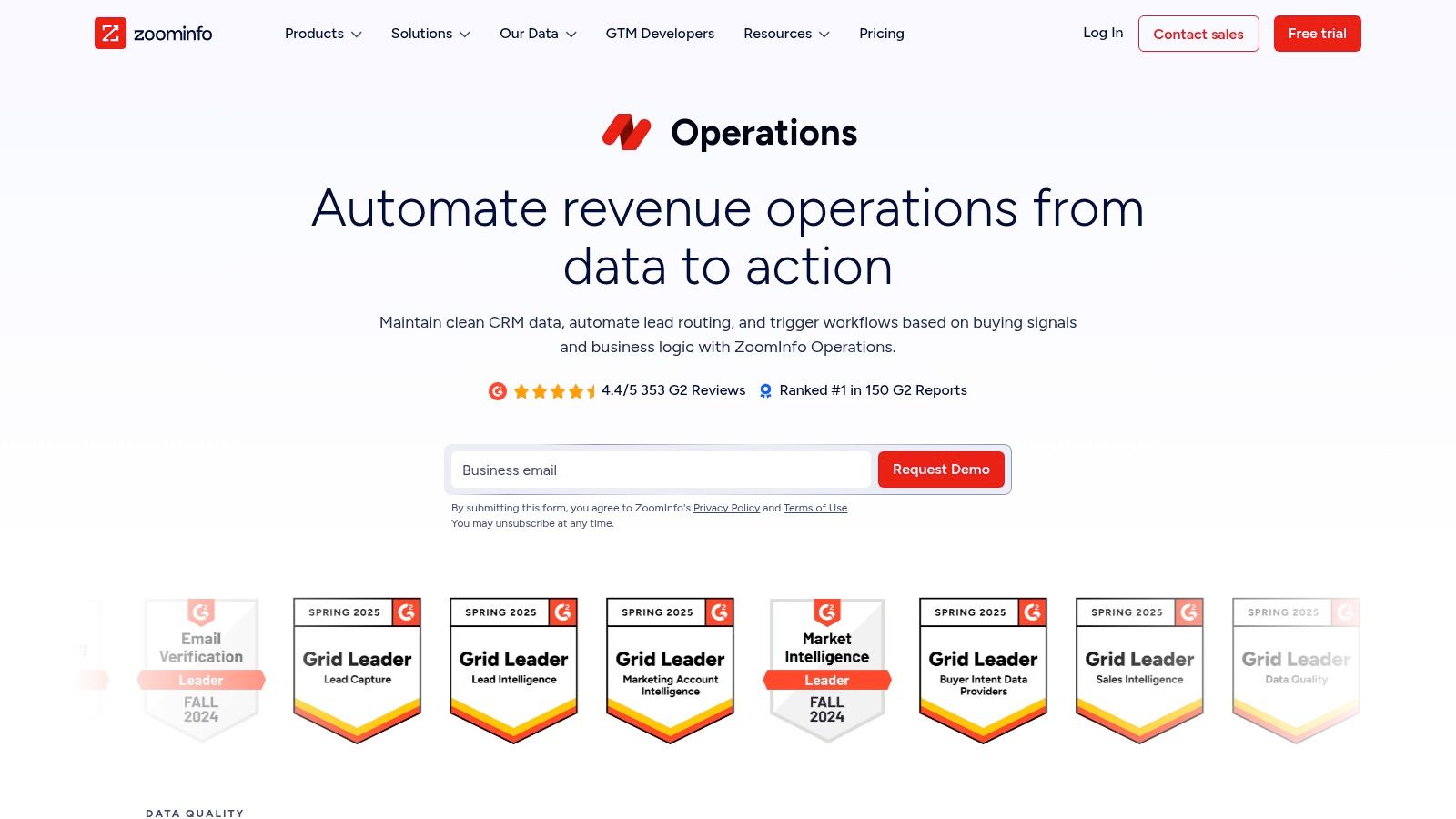
ZoomInfo OperationsOS Enrich fits enterprises that need data orchestration as well as data access. It combines company and contact enrichment through APIs and connectors with operational controls for matching, unifying, deduplicating, and normalizing records. That distinction matters when several business units, forms, sales tools, and marketing systems are feeding the same CRM.
The platform connects with systems such as Salesforce and HubSpot, and it supports multi-vendor waterfall enrichment rather than forcing teams to rely solely on the ZoomInfo dataset. A browser extension can also enrich records on the web, LinkedIn, and inside CRM workflows. For a large US-focused revenue organization, that combination creates a governed layer between raw records and downstream routing.
Where it earns its place
ZoomInfo is strongest when RevOps owns the process and can define rules for source priority, field overwrites, duplicate handling, and exception management. It's less attractive when a small team needs just a few verified contacts for a campaign.
The enterprise controls also support the broader discipline of revenue operations, where enrichment, routing, lifecycle stages, and reporting need to work together.
Practical rule: Use OperationsOS when bad records are creating systemic routing and reporting problems, not just when reps need more phone numbers.
Pricing is quote-based, and larger contracts can involve substantial annual commitments. Buyers should model connector costs, enrichment volume, renewal terms, data rights, and the work required to maintain the system. Deep US coverage is a clear advantage, but teams selling across APAC should test country-level coverage before treating the platform as a global default.
ZoomInfo OperationsOS is best for larger teams that value centralized control, broad integrations, and enterprise-grade hygiene more than quick self-serve deployment.
2. Apollo.io Prospect and Enrich
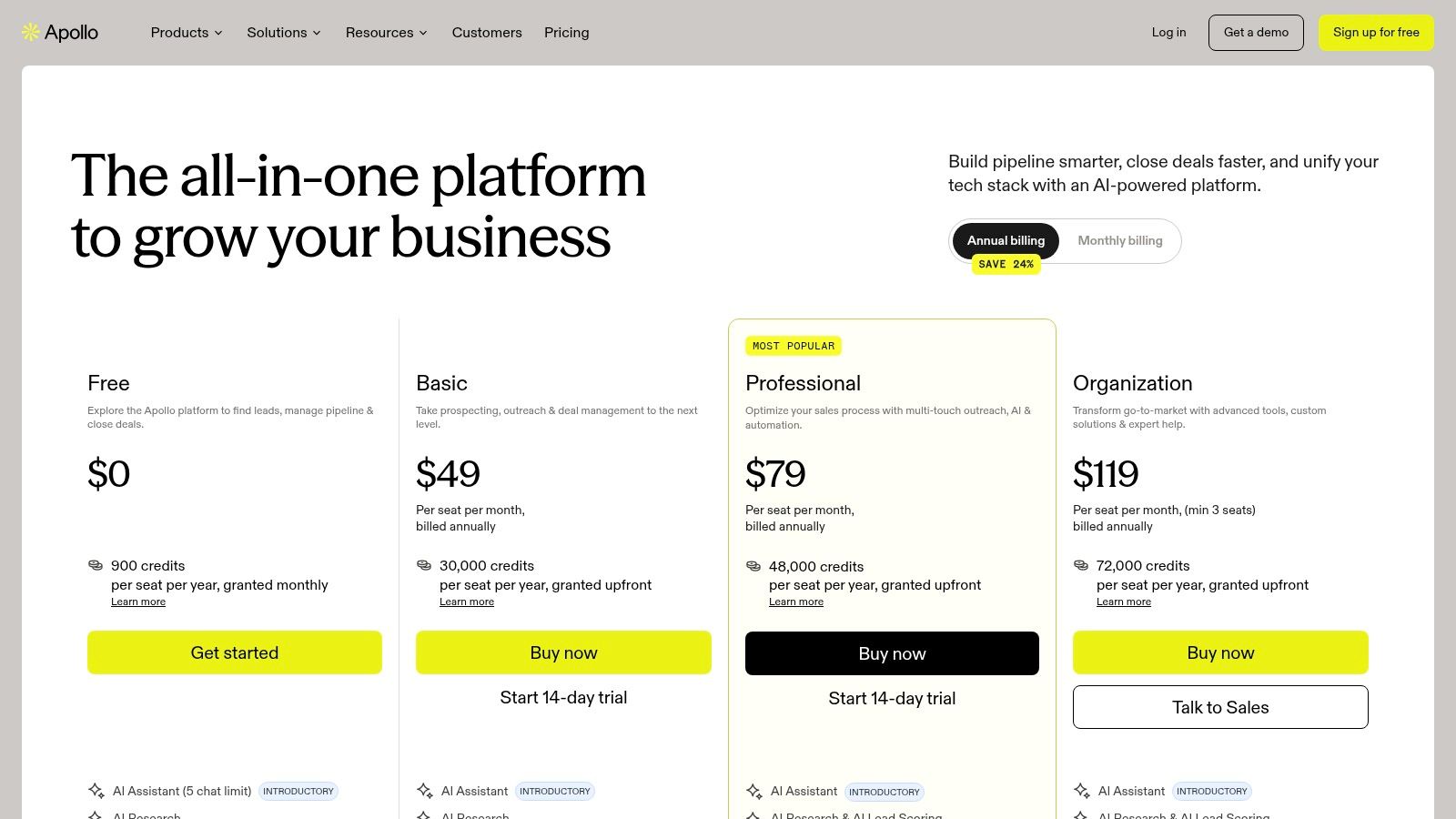
Apollo is the most accessible starting point on this list for teams that want prospect discovery and enrichment in one operating environment. It supports CSV bulk enrichment, Salesforce and HubSpot enrichment, API endpoints for people and companies, and waterfall workflows for email and phone reveal.
That flexibility lets a startup begin with a manually built account list, move into scheduled CRM enrichment, and later connect the workflow to internal systems. Apollo also provides usage reporting and automatic enrichment options, which helps operators understand where credits are being consumed instead of treating the database as a black box.
Best use in an outbound system
Apollo works well when the same team needs to identify prospects, enrich them, and prepare them for outreach without stitching together several products. Its self-serve pricing and feature tiers reduce procurement friction, particularly for startups and mid-market teams.
That makes it useful for practical prospecting, list building, and sales lead generation, but the workflow still needs controls. A revealed number or email should pass through validation, suppression, and routing rules before it reaches a sequence.
The database gets you to a candidate record. Your operating system decides whether that record is safe and useful to contact.
Waterfall enrichment can become involved when teams combine multiple reveal paths, and API workflows need careful handling of field mapping and usage. Higher scale can also expose workflow friction that isn't obvious during an initial trial.
Apollo.io is a strong fit for self-serve prospecting and enrichment, but APAC campaigns should be tested with representative country samples rather than judged by global database breadth alone.
3. Cognism Data-as-a-Service and API
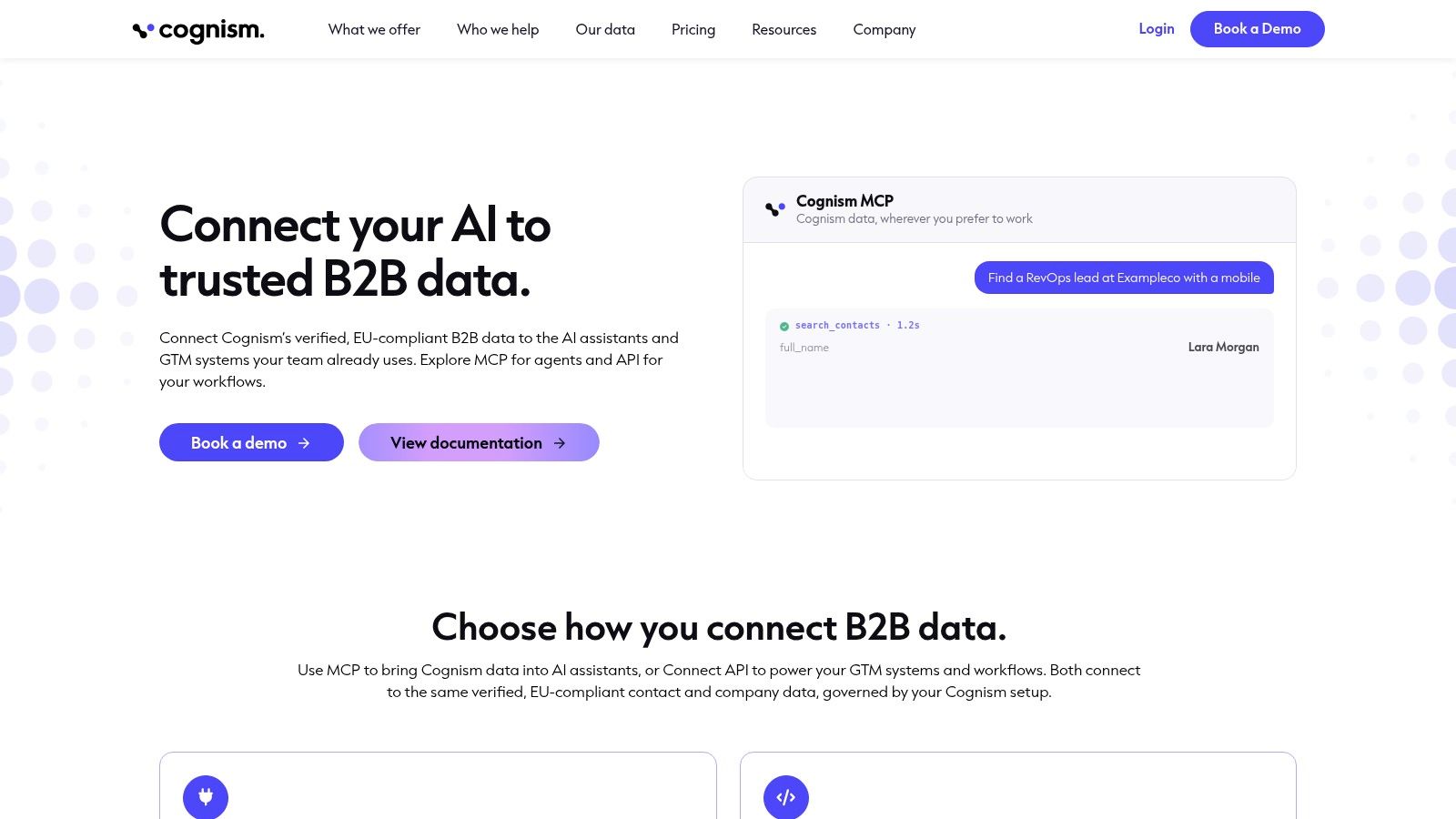
Cognism is designed for organizations that treat data as a managed operational input rather than a browser lookup tool. Its offer combines API enrichment, scheduled or bulk delivery, and warehouse destinations including Snowflake, S3, BigQuery, Databricks, and SFTP.
That delivery model is valuable when the CRM isn't the system of record. A data team can enrich records in a controlled pipeline, apply internal business rules, and send approved attributes into CRM, marketing automation, or account-based marketing workflows. Developer documentation and OAuth flows support programmatic implementation rather than manual exports.
Why compliance and phones matter
Cognism emphasizes phone-verified mobile numbers and international coverage. That makes it relevant for teams running phone-led outbound in EMEA or APAC, where a generic global contact database may not provide enough confidence at country level.
Procurement should include a detailed data processing review, permitted use cases, retention rules, suppression handling, and country-specific sourcing questions. A compliance posture documented through a DPA is useful, but it doesn't remove the need for the buyer to define its own lawful basis and outreach process.
Teams building a lead generation list should ask for a sample that reflects their actual markets, seniority levels, industries, and language requirements. Broad international positioning is not the same as equal coverage in every country.
Pricing is quote-based, and the enterprise DaaS model usually requires sales involvement. Cognism makes the most sense when warehouse delivery, verified mobiles, and governed international data justify a more formal procurement process.
4. Lusha
Lusha is built for speed. A rep can use its browser extension on LinkedIn or the web, find contact and company information, and push the result into a CRM or another sales workflow. API access and CRM integrations give operations teams a path beyond individual lookups.
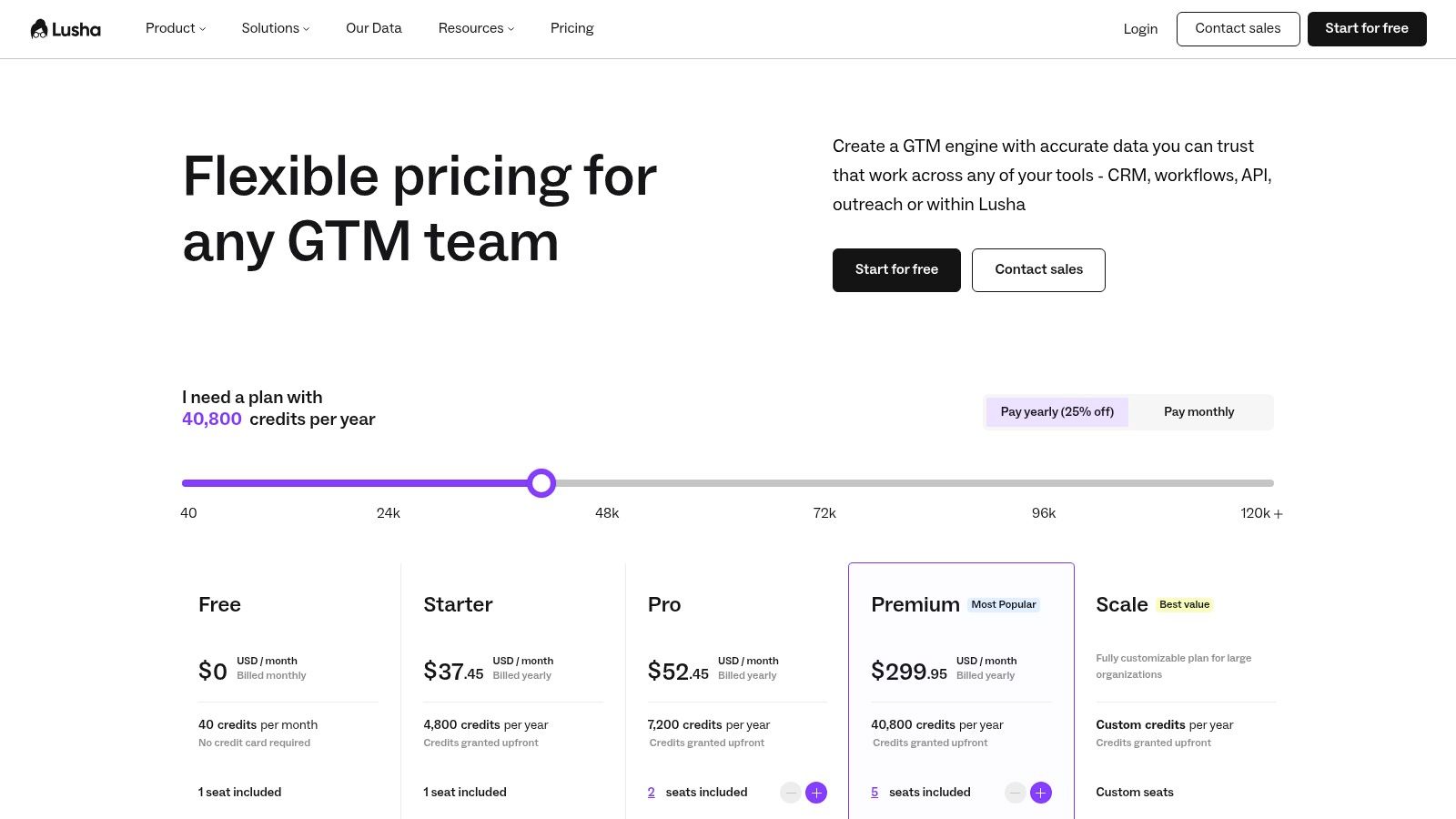
The product's appeal is practical rather than architectural. Self-serve plans, a credit slider, and monthly or annual billing make it easier to start without a long enterprise sales cycle. Teams can test the workflow quickly and see whether reps use it.
Where teams need discipline
Lusha works well for reps who research prospects as part of their normal LinkedIn lead generation process. It's also a reasonable self-serve alternative when a full enterprise platform would introduce more procurement and administration than the team needs.
The risk comes from treating a simple interface as proof of simple economics. Credit usage can vary by the type of contact information revealed, and pricing structures may change. Phone-heavy workflows can consume credits faster than email-led campaigns, so the team should test its actual lookup pattern before expanding seats.
Validate contact yield: Compare usable emails and phones, not just records returned.
Check APAC coverage: Test local industries, job titles, and markets before committing to volume.
Confirm credit mechanics: Document what consumes credits, what happens to failed matches, and whether unused capacity carries over.
Lusha has a compliance posture that includes SOC 2 Type II, ISO certifications, and GDPR and CCPA positioning. The buyer still needs to review its intended outreach, consent requirements, and suppression process. Lusha pricing is worth checking directly because commercial terms and credit structures can change.
5. Clearbit by HubSpot Breeze Intelligence and Clearbit Enrichment
Clearbit is most useful when HubSpot is already the center of the GTM system. Its enrichment operates inside HubSpot through automatic, manual, and workflow-based actions. Teams can control which fields may be overwritten, use Clearbit firmographic and demographic attributes, and apply Reveal or IP-to-company data to inbound activity.
That native position changes the buying question. Instead of asking whether Clearbit has every feature of an independent data platform, HubSpot teams should ask whether enrichment can improve form handling, lead segmentation, scoring, and sales routing without creating another operational surface.
A strong inbound mechanic
Clearbit is particularly relevant to form enrichment. A visitor can provide limited information, while the system appends company attributes and passes the record into HubSpot workflows. That supports segmentation and routing at the moment demand enters the system, instead of waiting for a rep to research the account manually.
The operational benefit is strongest when marketing, sales, and RevOps agree on field ownership. Selective overwrite controls help prevent enrichment from replacing trusted first-party data, but administrators still need a clear source hierarchy.
HubSpot consumption is tied to Breeze credits, so usage planning matters. A team that enriches every inbound record, repeats enrichment during workflow changes, or applies enrichment to broad CRM segments can create unexpected consumption.
Compliance also needs to sit beside workflow design. Teams should review email marketing laws for the markets they target and ensure enrichment supports, rather than bypasses, their consent and suppression controls.
HubSpot's Clearbit product page is the natural starting point for HubSpot customers. It's a weaker choice for organizations that want vendor independence or need the same enrichment layer across several CRM environments.
6. People Data Labs PDL
People Data Labs is for builders. Its person and company enrichment APIs provide the raw material for custom CRM pipelines, internal applications, warehouse jobs, and identity resolution workflows. The product doesn't try to make every operator work through a sales interface, which is exactly why technical teams may prefer it.
A useful PDL implementation starts with a schema, not a shopping list of fields. Define the attributes the routing or scoring system needs, identify which fields are optional, and decide how the pipeline handles no-match, partial-match, stale, and conflicting records.
Build the enrichment layer you own
PDL's developer documentation, field bundles, self-serve plans, and credit-based pricing support experimentation. A technical team can enrich a record when it enters the system, run a scheduled backfill, or expose enrichment inside a product workflow.
The trade-off is responsibility. Your team owns authentication, retries, logging, field mapping, data retention, and the logic that decides whether a new value replaces an existing one. That can be an advantage because the resulting system remains aligned with your internal model, but it requires engineering or technical operations capacity.
Start with activation fields: Only enrich fields that change routing, prioritization, personalization, or reporting.
Track credit behavior: Model volume by profile type and selected fields before production rollout.
Preserve provenance: Store the source and enrichment timestamp alongside the value where your architecture allows it.
Costs can rise with high-volume usage, and pricing varies according to profile complexity and selected fields. People Data Labs pricing should be evaluated alongside estimated API calls, retry behavior, and warehouse storage.
PDL is a strong fit when the company wants an owned data pipeline rather than a rep-facing database. It isn't the fastest route for a nontechnical team that needs ready-made prospecting and sequencing.
7. SalesIntel
SalesIntel places human verification at the center of its contact-data proposition. It supports contact and account enrichment, inbound lead enrichment, CRM and marketing integrations, Salesloft connectivity, and a Chrome extension. The positioning is especially relevant to teams that care more about reachable direct dials than about the widest possible firmographic catalog.
That focus can improve the decision process. Instead of buying a broad platform and hoping its phone records perform, a call-led team can test whether human-verified contacts produce enough usable numbers for its own ICP and territories.
Verify the commercial promise
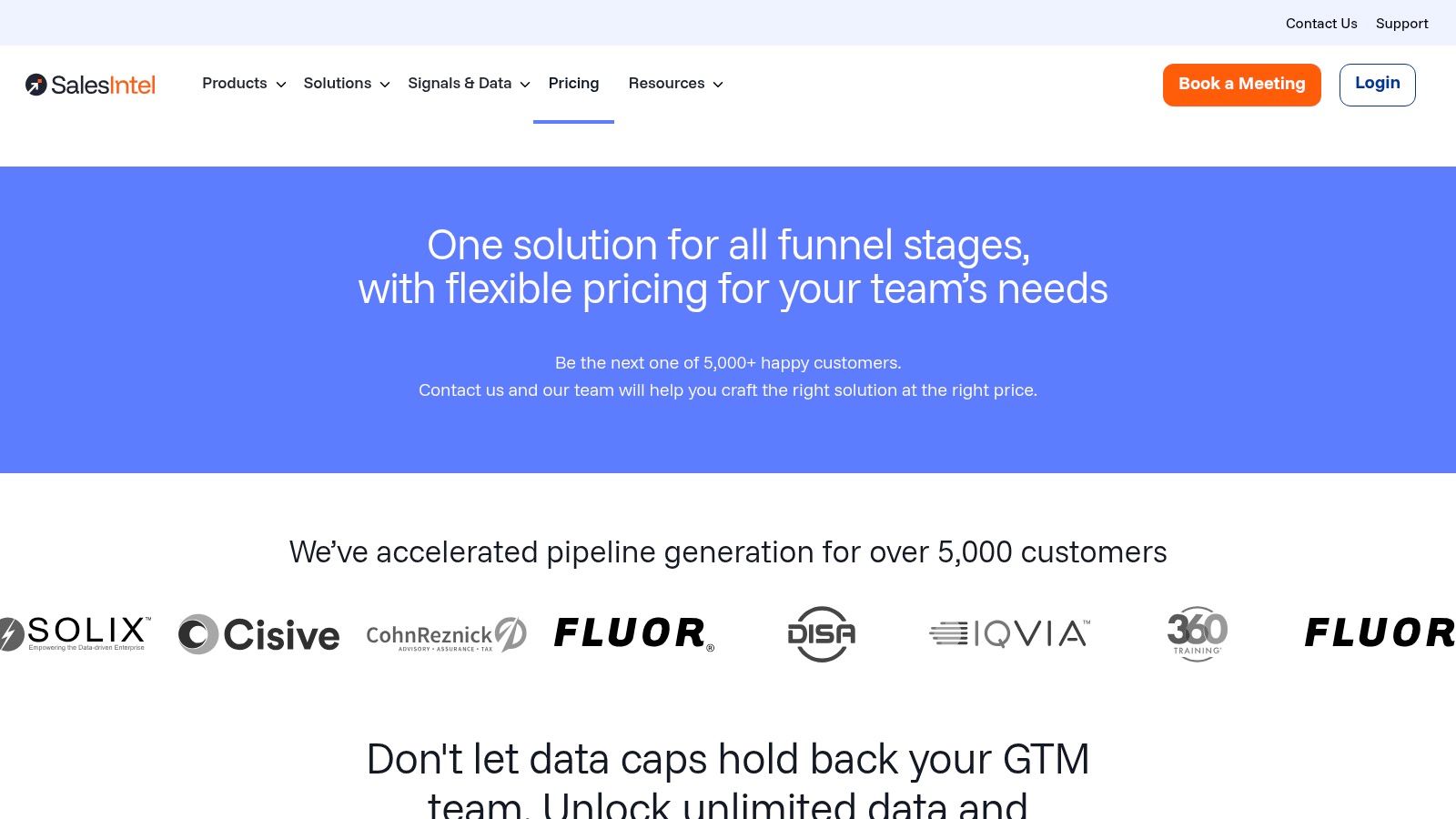
SalesIntel's pricing materials advertise “unlimited” enrichment and export per user. That wording should be checked against the contract, order form, fair-use language, export restrictions, API limits, and renewal terms. A simple usage promise can be valuable, but only if the MSA reflects what the operating team believes it bought.
The product is oriented toward US-verified dials, so APAC buyers should test local coverage rather than infer suitability from the human-verification model. Human review can improve difficult records, but it doesn't guarantee equal availability across every geography or role.
SalesIntel's strongest fit is a team with a clear phone-first motion, defined territories, and a willingness to validate data at the contract stage. It's less compelling for a business primarily seeking technographics, intent signals, or flexible warehouse orchestration.
SalesIntel pricing is the place to begin, but the final assessment belongs in a controlled pilot and a detailed commercial review.
8. LeadGenius
LeadGenius is useful when the required data doesn't fit neatly into a standard database filter. It combines human-in-the-loop research with programmatic enrichment and supports campaign-scoped work, custom signals, and delivery into CSV files, CRM imports, or data warehouses.
Consider an APAC account list where the team needs local partner relationships, a specific hiring signal, or a contact role that standard databases classify inconsistently. A generic platform may return a broad list with familiar fields. A scoped research engagement can instead define the unusual attributes, specify the countries and languages, and deliver records in the format the GTM system already accepts.
Why regional context changes the decision
Regional research is not just a coverage problem. Teams need to understand local naming conventions, subsidiary structures, business groups, market terminology, and whether a contact is genuinely responsible for the relevant function. Human review can help with those ambiguities when the campaign economics justify it.
LeadGenius uses metered per-record pricing, with separate compliance line items. That structure can be easier to connect to a campaign budget than seat-based access, but the engagement requires scoping. The buyer must define the input list, required fields, acceptance criteria, refresh expectations, and delivery format.
Use custom research for exceptions: Reserve it for fields and signals that standard providers don't handle reliably.
Define a usable record: Specify what counts as a valid contact, account match, and research completion.
Plan the handoff: Deliver the output directly into the CRM, warehouse, or campaign process instead of leaving it in a spreadsheet.
LeadGenius is a strong option for nuanced APAC and EMEA research. It isn't a one-click database, and the operational setup is part of the purchase.
9. Clay
Clay is an orchestration layer for teams that don't want a single provider to determine the whole enrichment workflow. It supports native providers, bring-your-own API keys, multi-provider waterfalls, workflow-style tables, and Claygent for research and signal extraction.
The practical value comes from designing fallback logic. One provider can handle company matching, another can attempt work email discovery, a third can verify the result, and a research step can inspect a public source for a specific signal. Clay lets the operator assemble those steps instead of exporting a list between disconnected tools.
Waterfalls need operating rules
A waterfall should have a stopping condition. If the first provider returns a value that passes validation, the workflow shouldn't keep spending on additional providers without a reason. If a provider fails, the next step should know whether it is dealing with a no-match, an invalid result, a missing field, or a temporary API error.
A maintainable design records provider order, field-level confidence, costs, timestamps, and the reason a fallback ran. Without those controls, flexibility becomes an expensive chain of actions that nobody can audit.
A waterfall is not automatically more accurate. It is only better when the fallback logic produces more usable records than the added cost and complexity consume.
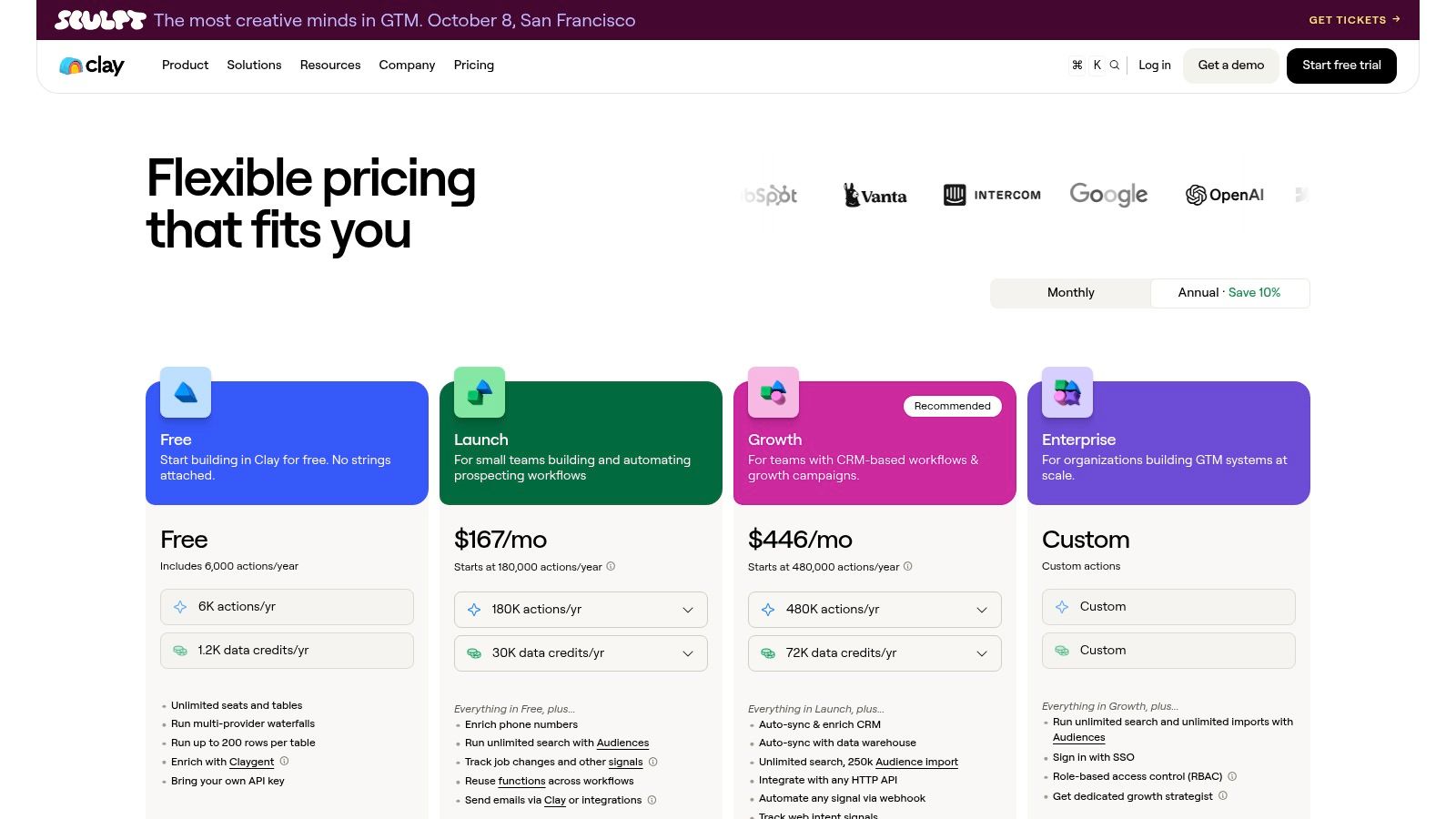
Clay's pricing can include fixed credits and metered AI usage, while provider fees and action counts affect total cost. Teams should model the complete workflow, including failed actions, retries, AI research, and verification.
Clay pricing suits system-first outbound teams with technical or operations ownership. It's powerful for global and APAC workflows, but it isn't a low-maintenance substitute for designing the process.
10. Dropcontact
Dropcontact is a downstream quality-control layer rather than a replacement for a broad account database. It focuses on email finding and verification, contact normalization, role and name cleanup, and deduplication. Its first-party algorithms and GDPR-native positioning make it relevant to teams that want to improve outbound readiness before records enter a sending system.
That separation is healthy. A prospecting platform can identify a likely contact, while a verification layer determines whether the email is complete enough to route into a campaign. The two functions don't need to come from the same vendor.
Use it before activation
A sensible Dropcontact workflow receives records after account and contact discovery. It normalizes names, roles, and duplicates, checks email availability and validity, then returns a status that the outbound system can use. Records that fail verification should go to a review or alternative research path, not directly into a sequence.
This is particularly useful for teams that care about deliverability and want a clear boundary between enrichment and sending. Verification doesn't establish permission to contact someone, so legal basis, consent requirements, suppression lists, and campaign rules still belong to the operator.
Dropcontact's scope is narrower than a platform that provides broad firmographics, intent, or account intelligence. That narrowness is an advantage when the problem is email quality and normalization, but it won't solve account selection or signal prioritization.
Dropcontact pricing presents a self-serve, volume-based model. Consider it when the stack already has a prospecting source and needs a verification step before CRM routing or outbound activation.
Top 10 Data Enrichment Tools, Feature Comparison
Product | Core capability ✨ | Quality ★ | Pricing & Value 💰 | Target 👥 | Unique USP 🏆 |
|---|---|---|---|---|---|
ZoomInfo OperationsOS (Enrich) | Enrichment + data orchestration, multi-vendor waterfall | ★★★★☆ (Enterprise / US-heavy) | 💰 Quote-based, often high ARR | 👥 Large GTM teams, enterprise ops | 🏆 Centralized hygiene & scale |
Apollo.io (Prospect & Enrich) | Large B2B DB + CRM/CSV/API enrichment | ★★★★☆ (Broad coverage) | 💰 Clear self-serve tiers; cost-effective | 👥 Startups & mid-market SDR teams | 🏆 Accessible pricing + bulk CRM tools |
Cognism (DaaS + API) | API/warehouse delivery + phone-verified mobiles | ★★★★☆ (International / compliant) | 💰 Quote-based; enterprise procurement | 👥 Compliance-focused, APAC/EMEA sellers | 🏆 GDPR-forward + verified mobile dials |
Lusha | Browser extension + quick contact/company enrichment | ★★★☆☆ (Fast UX, variable scale) | 💰 Self-serve credit pricing (transparent) | 👥 Reps & small sales teams needing fast lookups | 🏆 Fast setup & simple workflows |
Clearbit (Breeze Intelligence) | Native HubSpot enrichment & Reveal IP | ★★★★☆ (HubSpot-native control) | 💰 Consumed via HubSpot/Breeze credits | 👥 HubSpot-centric GTM teams | 🏆 Deep HubSpot integration & field control |
People Data Labs (PDL) | API-first person/company enrichment, flexible fields | ★★★★☆ (Developer-focused) | 💰 Credit-based; scales with usage | 👥 System builders & dev-led pipelines | 🏆 Transparent credits + schema flexibility |
SalesIntel | Contact/account enrichment with human verification | ★★★★☆ (US-verified focus) | 💰 Sales-quote; “unlimited” claims, verify contract | 👥 Teams needing high-accuracy US dials | 🏆 Human-verified contacts & simple usage story |
LeadGenius | Human-in-the-loop + programmatic research (scoped) | ★★★★☆ (Excellent for niche/APAC) | 💰 Per-record scoped pricing | 👥 Campaigns needing nuanced APAC/local signals | 🏆 Custom research for hard-to-source data |
Clay | Multi-provider enrichment waterfalls + AI research agent | ★★★★☆ (Highly flexible; ops-heavy) | 💰 Metered + provider fees; planning required | 👥 Ops teams building system-first workflows | 🏆 Multi-source orchestration + Claygent AI |
Dropcontact | First-party email discovery/verification & normalization | ★★★☆☆ (Verification-first, GDPR-native) | 💰 Volume-based self-serve plans | 👥 EU/APAC-compliant stacks; deliverability ops | 🏆 GDPR-first email verification layer |
Build the Stack Around Your Next Campaign
The best decision starts with the campaign, not the vendor category. If the team needs accessible self-serve prospecting and enrichment, start with Apollo or Lusha. Both can get a small or mid-market team moving without the procurement burden of a governed enterprise data program, but both still require field validation, suppression logic, and regional testing.
For enterprise-scale governance, compare ZoomInfo OperationsOS and Cognism according to the system you need to operate. ZoomInfo is the stronger fit when matching, deduplication, normalization, connectors, and centralized data quality are the central problems. Cognism is more relevant when managed delivery, phone-verified mobiles, compliance documentation, and international data are high-priority procurement requirements.
PDL is the better direction for API-led systems where engineering owns the schema, enrichment calls, and warehouse synchronization. Clearbit makes sense when HubSpot is the operational center and the team wants enrichment inside forms, records, and workflows rather than another independent platform.
SalesIntel belongs on a shortlist when human-verified contact data and US calling priorities drive the motion. LeadGenius is better suited to custom research, difficult fields, and nuanced APAC account work. Clay is the orchestration choice for teams that want to combine providers, API keys, research agents, and fallback rules. Dropcontact is the verification and normalization layer for teams that already have a source of prospects but need stronger outbound readiness.
Use a representative APAC sample before signing a broad contract. Include the countries, industries, languages, company sizes, job functions, and account structures that the campaign will target. Ask each vendor to return the fields your routing and messaging require, then measure usable-record yield, not raw records returned.
Document the rules before production:
Required fields: Define the minimum company, contact, role, and verification data needed for activation.
Fallback logic: Record when another provider or human researcher should run, and when the workflow should stop.
Field ownership: Decide whether first-party CRM data, enrichment data, or manual research wins during conflicts.
Compliance controls: Review sourcing, lawful basis, consent, suppression, retention, and regional restrictions.
Commercial terms: Confirm credits, overages, exports, API access, fair-use limits, renewal terms, and data rights.
Handoff design: Decide whether approved records move into the CRM, warehouse, routing engine, or outbound platform.
The market is expanding as teams move from static list cleaning toward continuous, cloud-delivered enrichment. One independent forecast places the market at USD 2.62 billion in 2025 and projects USD 7.11 billion by 2035, with a 10.5% CAGR, while another estimates USD 2.88 billion in 2025 rising to USD 3.24 billion in 2026 and USD 5.13 billion by 2030. Those projections appear in SNS Insider's market research, and they point to a category becoming part of core revenue infrastructure.
The important question isn't how much data a team can buy. It's whether the team can turn a verified, compliant, regionally relevant record into a prioritised action, a correctly routed lead, a useful message, and a measurable pipeline outcome.
The Social Search can help B2B teams connect ICP definition, prioritised account and lead lists, enrichment, outbound operations, routing, and reporting into an owned APAC-ready system. Its outbound sales systems work is designed for teams that need infrastructure they can operate and retain, rather than another disconnected database.
The Social Search designs and runs owned outbound systems for B2B teams, connecting ICP definition, enrichment, messaging, email and LinkedIn execution, signal-driven routing, and reporting. Visit The Social Search to discuss an APAC-ready enrichment and outbound system built around your next campaign.
