Why Email Marketing Is Important for B2B Pipeline
Discover why email marketing is important for B2B teams building pipeline. Covers ROI, deliverability, sequencing, and how email fits a modern GTM system.
You’re probably staring at a dashboard with a few channels doing too much heavy lifting. LinkedIn is producing some attention, cold calls are getting a few conversations started, maybe a webinar or paid campaign is getting signups, but the quarter still feels fragile because nothing ties the whole motion together. That’s where email marketing stops being a newsletter tactic and starts acting like the connective tissue of the pipeline.
When email is wired into the rest of the GTM system, it gives sales and marketing something most channels don’t, a controllable path from first touch to reply, from reply to meeting, and from meeting to revenue. It’s the channel that can carry the handoff, preserve context, and keep the follow-up sequence moving after the first spark of interest. Without it, teams often end up with disconnected activity and weak forecast confidence, even when they’re generating plenty of attention.
Table of Contents
Outbound Sequences Versus Broadcasts and Lifecycle Automation
How Email Works With LinkedIn, SEO, and Signal-Driven Routing
The Pipeline Problem Email Solves
A startup can survive on LinkedIn for a while. A founder can get lucky with one webinar. A mid-market sales team can keep dialing and still see meetings. Then the quarter gets real, the channel that was carrying the load slows down, and the team discovers it never had a system, just a series of disconnected wins.
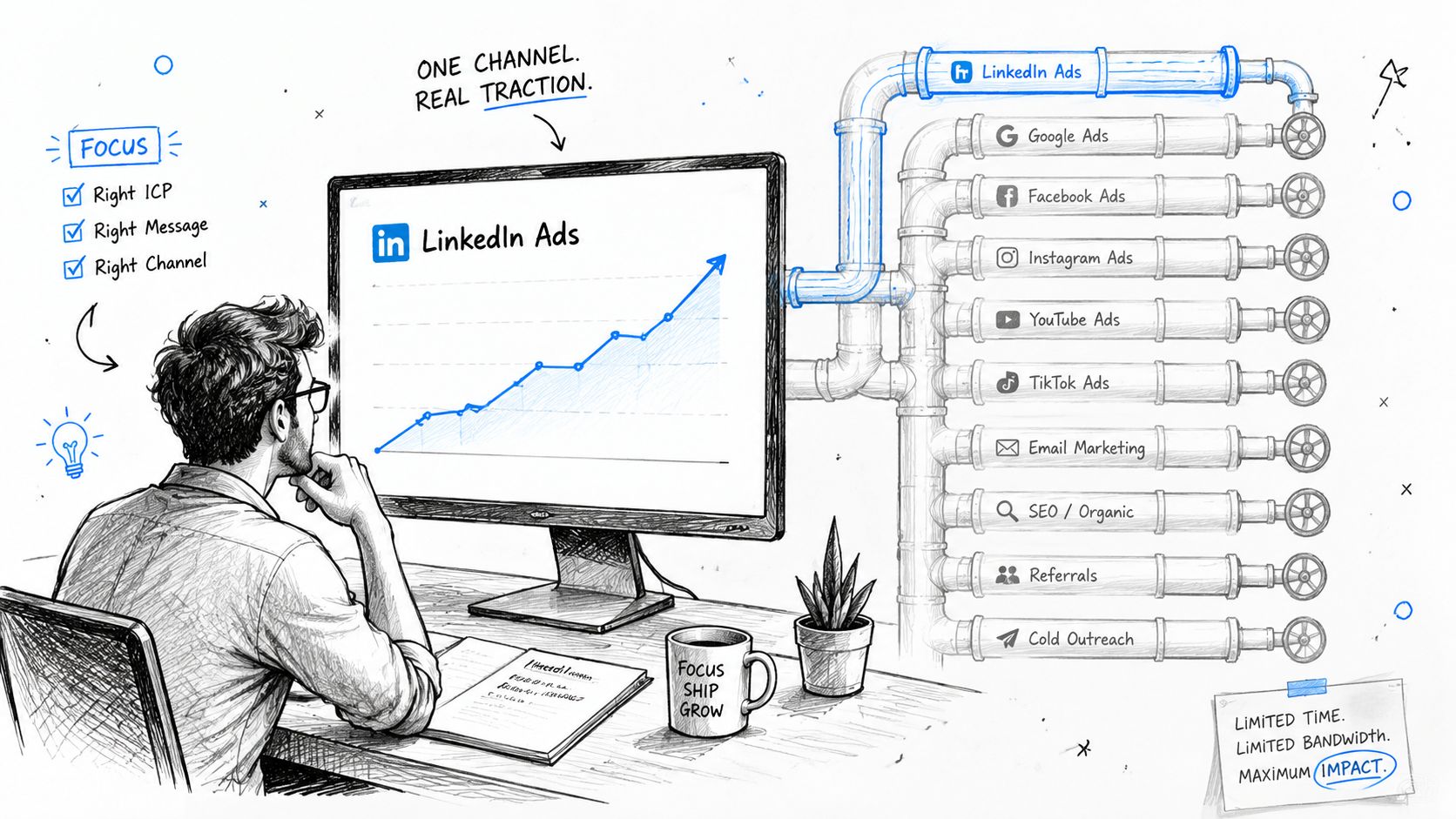
That’s the problem email marketing solves inside a B2B pipeline. Email lets you turn scattered touches into a sequence, then sequence into routing, routing into meetings, and meetings into forecastable pipeline. A useful way to think about it is that email doesn’t replace the rest of the motion, it connects the parts that otherwise drift apart, which is why a pipeline-generation framework like the one in this pipeline generation guide matters so much for teams trying to build repeatable demand.
What breaks when email is missing
Without email, the funnel usually becomes reactive. A prospect visits a site, clicks once, maybe replies on LinkedIn, and then the interaction dies because there’s no durable follow-up path. Sales ends up chasing intent manually, marketing loses attribution clarity, and leadership starts mistaking activity for momentum.
That’s also why email matters operationally, not just commercially. It gives the team a place to preserve context after the first touch, so the next message can reference a prior action, a content view, a meeting request, or a reply. In practical terms, that means fewer cold starts and more continuity across the pipeline.
Practical rule: if a lead can’t be moved from first touch into a timed follow-up path, the team doesn’t have a funnel, it has isolated interactions.
The strongest programs treat email as infrastructure. That means a defined list, a sequence, a routing rule, and a reporting loop, all working together. Once those pieces exist, the team can stop guessing which channel “created” the opportunity and start seeing how the whole system produced it.
The Scale and Durability of Email as a Channel
A B2B team can lose a week of pipeline when one paid channel gets more expensive, a social thread goes cold, or a rep stops getting replies in one sequence. Email stays useful in that moment because it gives the team a direct path back to people already identified, without waiting on a platform to decide whether the message gets seen. That makes it a working part of the GTM system, not a side channel.
There were about 4.48 billion global email users in 2024, with analysts expecting 4.89 billion by 2027, and more than 376 billion emails are sent and received every day, according to Shopify’s email marketing statistics. That scale matters because it shows email is still the default communication layer for buyers, sellers, and internal operators who depend on it to move work forward.
Why scale changes the GTM decision
Scale changes the trade-off. If a paid platform shifts auction pressure, if social distribution gets noisier, or if one rep’s outreach stalls in a thread, email still gives you a direct route to the list you already built. In B2B, that direct route matters because pipeline has to survive channel volatility, not just one good month of response rates.
The other reason teams keep paying attention to email is that the channel still sits at the center of operational work. According to the same Shopify source, 87% of marketing leaders say email marketing is critical to company success, and 44% of marketing professionals call it their most effective channel. Those figures do not guarantee a campaign will convert, but they do show where serious GTM teams keep their routing, sequencing, and follow-up logic.
For list-based outbound and nurture programs, the practical question is not whether buyers still read email. They do. The question is whether the team can control deliverability, sequence timing, and attribution well enough to turn attention into pipeline instead of scattered touches.
That is why the marketing ROI guide at this marketing ROI guide belongs in the conversation alongside the playbook for converting email leads. One covers how to think about return, the other shows how email becomes a repeatable conversion path once the list, cadence, and handoff rules are in place.
Ownership as the Economic Advantage
Email’s scale would be enough to keep it in the stack, but the economics are what make it hard to replace. Industry sources report an average return of about $36 for every $1 spent on email marketing, and some 2024 to 2026 estimates place ROI as high as $42 per $1, according to Nutshell’s email marketing statistics roundup. That level of return helps explain why email stays in the mix even when paid media looks faster on a dashboard.
Ownership drives the economics
Email is an owned, measurable first-party channel. You control the audience, the send logic, and the timing, and every interaction, opens, clicks, unsubscribes, purchases, and conversions, can be tracked for attribution and optimization, as outlined in Coursera’s email marketing overview. That changes the economics because you are not renting attention inside a system you do not control.
Paid channels can still play a role, but their cost structure usually works against compounding. Email gets stronger as segmentation improves, because the same list can be sorted by behavior, timing, or stage instead of paying again for each message delivered. A useful piece on boost B2B growth with email comes back to that same point, the channel keeps paying when the audience and message are controlled properly.
Operator’s note: if a channel becomes more expensive every time you need another impression, it functions as a budget line. If it becomes more useful as you learn, it operates as infrastructure.
For a broader framework on how revenue teams should think about channel payback, this marketing ROI guide is worth studying. The main takeaway is that email is one of the few digital channels where better targeting can improve unit economics instead of eroding them.
Where Email Fits Inside a B2B Funnel
Email shows up at every stage of the funnel, but it changes jobs as buyer intent changes. At the top, it captures cold interest and moves a lead into a known list. In the middle, it nurtures with education, timing, and relevance. At the bottom, it supports sales conversations with reminders, follow-ups, and next-step prompts.
A practical funnel starts with ICP clarity. If you don’t know who belongs in the list, the sequence becomes noise. If you do know the account profile, role, and trigger, email can carry the right message at the right moment, which is why a lead-generation framework like this guide to attract, qualify, and convert better leads fits so naturally with email-led motions.
The funnel stages that matter
Awareness: email captures the first durable touch after content, a referral, or a signal-driven visit.
Consideration: nurture sequences give prospects reasons to stay engaged without forcing a sales conversation too early.
Decision: follow-up email supports demo requests, objections, and next-step coordination after a reply.
That structure works because email isn’t one copy style. Cold outbound needs short, relevant, reply-driven messaging. Nurture needs value and pacing. Sales follow-up needs precision and memory of what already happened. Treat them as different jobs and the system gets easier to manage.
The reporting layer matters just as much as the copy. If you can’t see which stage produced the response, which list moved, and which message generated the meeting, the funnel is just a story people tell themselves after the fact. Email becomes valuable when the team can trace the path, not just send the message.
Outbound Sequences Versus Broadcasts and Lifecycle Automation
A lot of teams say they’re “doing email” when they’re really running three different motions that need different rules, different lists, and different measurements. Outbound sequences are narrow, reply-driven, and built to start new conversations. Broadcasts are segment-based and work better for announcements, content, or product updates. Lifecycle automation is triggered by behavior and should feel timely, not promotional.
Pick the job before you pick the format
Cold outbound works best when the list is tight and the message is specific. Sequencing and deliverability have to be managed together, which is why a platform like Instantly can fit that motion. Data quality still matters too, so enrichment through Apollo can sharpen targeting, while Trigify helps decide when a buying signal is strong enough to justify a send.
Broadcasts work differently. They should not read like a rep’s one-to-one note, and they do not need to. A good broadcast earns attention from a warmer list, then routes engaged readers into the next step through the CRM or lifecycle flow. Lifecycle automation is even more distinct, because the trigger defines the message, not the calendar.
If you use outbound cadence on a warm subscriber base, you’ll annoy people. If you use newsletter logic on a cold target list, you’ll get ignored.
The mistake is operational in nature rather than strategic. Teams often ask why a campaign underperformed when the core issue is that they ran the wrong motion against the wrong audience. The cleaner path is to map each email type to one buyer stage, then measure it on the metric that matches the job, replies for outbound, engagement for broadcast, and triggered conversion for automation.
For a tighter cold outbound reference point, this cold email guide gives a useful framework. Email only works well when structure, list quality, and cadence stay aligned. When a workflow is meant to leads and sales automatically through behavior-based routing, the trigger and the follow-up have to match the buyer’s context.
How Email Works With LinkedIn, SEO, and Signal-Driven Routing
Email becomes more useful once it sits inside a routing system instead of being treated as a silo. LinkedIn adds context and social proof, SEO captures inbound intent, and signal tools help decide when a sequence should start. The objective is to move the right account into the right motion at the right time, with the fewest wasted touches.
A practical setup often looks like this. Trigify flags a hiring or funding signal, Apollo enriches the contact, a sequenced email goes out, and a LinkedIn touch through HeyReach reinforces the same conversation. Inbound readers who came in through an SEO article built with Outrank or optimized through SearchAtlas can go into a different nurture path, because their intent is already warmer.
That same routing logic matters across regions and channels. A WhatsApp reply from an APAC buyer can be pulled into the same pipeline view through Respond.io, which keeps asynchronous communication from splitting the record. For social follow-up, Manychat can support comment and DM automation when a campaign’s first touch begins outside the inbox.
Why the system matters more than the channel
Strong email programs do not ask email to carry every job. They use it to handle the parts of the motion that need persistence, timing, and traceability. A contact may see a LinkedIn impression, read a content page, and then receive an email sequence before they ever reply, which is why the broader LinkedIn lead generation playbook belongs in the same operating conversation.
Email also fits naturally with automation because it can route interest without forcing the funnel into manual labor. EmailScout’s explanation of how automation helps generate leads and sales automatically matches what strong GTM systems already do. They reduce unnecessary handoffs and keep the next step visible.
Routing, enrichment, and follow-up decide whether the motion holds together. Once email is connected to signal and social activity, it stops behaving like a standalone send channel and becomes the backbone of an asynchronous buying journey.
Why Email Programs Stall and How to Fix Them
A lot of email programs do not stall because email lost relevance. They stall because the operating layer underneath the channel starts to break. Deliverability slips, attribution gets muddy, frequency becomes inconsistent, and triggered flows never get built, so the team keeps sending while pipeline impact gets harder to see.
Common B2B Email Failure Modes and Fixes
Failure Mode | Symptom | Fix |
|---|---|---|
Deliverability decay | Messages land less consistently and replies taper off | Warm inboxes, rotate sending domains, and keep sending behavior stable |
Attribution blur | Revenue gets credited to the wrong channel or disappears in reporting | Tie sequences, lists, and replies to a single reporting view |
Over-frequency | Subscribers disengage, complaints rise, and engagement falls | Set frequency caps by segment and slow down when the list is cool |
Weak lifecycle automation | Batch sends carry too much of the workload | Build triggered follow-ups for welcome, re-engagement, and post-reply paths |
CMSWire’s troubleshooting view of underperforming email points to the same operational culprits, attribution blur, deliverability issues, over-frequency, and weak automation, plus a missed opportunity in lifecycle messaging. The list may be fine, but if the system is weak, the channel will still look underpowered. The issue is operational rather than strategic.
The fix is to treat email like infrastructure inside the GTM system. Warm the sending environment, connect revenue back to specific sequences, and build triggered flows so the team is not relying on batch sends to do all the work. Once those pieces are in place, email stops acting like a periodic campaign and starts functioning like a dependable pipeline layer.
