GTM Strategy for Startups: A Complete 2026 Playbook
A practical GTM strategy for startups in 2026 covering ICP, positioning, channels, pricing, and measurement frameworks that actually drive pipeline.
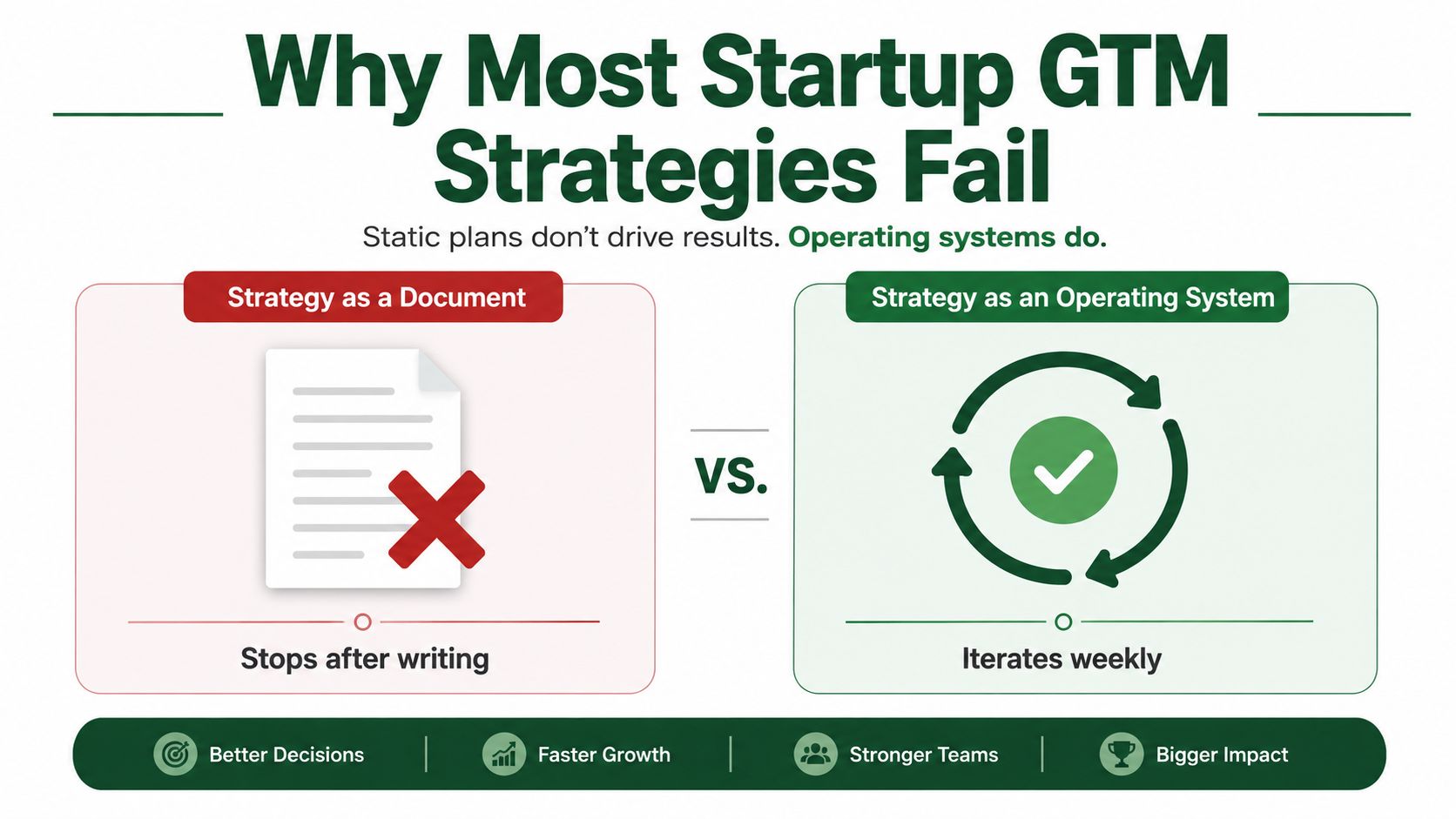
Most startups don’t fail because they lack a good product, they fail because they launch with no documented go-to-market strategy. A 2026 industry roundup citing Gartner says 72% of companies have no formal GTM strategy, and companies with a documented one are 3.4x more likely to achieve a successful launch, which is a blunt reminder that execution structure matters more than hustle alone. The problem isn’t creativity. It’s that founders treat GTM like a deck instead of an operating system.
That operating system has to connect ICP definition, data, messaging, sequencing, channel mix, and reporting so the first meetings come from a system the founder owns. If one part is fuzzy, the whole motion gets noisy, and the team mistakes activity for traction. The strongest early-stage teams don’t “do GTM” in a vague sense. They build a machine that can be reviewed, adjusted, and repeated.
Table of Contents
Why Most Startup GTM Strategies Fail Before They Start
A GTM strategy fails early when founders confuse planning with operating. A slide deck can describe the ICP, channels, and messaging, but it can’t route leads, trigger follow-up, or tell you which message earned the meeting. The startups that move fastest don’t start with more ideas. They start with a system that forces weekly decisions.
The first failure mode is ICP drift. Founders want to sell to everyone who could possibly buy, which means the list gets broad, the copy gets generic, and the first dozen conversations don’t resemble each other enough to learn from. The second failure mode is channel sprawl, where teams launch on email, LinkedIn, content, communities, and partnerships at once, then can’t tell which motion produced signal. The third failure mode is measurement after spend, which makes every test look inconclusive because the tracking was bolted on later.
A practical GTM engine begins before any budget goes out the door. It needs one primary motion, a clear list source, tracking and attribution in place, and a review ritual that kills weak messages fast. That’s the same logic behind Trackingplan growth consulting insights, which is useful because it treats growth as a system of instrumentation, not isolated campaigns.
Practical rule: if you can’t answer who the ICP is, where the list came from, and what triggered the outreach, you don’t have a GTM strategy yet.
Maturity Level | % of Companies | Likely Outcome |
|---|---|---|
No formal GTM plan | 72% | Launches run ad hoc and learn slowly |
Documented GTM strategy | Lower share than the group above | More structured launches and clearer accountability |
Documented strategy with ICP, messaging, and tracking | Not quantified in the data provided | Better learning cycles and cleaner pipeline decisions |
The point of the table isn’t to worship documentation. It’s to show that structure is associated with better outcomes, while chaos tends to hide the bottleneck. For a practical breakdown of how teams route prospecting into pipeline, this B2B lead generation resource is a good reference point for the mechanics behind the motion. A startup GTM strategy only works when it produces repeatable outputs, not just a neat planning file.
Defining the ICP That Actually Converts
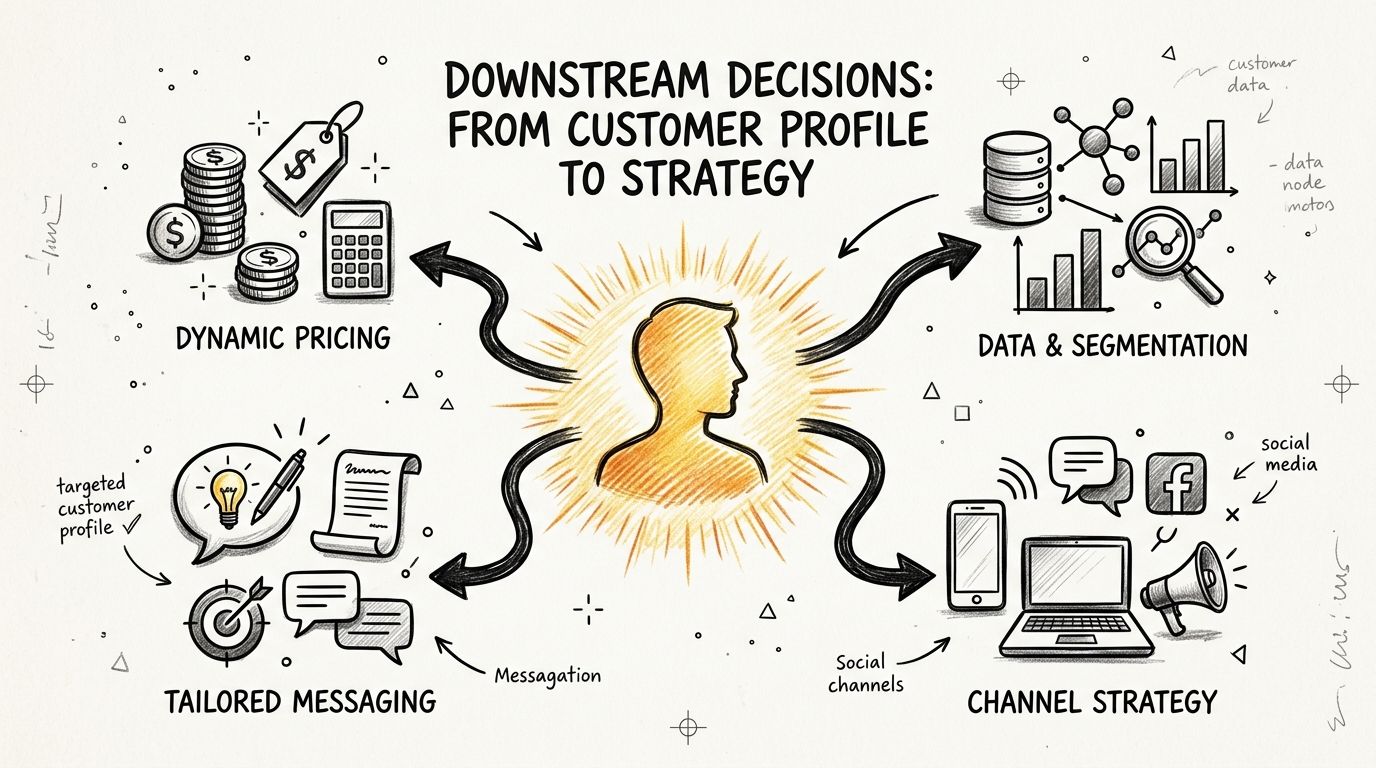
The highest-impact decision in a gtm strategy for startups is the ICP, because every downstream choice depends on it. List source, enrichment fields, offer shape, pricing posture, and even the sales motion all follow the same question, who are we willing to be excellent for? If that answer is fuzzy, every other decision gets fuzzy too.
Start with interviews, not assumptions
The cleanest early-stage method is to run 20 to 30 primary-research interviews before locking positioning, then use those conversations to narrow the list. The people to talk to are recent buyers, near-buys, and users who felt the problem sharply enough to care. Ask what triggered their search, what they tried first, what made them reject alternatives, and what language they used when describing the pain in their own words.
After the interviews, turn notes into a ranked account list. That list should layer firmographic, technographic, and trigger signals, so you’re not just looking at company size or industry in isolation. For example, “mid-market HR leaders” is too loose to guide outreach. A stronger ICP looks more like a defined band of industries, a headcount range, a known tool stack, and a trigger such as a hiring push, a system migration, or a compliance change.
Don’t let enrichment replace judgment. Use tools to speed up research, then validate the pattern with real conversations.
Use enrichment to rank, not to decide
Apollo fits well. It helps enrich records and speed list building, but it shouldn’t decide who makes the cut. Human validation still matters because the best signals are often the ones that don’t look obvious in a database, especially across APAC and US markets where job titles, buying committees, and tool usage differ.
Once the list is built, score it ruthlessly. The goal is simple, put sales time on the smallest set of accounts most likely to book meetings. The teams that win early don’t spray effort across the whole market, they concentrate on the subset where the message, pain, and timing line up. For a structured workflow around this step, the ICP list building service is a useful benchmark for what “done properly” looks like.
Positioning and Messaging That Earn Replies
Positioning is not a tagline. It’s the reason one buyer chooses you instead of the status quo or the competitor they already know. Early-stage teams usually get this wrong by writing internal prose that sounds polished but doesn’t survive contact with a prospect inbox.
Test the offer shape, not just the copy
Three versions are worth testing early. A problem-led version names the pain first. An outcome-led version starts with the business result the buyer wants. A contrast-led version explains why your approach is different from the default way the team is handling the problem now.
Each version should separate the value proposition, the offer, and the call-to-action. That sounds basic, but it matters because weak teams mix them together, then can’t tell whether the problem was the promise, the ask, or the timing. If the value proposition is clear but the CTA is too big, replies fall. If the offer is good but the positioning is generic, the message blends into everything else in the inbox.
Rewrite generic messaging into something buyers can answer
A bad message usually sounds broad and self-referential. “We help modern teams grow faster with smart automation” tells a buyer almost nothing about fit, pain, or timing. A better version anchors the message to a specific segment, a specific trigger, and a specific outcome, then asks for a low-friction next step.
For example, if a buyer has just switched CRM, added SDR headcount, or expanded into a new region, lead with that trigger rather than your product category. Then tie the offer to the exact operational strain that change creates. LinkedIn and email still need different shapes, too. Email can carry slightly more context, while LinkedIn usually rewards shorter, sharper language and a lower-commitment ask.
For a practical reference on how to structure that offer-message fit, the offer and messaging resource is worth a look. Strong messaging doesn’t try to sound clever. It tries to sound unmistakably relevant.
Choosing the Right Channel Mix for Early Pipeline
Channel choice is where startups either gain an advantage or burn runway. The wrong mix creates a pile of partial results that looks busy and teaches almost nothing. The right mix creates a small set of clean tests that can turn into meetings within the first month, and it gives the founder a system they can own instead of a scattered set of experiments.
Compare the channels on control, speed, and signal quality
Outbound email is usually the fastest way to test a narrow ICP because you control the list, the timing, and the message shape. LinkedIn outreach works well when the buyer is active there or when the relationship layer matters, and a useful reference on that motion is LinkedIn lead generation insights, but it usually needs tighter sequencing and more patience. Content and SEO compound over time and help capture demand, but they are slower to produce first meetings. Partner and community channels can work well when there is an existing trust network, though they are less controllable and more dependent on other people’s incentives.
The early mistake is trying to launch all four at once. Attribution gets muddy, and the team usually cannot say which channel deserves more investment. Start with 2 to 3 channels, not five. One should be the primary motion, and the others should support it rather than compete with it.
Channel rule: if a channel can’t be tied to a specific list, message, and outcome, it is too early to scale.
Fit tools to the motion, not the other way around
For email sequencing and deliverability, Instantly is a practical fit. For LinkedIn outreach and automation, HeyReach is usually the right layer when you need controlled volume without turning the motion into chaos. For SEO content, Outrank fits when you want to support outbound with a demand-capture layer that matures over time. For buying signals, Trigify helps you time outreach around real events instead of blasting the same message to everyone.
If you are deciding how much human prospecting you need, the BDRs guide from hireSDR is a useful framing resource. The right mix prioritizes one primary channel that books meetings, with one or two supporting motions that reinforce the same market position.
Here’s a practical way to think about the early mix.
Channel | Time to First Meeting | Control | Best For |
|---|---|---|---|
Outbound email | Fast | High | Precise ICP tests and immediate pipeline |
LinkedIn outreach | Fast to moderate | Moderate | Founder-led selling and relationship-heavy markets |
Content and SEO | Slow | Moderate | Long-term demand capture and credibility |
Partners and community | Variable | Low to moderate | Trusted ecosystems and warm introductions |
Outbound email usually gives the cleanest signal in week one because list quality, message angle, and reply rates are easier to isolate. LinkedIn can add useful context for founders who sell into relationship-heavy markets, especially if the buyer is already active there and you need a softer first touch. Content and SEO are slower, but they help a startup own a point of view that outbound can reinforce later. Partners and community work best when someone already trusts the introducer, which can shorten the path to a meeting but makes volume harder to control.
If the motion depends on structured LinkedIn work, this guide to LinkedIn lead generation is worth keeping nearby. It helps separate casual activity from outreach that produces conversations.
Pricing Models That Match Your ICP and Motion
Pricing is part of GTM, not a separate finance exercise. If the pricing shape fights your motion, the sales process gets heavier than the business can support. Early-stage startups often discover this the hard way when a price point forces them into an enterprise-style cycle before the product is ready for it.
Build a layered pricing stack
A practical structure usually starts with an entry tier for land-and-expand, a core tier sized to the ICP’s likely budget, and a scale tier for larger or more complex buyers. On top of that, you can add usage, seat, or API overlays if the product value varies by consumption or by user count. That stack helps the product signal who it’s for without hiding the upper end of the market.
The main decision is the pricing model. Flat per-seat pricing works when adoption is easy to understand and the buyer thinks in headcount. Tiered subscription pricing fits when value clusters around package boundaries. Usage-based pricing works better when consumption maps directly to value. Hybrid models are useful when no single dimension captures the full value story.
Test price through the same motion you use to sell
Cold outbound is a good place to test pricing language because it exposes objection patterns quickly. If prospects hesitate on the price before they understand the problem, the market may not see the value clearly enough yet. If they react only after the conversation deepens, the issue may be packaging, not price itself.
A pricing page should mirror the messaging hierarchy already in the outbound motion. Lead with the buyer problem, then the fit, then the package logic. For a good reference point on practical pricing benchmarks, check PitchSmart rates and compare the shape, not just the sticker price. The goal isn’t to be cheapest or most expensive. It’s to make the price feel consistent with the kind of buyer you want to attract.
Measurement Framework for the First 90 Days
The first quarter needs a small dashboard, not a crowded one. Vanity metrics make teams feel busy, but they don’t tell you whether the GTM engine is creating a repeatable path to pipeline. The numbers that matter early are the ones that map directly to buyer response and revenue movement.
Measure what changes decisions
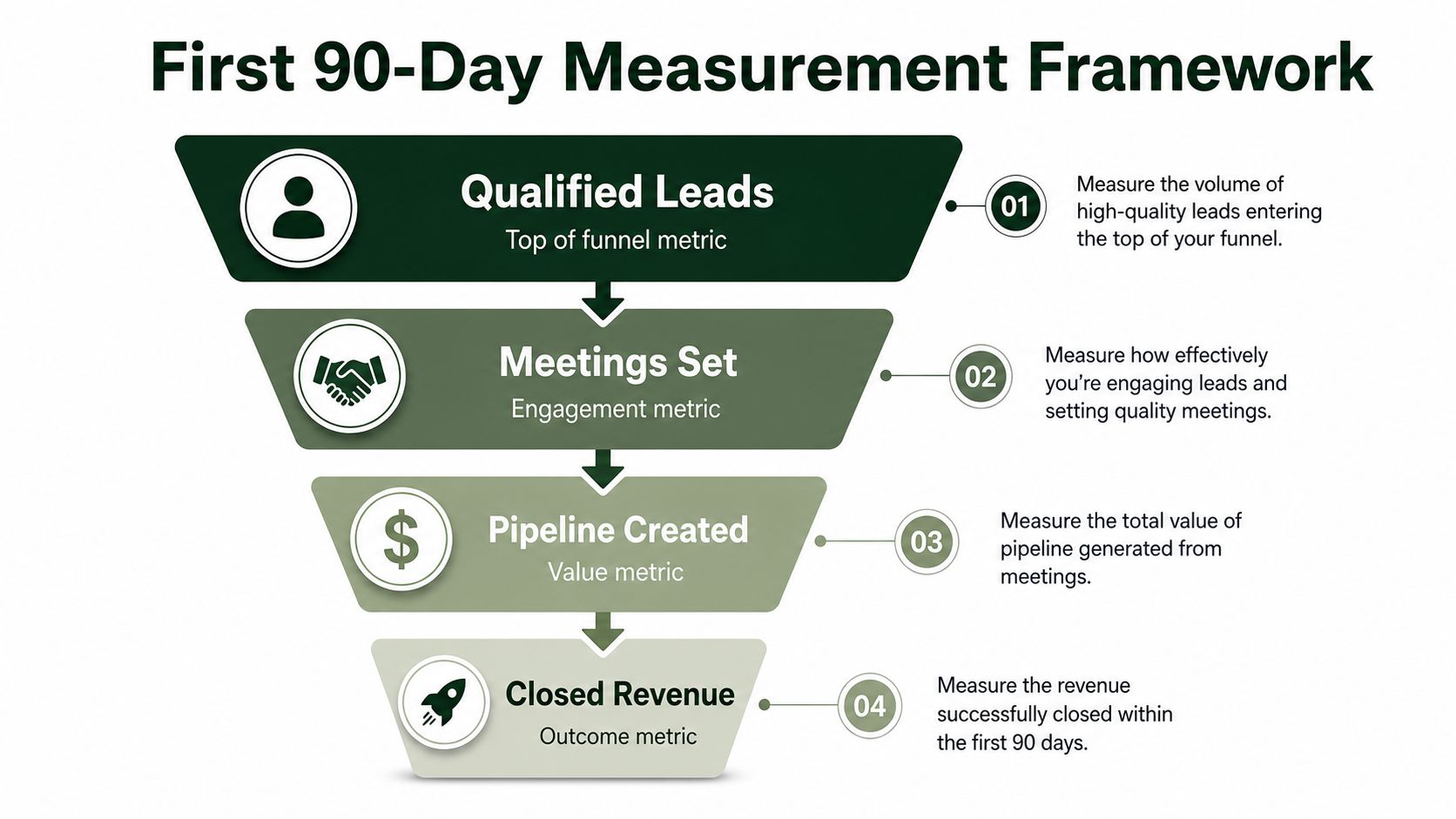
The first metric is qualified meetings booked. That tells you whether the ICP, offer, and channel combination is producing real conversations. The second is pipeline value created, which tells you whether those meetings are turning into opportunities with actual upside. The third is reply or engagement rate, because you need to know whether the message is resonating before you push volume. The fourth is CAC payback period, which matters because your motion has to stay alive long enough to compound.
A useful weekly review asks three questions. Which list segment produced meetings, which message version drove replies, and which channel converted best? If the answer is unclear, the team probably changed too many variables at once. That’s the point where you stop scaling and reset the test.
Measure the list, the message, and the channel together, or you’ll only know that something worked, not why it worked.
The launch benchmarks matter because the environment is slow even when the team is doing the right things. A 2024 benchmark summary says the average GTM planning cycle is 4.2 months, and the average time from GTM kickoff to first sale is 127 days. The same source reports that 77% of B2B product launches miss revenue targets in year one, which is why disciplined measurement matters so much. The reporting and pipeline dashboard service is a good example of how to keep the instrumentation tied to decisions instead of decoration.
The 90-Day Operating Cadence That Makes It Stick
The GTM strategy only compounds when someone runs it like a weekly operating system. Founders who leave it in a doc usually revisit it only when pipeline is already off track. A good cadence keeps the team honest before that happens.
Weeks 1 to 4, build the base
The first two weeks should focus on ICP research, enrichment, and list building. The next two should turn that research into messaging, sequencing infrastructure, and deliverability setup. That’s where email systems, list hygiene, and sender discipline matter more than copy flourishes.
Weeks 5 to 8, send and learn
Once outbound starts, the team needs a parallel demand layer. SEO and content can support discovery, especially when built with SearchAtlas and Outrank, but they shouldn’t distract from the primary motion. LinkedIn touches through HeyReach can reinforce email, and Manychat can support community or comment-based entry points when those are part of the buyer journey. The key is keeping one motion coherent rather than fragmenting it into disconnected experiments.
Weeks 9 to 12, review and lock the system
By this point, you should know which message earned replies, which list segment converted, and which channel deserves more attention. Kill weak combinations quickly. Double down on the ones that produce meetings with the right buyers. If the motion is still messy, document the actual workflow and hand it to a fractional GTM lead or a founder who can keep the system moving while the product team stays focused on product and key accounts.
A 2026-era GTM pattern worth paying attention to is AI-led acceleration, but the question isn’t whether AI helps. It’s where it helps without degrading signal quality, especially in segmentation and personalization. The strongest teams use AI to compress research and execution, then keep human validation in the loop so the data stays trustworthy.
If you want a GTM system that the founder owns, The Social Search builds the ICP, data, messaging, sequencing, and reporting layers as one operating motion, not a pile of disconnected tactics. If you’re trying to generate qualified pipeline across APAC or global markets, visit The Social Search and see how a system-first GTM build can replace scattered outreach with something your team can run, measure, and hand over.
