Lead Gen Guide: How to Attract, Qualify, and Convert Better Leads
Learn lead gen strategies for SEO, social media, AI chat agents, Meta and TikTok ads, plus qualification, metrics, and best practices that convert.
Lead gen is not just about collecting email addresses. At its best, it is a repeatable system for attracting the right people, qualifying their intent, and moving them into a sales conversation. The modern version of lead gen mixes content, landing pages, paid social, search, chat, and CRM follow-up so you do not lose good prospects after the first click. That is why many teams now build lead gen around AI-assisted content, automation, segmentation, and reporting, not just forms. (salesforce.com)
What lead gen means today
In plain English, a lead is someone who has shown enough interest for you to continue the conversation. A prospect is a lead that looks like a real fit for your offer, while an MQL is engaged but not ready for direct sales outreach and an SQL is ready for sales to step in. That distinction matters because it keeps marketing and sales aligned instead of forcing every new contact through the same path. (salesforce.com)
Lead gen also sits inside a broader funnel. HubSpot describes a lead generation funnel as a process for attracting, qualifying, and nurturing leads, while Salesforce frames lead generation as building interest and turning that interest into a sale. In practice, that means lead gen is not a single campaign. It is the sequence of steps that moves people from discovery to a qualified conversation. (blog.hubspot.com)
If you want that workflow handled as a system instead of a patchwork of tools, an automated lead generation service can connect capture, routing, follow-up, and reporting in one place.
The lead gen process that actually works
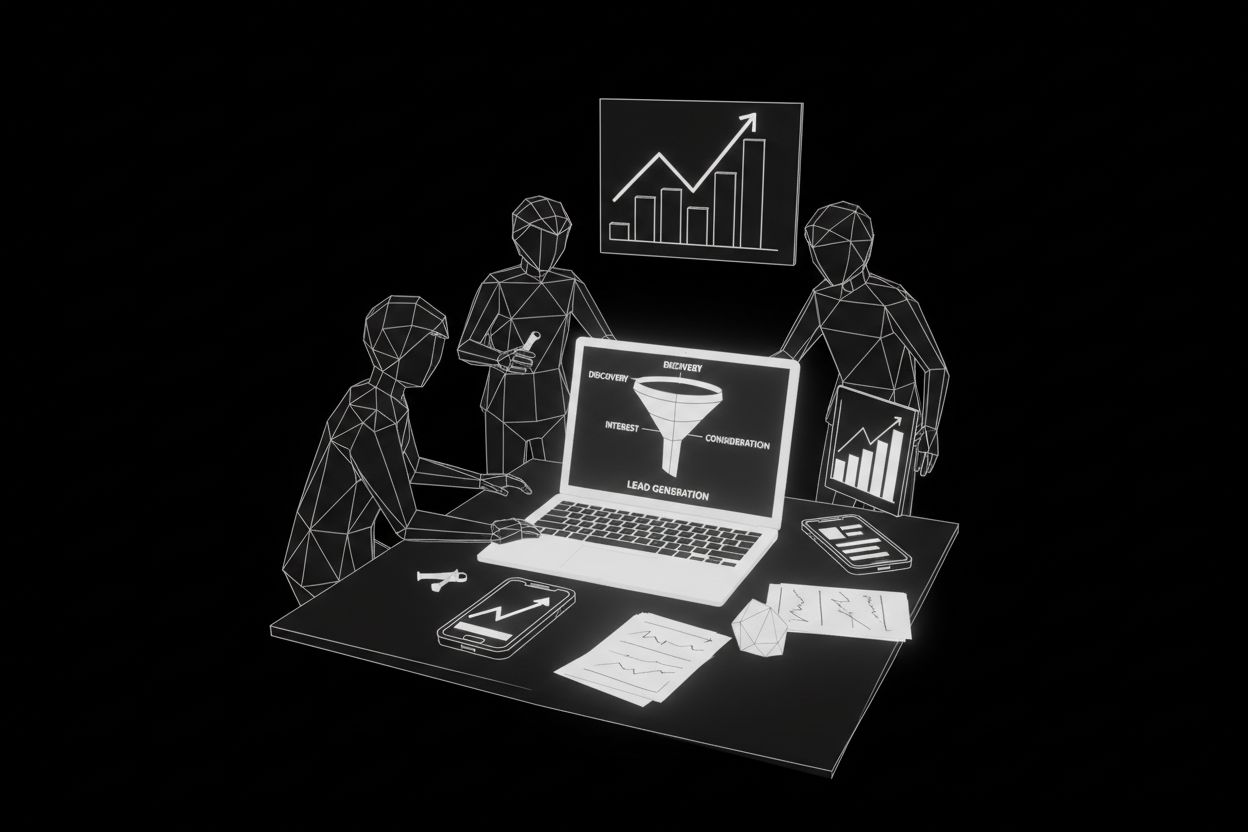
The best lead gen systems are simple on the surface and disciplined underneath. They attract attention, capture contact details, qualify the lead, nurture the relationship, and then hand the right person to sales at the right time. HubSpot and Salesforce both emphasize that effective lead generation depends on a clear process, not random activity. (blog.hubspot.com)
A practical workflow looks like this:
Attract with useful content, search visibility, social posts, and targeted ads that answer a real buyer problem. (blog.hubspot.com)
Capture with landing pages, forms, chat, instant forms, or a short booking flow that makes the next step obvious. (hubspot.com)
Qualify with a few smart questions, form fields, or lead scores so you know who is worth immediate follow-up. (blog.hubspot.com)
Nurture with email, DMs, retargeting, and helpful content until the lead is ready to talk. (blog.hubspot.com)
Convert with a demo, callback, quote request, or checkout step that matches the level of intent. (salesforce.com)
The biggest mistake here is trying to get maximum form fills at any cost. The better goal is to collect the right information with the least friction possible, then respond quickly while interest is still high. If you want the sequence built for you end to end, this is also where automated lead generation starts to pay off fast.
Best lead gen channels for SEO, social, and paid media

Lead gen works best when you stop betting everything on one channel. The strongest teams build a mix of SEO, paid social, search, and chat-based follow-up so the same offer can meet buyers in different places. HubSpot’s recent lead gen guidance also reflects this reality, with content, automation, landing pages, and reporting all working together to build a stronger pipeline. (offers.hubspot.com)
SEO and content that pull in the right traffic
SEO is still one of the cleanest lead gen channels because it catches people while they are actively searching for an answer. Blog posts, service pages, comparison pages, case studies, and landing pages all become lead gen assets when they point to a clear next step. HubSpot’s landing page tools highlight SEO-friendly titles and descriptions, device previews, and conversion-focused page building, which is exactly what you want when search traffic is supposed to become pipeline. (hubspot.com)
A simple way to think about SEO lead gen is this: use content to earn attention, then use the landing page to earn the lead. If your page gives value but does not move the visitor forward, it is traffic, not lead gen.
Meta ads that turn attention into leads
Meta is still one of the most useful platforms for lead gen because it supports multiple conversion paths. Meta lead ads can use forms, click-to-message, or calling, which means you can match the experience to the offer and the intent level. Meta also offers instant forms, Advantage+ leads campaigns, and measurement tools like the Conversions API to help advertisers optimize and measure outcomes more effectively. (facebook.com)
The practical advantage is speed. Someone can see the ad, open the form, and become a lead without a long page load or a lot of decision fatigue. That is especially helpful for services, local businesses, and offers that need a quick response. If paid media is a serious part of your pipeline, paid ads management is what keeps creative, targeting, and landing pages working together instead of drifting apart.
TikTok lead gen for fast attention and lower-funnel capture
TikTok has built out several lead gen options of its own. Its lead generation objective can open an instant form, send someone to your website, or route the person to direct messages and other messaging apps. TikTok also supports Business Account Lead Generation through CTA, video anchor, and LIVE anchor placements, which lets brands collect leads directly from content people are already watching. (ads.tiktok.com)
That makes TikTok a strong channel when creative is doing the heavy lifting. Short, clear videos can introduce the offer, while native forms reduce friction at the point of interest. If your audience already spends time on the platform, TikTok can move from awareness to lead capture faster than many traditional channels.
Google lead forms for high-intent searchers
Google Ads lead forms are useful when people are already searching for something specific and you want to make conversion easy. Google says lead forms can be used in Search and Performance Max campaigns, and they can also appear in Display and Video campaigns, with some differences by campaign type. (support.google.com)
This is a good fit for high-intent searches, local services, and products that need a quick capture path. The key is to pair the form with a strong offer, because the searcher is already signaling interest.
Social media with AI that does more than post content
Organic social works better when it feeds lead capture, not just likes. A automated social media workflow can keep your content calendar, CTA, and follow-up sequence aligned so every post has a job to do.
The other upgrade is using chat and AI to catch interest the moment it appears. Meta supports ads that click to message, and those conversations can happen in Messenger, Instagram, or WhatsApp. Meta also offers automated chats on Messenger and keyword-based automations in Business Suite, which means you can respond faster and qualify people without making them wait for a human reply. (facebook.com)
That is where an automated AI chat agents setup becomes useful. The point is not to sound robotic. The point is to ask a few consistent qualifying questions, route the lead correctly, and keep the conversation moving.
How to qualify leads without slowing sales

Qualification is where lead gen turns into revenue. HubSpot defines lead scoring as assigning values to leads based on their fit and behavior, and its CRM tools let those scores feed segments, workflows, and reports. Salesforce also notes that CRM software can bring together customer and prospect data, while AI-powered tools can help teams manage relationships across the buyer journey. (blog.hubspot.com)
A simple qualification framework looks like this:
Fit: industry, location, company size, role, or service area. (knowledge.hubspot.com)
Intent: pricing page visits, demo requests, repeated site visits, form completions, or message replies. (knowledge.hubspot.com)
Timing: are they researching now, comparing options, or ready to buy? (blog.hubspot.com)
Disqualifiers: competitors, job seekers, vendors, out-of-market regions, or poor-fit use cases. This is a practical application of the same scoring logic. (knowledge.hubspot.com)
The simplest version is often the best version. Start with a few meaningful signals, not a giant scoring model that nobody understands. Then tighten the handoff between marketing and sales so people know exactly when a lead becomes an MQL and when it becomes an SQL. (blog.hubspot.com)
A good CRM in marketing helps you keep that handoff clean, because every form fill, call, note, and message lives in one place.
Metrics that tell you whether lead gen is working
Lead gen is easy to measure if you focus on the right numbers. HubSpot’s funnel guidance highlights shared metrics like conversion rate and cost per lead, while qualification metrics such as MQL-to-SQL show whether the leads you generate are actually useful to sales. (blog.hubspot.com)
Track these first:
Cost per lead to see how efficient each channel is. (blog.hubspot.com)
Landing page conversion rate to measure how well the offer and page work together. (blog.hubspot.com)
MQL-to-SQL rate to check lead quality and sales readiness. (blog.hubspot.com)
SQL-to-close rate to see whether your pipeline is healthy. (salesforce.com)
Time to first response to make sure hot leads do not cool off before someone replies. This is a practical best practice when leads are coming through forms and chat. (facebook.com)
Do not look at these numbers in a vacuum. A cheaper lead is not a better lead if it never becomes an opportunity. The channel that creates the best-fit customers is usually the one worth scaling.
Common lead gen mistakes that waste budget
A lot of lead gen problems come from friction, not demand. The most common mistakes are chasing volume over fit, sending traffic to a generic page, asking for too much information too early, and letting leads sit without a fast follow-up plan. Meta and Google both build their lead products around shorter, easier paths, which is a good clue that the experience after the click matters as much as the click itself. (facebook.com)
A few other mistakes to avoid:
Treating social DMs like a side channel instead of a real conversion path.
Running ads without a CRM or a clear ownership model.
Ignoring nurture, so every lead has to be sold from scratch.
Measuring only top-of-funnel volume and not pipeline quality.
If you are using social and paid media together, keep the creative, form, and follow-up aligned. That is where lead gen gets expensive when it is done poorly and efficient when it is done well.
A practical lead gen stack for modern teams
The strongest lead gen stacks are not complicated. They usually include landing pages, forms, a CRM, ad platforms, email automation, social publishing, and some kind of chat layer. Salesforce describes CRM as a system for managing interactions with customers and prospects, and its AI-focused material shows how AI agents can help qualify leads and support campaigns. (salesforce.com)
For most teams, the stack should do four jobs well:
Capture interest from SEO, social, and paid media. (hubspot.com)
Qualify leads with scoring or chat-based questions. (knowledge.hubspot.com)
Route leads into the right owner or sequence fast. (facebook.com)
Measure what actually becomes pipeline. (blog.hubspot.com)
If you build those four layers cleanly, lead gen becomes much easier to scale. You can publish smarter content, run better ads, and use AI chat agents to keep conversations alive when a human is not available.
FAQ
What is lead gen in simple terms?
Lead gen is the process of attracting potential customers, collecting their details, and nurturing them until they are ready for a sales conversation. (salesforce.com)
Is lead gen the same as demand gen?
Not exactly. Demand gen focuses on creating awareness and interest across the market, while lead gen focuses on capturing and qualifying contacts who are closer to a buying conversation. (blog.hubspot.com)
What makes a qualified lead?
A qualified lead usually has the right fit, enough intent, and a realistic timing window. In other words, they match your ICP and show signs that they are moving toward a decision. (knowledge.hubspot.com)
Do AI chat agents help with lead gen?
Yes, especially when they handle first response, ask qualifying questions, and route people to the right next step. Salesforce says AI agents can qualify leads and book meetings, while Meta supports automated chats and message-based lead flows. (appexchange.salesforce.com)
Which channel should I start with?
Start with the channel your audience already uses and the one you can follow up on quickly. For many teams, that means SEO plus one paid channel, then adding social and chat once the process is working. (blog.hubspot.com)
Lead gen works when every step makes the next step easier. That means stronger content, cleaner forms, faster replies, and a real system behind the scenes. If you get those pieces working together, you will not just generate more leads. You will generate better ones. (blog.hubspot.com)
