What Is CRM in Marketing: A Complete Guide to Strategy, Automation, AI, and Growth
Discover what is CRM in marketing, how to build campaigns with AI chat agents, social ads on Meta and TikTok, and an implementation roadmap to boost leads and retention.
Every customer interaction holds potential value. When you organize those interactions in one place and use them to guide outreach, creative, and ad spend, you stop guessing and start growing. This guide explains what CRM in marketing really means, how it powers lead generation and retention, and how to use modern AI, chat agents, and social ad platforms like Meta and TikTok to turn data into revenue.
What is CRM in marketing?

CRM in marketing refers to using customer relationship management systems and the data inside them to plan, execute, and optimize marketing activities. It is more than a contact list. CRM in marketing connects behavioral data, purchase history, support interactions, and campaign responses to enable targeted messaging, automation, and measurement across the customer lifecycle.
At its core CRM-based marketing answers these questions:
Who are our best customers and why
Which messages move them from interest to purchase
What channels produce the most qualified leads
When to reengage customers and which offers work best
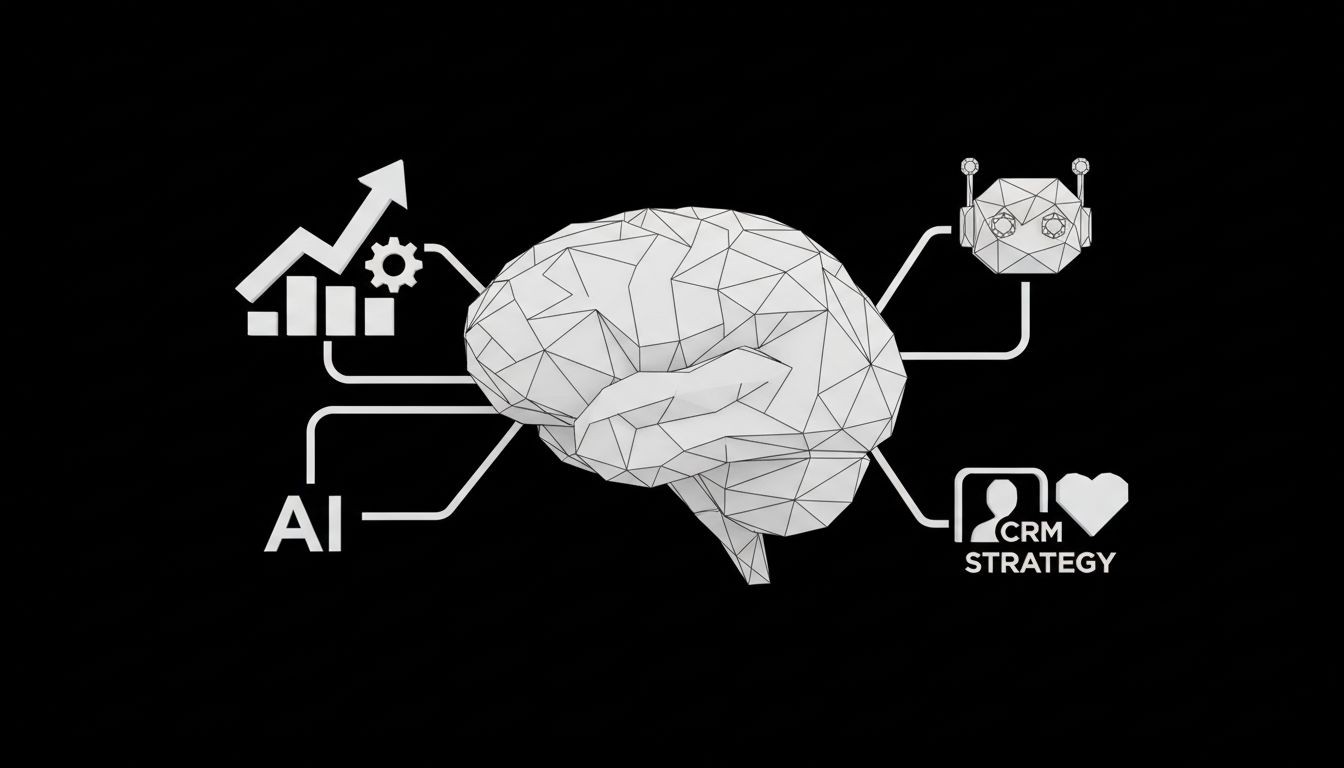
Think of CRM as the central nervous system that informs personalized marketing actions and measures their effect on growth.
Key CRM marketing capabilities and features
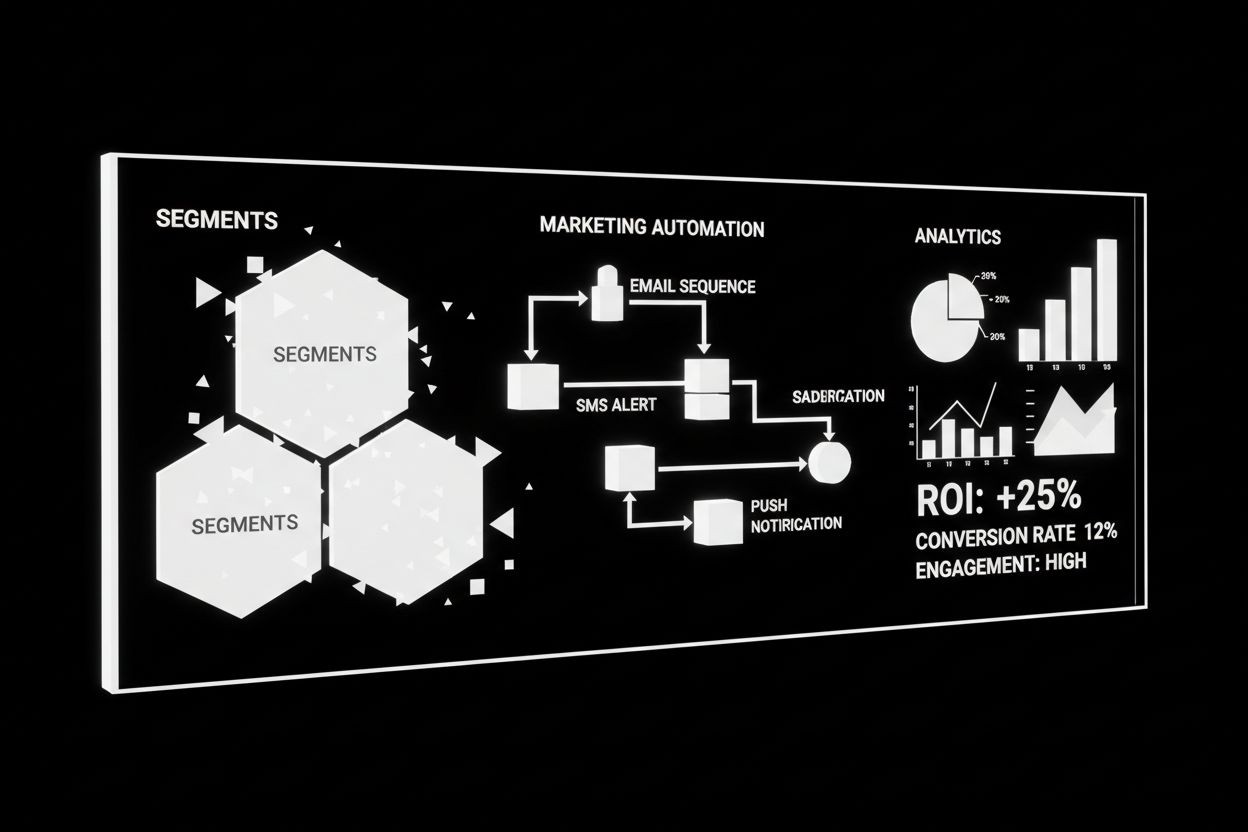
CRM platforms vary in depth, but these features are essential for marketing teams:
Contact and company profiles - unified records that combine demographics, behavior, purchases, and support history
Segmentation and audience building - rules, attributes, and dynamic lists for precise targeting
Marketing automation and workflows - triggers, timed sequences, and multi-step journeys
Email and messaging engines - campaign creation, A/B testing, and deliverability tools
Lead scoring - algorithmic or rule-based scores to prioritize follow up
Integration and APIs - connections to ad platforms, eCommerce, chat systems, and analytics
Analytics and attribution - campaign performance, LTV, churn, and cohort analysis
Consent and compliance tools - subscription management, data deletion, and audit trails
Together these capabilities let marketers move from batch-and-blast outreach to individualized experiences that increase conversion and lifetime value.
Why CRM matters for modern marketing
CRM transforms marketing from art into repeatable science. Key outcomes you can expect:
Better lead quality and faster sales cycles through coordinated nurturing
Higher retention thanks to timely reengagement and offers
Improved ROI because personalization and segmentation reduce wasted media spend
Clearer measurement of LTV and campaign impact, allowing smarter budget allocation
From a practical perspective CRM reduces friction between marketing, sales, and support. Shared data aligns teams so customers receive consistent, contextually relevant messages.
How CRM marketing automation works
Automation takes manual marketing tasks and turns them into event-driven journeys. A typical automation flow looks like this:
A visitor downloads an ebook from a lead ad on Meta or interacts with a TikTok video.
The ad platform passes the lead and UTM data to the CRM via an integration.
The CRM creates a contact record and applies a lead score based on source and behavior.
A welcome email or SMS sequence triggers. If the contact clicks a link or schedules a demo, the automation changes paths.
If no engagement occurs, the CRM retargets the audience on social channels and assigns the contact to sales if a score threshold is reached.
Automation examples relevant to modern channels:
Social ad follow up: automatically push leads from Meta Lead Ads into a nurture sequence personalized by interest.
Abandoned cart recovery across email and SMS, with an experiment on ad retargeting.
Post-purchase journeys that invite reviews, recommend accessories, and enroll high-value buyers in loyalty programs.
Automation reduces manual work and ensures no lead slips through the cracks.
Channels CRM marketing powers
CRM is not a channel, but it enhances all channels by bringing context and segmentation.
Email: still the backbone for owned communication. Use CRM data for dynamic content, triggers, and send-time optimization.
SMS and messaging apps: high open rates, ideal for time-sensitive offers and delivery updates.
Social ads: target lookalike and custom audiences based on CRM segments to scale acquisition on Meta and TikTok.
Chat and AI agents: real-time assistance and qualification via on-site chat or social messaging platforms.
In-app and push notifications: for mobile-first products, CRM signals inform lifecycle push campaigns.
Direct mail and offline channels: CRM audience exports power targeted offline outreach for high-value accounts.
Integrating these channels with your CRM creates consistent cross-channel journeys that respect user preferences and history.
Using AI and chat agents inside CRM marketing
AI is no longer theoretical. It powers personalization at scale and speeds up tasks that used to take hours. Practical uses include:
AI chat agents for lead qualification: natural language bots can collect intent signals, qualify leads, and schedule demos. They feed qualified leads into your CRM and trigger the appropriate automation.
Predictive lead scoring: machine learning models predict who is most likely to convert or churn, helping prioritize outreach and optimize ad spend.
Content personalization: AI can generate subject lines, social copy, and recommended product lists based on user data.
Audience expansion: AI helps build lookalike audiences from CRM segments for Meta and TikTok campaigns.
Example workflow: a visitor on your website engages with an AI chat agent, which asks qualifying questions. Based on answers and past behavior, the agent sends a qualified lead to CRM, which triggers a tailored nurture path and a Meta lookalike campaign to reach similar prospects.
CRM and social media advertising on Meta and TikTok
Social platforms are major acquisition channels. CRM integrations make ad spend more efficient:
Custom Audiences: upload CRM segments, like high intent leads or recent buyers, to exclude or retarget on Meta.
Offline conversion tracking: tie ad clicks to revenue by sending purchase confirmations back to the ad platform through the CRM.
Sequential creative: use CRM behavior to inform the order of ad creative shown to prospects.
Cross-channel retargeting: if a user clicks a TikTok ad but does not convert, target them with a different message on Meta using CRM-powered segments.
Running ads with CRM data reduces wasted impressions and increases relevance. A practical tip: maintain a rolling audience of CRM contacts who engaged in the last 30 or 90 days and refresh creative monthly to avoid ad fatigue.
CRM marketing strategies with real examples
Below are strategies you can implement now, with examples across common business models.
1. Lead generation for B2B SaaS
Strategy: Use gated content, webinars, and product demos. Capture leads with chat agents that qualify intent.
CRM actions: assign scores based on company size, job role, and engagement. Route high score leads to sales. Nurture mid-score leads with a product tour series.
Example campaign: LinkedIn or Meta ads drive webinar signups. Post-webinar, attendees get a personalized email sequence. Non-attendees receive a three-email replay campaign with a targeted TikTok short-form demo.
2. Acquisition and retention for eCommerce
Strategy: Combine customer purchase data with ad audiences for cross-sell and winback.
CRM actions: build segments for first-time buyers, repeat buyers, and lapsed customers. Trigger cart abandonment flows and post-purchase product recommendations.
Example campaign: Launch a Meta dynamic product ad targeting CRM segment of users who viewed product X but did not purchase. Simultaneously, send an SMS with a limited-time coupon.
3. Lead nurturing for professional services
Strategy: Qualify via content and consultations, use CRM to track interactions and client status.
CRM actions: create lifecycle stages such as Prospect, Qualified Lead, Proposal Sent, and Client. Automate reminders to follow up based on stage and time elapsed.
Example campaign: A Google ad captures a contact that gets routed to a CRM sequence with case studies and an AI-powered chat booking a consultation. After the meeting, the proposal stage triggers a tailored follow-up sequence.
4. Local businesses and event-driven marketing
Strategy: Use CRM to manage RSVPs, reminders, and follow-ups for events.
CRM actions: sync RSVP lists, send automated SMS reminders, and post-event surveys to collect testimonials.
Example campaign: Promote a pop-up event on Facebook. Use the CRM to send segmented invites to VIP customers and a general invite to lookalike audiences.
Implementation roadmap - step-by-step
Building CRM marketing is a cross-functional effort. Use this phased roadmap to go from zero to running measurable campaigns.
Audit and align
Map current customer data sources and tools. Identify owners for marketing, sales, and support data.
Define business goals such as MQLs, retained customers, or cost per acquisition.
Clean and centralize data
Deduplicate records and standardize fields like email, phone, and company.
Set data ownership and a process for ongoing hygiene.
Define lifecycle and segments
Create a clear lifecycle model and criteria for each stage.
Build core segments: new leads, marketing qualified leads, trial users, active customers, churn-risk.
Configure CRM and integrations
Integrate ad platforms, website tracking, eCommerce, chat agents, and analytics.
Implement event tracking and UTM standards to capture source and campaign data.
Launch core automations
Start with welcome, lead nurture, and cart recovery flows.
Add lead scoring and handoff rules for sales.
Test and iterate
A/B test subject lines, sequence timing, and offers.
Track conversion rates and refine segmentation rules.
Scale and optimize
Add AI features like predictive scoring and content generation.
Expand CRM-driven ads and multi-channel journeys.
Govern and measure
Establish SLAs, reporting cadence, and data privacy controls.
Following these steps reduces technical debt and ensures marketing efforts are measurable and repeatable.
Industry-specific examples and considerations
B2B, B2C, SaaS, and retail all benefit differently from CRM marketing. Here are targeted considerations and quick examples.
B2B and SaaS: focus on account-based features, multi-contact records, and long nurture sequences. Use AI-based intent signals to prioritize accounts.
eCommerce and retail: prioritize real-time inventory integration, dynamic product recommendations, and transactional messaging.
Professional services: track proposal and contract stages and use CRM to create a consultative content sequence.
Nonprofit and membership: segment by donor recency and lifetime giving to tailor appeals and stewardship messages.
These adaptations help align the CRM configuration to the business model and buyer journey.
Common mistakes to avoid
Many organizations implement CRM marketing poorly. Avoid these pitfalls:
Treating CRM as an inbox or address book rather than a strategic asset
Ignoring data hygiene which pollutes segmentation and automation outcomes
Over-automating without human review, causing irrelevant messaging
Not integrating ad platforms and attributing conversions properly
Failing to set clear ownership across teams for lifecycle stages
Fixing these issues early saves time and prevents erosion of customer trust.
Budgeting and ROI for CRM marketing
Budgeting depends on scale and features. Typical cost components:
CRM software subscription: per-seat and per-contact pricing models
Integrations and middleware: if you need custom connectors
Creative and campaign spend: ad platforms like Meta and TikTok budgets
AI features and advanced analytics: add-on costs for predictive models
Implementation and training: professional services, onboarding, and internal change management
Calculating ROI
Estimate incremental revenue from improved conversion rates and retention.
Subtract total CRM and ad costs.
Divide by total cost to get ROI.
Example: if CRM-driven campaigns reduce churn by 5 percent and increase average customer spend by 10 percent, calculate the net gain in annual revenue and compare to the sum of CRM subscription and ad spend to validate investment.
Team structure and roles
Successful CRM marketing requires cross-functional collaboration. Core roles include:
CRM Manager or Marketing Ops: owns data model, integrations, and automation
Campaign Manager: builds and runs campaigns, creative tests, and messaging
Data Analyst: measures performance, builds reports, and supports models
Sales Enablement: defines lead handoff and feedback loops
Developers or Integration Specialist: maintain connectors and custom logic
In smaller teams, roles can be combined. Clear responsibilities and SLAs are essential.
Key CRM marketing metrics to track
Measure both acquisition and lifetime performance:
Cost per lead (CPL)
Lead-to-customer conversion rate
Marketing qualified leads (MQLs) and qualified opportunity conversion
Customer acquisition cost (CAC)
Customer lifetime value (LTV)
Churn rate and retention cohorts
Average order value (AOV) and repeat purchase rate
Time to close and pipeline velocity
Pair ad platform metrics with CRM outcomes to understand which channels create real business value.
Data privacy, consent, and compliance
Handling customer data requires clear processes:
Collect only necessary data and capture explicit consent where required.
Maintain an audit trail for consent and data processing activities.
Implement a process for data subject requests such as access and deletion.
Use hashed identifiers when syncing audiences to ad platforms.
Regularly review compliance with GDPR, CCPA, and other regional laws.
Privacy-friendly practices also improve deliverability and customer trust.
Integration challenges and solutions
Common technical hurdles include:
Fragmented data sources and inconsistent identifiers
Latency between events and CRM updates
Attribution gaps between ad platforms and backend systems
API rate limits and platform mismatches
Solutions:
Implement a canonical ID strategy using email or a persistent customer ID
Use middleware or reverse ETL tools to keep data in sync
Validate events at source and use server-side events for ad platforms
Monitor integration health and set alerts for failures
Addressing these issues early prevents breakdowns in automation and reporting.
Advanced CRM marketing tactics
Once core systems are running, move to advanced approaches:
Multi-touch attribution models to weigh campaign influence across channels
Predictive churn models and targeted winback experiments
Multivariate testing within automation sequences to optimize messaging
Dynamic creative optimization for social ads using CRM feed data
Account-based marketing (ABM) using CRM contacts grouped by account for targeted outreach
These tactics increase accuracy and allow the team to scale personalization.
Beginner checklist: choosing a CRM for marketing
If you are evaluating CRM options, look for these capabilities:
Native marketing automation and easy campaign builder
Robust APIs and pre-built integrations with Meta, TikTok, and chat platforms
Support for segmentation and dynamic lists
Lead scoring and lifecycle management
Reporting dashboards and LTV calculations
Data privacy and consent management features
Reasonable pricing model for your contact volume
Start with a proof-of-concept that validates core use cases before committing to a long-term contract.
Templates you can use today
Here are quick templates you can copy into your CRM automation builder:
Welcome sequence (3 emails)
Email 1: Welcome and high-level value proposition
Email 2: Product benefits and social proof
Email 3: Call to action with a low-friction offer
Cart recovery flow (2 SMS + 2 emails)
SMS 1: Reminder within 1 hour
Email 1: 6 hours with product images and urgency
Email 2: 24 hours with small discount
SMS 2: 48 hours if still open
Post-purchase nurture
Email 1: Order confirmation and tracking
Email 2: Product tips and how-to after 3 days
Email 3: Cross-sell recommendations after 14 days
Use your CRM to personalize tokens like product name, last purchase, and recommended items.
Troubleshooting common problems
If automations are not performing, check these areas:
Data quality: Are emails valid and UTM parameters present?
Trigger logic: Are conditions too narrow or too broad?
Deliverability: Is your sending domain authenticated and warm?
Channel mix: Are you relying too much on email when customers prefer SMS or chat?
Attribution: Are conversions getting lost between ad platform and CRM?
Fix root data issues first; most automation failures trace back to poor inputs.
CRM marketing vs marketing automation platforms
There is overlap, but they are not identical:
CRM focuses on record management, sales pipeline, and full customer history
Marketing automation emphasizes campaign workflows, lead scoring, and multi-channel execution
Best practice: choose a solution where CRM and marketing automation are integrated or tightly connected so data and actions flow without manual exports.
Frequently asked questions
What is the difference between CRM and email marketing tools?
CRM stores unified customer records and supports sales workflows. Email tools focus on bulk sends. The best marketing outcome comes from combining CRM data with robust email capabilities.
Can small businesses benefit from CRM marketing?
Yes. Small businesses gain immediate value from basic automation like welcome sequences, abandoned cart recovery, and targeted promotions.
How does CRM help with Meta and TikTok ads?
CRM segments become custom audiences, improving targeting. Offline conversions and server-side events can close the loop between ad clicks and revenue.
Is AI necessary for CRM marketing?
AI is helpful for predictive scoring, content personalization, and chat agents. You can see results without AI, but AI speeds up scaling and improves accuracy.
How long before I see ROI?
With proper setup and integrated ad campaigns, many teams see measurable improvement within 90 days. Complex account-based programs may take longer.
Conclusion and next steps
CRM in marketing is a multiplier for every channel you run. When customer data, automation, and ad platforms work together, you lower acquisition costs, improve retention, and create consistent experiences that scale.
If you are ready to move forward, start with a data audit, build a minimum viable automation suite, and test CRM-powered campaigns on Meta and TikTok. Use AI chat agents to qualify leads in real time and feed enriched contacts back into your CRM to power lookalike audiences and predictive scoring.
Need help implementing your first CRM-driven campaign? Contact our team to plan a roadmap, or explore hands-on resources to get started.
Learn more about lead generation and marketing automation to connect CRM with paid channels.
See practical tips for lead generation using social media and CRM audience activation.
Read our guide on lead generation how to for campaign templates you can adapt.
For coordination between teams, check sales and marketing to design clear handoffs and SLAs.
Ready to talk? Reach out via our contact page and schedule a CRM strategy session.
Putting CRM at the center of marketing does not guarantee instant success, but with disciplined data practices and the right integrations, it reliably drives better leads, smarter ad spend, and stronger customer relationships.
Article created using Lovarank