Lead Generation Using Social Media: Expert Guide for 2026
Master lead generation using social media in 2026 with expert strategies, AI tactics, and actionable steps to boost high quality leads and maximize ROI.
Dec 21, 2025
Did you know that in 2026, lead generation using social media is projected to surpass all traditional marketing channels in both reach and conversion rates? Businesses worldwide are shifting focus to capture high-quality leads where audiences spend most of their time—on evolving social platforms.
This expert guide will show you how to master lead generation using social media. You will discover proven strategies, the latest AI-driven tools, and data-backed trends that set successful brands apart.
Inside, you will find step-by-step tactics, platform insights, automation techniques, content strategies, analytics, and a glimpse into the future of social media lead generation. Ready to transform your results? Let’s dive in.
The Evolving Social Media Landscape for Lead Generation in 2026
Social platforms have rapidly transformed the way brands attract and nurture prospects. In 2026, businesses must adapt to an ever-changing landscape to succeed with lead generation using social media. The following sections explore the platforms, technologies, user behaviors, privacy rules, and market data shaping this evolution.
Key Social Platforms Dominating Lead Generation
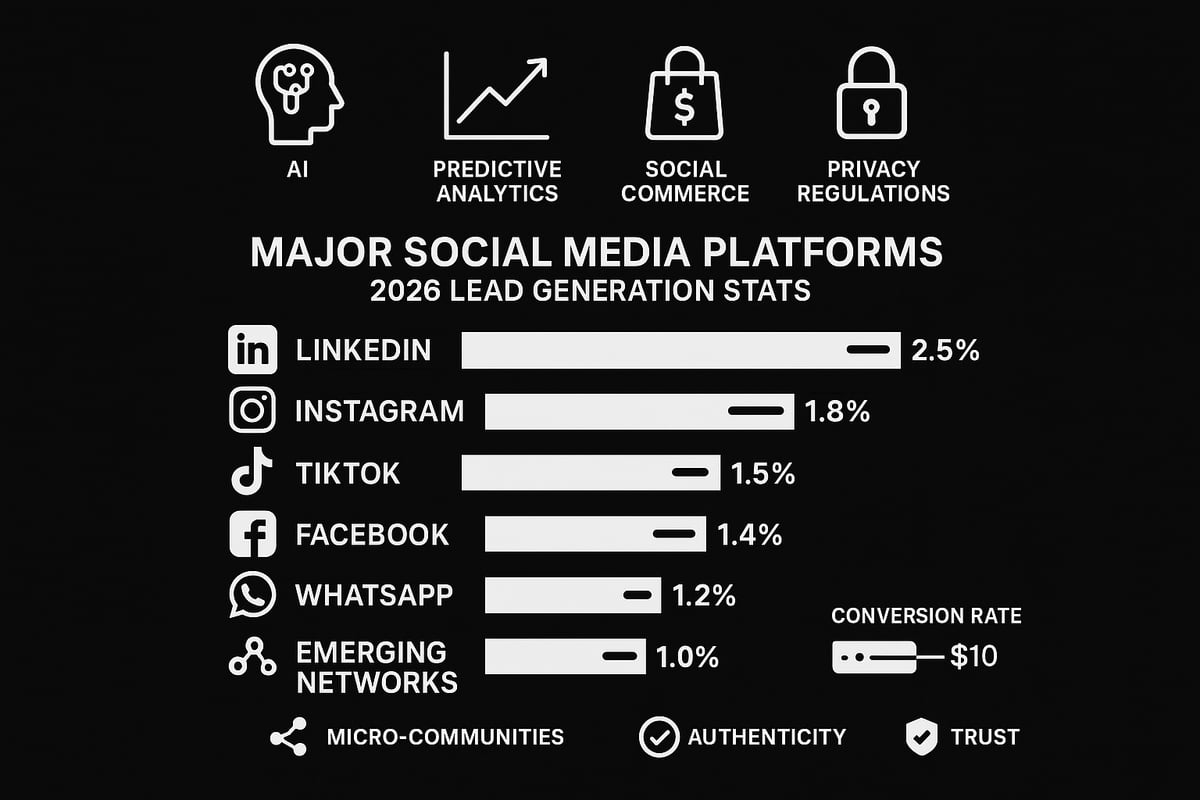
In 2026, several platforms stand out for lead generation using social media. LinkedIn remains the top choice for B2B, boasting a 17.5% lead conversion rate in 2025. Instagram and TikTok continue to surge, especially among younger demographics and creative industries. Facebook still offers vast reach and advanced targeting, while WhatsApp is gaining traction for direct, conversational engagement.
Platform | Best For | 2025 Lead Conversion Rate |
|---|---|---|
B2B, SaaS | 17.5% | |
B2C, Lifestyle | 11.2% | |
TikTok | Gen Z, Creators | 8.9% |
Broad Audiences | 9.7% | |
Direct Comms | 7.3% |
Emerging networks like BeReal and niche platforms cater to specialized communities, expanding the reach for targeted lead generation using social media. For more platform-specific statistics and trends, see Social Media Lead Generation Statistics 2025.
New Features and Technologies Impacting Lead Generation
The landscape for lead generation using social media is being shaped by powerful new tools. AI-driven targeting allows brands to reach users with unprecedented accuracy, while predictive analytics forecast prospect intent. Smart ad formats, such as dynamic lead forms, reduce friction and increase conversions.
Social commerce integration is now mainstream, with shoppable posts making it easy to capture leads directly within the feed. Interactive features like live streams, polls, and immersive AR/VR experiences create new opportunities for engagement and data collection.
Brands that embrace these technologies are better positioned to capture quality leads and stay ahead of the competition in lead generation using social media.
Changing User Behaviors and Expectations
Consumers in 2026 demand more from their social experiences. The rise of micro-communities and niche groups allows for deeper, more meaningful conversations. This shift offers brands a chance to foster trust and credibility through authentic engagement.
Personalized experiences have become the standard, making static, generic content less effective for lead generation using social media. At the same time, users are more skeptical of intrusive ads, prompting marketers to focus on transparency and value-driven interactions.
Understanding these behavioral shifts is crucial for brands looking to maintain relevance and enhance their lead generation using social media efforts.
Regulatory and Privacy Considerations
With evolving privacy laws like GDPR and CCPA updates, marketers must navigate stricter rules around data collection and targeting. Platforms have responded by reducing third-party tracking and increasing transparency.
Key regulatory impacts on lead generation using social media include:
Consent requirements for data usage
Platform-level restrictions on audience targeting
Enhanced user controls over personal information
Adapting to these policies is essential for compliant, effective lead generation using social media in 2026.
Competitive Insights and Market Data
Benchmarks for lead generation using social media vary by industry, but the gap between paid and organic lead acquisition costs continues to widen. B2B brands see higher conversion rates on LinkedIn, while B2C finds greater efficiency on Instagram and TikTok.
Channel | Avg. Cost Per Lead | Notable Brands Leading |
|---|---|---|
$41 | Salesforce, HubSpot | |
$28 | Nike, Sephora | |
TikTok | $23 | Gymshark, Duolingo |
$35 | Shopify, Canva |
Analyzing these trends helps marketers make informed decisions and optimize spend for lead generation using social media.
Step-by-Step Process: Building a Social Media Lead Generation Strategy
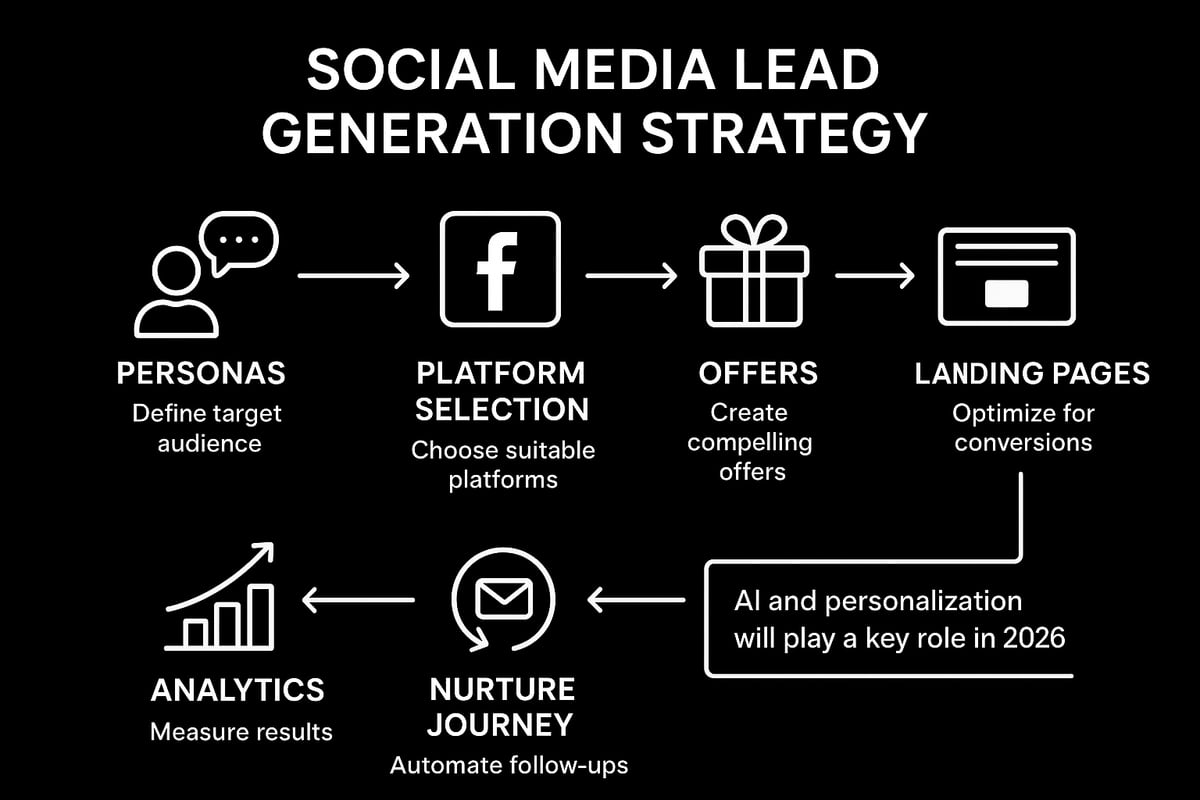
A successful lead generation using social media strategy requires a precise, methodical approach. By following these six actionable steps, businesses can maximize social media’s potential to attract, engage, and convert high-quality leads. Let’s break down each stage to ensure your campaigns are both efficient and scalable. For additional expert strategies, visit Lead generation through social media.
Step 1: Defining Your Ideal Customer Profile and Buyer Personas
The foundation of lead generation using social media is a clear understanding of your target audience. Start with social listening, competitor analysis, and direct surveys to gather demographic and behavioral data.
Leverage AI-driven analytics to identify unique patterns and refine your buyer personas. For B2B, focus on firmographics, job roles, and decision-making criteria. In B2C, prioritize interests, lifestyle, and purchase motivations.
Use tools like audience insights and sentiment analysis platforms.
Segment personas by goals, pain points, and preferred content formats.
Continuously update personas as trends and platforms evolve.
A precise persona ensures your messaging resonates and your campaigns deliver higher conversion rates.
Step 2: Selecting the Right Social Platforms
Choosing the optimal channels is crucial for lead generation using social media. Match each platform’s audience profile with your target market to maximize relevance and engagement.
Evaluate built-in lead generation tools such as LinkedIn Lead Gen Forms, Facebook Lead Ads, and TikTok’s in-app signups. Research recent platform statistics and trends to determine where your audience is most active.
Compare platforms using a simple table:
Platform | B2B/B2C | Lead Tools | Engagement Level |
|---|---|---|---|
B2B | Lead Gen Forms | High | |
B2C | Shoppable Posts | High | |
TikTok | B2B/B2C | Instant Forms | Rapid Growth |
Select 2-3 platforms for focused campaigns, then expand based on performance and resource capacity.
Step 3: Crafting Compelling Offers and Lead Magnets
Effective lead generation using social media hinges on irresistible offers tailored to your personas. High-value content like ebooks, webinars, free trials, or exclusive reports can motivate users to share their information.
Personalize your messaging for each segment and platform. Use urgency, exclusivity, or social proof to increase appeal. According to industry data, personalized lead magnets can boost conversion rates by up to 30%.
Match offers to funnel stage: top (guides), middle (webinars), bottom (free trials).
Test different formats to see which resonates best.
Highlight clear benefits and next steps in every offer.
Ensure your offer aligns with the user's needs and platform expectations.
Step 4: Designing Optimized Landing Pages and Forms
The user’s journey in lead generation using social media should lead to seamless, mobile-optimized landing pages. Keep forms short and intuitive to reduce friction and increase completion rates.
Integrate AI-powered chatbots or virtual assistants to guide users, answer questions, and capture additional data in real time. Use A/B testing to refine layouts, headlines, and calls to action.
Prioritize fast load times and visual clarity.
Use progressive profiling to gather more information without overwhelming users.
Example: A two-step form with a chatbot can increase conversions by up to 22%.
A high-converting landing page bridges the gap between social engagement and qualified leads.
Step 5: Creating a Multi-Touch Nurture Journey
Lead generation using social media is not a one-touch process. Develop an automated nurture journey that engages prospects across channels. Use a mix of direct messages, personalized emails, and retargeting ads to maintain contact.
Sequence your content to address different buyer stages. Start with educational material, then move to solution-focused content, and finally, conversion offers. Workflow automation tools help streamline these interactions and ensure timely follow-ups.
Set up triggered DMs for new leads.
Use drip campaigns to deliver value over time.
Segment audiences for tailored nurture paths.
This approach increases engagement and guides leads efficiently down the funnel.
Step 6: Measuring, Analyzing, and Iterating
Continuous improvement is key to lead generation using social media. Track essential KPIs such as cost per lead (CPL), conversion rate, and return on ad spend (ROAS) using robust analytics dashboards.
Implement A/B testing for creative assets, offers, and targeting parameters. Use real-time data to identify what’s working and quickly pivot when necessary.
Set up UTM parameters for precise attribution.
Compare campaign performance across platforms.
Example: A/B testing landing page headlines improved conversions by 18% in a recent campaign.
Regular analysis and iteration ensure your strategy remains effective and scalable.
Advanced Tactics: AI, Automation, and Personalization in 2026
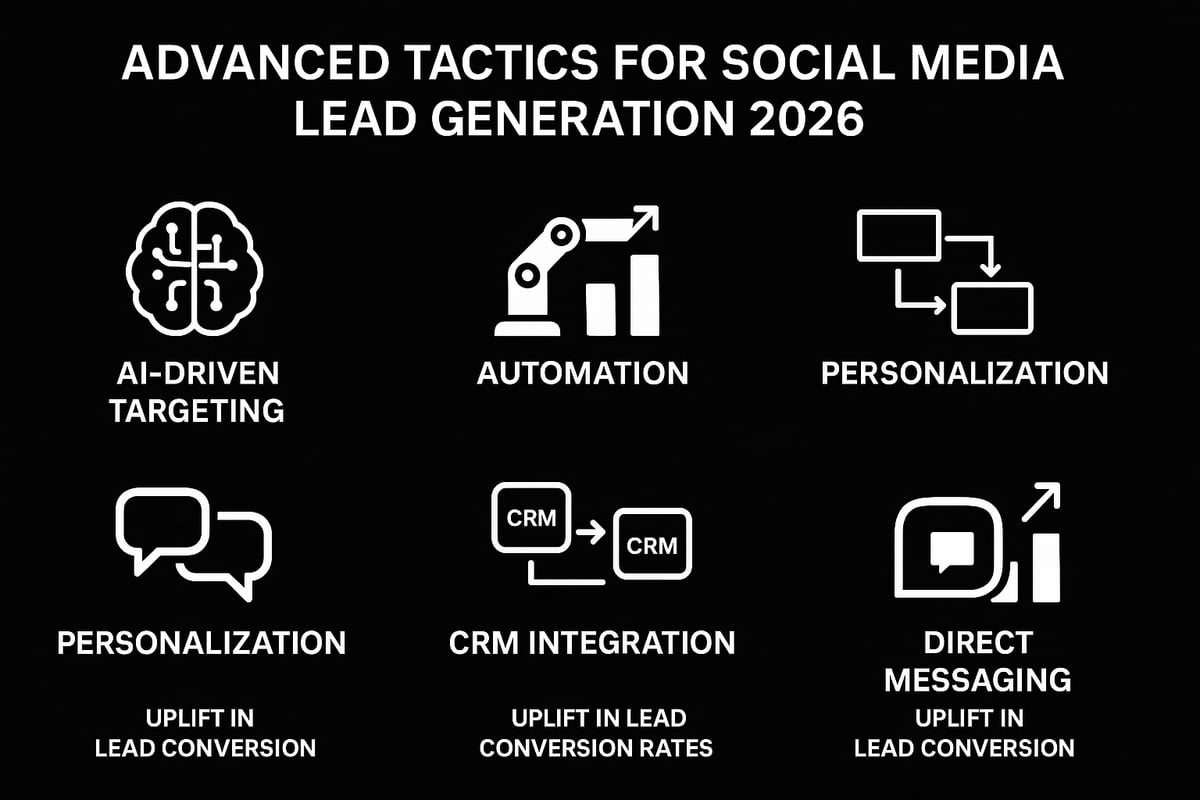
In 2026, advanced tactics are redefining lead generation using social media. Businesses must leverage AI, automation, and personalization to stay ahead. These innovations enable marketers to reach ideal prospects faster, nurture leads with precision, and scale campaigns while maintaining a personal touch.
AI-Driven Audience Targeting and Segmentation
Artificial intelligence is transforming lead generation using social media by enabling hyper-targeted campaigns. Machine learning models now analyze real-time behavioral data to identify high-intent prospects, segment audiences, and anticipate purchase signals.
Predictive lead scoring tools help marketers focus resources on the most promising contacts. For example, AI can detect subtle intent markers, such as engagement with specific content or time spent on product pages, to refine targeting.
Key benefits include:
Increased lead quality
Higher conversion rates
Reduced acquisition costs
AI-driven segmentation ensures messages reach the right audience at the right time, maximizing the impact of lead generation using social media.
Automation of Outreach and Engagement
Automation is crucial for scaling lead generation using social media without sacrificing personalization. Advanced chatbots and conversational AI engage prospects instantly, answer queries, and collect lead data around the clock.
Automated workflows now orchestrate multi-channel outreach, including DMs, email, and retargeting ads. Platforms like LinkedIn and Facebook offer built-in automation, while third-party tools integrate seamlessly.
Here is a sample automation workflow:
For deeper insights on optimizing your process, explore these marketing automation using AI strategies.
Personalization at Scale: Dynamic Content and Messaging
Personalization has become a cornerstone of lead generation using social media. AI-powered platforms adapt content and messaging in real time based on user behavior, preferences, and lifecycle stage.
Dynamic creative optimization enables brands to serve tailored videos, interactive polls, or voice messages to each segment. According to industry data, personalized content can boost engagement rates by up to 40 percent.
Effective tactics include:
Personalized product recommendations
Custom video intros
Interactive quizzes
Delivering relevant experiences at scale helps brands stand out and drive meaningful actions in lead generation using social media.
Integrating Social Media with CRM and Sales Automation
Integrating social media with CRM and sales automation systems streamlines the lead management process. Seamless API connections allow for automatic lead capture, enrichment, and handoff to sales teams.
A comparison of integration benefits:
Integration Type | Key Advantage | Example Tool |
|---|---|---|
Social to CRM | Unified lead tracking | HubSpot |
CRM to Sales Automation | Accelerated follow-up | Salesforce |
Multi-platform Sync | Consistent data flow | Zapier |
This approach ensures no lead slips through the cracks, accelerating pipeline velocity and improving ROI from lead generation using social media.
WhatsApp and Direct Messaging for Lead Generation
Direct messaging apps like WhatsApp, Messenger, and Instagram DMs are now powerful channels for lead generation using social media. Personalized, real-time conversations build trust and drive conversions.
Best practices include:
Using opt-in messaging to respect privacy
Automating initial outreach with chatbots
Escalating qualified leads to human agents
Brands have reported up to 3X higher response rates through messaging apps compared to email. Leveraging these platforms effectively can significantly enhance your social media lead generation efforts.
Content Strategies That Drive Social Media Leads
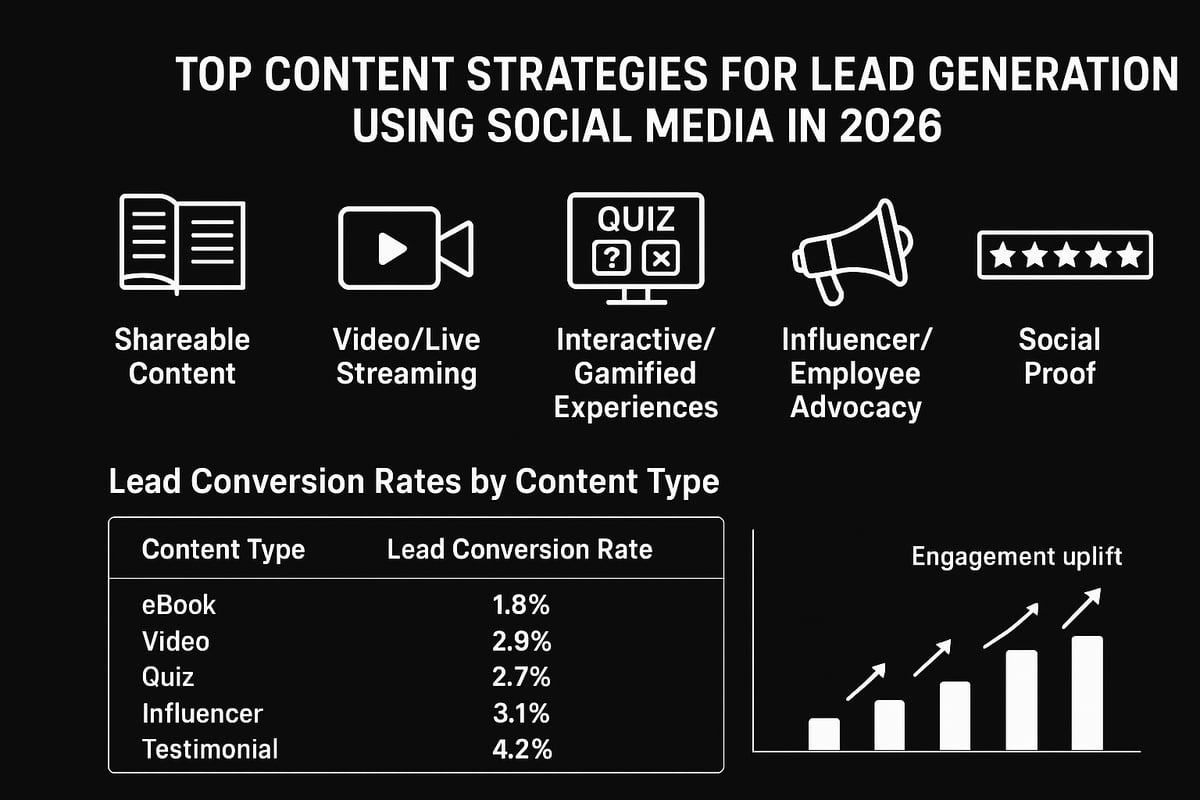
Unlocking effective content strategies is essential for lead generation using social media in 2026. As platforms evolve, businesses must adapt their content to capture attention, drive engagement, and convert followers into leads. The following approaches represent the most impactful tactics for maximizing results.
Creating High-Value, Shareable Content
High-value, shareable content is the foundation of lead generation using social media. Audiences respond to content that educates, solves problems, or inspires action. How-to guides, research reports, infographics, and user-generated testimonials are top performers.
Consider these effective formats:
How-to articles and tutorials
Industry case studies and reports
Infographics and data visualizations
The most successful brands combine value with storytelling and visual appeal. According to Social media lead generation tips, content that is both relevant and easy to share consistently generates more qualified leads. Sharing user testimonials or customer stories can also amplify trust and reach.
Video and Live Streaming for Engagement
Video content has become a cornerstone for lead generation using social media. Short-form clips, product demos, and live Q&A sessions capture attention and boost engagement rates. Platforms like TikTok and Instagram Reels drive rapid discovery, while webinars and live streams foster deeper connections.
Key video strategies include:
Hosting live product demonstrations
Running interactive Q&A sessions
Sharing behind-the-scenes stories
Recent studies show that video can increase lead conversion rates by up to 80 percent compared to static posts. Prioritizing authentic, real-time engagement helps brands stand out and drive more leads through social channels.
Interactive and Gamified Experiences
Interactive and gamified content is reshaping lead generation using social media. Quizzes, polls, contests, and AR filters not only entertain but also encourage users to share information in exchange for value. These experiences increase participation, enable data collection, and foster a sense of community.
Popular gamified tactics:
Social media quizzes with instant feedback
Polls and surveys embedded in stories
Contest giveaways with entry forms
Brands leveraging these strategies often see higher engagement and conversion rates. Interactive elements personalize the journey, making users more likely to provide their details and become leads.
Influencer and Employee Advocacy Programs
Influencer and employee advocacy programs are powerful amplifiers for lead generation using social media. By partnering with niche influencers or empowering employees to share branded content, companies can extend their reach and credibility within target markets.
Effective approaches:
Micro-influencer partnerships for targeted campaigns
Employee advocacy platforms to streamline sharing
Co-created content with thought leaders
Case studies reveal that advocacy-driven content generates higher trust and up to 4x more leads compared to brand-only posts. Engaging authentic voices helps brands tap into new audiences and improve lead quality.
Social Proof and Trust-Building Content
Building trust is essential for lead generation using social media. Sharing customer reviews, ratings, and detailed case studies offers social proof that reassures potential leads. Third-party validation and transparent results help overcome skepticism in crowded digital spaces.
Trust-building tactics:
Featuring verified customer testimonials
Publishing third-party awards or certifications
Highlighting successful client outcomes in stories
Statistics show that 92 percent of consumers trust recommendations from peers and user-generated content over branded messaging. Leveraging social proof not only increases credibility but also drives higher conversion rates for social media leads.
Analytics, Attribution, and ROI Measurement for Social Media Leads
Accurate analytics and attribution are the backbone of successful lead generation using social media. By tracking performance across every touchpoint, businesses gain clarity on what drives results and where to optimize for higher ROI.
Setting Up Robust Tracking and Attribution Models
Establishing robust tracking is foundational for lead generation using social media. Multi-touch attribution models provide a more accurate view of the customer journey than last-click models. This approach helps marketers understand how each social media interaction contributes to lead conversion.
Use UTM parameters to tag links, enabling granular source tracking. Conversion tracking tools, like Facebook Pixel or LinkedIn Insight Tag, allow you to monitor actions from ad clicks to completed forms.
Attribution Model | Pros | Cons |
|---|---|---|
Last-click | Simple, easy to set | Misses early touchpoints |
Multi-touch | Holistic insights | More complex setup |
Selecting the appropriate model ensures that every stage of lead generation using social media is properly measured.
Key Metrics for Social Media Lead Generation
To maximize lead generation using social media, focus on metrics that reveal both efficiency and quality. Track cost per lead (CPL), lead quality score, and pipeline velocity. These KPIs offer insight into campaign performance and return on ad spend.
Most platforms now feature advanced analytics dashboards. For example, LinkedIn and Facebook provide real-time data on engagement and conversions. According to Social Media Marketing Statistics 2025, over 70% of marketers say social media analytics have directly improved their lead generation efforts.
Industry benchmarks can further contextualize your results, highlighting areas where your strategy excels or needs improvement.
Using Analytics to Optimize Campaigns in Real Time
Continuous optimization is essential for lead generation using social media. Real-time analytics and automated alerts enable marketers to identify trends and adjust campaigns instantly. A/B testing different creatives, offers, and audience segments ensures that the best-performing elements are scaled.
For example, if a particular ad creative is driving more high-quality leads, you can quickly allocate more budget to that asset. Tools like Google Analytics, Meta Business Suite, and third-party platforms simplify this process.
A case study showed that brands using real-time optimization saw a 25% increase in lead conversion rates, underscoring the value of agile adjustments in today’s fast-paced social landscape.
Forecasting and Scaling Lead Generation Efforts
Forecasting future pipeline growth is critical for scaling lead generation using social media. Predictive analytics tools help estimate lead volume and ROI based on historical data and current trends. Budget allocation becomes more strategic, ensuring resources go to the highest-performing channels.
Integrating industry benchmarks, such as those found in B2B Lead Generation Trends 2025, can guide expectations and highlight emerging opportunities. Brands that leverage data-driven insights are able to scale campaigns confidently, adapting to changes in platform algorithms or audience behaviors.
Regular review and adjustment position businesses for sustained success in a rapidly evolving social media environment.
Future Trends: What’s Next for Social Media Lead Generation?
As we look ahead, the landscape of lead generation using social media will continue to shift rapidly. Businesses and marketers need to stay agile and informed to capture emerging opportunities. Below, we explore key trends that will shape success in 2026 and beyond.
The Rise of Social Commerce and In-Platform Conversions
Social commerce is transforming lead generation using social media by streamlining the buyer journey within platforms. Shoppable posts, in-app checkouts, and native lead forms are reducing friction, making it easier to convert interest into actionable leads.
Brands leveraging social sales strategies are seeing impressive results, with recent data showing that over 60% of social media users have purchased directly through in-platform features. For example, Instagram and TikTok now offer seamless shopping experiences, while LinkedIn's lead gen forms continue to deliver high conversion rates for B2B.
As adoption accelerates in 2026, expect social commerce to become a primary driver of lead generation using social media across industries.
Privacy, AI Ethics, and Consumer Trust
Privacy regulations like GDPR and CCPA are evolving, requiring brands to rethink how they collect and use data for lead generation using social media. With AI-driven personalization on the rise, ethical considerations around consent, transparency, and data protection are front and center.
Consumers expect brands to balance targeted experiences with respect for privacy. Thoughtful implementation of AI tools, guided by ethical frameworks, will be essential to building trust. Industry experts recommend clear opt-in mechanisms and transparent data practices.
Organizations that prioritize privacy and ethics will not only comply with regulations but also strengthen consumer relationships, enhancing their lead generation using social media efforts.
Emerging Platforms and Technologies to Watch
The future of lead generation using social media will be shaped by emerging networks and cutting-edge technologies. New platforms like decentralized social apps, as well as innovations in voice and AR/VR, are opening fresh channels for engagement.
AI agents are also transforming how teams collaborate and connect with audiences. According to research on AI Agents in Social Media Collaboration, these technologies improve productivity and targeting, enabling more effective lead generation using social media.
Early adopters who experiment with these tools and platforms will gain a strategic edge as the market evolves.
Preparing Your Lead Generation Strategy for 2027 and Beyond
To future-proof lead generation using social media, businesses must embrace agility and ongoing experimentation. Building adaptable workflows enables quick pivots as new platforms, features, and regulations arise.
Continuous learning is vital—stay updated on trends, test emerging tactics, and invest in skill development. Utilize resources such as industry reports, webinars, and networking groups to remain ahead of the curve.
By fostering a culture of innovation and readiness, organizations will be well-positioned to maximize lead generation using social media in the years to come.
As you’ve seen throughout this guide, social media lead generation in 2026 is all about combining smart strategy with the latest AI-driven tools and automation. If you’re ready to put these insights into practice, but want expert support tailored to your business, why not take the next step? You can get personalized recommendations for streamlining your marketing and sales processes, saving valuable time and resources, and setting yourself up for sustainable growth. Let’s work together to elevate your results—Book a free consultation and see how The Social Search can help you stay ahead of the competition.