SEO vs SEM: How to Choose and Combine Both for Maximum ROI
Understand SEO vs SEM, their costs, timelines, and when to use each. Practical budgets, timelines, and an integrated playbook to maximize ROI for any business.
Organic search remains one of the most reliable ways to attract customers, but paid search can deliver immediate visibility and conversions. Choosing between SEO vs SEM is not an either or decision for most businesses. The right approach depends on goals, timeline, budget, funnel stage, and industry dynamics. This guide walks through the mechanics of each channel, the trade offs you need to understand, and a practical set of decision tools and templates you can use to create a tailored strategy.
What is SEO?
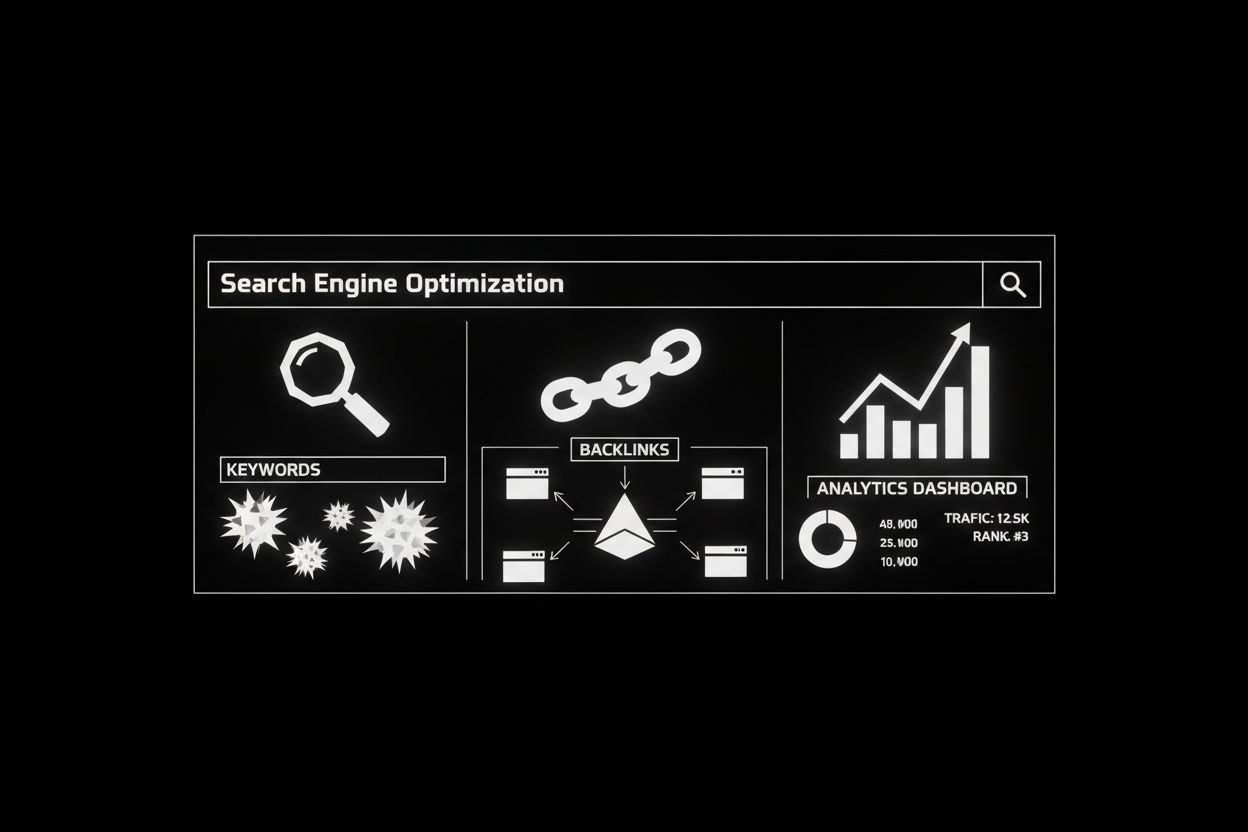
Search engine optimization, or SEO, means improving a website so it ranks higher in organic search results. SEO is a broad discipline that spans content, technical infrastructure, and reputation signals. The goal is to attract relevant organic visits that turn into leads, sales, or other valuable actions without paying for each click.
Key pillars of SEO
On page SEO
On page SEO refers to everything you can control on the page. That includes:
Keyword targeting and intent mapping. Choose phrases that match what searchers want to do or learn.
Title tags, meta descriptions, and headings. These help search engines understand context and influence click rates.
Content quality and structure. Longer content is not automatically better. Relevance, clarity, and helpfulness matter most.
Internal linking. Helps distribute authority and guide user journeys.
Actionable tip: Start with a content inventory and map each page to a primary keyword and user intent. Fix missing title tags and duplicate meta descriptions first.
Off page SEO
Off page SEO is about reputation and trust signals. The two most important elements are:
Backlinks. High quality, relevant backlinks still provide the strongest external signal.
Brand signals. Mentions, reviews, and citations that confirm your brand authority.
Actionable tip: Use a targeted outreach program focused on 10-20 authoritative sites in your niche instead of chasing volume. Aim for contextual links in relevant content.
Technical SEO
Technical SEO is the foundation that ensures crawlers can access and index your site and that users have a quick, reliable experience. Key areas:
Crawlability and indexation. XML sitemaps, robots directives, and canonical tags.
Site speed and Core Web Vitals. Performance affects rankings and conversions.
Mobile friendliness. Most searches are mobile, so responsive design is essential.
Structured data. Schema markup can improve eligibility for rich results.
Actionable tip: Run a technical audit quarterly and fix high-impact issues first, such as slow server response, duplicate content, and broken pages.
User signals and experience
Search engines measure user behavior signals like click through rate, time on page, and pogo sticking. Good UX supports SEO by keeping visitors engaged and encouraging conversions.
Actionable tip: Measure page level engagement and prioritize improvements on pages with high impressions but low engagement.
What is SEM?
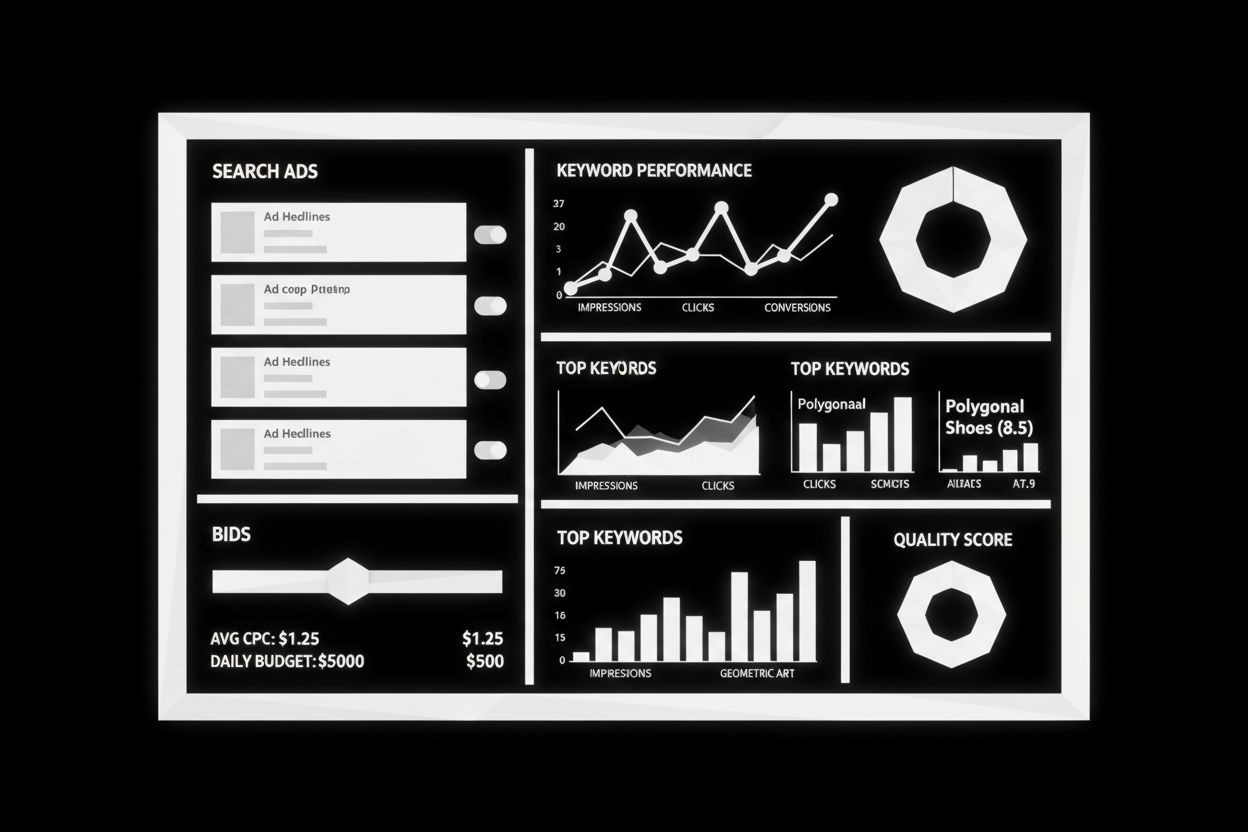
Search engine marketing, or SEM, is the practice of using paid search to appear in search engine results. In many contexts, SEM is used interchangeably with PPC, which stands for pay per click. Unlike organic listings, paid ads appear in slots labeled as ads and require ongoing budget to maintain visibility.
Core components of modern SEM
Keyword research and intent segmentation
Paid search requires a tight match between keyword intent and landing experience. Keywords are often grouped by intent:
Informational keywords. Good for top of funnel and content promotion.
Commercial investigation. Often used for comparison content and retargeting.
Transactional keywords. High intent, highest conversion potential.
Actionable tip: Build separate campaigns or ad groups by intent. Use different landing pages and conversion goals for each.
Bidding strategies and automation
Bidding is where budget meets strategy. Options include manual CPC, target CPA, target ROAS, and value based bidding. Platforms increasingly offer automated bidding driven by machine learning.
Actionable tip: Start with manual bidding on core transactional keywords to gather data, then test automated strategies for scale.
Ad creation and extensions
Compelling ad copy and the right extensions increase click through rate and quality score. Extensions include sitelinks, callouts, structured snippets, and call extensions.
Actionable tip: Write 3-4 ad variations per ad group and test headlines that reflect explicit user intent.
Quality Score and account structure
Quality Score affects CPC and ad rank. It is a function of expected click through rate, ad relevance, and landing page experience. Well structured accounts with tight ad groups tend to get better scores.
Actionable tip: Monitor Quality Score at keyword level. If a keyword has low score, refine ad copy, landing page, or pause the keyword and replace it with a phrase match.
Negative keywords and wasted spend
Negative keywords are essential to cut irrelevant traffic. Without them, campaigns waste budget on searches that will not convert.
Actionable tip: Use search term reports weekly during early campaign phases to add negatives and reduce waste.
Special forms of SEM
Shopping ads. For product led businesses, shopping campaigns drive highly qualified traffic with clear purchase intent.
Local search ads. These connect with local inventory and Google Business Profile.
Microsoft Ads and other engines. Consider diversification to control cost and reach.
SEO vs SEM: Key differences
Below is a concise breakdown of the main differences and what they mean for strategy.
Dimension | SEO | SEM / PPC |
|---|---|---|
Cost per click | No direct per click cost; investment in content and tech | Direct cost per click; controlled by bids |
Time to results | Slow; months to years for authority | Immediate visibility once campaigns run |
Sustainability | Cumulative and compounding | Stops when budget stops |
Control over messaging | Less control; SERP features vary | High control over headline, CTA, landing page |
Targeting precision | Good with on page intent and structured data | Very precise: keywords, location, device, schedule |
Testing and scale | Slower test cycles | Fast testing; easy to scale successful creatives |
Measurement clarity | Attributed across channels; multi touch needed | Clear transactional data; easy to attribute direct clicks |
Actionable interpretation: Use SEO to build a sustainable foundation and capture bottom of funnel over time. Use SEM when you need speed, precise targeting, or to validate high intent keywords you plan to own organically later.
When to use SEO
SEO is the best option when you plan to build long term organic visibility and reduce dependency on paid channels. Typical scenarios include:
You have a content driven value proposition and time to invest in authority building.
You need predictable organic traffic that compounds across seasons.
You sell high lifetime value products where front loaded investment in organic traffic is justified.
Industry specific guidance
E commerce. SEO is crucial for category and product pages. For new product launches, combine with PPC to jump start sales while organic rankings build.
B2B SaaS. Organic content helps with mid funnel and thought leadership. Use SEM for trial sign ups and demo bookings in the short term.
Local service businesses. Local SEO and Google Business Profile deliver high intent leads that cost less over time than ads.
SEO timeline and realistic expectations
Months 1 to 3. Technical fixes, keyword mapping, and foundational content.
Months 4 to 9. Content amplifies, some keywords start ranking on page 2 and occasional page 1 gains.
Months 9 to 18. Consistent page 1 visibility for primary keywords and steady traffic growth.
Months 18 plus. Compound authority and broader keyword coverage.
Sample 12 month SEO plan (high level)
Month 1 3 6 9 12
Technical audit and fixes
Content calendar and pillar pages
Backlink outreach and PR
CRO experiments on high traffic pages
Scale content and localization
Actionable tip: Prioritize high intent pages that already have impressions but low CTR. They often convert quickest once optimized.
When to use PPC / SEM
Paid search is the tool of choice when you need speed, clear attribution, or hyper targeted outreach.
Typical use cases
Launching a new product and you need immediate traffic.
Seasonal promotions where speed beats long term growth.
Testing messaging, pricing, and landing pages quickly.
Capturing bottom of funnel transactional demand.
A 90 day PPC playbook
Days 0 to 14 - Setup
Keyword and competitor research.
Create account structure with tightly themed ad groups.
Build 3 ad variations and dedicated landing pages.
Implement conversion tracking and analytics.
Days 15 to 45 - Learn
Monitor search term reports daily and add negatives.
Pause low performing keywords and increase bids on winners.
Test landing page variants in controlled A B tests.
Days 46 to 90 - Scale
Expand successful ad groups into new match types and geographies.
Test automated bidding strategies on datasets with enough conversions.
Layer in remarketing and audience targeting.
Actionable tip: For new campaigns, expect an initial calibration period of 30 to 60 days before scaling.
Quality Score deep dive
Quality Score reduces CPC when your ads match intent and landing pages perform. Focus areas:
Expected click through rate: Improve ad relevance and ad copy.
Ad relevance: Make ad text highly aligned to keyword and landing page.
Landing page experience: Fast loading page with clear CTA and minimal distractions.
Actionable tip: If a keyword has low Quality Score, look for a mismatched landing page or a need to split the keyword into a dedicated ad group.
Negative keywords and wasted spend
Negatives prevent irrelevant searches from triggering ads. Build a negative keyword library from the start and refine weekly.
Actionable tip: Use phrase match negatives sparingly. Prioritize exact match negatives for expensive keywords.
When to use both: Integrated SEO and SEM strategy
Combining channels often produces the best results. Use each for its strengths to drive faster growth and to reinforce learning across channels.
How the channels complement each other
Use PPC to test high intent keywords and landing page copy before investing in organic content.
Use SEO to reduce long term CAC and to feed organic credibility that improves ad performance.
Use remarketing lists from PPC to target users with specific content on organic pages.
Practical integration tactics
Keyword handoff. Run PPC on a set of high converting keywords while your SEO team builds authoritative content to own those queries organically over time.
Shared audiences. Export high intent search audiences from PPC and craft content to capture them in the organic funnel.
Coordinated content calendar. Align paid promotions with new organic content so pages get initial engagement that helps ranking.

Attribution and attribution models
Use multi touch attribution to measure combined channel impact. Common models include:
Last click. Simple but ignores upper funnel contributions.
Linear. Splits credit evenly across touch points.
Time decay. Gives more credit to recent touch points.
Data driven. Uses machine learning to assign credit based on actual performance.
Actionable tip: Use last click for simple reporting, but rely on data driven or time decay attribution to guide budget decisions between SEO and PPC.
Migration strategy: moving from PPC to organic dominance
Phase 1. Use PPC to validate keywords with a conversion test.
Phase 2. Build long form pillar content and internal linking to support ranking.
Phase 3. Reduce PPC spend gradually as organic traffic grows and reassign budget to other high ROI campaigns.
Budget allocation frameworks and calculators
Budget decisions should be driven by goals, CPC benchmarks, conversion rates, and lifetime value. Below is a simple framework you can use.
Step 1. Estimate CPC and conversion rate
Average CPC by industry. Example ranges: ecommerce $0.30 to $2.00, B2B $2.00 to $10.00, legal and finance $5.00 to $50.00. These are averages and vary by keyword and geography.
Conversion rate. Ecommerce conversion rates often fall between 1.0 and 3.0 percent. B2B lead forms convert at 2 to 10 percent depending on targeting.
Step 2. Calculate cost per acquisition (CPA)
CPA = Average CPC / Conversion rate
Example: CPC $2.00 with conversion rate 2 percent gives CPA = $100.
Step 3. Compare CPA to customer value
If average customer lifetime value is $1,200 and CPA is $100, paid search ROI looks promising.
If LTV is $200 and CPA is $150, rework targeting or landing page conversion before scaling paid spend.
Step 4. Allocate budget across channels
High level rule of thumb:
If you need immediate revenue, allocate 60 to 80 percent to PPC and 20 to 40 percent to SEO activities.
If you have time and need sustainable growth, allocate 60 to 80 percent to SEO and 20 to 40 percent to PPC for testing and opportunistic wins.
Actionable calculator you can use
Monthly PPC budget required to hit X customers
Target customers per month: T
Target CPA: A
Monthly PPC budget = T times A
Example: Want 300 customers a month and CPA is $100, monthly PPC budget should be $30,000.
Budget allocation by business model
Local small business. Start with 40 percent paid to generate initial leads while optimizing GBP and local SEO. Move toward 70 percent organic after 12 to 18 months.
Ecommerce. Split 50-50 on launch. As organic category rankings stabilize, shift 10 to 20 percent of budget from paid to growth experiments.
B2B SaaS. Use paid for demo sign ups and SEO for content that nurtures longer sales cycles.
Measurement and KPIs
KPIs differ by channel but must tie back to business goals. Examples:
SEO KPIs
Organic sessions
Keyword ranking distribution
Branded vs non branded organic traffic
Organic conversions and assisted conversions
Average position in SERPs and share of voice for target keywords
PPC KPIs
Impressions and click through rate
Cost per click and cost per acquisition
Conversion rate and return on ad spend
Impression share and lost impression share due to budget or rank
Cross channel KPIs
Assisted conversions across organic and paid
Customer acquisition cost by channel
Lifetime value to CAC ratio
Reporting cadence and experiments
Weekly: PPC performance and search term review.
Monthly: Organic traffic trends, keyword movement, and technical audit checks.
Quarterly: Attribution review and budget reallocation based on performance.
Actionable tip: Run holdout experiments where you pause PPC for a specific keyword set and measure organic impact over 6 to 12 weeks. This reveals the degree of cannibalization and organic uplift.
Tools and resources
Practical toolset with pricing tiers and purpose
Google Search Console: Free. Essential for organic performance, indexing issues, and CTR insights.
Google Analytics 4: Free. Central for cross channel reporting.
Google Ads: Paid. Core platform for SEM.
Microsoft Ads: Paid. Often lower CPCs and complementary reach.
Ahrefs: Paid. Excellent for backlink research and keyword gap analysis.
SEMrush: Paid. Great for competitor intelligence and site audits.
Screaming Frog: One time or subscription. Technical crawling for SEO audits.
Optmyzr or Wordstream: Paid. PPC management tools for automated rules and reporting.
Actionable tip: Start with free tools for measurement and one paid SEO or PPC tool to fill research gaps. Scale your stack as needs grow.
Team and resource requirements
Roles and skills for each approach
SEO team
Content strategist and writers. Create pillar content and topical clusters.
Technical SEO specialist. Fix crawlability and performance issues.
Outreach and PR. Build authority and backlinks.
Analyst. Track keyword performance and organic conversion.
PPC team
Account manager. Day to day campaign management and optimization.
Creative writer/designer. Create ad copy and landing pages.
Data analyst. Builds attribution models and evaluates ROAS.
Automation engineer. Implements bidding strategies and scripts.
In house vs agency
Small businesses often benefit from agencies for PPC due to complexity and speed.
Larger organizations usually maintain in house SEO teams to retain control over content and technical decisions.
Estimated costs
Small business: Expect to spend $1,000 to $5,000 per month on PPC plus $1,000 to $4,000 per month on basic SEO services.
Mid market: $5,000 to $30,000 per month combined depending on competition and goals.
Enterprise: $30,000 plus per month and dedicated teams.
Actionable tip: If uncertain, begin with a two to three month trial with an agency and define clear performance metrics and handover requirements.
Risks, pitfalls, and troubleshooting
SEO risks and mitigations
Risk: Algorithm updates can reduce traffic. Mitigation: Diversify traffic sources and follow best practices rather than hacks.
Risk: Over reliance on a single keyword. Mitigation: Build topical authority across related queries.
Risk: Poor technical foundation. Mitigation: Regular technical audits and prioritized fixes.
PPC risks and mitigations
Risk: Overspend on non converting keywords. Mitigation: Aggressive negative keyword management and conversion tracking.
Risk: Ad disapprovals or policy violations. Mitigation: Understand platform policies and keep ads compliant.
Risk: Click fraud. Mitigation: Use IP exclusions and monitor suspicious traffic.
Common troubleshooting checklist
Sudden drop in organic traffic: Check Google Search Console for manual actions, inspect server logs, and review recent content changes.
Rising CPCs: Check impression share and competitor activity, adjust bids and improve Quality Score.
Low conversion rate on landing pages: Run A B tests and shorten the conversion path.
Case studies and scenarios
Example 1: Local cafe
Situation: New cafe in a busy neighborhood with limited marketing budget.
Strategy: Focus on local SEO first. Optimize Google Business Profile, local schema, and review acquisition. Run search ads for branded and near me queries during first 2 months to drive awareness.
Results expectation: PPC drives initial foot traffic. Organic reviews and GBP listing lead to a steady stream of searches and calls within 3 to 6 months. Over 12 months, organic reduces reliance on ads.
Example 2: Niche ecommerce product launch
Situation: Company launches a specialty product category with high margin.
Strategy: Use SEM to capture immediate demand, test messaging and price points, and run shopping campaigns. Simultaneously publish in depth product pages, comparisons, and influencer outreach for backlinks.
Results expectation: PPC recovers CAC quickly while SEO brings down long term CAC after 9 to 18 months.
Example 3: B2B SaaS with long sales cycle
Situation: Software for HR teams with enterprise pricing.
Strategy: Use PPC for demo requests and trial sign ups targeting high intent keywords. Invest heavily in content for thought leadership and mid funnel nurture sequences to reduce sales friction.
Results expectation: Paid channels deliver measurable leads immediately. Organic grows pipeline quality and reduces cost per lead over 12 to 24 months.
Decision framework: Should you choose SEO, PPC, or both?
Ask these questions and follow the suggested actions.
How quickly do you need results?
Immediate: Prioritize PPC.
6 months plus: Invest in SEO while using some PPC for short term needs.
What is your budget?
Very limited budget: Start with SEO fundamentals and local paid tests.
Moderate budget: Combine both and use PPC to test keywords.
What is the expected lifetime value of a customer?
High LTV: Long term SEO investment is often justified.
Low LTV: PPC can prove profitable if CPA stays lower than customer value.
Is your market crowded and expensive?
If CPCs are prohibitive, focus on niche long tail SEO and alternative channels.
Do you need precise targeting by location, device, or schedule?
Use PPC for the highest level of control.
Quick checklist to decide
Use SEO only when you have time and need sustainable volume.
Use PPC only when timelines are tight or when testing messaging.
Use both when you want instant results and long term growth.
Final recommendations and next steps
Start with a clear measurement plan. Ensure conversion tracking is accurate across channels.
Use PPC to validate high intent keywords and landing page ideas you plan to own organically.
Build a 12 month SEO plan that focuses on technical fixes, content pillars, and targeted outreach.
Create a 90 day PPC plan structured for learning and scaling with strict negative keyword management.
Revisit budget allocation quarterly and use multi touch attribution to understand the real contribution of each channel.
If you want a practical next step, pick one high intent keyword your business wants to own. Run a three month paid test to measure CPA and conversion behavior. Simultaneously publish a high quality pillar page aimed at ranking for the same query. After three months compare costs, conversion rates, and scaling potential. Use that data to decide where to invest more heavily.
By treating SEO vs SEM as complementary tools in the same toolkit, you can build an engine that delivers near term results and long term, compounding value.
Article created using Lovarank