Sales and Marketing Versus: Key Differences in 2026
Discover the key differences between sales and marketing in 2026 Learn how modern strategies, technology, and collaboration can drive business growth
Dec 23, 2025
In 2026, the boundaries between sales and marketing have never been less clear. Businesses are seeing traditional roles blend, yet understanding the unique strengths of each area remains more important than ever.
Why does this matter? Organizations that master the evolving distinctions between sales and marketing are better equipped to drive growth, strengthen their brand, and outperform competitors in the fast-changing marketplace.
This article will unpack how sales and marketing are defined today, what sets them apart, and the critical ways they work together. You’ll discover strategies, new technologies, team models, and future trends that will help you align your teams for ongoing success.
Defining Sales and Marketing in 2026
The landscape of sales and marketing in 2026 is a dynamic blend of tradition and innovation. As organizations adapt to rapid technological advancement, the distinction between these two functions becomes both more blurred and more crucial. Understanding how each role has evolved is essential for leaders aiming to drive business growth.
Evolving Definitions and Core Functions
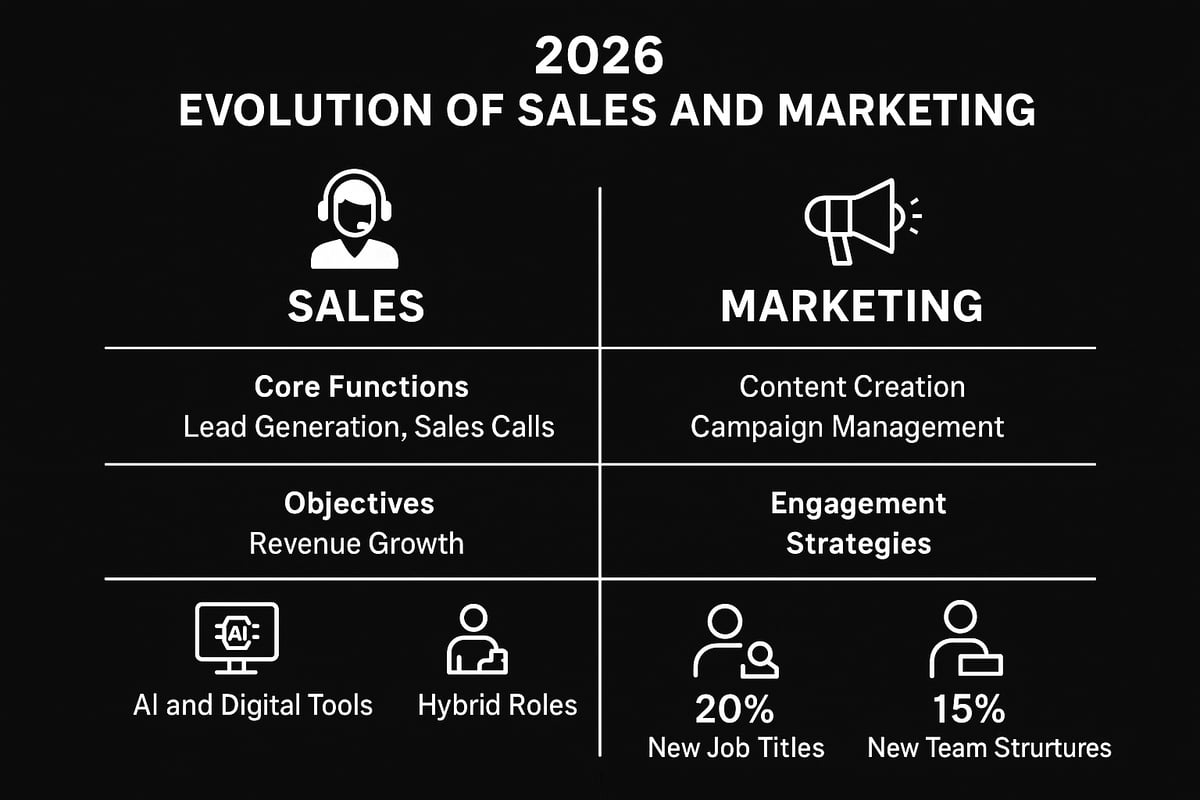
In 2026, sales and marketing have both undergone significant transformation. Sales is best defined as the direct pursuit of revenue through customer acquisition and sustained relationship management. This function is responsible for converting leads into customers and nurturing those relationships for repeat business.
Marketing, in contrast, focuses on creating demand, building brand awareness, and nurturing potential leads long before they reach the sales funnel. The adoption of AI and digital platforms has accelerated this shift, with marketing teams now leveraging automation and analytics to drive results.
The overlap between sales and marketing is more pronounced, often leading to hybrid roles such as “Revenue Operations Manager” or “Growth Strategist.” According to recent industry surveys, over 40% of organizations have introduced new job titles that blend responsibilities across both areas. For more insights on how AI and digital transformation are reshaping boundaries, see AI's Impact on B2B Marketing in 2026.
Objectives: Short-Term vs. Long-Term Focus
Sales and marketing have distinct objectives, though their efforts ultimately converge on business growth. Sales teams are measured by their ability to generate immediate revenue, close deals, and meet short-term quotas. Their focus is on converting prospects into customers as efficiently as possible.
Marketing, meanwhile, adopts a long-term perspective. The primary goals include fostering brand loyalty, achieving market positioning, and developing a healthy pipeline of future leads. While sales teams may be driven by quarterly targets, marketing departments work toward multi-year brand equity and customer engagement. This difference in focus is a core element of successful sales and marketing alignment.
Audience Engagement Approaches
How do sales and marketing engage with their audiences in 2026? Sales teams rely on one-on-one, highly personalized outreach. Relationship-building and tailored conversations remain central, supported by data-driven insights and digital tools.
Marketing, on the other hand, uses mass communication strategies, segmentation, and content-driven campaigns to reach larger audiences. The adoption of omnichannel strategies and personalization technologies allows marketing to deliver targeted messages at each stage of the buyer journey. Recent statistics show that the average buyer interacts with at least eight touchpoints before making a decision, highlighting the need for integrated sales and marketing efforts.
Integration and Collaboration Trends
The rise of “smarketing” and integrated revenue teams is one of the most significant trends in 2026. Organizations are increasingly breaking down silos, encouraging collaboration through shared tools, dashboards, and unified communication platforms.
Case studies reveal that companies with aligned sales and marketing teams report higher revenue growth and improved customer satisfaction. On the flip side, organizations that maintain strict separation between these functions often struggle with inefficiencies and missed opportunities. The integration of sales and marketing is now recognized as a best practice for competitive advantage.
Key Arguments and Insights
Defining clear roles for sales and marketing is essential to avoid internal conflict and drive efficiency. When boundaries are ambiguous, teams may duplicate efforts or neglect critical tasks, leading to lost revenue and a fragmented customer experience.
Several leading companies have restructured their operations to clarify responsibilities, resulting in measurable improvements in key metrics such as conversion rates and customer retention. The blending of sales and marketing roles, when managed strategically, enhances collaboration and delivers a seamless experience for both teams and customers.
Strategic Approaches: How Sales and Marketing Win in 2026
In 2026, organizations are reimagining how sales and marketing drive growth. Both functions now rely on advanced strategies, fueled by data and technology, to outperform competitors. Let's explore how each discipline wins in today's fast-moving business environment.
Marketing Strategies in 2026
Modern marketing strategies in 2026 are built on a foundation of data, creativity, and technology. Brands leverage advanced analytics to craft hyper-relevant content for segmented audiences. Influencer partnerships and experiential campaigns, such as virtual reality product launches, help organizations stand out.
AI plays a central role, optimizing targeting and predicting customer behaviors. Marketers use predictive analytics to personalize every interaction, from email to social media ads. AR and VR experiences immerse customers in a brand's story, increasing engagement and recall.
A recent industry survey found that digital marketing delivers 3x higher ROI than traditional channels. Marketers now prioritize omnichannel campaigns, ensuring a seamless experience across all touchpoints. This approach helps sales and marketing teams align their messaging and objectives.
Key tactics include:
Data-driven content creation
Influencer and community partnerships
Immersive AR/VR brand events
Continuous campaign optimization with AI
By embracing these innovations, sales and marketing leaders build long-term brand equity and consistently fill the sales pipeline.
Sales Strategies in 2026
Sales teams in 2026 excel by putting customers at the center of every conversation. The shift to consultative and solution-based selling ensures buyers feel understood and valued. Representatives act as trusted advisors, using data to tailor recommendations and deliver measurable value.
Automation streamlines lead qualification, nurturing, and follow-up, freeing up sales professionals to focus on high-impact activities. Real-time CRM updates and virtual selling tools, like video pitches and AI-driven prospecting, increase efficiency and conversion rates.
A SaaS company, for example, may use AI to analyze buying signals and recommend the best outreach strategy for each prospect. This approach shortens the sales cycle and improves win rates.
Key sales strategies include:
Consultative, value-focused conversations
Automated lead management workflows
Video-based and virtual selling experiences
AI-powered prospecting and closing tools
Ultimately, the integration of technology with human expertise helps sales and marketing teams achieve their revenue goals faster.
Technology and Tools: Bridging the Divide
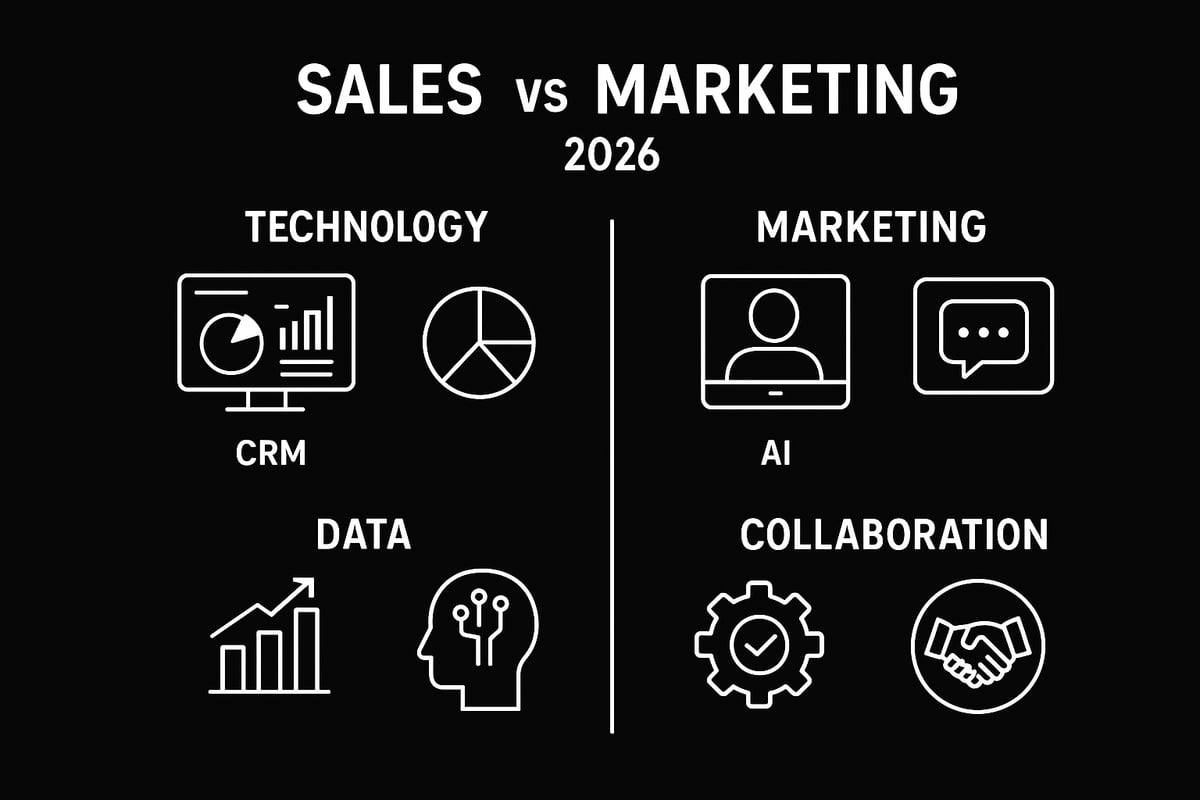
Unified technology stacks are essential for bridging the gap between sales and marketing in 2026. Shared platforms, such as CRMs and customer data platforms (CDPs), enable seamless data flow across teams. Marketing automation tools streamline campaign execution, while AI-powered chatbots deliver instant responses to prospects.
Automated workflows and real-time analytics empower both functions to monitor performance and adjust strategies on the fly. Companies are increasingly integrating marketing analytics with sales enablement tools, ensuring everyone has access to the same insights.
Tool/Platform | Marketing Use | Sales Use |
|---|---|---|
CRM | Lead nurturing | Pipeline and deal tracking |
CDP | Audience segmentation | Personalized outreach |
Marketing Automation | Campaign management | Lead qualification |
Analytics Dashboard | Campaign ROI | Sales performance |
Organizations that invest in integrated technology see higher alignment and faster growth. For more on practical strategies, see Sales and Marketing Business Strategies.
The Role of Customer Data and Insights
Customer data is the foundation of effective sales and marketing in 2026. Marketers use analytics to identify high-value segments, optimize campaigns, and predict future trends. Personalization technologies enable tailored messaging, increasing engagement throughout the buyer journey.
Sales teams leverage these insights to anticipate objections, personalize outreach, and build trust. Data-driven selling ensures that every interaction is relevant and timely, improving both conversion rates and customer satisfaction.
Data governance and privacy are top priorities, with organizations investing in compliance and ethical data use. Companies that excel at using data collaboratively see measurable improvements in revenue, customer retention, and brand reputation.
Case studies show that when sales and marketing teams share insights, they create a unified customer experience and outperform siloed competitors. By harnessing the power of data, organizations future-proof their growth strategies.
Team Structures and Collaboration Models
The way organizations structure their sales and marketing teams in 2026 directly impacts agility, alignment, and revenue growth. As digital transformation accelerates, businesses are rethinking traditional models to foster collaboration and maximize impact. Understanding these evolving team structures helps leaders unlock the full potential of their sales and marketing efforts.
Organizational Structures: Separate vs. Unified
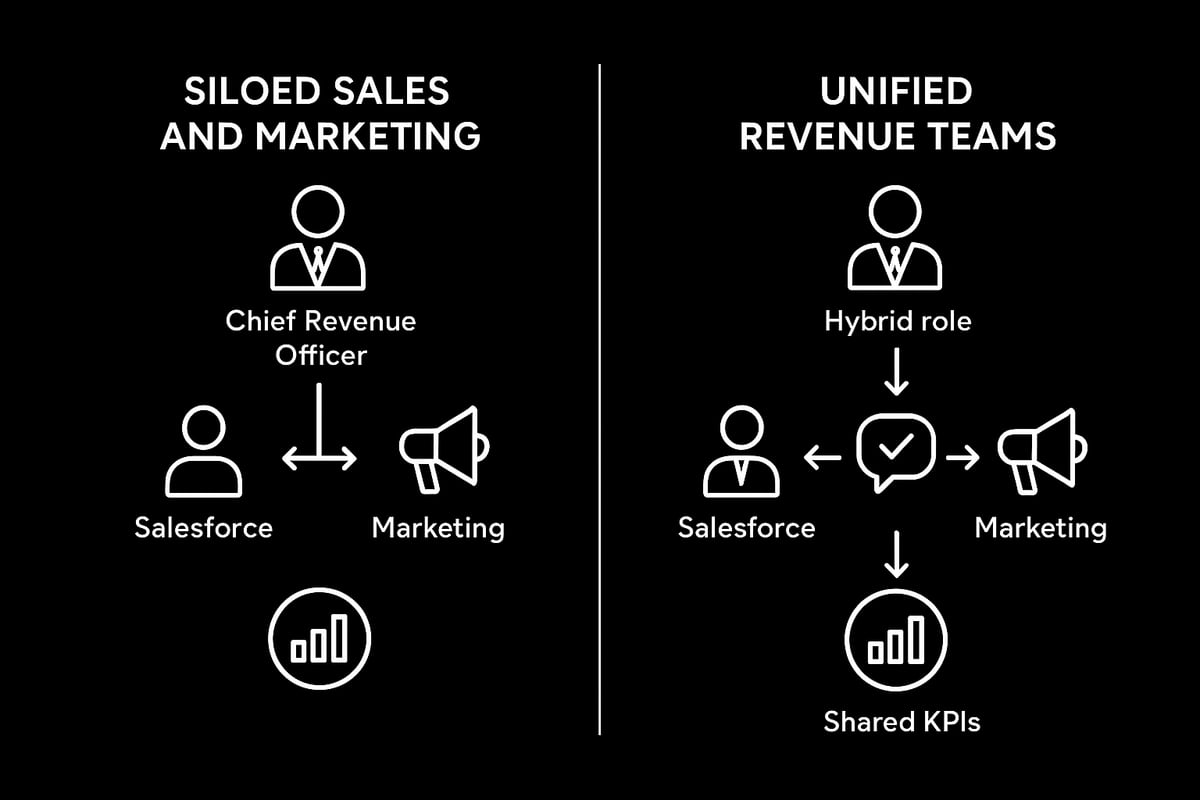
In 2026, companies face a pivotal choice between maintaining separate sales and marketing departments or adopting unified revenue teams. Traditional silos offer focused expertise but can hinder collaboration and slow response times. Modern organizations increasingly appoint Chief Revenue Officers to oversee both sales and marketing, driving integrated strategies.
A comparison table highlights the pros and cons:
Structure | Pros | Cons |
|---|---|---|
Separate Teams | Specialized skills, clear roles | Communication gaps, slower alignment |
Unified Teams | Streamlined goals, agility | Role ambiguity, complex management |
Emerging hybrid roles, such as Revenue Operations Managers, bridge gaps and foster alignment. Industry surveys in 2026 show a rise in these hybrid positions, reflecting a shift toward unified approaches to sales and marketing.
Communication and Alignment Practices
Effective communication is vital for successful sales and marketing collaboration. Regular joint meetings, shared KPIs, and cross-training ensure both teams remain aligned on objectives and messaging. Companies use collaboration platforms like Slack, Teams, or Asana to streamline updates and feedback.
Organizations that invest in clear alignment practices outperform peers in speed and adaptability. According to Sales and Marketing Consulting Insights, expert consulting support can accelerate alignment, helping teams break down silos and focus on shared outcomes.
Joint planning sessions and open channels for feedback foster trust and transparency. High-performing organizations set up integrated dashboards, allowing both sales and marketing teams to track progress in real time.
Lead Handover and Feedback Loops
A seamless lead handover process is crucial for optimizing sales and marketing performance. Marketing generates and qualifies leads, then passes them to sales for personalized outreach. To ensure quality, sales teams provide feedback on lead fit and conversion, which marketing uses to refine targeting and messaging.
Closed-loop reporting systems enable continuous improvement. Iterative cycles help both teams identify bottlenecks and adjust strategies quickly. In 2026, companies leverage real-time data to monitor lead progression, reducing friction and maximizing conversion rates.
Short, frequent feedback sessions keep everyone aligned. This approach ensures that sales and marketing are always working from the same playbook, with clear visibility into pipeline health.
Training and Skills Development
The evolving landscape of sales and marketing demands new skills. Digital literacy, data analytics, and customer empathy are now critical for both teams. Organizations encourage continuous learning through certification programs, workshops, and on-the-job training.
Cross-functional training is a top priority in 2026. Budgets for upskilling have increased, reflecting the need for hybrid professionals comfortable navigating sales and marketing responsibilities. These initiatives drive adaptability and foster a culture of shared growth.
Regular skill assessments help identify gaps and tailor development plans. By investing in learning, companies ensure their sales and marketing teams stay ahead in a competitive market.
Challenges and Solutions for Effective Collaboration
Despite progress, common challenges persist in aligning sales and marketing. Misaligned goals, communication gaps, and unclear responsibilities often create friction. To overcome these, organizations implement unified dashboards, shared incentives, and leadership-driven alignment.
Real-world examples show that leadership buy-in is essential for breaking down barriers. Companies that prioritize collaboration see improvements in customer experience and revenue. Clear role definitions, transparent reporting, and integrated tools help teams navigate complexity and stay focused on shared outcomes.
Ultimately, addressing these challenges enables sales and marketing teams to operate as a cohesive unit, driving sustainable business growth.
Measurement and KPIs: Tracking Success in Sales and Marketing
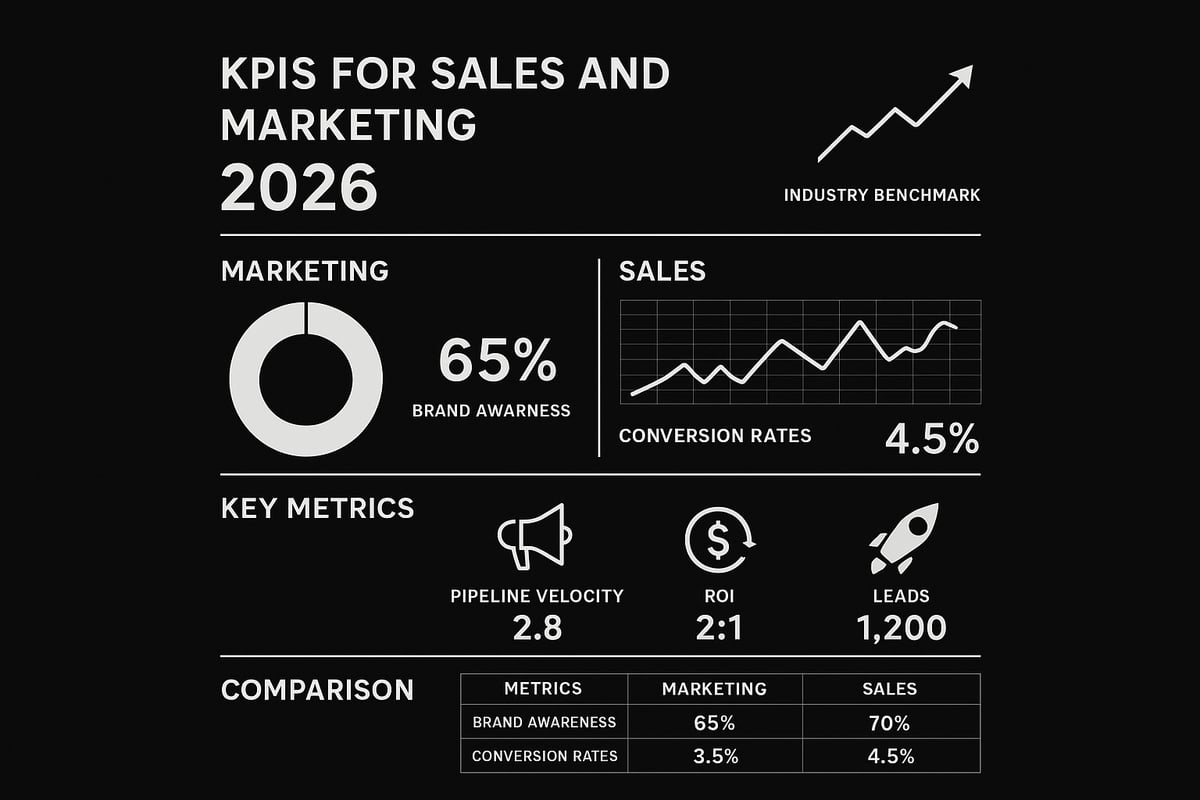
In 2026, measuring success in sales and marketing is more sophisticated than ever. Organizations must track the right metrics to optimize performance, align teams, and drive growth. Let’s break down the key measurement areas shaping high-performing sales and marketing teams today.
Marketing Metrics and KPIs
Marketing teams in 2026 focus on metrics that reflect both reach and engagement. Common KPIs include brand awareness, website traffic, lead volume, and engagement rates across digital channels.
Multi-touch attribution models are now standard, helping marketing teams understand how campaigns influence buyers at every stage. Data-driven insights enable teams to optimize campaigns quickly and allocate budgets efficiently.
A sample table of top marketing KPIs:
KPI | Description |
|---|---|
Brand Awareness | Share of voice, mentions, recall |
Website Traffic | Unique visits, session duration |
Lead Volume | MQLs, SQLs generated |
Engagement Rate | Clicks, shares, comments |
Tracking these metrics ensures that sales and marketing efforts remain aligned and focused on driving pipeline growth.
Sales Metrics and KPIs
Sales teams rely on metrics that directly link to revenue and growth. Key performance indicators include revenue generated, conversion rates, sales cycle length, and quota attainment.
Retention and expansion have become central, so tracking customer retention rates and upsell opportunities is essential. In 2026, average deal size and win rates by industry are closely monitored to benchmark individual and team performance.
KPI | Description |
|---|---|
Revenue Generated | Total sales closed |
Conversion Rate | Leads to closed deals |
Sales Cycle Length | Time from lead to close |
Quota Attainment | Percentage of target achieved |
Sales and marketing collaboration ensures data is shared for better forecasting and strategy.
Shared and Overlapping Metrics
The lines between sales and marketing KPIs are increasingly blurred. Teams now track shared metrics to measure end-to-end performance and customer value.
Key shared metrics include pipeline velocity, lead-to-customer conversion rates, and customer lifetime value (CLV). Shared dashboards and real-time reporting foster transparency and accountability.
Pipeline velocity measures how quickly leads move through stages.
Lead-to-customer conversion tracks the entire journey.
CLV reflects the total value a customer brings over time.
Aligning on these metrics helps sales and marketing teams work toward common goals and optimize the customer experience.
Attribution and ROI Analysis
Understanding the impact of marketing on sales outcomes—and vice versa—is crucial. Advanced attribution models and AI-powered tools are now standard for tracking ROI across integrated campaigns.
Marketing teams analyze which channels drive the highest-quality leads. Sales provides feedback on lead quality to refine marketing strategies. This closed feedback loop is essential for continuous improvement.
For more on tracking KPIs and ROI, see Measuring Leads and Sales Performance, which offers detailed frameworks for evaluating sales and marketing effectiveness in 2026.
Benchmarking and Industry Trends
Benchmarking performance is vital to stay competitive. In 2026, organizations compare their sales and marketing metrics against industry standards to identify strengths and gaps.
Key trends include the rise of data-driven strategies, unified tech stacks, and agile measurement approaches. High-performing companies regularly review benchmarks, adjust KPIs, and foster alignment between teams.
For a deeper look at emerging benchmarks and trends, visit Future Sales and Marketing Trends for insights on what sets leading organizations apart in the evolving landscape.
The Future of Sales and Marketing: Trends Shaping 2026 and Beyond
The future of sales and marketing is unfolding faster than ever, driven by rapid advances in technology and changing buyer expectations. In 2026, organizations that adapt to these trends will position themselves at the forefront of growth, innovation, and customer loyalty.
Impact of AI and Automation
AI is transforming the sales and marketing landscape, automating tasks that once required hours of manual work. Predictive lead scoring, chatbots, and automated campaign management are now standard tools, enabling teams to focus on high-value activities. By 2026, over 80 percent of organizations are expected to deploy AI-driven solutions for prospecting, nurturing, and closing deals.
Automation is not just about efficiency, but about delivering smarter, more personalized experiences at scale. AI-powered platforms can analyze customer data in real time, anticipate needs, and recommend tailored content or products. As a result, businesses are seeing higher conversion rates and improved ROI.
For a deeper dive into how automation and AI are reshaping marketing, see Marketing Automation and AI Trends. The integration of these technologies is narrowing the gap between sales and marketing, creating unified workflows and shared data insights.
Personalization and Customer Experience
Hyper-personalization is the new standard for sales and marketing in 2026. Customers expect every interaction to be relevant, timely, and consistent across all channels. AI and data analytics now enable companies to deliver unique experiences, from dynamic website content to personalized product recommendations.
Omnichannel strategies are essential, ensuring that whether a customer connects via social media, chat, or in person, the journey feels seamless. Brands that invest in delivering exceptional customer experiences are outperforming competitors in both retention and revenue growth.
Personalization is not just a marketing tactic—it is a strategic imperative. Companies that master it can build lasting loyalty and stand out in crowded markets. In this environment, sales and marketing teams must work together to map and optimize every touchpoint.
Evolving Buyer Behaviors and Expectations
Buyers in 2026 are more informed and self-reliant than ever. They conduct extensive research online, seek peer reviews, and often engage with brands digitally before ever speaking to a sales representative. According to recent studies, over 70 percent of B2B buyers now prefer digital-first engagement throughout their purchasing journey.
Authenticity and transparency are non-negotiable. Customers want to know the people and values behind the brand. Community-driven decision making is rising, with buyers turning to online forums and social groups for recommendations.
Sales and marketing strategies must evolve to meet these expectations. Providing educational content, fostering online communities, and enabling self-service options are becoming key differentiators in the modern buying process.
Skills and Talent for the Next Era
The demand for hybrid professionals who understand both sales and marketing is surging. In 2026, successful teams are composed of individuals skilled in data analytics, AI tools, digital communication, and customer psychology.
Companies are investing in continuous learning, offering cross-training and certification programs to build versatile talent. The table below summarizes the top skills required for the future:
Skill Area | Description |
|---|---|
Data Analytics | Interpreting customer data |
AI Literacy | Using automation tools |
Digital Empathy | Building authentic connections |
Content Creation | Crafting persuasive messages |
Cross-functional expertise is no longer optional. To stay competitive, organizations must foster a culture of lifelong learning within their sales and marketing teams.
Predictions and Recommendations for Businesses
Looking ahead, agility and collaboration will define the winners in sales and marketing. Businesses must be ready to pivot strategies, experiment with new technologies, and break down silos between teams.
Key recommendations include:
Invest in unified technology stacks to streamline workflows
Align goals and KPIs across sales and marketing
Focus on customer-centric strategies for long-term loyalty
For more insights on driving team alignment and shared success, explore Sales and Marketing Alignment Strategies.
By embracing these trends, organizations can future-proof their growth and ensure their sales and marketing efforts are not just keeping pace, but setting the standard for 2026 and beyond.
As we’ve explored the evolving landscape of sales and marketing in 2026, it’s clear that understanding and aligning these functions is more important than ever for sustained growth. The right blend of automation, strategy, and collaboration can set your business apart and unlock new opportunities. If you’re ready to future proof your sales and marketing efforts or want clarity on where to focus next, I invite you to take the next step. Let’s talk about your goals and how AI driven solutions can help you stay ahead—simply Book a free consultation to get started.