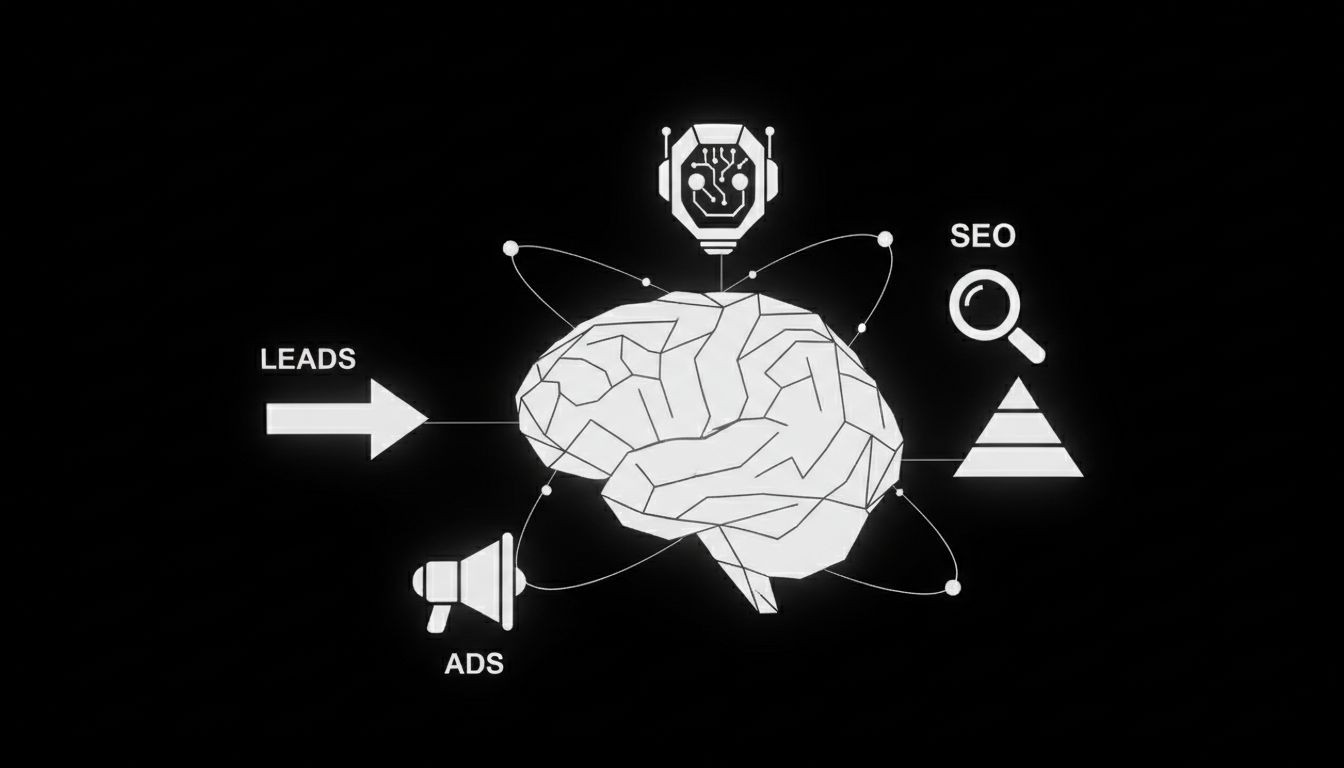
What Is Digital Marketing? A Practical Guide to Leads, Ads, SEO, and AI
Learn what digital marketing is, how it drives leads, and how SEO, social media, Meta ads, TikTok ads, AI chat agents, and automation work together.
If you have ever wondered why some brands seem to show up everywhere while others struggle to get a single inquiry, the answer is usually digital marketing. It is not just ads or social posts. It is the full system of getting discovered, building trust, collecting leads, and turning that attention into revenue. Google describes digital marketing as using online channels such as search, social media, email, and display advertising to attract and engage customers, encourage purchases, and build loyalty. (grow.google)
What digital marketing includes

Digital marketing is the umbrella term for every online touchpoint that helps a person move from awareness to action. In practice, that usually means search, content, social media, email, display ads, landing pages, analytics, and AI-assisted tools that speed up planning and production. The point is not to use every channel. The point is to build a path that matches how your audience actually buys. Google’s certificate materials also frame the field around attracting customers, measuring performance, and using AI to improve productivity. (grow.google)
A simple way to think about it is this: digital marketing starts before someone knows your brand and continues after they become a lead. It helps you get found, explain your value, answer objections, and stay visible long enough for trust to build. That is why businesses use it for awareness, lead generation, sales, retention, and repeat purchases. (grow.google)
Search, SEO, and SEM
Search is often where intent starts. Someone types a problem into Google, compares options, and decides whether your brand is worth a click. If you are still mapping out organic and paid search, it helps to read how SEO and SEM work together so you can see where each channel fits in the buying journey. SEO builds long-term visibility, while SEM and paid search can put offers in front of people who are ready to act now. For service businesses, that mix is often the fastest route to consistent lead flow. Google includes search engines and paid advertising among the core ways marketers attract and engage customers online. (grow.google)
Social media, content, and brand trust
Social media is where many prospects meet a brand for the first time. It is also where trust builds fast, because people see the tone, the offer, the comments, and the proof all in one place. If your team needs a reliable publishing rhythm, automated social media can help you stay visible without turning content into a daily scramble.
Content gives that social presence substance. Short videos, carousels, customer stories, blog posts, and landing pages all help people understand why they should choose you. The best content does not just entertain. It answers a real question, makes the next step obvious, and moves the reader closer to a conversation. (grow.google)
Email and nurture
Content brings people in, email moves them forward. A useful guide, short case study, or comparison page gives the prospect a reason to stay, while email lets you follow up with a sequence that answers objections and keeps the conversation alive. This is where segmentation and timing matter more than volume. Google includes email marketing and marketing analytics in its certificate because those two pieces make campaigns easier to improve over time. (grow.google)
AI chat agents and automation
An AI chat agent can greet a visitor, answer common questions, qualify the lead, and route the conversation to a person when the deal is serious. That matters because response speed often decides whether a prospect keeps moving or disappears. If you want a deeper breakdown of how this works in practice, see automated AI chat agents. Google also says AI can support strategy, market research, campaign decisions, email drafting, and copy variations for A/B testing. (grow.google)
Why digital marketing matters for lead generation
Digital marketing is valuable because it can do three things traditional marketing struggles to do at the same time: target specific audiences, measure what happens, and respond quickly. For businesses selling services, the goal is usually not just traffic, it is qualified conversations. That is why a strong lead-generation system matters. If you want to see how that system can be built end to end, this guide to automated lead generation is a useful next step.
The real advantage is control. You can define who sees the message, what offer they see, where they click, and what happens after they submit their details. You can also improve the whole flow step by step instead of waiting months to know whether a campaign worked. Google emphasizes that digital marketing is measurable and driven by analytics, which makes optimization possible. (grow.google)
For lead generation, that means every stage can be designed on purpose:
Awareness, where a person discovers your brand.
Consideration, where they compare your offer with others.
Conversion, where they submit a form, message, call, or booking request.
Follow-up, where sales or automation takes over.
That structure matters for ads, organic content, email, and AI chat. It also matters for the handoff between marketing and sales, because a lead is only valuable when someone follows up well. (grow.google)
How Meta and TikTok ads fit into a modern funnel
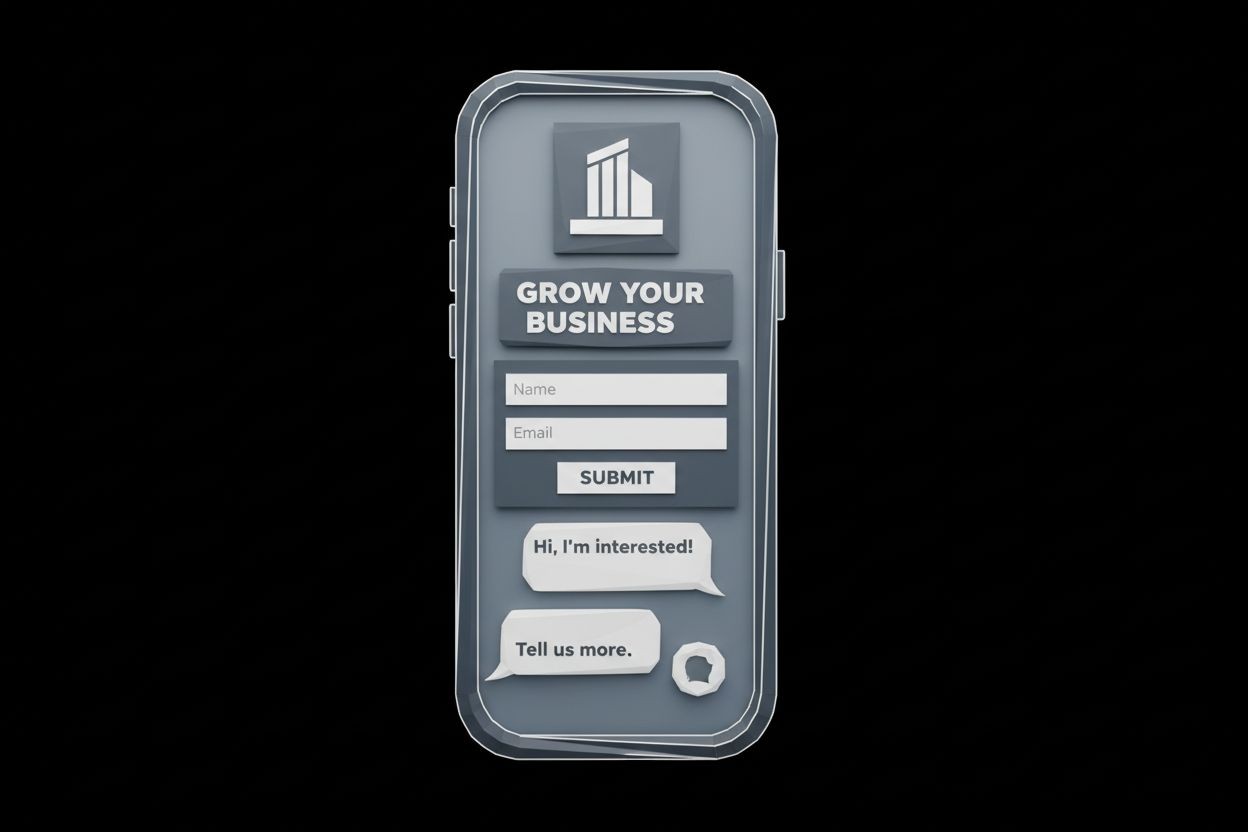
Meta and TikTok have become central to modern lead generation because they let businesses capture attention where people already spend time. Meta’s lead ads can collect information through forms, calling, and messaging solutions, and its click-to-message ads let businesses continue the conversation in Messenger or Instagram. Meta also positions these tools for businesses that need to build trust and nurture interest before the purchase happens. (facebook.com)
TikTok offers a similar advantage for discovery-led campaigns. Its lead generation solution can capture leads through instant forms, website destinations, or messaging ads, and TikTok’s help content explains that tapping the CTA can open an in-app form where people share their details and signal interest. That makes TikTok useful when the goal is not only reach, but also quick conversion inside the platform. (ads.tiktok.com)
This is why paid social works so well for many service brands, local businesses, coaches, consultants, and ecommerce offers. The audience is already engaged, the format is native to the platform, and the path to inquiry is short. When the offer is clear, a lead form or chat flow can do a lot of the heavy lifting before a sales call ever happens. That is also where paid ads management becomes valuable, because performance depends on creative, targeting, budget, and follow-up working together.
The best campaigns do not feel like interruptions. They feel like a useful next step. A person sees a problem, a promise, or a useful resource, then they are guided into a form or a chat thread that asks for just enough information to continue the conversation.
How to build a digital marketing strategy that actually produces leads
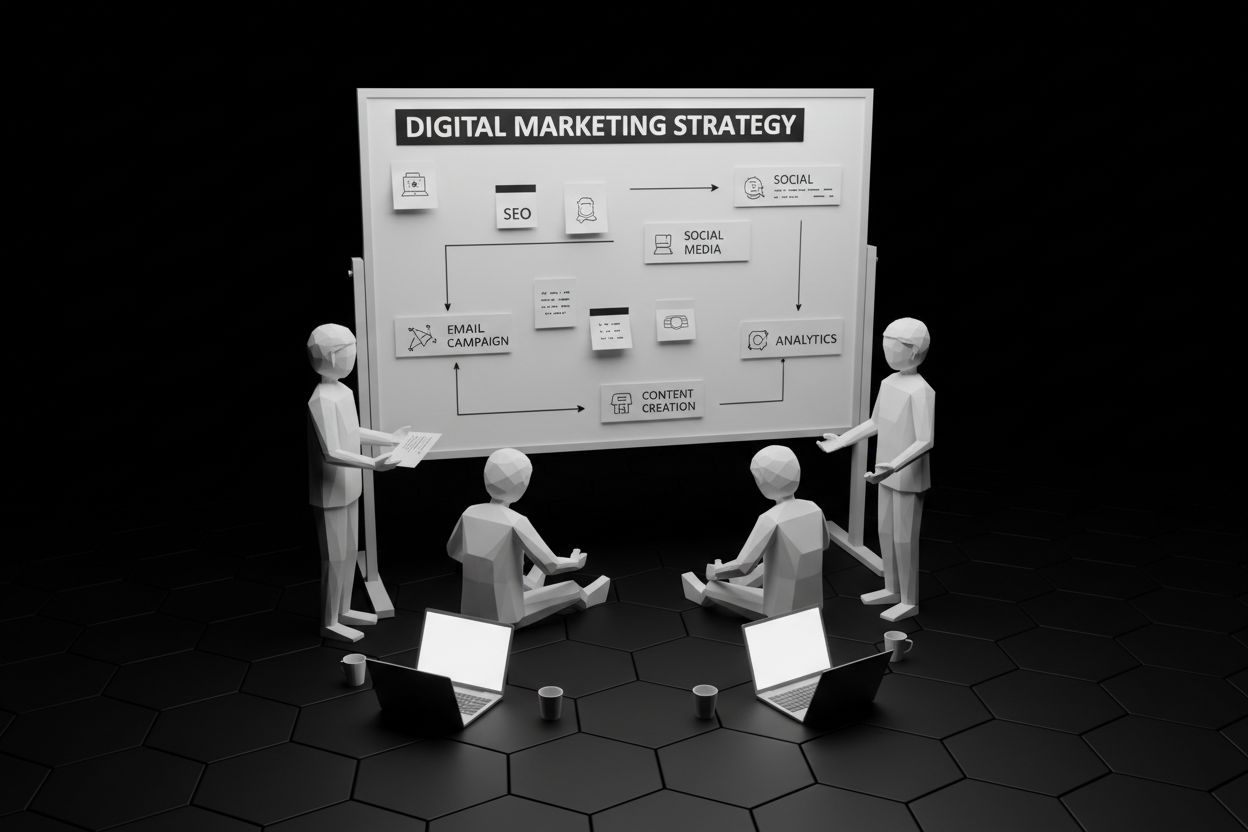
A good strategy starts smaller than most people expect. You do not need every platform. You need one clear offer, one audience segment, one conversion goal, and one follow-up system. From there, you can expand. The goal is to build a machine that consistently turns attention into leads, instead of collecting random likes and clicks.
1. Start with one offer
Choose a single offer that is easy to understand. A free consultation, a quote request, a strategy call, a checklist, or a demo usually works better than a vague brand message. The easier the next step is to understand, the easier it is for people to act.
2. Match the channel to the level of intent
Search works well when people already know what they want. Social and video work well when you need to create demand or introduce a new solution. Email works well when you need to nurture interest. Chat works well when someone wants fast answers. If the channel matches the mindset, conversion usually improves.
3. Build a landing page or lead path that removes friction
Every campaign needs a destination. That destination can be a landing page, an instant form, or a message thread. It should be clean, fast, and focused on one decision. Avoid long menus, distractions, and multiple competing CTAs. The job of the page is to collect the lead, not explain your whole company history.
4. Automate the follow-up
This is where many campaigns break. A lead that waits too long loses momentum. Use email, CRM workflows, and automated AI chat agents to respond quickly, qualify the person, and route serious inquiries to a human. The faster the follow-up, the better the chance of turning interest into revenue.
5. Measure what matters
Clicks are not the goal. Leads, booked calls, and closed revenue are the goal. Track cost per lead, lead quality, conversion rate, and time to first response. Google’s digital marketing materials stress analytics and data-driven decision-making for exactly this reason. When the numbers are visible, you can improve the campaign instead of guessing. (grow.google)
6. Test creative before you scale
Different hooks will attract different people. Test angles, headlines, visuals, offers, and calls to action. Small changes can matter more than large budget increases. Google also notes that AI can help generate copy variations for A/B testing, which makes it easier to create and compare more options without slowing down the team. (grow.google)
If you want a broader system for content, automation, and follow-up, the marketing and sales automation guide is a helpful companion resource.
A simple digital marketing example for a service business
Imagine a local business that wants more consultation bookings. The business runs a short Meta campaign with one offer, such as a free audit. The ad sends people to an instant form or a message thread. An AI chat agent answers common questions, checks whether the lead fits the service area, and hands qualified prospects to the sales team. Meanwhile, email follows up with a case study and a booking link.
That is digital marketing in practice. It is not one tactic. It is a connected system where each step supports the next. Social media introduces the brand, the ad creates interest, the form captures the lead, the chat agent qualifies it, and the follow-up turns it into a real conversation.
Common mistakes that slow down results
A lot of digital marketing fails for predictable reasons. The good news is that most of them are fixable.
Trying too many channels before one is working.
Sending paid traffic to a weak homepage instead of a focused landing page.
Posting content without a clear offer or next step.
Treating social media like a broadcast channel instead of a conversation channel.
Ignoring the speed of follow-up after someone submits a lead form.
Measuring vanity metrics while revenue sits untracked.
The fix is usually to simplify. Pick one goal, one audience, and one conversion path. Then improve the weakest part of the funnel before adding more spend or more channels.
What digital marketing really means for growth
At its best, digital marketing gives a business a repeatable way to be discovered, build trust, and generate leads online. It combines search, social, email, content, paid ads, analytics, and AI into one system that can be measured and improved. Google’s training materials, Meta’s lead ads, and TikTok’s lead generation tools all point in the same direction: the businesses that win are the ones that connect the right message to the right audience and then follow up quickly. (grow.google)
If you remember only one thing, make it this. Digital marketing is not about being everywhere. It is about building a clear path from attention to action, then making that path easier to use over time. That is how campaigns turn into pipeline, and how pipeline turns into growth.