The Ultimate Guide to Marketing and Sales Automation 2026
Discover the latest strategies for marketing and sales automation in 2026. Boost efficiency, increase revenue, and stay ahead with proven tools and expert insights.
Dec 24, 2025
Imagine a world where 80% of your marketing and sales tasks run automatically, letting your team focus on bold ideas and genuine customer connections.
In 2026, marketing and sales automation is no longer a luxury, it is a business necessity for those determined to lead.
This guide will break down marketing and sales automation, revealing the latest strategies, essential tools, and proven best practices.
You will discover the fundamentals, real-world benefits, emerging technology trends, and actionable steps for implementation and integration.
Ready to boost efficiency, drive revenue, and outpace the competition? Let us explore the future of marketing and sales automation together.
Understanding Marketing and Sales Automation
The world of marketing and sales automation is transforming how organizations connect with customers and drive revenue. This evolution is fueled by technology, changing buyer habits, and the growing need to streamline complex processes. As we explore its foundations, you’ll see why marketing and sales automation is now essential for any business aiming to stay ahead.
The Evolution of Automation in Sales & Marketing
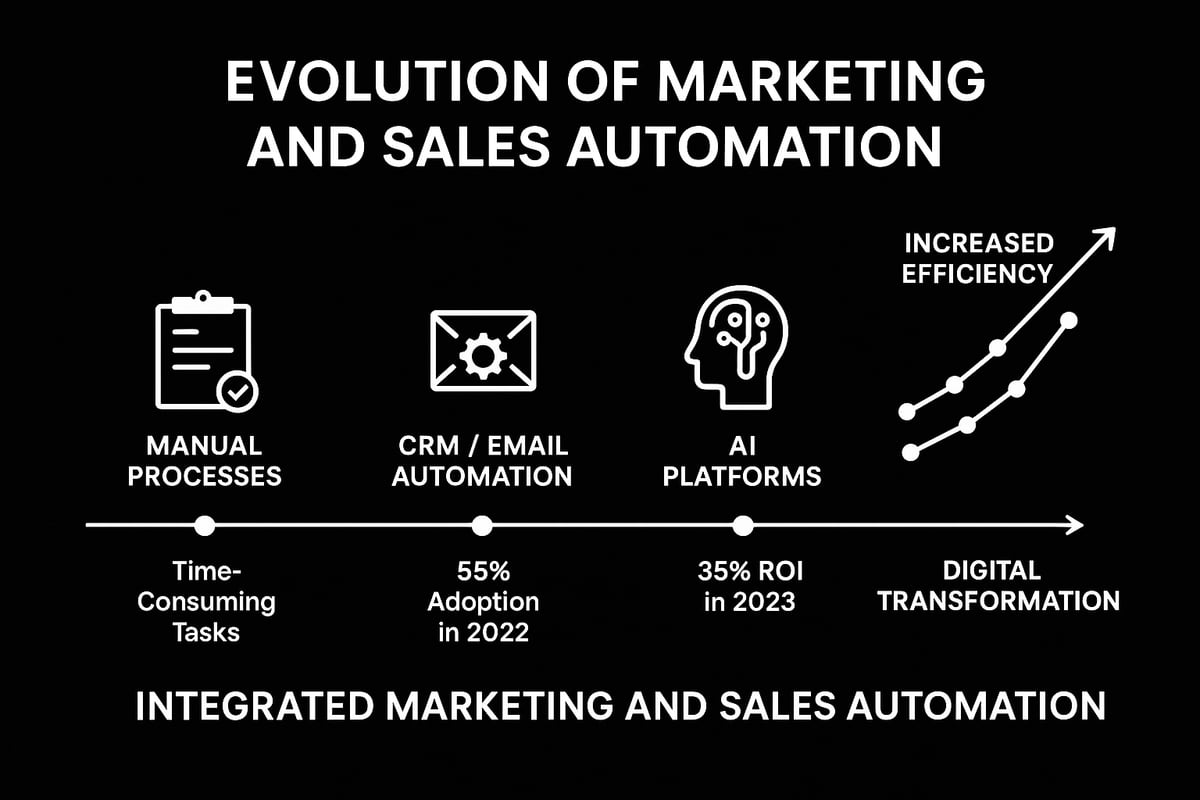
Marketing and sales automation began with basic manual processes, such as cold calling and direct mail. The introduction of CRM systems and email automation marked significant milestones, with 55% of marketers using email automation by 2022 (Ascend2). As digital transformation accelerated, customer journeys became more intricate, demanding smarter automation.
Remote work and digital channels further increased the need for robust marketing and sales automation. Early marketing and sales productivity systems, according to Harvard Business Review, delivered ROI exceeding 100%. Today, automation is no longer a supplemental tool but a cornerstone in modern business strategy.
What is Marketing Automation?
Marketing automation refers to software and tools that streamline, automate, and measure marketing tasks. Its core functions include campaign management, audience segmentation, lead nurturing, and multi-channel messaging via email, SMS, and social platforms. For example, automated email drip campaigns or personalized content delivery are now standard.
With a data-driven approach, marketing automation tracks and predicts audience behavior, allowing marketers to focus on strategy over repetitive tasks. Artificial intelligence now powers many platforms, enabling even greater efficiency and personalization. To see how AI is shaping this space, explore Marketing automation using AI.
What is Sales Automation?
Sales automation uses technology to automate sales activities and workflows, supporting everything from CRM management to lead scoring. Core functions include pipeline management, automated follow-ups, and contract generation. Examples range from automated invoice processing to instant sales forecasting reports.
The impact of marketing and sales automation in sales is clear. It reduces manual data entry, increases productivity by 10-20% (as seen in the Xerox case), and allows sales teams to concentrate on closing deals. Ultimately, sales automation frees professionals from admin work, boosting results and morale.
The Synergy: Why Sales and Marketing Automation Work Better Together
The real power of marketing and sales automation emerges when both functions are unified. Alignment ensures that data flows seamlessly, creating a cohesive customer journey and consistent messaging. Automated lead management bridges marketing nurturing with sales conversion for better results.
When teams share metrics and reporting, decision-making improves. For example, integrating CRM with marketing platforms enables seamless follow-ups and unified views of customer interactions. Combining these automation tools maximizes efficiency and ROI, allowing businesses to achieve more with less effort.
Key Benefits of Marketing and Sales Automation in 2026
Imagine a business landscape where teams focus on strategy and creativity, not repetitive tasks. This is the promise of marketing and sales automation in 2026. By leveraging advanced tools, organizations unlock greater efficiency, smarter decision-making, and measurable growth.
Increased Productivity and Efficiency
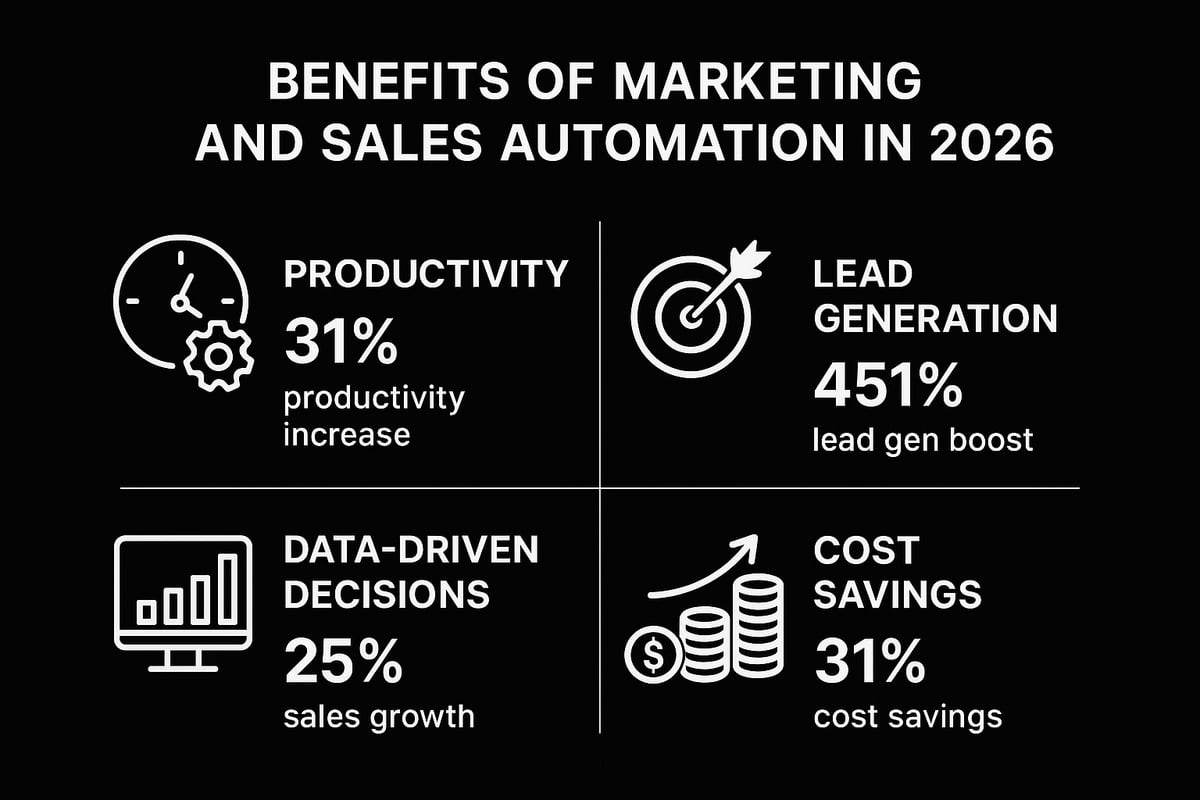
Marketing and sales automation transforms daily operations by handling repetitive tasks like email campaigns, scheduling, and data entry. Teams that once spent hours on manual work now redirect their energy to strategic initiatives. For example, telemarketers using automation increased their daily calls from 35 to over 50, resulting in triple the monthly sales.
Automation minimizes human error, ensures consistency, and allows organizations to scale without expanding headcount. As businesses grow, marketing and sales automation supports seamless expansion, making it a cornerstone of modern productivity.
Enhanced Lead Generation and Nurturing
With marketing and sales automation, companies can identify, segment, and engage prospects with precision. Automated lead scoring and personalized outreach deliver the right message at the right time, increasing conversion rates significantly. Tools now support real-time tracking of prospect behavior and trigger follow-ups across email, SMS, social, and chat channels.
The impact is substantial—marketing automation boosts lead generation by 451%, demonstrating its power to fill pipelines and nurture relationships. By automating lead management, businesses ensure no opportunity is missed.
Improved Data Collection and Decision Making
Marketing and sales automation centralizes customer and campaign data, providing real-time analytics that inform every decision. Teams can monitor prospect journeys, link marketing actions to closed sales, and adjust strategies quickly based on performance insights. For instance, advanced MSP systems allow tracking of every lead, task, and outcome, offering a clear view of ROI.
This data-driven approach empowers organizations to allocate resources effectively and forecast future results with confidence. Marketing and sales automation turns raw data into actionable intelligence.
Cost Savings and Revenue Growth
Investing in marketing and sales automation reduces both fixed and variable costs. Automated processes lower the breakeven point and enable smaller teams to achieve more. A custom printer, for example, saw a 25% sales increase and recouped their automation investment within six months.
Shorter sales cycles, fewer manual errors, and reduced staff attrition all contribute to higher margins and revenue growth. Marketing and sales automation delivers tangible, measurable value that drives long-term business success.
Essential Automation Technologies and Trends for 2026
In 2026, marketing and sales automation is defined by rapid innovation and ever-evolving technology. Companies that leverage the right automation tools are setting new industry benchmarks in efficiency, personalization, and revenue growth. Let us explore the essential technologies and trends shaping marketing and sales automation for the future.
AI and Machine Learning in Automation
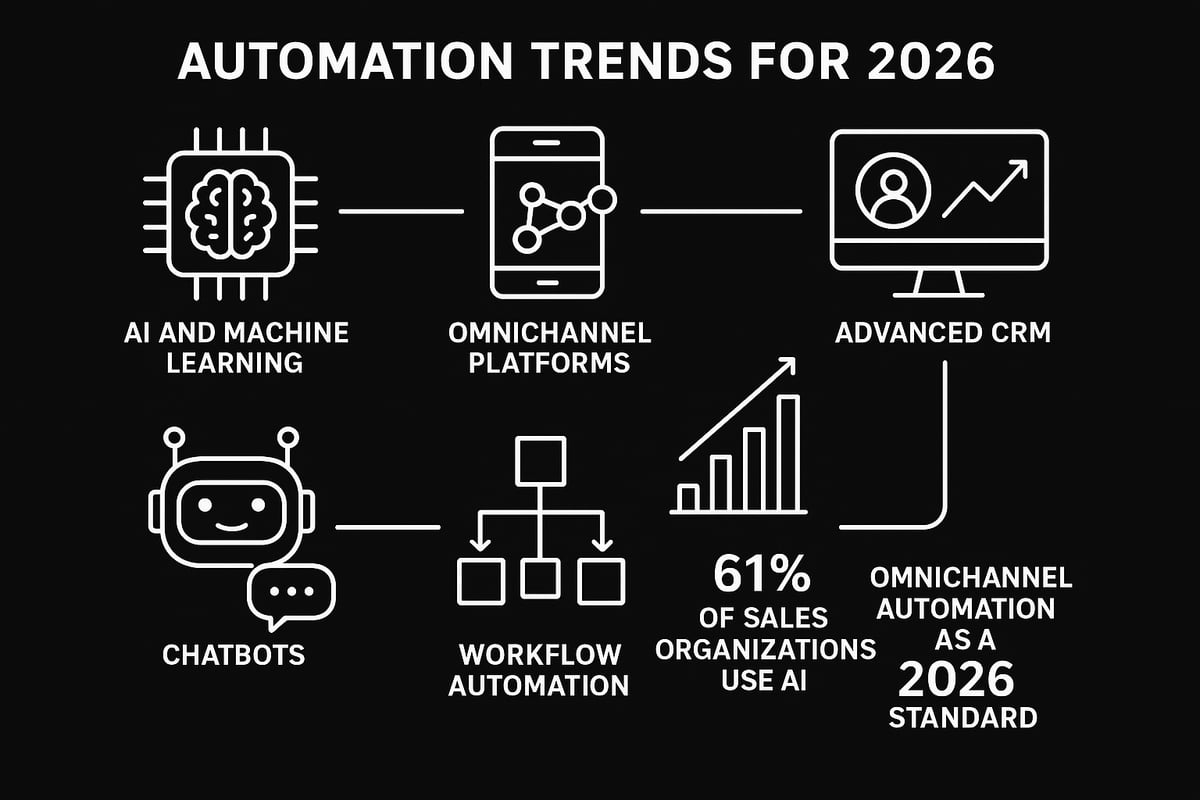
AI and machine learning are at the core of marketing and sales automation. Predictive analytics now enables businesses to score leads and personalize content with laser precision. Natural language processing powers advanced chatbots and sentiment analysis, creating more empathetic customer interactions.
Automated decision engines are now optimizing campaign performance in real time. For example, AI-driven recommendations in email and social campaigns are helping marketers boost engagement and conversions.
A recent report found that 61% of sales organizations use AI to automate repetitive tasks, showing just how mainstream AI has become in marketing and sales automation. As AI platforms become even more accessible, expect their adoption to accelerate across both SMBs and enterprises.
Omnichannel Automation Platforms
Omnichannel automation platforms unify communication channels—email, SMS, social media, web, and paid ads—into a single, cohesive system. These platforms create unified customer profiles, allowing for cross-channel tracking and seamless engagement.
Automated workflows can now be triggered by customer actions across any channel. For instance, a customer who clicks a social ad can instantly receive a personalized email follow-up.
This holistic approach to marketing and sales automation ensures consistent messaging and a frictionless customer journey. As customer expectations for seamless experiences grow, omnichannel platforms are quickly becoming a necessity.
Advanced CRM and Sales Enablement Tools
Advanced CRM systems are transforming how organizations approach marketing and sales automation. Next-generation CRMs now feature built-in automation, robust analytics, and deep integrations with other platforms.
Key functions include automated lead routing, pipeline management, and timely follow-ups. Sales teams benefit from reminders for appointments and contract renewals, reducing missed opportunities.
CRMs are evolving into the central hub for all customer data and sales activities. This integration streamlines operations, making marketing and sales automation more efficient and effective than ever before.
Conversational Marketing and Chatbots
Conversational marketing and AI-powered chatbots are redefining real-time customer engagement. These bots instantly qualify leads, answer FAQs, and provide round-the-clock support.
Live chat tools can capture leads directly from your website and even schedule product demos automatically. This level of automation allows businesses to engage prospects at any hour, increasing conversion rates.
With marketing and sales automation, conversational interfaces are driving higher engagement and setting new standards for customer experience in 2026.
Workflow and Process Automation
Workflow and process automation eliminates manual bottlenecks across organizations. Automated task assignments, approval flows, and notifications keep teams aligned and productive.
Integration with project management and calendar apps ensures nothing falls through the cracks. For example, IFTTT-style automations can trigger targeted emails based on external events, like weather-based promotions.
Customizable workflows allow marketing and sales automation to adapt to unique business needs, making scaling operations smoother and more predictable.
Data Integration and Analytics
Unified data integration is vital for marketing and sales automation success. Modern platforms offer real-time dashboards that consolidate key performance indicators for both marketing and sales.
Automated reporting and performance alerts help teams stay agile and responsive. Real-time attribution of marketing spend to revenue provides clear insights into ROI.
With marketing and sales automation, deeper and more actionable insights are possible. Integrated data sources empower organizations to make faster, smarter decisions, ensuring they remain competitive in a data-driven world.
Step-by-Step Guide to Implementing Marketing and Sales Automation
Implementing marketing and sales automation is a strategic process that requires careful planning and execution. The right approach ensures your business maximizes efficiency, drives revenue, and stays competitive in 2026. Follow these six essential steps to achieve seamless integration and long-term success.
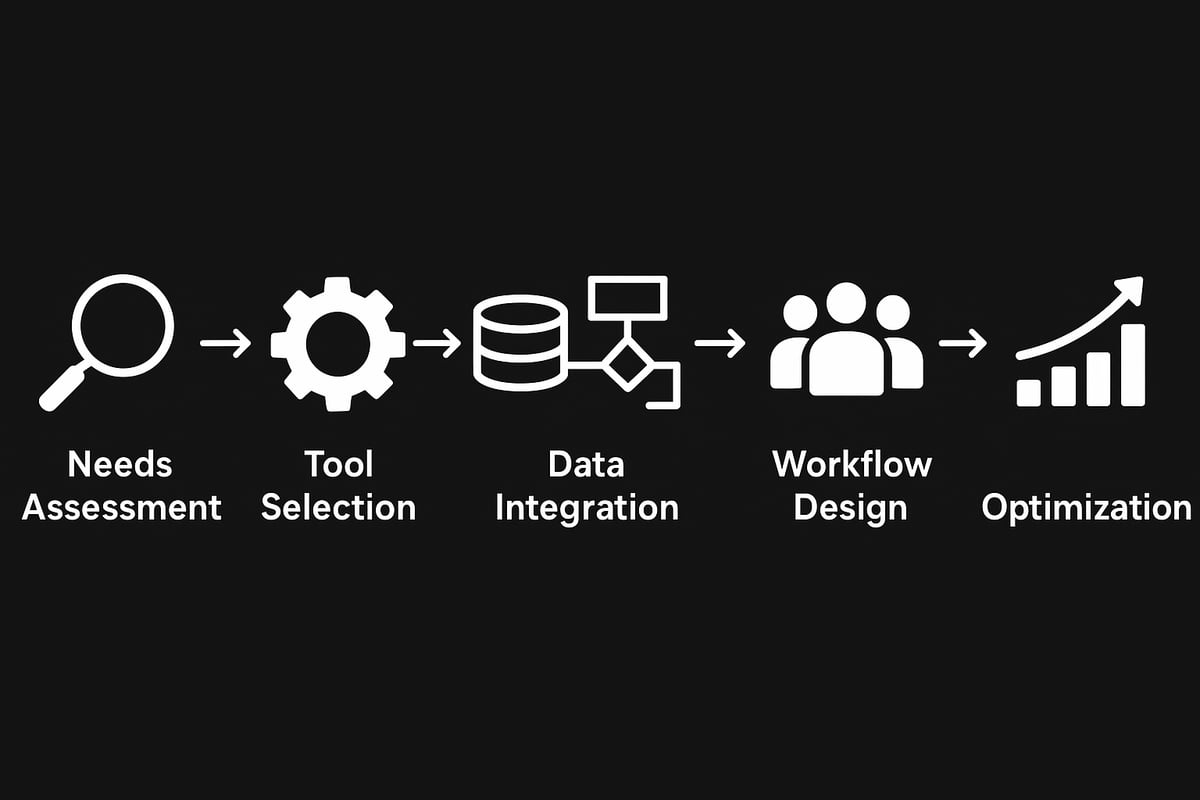
Step 1: Assess Your Business Needs and Goals
Start by evaluating your current marketing and sales automation landscape. Identify major pain points such as inefficient lead management, manual data entry, or slow follow-ups. Involve both marketing and sales stakeholders to get a holistic view.
Clearly define your objectives. Are you seeking increased efficiency, higher revenue, or improved customer experience? Analyze existing workflows and technology to uncover gaps where automation will add the most value.
Companies with complex sales structures often see the highest returns from marketing and sales automation. A thorough needs assessment sets the foundation for a tailored, results-driven strategy.
Step 2: Choose the Right Automation Tools and Platforms
Selecting the appropriate platforms is critical for successful marketing and sales automation. Evaluate features including integration capabilities, scalability, analytics, and ease of use. Consider your budget and the potential return on investment.
Compare leading solutions, focusing on those that align with your objectives and existing tech stack. Assess vendor support and onboarding resources to ensure a smooth transition. For example, one electronics manufacturer invested $2.5M in automation and achieved payback in under 12 months.
The right tools enable your team to unlock the full potential of marketing and sales automation, streamlining operations and supporting growth.
Step 3: Integrate Marketing and Sales Data
Data integration is vital for unified marketing and sales automation. Sync your CRM, marketing automation platforms, and other data sources to ensure consistency and accuracy.
Prioritize data cleanliness by establishing processes for deduplication and validation. Set up unified customer profiles to gain a holistic view of each prospect and client.
For instance, MSP systems can track every lead, task, and outcome, enabling robust cross-departmental collaboration and reporting. Integrated data empowers your teams to make informed decisions and drive better results.
Step 4: Design Automated Workflows and Campaigns
Map out your customer journeys to pinpoint where marketing and sales automation can make the greatest impact. Create triggers, actions, and personalized messages that respond to prospect behaviors.
Automate lead nurturing, follow-ups, and sales processes for maximum efficiency. Testing workflows before full deployment helps catch errors and optimize performance. For a deeper dive into workflow best practices, explore this resource on marketing automation workflows.
Thoughtfully designed automation ensures that every touchpoint is timely, relevant, and aligned with business goals.
Step 5: Train Teams and Foster Adoption
A successful marketing and sales automation rollout depends on team buy-in and training. Provide hands-on learning opportunities, clear documentation, and access to support resources.
Address change management by setting expectations, clarifying roles, and encouraging open feedback. Celebrate early wins to build momentum. For example, an electronics manufacturer saw a 31 percent productivity boost after focused automation training.
Continuous improvement and team engagement are key to sustaining the benefits of marketing and sales automation over time.
Step 6: Monitor, Measure, and Optimize
Ongoing measurement is essential for maximizing the value of marketing and sales automation. Track key performance indicators like conversion rates, response times, ROI, and customer satisfaction.
Use analytics to identify bottlenecks and areas for improvement. Regularly A/B test campaigns and workflows to refine your approach. Data-driven adjustments can lead to significant gains, as shown by Harvard Business Review case studies with higher campaign ROI.
Stay agile and update your processes as technology evolves to keep your marketing and sales automation strategy ahead of the curve.
Integration Strategies: Unifying Marketing and Sales Automation
Seamless integration is the backbone of successful marketing and sales automation. When both departments work in unison, businesses deliver a consistent customer experience, harness data more effectively, and drive higher conversion rates. Below, discover the core strategies for unifying your automation efforts and setting your organization up for scalable growth.
Building a Seamless Customer Experience
A unified approach to marketing and sales automation ensures every customer interaction feels personal and timely. By aligning messaging and automating follow-ups, teams build trust and reduce friction in the buyer’s journey.
Consistent touchpoints across channels
Automated handoffs ensure no leads fall through the cracks
CRM integration with email and social for real-time responses
For example, integrating CRM with your marketing platform allows instant follow-up after a prospect downloads content or submits a form. This seamless flow directly impacts conversion rates. As customer-driven data models gain traction, companies focusing on experience outperform those using product-centric approaches. Leveraging lead generation automation tools can further streamline this process, ensuring prospects receive the right message at the right time.
Data Management and Centralization
Centralized data is the foundation of effective marketing and sales automation. Maintaining a single source of truth empowers teams to make informed decisions and personalize outreach.
Automate data capture from all channels: web, phone, email, social
Clean, consistent data enables granular segmentation
Unified dashboards provide actionable insights
For instance, companies using centralized MSP databases can track every activity and outcome, simplifying reporting and optimization. With all information in one place, marketers and sales professionals can collaborate efficiently and adjust campaigns in real time.
Cross-Department Collaboration
Breaking down silos between marketing, sales, and support is essential for maximum automation ROI. Shared dashboards and automated reporting foster transparency and alignment.
Regular meetings supported by shared automation data
Prevention of conflicting offers or duplicate outreach
Real-time notifications for lead status and campaign results
When teams work together using integrated systems, they avoid costly mistakes, like sending overlapping promotions. Consulting with a sales and marketing consulting firm can help design integration strategies tailored to your business needs, ensuring everyone is moving toward the same goals.
Security, Privacy, and Compliance
As automation expands, so do data security and privacy concerns. Modern marketing and sales automation platforms offer built-in compliance features to protect both businesses and customers.
Automated consent management for email and SMS
Secure storage and access controls for sensitive data
Audit trails for regulatory requirements like GDPR and CCPA
Automating these processes reduces risk and builds customer trust. Privacy-first automation is quickly becoming a competitive differentiator, signaling to prospects that your brand values their data and complies with all regulations.
Measuring Success: KPIs and Optimization in Automated Marketing and Sales
Evaluating the effectiveness of marketing and sales automation requires a clear focus on the right performance indicators. With automation transforming workflows, selecting and monitoring key metrics ensures your organization stays on track and maximizes ROI. The following approach provides a framework to measure what matters most.
Key Metrics to Track
Success in marketing and sales automation hinges on tracking the metrics that directly reflect business growth. Start with lead conversion rates, which show how effectively leads move through your funnel. Monitor the average sales cycle length to assess efficiency improvements.
Other vital KPIs include campaign ROI, cost per acquisition, and customer lifetime value. Engagement rates across channels, such as email open rates and social interactions, give insight into audience responsiveness.
KPI | What It Measures |
|---|---|
Lead Conversion Rate | % of leads turning into sales |
Sales Cycle Length | Time from lead to close |
Campaign ROI | Revenue vs. marketing spend |
Cost per Acquisition | Cost to acquire each customer |
Customer Lifetime Value | Total value per customer |
Tracking these metrics in your marketing and sales automation efforts ensures you can quickly identify strengths and areas for improvement.
Attribution and ROI Analysis
Understanding which channels and campaigns drive results is essential for optimizing marketing and sales automation. Multi-touch attribution models help assign value to each stage of the customer journey, offering a more accurate view of ROI.
Automated reporting tools streamline the measurement process, linking marketing spend directly to revenue. For example, connecting CRM data to campaign outcomes allows you to pinpoint which tactics are most effective.
As the global marketing automation market is projected to reach $21.7 billion by 2032, organizations are investing more in tools that deliver measurable ROI. This focus empowers teams to allocate budgets wisely and refine strategies for maximum impact.
Continuous Improvement with Automation
The journey with marketing and sales automation does not end once systems are in place. Continuous improvement is vital to stay ahead in a competitive landscape. Regularly analyze campaign data to spot trends, gaps, and new opportunities.
Set up automated alerts to flag underperforming workflows. Leverage A/B testing to refine messaging, offers, and timing. Iterative optimization ensures your automation adapts to market changes and customer preferences.
Companies that prioritize ongoing improvement with marketing and sales automation often see sustained gains in efficiency, revenue, and customer satisfaction.
Real-World Case Studies and Success Stories
Case studies illustrate the tangible benefits of marketing and sales automation. An electronics manufacturer achieved a 33 percent sales increase and a 31 percent boost in productivity after integrating automation. A custom printer saw a 25 percent rise in sales with ROI realized in less than six months.
Telemarketing firm Aratex Services tripled sales per representative following automation. At a Vanity Fair division, order cycles dropped from two weeks to three days. These examples show that, when measured and refined, marketing and sales automation delivers rapid, significant returns for organizations of all sizes.
If you’re ready to stop wasting valuable hours on repetitive tasks and start fueling real growth, now is the perfect time to take action. This guide has shown that with the right approach, marketing and sales automation can help you streamline workflows, boost productivity, and outpace your competition in 2026. Why not see how these strategies could work for your business? Let’s talk about your goals, challenges, and the best automation solutions for you. You can Book a free consultation and begin building your competitive edge today.