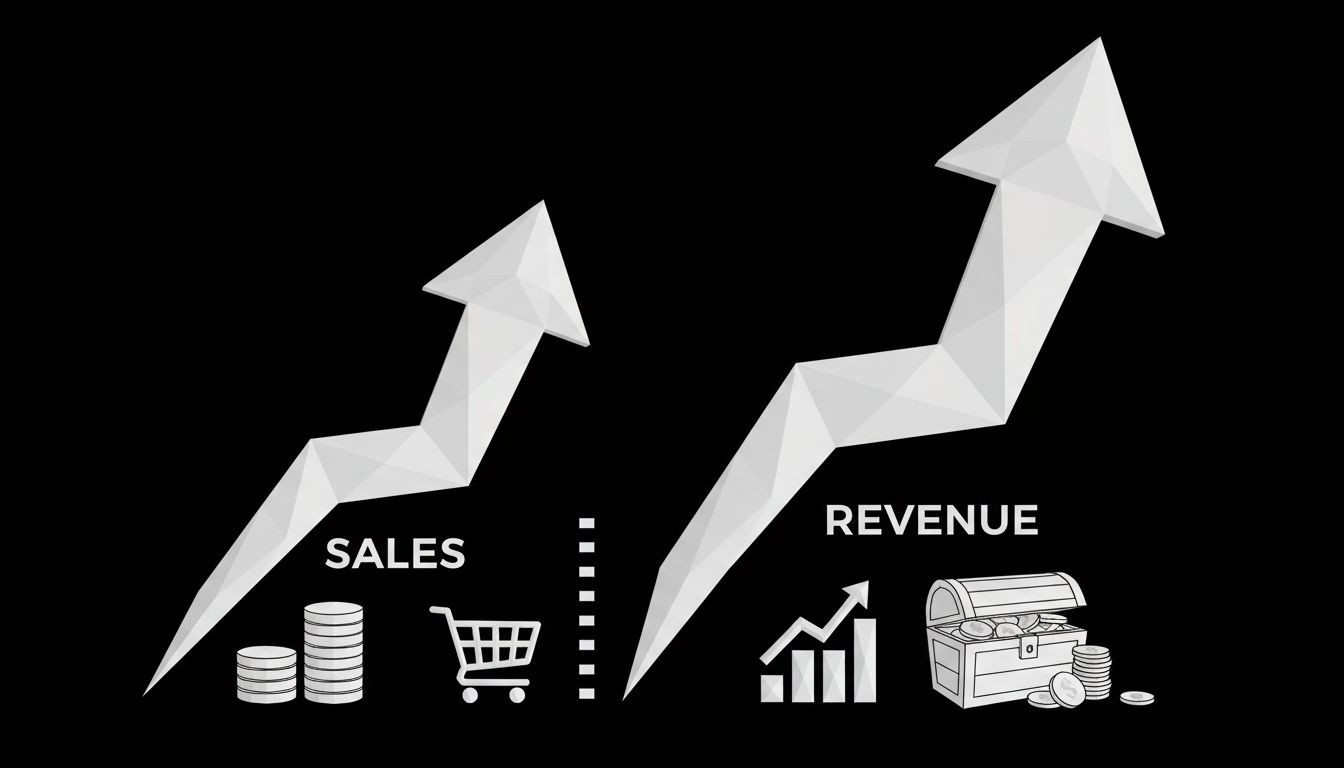
Revenue vs Sales: The Clear Difference Every Business Should Know
Learn revenue vs sales, how each differs from cash and profit, and how the right metric improves growth, ads, and reporting decisions for your business.
Many people use revenue vs sales as if they mean the same thing, but they do not always tell the same story. Sales usually refers to the value of products or services you sold, while revenue can be a broader number that reflects total income from your normal business activity. If you run ads, build a funnel, or rely on AI chat agents to convert leads, knowing the difference helps you read reports correctly, manage growth, and avoid chasing the wrong metric. It also makes your CRM data, marketing dashboards, and financial reports much easier to trust, especially if you are using a CRM strategy and automation guide to connect lead generation with real business outcomes.
Quick answer: revenue vs sales
Here is the simplest way to think about it:
Sales are the value of items or services you sold.
Revenue is the income your business brings in from its normal operations, which often includes sales and may include other business income too.
Cash is when the money actually lands in your account.
Profit is what is left after expenses.
For many small businesses, sales and revenue may look almost identical. Once you add refunds, discounts, subscriptions, shipping, financing, or non-operating income, the numbers can start to separate. That is why the distinction matters for founders, marketers, finance teams, and anyone using lead generation and marketing automation to grow a business.
What are sales?

Sales are the transactions where a customer buys something from you. In plain English, sales show what you sold and at what value. Depending on the business and the accounting method, sales may be reported as gross sales or net sales.
Gross sales are the total value of all sales before deductions. If you sold 100 products at $50 each, gross sales would be $5,000.
Net sales are what remains after subtracting things like:
Returns
Refunds
Discounts
Allowances
That means a business can have high gross sales but lower net sales if a lot of customers return items or use coupons.
This is one reason sales teams and growth teams should not stop at the top-line number. If your campaigns are driving lots of low-quality leads, your sales count may look strong while your actual net results stay weak. That is also why a paid ads management strategy should always be paired with clear lead qualification and conversion tracking.
Gross sales vs net sales
A quick example makes it easier:
Gross sales: $120,000
Returns and refunds: $10,000
Discounts: $5,000
Net sales: $105,000
If you only look at gross sales, you may think the business is performing better than it really is. Net sales gives you a cleaner view of what customers actually kept and paid for.
What is revenue?
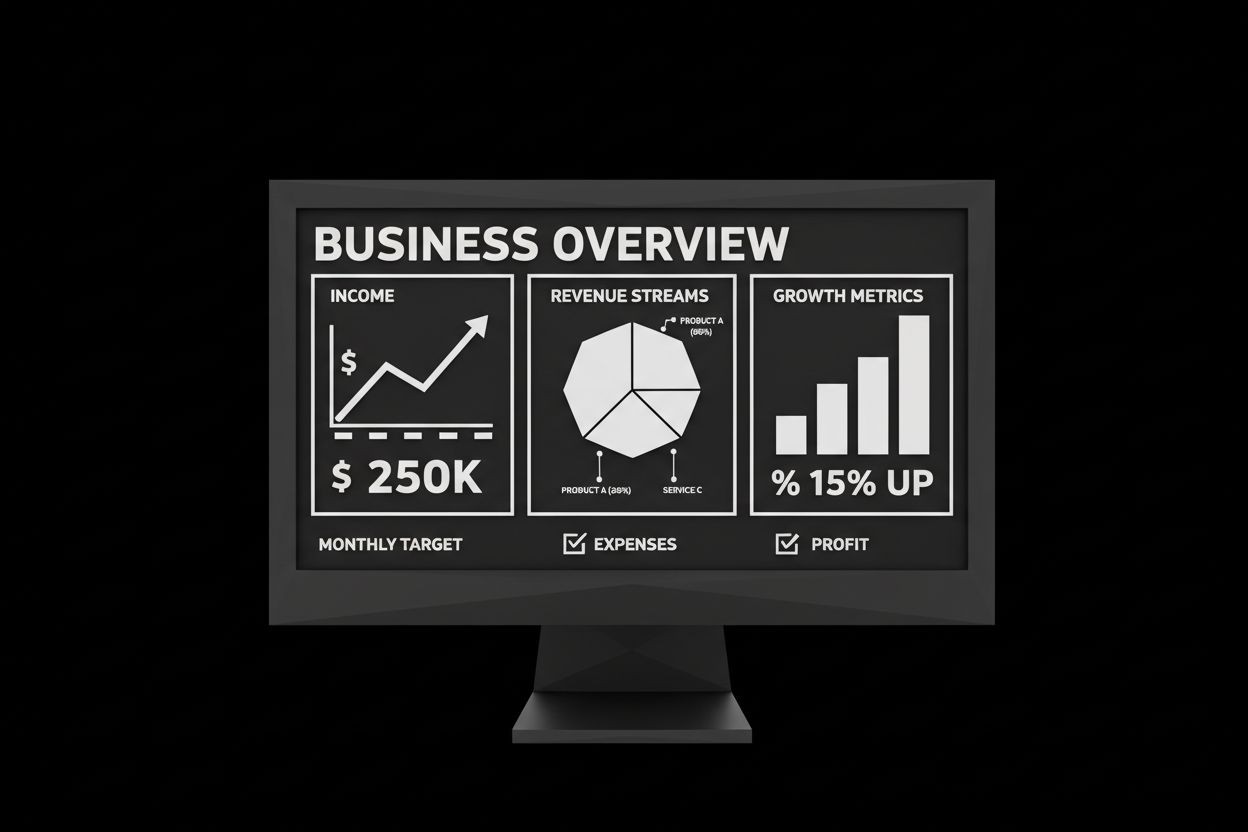
Revenue is the total income your business generates from its normal operations over a specific period. In many companies, revenue is closely tied to sales. In others, it includes more than product or service sales alone.
Revenue is often discussed as the top line because it appears before expenses are deducted. It helps answer a simple question: how much money did the business bring in before costs?
Depending on the business model, revenue may include:
Product sales
Service income
Subscription fees
Usage-based charges
Membership fees
Delivery or setup fees
Other operating income
In some businesses, revenue is broader than sales. In others, the two terms are used almost interchangeably in everyday conversation. The key is to understand what your own reports are actually measuring.
Gross revenue, operating revenue, and non-operating revenue
You may run into a few revenue terms:
Gross revenue: total income before deductions
Operating revenue: money earned from core business activity
Non-operating revenue: income from side sources, such as interest or asset sales
For example, a software company may earn revenue from subscriptions, onboarding services, and support contracts. A retail brand may earn revenue from product sales and also from shipping protection or warranties. If you are building an automated funnel, this distinction matters because not every dollar should be treated the same in your reports.
Revenue vs sales: side-by-side comparison

Here is a simple breakdown of revenue vs sales:
Category | Sales | Revenue |
|---|---|---|
Basic meaning | Value of goods or services sold | Total income from normal business activity |
Includes discounts and returns? | Usually no, not in gross sales. Yes in net sales | Often yes, depending on how revenue is reported |
Includes non-operating income? | Usually no | Sometimes yes, if the business uses a broader definition |
Where it appears | Sales reports, revenue dashboards, income statement | Income statement, financial reports, dashboards |
Most common use | Sales performance, conversion tracking, pipeline analysis | Overall business performance, finance, forecasting |
The easiest way to remember it is this: sales are about the transaction, revenue is about the income picture.
For a founder or marketing team, that difference affects more than accounting. If your lead generation system is bringing in many conversations but few closed deals, your sales number may be weak even if your revenue from a separate subscription line looks healthy. That is why businesses often combine reporting with automated SEO, ads, and CRM workflows instead of relying on one metric alone.
Revenue vs sales vs cash, gross profit, and net profit
This is where many business owners get tripped up.
Revenue vs cash
Revenue is not always the same as cash in hand. You can earn revenue before you receive payment, especially if you invoice clients or sell on subscription terms.
For example, if a client signs a $12,000 annual contract in January and pays upfront, you may receive cash immediately. But if you deliver the service over 12 months, the revenue may be recognized over time, depending on the accounting rules you use.
Sales vs cash
A sale can happen before money is collected. That is common in B2B services, ecommerce with delayed settlement, and subscription businesses. So the sales report might show a deal closed, while the bank balance still has not moved much yet.
Revenue vs gross profit
Gross profit is what remains after subtracting the cost of goods sold from revenue.
Revenue - Cost of goods sold = Gross profit
Gross profit tells you whether your core offering is profitable before overhead, payroll, rent, and marketing are added in.
Revenue vs net profit
Net profit is what is left after all expenses, including taxes, operating costs, interest, and overhead.
A business can have strong revenue and still lose money if costs are too high. That is why revenue alone should never be the only number you watch.
Real-world examples by business model
Ecommerce
An online store sells 1,000 products at $40 each.
Gross sales: $40,000
Returns: $3,000
Discounts: $2,000
Net sales: $35,000
If the store also earns $1,500 from gift wrap, shipping insurance, or a subscription box add-on, its revenue story may be a little broader than its sales number.
SaaS
A software company closes 25 new annual contracts at $2,000 each.
New sales booked: $50,000
Cash collected: maybe all at once, maybe monthly
Revenue recognized: often spread across the contract term
This is a great example of why sales and revenue are not always interchangeable. A sales team may celebrate new bookings, but the finance team may report revenue more gradually.
Services business
A marketing agency signs a $15,000 monthly retainer.
Sales: the contract is signed
Cash: received on invoice terms
Revenue: recognized as the work is delivered
This is especially important for agencies running demand generation or social campaigns. If you want more qualified leads and a cleaner handoff to sales, systems like automated AI chat agents can help capture intent, answer questions, and route prospects before they go cold.
Retail
A retail store records $60,000 in sales for the month, but later issues $4,000 in refunds and $1,000 in discounts.
Gross sales: $60,000
Net sales: $55,000
Revenue: usually reported around the net figure, depending on the accounting treatment
The lesson is simple. Raw sales can look impressive, but the real business picture is clearer once you account for deductions.
Why the difference matters for marketing, lead generation, and ads
If you are running Meta ads, TikTok ads, email campaigns, or content-driven lead generation, revenue vs sales is not just an accounting issue. It changes how you judge performance.
A campaign can produce:
Lots of leads, but low sales
Lots of sales, but low revenue quality
Strong revenue, but weak profit
Good top-of-funnel activity, but poor retention
That is why smart teams track the full chain from traffic to lead to sale to revenue.
A few practical examples:
Sales teams care about booked calls, closed deals, and win rate.
Finance teams care about recognized revenue, margin, and cash flow.
Marketing teams care about cost per lead, cost per acquisition, and revenue attributed to campaigns.
If you use paid ads management, make sure the dashboard does not stop at clicks or form fills. Tie your campaigns to qualified leads and eventually to revenue. If you are publishing content regularly, automated social media can help keep your top-of-funnel active without piling extra work on the team.
How to increase sales and revenue

Increasing sales and increasing revenue are related, but they are not always the same strategy. In practice, you want both.
1. Improve lead quality
More leads are not always better leads. If you are attracting people who are unlikely to buy, sales will suffer. Tighten your targeting, refine your offer, and make sure your landing pages speak to the right pain points.
2. Shorten response time
Speed matters. A prospect who waits too long for follow-up often moves on. Automated routing, instant replies, and AI chat agents can keep the conversation moving while your team focuses on higher-value calls.
3. Strengthen your messaging
Your product may be good, but if the message is vague, people will not act. Clarify the outcome, the problem you solve, and why you are different. This is especially important for lead generation campaigns and conversion-focused content.
4. Track the full funnel
Do not manage the business by one vanity metric. Measure:
Website visits
Lead submissions
Qualified leads
Sales conversations
Closed deals
Revenue recognized
Retention and repeat purchase rate
That full view helps you make better decisions than sales or revenue alone.
5. Improve retention and upsells
Revenue does not only come from new customers. Repeat buyers, higher-value plans, and add-on services can raise revenue without constantly increasing acquisition costs.
6. Use content to create demand
Search, social, and educational content build trust before the first sales call. If your team wants more discoverability and stronger inbound demand, automated SEO can support long-term growth while paid campaigns handle faster results.
7. Align marketing and finance
One of the biggest reasons businesses misread revenue vs sales is that marketing, sales, and finance all use different definitions. Agree on what counts as a lead, a sale, and revenue, then build reports around those definitions.
FAQ
Are sales and revenue the same?
Not always. Sales usually refer to what you sold, while revenue is the income a business earns from its normal operations. In some businesses they are very close, but they are not always identical.
Can sales be higher than revenue?
Yes, depending on how the business records returns, discounts, or revenue recognition. For example, gross sales can be higher than net revenue after deductions.
Is revenue before or after expenses?
Revenue is before expenses. It is the top-line income figure. Profit comes after expenses are subtracted.
Do discounts reduce sales or revenue?
They usually reduce net sales and can also affect reported revenue, depending on the business model and accounting treatment.
Which metric matters more, sales or revenue?
It depends on your role. Sales matter for conversion and pipeline performance. Revenue matters for the overall business picture. For growth teams, the best answer is to track both, along with profit and cash flow.
Why do ads teams care about revenue vs sales?
Because ad performance can look good at the click or lead level while still producing weak customers. If you want to scale profitably, you need to connect ad spend to actual sales and revenue, not just traffic.
The cleanest way to think about revenue vs sales is this: sales show what was sold, revenue shows what the business earned, cash shows what was collected, and profit shows what remains. Once you keep those numbers separate, your reporting gets clearer, your marketing gets smarter, and your growth decisions get much easier to trust.