What Is Social Media Marketing? A Practical Guide to Leads, Ads, and Growth
Learn what social media marketing is, how organic and paid strategies work, and how AI, ads, and lead gen turn attention into customers and leads faster.
Social media marketing is one of the fastest ways to get attention, build trust, and turn strangers into leads. At its core, it means using social platforms to reach the right audience, share useful content, and guide people toward a clear next step, whether that is booking a call, filling out a form, sending a DM, or making a purchase.
It is not just about posting pretty graphics or chasing likes. A real social strategy connects content, community, offers, and follow-up into one system. For brands that want consistency without losing their voice, automated social media systems can keep the engine running while your team focuses on strategy, creative, and sales.
What social media marketing actually is
Social media marketing is the process of using platforms like Instagram, Facebook, TikTok, LinkedIn, YouTube, and X to promote your brand, educate your audience, and drive business results. That can mean organic posts, paid ads, creator collaborations, community management, social selling, and direct-response campaigns.
The best way to think about it is as a conversation with a purpose. You are not simply putting content out into the world. You are trying to move people through a journey, from first seeing your brand to trusting it, then to acting on it.
That is why social media marketing works so well for lead generation. It lets you meet people where they already spend time, then use content and targeting to move them closer to a sale. If the goal is revenue, not just visibility, the strategy has to be built around outcomes.
What social media marketing is not
It is not posting randomly when you have time.
It is not only brand awareness.
It is not a shortcut that works without a plan.
And it is definitely not just one viral post.
A strong social strategy has a message, an audience, a platform choice, a content plan, and a clear conversion path.
How social media marketing works across the funnel
Social media marketing is most effective when you map it to the buyer journey. Different stages need different content, different calls to action, and different levels of trust.
Awareness: People are discovering your brand for the first time. Short videos, educational posts, carousels, and creator-style content work well here.
Consideration: People know you, but they are comparing options. Case studies, testimonials, comparisons, webinars, and product demos help build confidence.
Conversion: People are ready to act. This is where offers, lead forms, free consultations, and ad campaigns become important.
Retention: Existing customers need reasons to stay engaged. Community content, updates, exclusive tips, and customer education keep them active.
Advocacy: Happy customers can become promoters. Reviews, referrals, UGC, and shareable wins turn buyers into advocates.
The funnel matters because not every post should try to sell immediately. A good mix of social content creates attention at the top, interest in the middle, and conversions at the bottom.
Organic vs paid social media marketing
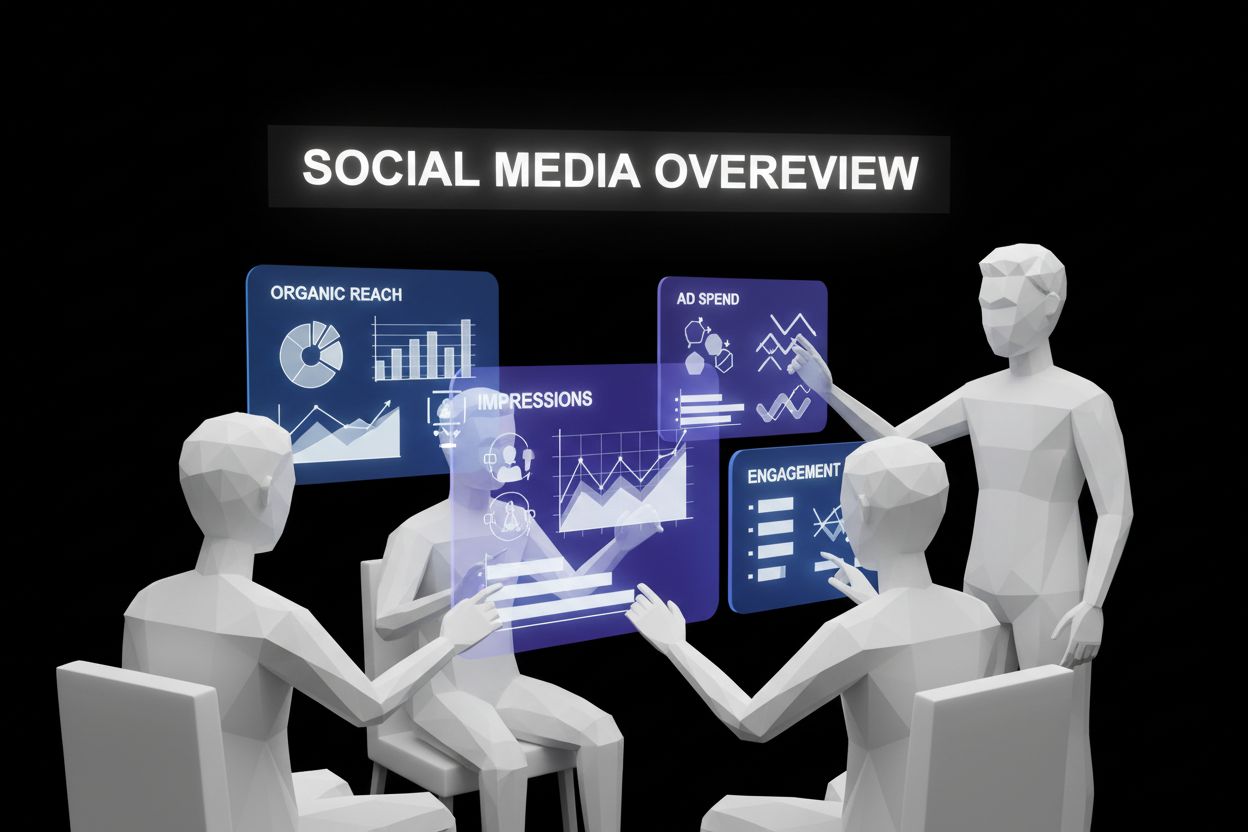
One of the most important things to understand is the difference between organic and paid social media marketing. Both matter, but they solve different problems.
Approach | What it does | Best for | Main tradeoff |
|---|---|---|---|
Organic social | Builds reach through posts, comments, shares, and community activity | Trust, consistency, brand voice, long-term audience growth | Slower reach, less control over distribution |
Paid social | Buys targeted visibility through ads and sponsored content | Fast reach, lead generation, retargeting, scaling winning offers | Requires budget and creative testing |
Organic social is how you build familiarity. It gives your audience a reason to remember you, follow you, and engage with your brand over time. Paid social is how you put the right message in front of the right people faster. It is especially useful when you need predictable traffic, more leads, or a specific business outcome.
For most businesses, the answer is not either-or. The strongest programs combine both. Organic builds trust, while paid amplifies what is already working. If you need help turning that into a performance channel, paid ads management can make the reach more predictable and the lead flow easier to scale.
A simple rule helps here. Use organic to learn what people respond to, then use paid to scale the best-performing messages.
How to choose the right platforms

Not every platform deserves the same amount of attention. The best platform is the one where your audience already pays attention and where your content format fits naturally.
Platform | Best for | Strong formats | Lead generation angle |
|---|---|---|---|
Facebook and Instagram | Local brands, consumer products, retargeting, community building | Reels, Stories, carousels, lead ads | Great for form fills, DMs, and appointment bookings |
TikTok | Discovery, UGC, fast attention, younger audiences | Short video, creator-style content, native ads | Strong for top-of-funnel reach and fast lead capture |
B2B, higher-ticket services, thought leadership | Posts, documents, carousels, webinars | Ideal for qualified leads and longer sales cycles | |
YouTube | Education, product demos, evergreen search | Long-form video, Shorts, tutorials | Excellent for trust-building before conversion |
X | Real-time updates, customer service, commentary | Short posts, threads, live reactions | Useful for visibility, but usually not the only channel |
Here is the easiest way to choose:
If you sell to consumers, start with Instagram, Facebook, or TikTok.
If you sell B2B services, start with LinkedIn and YouTube.
If your audience needs to see proof before they buy, lean into video.
If your market responds to speed and convenience, use Meta lead forms or TikTok lead ads.
The biggest mistake is trying to be everywhere at once. A focused strategy usually beats a scattered one. Pick two platforms, learn what works, then expand when you have enough content and data.
Content that actually drives attention and leads
Social media content should do more than fill a feed. It should create interest, answer questions, and move the right people toward an action.
Here is a practical way to think about content by goal:
For awareness: quick tips, short videos, myth-busting posts, trend-based content, founder stories
For engagement: polls, questions, behind-the-scenes content, comment prompts, hot takes
For lead generation: audits, checklists, free guides, webinars, consultation offers, lead magnets
For sales: testimonials, case studies, product demos, before-and-after examples, limited-time offers
For retention: onboarding content, customer education, community highlights, success stories
If a post is only informative but has no next step, it may earn views and still miss revenue. If a post pushes too hard without enough context, people scroll away. The sweet spot is clear value plus a clear conversion path.
This is where automated lead generation becomes useful. When content, form, and follow-up work together, the gap between attention and action gets much smaller.
A strong call to action does not always have to be “buy now.” It can be:
Book a call
Send a message
Download a guide
Get a quote
Watch a demo
Join a webinar
The CTA should match intent. Someone who just discovered you needs a softer ask than someone who has already watched your demo twice.
A simple workflow if you are starting from zero
If you are building your first social media marketing system, keep it simple.
Pick one business goal. Lead generation, booked calls, product sales, or community growth.
Define one audience. Be specific about who you want to reach and what they care about.
Choose two platforms max. Go where attention and intent already exist.
Create three content pillars. For example, education, proof, and offers.
Build one conversion path. That could be a form, DM, landing page, or call booking link.
Post consistently for 30 days. Then review what got reach, clicks, replies, and leads.
If you want a fuller system that connects content, follow-up, and conversion, the lead generation and marketing automation guide for 2026 success is a helpful next step.
The point is not to overcomplicate the first version. A small, clear system will teach you much more than an ambitious plan that never gets executed.
Where AI and automation fit

AI has changed social media marketing in a practical way. It helps teams move faster, stay consistent, and respond to interest before it goes cold.
Used well, AI can help with:
Brainstorming hooks and content ideas
Rewriting captions for different platforms
Summarizing comments and DMs
Suggesting content variations for A/B testing
Sorting leads by intent
Routing inquiries to the right person
This matters because social media is often the first place a buyer raises their hand. If someone comments, sends a message, or clicks an ad, the response speed can shape the outcome.
That is where AI chat agents make a real difference. They can answer common questions, qualify interest, capture basic information, and keep the conversation moving when your team is offline.
This is especially useful for businesses running Meta or TikTok campaigns.
Meta lead ads can use instant forms, website forms, or click-to-message experiences.
TikTok lead generation can capture leads in an instant form, on your website, or through messaging apps.
The best setup is not just about collecting leads. It is about what happens next. If a new lead gets a helpful response quickly, the chance of conversion goes up. If the lead sits untouched for hours, the opportunity often cools off.
For that reason, AI chat agents, CRM handoff, and automated follow-up should be part of the same system, not separate tools.
The metrics that matter most
A lot of brands still judge social media by likes and follower counts. Those numbers can be useful, but they do not tell the full story.
Metric | What it tells you | Why it matters |
|---|---|---|
Reach and impressions | How many people saw your content | Useful for awareness and distribution |
Engagement rate | How actively people interact | Helps identify strong creative and message fit |
Click-through rate | How often people click your CTA | Shows whether content creates intent |
Conversion rate | How many clicks become leads or sales | Tells you if the offer and landing path work |
Cost per lead | How much you pay for each lead | Important for paid social efficiency |
Customer acquisition cost | How much it costs to win a customer | Helps connect social activity to revenue |
ROAS | Return on ad spend | Essential for paid campaigns |
Assisted conversions | Whether social helped before the final sale | Shows social’s role in the full buyer journey |
If your social posts get strong engagement but no leads, your CTA or offer may be too weak. If your ads generate leads but few sales, your targeting or follow-up may need work. If your organic content gets attention but no clicks, the content may be entertaining without being strategic.
That is why social should be measured alongside your pipeline, not in isolation. Data from comments, clicks, DMs, forms, and closed deals should all point to the same business question, which is simple: did this help us grow?
Mistakes that slow social media results
Even good brands waste time on social media when the strategy is unclear. These are the most common mistakes:
Posting without a goal
Trying to grow on too many platforms at once
Making every post about the company instead of the customer
Ignoring comments and direct messages
Chasing vanity metrics without checking conversions
Using weak or missing calls to action
Posting inconsistent content with no pattern
Running ads without testing creative or audience segments
Not following up fast enough on leads
Treating social media as a side task instead of a business channel
Most of these problems are easy to fix once the system is visible. Clear goals, consistent content, and fast follow-up solve more than most people expect.
What social media marketing looks like in real businesses
A B2B consulting firm might use LinkedIn posts, short educational videos, and a webinar lead form to attract qualified prospects. After someone signs up, an AI chat agent can answer basic questions and route the lead to sales.
A local service business might use Instagram Reels, Facebook lead ads, and click-to-message campaigns to generate appointment requests. The goal is not broad fame. The goal is to make it easy for nearby buyers to take action.
An e-commerce brand might combine TikTok creator-style videos, Meta retargeting ads, and a sharp offer page to turn discovery into sales. In that case, the social content creates demand, and the paid campaigns recover the people who need more time.
A strong strategy usually follows the same pattern:
content attracts, ads amplify, automation catches the lead, and sales closes the loop.
Frequently asked questions
What is social media marketing in simple words?
It is the use of social platforms to promote a brand, connect with an audience, and drive actions like leads, sales, and repeat customers.
Is social media marketing free?
Organic posting is free to publish, but it still takes time, creative effort, and strategy. Paid social costs money, but it gives you more control over reach and targeting.
What is the best platform for social media marketing?
There is no single best platform. Instagram and Facebook often work well for consumer and local offers, LinkedIn is strong for B2B, and TikTok is powerful for discovery and attention.
How do beginners start social media marketing?
Start with one goal, one audience, and one or two platforms. Then create simple content pillars, post consistently, and measure clicks, leads, and conversions.
Is social media marketing better than traditional marketing?
It is usually faster to test, easier to target, and better for two-way communication. Traditional marketing still has value, but social media is often more flexible for lead generation and measurable growth.
The bottom line
What is social media marketing? It is a system for turning attention into action.
When it is done well, it helps you build awareness, earn trust, generate leads, and create long-term customer relationships. The strongest strategies combine organic content, paid ads, AI chat agents, and fast follow-up. That mix works because it respects how people actually buy. They discover, compare, ask questions, and then decide.
If you want better results, start smaller than you think. Pick one audience, one offer, one platform, and one clear conversion path. Then build from there with consistency, testing, and a process that makes lead generation easier to repeat.