Lead Generation in Marketing: Practical Strategies, AI Agents, Social Ads, and Nurture Templates
Lead generation in marketing explained: practical strategies with AI chat agents, social media, Meta and TikTok ads, nurture templates, and budgeted roadmaps.
Every business needs a steady flow of prospects that can be nurtured into customers. Lead generation in marketing is the system you build to attract strangers, capture interest, qualify prospects, and move them toward a sale. This article gives you a clear framework, channel tactics, AI and automation approaches, budgeted plans, and ready-to-use templates so you can start generating better leads this quarter.
What is lead generation in marketing?

Lead generation in marketing is the set of activities designed to identify potential customers, capture their contact information, and move them into a sales-ready pipeline. A lead is anyone who has expressed interest in your product or service by taking an action such as downloading content, submitting a form, chatting with an agent, or requesting a demo.
What counts as a lead
Marketing qualified lead (MQL) - engaged with marketing content and likely to be interested.
Sales qualified lead (SQL) - vetted and ready for sales outreach.
Product qualified lead (PQL) - used your product or trial and showed purchase intent.
Lead generation vs demand generation
Lead generation focuses on capturing identifiable prospects you can nurture. Demand generation fosters long-term interest that fills the top of the funnel. Both matter. Lead generation is about conversion. Demand generation builds brand and demand so conversion becomes easier.
Why lead generation matters for growth
A predictable lead generation engine makes planning, hiring, and forecasting possible. When you can estimate the number of leads needed to hit revenue, you can budget for channels and measure ROI. Companies that improve lead quality even slightly can see disproportionate gains in conversion and revenue.
If you want practical playbooks that combine automation with conversion best practices, check this guide on Lead Generation and Marketing Automation Guide for 2026 Success.
Key business benefits:
Predictable pipeline and scalable growth.
Shorter sales cycles when leads are qualified early.
Better allocation of marketing and ad spend.
How the lead generation process works
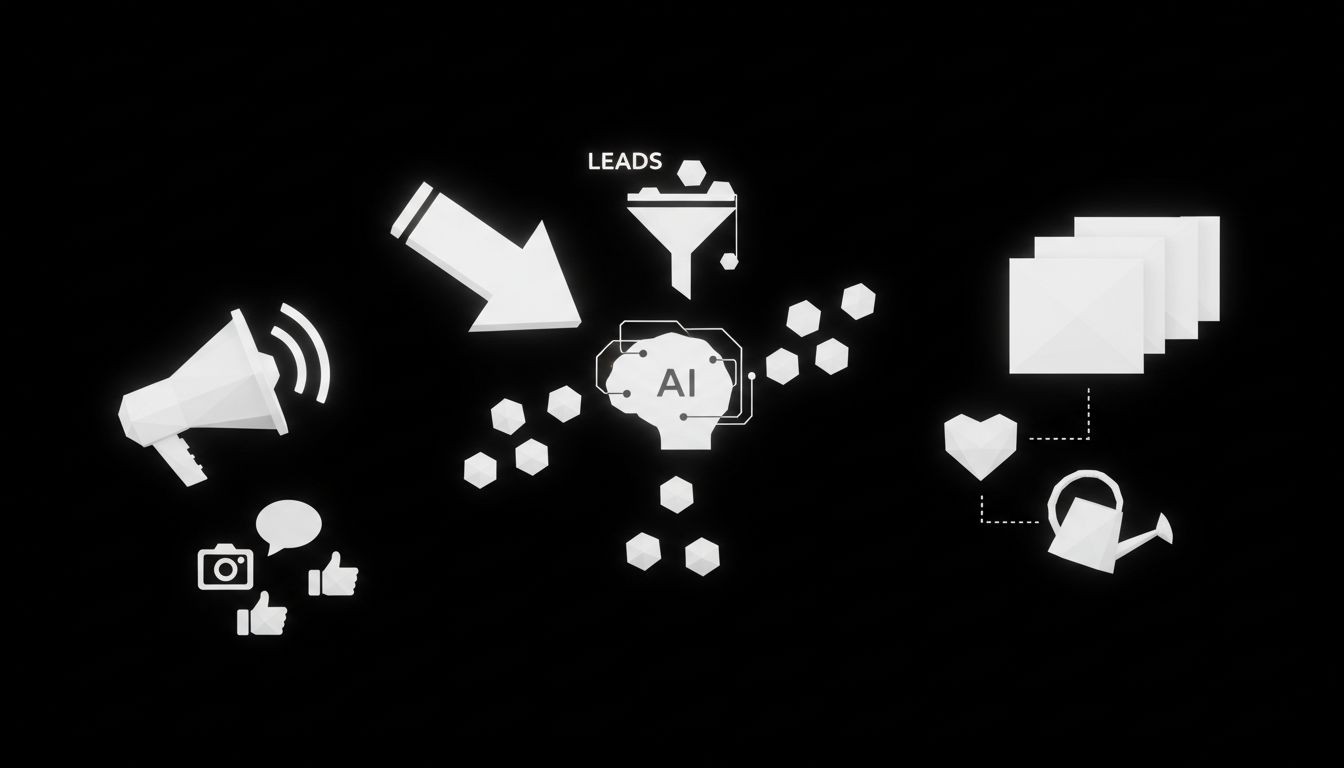
The process breaks down into four clear stages: attract, capture, nurture, and convert. Treat each stage as a system you can measure and optimize.
Attract - traffic and visibility
Channels to test:
Organic search and content - blog posts, guides, and SEO.
Paid search - short intent capture using Google Ads.
Social media - LinkedIn for B2B, Instagram and TikTok for B2C and discovery.
Paid social - Meta and TikTok ads for scalable top-of-funnel reach.
Referral and partner programs.
Emerging option: use AI-driven content and social scheduling to increase consistent output. Automate social hooks and use conversational AI to answer initial queries at scale.
Capture - landing pages, forms, and chat
Capture mechanisms should reduce friction. Use short, targeted landing pages with a single action. Test the number of form fields. Consider progressive profiling so you capture minimal info initially and enrich over time.
Live chat and conversational AI change the game. AI chat agents can answer pre-sales questions, capture high-intent visitor details, and book meetings automatically. If you are building chat flows, see implementation approaches for AI chat agents at Automated AI Chat Agents - The Social Search.
Conversion tips for capture:
Make the CTA obvious and relevant to the traffic source.
Offer a lead magnet that solves a narrow problem.
Use social proof and a clear value proposition above the fold.
Nurture - sequences and personalization
Once you capture a lead, fast and relevant follow-up matters. Use a tiered approach:
Immediate confirmation - send a thank you and deliver the promised asset.
Short-term nurture - 3 to 5 targeted emails over two weeks with educational content, case studies, and next steps.
Qualification and scoring - route to sales when activity indicates intent.
Long-term nurture - for leads that are not ready, add to an evergreen drip with monthly value content.
Example 5-email nurture sequence for a B2B SaaS MQL:
Email 1 (Immediate): Deliver the ebook, quick wins checklist, and a link to book a demo.
Email 2 (Day 3): Case study showing ROI for a similar customer.
Email 3 (Day 7): Product walkthrough video and answers to common objections.
Email 4 (Day 14): Comparison guide and a limited-time trial offer.
Email 5 (Day 30): Invitation to a webinar and a one-click calendar link.
Timing and content matter more than length. Use behavior-triggered emails when a lead revisits pricing or uses a chat function.
Convert - handoff and sales enablement
Set clear Service Level Agreements between marketing and sales. Define:
What constitutes an MQL and an SQL.
Response time requirements for follow-up.
Handoff method, such as a CRM task or warm intro email.
Use meeting booking links and playbooks for SDRs to handle leads that come through chat or paid channels.
Channel-specific tactics: SEO, SEM, Social, and Paid Ads

SEO and content marketing
Focus on targeted intent keywords and content that answers buyer questions.
Use gated assets only when the asset provides clear incremental value.
Optimize CTAs within blog posts to match intent.
For a primer on search and how it interacts with paid strategies, see What Is SEM in Marketing.
Paid search and display
Use short, intent-focused landing pages.
Test phrase match and broad match modifiers for discovery.
Track conversions with server-side or first-party methods to reduce data loss.
Social media and AI-driven creative
Use short video and vertical formats for discovery on TikTok and Reels.
For B2B, LinkedIn still performs well for targeted account outreach.
Often the fastest way to scale test creative is to pair short social ads with an AI creative assistant that generates variants.
Running Meta and TikTok ads
For Meta, test audience segmentation with lookalikes and retargeting pools.
For TikTok, prioritize creative testing and early funnel interest drivers. Use landing pages optimized for mobile speed.
Allocate an experimentation budget before scaling to find winning creative and hooks.
If paid ads are central to your plan, review best practices for ad operations and measurement at Paid Ads Management - The Social Search.
Lead qualification and scoring: turning activity into signal
A practical scoring model assigns points to behaviors and firmographic signals. Example scoring rules:
+10 points - visited pricing page
+8 points - downloaded product guide or whitepaper
+5 points - attended webinar
+3 points - opened three emails in a week
-5 points - unsubscribed or bounced email
Set thresholds for actions:
MQL threshold: 15 points
Sales-ready (SQL): 25 points or explicit demo request
Advanced approach: use predictive scoring that incorporates intent signals such as repeat visits, time on key pages, and ad engagement. Multi-touch attribution helps you see which channels contribute to pipeline rather than just first-touch lead volume.
Tools and technology stack by business stage
Choose tools that fit your resources and scale. Basic stack components include CRM, email automation, landing page builder, ad platform connectors, analytics, and chat.
Guide by stage:
Solo or bootstrap ($0 - $1K monthly): Use an affordable CRM with built-in forms, a landing page builder, and lightweight email automation. Focus on organic content and low-budget social ads.
Growth stage ($1K - $10K monthly): Add paid social and search, a more robust marketing automation platform, and chat with simple automation.
Enterprise ($10K+ monthly): Predictive scoring, CDP, server-side tracking, dedicated attribution tools, and advanced chat agents with integrations.
For a deep dive into CRM strategy and automation that supports lead generation, see What Is CRM in Marketing: A Complete Guide to Strategy, Automation, AI, and Growth - The Social Search.
If you want service-level help to automate lead generation, this resource is useful: Automated Lead Generation - The Social Search.
Privacy, compliance, and first-party data
Data privacy affects how you track, target, and retarget leads. Prioritize:
Collecting first-party data through gated content and direct relationships.
Transparent consent on forms and clear privacy notices.
Server-side measurement and first-party event collection to reduce dependency on third-party cookies.
Keep a record of consent and provide easy ways for users to update preferences. When you implement analytics, map which personal data fields are stored and who has access.
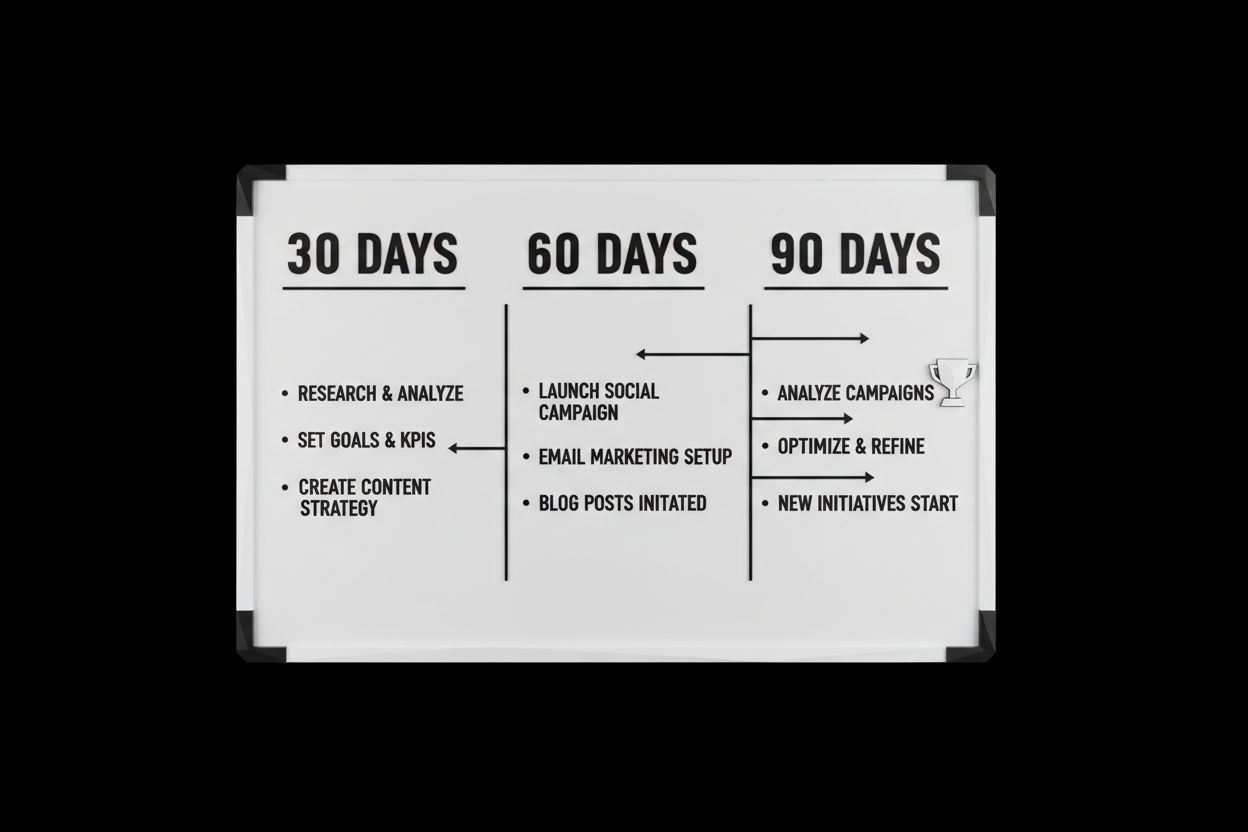
Quick start plans by budget: 30/60/90 day roadmaps
Choose a plan based on your budget and team size.
Shoestring plan (0 - 30 days)
Day 1-7: Identify your best performing content and convert it into a lead magnet.
Day 8-21: Build a single landing page and short email sequence.
Day 22-30: Run a small social ads test for $200-$500 to validate the magnet.
Growth plan (30 - 60 days)
Week 5-8: Add an AI chat agent to capture website intent and book meetings.
Week 9-12: Expand paid tests on Meta and TikTok and optimize landing pages.
Begin A/B testing forms and CTAs.
Enterprise plan (60 - 90 days)
Integrate predictive scoring and a CDP.
Implement server-side tracking and advanced attribution.
Scale high-performing channels and automate handoffs to sales.
Spread effort across attract, capture, and nurture so you have both short-term wins and a long-term engine.
Troubleshooting and common mistakes
When campaigns underperform, audit these items:
Traffic mismatch: Are you sending the wrong traffic to a high-commitment landing page? Align ad creative to the landing page promise.
Form friction: Test removing fields or using progressive profiling.
Slow response: Leads that do not receive timely follow-up drop off fast. Track response times and automate immediate confirmations.
Poor lead routing: Ensure leads reach the right salesperson with context and lead score.
A quick A/B testing checklist:
Test one variable at a time.
Run tests long enough to reach statistical significance.
Use the winning variant to inform other pages and channels.
Lead generation maturity model and next steps
A maturity model helps you prioritize investment:
Stage 1 - Ad hoc: Basic forms and ad tests. Focus on simple capture and fast follow-up.
Stage 2 - Repeatable: Defined nurture sequences and scoring. Start automation and predictable reporting.
Stage 3 - Optimized: Predictive scoring, multi-touch attribution, and AI personalization.
Stage 4 - Integrated: Real-time orchestration between systems, advanced privacy-first measurement, and account-based engagement.
If you want to automate more of your lead generation workflow, including chat and campaign automation, explore services that can implement a tailored system for your team at Automated AI Chat Agents - The Social Search.
Final checklist before you launch
Map the funnel with goals and metrics for each stage.
Create one high-value lead magnet and a matching landing page.
Set up an immediate confirmation touch and a short nurture flow.
Define lead scoring and handoff criteria.
Implement privacy-first tracking and consent capture.
Run small experiments on creative and landing pages before scaling spend.
Lead generation in marketing rewards iteration and clarity. Start with measurable experiments, keep what scales, and use automation and AI where it saves time and improves qualification. If you need hands-on help building a predictable engine, the next logical step is to combine automation with a focused paid channel test and tight sales alignment. For implementation support and managed campaigns, consider speaking with specialists at Automated Lead Generation - The Social Search.
If you follow this framework, you will have a clear path from attracting traffic to converting qualified leads into customers.