What Is SEM: The Complete Guide to Search Advertising, Budgets, and Strategy
What is SEM? Discover how search advertising drives predictable leads—practical budgets, CPC benchmarks, launch checklists, templates, and a 30/60/90 scaling roadmap.
Search queries are intent in motion: people actively looking for a solution, product, or service. Search Engine Marketing (SEM) lets you intercept that intent with paid listings, turning high-intent queries into predictable leads. This guide answers the central question — what is SEM — and then goes further: real budget examples, industry benchmarks, troubleshooting, a 30/60/90 roadmap, templates, and advanced tactics that founders, operators, and marketing leaders can act on immediately.
What is SEM?

SEM (Search Engine Marketing) is the practice of using paid advertising to appear in search engine results. In practical terms, SEM typically refers to pay-per-click (PPC) campaigns on platforms like Google Ads and Microsoft Advertising (Bing). Unlike SEO, which focuses on earning organic rankings, SEM buys visibility for specific queries using bids, ad creatives, and audience signals.
Key elements at a glance:
Pay-per-click (PPC): You pay when someone clicks your ad.
Keywords: You choose the search terms that trigger your ads.
Ad creative: Headlines, descriptions, and extensions that persuade clicks.
Landing pages: Where traffic converts (leads, purchases, sign-ups).
Bidding & automation: How much you pay and when your ads appear.
Understanding what is SEM starts with the mindset: SEM converts intent into action, and it’s measurable and scalable when done properly.
Why SEM matters for founders and marketing leaders
SEM is uniquely valuable for teams that need predictable lead generation and short-term growth. Benefits include:
Immediate visibility for high-intent queries.
Granular control over spend and targeting.
Faster testing and iteration than organic channels.
Clear attribution to measure ROI (when tracking is set up correctly).
For startups and B2B companies where time to pipeline matters, SEM can be the fastest way to validate ICPs, positioning, and pricing.
SEM vs SEO: How they work together
SEO (Search Engine Optimization): Improves organic rankings over weeks/months. Great for long-term, low-cost traffic.
SEM (Search Engine Marketing): Buys visibility instantly for targeted queries. Great for predictable short-term results and testing.
Best practice: use SEM to test keyword-to-offer fit and copy quickly; then invest in SEO for winning queries to reduce long-term CAC (customer acquisition cost).
How SEM works: components and mechanics
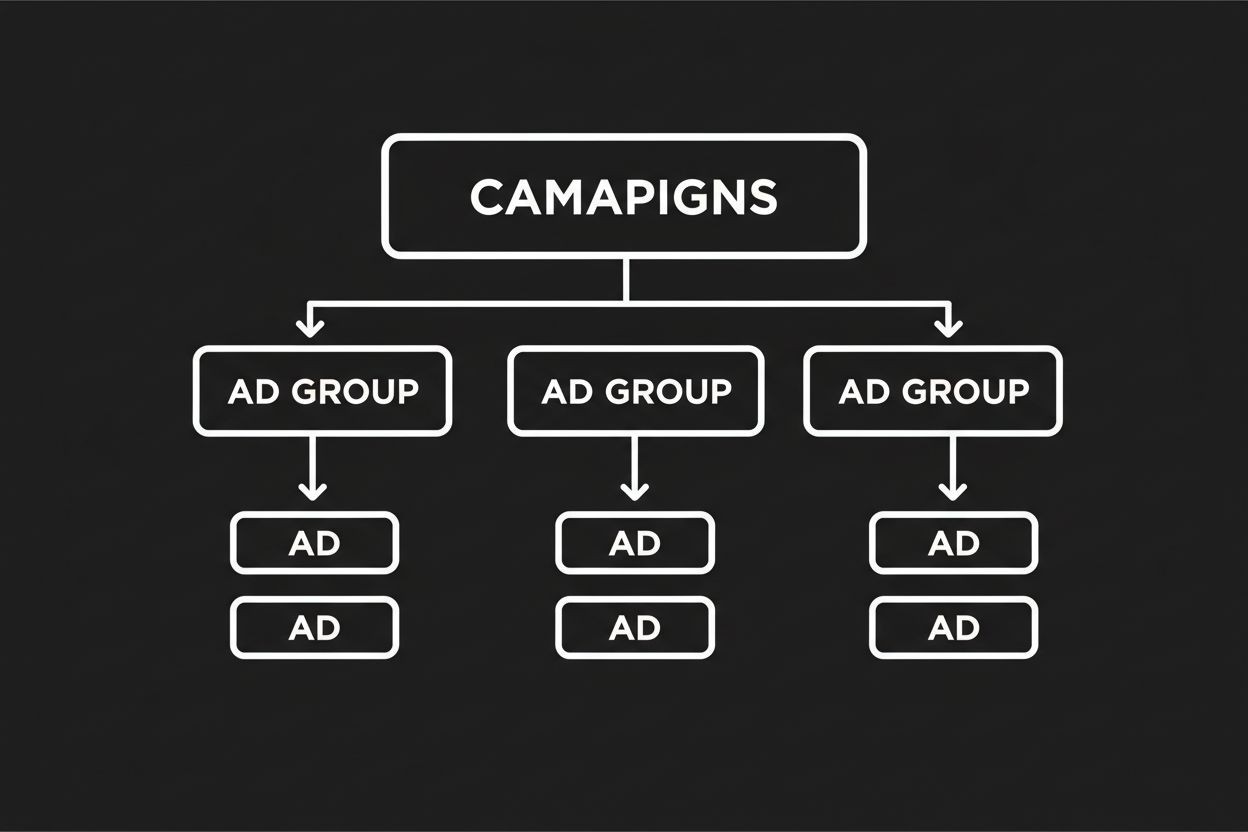
SEM campaigns are built from the ground up. Here’s the typical structure and key mechanics:
Campaign structure
Account > Campaign > Ad Group > Ad > Landing Page
Keywords and match types
Broad, phrase, exact, negative keywords control which search queries trigger ads.
Keyword selection should combine intent (commercial/transactional) with volume and cost considerations.
Ad creatives and extensions
Headlines and descriptions that match intent and include calls to action.
Extensions (sitelinks, callouts, structured snippets) increase real estate and CTR.
Bidding and Quality Score
Bids determine auction competitiveness; Quality Score (Google) influences CPC and ad rank.
Quality Score depends on expected CTR, ad relevance, and landing page experience.
Targeting and audiences
Device, location, hour, and audience signals (remarketing lists, custom intent).
Use audience layering to prioritize high-value users.
Measurement and conversion tracking
Track conversions via tags (Google Tag Manager, server-side options) and import offline conversions for true ROI.
Costs, budgets, and real-world benchmarks
One gap most beginner guides miss is realistic numbers. Below are practical examples and a simple ROI calculation.
CPC ranges (approximate averages — vary by region and competition):
B2B SaaS (mid-funnel keywords): $5–$20 per click
E-commerce (product keywords): $0.50–$3 per click
Legal & finance: $20–$200 per click (high value)
Local services (plumber, locksmith): $3–$25 per click
Sample monthly budgets and outcomes
Test phase (small company): $1,000–$3,000 — learn high-intent keywords, build messaging
Growth phase (scaling leads): $5,000–$25,000 — optimize for CAC and conversion rate
Aggressive scale (mature product with high LTV): $25,000+ — expand keywords and geographies
Simple ROI calculation example
Avg CPC: $5
Clicks per month (with $5,000 spend): 1,000 clicks
Conversion rate (landing page): 4% → 40 leads
Avg deal size or LTV: $5,000
Close rate: 10% → 4 customers → $20,000 revenue
Spend: $5,000 → Profit before other costs: $15,000
Use this template to model your own campaigns: (Spend / CPC) * CR * Close Rate * Avg Deal = Estimated Revenue.
Creating an SEM strategy: step-by-step
Define objectives and unit economics
What’s a qualified lead? What can you pay to acquire it and still be profitable?
Keyword research and prioritization
Use search volume, relevance, intent, and competitor presence to rank targets.
Landing page & offer alignment
Align ad messaging to landing page headlines, offers, and CTAs to maximize Quality Score and CR.
Campaign architecture
Start with tight ad groups (3–5 keywords each) and expand once winning keywords emerge.
Bid strategy and budgets
Start manual or enhanced CPC for control; move to target CPA/ROAS when you have consistent conversion data.
Measurement and reporting
Implement conversion tags, import offline conversions, and set up a simple dashboard for CAC and LTV metrics.
Iterate and expand
Expand match types, add SKAGs (single keyword ad groups) for high-performing terms, test creatives.
Campaign launch checklist
Conversion tracking implemented and validated
Landing page aligned with ad copy
Negative keywords list initialized
Ad variants ready (3+ per ad group)
Daily budget and bids set
UTM parameters for analytics
Common mistakes and troubleshooting: why isn’t my campaign working?
If your campaign isn’t delivering, start with this checklist:
Low impressions: Check bids, budget caps, targeting geography, and keyword match types.
High impressions, low CTR: Improve ad relevance, test different headlines, use ad extensions.
High CTR, low conversions: Check landing page UX, page speed, offer clarity, and tracking accuracy.
Spiking CPCs: Inspect competitor auctions, quality score, and bid strategy. Add negative keywords.
Conversion tracking issues: Validate tags, event firing, and ensure no duplicate or missing conversions.
Example troubleshooting flow for low conversions:
Verify conversion events fire correctly using tag assistants.
Split test landing pages (A/B) with different headlines and CTAs.
Review traffic quality via analytics (bounce rate by keyword).
Exclude low-intent keywords and refine match types.
Layer in audience targeting (remarketing, in-market) for higher intent.
Industry-specific playbooks
E-commerce
Use product-specific keywords and shopping campaigns.
Combine SEM with dynamic remarketing and promo extensions.
Target high-intent terms (“buy [product] online”) and optimize product feed.
SaaS & B2B
Target solution and problem-focused queries (“best [software] for [use case]”).
Use lead capture gating with content offers and nurture via email.
Bid on competitor terms carefully; test with a small budget first.
Local businesses
Focus on location-based queries and call extensions.
Use local inventory ads or service area targeting to increase relevance.
Optimize for calls and appointment bookings as primary conversions.
B2B enterprise
Target top-of-funnel education queries plus bottom-of-funnel intent.
Use longer sales cycle attribution (import offline conversions, CRM integration).
Employ account-based advertising (custom intent audiences, customer match).
Advanced tactics and automation
Responsive Search Ads (RSA): Let the platform mix headlines/descriptions for best-performing combinations.
Smart bidding (Target CPA/ROAS): Use when you have reliable conversion data.
Audience layering: Combine keywords with remarketing lists and custom intent to boost efficiency.
Scripts and automation: Pause poor-performing keywords, scale winners, and automate reporting.
Server-side conversion tracking: Improve accuracy and ensure compliance with ad platform policies.
When scaling, prioritize systems: automated rules for budget pacing, anomaly detection alerts, and centralized dashboards.
Metrics, tracking, and attribution deep dive
Essential SEM KPIs
Impressions, Clicks, CTR
CPC, Cost per Conversion (CPA)
Conversion Rate (CR)
Return on Ad Spend (ROAS)
Lifetime Value (LTV) and CAC
Tracking setup best practices
Implement Google Tag Manager and validate with preview modes.
Use server-side tracking for reliability and privacy compliance.
Import CRM conversions and offline sales to align ad spend with revenue.
Attribution models
Last click: Simple, but undercounts assistive touchpoints.
Data-driven: Uses your data to attribute credit; recommended when available.
Multi-touch linear/time-decay: Useful for longer B2B funnels.
Reporting & dashboards
Create a dashboard that ties spend to pipeline: Ad spend → Leads → Opportunities → Revenue. This is the only way to judge true ROI.
30/60/90 day roadmap: what to expect
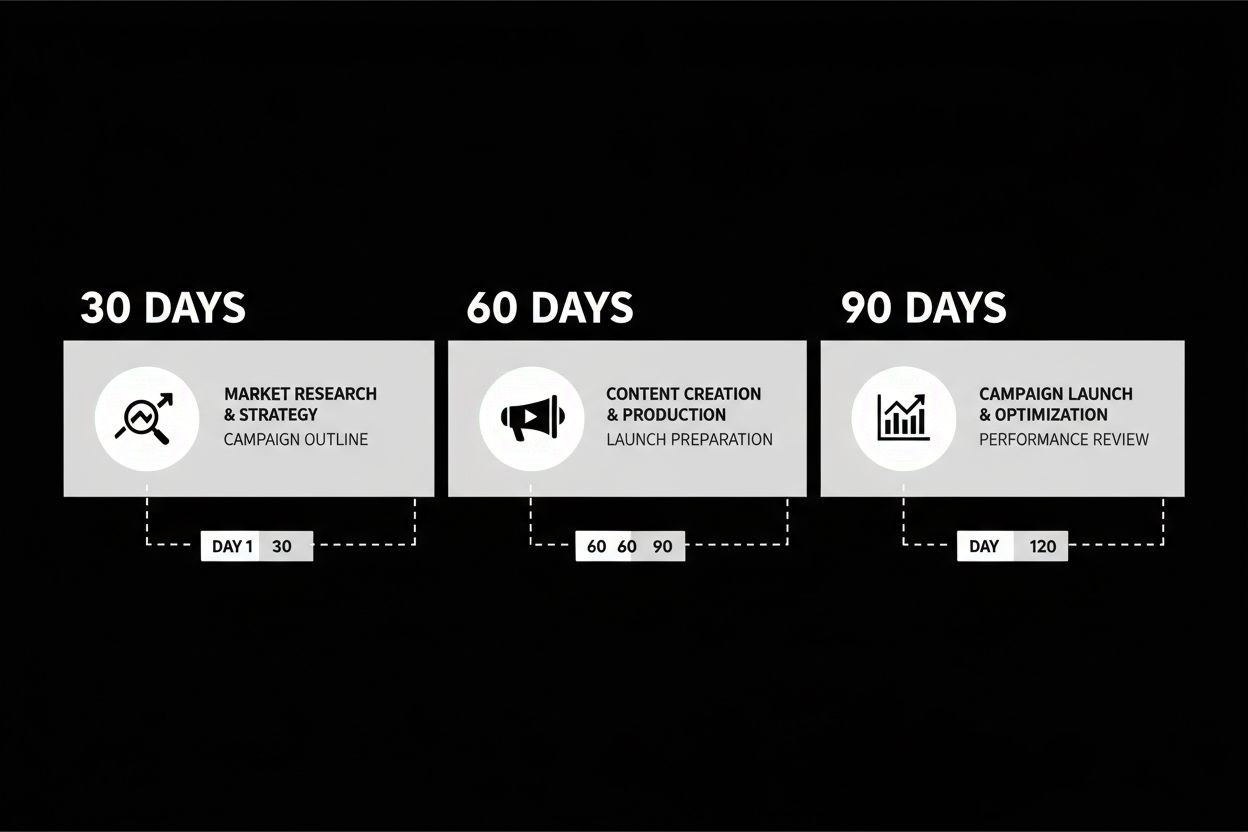
30 days — Foundation
Launch test campaigns with highest-intent keywords.
Validate tracking and baseline conversion rates.
Identify 3–5 winning keywords and 2 high-converting landing page variants.
60 days — Optimize
Shift budget to winning keywords and ad groups.
Start smart bidding for stable conversion sets.
Launch remarketing lists and test audience layering.
90 days — Scale
Expand keyword set and geographies.
Implement automated rules and scripts for efficiency.
Integrate CRM conversions for full-funnel attribution and optimize to LTV/ROAS.
Realistically, expect incremental improvements each period — don’t expect perfect scale overnight. The 30/60/90 cadence is about building measurement confidence then scaling.
Legal, policy, and privacy considerations
Trademark bidding: Platforms have rules about using competitor trademarks in ad text; bids on terms vary by region and policy.
Ad policy compliance: Review disallowed content, editorial requirements, and destination requirements for landing pages.
Privacy & tracking: Ensure consent management for regions under GDPR/CCPA and consider server-side tracking to reduce data loss while maintaining compliance.
Tools and resources (recommended ecosystem)
Keyword research
Google Keyword Planner — free, baseline volumes.
Ahrefs / SEMrush — competitive intelligence and keyword gap analysis.
Bid & automation
Google Ads scripts — free, programmable automation.
Optmyzr, Kenshoo — enterprise bid management and automation.
Landing pages & CRO
Unbounce, Leadpages — rapid landing page testing.
Google Optimize / VWO — A/B testing platforms.
Tracking & analytics
Google Analytics 4 + GTM
Server-side tagging solutions
Reporting
Looker Studio (formerly Data Studio) — customizable dashboards.
Templates: ad copy and keyword research
Ad copy templates (fill in brackets):
[{Keyword} — Main benefit] Headline
Description: [Short benefit statement] • [CTA]
Example for SaaS: “[CRM for Small Teams] — Save 3 Hrs/Week. Try Free 14-Day Trial.”
Keyword research template (columns):
Keyword | Intent (Transactional/Commercial) | Volume | Avg CPC | Difficulty | Current Rank | Priority
Use these templates to speed up planning and handoffs to copywriters and designers.
Final checklist before you scale
Tracking validated and CRM conversions imported
Clear target CPA or ROAS aligned with unit economics
Landing pages tested and optimized for conversions
Negative keywords and exclusions set up
Automated rules and alerts in place for budget pacing
SEM can be both a growth engine and a laboratory for messaging and positioning. If you treat it as a system — not a campaign-by-campaign scramble — it becomes a predictable source of qualified leads.
If you’d like help building an SEM plan tied to your unit economics and a 30/60/90 execution roadmap, we regularly work with founders and marketing leaders to design systems that scale without burning cash. Reach out for a tailored diagnostic and practical next steps.
Article created using Lovarank