AI Lead Generation Agency: The Complete Guide to Scaling Qualified Pipeline in 2026
Discover how an AI lead generation agency builds predictable pipeline with multi-channel AI, chat agents, ads, CRM integration, and a 30/60/90-day playbook.
If your sales team is burning time on manual prospecting and low reply rates, an AI lead generation agency can turn that inefficiency into a predictable pipeline. This guide walks you through what these agencies do, how they pair AI and humans, real-world channels to use, measurable outcomes you should expect, and a step-by-step implementation plan you can adopt in 30, 60, and 90 days.
Why AI lead generation matters now

Sales and marketing teams are under pressure to deliver more qualified leads with fewer resources. B2B buyers are harder to reach and respond more slowly. An AI lead generation agency applies machine learning and automation to find, score, and engage prospects across email, LinkedIn, chat, and paid channels. The result is faster prospect discovery, higher reply rates, and the ability to scale outreach without ballooning headcount.
What changes today compared with manual lead gen
Faster data enrichment and prospect research using AI models
Personalization at scale without writing hundreds of manual versions
Cross-channel orchestration so prospects see coordinated messages on email, social, and ads
Real time lead scoring that prioritizes follow up for reps
This is not about replacing salespeople. It is about removing repetitive tasks and putting human energy where it converts best.
What is an AI lead generation agency?
An AI lead generation agency combines data, automation, and human review to build predictable pipeline. Services typically include targeting and account selection, contact discovery, enriched prospect profiles, AI-generated personalized outreach, multi-step sequences, conversation handling with AI chat agents, and CRM integration.
Core benefits you should demand
Reduced manual prospecting time by 30 to 60 percent
Higher reply and meeting rates through personalized sequencing
Lower cost per qualified lead by cutting human hours and wasted outreach
Scalable campaigns that can reach hundreds of ideal prospects weekly
For a practical example, see an agency approach that pairs outbound with paid ads and chat agents to accelerate conversions. A useful resource on aligning automated lead generation with marketing automation is this guide on Lead Generation and Marketing Automation Guide for 2026 Success.
How an AI lead generation agency works
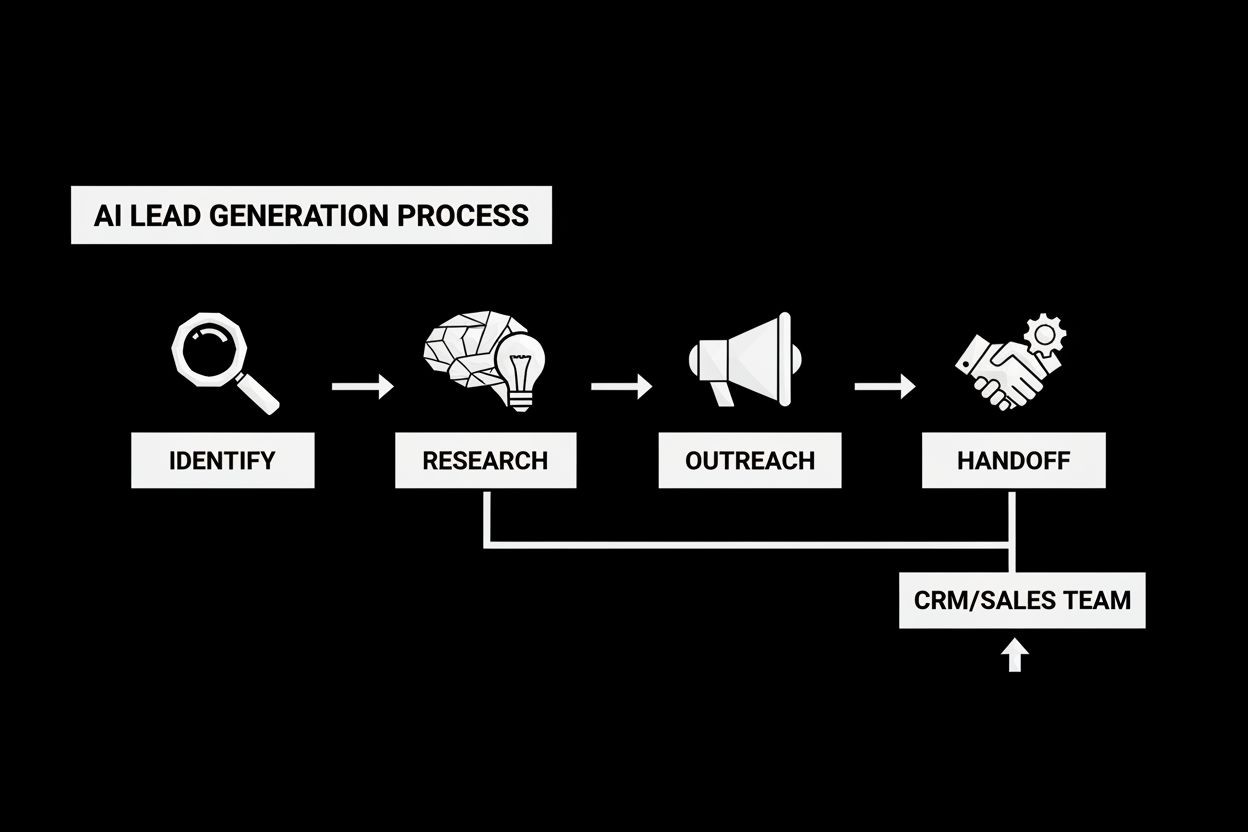
A reliable process tends to follow five steps. Each step blends AI capabilities with human oversight.
Identify: Define ICP and target accounts. AI analyzes current customers to build audience models and lookalike sets.
Research: Automated enrichment pulls firmographic, technographic, and intent signals to build prospect profiles.
Outreach: AI writes and sequences multi-channel messages across email, LinkedIn, SMS, and chat. Human reviewers vet tone and personalization.
Engage: AI chat agents or SDRs handle replies, qualify prospects, and book meetings.
Handoff: Leads flow into CRM with lead scores and recommended next steps for sales.
Key integrations to expect
CRM platforms such as HubSpot or Salesforce
Email delivery and warmup systems
LinkedIn automation that follows platform rules
Paid ad platforms for Meta and TikTok
Analytics and reporting dashboards
If you want to align chat with lead capture, explore how Automated AI Chat Agents can be used to qualify inbound traffic and route hot leads to sales.
Channels and tactics that perform best
A multi-channel approach is essential. Relying on email only gives diminishing returns over time. High-performing agencies coordinate four channels.
Email sequences
Multi-step outreach with short, personalized lines
Subject line testing and cadence optimization
Follow up sequences with value adds such as case studies or invites
LinkedIn outreach
Connection requests with bespoke notes
Value-first messaging before the pitch
Profile optimization to boost accept rates
AI chat agents and website conversion
AI agents qualify inbound visitors and book meetings
Integration with live agents for hot handoffs
Paid ads (Meta and TikTok)
Lookalike audiences built from AI identified accounts
Dynamic creative optimization using AI to test headlines and visuals
Retargeting warm prospects with offers
For running paid campaigns in parallel with outreach, a coordinated paid strategy is critical. See operational approaches in our Paid Ads Management service page.
AI lead scoring methodology: how agencies predict who will convert
AI lead scoring is not magic. It combines historical data with signal weighting. A typical methodology looks like this:
Feature selection: firmographics, engagement events, intent signals, technographics, email opens, website behavior
Labeling: past conversions define what a positive outcome looks like
Model training: use classification models to predict conversion probability
Calibration: translate model output into score buckets such as Hot, Warm, Cold
Human validation: sales feedback loops improve accuracy over time
Action you can take: ask your agency for the top five predictive features they use and request how often the model retrains.
Tools and platforms to evaluate
Most agencies will combine off-the-shelf and proprietary tools. Common platforms include LinkedIn for outreach, email sequence tools, Apollo and ZoomInfo alternatives for data, and CRM systems for handoff. Compare tools on three axes: data quality, deliverability and compliance, and ease of integration.
Useful reading on how CRM and automation fit together is available in What Is CRM in Marketing.
Implementation: a practical 30/60/90 day plan
This timeline gives realistic milestones and ownership.
30 days: Planning and rapid testing
Week 1: Define ICP, target accounts, and success metrics (MQLs, meetings booked, CPL)
Week 2: Integrate CRM and data sources, set up tracking
Week 3: Build 2 email sequences, a LinkedIn sequence, and one chat bot flow
Week 4: Run a small pilot with 200 prospects and initial paid test on Meta or TikTok
60 days: Scale and optimize
Expand prospect lists to 1,000 accounts
Add personalization layers using dynamic tokens and AI fragments
Begin multi-variant A/B tests for subject lines, opening lines, and CTAs
Use initial replies to refine lead scoring and qualification rules
90 days: Ramp to predictable pipeline
Full rollout with weekly cadence and reporting
Implement retargeting ads for engaged but not converted prospects
Formal handoff SLA between marketing and sales
Monthly executive dashboard with conversion metrics and cost per qualified lead
For agencies that also manage organic social automation, you can link campaign calendars with outreach using tools outlined in Automated Social Media.
Multi-channel orchestration and A/B testing framework
Coordinating channels increases touchpoint relevance. A simple orchestration plan:
Day 0: LinkedIn connection or paid ad exposure
Day 2: Cold email with a personalized insight
Day 6: Follow up on LinkedIn with content share
Day 10: Retargeting ad featuring a case study
Day 14: Chat agent outreach when prospect visits pricing or features pages
A/B testing framework
Test one variable at a time such as subject line, opening sentence, or CTA
Run tests with statistically meaningful sample sizes before concluding
Collect qualitative feedback from replies to understand sentiment
Compliance, ethics, and deliverability
Responsible agencies treat privacy and deliverability as primary concerns. Key items to check:
GDPR and CAN-SPAM compliance for prospect lists and email content
LinkedIn best practices to avoid account restrictions
Email warm up and sending domain configuration to maintain deliverability
Data handling and storage policies, including opt-out and unsubscribes
Request clear documentation showing how the agency stores and processes prospect data and how it handles suppression lists. Also review the privacy policy on vendor pages and your own site. For contractual clarity, consult the privacy resources such as Privacy policy - My Framer Site.
Balancing AI and human involvement
The highest converting programs use AI to automate repeatable tasks and humans to handle nuance. A good split looks like this:
AI: prospect discovery, initial personalization, message generation, lead scoring, chat qualification
Human: final review of high-value messages, handling complex objections, demo calls, strategic account outreach
Create a rule set that escalates any conversation with buying intent to a human within a set SLA such as two business hours.
Common mistakes and how to avoid them
Spraying generic messages: Use short, insight-driven personalization instead
Over-automation without review: Implement human-in-the-loop for every new campaign
Ignoring data quality: Clean and enrich lists regularly
Not coordinating channels: Sync email, LinkedIn, ads, and chat for consistent messaging
A frequent blind spot is not aligning paid ads with outbound. Agencies that coordinate both channels convert faster. See how paid and organic can work together in the Automated Lead Generation overview.
Budgeting and ROI expectations
Budget variables include list cost, platform fees, ad spend, and agency retainer. Example baseline for initial three months:
Data and enrichment: $500 to $2,000 per month
Outreach platform and automation: $300 to $1,500 per month
Ads test budget: $3,000 to $10,000 over 90 days
Agency retainer: $3,000 to $10,000 depending on scope
ROI benchmarks to target
25 to 45 percent improvement in reply rates from personalized sequences
3x higher meeting to close conversion when leads are qualified by AI + human
Reduced cost per qualified lead over time as models optimize
Ask your agency for an ROI projection using your average deal value and conversion rates. If you do not have that readily available, an agency should help you build a simple ROI model during onboarding.
Measuring success: metrics to track
Meetings booked per week
SQL to opportunity conversion rate
Cost per qualified lead
Reply and acceptance rates by channel
Lead velocity and pipeline coverage
Ensure dashboards reflect both short term activity metrics and long term revenue impact.
Vendor selection checklist
When evaluating an AI lead generation agency, compare using this checklist:
Can they show verified case studies and metrics?
Do they integrate with your CRM and sales stack?
How do they handle data privacy and compliance?
What is the balance between automation and human oversight?
Do they run multi-channel campaigns including paid ads and chat?
How transparent is their pricing and reporting?
For a deeper look at how automated website experiences and chat can help conversion, review Automated Website Creation and match the approach with your outreach.
FAQs
Q: How many leads can an agency deliver weekly?
A: It depends on your ICP and budget. After a 90 day ramp you can expect a steady weekly flow tied to your target list size and ad spend.
Q: Will AI outreach look robotic?
A: Not if personalization is done right. Use short human-sounding messages, reference specific insights, and escalate to human follow up when prospects reply.
Q: Is this legal on LinkedIn?
A: Agencies must follow LinkedIn terms and avoid automated actions that violate policies. Ask for their compliance practices and rate limits.
Conclusion and next steps
An AI lead generation agency can be a force multiplier when it pairs smart models with human judgment, respects privacy, and coordinates channels. If you are ready to test, start with a 30 day pilot that includes a small paid test, two outreach sequences, and CRM integration. Track early metrics and iterate quickly.
If you want a combined approach that includes chat agents, paid ads, and social automation, see our services for Automated AI Chat Agents, Paid Ads Management, and Automated Social Media. For ongoing insights and strategy, our blog and insights cover case studies and advanced playbooks you can adapt.
Ready to move from manual prospecting to predictable pipeline? Start by documenting your ICP, confirming CRM integration, and running a focused 30 day pilot. That single step will reveal whether AI-driven lead generation is the right lever to scale your revenue reliably.