How to Build and Scale a Profitable LinkedIn Automation Agency: Complete Guide
Step-by-step guide to building a profitable LinkedIn automation agency, with pricing, tech stack, workflows, and a 90-day roadmap for consistent client results.
If you are thinking about turning LinkedIn outreach automation into a repeatable service, this guide walks through everything you need to win clients, deliver results, and scale profitably. You will get concrete pricing templates, a campaign playbook, tech stack blueprints, onboarding and reporting checklists, and safeguards to keep client accounts safe while maximizing meeting volume and ROI.
Why start a LinkedIn automation agency

LinkedIn remains the single best platform for B2B lead generation when the audience is decision makers and founders. A LinkedIn automation agency packages outreach expertise, technical automation, and messaging optimization into a repeatable, scalable product. Clients hire agencies because they want predictable pipeline without hiring or managing SDRs.
Top reasons the model works now:
High demand from SaaS, consulting, recruiting, and professional services.
Predictable unit economics once you standardize ICPs, sequences, and reporting.
Strong complementarity with paid ads, content, and AI chat agents to capture and convert warm responses.
Typical client outcomes to promise and measure:
Increased connection acceptance rates and qualified conversations.
Meetings booked per month per account.
Cost per meeting compared with hiring an SDR.
If you already run lead generation services, adding LinkedIn automation is a natural upsell. For agencies focused on paid social, pairing a LinkedIn outbound channel with Meta or TikTok ad funnels increases top of funnel predictability and lowers overall cost per qualified lead. Consider offering integrated packages combining automated LinkedIn outreach with paid ads and AI chat agents to capture responses 24 hours a day. For help with paid ad integrations see Paid Ads Management - The Social Search.
Business models and pricing
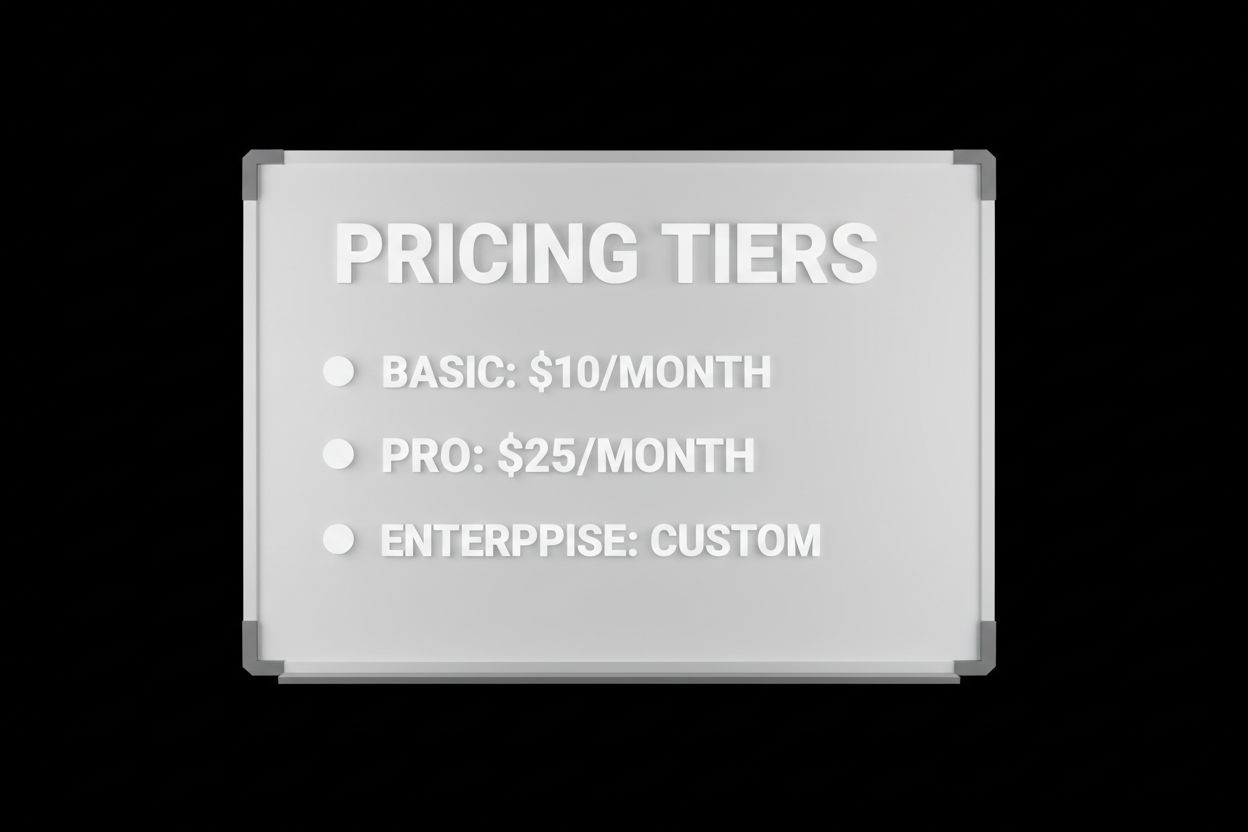
Choose a business model early. Each has trade offs in revenue predictability, margin, and operational complexity.
Service models
Done-for-you (DFY): You own prospecting, sequences, inbox management, and reporting. Higher price, higher margins, and greater delivery complexity.
Done-with-you (DWY): You provide the automation framework, templates, and training. The client runs some operations. Lower price, faster onboarding.
White-label / Reseller: Other agencies resell your service. Requires tight processes and SLAs.
SaaS / Tool + Managed Services: Offer a tool or dashboard plus managed campaign bundles.
Pricing guidelines
Minimum retainer per client: $3,000 to $10,000 per month for DFY packages depending on deliverables. Agencies that want to scale profitably often set a practical minimum of $10,000 per month when including managed inbox handling and multi-account setups.
DWY packages: $1,500 to $4,500 per month plus one-off onboarding fees.
Additional add-ons: Lead enrichment, calendar booking automation, custom copywriting, CRM integrations, and AI chat agent setup.
Sample packages
Starter - $3,000/mo: 1 account, 300 connections/month, basic sequence, weekly reporting.
Growth - $8,000/mo: 3 accounts, dedicated campaign manager, advanced sequences, CRM sync, calendar automation.
Enterprise - $15,000+/mo: Multi-account rotation, white-label reporting, SLA, dedicated technical engineer.
How to justify price to clients
Present a cost per booked meeting projection. Example: If you book 12 meetings/month from a $8,000 package, the cost per meeting is $667. Compare that to an in-house SDR cost of $4,000 to $6,000 per month for equivalent output.
Show pipeline attribution to revenue. If average deal size is $30,000 and 1 in 10 meetings close, 12 meetings translate to 1.2 deals or $36,000 in pipeline, which supports a clear ROI argument.
Contract and scope tips
Include clear deliverables, acceptance criteria, and a cancellation clause.
Timebox discovery and list enrichment phases to avoid scope creep.
Charge one-time onboarding fees for data cleanup and setup.
For agencies that want to layer automation beyond LinkedIn, create bundles that integrate automated social engagement, AI chat agents, and paid ads. If you need a reference on broader lead generation automation practices see Automated Lead Generation - The Social Search.
Operations and team structure
A lean, repeatable delivery model reduces churn. Typical roles and responsibilities:
Founder / Client Success: Sells and manages high-level client relationships.
Campaign Manager: Defines ICP, approves sequences, manages outcomes.
Automation Engineer: Handles tooling, proxies, account rotation, and integrations.
Copywriter / Messaging Specialist: Writes and A/B tests sequences.
QA / Compliance Specialist: Monitors accounts for safety and LinkedIn policy risks.
Virtual Assistant or Inbox Manager: Triage responses, route leads, and book meetings.
Onboarding process checklist
Discovery call to capture ICP, offer, objections, and CRM access.
Data handoff and list enrichment. Validate 1,000 to 3,000 prospects for a typical campaign.
Sequence design and 1-2 week warmup with low-volume activity to build account trust.
Pilot run (2 to 4 weeks) with performance KPIs and reporting cadence.
Transition to scale if pilot meets benchmarks.
SLA examples
Response time for critical issues: 4 hours.
Weekly performance report: Delivered every Monday.
Monthly strategy call: 30 to 60 minutes to adjust ICP and messaging.
Tech stack and integrations
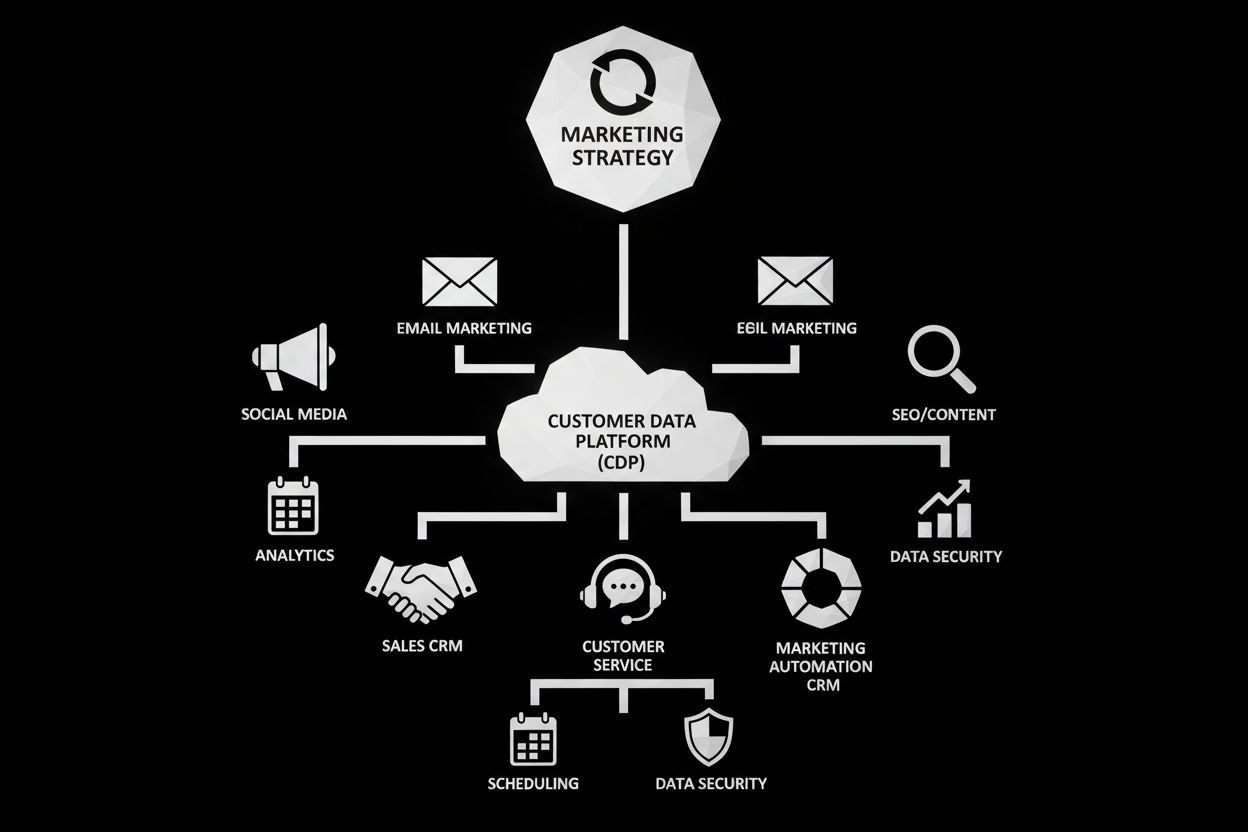
A reliable stack is key for multi-client operations. Components to standardize:
LinkedIn automation engine: The core software that sequences connection requests, messages, and follow-ups. Choose tools with multi-account support, rotation, and safety features.
Enrichment and list building: Tools to find emails, firmographics, and titles.
CRM: HubSpot, Salesforce, or Pipedrive for tracking opportunity stages.
Zapier / Make / n8n: For glue between LinkedIn tool, CRM, calendar, and chat agents.
Webhooks and API: For real-time routing of replies to AI chat agents and booking systems.
Proxies and account rotation: Residential proxies and careful warmup to reduce LinkedIn bans.
Unified inbox: Consolidate responses across accounts to avoid lost leads.
Example workflow
Prospect list exported or built in a tool like PhantomBuster or Apollo.
Enrich with company size, revenue estimate, and email where needed.
Import into automation engine and assign sequences.
Outbound message triggers route replies to a unified inbox.
AI chat agents handle qualification or live inbox managers book meetings.
Qualified opportunities sync to CRM and trigger paid media retargeting.
Integrations you should offer clients
Calendar integrations to auto-book meetings.
CRM sync for contact and deal creation.
Ad platform audience updates for retargeting warm responders.
If you are implementing AI chat agents as part of your service, integrate them to qualify and pre-pitch leads. See our guide on deploying AI chat agents for 24/7 capture at Automated AI Chat Agents - The Social Search.
Campaign setup playbook: step-by-step
Discovery
Define ICP, ideal titles, verticals, and negative criteria.
Agree on success metrics: acceptance rate, reply rate, meetings booked.
Data and enrichment
Clean lists and remove duplicates.
Add firmographic tags for segmentation.
Messaging and value proposition
Build 2 to 3 message variants.
Use short, personalized lines that reference a specific trigger like company update, role, or content.
Warmup and safety
Start with conservative daily limits for new accounts.
Use established accounts first, then scale with rotation.
Launch pilot
Send over 2 to 4 weeks with tight monitoring.
Record metrics per sequence variant and per persona.
Scale and optimize
Increase daily volumes per account while monitoring acceptance and reply rates.
Rotate sequences, pause underperformers, and double down on winners.
Sample 5-step sequence
Connection request: 1 line with clear context.
Follow-up 3 days later: Value add or quick question.
Nudge 6 days later: Social proof or case study.
Direct ask 10 days later: Short ask to book 20 minutes.
Final follow-up 14 days later: Polite close or resource.
Reporting templates
Weekly: Acceptance rate, reply rate, meetings booked, message variants tested.
Monthly: Cost per meeting, pipeline value, attribution to closed deals.
For broader lead generation playbooks and funnel integration examples check Lead Generation and Marketing Automation Guide for 2026 Success - The Social Search.
Safety, compliance, and failure modes
Common issues and fixes
Rapid account bans: Reduce daily limits, warm up new accounts, use IP rotation.
Low reply rates: Revisit ICP, personalize more, test new hooks.
High spam flags: Slow outreach and audit message language for spammy terms.
CRM misattribution: Ensure unique identifiers and webhook reliability.
Best practices
Maintain per-account daily caps and gradually ramp activity.
Use human review for high-value replies before handing to automation.
Keep a clear failover: blocked account workflow and immediate client notification.
Sales, retention, and upsells
Positions to prioritize when selling
Focus on outcomes like meetings and pipeline value.
Use case studies that show exact numbers: acceptance rate, meetings per month, and cost per meeting.
Retention strategies
Regular strategy sessions: Monthly KPI review and content refresh.
Value stacking: Add retargeting ads, content syndication, or AI chat agents to increase conversion rates.
Performance guarantees with fair exit clauses to reduce buyer risk.
Cross-sell opportunities
Pair LinkedIn outreach with paid social campaigns for account-based marketing.
Offer content packages to warm up prospects through thought leadership.
Add AI chat agents to handle off-hours and qualify inbound replies. Read more on social media automation services at Automated Social Media - The Social Search.
Scaling math and ROI example
Compare automation vs. hiring an SDR
Assumptions
Automation package: $8,000/mo for 3 accounts.
Expected meetings: 12 meetings per month across accounts.
In-house SDR cost: $5,000/mo fully loaded and books 8 meetings.
Calculation
Cost per meeting automation: $8,000 / 12 = $667.
Cost per meeting SDR: $5,000 / 8 = $625.
Interpretation
Automation is similar to SDR cost per meeting in this example. The real advantage is predictability, faster ramp, and the ability to scale to multiple accounts without expanding headcount. When you add retargeting, AI chat agents, and better lead enrichment the total cost per booked qualified meeting often drops below in-house alternatives. For agencies that add paid media, bundling both channels usually improves conversion and lowers combined cost per acquisition. See related paid ad integration ideas at Paid Ads Management - The Social Search.
90-day roadmap to launch
Week 1-2
Finalize pricing, core packages, and SLA templates.
Select core tech stack and onboard trial accounts.
Week 3-6
Build ICP templates and message libraries for 3 verticals.
Run pilot campaigns and refine warmup processes.
Week 7-12
Close first customers and deliver pilots.
Standardize reporting and automation playbooks.
Add cross-sell offers like AI chat agents and paid ads.
Checklist to launch
Legal and contract templates
Onboarding checklist and discovery form
Tech stack accounts and API keys
Message library and templates
Reporting dashboard and CRM flows
Final notes
Building a LinkedIn automation agency is less about the tools and more about the repeatable processes, safety controls, and honest economics you set for clients. Focus first on one vertical, prove predictable outcomes with a pilot, and then systematize delivery so margins improve as you scale. Pairing outreach with AI chat agents, social media automation, and paid ads can turn outreach into a reliable revenue channel for your clients and a stable recurring revenue stream for your agency. If you are ready to operationalize automation or want a partner for execution, explore our automated lead generation services at Automated Lead Generation - The Social Search.
If you want to talk through your first offering or template contracts reach out and we can help scope a pilot quickly.