8 Proven Strategies to Boost Leads and Sales in 2026
Discover 8 proven strategies to boost leads and sales in 2026. Learn how to leverage AI, optimize conversion, and achieve measurable growth in a changing market.
Dec 16, 2025
In 2026, the race for leads and sales will reach unprecedented heights as digital transformation accelerates and buyer expectations evolve. To stay ahead, businesses must adopt strategies that are not only innovative, but also proven to deliver measurable results. This article reveals eight actionable approaches designed to help you dramatically increase your leads and sales, no matter your industry. Discover how top companies are leveraging advanced automation, data-driven tactics, and creative engagement techniques to achieve future-proof growth. Ready to outpace the competition? Use this roadmap to implement winning strategies and secure your place at the forefront of the market.
Understanding the 2026 Lead Generation and Sales Landscape
The landscape for leads and sales in 2026 is rapidly evolving, shaped by new buyer expectations and digital innovation. To stay ahead, businesses must adapt their strategies, leveraging data, technology, and seamless collaboration between marketing and sales. Let us explore the critical shifts and proven approaches defining success in the coming years.
The Evolution of Buyer Behaviors and Digital Channels
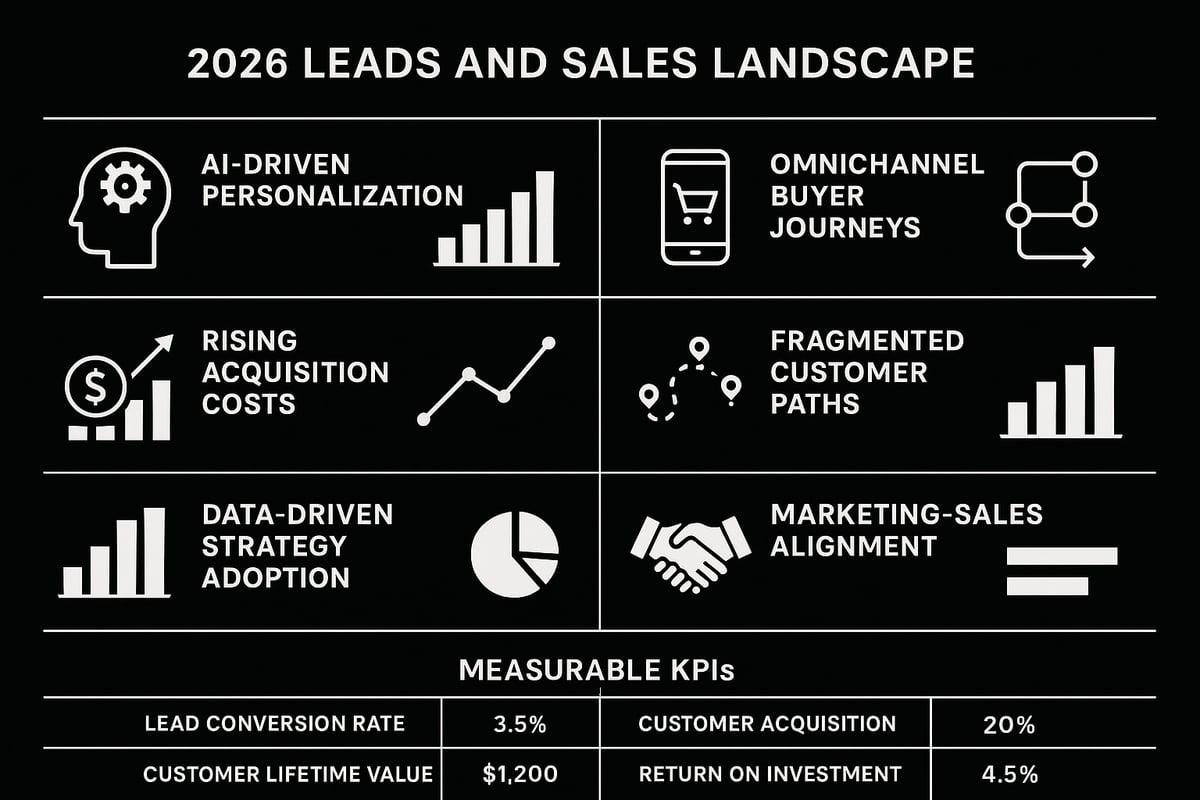
Buyer behaviors are shifting dramatically as consumers demand more control and personalization. Omnichannel experiences dominate, with buyers conducting self-service research across multiple platforms. AI-driven personalization and predictive analytics are now standard, elevating expectations for tailored interactions.
Authenticity is key. Buyers are increasingly skeptical and seek value-driven content, not just promotions. For example, 80% of B2B buyers now expect personalized outreach, and more decision-makers are involved in each purchase. To succeed in leads and sales, companies must provide genuine, relevant engagement across all channels.
Key Challenges Facing Businesses in 2026
Businesses face several challenges in securing leads and sales in 2026. The sheer volume of information has shortened attention spans, making it harder to capture interest. Digital ad spaces are saturated, pushing acquisition costs higher.
Customer journeys are fragmented, spanning devices and platforms, which complicates tracking and nurturing efforts. Scaling the qualification and nurturing of leads is increasingly difficult. Organizations must rethink how they attract and convert prospects to optimize leads and sales results.
The Importance of Data-Driven Strategies
Winning in leads and sales now depends on leveraging data at every stage. First-party and zero-party data are crucial for precise targeting. Real-time analytics allow marketers to optimize campaigns and sales outreach on the fly.
Automation is vital for lead scoring and managing the sales pipeline efficiently. For instance, businesses using AI-based lead scoring see conversion rates jump by 50%. Adopting a data-centric approach gives companies a measurable edge in leads and sales performance.
Integrating Marketing and Sales for Maximum Impact
Alignment between marketing and sales teams is no longer optional, it is essential for maximizing leads and sales. Consistent messaging and shared objectives help avoid gaps as prospects move through the funnel.
A seamless handoff between marketing-qualified and sales-qualified leads ensures no opportunity is lost. Closed-loop reporting enables both teams to refine strategies based on real outcomes. In fact, companies with aligned teams achieve 67% higher deal closing rates, proving the power of collaboration in leads and sales growth.
Setting Measurable Goals for Lead and Sales Growth
Setting clear, measurable goals drives continuous improvement in leads and sales. Key performance indicators include lead quality, conversion rate, and sales velocity. Regular testing and data-driven optimization are necessary to adapt to changing market dynamics.
For a deeper dive into comprehensive sales and lead generation strategies, explore proven methods that top businesses are using to thrive in 2026. By tracking KPIs and refining tactics, organizations can achieve sustainable leads and sales growth.
8 Proven Strategies to Boost Leads and Sales in 2026
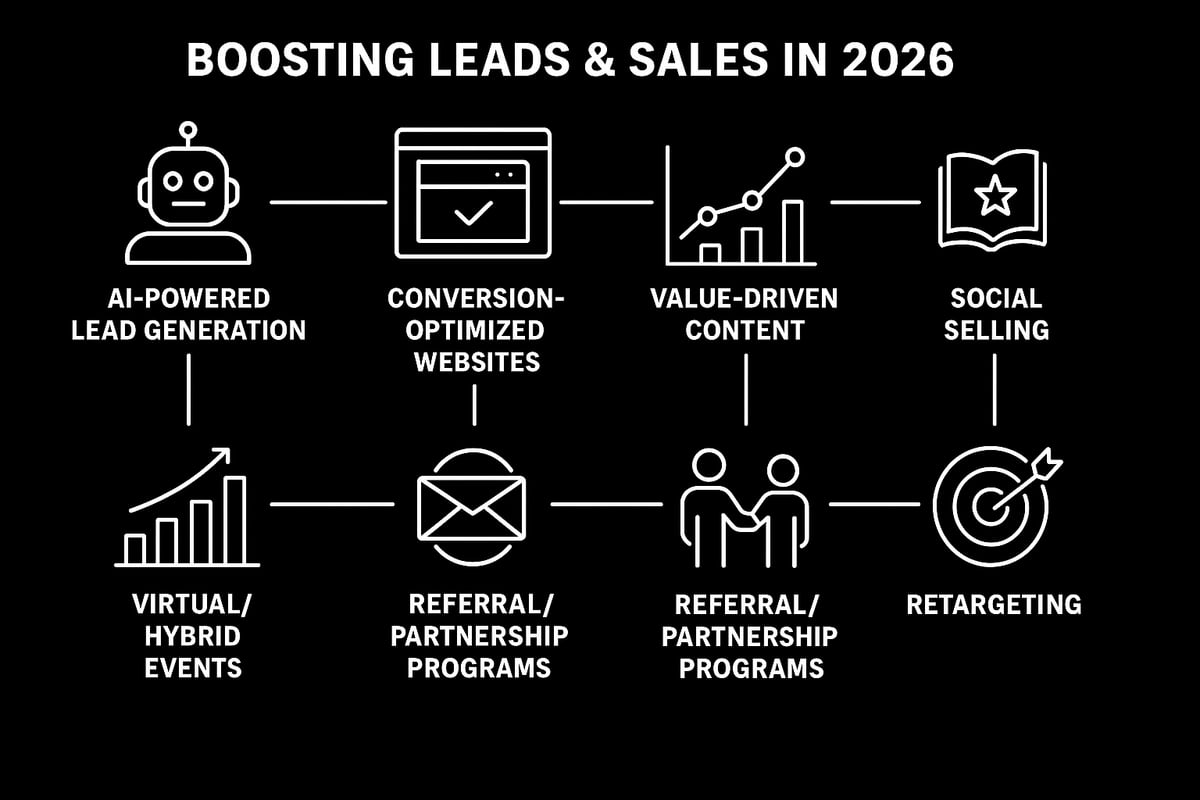
Staying ahead in 2026 requires businesses to adapt, innovate, and execute with precision. The following strategies are designed to help you generate more leads and sales, leveraging advanced technology, human connection, and proven best practices.
1. Leverage AI-Powered Lead Generation
AI is revolutionizing how companies identify, qualify, and nurture leads and sales opportunities. With intelligent algorithms, you can pinpoint ideal prospects in real time, ensuring your outreach is always relevant and efficient.
Integrate AI tools to automate the initial stages of prospecting. Chatbots and automated email sequences can handle early communication, freeing up your sales team to focus on high-value interactions. AI also enables personalized content and targeted offers based on behavioral and firmographic data, increasing the likelihood of engagement.
For example, AI chatbots have been shown to increase lead capture rates by 30%. Predictive lead scoring within your CRM further refines your pipeline, helping you prioritize leads and sales activities that deliver results. One SaaS company doubled its sales pipeline after deploying AI-driven workflows to streamline qualification and follow-up.
When adopting AI, always address privacy and ethical considerations. Leading platforms like HubSpot AI and Salesforce Einstein offer transparent, compliant solutions. For a deeper dive into these methods, explore AI-powered lead generation insights.
2. Optimize Your Website for Conversion
Your website is the digital front door for leads and sales. To maximize its impact, deploy dynamic landing pages tailored to each visitor segment. Use A/B testing to refine calls-to-action, button placements, and messaging, ensuring every element is optimized for conversions.
Integrate live chat and conversational marketing features to engage visitors instantly. Streamline forms for both mobile and desktop users, reducing friction and making it easy to take the next step. Businesses with optimized landing pages typically see a 20% increase in conversions.
Build trust by showcasing testimonials, case studies, and security badges. Use exit-intent popups and retargeting ads to recover visitors who are about to leave. Regularly review heatmaps and analytics to identify bottlenecks and opportunities for improvement. This approach ensures your website not only attracts leads and sales but also converts them efficiently.
3. Create Value-Driven Content and Lead Magnets
Content remains a cornerstone for attracting qualified leads and sales prospects. Develop in-depth guides, webinars, and interactive tools that directly address buyer pain points. Gated content, such as downloadable resources or exclusive webinars, helps you capture high-intent leads.
Personalize your content offers based on the buyer’s journey and persona. For instance, webinars can convert 30% of attendees into leads. Repurpose your top-performing content into multiple formats—videos, infographics, or podcasts—to extend reach across channels.
Today’s buyers crave interactive experiences. In fact, 82% of buyers prefer interactive content like quizzes, assessments, and ROI calculators, making these formats powerful lead magnets. Collaborate with industry influencers for co-branded content, and integrate your lead magnets with automated nurture sequences. Track ROI through precise lead attribution analytics to ensure your efforts drive measurable leads and sales growth.
4. Harness Social Selling and Community Engagement
Social platforms are vital arenas for building trust and accelerating leads and sales. Establish your authority by sharing thought leadership on LinkedIn, X, and niche industry communities. Leverage social listening tools to monitor conversations and identify prospects in real time.
Launch and moderate branded groups or online communities to foster engagement and gather feedback. Encourage customers to share testimonials and user-generated content, amplifying your credibility and reach. Companies using social selling report 45% more sales opportunities.
Train your sales team to personalize outreach and nurture relationships, rather than relying solely on automated messages. Run targeted ad campaigns based on social intent signals to reach decision-makers at the right moment. Carefully measure engagement and track the impact of social channels on your pipeline to continually refine your leads and sales strategy.
5. Implement Advanced Email and SMS Automation
Automation is critical for scaling leads and sales outreach. Segment your email and SMS lists by persona, behavior, and engagement level. Use AI to determine optimal send times, craft compelling subject lines, and personalize content for each recipient.
Trigger automated nurture sequences based on user actions, such as abandoned carts or demo requests. Adding SMS to your mix increases immediacy, allowing you to send reminders and time-sensitive offers. Automated email sequences can boost sales by 14%, making this a high-ROI channel.
Re-engagement campaigns help win back dormant leads and sales prospects. Always ensure compliance with privacy regulations such as GDPR and CCPA. Consistently analyze open, click, and conversion rates, using insights to fine-tune your campaigns and maximize leads and sales performance.
6. Build Strategic Referral and Partnership Programs
Referrals and partnerships are among the most cost-effective ways to drive new leads and sales. Incentivize your current customers with referral bonuses, discounts, or exclusive rewards for bringing in new business.
Form alliances with complementary companies to share leads and co-market solutions. Use automated tools to track referrals and ensure timely rewards. Referral programs can generate up to 30% of new leads, providing a steady pipeline of warm prospects.
Develop joint campaigns and provide partners with sales enablement materials and training. Monitor the quality and conversion rates of referred leads to refine your approach. For example, a B2B company grew its pipeline by 25% through strategic alliances, proving the power of collaborative leads and sales efforts.
7. Retarget and Re-Engage Lost Opportunities
Not every prospect converts on the first interaction, but retargeting can bring them back into your leads and sales funnel. Deploy retargeting ads across web and social platforms to stay top-of-mind with prospects who showed interest but did not convert.
Leverage CRM data to trigger personalized follow-ups for leads that have gone cold. Offer time-limited incentives or share updates about new product features to reignite interest. Retargeting can recover 10-20% of lost leads, making it a powerful addition to your strategy.
Automate reminders for your sales reps to check in with past opportunities. Segment lost leads by reason for loss, tailoring your re-engagement messaging accordingly. Integrate retargeting efforts with your email and SMS drip campaigns, and diligently track reclaimed leads and closed deals to measure the impact on overall leads and sales.
8. Attend and Host Virtual/Hybrid Events
Events remain a potent engine for driving high-quality leads and sales. Host webinars, workshops, and virtual conferences to showcase your expertise and connect with potential buyers in a meaningful way. Partner with industry associations for joint events to expand your reach.
Use event registration as a key lead capture mechanism, then follow up with attendees using personalized content and special offers. Virtual events generate twice as many leads as traditional events, reflecting their growing influence in the digital era.
Incorporate interactive elements such as polls and live Q&A to boost engagement. Record and repurpose event content for on-demand access, extending the value of each event. Carefully track attendee engagement and pipeline contribution to ensure your event strategy consistently drives measurable leads and sales results.
Measuring, Optimizing, and Scaling Your Lead and Sales Strategies
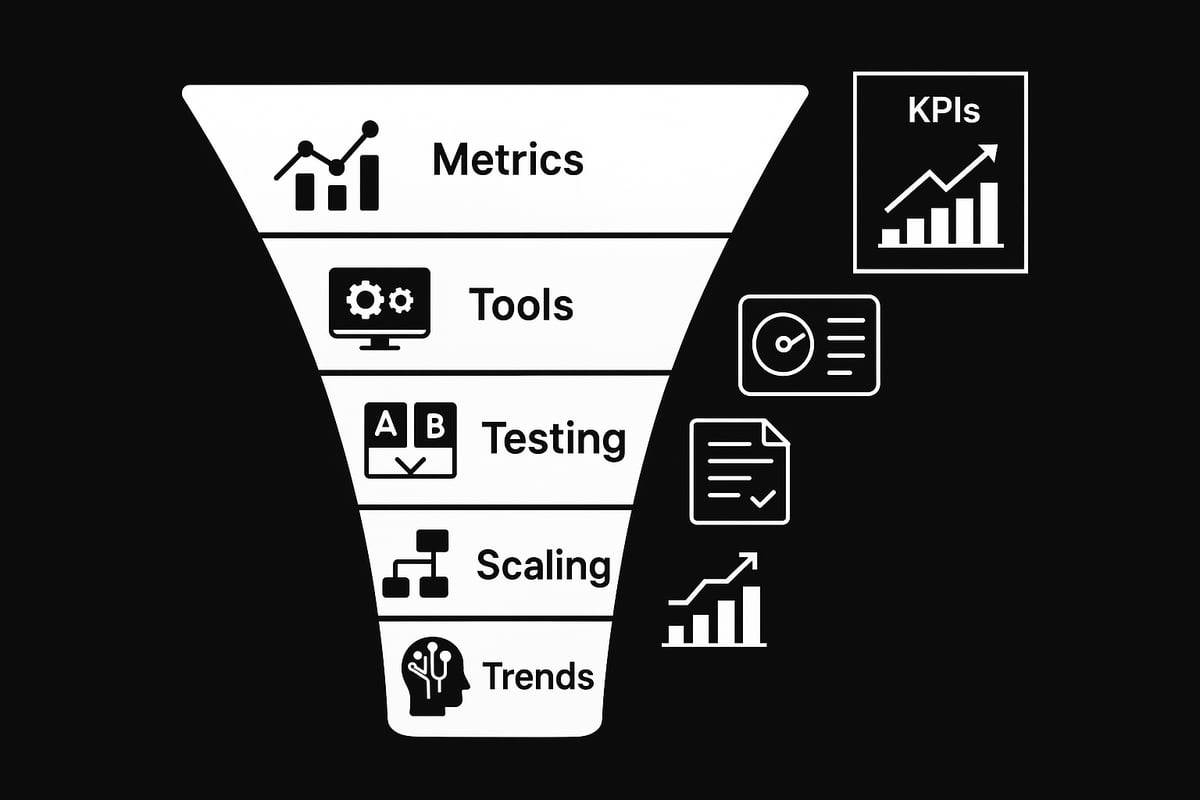
To outpace the competition in 2026, measurement and optimization are essential for sustainable leads and sales growth. Knowing what to track, how to automate, and when to scale can make the difference between incremental gains and exponential results.
Key Metrics for Success in 2026
Effective measurement starts with clear and actionable metrics. For leads and sales teams, focus on tracking the following:
Lead quality: Assess the fit and readiness of each lead.
Source attribution: Determine which channels deliver the highest value.
Sales pipeline velocity: Monitor how quickly leads move from initial contact to closed deal.
Conversion rates: Evaluate the percentage of leads turning into customers.
Customer acquisition cost (CAC): Understand the investment needed to win new business.
Lifetime value (LTV): Measure the total revenue generated per customer.
By consistently monitoring these metrics, organizations can refine strategies and maximize leads and sales results.
Tools and Technologies for Tracking and Automation
Modern tools make it easier to track, automate, and enhance every stage of the leads and sales process. Leading CRM platforms like HubSpot and Salesforce offer integrated analytics to visualize pipeline performance. Marketing automation tools enable personalized, multi-channel campaigns with real-time reporting.
AI-powered dashboards provide instant insights and predictive analytics to optimize outreach and follow-up. Integrating first-party data with ad and email platforms ensures more accurate targeting. For more on process efficiency, explore Automated lead generation techniques.
Selecting the right stack empowers teams to act quickly and scale what works.
Continuous Testing and Iteration
In a rapidly changing digital environment, continuous testing is vital for leads and sales optimization. Use A/B and multivariate testing to improve landing pages, emails, and ad creative. Feedback loops from sales and customer service teams help identify friction points and new opportunities.
Regularly review campaign performance and reallocate budgets based on proven results. Companies that prioritize testing and iteration can achieve up to 30 percent faster growth in their leads and sales metrics.
Scaling What Works: From Pilot to Enterprise
Once high-performing strategies are identified, scaling becomes the next focus for leads and sales teams. Document successful processes so they can be replicated across teams and regions. Invest in training to ensure everyone is aligned on best practices.
Automation allows businesses to manage increased lead volumes without sacrificing quality. For example, companies have scaled from 100 to 1,000 leads per month by automating nurture sequences and standardizing outreach.
Staying Ahead: Trends to Watch in Lead Generation and Sales
To future-proof leads and sales strategies, stay informed about upcoming trends. AI and predictive analytics will continue to drive personalization and efficiency. Privacy-first marketing and zero-party data collection are becoming critical.
Video and interactive content are gaining traction, while voice and conversational commerce are evolving. Preparing for emerging platforms and shifting buyer behaviors will ensure sustained success in leads and sales as 2026 approaches.
As you’ve seen, the landscape for lead generation and sales in 2026 calls for smarter strategies and seamless automation. If you’re ready to put these proven approaches into action—whether it’s leveraging AI, optimizing your sales funnel, or aligning your teams for maximum impact—I’m here to help you map out a tailored plan. Let’s talk about how your business can scale efficiently and stay ahead of the competition with intelligent workflows and automation. Ready to accelerate your growth? Book a free consultation and discover your next steps to sustainable revenue gains.