The Expert Guide to Marketing My Business in 2026
Unlock the future of marketing my business in 2026 with expert AI strategies, automation, social commerce, and privacy-first tactics for measurable growth.
Dec 17, 2025
Imagine your business thriving in 2026, leaving competitors struggling to keep pace with innovation. The landscape is shifting rapidly, and success requires more than just traditional tactics. This expert guide is designed to help you with marketing my business using actionable, future-focused strategies that deliver results. You will discover how to leverage AI, build omnichannel experiences, tap into social commerce, embrace privacy-first advertising, and automate for scalable growth. If you are ready to overcome tomorrow’s challenges and seize new opportunities, this guide will show you exactly how to stay ahead.
Understanding the 2026 Marketing Landscape
The landscape for marketing my business in 2026 is transforming at an unprecedented pace. New technologies, evolving regulations, and changing consumer expectations are reshaping the way brands connect with audiences. To stay ahead, business leaders must understand the key forces driving these changes and adapt accordingly.
Key Trends Shaping Marketing in 2026
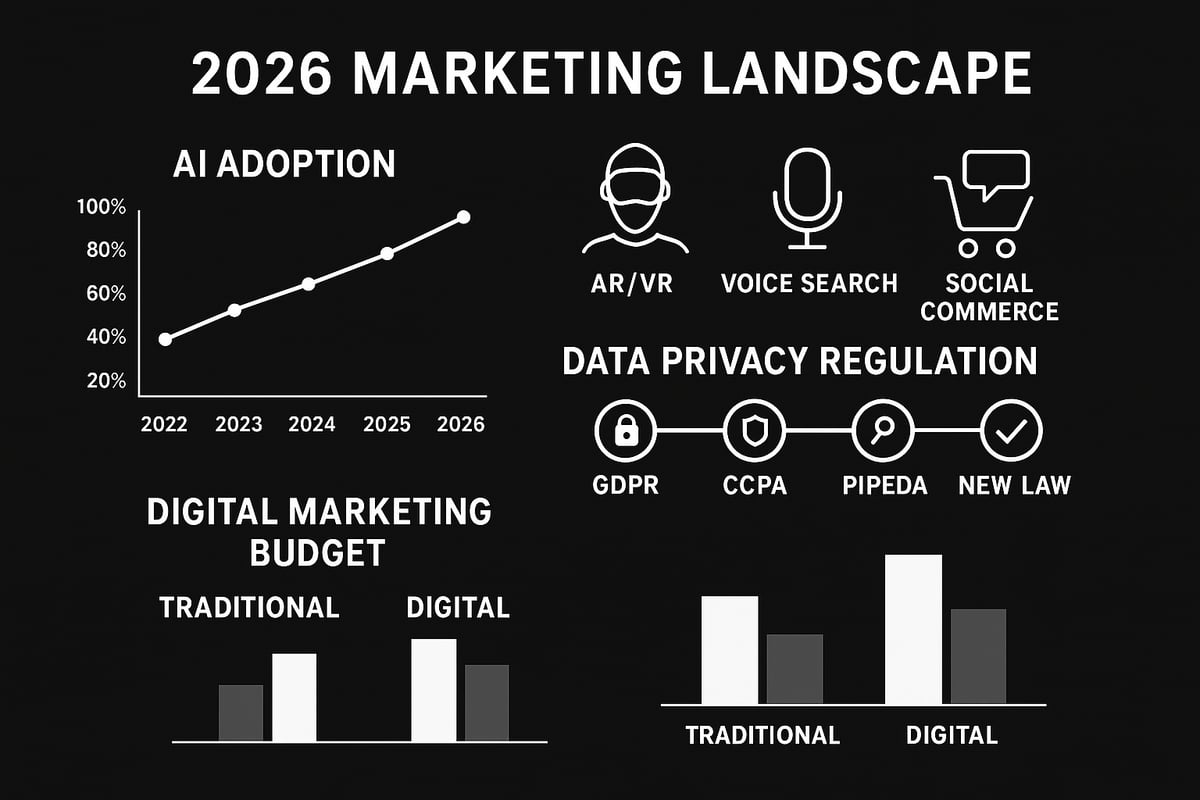
Several powerful trends are defining how marketing my business will look in 2026. Artificial intelligence and machine learning now drive customer targeting and personalization, making campaigns smarter and more effective. Voice search and conversational interfaces are rapidly gaining traction, requiring businesses to optimize for spoken queries.
Immersive technologies like augmented reality (AR), virtual reality (VR), and mixed reality are revolutionizing digital campaigns, allowing customers to experience products virtually before purchasing. Social commerce is taking center stage, with platforms such as Instagram, TikTok, and new entrants leading in-app shopping experiences.
Data privacy regulations, including updates to GDPR and CCPA, are forcing marketers to rethink data collection and consent. Influencer marketing continues to evolve, with brands focusing on partnerships with micro and nano-influencers for authentic engagement. Sustainability and ethical branding have emerged as top priorities, shaping brand reputation and consumer trust.
A notable development is the move toward fully automated, AI-driven ad creation and targeting. For example, Meta's AI-Driven Ad Automation Plans highlight the industry's shift to automation, making marketing my business more efficient and data-driven.
The Evolving Customer Journey
The customer journey is no longer linear. AI chatbots and virtual assistants are deeply integrated into every stage of marketing my business, from initial awareness to post-sale support. Consumers expect seamless omnichannel experiences that bridge digital and physical touchpoints, whether browsing on mobile, desktop, or in-store.
Personalization is now the norm, not the exception. According to Salesforce (2024), 73% of consumers expect tailored experiences at every interaction. Brands must respond to fragmented attention spans by delivering relevant content in micro-moments, capturing interest in seconds.
To succeed in marketing my business, companies are leveraging real-time analytics to understand and anticipate customer needs. The integration of voice, mobile, and wearable technologies creates new opportunities for meaningful engagement, while also raising the bar for customer experience.
Competitive Benchmarking: Where Businesses Stand
Leading brands are setting new standards for marketing my business in 2026. Analysis shows that 60% of marketing budgets are now allocated to digital-first initiatives, reflecting the growing importance of online channels (Statista, 2025).
Retailers are using AR to enable customers to visualize products in their own environments, enhancing confidence and reducing returns. This innovation gives businesses a competitive edge and boosts conversion rates.
A quick benchmark table:
Strategy | Adoption Rate | Impact |
|---|---|---|
Digital-first budgets | 60% | Higher ROI, agility |
AR product visualization | Growing | Improved engagement |
AI-driven personalization | Mainstream | Increased loyalty |
Staying competitive means continuously analyzing what works for leaders and adapting those insights to marketing my business. By embracing these future-focused strategies, businesses can position themselves for sustained growth in a rapidly changing environment.
Building a Future-Proof Marketing Strategy
Building a future-proof approach to marketing my business in 2026 requires a blend of innovation, agility, and data-driven decision-making. Success in this new era is about more than adopting trends—it’s about creating a strategy that evolves with your audience and technology. Let’s break down the critical elements to ensure your marketing my business plan is ready for the challenges and opportunities ahead.
Setting SMART Goals for 2026
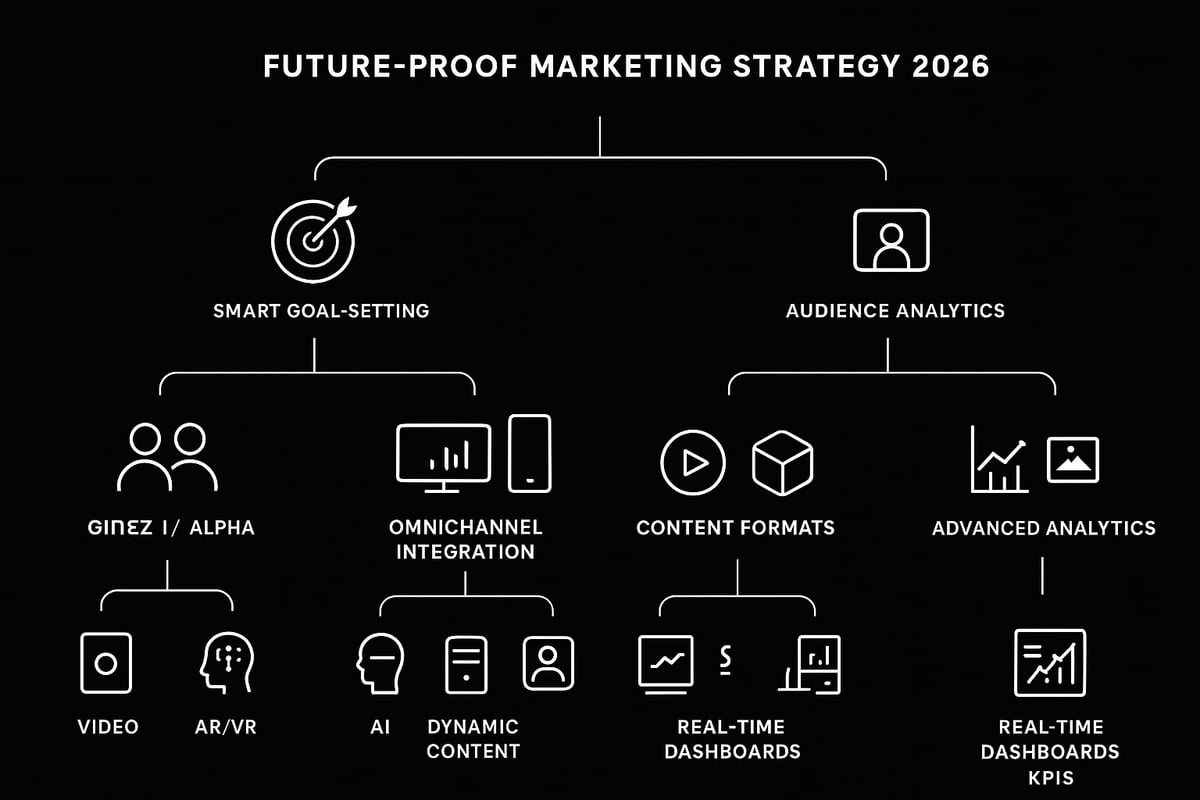
The foundation of marketing my business in 2026 is setting SMART (Specific, Measurable, Achievable, Relevant, Time-bound) goals. These objectives ensure your marketing my business efforts are focused and trackable. For example, instead of a vague target like “increase sales,” set a goal to “increase qualified leads by 30% within 12 months using AI-driven targeting.” This clarity helps align marketing my business objectives with broader company growth.
SMART Component | Example for 2026 |
|---|---|
Specific | Grow email list by 5,000 Gen Z users |
Measurable | Track conversions from social ads |
Achievable | Use proven platforms and automation |
Relevant | Align with company’s digital push |
Time-bound | Achieve by Q4 2026 |
For more actionable insights on aligning your goals, explore these Strategies to Market Your Business.
Understanding Your Evolved Audience
To succeed at marketing my business, it is essential to understand how customer segments are changing. Advanced analytics tools now help marketers map out emerging groups, such as Gen Z and Gen Alpha, who have unique preferences and behaviors. By leveraging social listening and sentiment analysis, brands can stay ahead of shifting trends and expectations.
Use data-driven insights to identify what motivates your audience. Are they seeking sustainability? Do they value ethical brands? Marketing my business with these insights ensures every campaign resonates on a personal level and builds stronger connections.
Crafting an Omnichannel Approach
Consumers expect seamless experiences across every platform. Crafting a unified approach to marketing my business means integrating online and offline channels—web, mobile, social, voice, and even wearables. Each touchpoint should feel connected, whether a customer starts their journey on your app or visits a physical location.
A standout example is Starbucks, which blends its app and in-store experience to offer personalized rewards and easy ordering. By investing in omnichannel, marketing my business efforts reach customers wherever they are, making engagement easier and more effective.
Content Marketing in 2026
The future of content marketing my business relies on short-form video, interactive formats, and immersive experiences. AI-generated content is becoming the norm, but maintaining ethical standards and brand authenticity is vital. Marketers must balance automation with creativity to avoid generic messaging.
Data shows that 82% of all online content consumed will be video-based by 2026. Use interactive polls, AR filters, and live streams to keep audiences engaged. Marketing my business with innovative content not only attracts attention but also fosters long-term loyalty.
Personalization at Scale
Personalized experiences are no longer optional for marketing my business. AI and big data enable hyper-personalized communication, from dynamic website content to individualized product recommendations. E-commerce platforms can now display tailored offers based on browsing history and preferences.
Delivering the right message at the right time increases conversions and customer satisfaction. For instance, email campaigns triggered by user behavior can boost engagement significantly. Scaling personalization ensures marketing my business stands out in a crowded digital landscape.
Measuring Success: Advanced Analytics
Measuring the impact of marketing my business in 2026 means moving beyond basic metrics. Predictive analytics and real-time dashboards provide actionable insights for fast decision-making. Attribution modeling tracks the customer journey across all channels, ensuring you know what works best.
Key performance indicators (KPIs) to monitor include Customer Lifetime Value, Engagement Rate, and Conversion Rate. By adopting advanced analytics, marketing my business strategies become more agile and effective, allowing for quick pivots when market conditions change.
Leveraging Artificial Intelligence and Automation
Artificial intelligence and automation are transforming how organizations approach marketing my business in 2026. These technologies streamline operations, enhance personalization, and unlock new growth opportunities. Staying ahead means understanding where and how to apply AI and automation for the greatest impact.
AI in Customer Acquisition and Retention
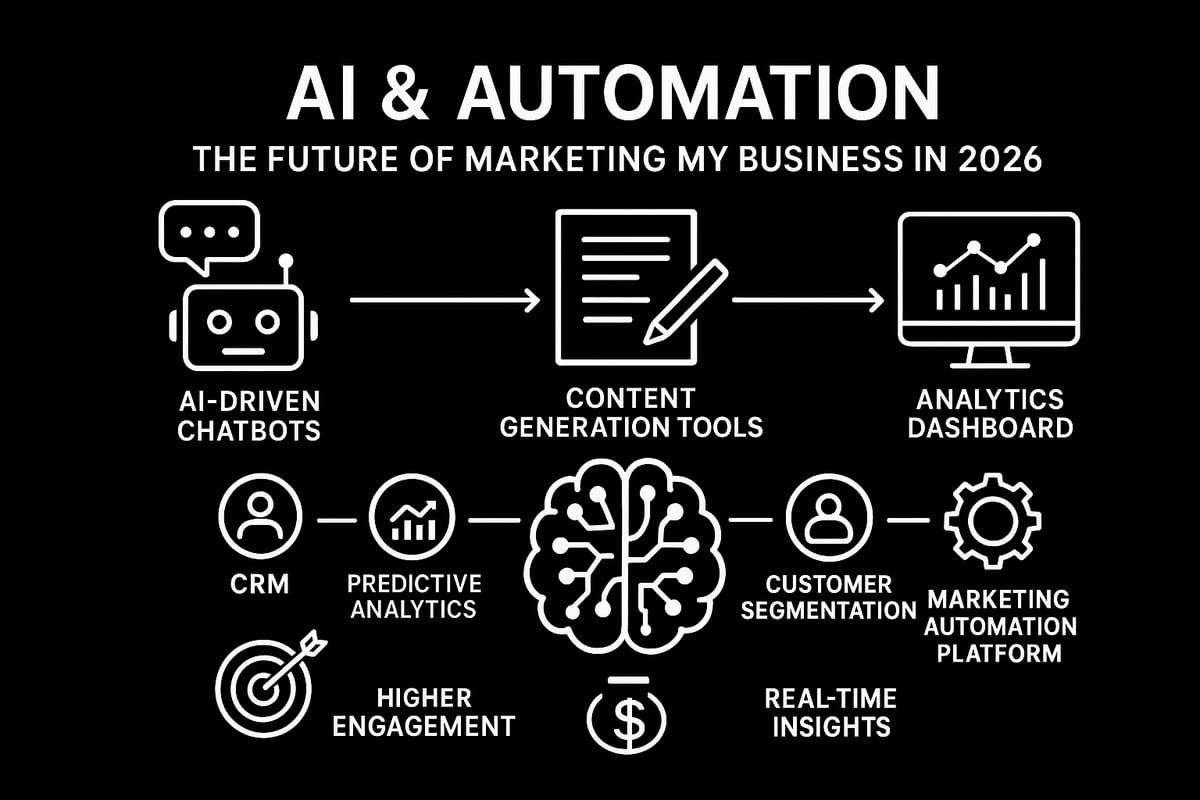
AI is revolutionizing customer acquisition and retention for those focused on marketing my business. Predictive lead scoring uses historical data to identify prospects most likely to convert. AI-powered segmentation enables personalized messaging tailored to each audience segment.
Chatbots and virtual assistants provide 24/7 support, guiding customers through their journey. Automated email nurturing campaigns, driven by AI, achieve up to three times higher open rates than traditional approaches. These innovations not only save time but also enhance customer satisfaction, making marketing my business more efficient and effective.
Marketing Automation Platforms: Choosing the Right Tools
Selecting the right automation platform is crucial for marketing my business. Top solutions like HubSpot, Marketo, and Salesforce offer robust features, but each has unique strengths. Integration with CRM and sales systems ensures unified data flow, while workflow automation and behavioral triggers drive results.
Platform | CRM Integration | Key Feature | Analytics Depth |
|---|---|---|---|
HubSpot | Excellent | Workflow Builder | Advanced |
Marketo | Good | Lead Management | Detailed |
Salesforce | Outstanding | AI Sales Insights | Real-time |
When exploring options for marketing my business, consider reading about Marketing Automation with AI to understand how these platforms leverage artificial intelligence for smarter campaigns. Choose a tool that aligns with your business goals and offers flexibility for future growth.
Intelligent Workflows and Process Optimization
Intelligent workflows streamline repetitive tasks, freeing up valuable time when marketing my business. Automated scheduling of social posts, ad management, and reporting reduces manual errors and increases campaign speed. By mapping out marketing processes, businesses can identify automation touchpoints that deliver measurable ROI.
For example, automated ad bidding adjusts spend in real time to maximize returns. These optimizations allow teams to focus on strategic decisions instead of daily operational tasks. As a result, marketing my business becomes more agile and responsive to market changes.
AI-Driven Content Creation and Curation
Content is a cornerstone of marketing my business, and AI tools are making content creation faster and smarter. Platforms like Jasper AI and Copy.ai generate blog posts, social updates, and ad copy at scale. These solutions ensure consistency in brand voice while adhering to compliance standards.
AI also curates content by analyzing audience preferences and trending topics. Marketers can deliver highly relevant material that resonates with target demographics. This approach enables marketing my business to stay ahead of competitors in content quality and engagement.
Data-Driven Decision Making
AI empowers data-driven decision making, which is essential for marketing my business in 2026. Real-time analytics and predictive modeling provide actionable insights to guide strategy. Marketers can forecast trends, optimize campaigns, and pivot quickly based on live data.
Dashboards visualize key performance indicators such as customer lifetime value, engagement rates, and conversion rates. According to Gartner, 70 percent of marketers expect AI to be critical for decision-making by 2026. Leveraging this technology ensures marketing my business remains competitive and future-ready.
Mastering Social Commerce and Community Building
Social commerce is rapidly transforming the way brands connect with customers. In 2026, integrating social platforms into your approach for marketing my business will be crucial for driving revenue and building lasting relationships. By mastering both commerce and community, companies can create sustainable growth and stand out in a crowded digital world.
Social Commerce: The New Frontier
The landscape for marketing my business is evolving as social commerce becomes the leading channel for product discovery and sales. In-app shopping features on Instagram, TikTok, and other emerging platforms now enable seamless purchasing without leaving the app. Shoppable livestreams and influencer-led events are driving real-time engagement and instant conversions.
According to Social Commerce Market Growth Projections, the U.S. social commerce market is expected to reach $114.7 billion in 2025, fueled by platform integration and consumer engagement. For any business owner focused on marketing my business, adapting to these trends is now essential.
Building Engaged Online Communities
A thriving online community is a powerful asset for marketing my business in 2026. Brands are leveraging private groups, Discord servers, and branded forums to nurture loyalty and encourage advocacy. These spaces foster genuine connections, turning customers into brand ambassadors.
Nike’s global running community is a prime example, offering exclusive content and direct interactions. By prioritizing engagement, businesses can maintain relevance and drive word-of-mouth. When marketing my business, investing in community-building platforms will help sustain long-term growth.
User-Generated Content and Social Proof
User-generated content (UGC) is now a cornerstone of trust for marketing my business. Encouraging customers to share experiences, reviews, and testimonials amplifies brand credibility. Social mentions and positive feedback act as digital word-of-mouth, influencing purchase decisions.
A recent Nielsen study found that 92% of consumers trust UGC over branded content. Featuring real customer stories and social proof on your channels not only boosts engagement but also enhances the authenticity of marketing my business in a saturated digital space.
Influencer Marketing 2.0
The influencer landscape has shifted toward micro- and nano-influencers, offering authentic reach and higher engagement. For marketing my business, partnering with these influencers allows brands to connect with niche audiences at a more personal level.
Measuring ROI goes beyond follower counts. Engagement rates, audience fit, and content quality are now the priorities. By aligning with the right influencers, businesses can amplify their message and drive measurable results, making influencer collaborations a key pillar of marketing my business.
Social Listening and Real-Time Engagement
Social listening tools have become indispensable for marketing my business in 2026. Platforms like Sprout Social and Brandwatch enable brands to monitor conversations, identify trends, and respond to feedback instantly. This proactive approach not only strengthens reputation but also aids in crisis management.
Real-time engagement ensures that brands stay connected with their audience. By addressing concerns and celebrating successes promptly, businesses can foster trust and loyalty. For anyone marketing my business, investing in robust social listening is an essential strategy for ongoing success.
Privacy-First Marketing and Ethical Data Use
The landscape for marketing my business in 2026 is shaped by a wave of new privacy regulations and a growing demand for ethical data practices. As digital marketing evolves, compliance and transparency are no longer optional—they are essential for building lasting customer trust.
Navigating New Privacy Regulations
Privacy regulations such as GDPR 2.0, updated CCPA, and similar global laws are redefining how companies approach marketing my business. These rules require brands to secure explicit consent before collecting or using personal data.
A notable example is Apple’s AppTrackingTransparency, which forces apps to obtain user permission for tracking, resulting in lower ad performance for those not compliant. The impact is clear: businesses must adapt their strategies to maintain effective targeting while respecting privacy.
Regulation | Key Requirement | Impact on Marketing My Business |
|---|---|---|
GDPR 2.0 | Explicit consent, data rights | Stricter targeting, opt-in needed |
CCPA Updates | Consumer data access, deletion | More transparency, compliance focus |
Global Laws | Varying local standards | Need for flexible data strategies |
Ignoring these changes risks penalties and erodes consumer trust.
Building Trust Through Transparency
Customers are more likely to engage with brands that are open about their data practices. For marketing my business, clear privacy policies and straightforward opt-in processes show respect for user preferences.
Companies should:
Publish easy-to-read privacy policies.
Explain data usage in simple language.
Offer clear options for users to manage their data.
Statistics reveal that 67% of consumers are more likely to buy from brands they trust with their data (PwC, 2025). Transparency not only ensures compliance but also strengthens customer relationships, giving your business a competitive advantage.
Ethical Data Collection and Usage
Shifting towards first-party data is now a cornerstone of marketing my business. By gathering information directly through loyalty programs, preference centers, and user accounts, brands reduce reliance on third-party cookies.
Ethical practices include:
Requesting only essential data.
Providing value in exchange for information (like rewards or personalized offers).
Letting users update or delete their data easily.
Retailers are increasingly using loyalty apps to collect consented data, ensuring both compliance and a personalized experience. This approach fosters loyalty and aligns with consumer expectations for ethical treatment.
Future-Proofing Your Data Strategy
To keep marketing my business ready for future challenges, investing in secure, adaptable data infrastructure is essential. Continuous monitoring of regulatory updates and regular audits help maintain compliance.
Best practices include:
Using encrypted databases and secure cloud storage.
Training teams on privacy-first protocols.
Regularly reviewing and updating consent mechanisms.
For further details on compliance and sustainable strategies, explore Business Marketing Best Practices, which covers proven approaches to privacy-first marketing. Staying proactive ensures your business remains trusted and competitive in a rapidly evolving digital environment.
Integrating Automation for Scalable Growth
Automation is revolutionizing how organizations approach marketing my business, making growth more predictable and scalable. As competition intensifies in 2026, businesses that embrace automation gain a crucial advantage, streamlining operations and maximizing results. Let’s explore how automation can transform your strategy for marketing my business, from workflows to analytics.
Creating Automated Marketing Workflows
The foundation of scaling marketing my business starts with mapping customer journeys and identifying automation touchpoints. Every interaction, from lead capture to post-sale follow-up, can be automated for efficiency and consistency.
Key steps to build automated workflows:
Identify repetitive marketing tasks
Implement triggers for lead nurturing and follow-up
Use segmentation to personalize communication
For example, automating WhatsApp drip campaigns enables e-commerce brands to engage prospects at every stage, delivering timely offers and updates. By embedding automation in marketing my business, you free up resources, minimize errors, and ensure no lead is left behind.
Sales and Marketing Alignment through Automation
Aligning sales and marketing my business is essential for scalable growth. Automation bridges the gap by integrating CRM, sales, and marketing platforms, creating a unified data ecosystem.
Benefits include:
Automated lead scoring and handoff to sales
Real-time data sharing between teams
Streamlined communication and follow-up
Consider Salesforce’s AI-powered pipeline management, which ensures every qualified lead is tracked and nurtured from first interaction to conversion. Automation in marketing my business guarantees that both teams operate as a cohesive unit, driving higher close rates and better customer experiences.
AI-Powered Lead Generation and Qualification
AI-driven solutions are transforming how businesses handle lead generation and qualification. Predictive analytics identify high-value prospects, while automation tools streamline outreach across channels.
Smart strategies for marketing my business:
Predictive scoring for prioritizing leads
Automated multi-channel outreach (email, SMS, chat apps)
Real-time qualification using AI chatbots
To deepen your approach, explore Social Media Lead Generation Tips for actionable tactics that integrate seamlessly with automation platforms. AI tools are helping companies increase lead-to-customer rates by up to 40 percent, making marketing my business more effective and measurable.
How AI-Driven Solutions Like The Social Search Accelerate Growth
AI-powered platforms such as The Social Search are redefining marketing my business by automating lead generation and sales processes. Automated workflows on WhatsApp or similar channels save time, reduce costs, and ensure every lead receives personalized attention.
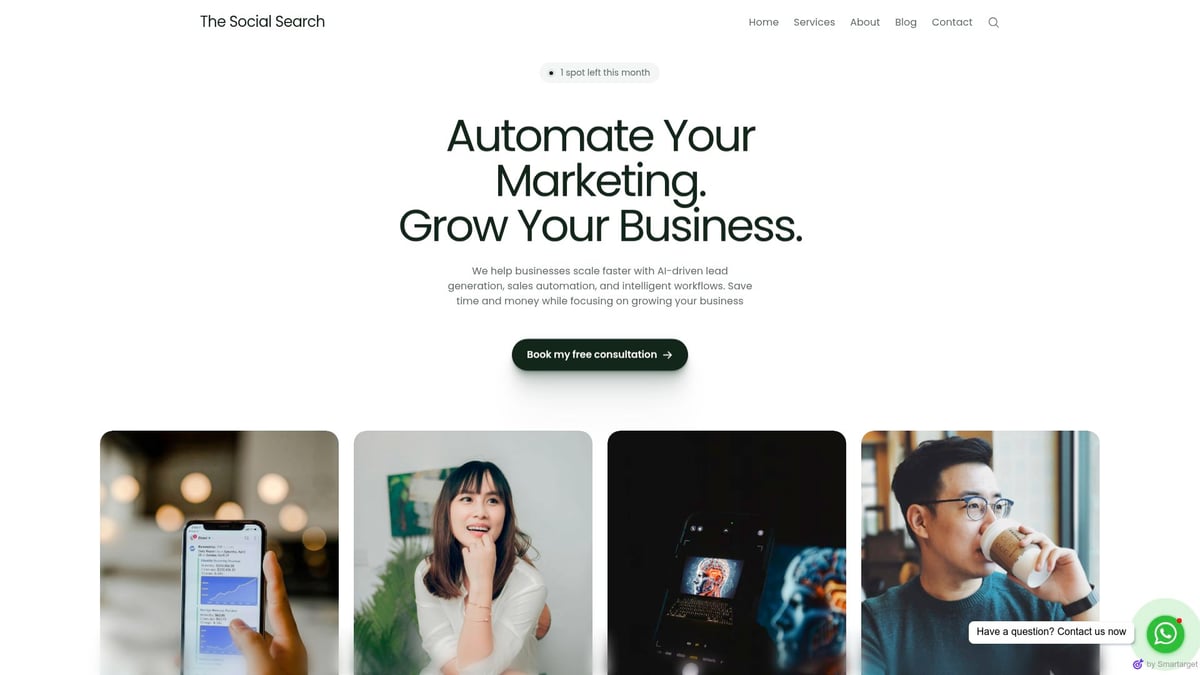
Businesses report scaling faster with AI-driven WhatsApp marketing, achieving higher conversion rates while maintaining compliance. Automation delivers a significant edge for SMEs, empowering them to compete with larger organizations in the 2026 landscape.
Scaling Campaigns with Automation
Scaling marketing my business demands the ability to manage multiple campaigns across channels without sacrificing quality. Automation enables bulk messaging, campaign scheduling, and simultaneous execution on platforms like email, social media, and messaging apps.
Key tactics include:
Automated A B testing for optimizing creative and timing
Real-time analytics for campaign adjustments
Cross-platform coordination for omnichannel reach
Recent data reveals that AI-powered personalization and chatbots significantly boosted online sales during the 2024 holiday season, as highlighted in AI's Impact on Holiday Sales. Automation empowers marketing my business to reach new heights of efficiency and ROI.
Overcoming Common Automation Challenges
While automation powers growth, it brings unique challenges to marketing my business. Ensuring data quality, seamless integration, and a human touch is essential.
Best practices include:
Regularly audit data for accuracy
Integrate platforms to avoid silos
Monitor for automation fatigue among audiences
Maintaining balance between automation and personalization is key. By refining processes continuously, you can keep marketing my business both effective and relatable.
Measuring and Optimizing Automated Campaigns
Success in automated marketing my business relies on robust measurement and optimization. Set clear KPIs, use real-time dashboards, and iterate based on performance data.
Key metrics to track:
Conversion rate
Customer lifetime value
Engagement rate
Leverage advanced analytics and attribution modeling to understand what works across channels. Iterative testing ensures marketing my business stays ahead, driving sustained growth and maximizing returns.
As you look ahead to 2026 and consider how AI, automation, and data-driven strategies can transform your business, it's clear that staying ahead means embracing intelligent workflows and future-proof tactics. If you’re ready to put these expert insights into action and want personalized guidance on scaling your marketing and sales with confidence, I invite you to take the next step. Let’s discuss how you can leverage automation to save time, boost growth, and outpace your competitors—tailored for your unique goals.
Book a free consultation