Business Marketing Guide: Strategies for Success in 2026
Unlock business marketing success in 2026 with proven strategies, AI-driven tactics, and omnichannel approaches. Stay ahead and drive sustainable growth today.
Dec 7, 2025
In 2026, business marketing is evolving faster than ever, creating both challenges and opportunities for every company. To stand out in this increasingly crowded landscape, you need strategies that go beyond the basics. This guide reveals the most effective business marketing approaches for 2026, from cutting-edge digital trends and AI-powered personalization to omnichannel tactics and data-driven decision-making. You will discover actionable steps and real-world examples designed for immediate impact. Stay ahead of the curve by implementing these proven methods and ensure your business not only survives, but thrives in the future marketplace.
Understanding the 2026 Marketing Landscape
The business marketing world in 2026 is experiencing rapid and unprecedented change. To stay competitive, companies must recognize the core shifts impacting how brands connect with customers and how strategies are executed. Let us break down the essential elements shaping this new landscape.
Shifts in Consumer and Business Behavior
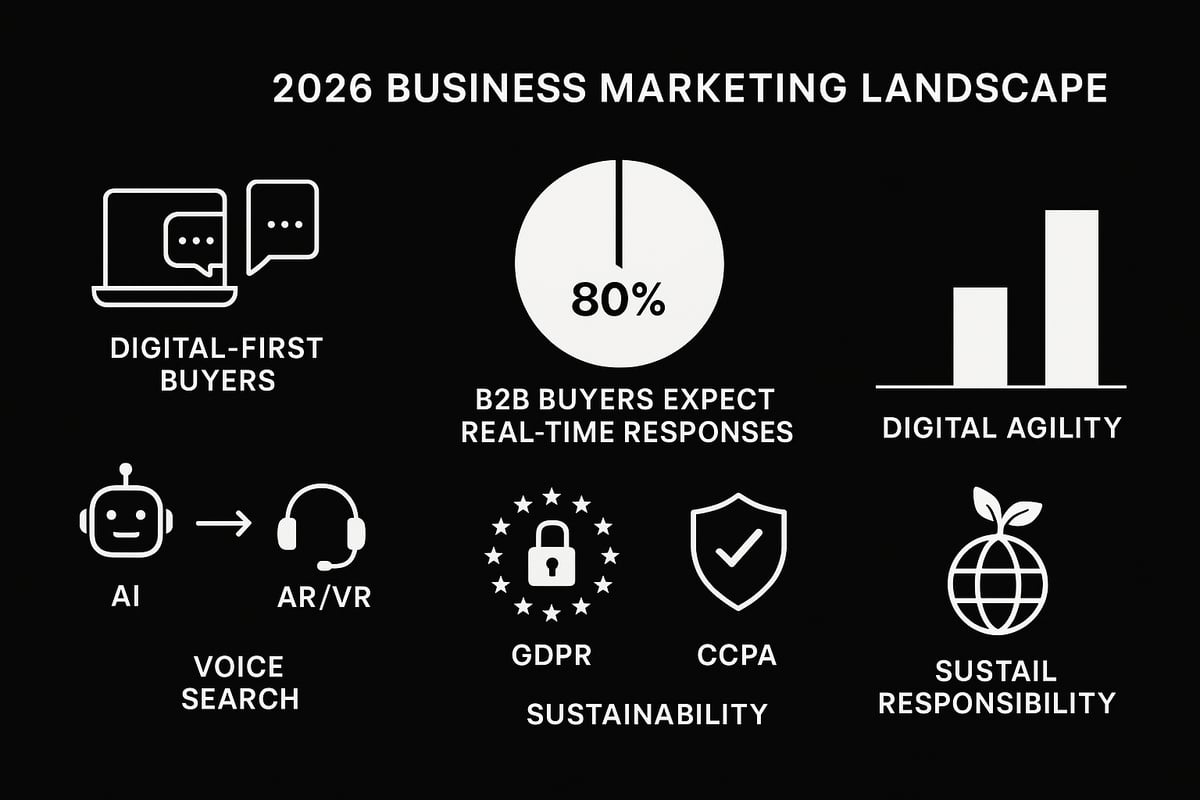
Consumer and business marketing behaviors have evolved dramatically. Buyers are now digital-first, with most business interactions starting online. There is an unmistakable demand for personalized, real-time engagement, especially as decision-makers seek quick, relevant information.
Mobile and instant communication channels are overtaking more traditional contact methods. Messaging apps like WhatsApp, SMS, and chat-based solutions are now dominant, while email is losing ground. According to industry trend reports, 80 percent of B2B buyers expect real-time responses from vendors, making speed a critical factor in business marketing success.
These changes mean brands must rethink their entire approach, ensuring every touchpoint is optimized for immediacy, personalization, and convenience.
Technological Advancements Shaping Marketing
Technology continues to revolutionize business marketing. AI and machine learning now drive smarter automation, allowing brands to deliver highly personalized experiences at scale. Voice and visual search are gaining traction, enabling users to interact with brands in new, intuitive ways.
Augmented and virtual reality are becoming more accessible, with brands using AR for interactive product demos at virtual trade shows. According to Kantar's 2026 marketing trends report, inclusivity, retail media networks, and creator content are also shaping the future of business marketing, highlighting the need for brands to innovate across multiple dimensions.
Keeping up with these advancements is essential for staying ahead and capturing the attention of a modern audience.
Regulatory and Privacy Considerations
Data privacy regulations are tightening worldwide. Updates to GDPR, CCPA, and similar global laws mean stricter requirements for data collection and usage. For business marketing teams, this shift increases the importance of first-party data and consent-based approaches.
Tracking and retargeting strategies must now prioritize transparency and respect for user preferences. Personalization remains vital, but it must be achieved ethically and within the boundaries of privacy regulations. Brands that clearly communicate their data practices are building stronger trust with their audiences.
The Rise of Sustainability and Social Responsibility
Sustainability is now a driving force in business marketing. Both consumers and B2B clients are favoring brands known for ethical practices and transparent values. Companies are weaving sustainability messaging into their strategies, not only as a differentiator but as a core expectation.
Social responsibility initiatives, from eco-friendly operations to community engagement, resonate with modern buyers. Incorporating these elements can help foster loyalty and position your business as a forward-thinking leader in the market.
Competitive Landscape
The competitive arena for business marketing is more intense than ever. Startups, with their agile digital tactics, are disrupting traditional players and raising the standard for innovation. This surge in competition means that differentiation and a unique value proposition are essential.
Brands must identify what sets them apart and communicate it clearly across all channels. In this environment, those who adapt quickly and focus on continuous improvement will thrive, while others risk being left behind.
Building a Data-Driven Marketing Strategy
In 2026, building a data-driven marketing strategy is essential for companies seeking a competitive advantage. The right approach empowers organizations to make informed decisions, optimize campaigns, and drive growth in the complex world of business marketing.
Defining Clear Objectives and KPIs
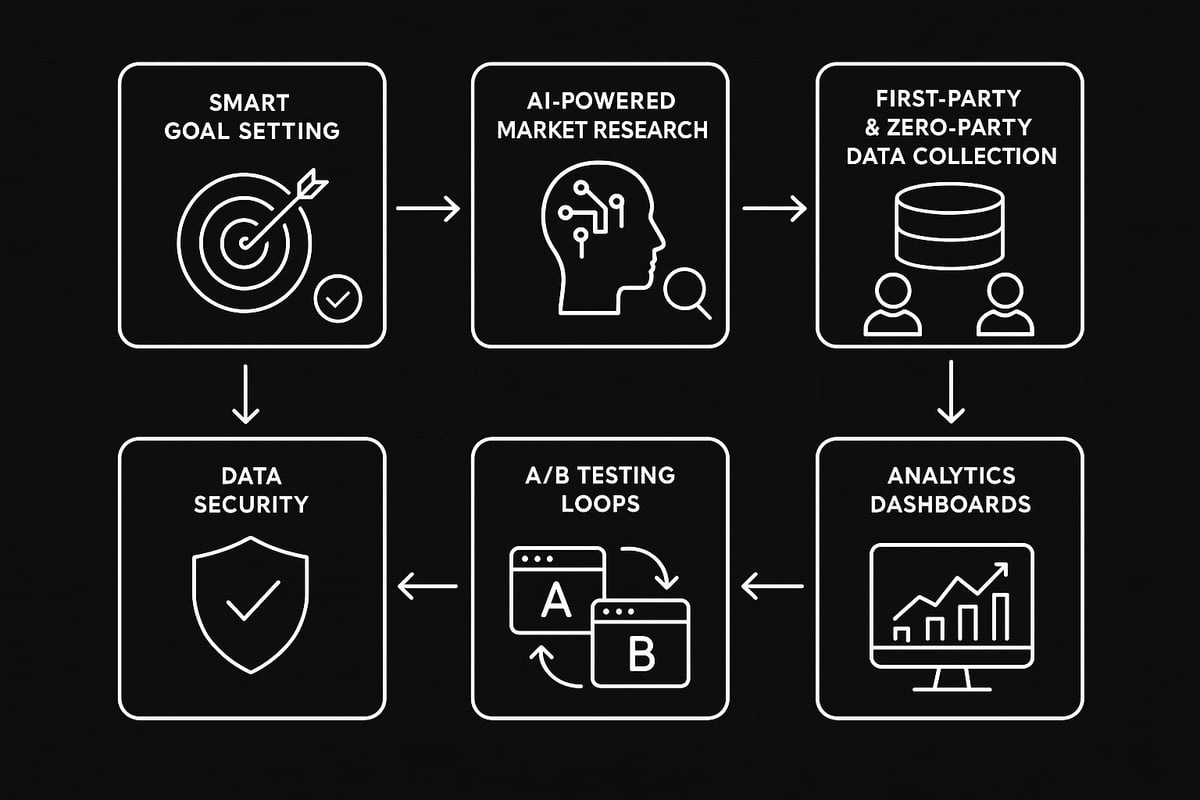
A successful business marketing strategy starts with clear, measurable objectives. Set SMART goals that align with your company’s vision, such as increasing lead generation or improving customer retention.
Identify key performance indicators (KPIs) that reflect your objectives. Common KPIs include conversion rates, customer lifetime value, and cost per acquisition. By focusing on these metrics, you ensure that every marketing activity supports your business marketing goals.
Use a simple table to track KPIs:
Objective | KPI | Target Value |
|---|---|---|
Lead Generation | Number of Leads | 5,000/month |
Conversion Optimization | Conversion Rate | 8% |
Customer Retention | Retention Rate | 85% |
Regularly review your progress and adjust targets as your business marketing strategy evolves.
Conducting Market Research and Competitive Analysis
Effective business marketing relies on a deep understanding of your market and competitors. Use AI-powered tools to gather real-time insights about industry trends, customer preferences, and emerging opportunities.
Develop detailed buyer personas based on demographic and behavioral data. Analyze your competitors’ strengths and weaknesses to identify gaps and differentiate your brand.
Benchmark your performance against industry standards. This process helps refine your business marketing positioning and uncovers new growth avenues.
Break down research findings into actionable steps:
Use sentiment analysis to gauge customer perceptions.
Monitor competitor campaigns for inspiration.
Identify underserved segments for targeted outreach.
Leveraging First-Party and Zero-Party Data
Collecting and utilizing first-party and zero-party data is the foundation of modern business marketing. Gather data directly from your website, app, and CRM to understand customer interactions and preferences.
Encourage customers to share information voluntarily through interactive quizzes or surveys. This approach not only enhances personalization but also builds trust.
For more actionable insights on harnessing data for business marketing, explore these Data-Driven Lead Generation Tips.
Key methods to maximize data value:
Integrate data sources for a unified customer view.
Use preference centers to let users control their data.
Apply AI to segment audiences based on real-time inputs.
Integrating Analytics and Attribution Models
Data-driven business marketing thrives on robust analytics. Implement tools like Google Analytics 4 and AI-powered dashboards to visualize performance and uncover trends.
Adopt multi-touch attribution models to understand the full customer journey. This clarifies which channels and messages drive conversions, enabling smarter budget allocation.
A sample attribution model might track:
Initial interaction (social ad)
Mid-funnel engagement (email)
Final conversion (website form)
Continually refine analytics setups to ensure your business marketing decisions remain evidence-based.
Testing, Learning, and Iterating
Continuous improvement is at the heart of business marketing success. Employ A/B and multivariate testing to optimize messaging, creative, and channel strategies.
Adopt agile marketing cycles, allowing rapid adjustments based on real-time results. Document lessons learned to inform future campaigns and avoid repeating mistakes.
Consider this workflow:
Hypothesize a change (e.g., new headline).
Run controlled tests.
Analyze results and implement top performer.
Companies that embrace iterative business marketing approaches often see higher ROI and sustained growth.
Ensuring Compliance and Data Security
As data privacy regulations evolve, compliance is non-negotiable in business marketing. Stay updated on global laws like GDPR and CCPA, and prioritize transparency in how you collect and use customer data.
Implement robust security measures to safeguard sensitive information. Communicate your privacy policies clearly to build trust with prospects and customers.
Key practices for secure business marketing include:
Encrypting stored data.
Using consent management platforms.
Conducting regular security audits.
By making compliance a core pillar, you protect your brand reputation and maintain customer loyalty.
Omnichannel Marketing: Reaching Customers Everywhere
Reaching today’s customers requires more than a single-channel approach. In 2026, business marketing is defined by seamless engagement across digital and offline touchpoints. Companies that master omnichannel marketing create consistent, relevant experiences that drive loyalty and growth.
Mapping the Customer Journey Across Channels
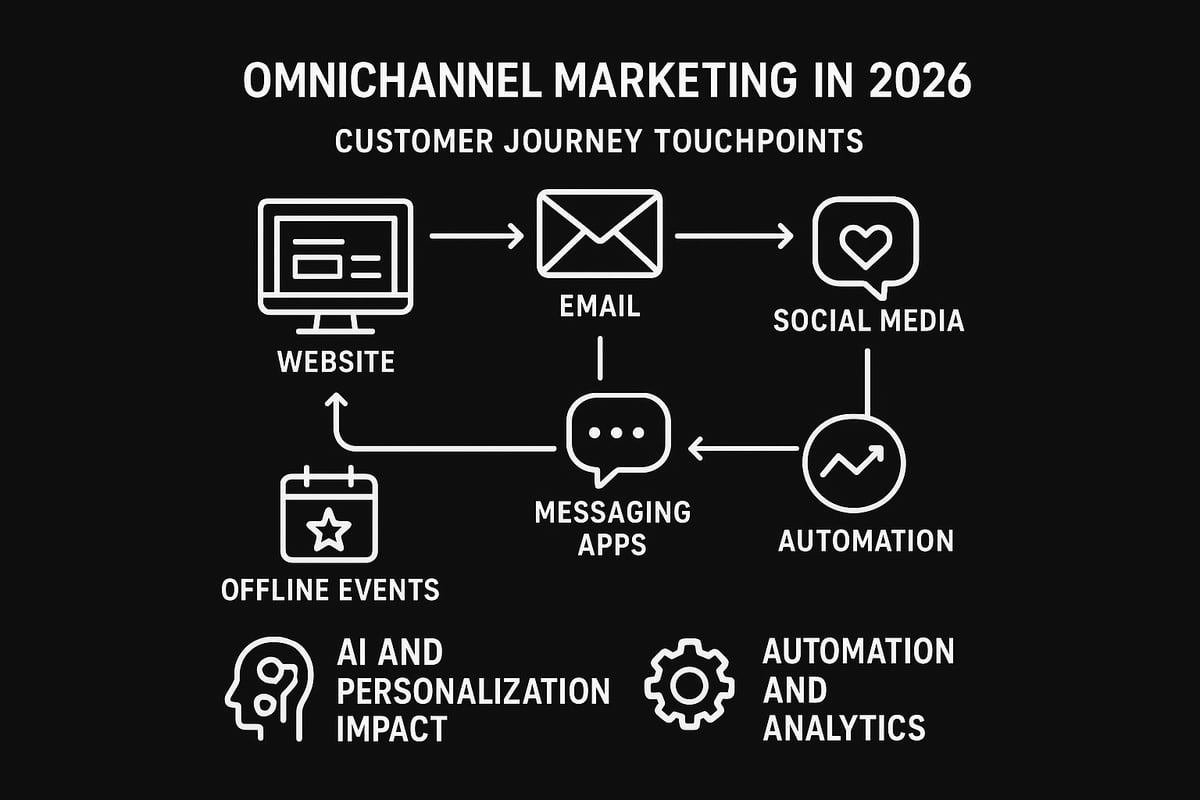
Understanding every step your customer takes is vital for effective business marketing. Start by identifying key touchpoints: your website, email, social media, messaging apps, and offline interactions. Map out how customers move between these points and where they might need support.
Seamless transitions between platforms are essential. For example, a customer might research your product on mobile, receive a follow-up via WhatsApp, and later visit your store in person. Integrating all these interactions ensures a unified experience. For actionable tactics, explore Omnichannel Marketing Strategies to enhance your business marketing approach.
Personalization at Scale
Personalization is no longer optional in business marketing. With advanced AI, companies can deliver dynamic content and tailored offers to each user. Analyze behaviors, purchase history, and preferences to segment audiences effectively.
AI-driven segmentation allows for real-time adjustments, ensuring every message feels relevant. For instance, personalized WhatsApp campaigns achieve open rates as high as 98 percent. This level of customization builds stronger connections and enhances overall customer satisfaction, setting your business marketing apart from competitors.
Integrating Automation and AI
Automation and AI are reshaping business marketing strategies. Automated workflows handle repetitive tasks like lead nurturing and follow-ups, freeing teams to focus on high-impact work. AI-powered chatbots engage customers instantly, answering queries and guiding them through the buying process.
These tools not only boost efficiency but also improve conversion rates. In B2B settings, AI chatbots have been shown to convert 20 percent more leads. Implementing automation ensures your business marketing remains agile and responsive to changing customer expectations.
Social Media and Influencer Marketing
Social media continues to be a powerhouse in business marketing. Platforms like TikTok, LinkedIn, and niche networks offer unique opportunities to reach targeted audiences. Building authentic partnerships with industry influencers amplifies your message and adds credibility.
Influencers help humanize your brand and foster trust. By collaborating with voices your audience respects, you can extend your reach and drive meaningful engagement. Integrating influencer marketing into your omnichannel strategy maximizes visibility and impact.
Offline and Hybrid Experiences
Despite the digital shift, offline and hybrid experiences remain crucial in business marketing. Combining digital and in-person events extends your reach and deepens relationships. Hybrid conferences with virtual networking and live demos allow broader participation.
These experiences bridge the gap between online and physical interactions. Attendees can engage on their terms, increasing satisfaction and retention. Incorporating hybrid tactics ensures your business marketing strategy appeals to diverse customer preferences.
Measuring Omnichannel Performance
To optimize business marketing, unify your data across all channels. Use dashboards that track customer interactions from website visits to offline purchases. Attribution modeling helps you understand which touchpoints drive results.
Monitor metrics like engagement rates, conversion rates, and ROI. Regular analysis enables you to refine your approach, ensuring every channel contributes to your goals. By measuring performance, you make data-driven decisions that power sustainable growth.
AI-Driven Lead Generation and Sales Automation
Artificial intelligence is rapidly transforming business marketing by streamlining lead generation and sales automation. Companies that embrace these innovations are seeing measurable improvements in efficiency, lead quality, and customer engagement.
The Power of AI in Lead Generation
AI has fundamentally changed how business marketing teams identify and nurture potential clients. Predictive analytics now allow marketers to spot high-value prospects early, focusing resources where they're most likely to convert. Automated lead scoring systems rely on machine learning to rank prospects based on behavior, engagement, and fit.
For example, companies using AI platforms have reported a 40% increase in qualified leads. This not only boosts the quantity but also the quality of leads entering the sales funnel. By integrating AI into business marketing, organizations can react faster to market signals and customer intent, gaining a decisive edge.
Intelligent Workflows for Sales and Marketing Alignment
Seamless collaboration between sales and marketing is vital for effective business marketing. AI-powered workflows help bridge gaps by automating handoffs, ensuring no leads fall through the cracks. Automated reminders and follow-ups keep both teams in sync, reducing response times and improving customer experience.
These intelligent workflows enable real-time updates, so sales representatives can act promptly on hot leads. The result is a smoother buyer journey and increased conversion rates. AI-driven alignment also provides better visibility into campaign performance, making business marketing strategies more agile and responsive.
Personalizing Outreach at Scale
Personalization is essential in modern business marketing, yet achieving it at scale can be challenging. AI enables dynamic messaging tailored to individual behaviors, preferences, and purchase histories. Multichannel outreach, including email, messaging apps, and calls, ensures every prospect receives relevant communication.
A standout example is the use of personalized WhatsApp campaigns, which have achieved engagement rates far above traditional channels. Through AI-driven segmentation, marketers can deliver the right message, at the right time, on the right platform. This level of customization helps business marketing efforts stand out in crowded markets.
How AI-Powered Solutions Accelerate Growth
Businesses leveraging AI-driven lead generation and sales automation are seeing remarkable time and cost savings. For instance, The Social Search helps SMEs and mid-sized companies automate their business marketing and sales processes, making it easier to scale operations rapidly.
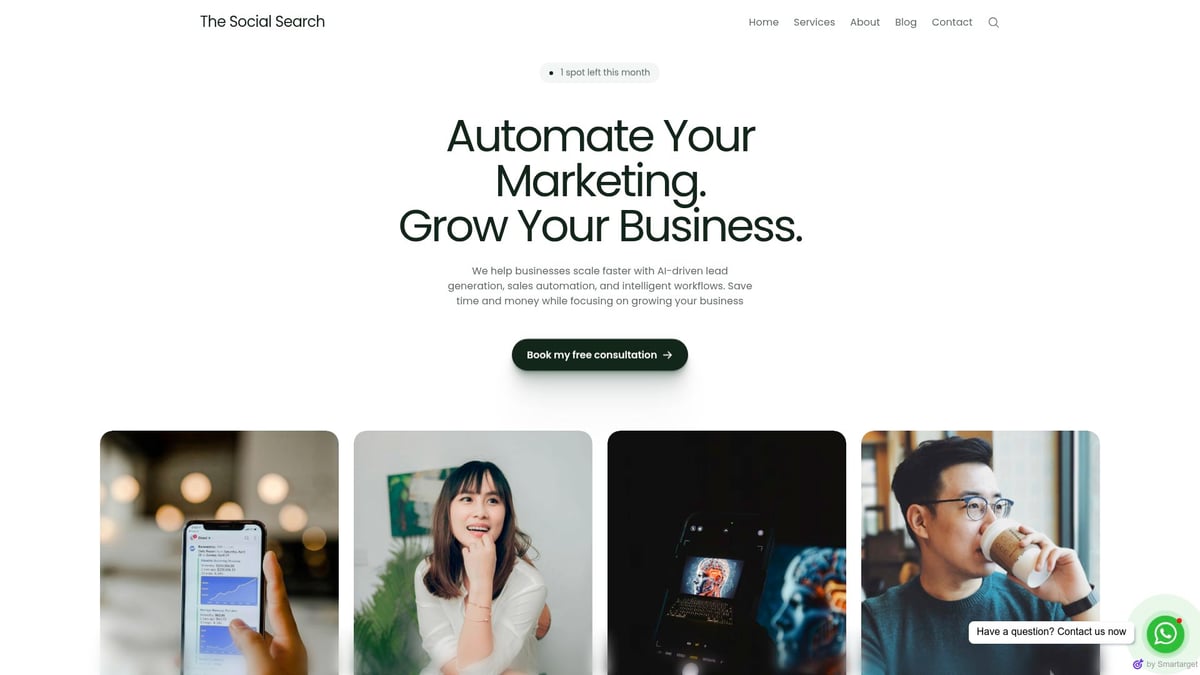
By integrating intelligent workflows and automating repetitive tasks, teams can focus on strategic growth rather than manual work. Companies using The Social Search report higher conversion rates and improved ROI from their business marketing activities. These AI-powered solutions keep organizations ahead of competitors and ready to adapt to evolving customer expectations.
Sales Enablement and Automation Tools
Modern business marketing relies on a robust set of sales enablement and automation tools. CRM platforms enhanced with AI provide smarter sales pipelines and predictive insights. Automated proposal generation and contract management tools help reduce manual work and speed up deal cycles.
Tool Type | Key Benefit | Example Impact |
|---|---|---|
AI-powered CRM | Smarter lead tracking | Shorter sales cycles |
Automated proposal generators | Faster document creation | 25% reduction in time |
Contract automation | Streamlined approvals | Fewer errors |
These tools empower business marketing teams to operate more efficiently and close deals faster. By automating routine tasks, sales professionals can focus on building relationships and delivering value.
Measuring and Optimizing Lead Generation Efforts
To maximize results, business marketing teams must track and optimize key metrics. Important indicators include cost per lead, conversion rate, and sales velocity. Continuous improvement relies on analyzing these metrics and making data-driven adjustments.
Regular A/B testing and campaign analysis help identify what works best. With advanced analytics, marketers can uncover trends and refine strategies for better ROI. Ongoing optimization ensures business marketing efforts remain effective as the landscape evolves.
Content and Thought Leadership in 2026
Content and thought leadership are the backbone of business marketing in 2026. Brands that consistently deliver value, expertise, and authenticity rise above the noise. With rapid digital evolution, companies must rethink how they create, distribute, and measure content to build trust and drive measurable business outcomes.
Creating Valuable, Original Content
In 2026, business marketing teams shift their focus from sheer volume to producing content with depth and originality. Audiences demand substance, so businesses invest in formats that educate, engage, and inspire.
Popular content types include:
In-depth video explainers
Podcasts with industry leaders
Interactive webinars and guides
Research shows that B2B companies generate up to three times more leads with educational content compared to generic posts. For a deeper dive into effective strategies, see Marketing for Businesses Explained.
Establishing Authority and Trust
Building authority is crucial for business marketing success in a crowded digital space. Industry leaders publish research, whitepapers, and case studies to showcase expertise and credibility.
Engaging with respected publications and speaking at industry events further strengthens reputation. This trust attracts high-quality leads and nurtures long-term relationships, making your brand a go-to source in its sector.
Leveraging User-Generated Content and Social Proof
User-generated content is a powerful asset in business marketing. Reviews, testimonials, and community contributions build authenticity and foster trust.
Encourage customers to share feedback
Highlight case studies from real clients
Feature peer reviews prominently
A recent study found that 70 percent of buyers trust peer reviews over brand messaging. Organizations that harness user voices see higher conversion rates and more engaged audiences.
SEO and Voice Search Optimization
Optimizing content for search is evolving rapidly. In 2026, voice search and featured snippets play a vital role in business marketing. Brands tailor their content to answer conversational queries and use structured data for better visibility.
With the rise of generative AI in video, nearly 90 percent of advertisers plan to use GenAI for building video ads, according to IAB's report on GenAI in video ads. Staying ahead in SEO and video ensures you remain discoverable across channels.
Content Distribution and Promotion
Creating content is only half the equation in business marketing. Multi-channel syndication amplifies reach, tapping into owned, earned, and paid media.
Effective distribution strategies include:
Partnering with influencers and thought leaders
Sharing across social media platforms
Leveraging email and messaging apps
Amplification through networks and partnerships extends your message to new, relevant audiences.
Measuring Content Effectiveness
Measurement guides every business marketing decision in 2026. Teams track metrics such as time on page, shares, and backlinks to assess performance.
A simple table for key metrics:
Metric | Purpose |
|---|---|
Engagement Rate | Gauges audience interest |
Lead Generation | Measures conversion effectiveness |
Pipeline Influence | Assesses impact on sales |
Analyzing these insights allows marketers to refine content, optimize campaigns, and demonstrate tangible ROI.
Future-Proofing Your Marketing Strategy
The future of business marketing is defined by agility, innovation, and resilience. As markets shift and technologies advance, companies must adopt forward-thinking approaches to remain competitive. Future-proofing your business marketing strategy means preparing for change and building a foundation for sustainable growth.
Embracing Continuous Innovation
Staying ahead in business marketing requires relentless innovation. Emerging technologies such as AI, automation, and data analytics are reshaping how companies connect with audiences. Allocating budget for pilot projects and experimentation helps organizations identify new opportunities and adapt swiftly.
For example, companies leveraging AI in Marketing Automation are able to streamline campaign management, personalize customer experiences, and unlock insights at scale. Integrating these tools keeps your business marketing efforts both current and future-ready.
Building Agile, Cross-Functional Teams
To succeed in business marketing, organizations must foster collaboration across marketing, sales, and IT. Cross-functional teams enable faster decision-making and more effective problem-solving. Upskilling staff in data analytics and automation ensures teams are ready to respond to changing demands.
Regular training sessions and knowledge-sharing initiatives are essential. Agile teams adapt quickly, experiment with new tactics, and drive innovation throughout the business marketing process.
Customer-Centricity and Experience Management
Putting the customer at the center of your business marketing strategy is crucial. Collect feedback at every touchpoint and use journey mapping to identify pain points and opportunities. Loyal customers are more likely to become advocates, amplifying your brand’s reach.
Implementing loyalty and advocacy programs strengthens relationships and increases retention rates. When your business marketing focuses on customer experience, you build trust and encourage repeat engagement.
Preparing for Regulatory and Market Shifts
Regulatory environments are evolving rapidly. Monitoring privacy regulations and compliance requirements is vital for business marketing teams. Adapting to changes like GDPR or CCPA ensures ongoing trust and reduces risk.
Scenario planning helps anticipate industry or economic disruptions. For example, Small business marketing trends for 2026 highlight how organizations are shifting from experimentation to execution, embracing automation and compliance tools to stay ahead in a dynamic landscape.
Investing in Sustainable and Ethical Marketing
Modern customers and partners expect brands to align with ethical and environmental values. Integrate sustainability messaging into your business marketing and communicate transparently about your practices.
Showcase your commitment through measurable actions—such as responsible sourcing or reducing environmental impact. Ethical business marketing not only builds trust but also differentiates your brand in a crowded market.
Scalability and Flexibility in Marketing Operations
As your company grows, your business marketing operations must scale efficiently. Modular tech stacks and cloud-based solutions offer flexibility to adapt to market changes and support expansion.
Automating repetitive tasks and integrating platforms enables your team to focus on strategy. Building scalability into your business marketing processes ensures you can seize new opportunities without disruption.
Key Metrics for Long-Term Success
Tracking the right metrics is essential for sustained business marketing growth. Focus on lifetime value, retention rates, and brand equity to measure impact over time. Benchmark performance against industry standards to identify areas for improvement.
Regular reviews of these metrics guide strategic adjustments and keep your business marketing aligned with long-term objectives. Continuous improvement is the foundation of future-proof success.
As you look to navigate the evolving marketing landscape in 2026, applying strategies that harness AI, data-driven insights, and automation can transform how your business grows. If you’re ready to take the next step—whether it’s refining your lead generation, streamlining your sales processes, or building an agile marketing strategy—I invite you to connect with experts who understand your goals and challenges. Let’s work together to unlock new opportunities for your business and ensure you stay ahead of the competition. Book a free consultation and discover how personalized, future-ready solutions can accelerate your growth.