Marketing Automation Using AI Guide: Strategies for 2026
Discover the future of marketing automation using AI with expert strategies, top tools, and actionable steps to boost ROI and personalize campaigns in 2026.
Dec 4, 2025
Artificial intelligence is rapidly transforming the way marketers connect with audiences, turning marketing automation using ai into a game changer for digital campaigns. As we approach 2026, advancements in AI will redefine how brands automate, personalize, and scale their marketing efforts.
This comprehensive guide will help marketers unlock future-proof strategies to boost ROI, streamline processes, and deliver personalized experiences that stand out. You will discover how AI’s evolving role in marketing automation, its core benefits, strategic frameworks, step-by-step implementation, top tools for 2026, and emerging trends can elevate your results.
Are you ready to tap into smarter, more efficient marketing? Explore actionable insights and start building your competitive edge with the latest in marketing automation using ai.
The Evolving Role of AI in Marketing Automation
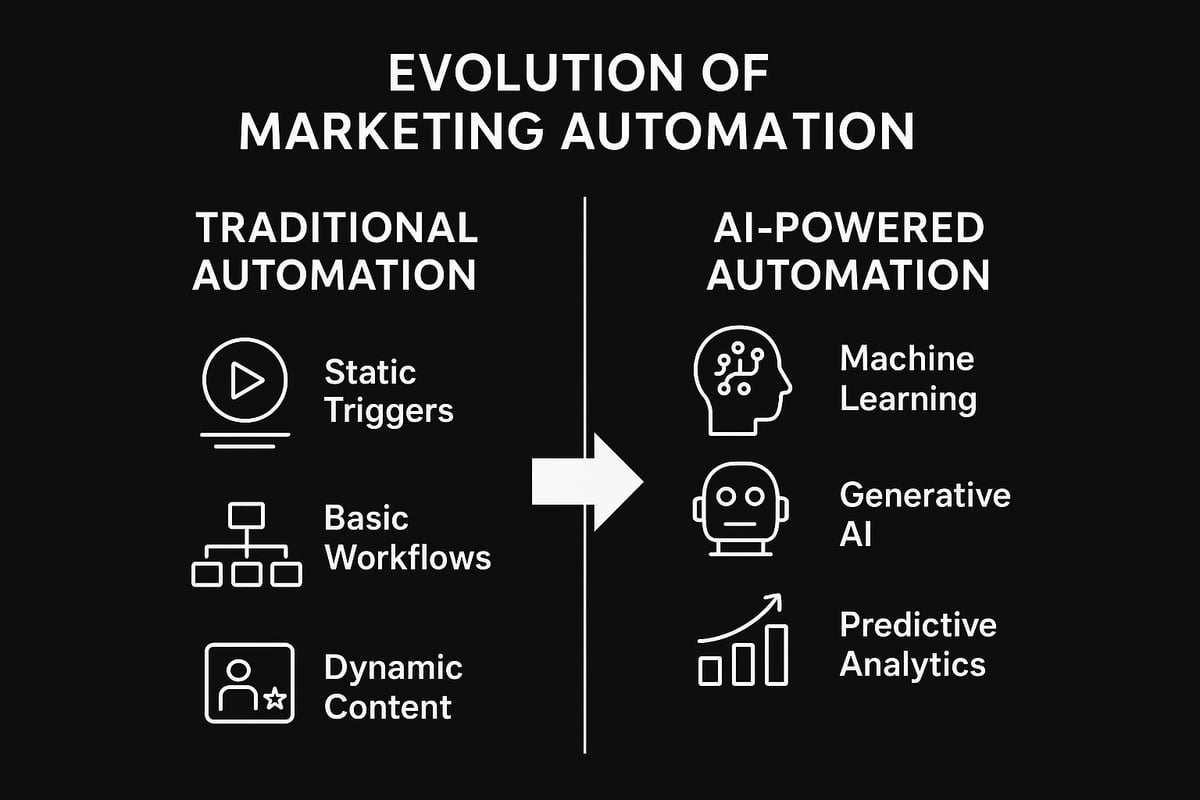
Artificial intelligence is redefining the landscape of marketing automation using ai, evolving from simple rule-based workflows to sophisticated, adaptive systems. Traditional automation relied on static triggers and pre-set sequences, limiting creativity and flexibility. In contrast, AI-powered automation leverages machine learning and generative models like ChatGPT or Midjourney, allowing marketers to generate creative content and manage campaigns dynamically. For example, AI can automatically create webinar teasers based on real-time engagement data. This approach unlocks new capabilities, not just operational efficiency. For a deeper dive into this evolution, see AI in Marketing Automation.
Defining AI-Driven Marketing Automation
Marketing automation using ai in 2026 is powered by a convergence of advanced technologies. Machine learning enables platforms to learn from vast amounts of customer data, while natural language processing helps brands communicate with customers more effectively. Computer vision is being used to analyze images and videos for campaign optimization. Predictive analytics plays a key role in mapping customer journeys, anticipating needs, and triggering personalized touchpoints. AI chatbots and virtual assistants deliver 24/7 engagement, and real-time personalization engines adapt content instantly. For example, AI-driven segmentation allows campaigns to target micro-audiences with specialized offers.
Key AI Technologies Powering Automation in 2026
The synergy between AI and automation is at the core of marketing automation using ai. AI excels at analyzing data, identifying opportunities, and making strategic decisions. Automation platforms then execute these decisions, ensuring consistent delivery across channels. For instance, AI can curate relevant content based on audience preferences, and automation schedules its publication across email, social, and web platforms. According to HubSpot, 71% of business leaders report positive ROI from integrating AI and automation. This partnership leads to exponential scalability, allowing marketers to focus on strategy rather than manual tasks.
How AI and Automation Work Together
Despite the promise, marketing automation using ai brings new challenges and ethical considerations. Data privacy and security are top concerns as AI systems process sensitive customer information. Algorithmic bias and transparency issues can impact fairness and trust. Human oversight is essential to ensure AI-driven campaigns remain aligned with brand values and messaging. Marketers must also stay compliant with evolving regulations like GDPR and CCPA. Striking the right balance between automation and authentic brand voice is key to sustainable success.
Challenges and Ethical Considerations
Core Benefits of Marketing Automation Using AI
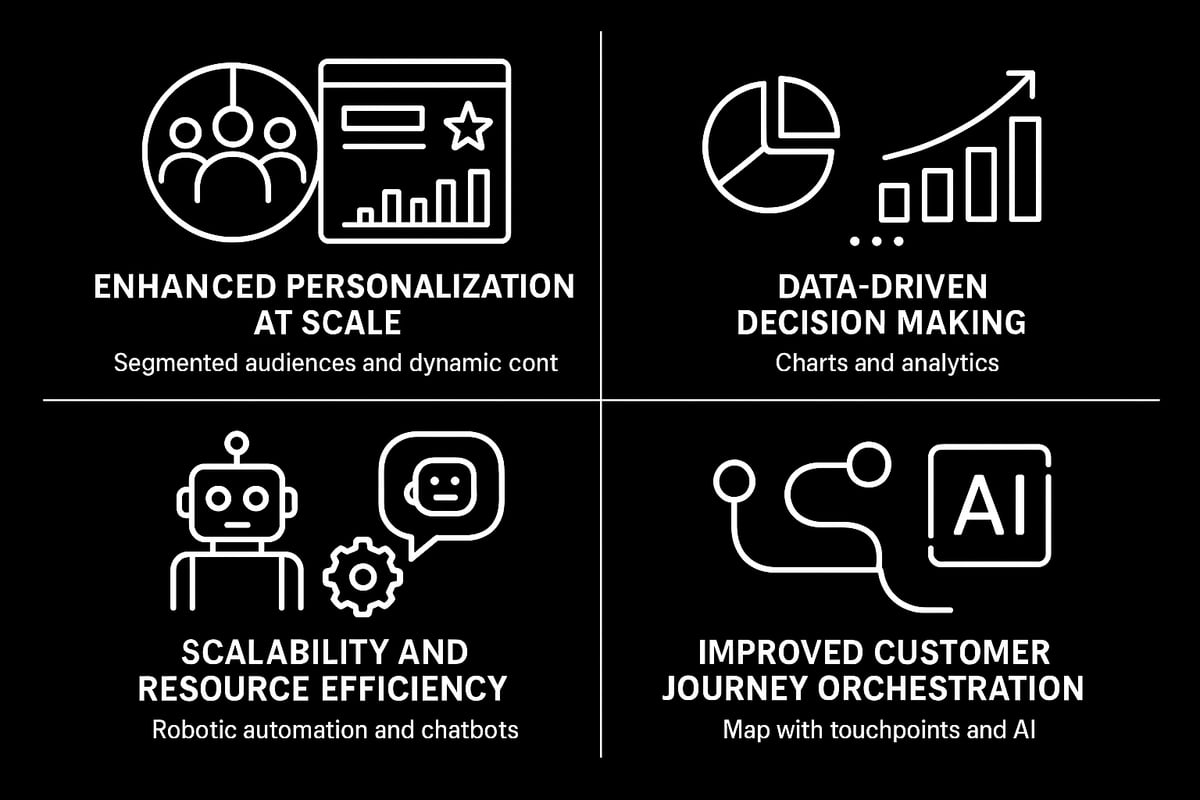
Adopting marketing automation using ai transforms how businesses connect with customers, optimize processes, and deliver results. Let us explore the four core benefits that set this approach apart for marketers in 2026.
Enhanced Personalization at Scale
With marketing automation using ai, personalization reaches unprecedented levels. AI analyzes customer behaviors, preferences, and interactions, enabling marketers to segment audiences with pinpoint accuracy.
Micro-audiences receive tailored content in real time.
Automated follow-ups adapt to individual event engagement.
Dynamic recommendations increase relevance and satisfaction.
This hyper-specific approach boosts loyalty and satisfaction. Unlike manual segmentation, marketing automation using ai delivers personalized experiences without the need for constant human intervention.
Data-Driven Decision Making
AI processes vast quantities of marketing data, uncovering actionable insights that drive smarter decisions. With marketing automation using ai, campaign timing, channel selection, and budget allocation are optimized based on real performance analytics.
AI identifies underperforming channels and reallocates spend.
Real-time dashboards track campaign effectiveness.
Automated recommendations minimize guesswork.
According to AI marketing statistics 2025, marketers using AI-driven automation consistently report improved ROI and campaign outcomes. The ability to act on big data sets marketing automation using ai apart from traditional strategies.
Scalability and Resource Efficiency
Scaling marketing operations is effortless with marketing automation using ai. AI handles repetitive tasks like lead nurturing, customer support, and content distribution, freeing teams to focus on strategy and creativity.
Chatbots provide instant, 24/7 support to countless customers.
Automated workflows streamline lead qualification and follow-up.
Businesses grow without increasing headcount proportionally.
Resource savings and higher customer satisfaction are direct results of implementing marketing automation using ai, making it a critical asset for growth-oriented organizations.
Improved Customer Journey Orchestration
AI maps the entire customer journey, predicting needs and delivering timely interventions. Marketing automation using ai ensures seamless cross-channel experiences, adapting to each step a customer takes.
AI recommends next-best actions or content based on real-time behavior.
Omnichannel automation maintains brand consistency.
Targeted interventions drive conversions and loyalty.
By orchestrating journeys with precision, marketing automation using ai enables brands to engage customers meaningfully at every touchpoint.
Step-by-Step Guide: Implementing AI Marketing Automation Strategies for 2026
Mastering marketing automation using ai is essential for staying ahead in 2026. This step-by-step guide breaks down how to assess, plan, and execute next-generation strategies that will set your team up for measurable success.
Step 1: Assess Your Current Marketing Automation Maturity
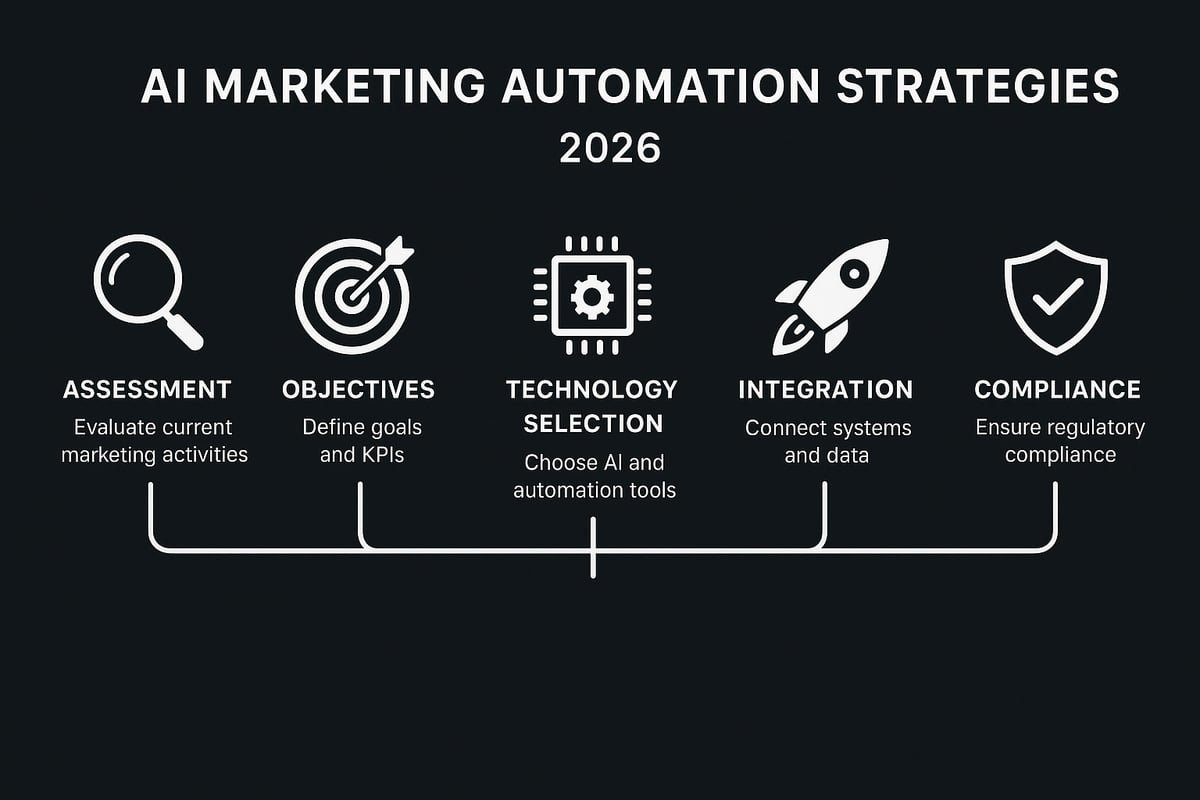
Start by taking a close look at your marketing automation using ai readiness. Audit all current automation tools, mapping out existing workflows and identifying manual processes that could benefit from AI enhancements.
Evaluate your data quality, integration points, and accessibility. Are there disconnected systems or data silos? Benchmark your setup against industry standards to spot gaps. For example, many small businesses still rely on manual email segmentation or basic scheduling tools, missing out on AI-powered personalization.
Referencing Marketing Automation and AI Insights can help you understand how leading brands identify these gaps and set priorities. This foundational step sets the direction for successful marketing automation using ai.
Step 2: Define Clear Objectives and KPIs
Once you know your starting point, define what you want to achieve with marketing automation using ai. Set measurable goals, such as increasing lead conversion rates, boosting engagement, or improving customer retention.
Align these objectives with your long-term business growth targets. Prioritize high-impact use cases, like deploying personalized drip campaigns or launching AI-powered chatbots. Establish KPIs for each goal to track progress precisely.
Clear objectives help you select the right technologies and focus your marketing automation using ai efforts where they will deliver the most value.
Step 3: Select the Right AI Technologies and Tools
Choosing the right platforms is critical for marketing automation using ai. Evaluate solutions based on integration capabilities, scalability, and vendor support. Look for features such as predictive analytics, AI-driven content creation, and omnichannel automation.
Compare top platforms side by side:
Platform | Key AI Feature | Best For |
|---|---|---|
Kaltura | Video content repurposing | Video marketing |
Mailchimp | Behavioral segmentation | Email automation |
HubSpot | Lead scoring, workflows | CRM and sales |
Many leading tools now have AI built in, making marketing automation using ai more accessible than ever.
Step 4: Integrate AI with Existing Marketing Stack
Integration is where marketing automation using ai truly scales. Plan for seamless data flow between your AI tools and platforms such as CRM, CMS, email, and social channels.
Address challenges like data interoperability and synchronization early. Use APIs or middleware to connect systems efficiently. For example, automate cross-channel publishing by letting AI curate and schedule content based on engagement data.
When marketing automation using ai is well integrated, you unlock new possibilities for real-time, data-driven campaigns.
Step 5: Develop AI-Driven Campaigns and Content
Leverage marketing automation using ai to power every stage of your campaigns. Use AI for content ideation, rapid creation, and ongoing optimization. Automate audience segmentation and targeting, ensuring each message is relevant and timely.
Set up AI-powered triggers to deploy campaigns based on user behavior or lifecycle stage. For instance, let AI generate personalized webinar teasers or social posts tailored to each audience segment.
With marketing automation using ai, campaign launches become faster and engagement rates climb.
Step 6: Monitor, Measure, and Optimize Performance
Continuous improvement is key to effective marketing automation using ai. Implement real-time analytics and intuitive dashboards to track performance across channels.
Use AI to spot trends, anomalies, and opportunities for optimization. Automate A/B testing, letting algorithms suggest tweaks to underperforming campaigns. For example, AI can recommend adjusting ad spend or changing creative assets to boost ROI.
Automated optimization means your marketing automation using ai strategy keeps getting smarter over time.
Step 7: Ensure Compliance and Ethical AI Use
Responsible marketing automation using ai requires careful attention to privacy and ethics. Monitor for data privacy, consent, and regulatory compliance at every stage.
Build transparency and explainability into your AI-driven processes. Regularly audit algorithms for bias or fairness, and train your team on responsible AI practices.
Trustworthy marketing automation using ai builds stronger customer relationships and safeguards your brand’s reputation.
Top AI Marketing Automation Tools and Platforms for 2026
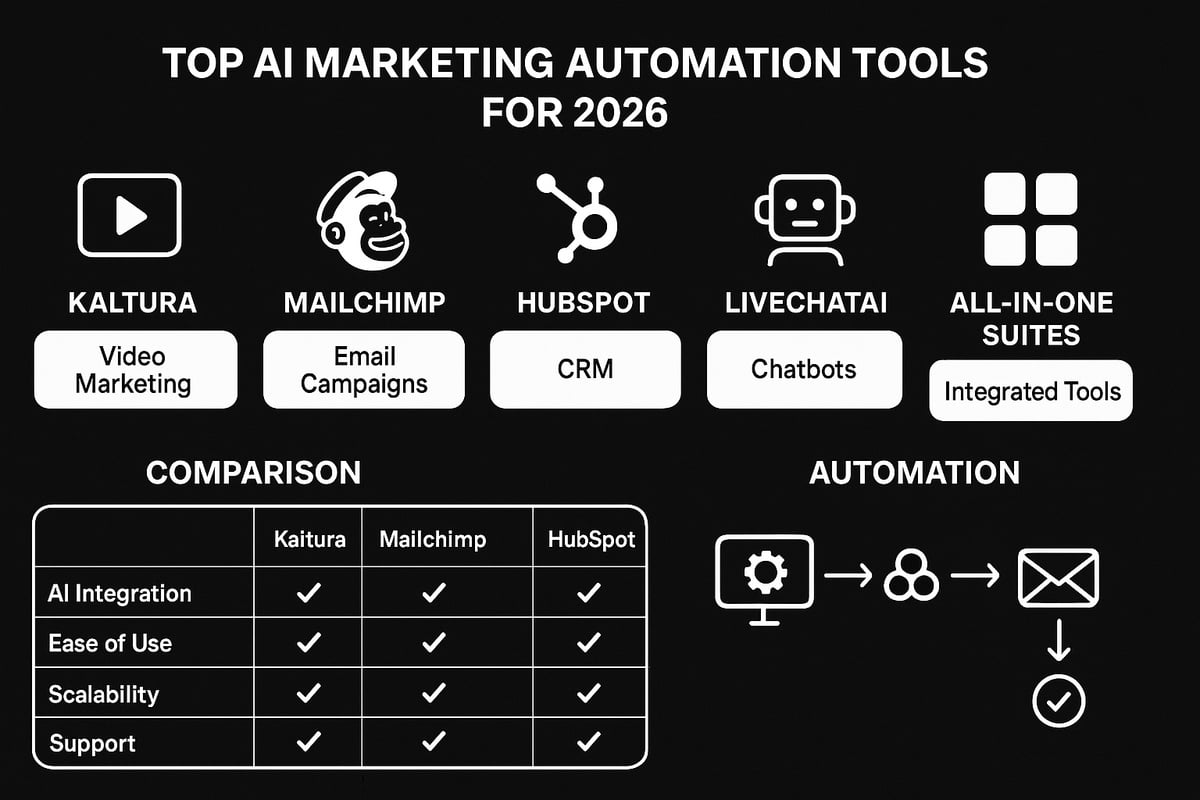
Selecting the right platforms is crucial for success with marketing automation using ai. As we move toward 2026, new solutions are redefining what is possible for marketers. The following tools are leading the way, each offering unique capabilities that help brands automate, personalize, and optimize campaigns at scale.
Video Marketing Automation: Kaltura
Kaltura stands out for marketing automation using ai in video campaigns. Its AI-powered suite automates content repurposing, making it simple to turn webinars into short, engaging teasers. Marketers benefit from advanced engagement analytics and seamless cross-channel publishing. For example, Kaltura’s AI identifies the most impactful moments from a webinar and generates teaser clips that drive registrations. This reduces manual editing time and ensures content remains relevant across platforms. Recognized as a top enterprise AI video solution, Kaltura empowers teams to deliver measurable ROI while streamlining video marketing workflows.
Email Marketing Automation: Mailchimp
Mailchimp brings marketing automation using ai to the inbox with behavioral segmentation, AI-driven content personalization, and optimal send-time prediction. The platform automates A/B testing and delivers campaign performance analysis in real time. Imagine launching a campaign where Mailchimp automatically customizes subject lines and content for each micro-segment, resulting in higher open rates and better conversions. Its intuitive dashboards help marketers quickly spot trends and adapt strategies. Mailchimp is especially popular among SMBs for its ease of use and deep AI integration, making it a go-to solution for email automation.
CRM and Sales Automation: HubSpot
HubSpot’s platform integrates marketing automation using ai directly into its CRM, supporting sales, marketing, and service workflows. Features such as AI-powered lead scoring, personalized workflows, and behavior tracking enable precise targeting and timely follow-ups. For instance, HubSpot’s AI can segment leads based on their interactions and automatically trigger customized follow-up sequences. This not only boosts lead conversion rates but also enhances customer retention. HubSpot’s widespread adoption stems from its robust automation features and strong support ecosystem, making it a cornerstone for businesses seeking seamless integration across channels.
Conversational AI and Chatbots: LiveChatAI
LiveChatAI elevates marketing automation using ai by enabling brands to deploy customizable AI chatbots across websites, social channels, and SMS. These bots are trained on proprietary data, delivering personalized responses and real-time support. A practical use case is automating FAQ responses and qualifying leads around the clock, freeing up human agents for higher-value tasks. LiveChatAI’s analytics provide actionable insights into customer interactions, allowing for continuous improvement. With scalable, consistent customer engagement, this tool is essential for organizations aiming to maintain a high level of support without increasing headcount.
All-in-One AI Marketing Suites and Emerging Tools
The future of marketing automation using ai lies in comprehensive platforms that unify campaign management, predictive analytics, and omnichannel orchestration. New and emerging suites are offering integrated solutions with advanced personalization, workflow automation, and real-time optimization. When evaluating these tools, marketers should look for scalability, ease of integration, and robust support. For more details on how these platforms are shaping the landscape, see this guide on Automation for Marketing Campaigns. To stay ahead of trends and discover the most innovative solutions, explore the latest AI marketing automation trends for 2026. These resources will help ensure your strategies remain future-ready.
Future Trends and Predictions: The Next Frontier of AI in Marketing Automation
The future of marketing automation using ai is defined by rapid shifts in both technology and consumer expectations. As we approach 2026, marketers must anticipate and adapt to emerging trends that will shape customer engagement, personalization, and compliance. Let us explore five pivotal directions that will transform the marketing automation using ai landscape.
Hyper-Personalization and Predictive Engagement
Marketing automation using ai is set to deliver hyper-personalization at a scale never seen before. AI will analyze real-time behavioral signals, enabling marketers to craft one-to-one experiences for every customer. Predictive engagement will trigger dynamic content and offers as users interact across channels, tailoring each journey to individual needs.
Recent data shows that personalization is a key driver for loyalty and conversions. As noted in the Generative AI adoption in marketing report, most marketing teams are now ecstatic about AI's ROI, making advanced personalization an industry standard. By 2026, marketing automation using ai will make every interaction relevant, timely, and highly engaging.
Autonomous Campaigns and Agentic AI
The rise of autonomous campaigns is revolutionizing marketing automation using ai. Soon, fully autonomous AI agents will manage entire campaigns, from planning to execution. Agentic AI will be capable of seeing, listening, and responding to customer triggers in real time, even moderating live events or webinars as digital avatars.
This shift means marketers will transition from hands-on management to strategic oversight. AI will handle campaign optimization, resource allocation, and real-time adjustments, freeing teams to focus on creative strategy. As marketing automation using ai matures, expect to see a surge in agent-led initiatives that drive measurable results with minimal manual intervention.
AI-Driven Content Repurposing and Creation
Content remains at the heart of marketing automation using ai. In the coming years, AI will automate the transformation of long-form assets into interactive content like video clips, quizzes, and infographics. AI-generated video, audio, and written materials will be produced at scale, ensuring brands can reach audiences across every channel.
For example, marketers will leverage AI Content Labs to rapidly diversify content formats, maximizing ROI and reach. With marketing automation using ai, teams can focus on ideation and brand storytelling, while AI handles creation, distribution, and performance analysis. This trend empowers marketers to stay agile and relevant in a fast-paced digital landscape.
Seamless Human-AI Collaboration
The future of marketing automation using ai is not about replacing humans, but about seamless collaboration. AI brings efficiency, data analysis, and automation, while humans contribute creativity, empathy, and brand voice. Marketers will use AI to draft content, automate responses, and segment audiences, but will always provide the final review and direction.
A recent Collaborating with AI agents study found that teamwork between humans and AI agents boosts productivity and performance in marketing. As marketing automation using ai evolves, expect deeper integration between human intuition and AI-powered insights, leading to superior customer experiences.
Evolving Data Privacy and Trust Standards
With marketing automation using ai advancing, data privacy and consumer trust will be central concerns. Anticipated regulations and heightened expectations require brands to prioritize ethical AI, transparency, and responsible data stewardship. Companies will adopt explainable AI systems that clarify how decisions are made, building trust with customers.
Responsible marketing automation using ai will become a competitive differentiator. Brands that lead in transparency and compliance will win loyalty in a marketplace where trust is paramount. As standards evolve, marketers must stay informed and proactive to maintain long-term relationships.
As you look ahead to 2026, it’s clear that embracing AI-powered marketing automation isn’t just about keeping up—it’s about getting ahead. You’ve just explored proven strategies, step-by-step frameworks, and the latest tools that can help your business personalize at scale, streamline operations, and drive measurable growth. If you’re ready to put these insights into action but want expert guidance tailored to your goals, let’s connect. We can work together to assess your current workflows, identify quick wins, and build a roadmap for sustainable success. Book a free consultation and let’s start scaling your marketing with confidence.