Guide to Choosing a Sales and Marketing Consulting Firm 2026
Learn how to choose the right sales and marketing consulting firm in 2026 with expert criteria, proven strategies, and actionable steps to boost your business growth.
Nov 29, 2025
In 2026, choosing the right sales and marketing consulting firm could determine whether your business grows exponentially or struggles to keep up. The stakes are high, and the market is more complex than ever. This guide is designed to help you select the ideal consulting partner, using proven, data-driven steps tailored to your unique needs. We will break down why consulting matters now, how to define your objectives, what criteria to consider, the questions to ask, and the trends shaping the industry. Get ready for a clear roadmap to drive measurable sales and marketing success.
The Evolving Role of Sales and Marketing Consulting Firms in 2026
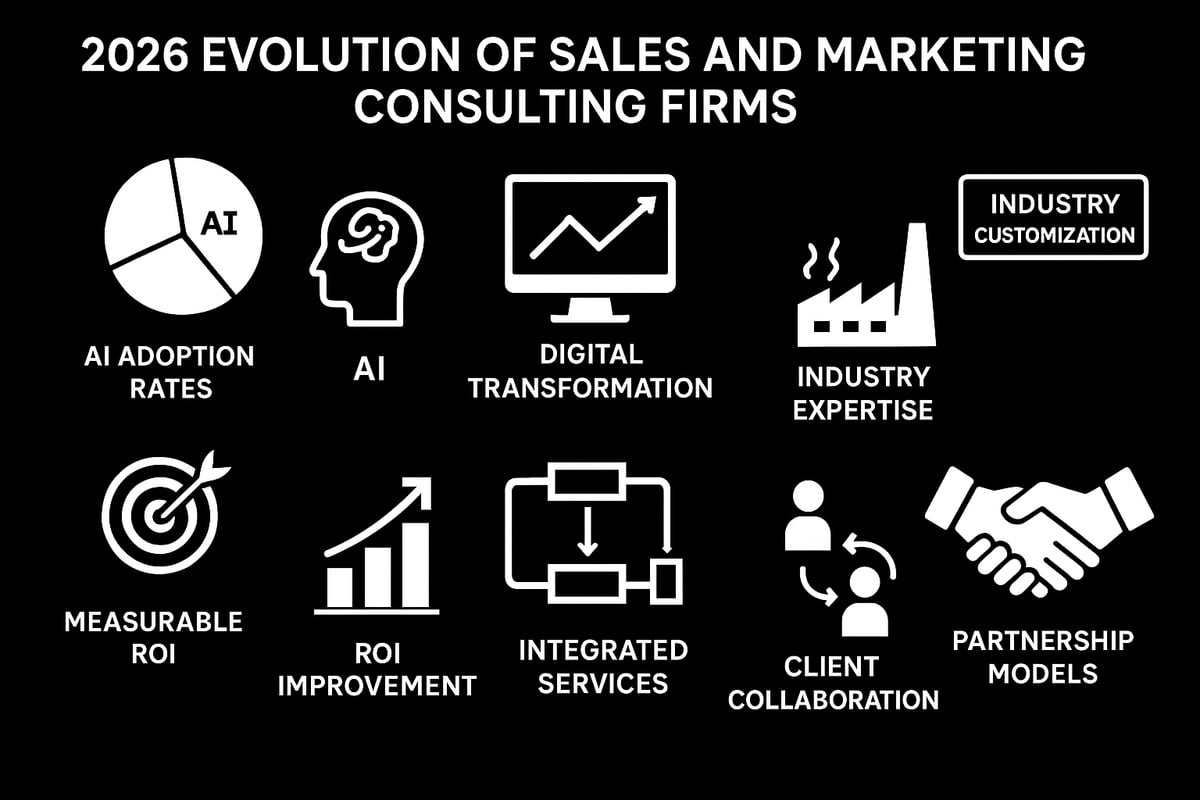
The landscape for every sales and marketing consulting firm is rapidly changing in 2026. New technologies, shifting client expectations, and the demand for measurable results are reshaping how these firms deliver value. Understanding these shifts is crucial for businesses aiming to select the right partner.
The Impact of Digital Transformation and AI
Digital transformation has fundamentally altered the role of the sales and marketing consulting firm. Firms are now guiding clients through complex omnichannel environments, integrating social commerce, and leveraging AI for lead generation and customer engagement.
AI-powered CRM systems and automated marketing platforms are no longer optional. Consulting partners are expected to recommend, implement, and optimize these tools. For example, a recent project saw a consulting team deploy AI-driven automation to streamline lead scoring and campaign management, resulting in significant efficiency gains.
To stay ahead, leading firms continually invest in the latest data analytics and automation strategies. For a deeper dive into these advances and more, see the Top 10 consulting industry trends in 2026.
Industry-Specific Expertise and Customization
Generic solutions are fading fast. In 2026, every sales and marketing consulting firm is expected to offer deep industry expertise—whether in life sciences, retail, or consumer products.
Tailored strategies win out over one-size-fits-all approaches. For instance, a life sciences company recently turned to consultants with specialized knowledge to enhance healthcare provider (HCP) engagement and streamline complex data management requirements.
This level of industry customization ensures that recommendations are relevant, actionable, and aligned with sector-specific regulations or customer behaviors.
Measurable Business Outcomes
Unlike in the past, a sales and marketing consulting firm is now held accountable for delivering quantifiable business results. Clients want more than advice—they expect real ROI.
Typical metrics include revenue growth, cost savings, and improvements in customer acquisition or retention. One notable example involves a category management transformation project that drove double-digit sales increases for a consumer products client.
Firms that can clearly demonstrate their impact with data-backed case studies are gaining a competitive edge in the 2026 consulting landscape.
The Rise of Integrated Service Offerings
There is a marked shift toward end-to-end solutions. A sales and marketing consulting firm now often provides bundled services, including strategy, technology enablement, execution, and change management.
This integrated model streamlines vendor management and ensures that digital, data, and sales enablement initiatives work in harmony. Firms offering comprehensive packages—covering everything from CRM implementation to process optimization—are especially valued by clients seeking a seamless transformation journey.
Client-Consultant Collaboration Models
The relationship between client and sales and marketing consulting firm is evolving from transactional to partnership-based. Today, successful engagements emphasize collaboration, knowledge transfer, and building internal capabilities.
Consultants are not just external experts—they serve as partners who empower your team to sustain improvements after the engagement ends. This approach fosters transparency, shared accountability, and long-term value.
Step 1: Assessing Your Business Needs and Readiness
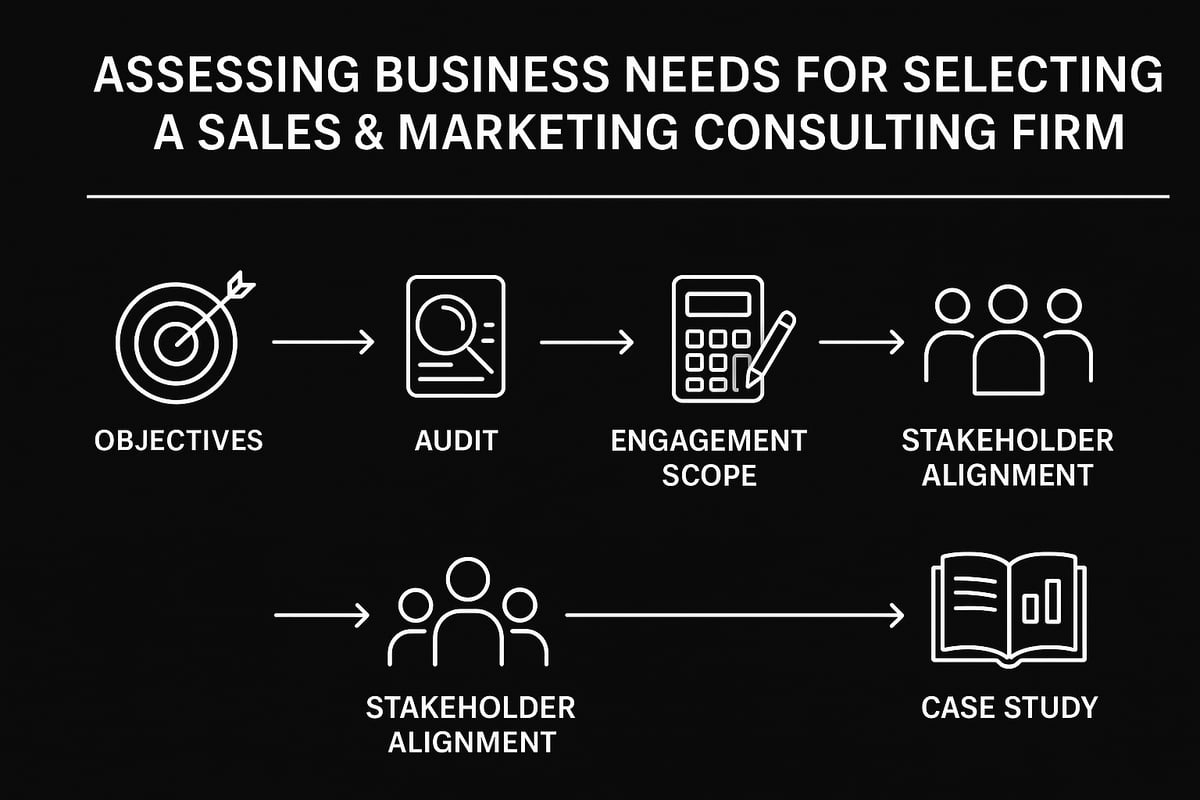
Before choosing a sales and marketing consulting firm, it is critical to lay a solid foundation by thoroughly assessing your business needs and readiness. This process ensures you select a partner who can deliver measurable impact and aligns with your strategic goals.
Defining Your Sales and Marketing Objectives
Begin by clarifying what you aim to achieve with a sales and marketing consulting firm. Outline your growth targets, revenue goals, and market expansion priorities. Are you focused on boosting lead generation, improving conversion rates, or expanding into new markets? Identify pain points such as:
Weak digital presence
Low conversion rates
Inefficient sales processes
Setting clear objectives not only directs your search but also helps you evaluate if a consulting partner can address your specific challenges. For deeper insights into current trends and best practices, review Sales and marketing consulting insights.
Auditing Current Capabilities
Next, conduct a thorough audit of your existing capabilities before engaging a sales and marketing consulting firm. Evaluate your sales and marketing teams, technology stack, and current workflows. Ask:
Do you have the right skill sets?
Are your tools up to date and integrated?
Where are the gaps in expertise or technology?
A gap analysis will reveal areas where external consulting can add the most value. This step ensures you target firms that complement, rather than duplicate, your internal strengths.
Determining Scope of Engagement
Decide what type of relationship you need with a sales and marketing consulting firm. Consider if your needs are best met by a project-based engagement, a retainer, or a long-term partnership. Reflect on your requirements:
Do you want only strategy, or strategy plus implementation?
Are you seeking help with a single issue or multiple services?
Defining the scope up front allows you to filter firms based on their ability to deliver the right level of support and flexibility.
Budgeting and ROI Expectations
Establish a realistic budget for working with a sales and marketing consulting firm. Use industry benchmarks to guide your expectations and define clear success metrics, such as:
Revenue growth
Cost savings
Customer acquisition or retention rates
Determine your anticipated return on investment and how you will track progress. Budgeting with ROI in mind will help you justify the investment and select a partner who can deliver tangible results.
Stakeholder Alignment and Buy-In
Secure early alignment among key decision-makers before selecting a sales and marketing consulting firm. Communicate your goals and expectations clearly across the leadership team. Ensure all stakeholders understand:
The purpose of the engagement
The desired business outcomes
Their roles in the process
This proactive approach lays the groundwork for a smooth selection process and maximizes the impact of your consulting partnership.
Example
Consider a consumer products company aiming for direct-to-consumer growth. After identifying stagnant online sales, the leadership team audits their digital marketing skills and finds gaps in automation expertise. By defining objectives, auditing capabilities, outlining engagement scope, setting a budget, and aligning stakeholders, they confidently approach a sales and marketing consulting firm that specializes in DTC strategies and digital transformation.
Step 2: Key Criteria for Evaluating Sales and Marketing Consulting Firms
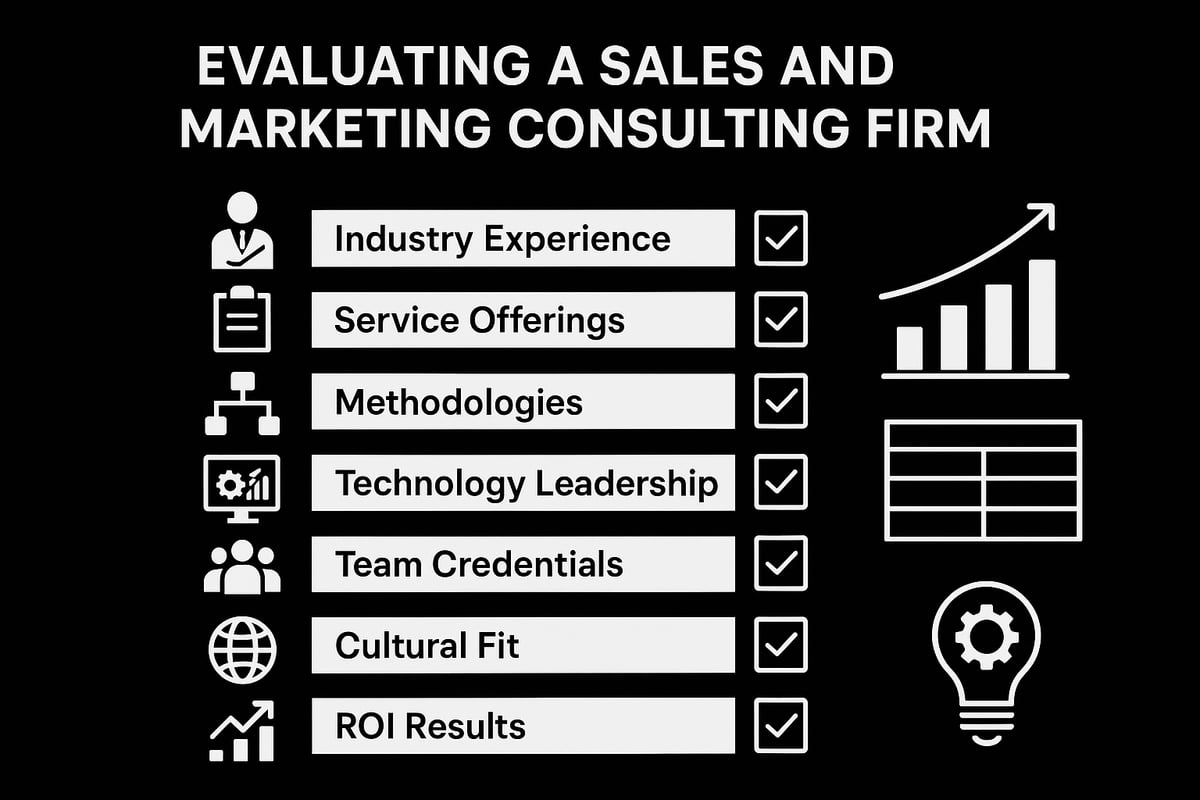
Selecting the right sales and marketing consulting firm can define your organization’s growth trajectory. With so many firms vying for your attention, understanding what truly matters is essential. Below, we break down the key criteria to help you confidently compare your options.
Industry Experience and Track Record
A sales and marketing consulting firm’s industry expertise is non-negotiable in 2026. Deep knowledge of your sector, whether it is retail, life sciences, or B2B technology, ensures that recommendations are grounded in reality.
Look for firms that showcase relevant case studies and client testimonials. Ask for examples of challenges they have solved within your industry. A proven track record signals the firm’s ability to deliver impact, not just advice.
Assess their familiarity with regulations, market trends, and unique customer behaviors in your field. This alignment reduces onboarding friction and accelerates results. Ultimately, a firm’s industry experience can be the difference between generic strategies and transformational change.
Service Offerings and Capabilities
The scope of services offered by a sales and marketing consulting firm should match your needs today and in the future. Leading firms provide a spectrum of integrated solutions, from strategy and digital transformation to CRM, analytics, trade promotion, and sales enablement.
Evaluate whether the firm can support end-to-end projects or prefers to specialize in a single area. Bundled services often streamline execution and ensure consistency across your initiatives.
To understand the full range of possibilities, review this Sales and marketing services overview for context on what top consulting partners can deliver. This helps you identify gaps in your current approach and select a firm that can bridge them.
Methodologies and Approach
A sales and marketing consulting firm’s methodology shapes the entire engagement. Does the firm use proprietary frameworks? Are its processes data-driven and transparent? The right approach should blend proven best practices with the flexibility to address your unique business context.
Ask for details about their project management style, change management protocols, and tools for collaboration. Customization is crucial—avoid firms that rely too heavily on templated solutions.
Request sample project plans or roadmaps. This will reveal how the firm balances structure with adaptability, ensuring your priorities remain central throughout the project.
Technology and Innovation Leadership
In 2026, digital transformation is at the heart of every successful sales and marketing consulting firm. Firms must demonstrate expertise in AI, automation, marketing technology, and advanced analytics.
Evaluate their partnerships with leading technology vendors such as Salesforce, HubSpot, or SAP. Ask how they integrate new tools like AI-powered CRM or marketing automation into client projects.
Firms at the forefront of innovation will not only implement the latest technologies but also guide your team through adoption. This tech leadership ensures your business stays ahead of the competition.
Team Expertise and Credentials
The consultants assigned to your project are as important as the firm itself. Review the team’s seniority, industry certifications, and specialized skills. A top-tier sales and marketing consulting firm invests in ongoing training and thought leadership.
Check for industry awards, published insights, and speaking engagements. These credentials signal both expertise and a commitment to advancing the field.
Request bios or resumes for key team members. This transparency helps you assess whether their backgrounds align with your business needs and culture.
Cultural Fit and Communication Style
A successful consulting partnership relies on more than technical expertise. The sales and marketing consulting firm you choose should align with your company’s values, pace, and preferred ways of working.
During initial meetings, gauge their communication style. Are they transparent, proactive, and collaborative? Do they listen and adapt to your feedback?
Prioritize firms that foster open dialogue and knowledge transfer. A strong cultural fit leads to smoother projects, higher engagement, and lasting results.
Measurable Results and ROI
In today’s environment, every investment in a sales and marketing consulting firm must drive measurable business outcomes. Demand evidence of past performance: ask for data on revenue growth, cost savings, lead quality, and customer retention.
Review KPIs tracked in previous projects. Leading firms provide dashboards and regular reporting to keep you informed of progress.
A results-focused partner will tie their compensation or milestones to your desired outcomes. This accountability ensures your engagement delivers quantifiable value, not just recommendations.
Step 3: The Consultant Selection Process – Steps, Questions, and Red Flags
Selecting the right sales and marketing consulting firm is a critical step in driving your business forward. The process requires a structured approach, careful evaluation, and attention to detail. By following these steps, you can confidently identify the best partner for your unique needs.
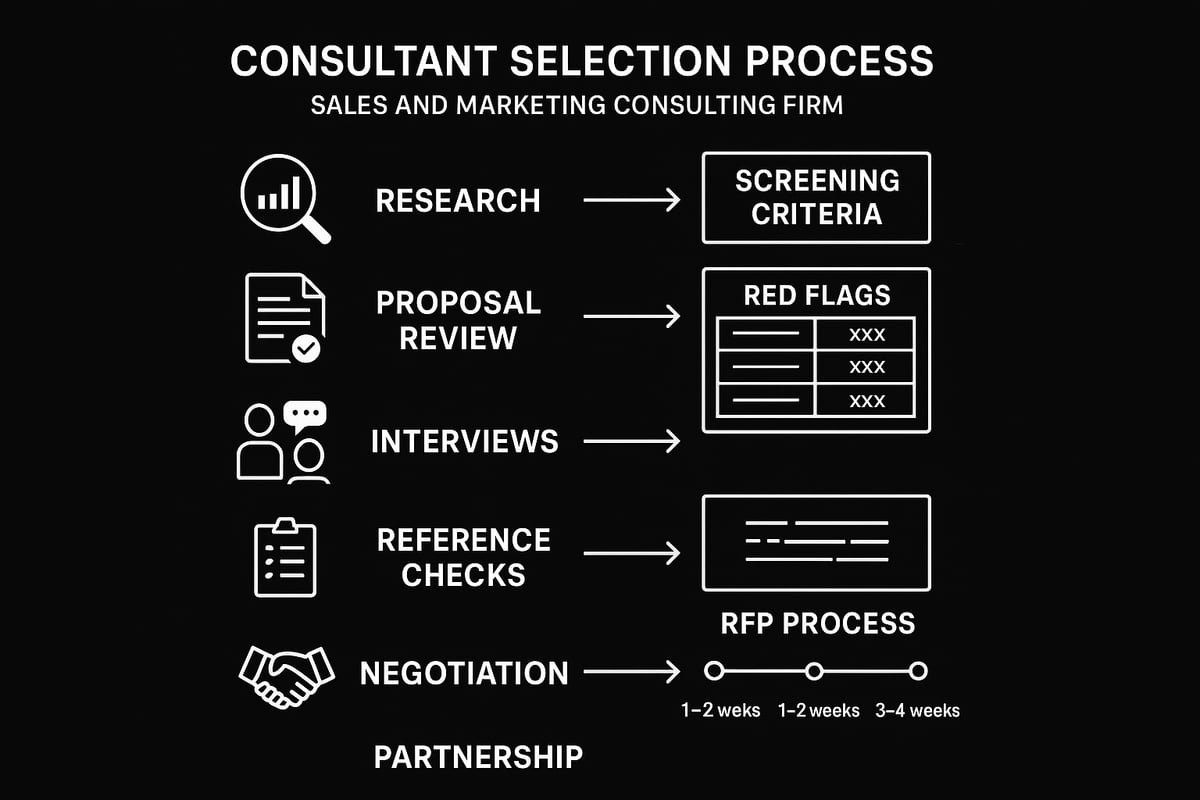
Creating a Shortlist of Potential Firms
Begin by researching and identifying a shortlist of sales and marketing consulting firm candidates. Use industry directories, ask for referrals from trusted peers, and review case studies relevant to your sector. Evaluate each firm's specialization, reputation, and client portfolio.
Look for firms with proven expertise in your industry and a track record of measurable results. Combine online research with insights from the Marketing consulting firm guide to ensure you are considering all essential selection criteria. A well-curated shortlist sets the stage for a focused, effective selection process.
Requesting and Reviewing Proposals (RFP/RFI)
Once you have your shortlist, request detailed proposals or responses to a Request for Proposal (RFP) or Request for Information (RFI). Clearly outline your objectives, scope, timelines, and success metrics in the RFP.
Assess each proposal for how well the sales and marketing consulting firm addresses your needs. Review their methodologies, innovation, and ability to deliver tailored solutions. Look for clarity, transparency, and evidence of relevant client success stories. Proposals should align with your goals and demonstrate both strategic vision and practical execution plans.
Conducting Interviews and Due Diligence
Interview your top candidates to assess fit and expertise. Use these key questions to guide your discussions:
How do you customize your approach for our industry and company size?
Can you provide recent, relevant success stories?
What is your process for measuring and reporting ROI?
How do you ensure effective knowledge transfer to our team?
During interviews, observe how each sales and marketing consulting firm communicates and responds to your concerns. Transparency, responsiveness, and a collaborative mindset are strong indicators of a reliable partner.
Evaluating Fit and Chemistry
Beyond technical expertise, evaluate cultural fit and the potential for a strong working relationship. Organize in-person or virtual workshops to gauge chemistry and alignment.
Warning signs include overpromising, vague answers, or reluctance to share specifics. A reputable sales and marketing consulting firm will engage openly, ask insightful questions, and show a genuine interest in your business. Prioritize firms that foster trust and demonstrate a partnership mentality.
Checking References and Past Performance
Before making a final decision, conduct thorough reference checks. Ask previous clients about project outcomes, communication quality, and overall value delivered.
Watch for warning signs such as inconsistent results, lack of measurable impact, or poor client retention. A dependable sales and marketing consulting firm should provide transparent case studies and be forthcoming with references who can speak to real business outcomes.
Negotiating Terms and Setting Expectations
As you finalize your choice, negotiate clear terms in your contract. Define deliverables, timelines, pricing, and key success metrics. Build in flexibility for scope changes or additional services as your needs evolve.
Establish regular progress reviews and ensure both parties understand expectations. A well-structured agreement with your sales and marketing consulting firm is the foundation for a successful, mutually beneficial engagement.
Example
Consider a retail company seeking to expand its eCommerce business. After a structured RFP process and detailed interviews, the company selects a sales and marketing consulting firm with proven success in digital transformation for retail. The clear selection roadmap, reference checks, and contractual clarity ensure a smooth partnership and measurable business growth.
Step 4: Trends and Innovations in Sales and Marketing Consulting for 2026
The world of the sales and marketing consulting firm is evolving rapidly in 2026. Businesses face new challenges, but also exciting opportunities, as they adapt to emerging technologies and shifting consumer expectations. Staying ahead requires understanding the latest trends shaping the industry.
AI-Driven Lead Generation and Sales Automation
AI is transforming how a sales and marketing consulting firm approaches lead generation and sales automation. With smarter algorithms, firms can now identify high-potential prospects, automate outreach, and personalize engagement at scale.
Consultants are implementing AI-powered CRM platforms that score leads dynamically. This technology helps businesses focus their resources on the most promising opportunities. For example, AI tools now analyze customer behavior in real time to trigger automated, relevant messages.
The demand for digital transformation is fueling rapid growth in the consulting sector. According to industry projections, the tech consulting market is set to surpass $400 billion in 2026, highlighting the role of AI in driving business value.
Data-Driven Decision Making and Predictive Analytics
Every sales and marketing consulting firm in 2026 prioritizes data-driven decision making. Firms use advanced analytics to segment customers, optimize campaigns, and forecast sales outcomes with greater accuracy.
Predictive analytics helps consultants recommend the right marketing mix and timing for each client. The ability to turn raw data into actionable insights is now a key differentiator.
Analytics Application | Business Impact |
|---|---|
Customer Segmentation | Higher campaign ROI |
Sales Forecasting | Better resource allocation |
Campaign Optimization | Increased conversion rates |
By leveraging these tools, a sales and marketing consulting firm can deliver measurable results and help clients stay ahead in highly competitive markets.
Omnichannel and Digital-First Strategies
In 2026, a sales and marketing consulting firm must guide clients through the complexities of omnichannel engagement. Buyers now expect seamless experiences across digital, social, and in-person channels.
Consulting firms are unifying marketing and sales touchpoints, ensuring consistent messaging and branding. This digital-first approach includes strategies for direct-to-consumer sales, social commerce integrations, and experiential marketing.
Clients benefit from increased reach and engagement. A sales and marketing consulting firm that excels in omnichannel strategy can help brands connect with diverse audiences and adapt to evolving buyer journeys.
Integration of Change Management and Training
Sustainable transformation requires more than just technology. A leading sales and marketing consulting firm integrates change management and training into every engagement.
Consultants focus on upskilling internal teams, transferring knowledge, and providing ongoing support. Workshops, tailored training modules, and hands-on sessions ensure that new processes and tools are fully adopted.
By building internal capabilities, a sales and marketing consulting firm empowers clients to maintain momentum and drive results long after the engagement ends.
Sustainability and Purpose-Driven Marketing
Purpose-driven marketing has become a priority for every sales and marketing consulting firm in 2026. Clients seek guidance on integrating ESG (Environmental, Social, Governance), DEI (Diversity, Equity, Inclusion), and ethical practices into their brand strategies.
Consulting projects now include sustainability audits, inclusive marketing campaigns, and transparent reporting frameworks. This approach builds trust with consumers and creates long-term value for businesses.
A sales and marketing consulting firm that leads in sustainability can position clients as industry innovators and meet rising stakeholder expectations.
Step 5: Maximizing Value from Your Consulting Engagement
Maximizing your investment in a sales and marketing consulting firm requires a structured approach from day one. By focusing on clear objectives, collaboration, knowledge transfer, and ongoing measurement, you unlock the highest return on your partnership.
Setting Clear Goals and KPIs
Start your engagement by defining measurable goals with your sales and marketing consulting firm. Establish KPIs that directly align with your strategic objectives, such as lead conversion rates, campaign ROI, or customer lifetime value.
Create a shared dashboard or reporting cadence to review these KPIs regularly. This transparency ensures everyone stays focused on outcomes, not just activity. When both your team and the consulting partner understand what success looks like, you set the stage for meaningful progress.
Ensuring Effective Collaboration
A successful relationship with your sales and marketing consulting firm relies on open communication and teamwork. Assign internal champions who act as liaisons, bridging your company’s departments and the consultants.
Encourage regular check-ins, feedback sessions, and collaborative workshops. This approach fosters trust, accelerates problem-solving, and ensures solutions are tailored to your unique business context.
Assign project leads from both sides
Schedule bi-weekly alignment meetings
Promote cross-functional participation
Knowledge Transfer and Capability Building
Lasting value from a sales and marketing consulting firm comes through knowledge transfer. Request detailed documentation and hands-on training as part of your engagement.
Invest in upskilling your teams, so new strategies continue to deliver results after the consultants exit. For a deeper look at how firms support capability building, see this resource on marketing consulting services explained.
Consider workshops, shadowing, and mentorship programs to embed best practices across your organization.
Monitoring, Reporting, and Iteration
Track progress using live dashboards, analytics tools, and regular performance reviews. Your sales and marketing consulting firm should provide timely, actionable reports that highlight both wins and areas for improvement.
Use this data to refine tactics, reallocate resources, and quickly address issues as they arise. Continuous iteration ensures your strategy remains effective as market conditions evolve.
Planning for Long-Term Success
Think beyond the initial project by preparing for a smooth transition to internal ownership. Develop a roadmap for ongoing improvements, based on insights gained during your engagement with the sales and marketing consulting firm.
Evaluate opportunities for future collaborations or new initiatives. By maintaining a proactive mindset, your organization can sustain momentum and capitalize on long-term growth.
Frequently Asked Questions About Sales and Marketing Consulting Firms
Choosing a sales and marketing consulting firm involves important decisions that can impact your business trajectory. Here are answers to the most frequent questions companies ask before starting a consulting engagement.
Common Concerns and Misconceptions
Many businesses wonder about the true cost of working with a sales and marketing consulting firm. Consulting fees can vary widely depending on the firm’s reputation, project complexity, and engagement length. Some firms charge hourly or project-based rates, while others offer subscription models.
Another common question involves the difference between strategy and implementation consulting. Strategy consulting focuses on high-level planning and market analysis, while implementation consulting helps execute those strategies in real time. Most companies benefit from a firm that can bridge both.
Typical engagements last from a few weeks to several months. The duration depends on project scope and desired outcomes. Always clarify timelines and deliverables with your sales and marketing consulting firm at the start.
Tips for First-Time Buyers
If you are engaging a sales and marketing consulting firm for the first time, preparation is key. Start by aligning your internal stakeholders on project goals, expectations, and success criteria. This alignment ensures everyone understands the firm’s role and what you hope to achieve.
Assign a dedicated project lead or internal champion to facilitate communication between your team and the consulting partner. This approach streamlines decision-making and reduces misunderstandings.
Before the engagement, educate your staff on what to expect and encourage open communication. By doing so, your sales and marketing consulting firm can integrate more smoothly with your team, leading to better collaboration and results.
Latest Industry Insights
The sales and marketing consulting firm landscape is rapidly evolving. In 2026, digital transformation and AI advancements are shaping the most in-demand services, including CRM integration, predictive analytics, and omnichannel strategies.
Recent reports show that the marketing consulting market is on track to grow significantly, with subscription-based consulting models gaining traction for their flexibility and ongoing value. For detailed analysis of these trends and growth projections, see Marketing consulting market to grow by USD 41.56 billion by 2027.
Consulting firms are also investing in upskilling and technology adoption to keep pace with client needs. Staying informed about these shifts helps you choose a sales and marketing consulting firm that aligns with your industry and future goals.
After learning how the right consulting partner can help you harness AI, automation, and integrated strategies to accelerate growth, you might be wondering what your next step should be. If you’re ready to see how your business can leverage these innovations to get ahead in 2026, I invite you to take the first step with expert guidance tailored to your goals. Let’s explore your unique challenges and opportunities together—you don’t have to navigate this alone. Book a free consultation and discover how The Social Search can help position your company for sustainable sales and marketing success.