Performance Marketing Automation: The Practical Guide to Scaling ROI with AI, Meta, and TikTok
Actionable guide to performance marketing automation with setup roadmaps, AI-driven ad tactics for Meta and TikTok, vertical playbooks, and measurement best practices.
Every marketing team wants more predictable returns from ad spend. Performance marketing automation combines data, AI, and platform-level controls to deliver that predictability. This guide walks you from core concepts to hands-on implementation for Meta and TikTok ads, AI chat agents, automated social campaigns, and lead generation workflows. You will get a 12-week setup roadmap, vertical playbooks, troubleshooting tips, and governance practices so you can scale without losing control.
What is performance marketing automation
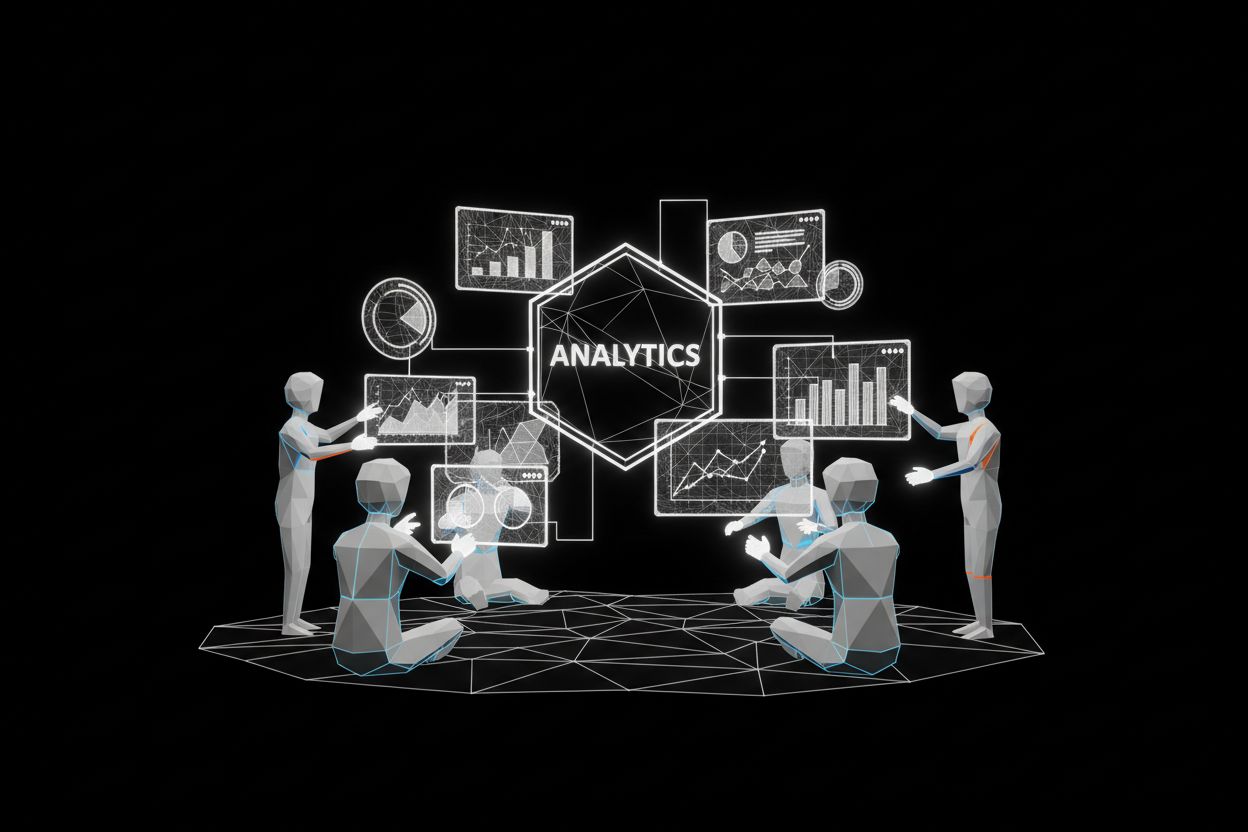
Performance marketing automation means using software, scripts, and AI to run campaigns that optimize for measurable outcomes like installs, leads, or purchases. It spans programmatic ad buying, automated bidding, creative optimization, lead nurturing, and attribution. The goal is to minimize manual tasks while increasing conversion velocity and return on ad spend.
Key components
Audience and identity layer - CDP or customer data platform to unify user signals
Activation layer - Ad platforms and DSPs where audiences are targeted
Automation engine - Rules, APIs, or AI models that trigger bids, creative swaps, or messages
Measurement layer - Conversion APIs, analytics, and attribution models
Orchestration - Workflow automation connecting ad platforms, CRM, email, and chat agents
Why it matters now
Cost efficiency - Automated bidding and budget allocation reduce wasted spend
Speed - AI tests thousands of creative and audience permutations faster than humans
Personalization - Dynamic creative and sequencing deliver relevant experiences at scale
Measurability - Tight feedback loops let you tie spend to revenue and optimize continuously
Benefits you can expect
Improved ROAS through automated bidding and audience pruning
Faster learning cycles for creative and audience strategies
Reduced manual workload for campaign ops teams
Scalable lead generation with automated handoffs into CRM and chat agents
Core tools and platform stack
Performance marketing automation is an ecosystem. Choose tools that integrate cleanly and support your privacy and attribution needs.
Major tool categories
Ad platforms and DSPs
Meta Ads and TikTok Ads for social performance
Programmatic DSPs for display and video
Automation engines and AI platforms
Native automated rules, third-party optimization layers, and ML models for bidding
Customer data and analytics
CDP, data warehouse, and BI dashboards for unified reporting
Orchestration and engagement
Marketing automation, email, and AI chat agents for lead follow up
Measurement and attribution
Server-side conversion APIs, multi-touch attribution tools, and fraud detection
Platform-specific notes
Meta and TikTok both offer automated bidding, advantage placements, and creative testing, but their learning windows and signal models differ. Treat them as complementary channels.
Use server-side conversion APIs to reduce signal loss from browser restrictions.
Connect your CDP or data warehouse to your ad accounts to feed high-value signals back into bidding models.
Recommended integrations
Ad platform to CDP sync for audience activation
CRM to automation engine for lead scoring and handoffs
Conversion API setup for Meta and TikTok to improve measurement accuracy
For hands-on services on these areas, see our guides on Automated Lead Generation and Paid Ads Management.
How AI enhances performance marketing automation
AI is no longer a novelty. It is the optimization layer for bidding, creative, segmentation, and messaging. Here are high impact use cases that produce immediate lift.
AI use cases
Automated bidding and budget allocation - Models predict conversion probability and shift budgets in near real time
Creative generation and testing - AI produces headlines, descriptions, and image variants, while automated experiments identify winners
Predictive audience scoring - Lookalike and propensity models find high value prospects before they convert
Dynamic personalization - Product feeds and dynamic creative optimize ads to each user
AI chat agents - Qualify leads, book demos, and feed intent signals back to ads
Practical example - Meta and TikTok combo
Use AI-driven creative templates to produce 30 variations daily
Deploy sets across Meta and TikTok with automated rules to pause underperformers after 24 hours
Feed conversion outcomes back to the CDP to retrain audience propensity models weekly
AI governance and guardrails
Limit automated budget swings, especially during low-signal periods
Require a minimum conversion threshold before letting AI scale spend
Log decisions so human teams can audit and reverse actions
You can automate social creative and scheduling through our Automated Social Media resource.
Twelve-week implementation roadmap
This section gives a practical timeline you can follow to get a robust performance marketing automation setup live. Adjust timing for team bandwidth and platform approvals.
Weeks 1 - 2: Audit and measurement foundation
Audit existing tracking and conversion events
Implement server-side conversion APIs for Meta and TikTok
Centralize event schema in your CDP or data warehouse
Define core KPIs and conversion windows
Weeks 3 - 4: Data and audience activation
Build high-value segments in the CDP - buyers, churn risk, high LTV
Map audiences to ad accounts and ensure consent flags for privacy
Create lookalikes and seed audiences for initial campaigns
Weeks 5 - 6: Automation and creative setup
Implement automated bidding rules with conservative caps
Onboard creative templates and set naming conventions
Set up experiments and define measurement plan
Weeks 7 - 8: Orchestration and lead flow
Configure lead routing to CRM with automated scoring
Deploy AI chat agents to capture and qualify inbound leads
Define SLA for sales follow up and closed loop reporting
Weeks 9 - 12: Scale and refine
Increase budget on validated audiences and creatives gradually
Retrain propensity models with new conversion data
Run full attribution analysis and adjust channel mix
Quick checklist - technical must-haves
Conversion events mapped and deduplicated
Server-side conversion APIs enabled
CDP or data warehouse connected to ad accounts
Automated rules with budget safety caps
Lead routing and chat agent handoffs tested
If you need a deeper primer on integrating lead generation with automation, read our Lead Generation and Marketing Automation Guide for 2026 Success.
Vertical playbooks - actions by industry
Performance marketing automation is not one size fits all. Here are tailored playbooks with example KPIs and budgets.
B2B SaaS
Objective - Qualified demos and MQLs
Channels - LinkedIn, Meta prospecting, Google search
Tactics - Account based lookalikes, gated content sequences, AI chat agents for booking demos
KPI benchmarks - CPL $50 to $250 depending on deal size
Typical budget - Start at $10k monthly for targeted account acceleration
eCommerce
Objective - ROAS on purchases and repeat rate
Channels - Meta, TikTok, programmatic retargeting
Tactics - Dynamic product ads, abandoned cart chat recovery, segmented retention flows
KPI benchmarks - ROAS 3x to 6x, CAC varies by category
Typical budget - Start at $5k monthly per tested catalog vertical
iGaming and high-frequency verticals
Objective - Deposits and LTV
Channels - Programmatic, social upper funnel, performance partnerships
Tactics - Real-time attribution, fraud prevention utilities, granular hourly optimizations
KPI benchmarks - CPA and early LTV cohorts tracked closely
Typical budget - Highly variable, model for incremental spend against LTV
For onboarding AI chat agents to your funnels, see Automated AI Chat Agents.
Measurement, attribution, and fraud prevention
Accurate measurement is the lubricant for automated systems. If your signals are noisy, AI will optimize the wrong outcomes.
Attribution models
Use multi-touch attribution to understand the contribution of upper funnel channels
Maintain last-click for transactional validation but rely on multi-touch for budget allocation
Implement experimentation where possible to validate causal lift
Key metrics to track
Cost per acquisition and first value
LTV to CAC ratio
Conversion rate by audience segment
Time to conversion and cohort retention
Fraud prevention
Use fingerprinting and server-side event validation to reduce bot noise
Monitor unusual install and conversion spikes and apply manual throttles
Syndicate blacklists across DSPs and ad accounts
A simple ROI checklist
Align on target LTV and acceptable CAC
Feed revenue events back to your CDP daily
Give models permission to reallocate budget within predefined caps
Team structure and change management
Automation requires a new set of roles and collaboration rhythms.
Core roles
Growth lead - owns performance, KPI targets, and prioritization
Data engineer - manages CDP, event schema, and integrations
Media buyer - builds experiments and platform strategies
ML engineer or vendor manager - supervises AI models and optimization layers
Creative lead - ensures assets meet brand and experiment needs
Sales ops - receives leads and enforces SLAs
Working rhythm
Weekly performance stand ups with clear action items
Monthly model reviews and retraining schedules
Quarterly roadmap updates to align product, marketing, and sales
Change management tips
Start small with low-risk automation rules
Train teams on reading AI outputs and reversing decisions
Document runbooks for troubleshooting and safe rollback
What to do when automation underperforms
Automation fails for clear reasons. Here is a troubleshooting flow you can run when performance drops.
Check data quality - Are conversion events being received accurately?
Verify traffic quality - Any spikes in bot or invalid traffic?
Inspect creative fatigue - Has engagement dropped across variants?
Audit recent rule changes - Did someone widen audience or increase max bids?
Run a controlled experiment - Pause automation on a subset and compare
Fallback and rollback
Have a manual campaign that can be reactivated quickly
Set conservative budget guardrails so failures are contained
Keep human-in-the-loop approval for big changes
Templates and next steps
Use these quick templates to get started.
Campaign naming template
[Channel][Objective][Audience][CreativeID][Date]
Conversion event schema - minimal
event_name: purchase
value: revenue
currency: USD
user_id: hashed_customer_id
timestamp
Staging checklist before scale
Conversion API tested end to end
Leads flowing to CRM with tags
Attribution windows and model defined
3 creatives per audience segment ready
If you want help implementing these templates or a custom automation roadmap, our team offers services in Automated Lead Generation and Paid Ads Management. For tactical guides on automation and lead pipelines, review Lead Generation and Marketing Automation Guide for 2026 Success.
Conclusion and call to action
Performance marketing automation is a force multiplier when it is built on clean data, clear KPIs, and human oversight. Start with measurement, roll out conservative automation, and build trust between models and teams. Use AI for scale, but retain human judgment for strategy and creative direction.
Ready to accelerate lead flow and ad performance? Explore our Automated Social Media and Automated AI Chat Agents services to move from pilot to scale.
If you want a bespoke implementation plan, contact our team through the site and we will build a 12-week roadmap tailored to your vertical and budget.