Conversion Focused Website Design: A Practical Guide to Boost Leads and Sales
Learn practical strategies for conversion focused website design that boost leads and sales. Templates, AI personalization, accessibility, testing, and benchmarks.
If your website gets traffic but not leads you are losing predictable growth. Conversion focused website design centers every page on a single business outcome and removes the friction that stops visitors from taking action. This guide gives step by step tactics you can implement now, industry-specific patterns, accessibility checks, AI personalization methods, and tracking tips to prove ROI.
What is conversion focused website design?
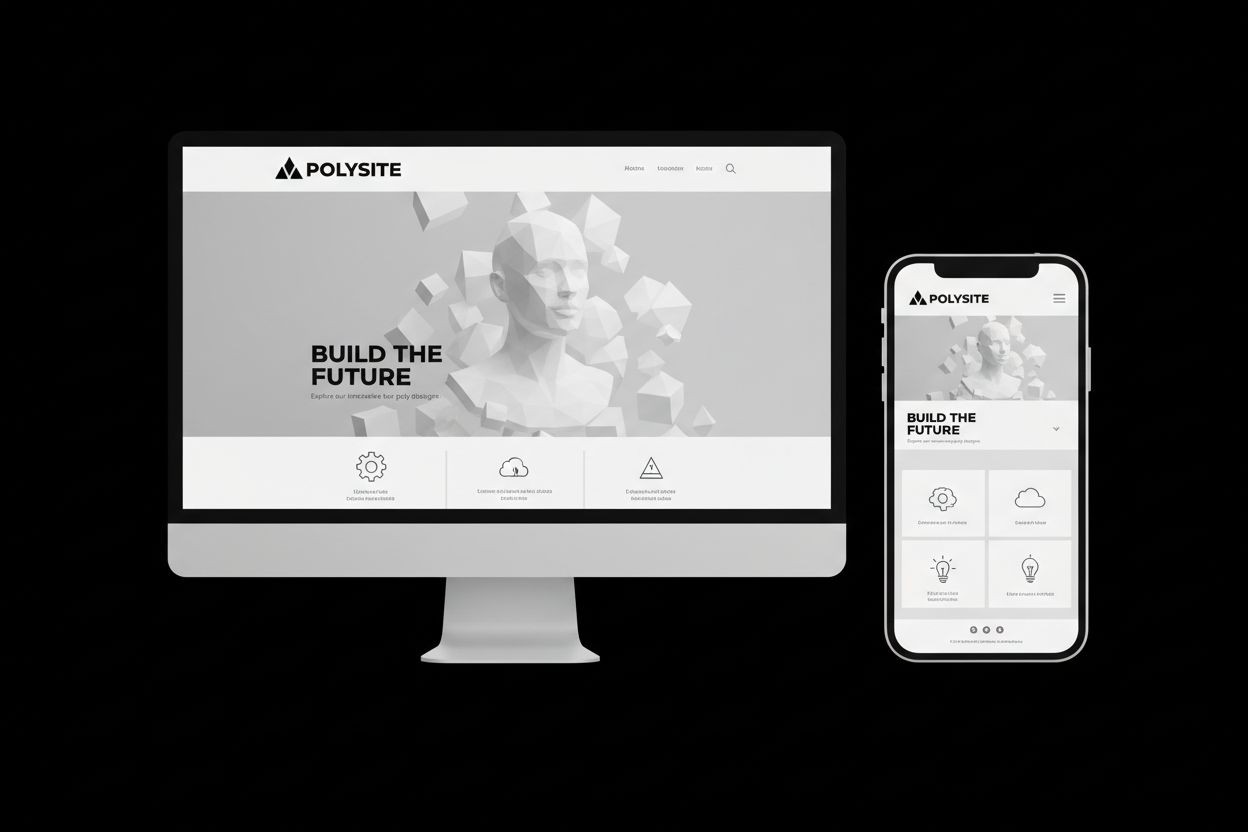
Conversion focused website design is the practice of designing pages with one measurable goal in mind. That goal could be form submissions, demo bookings, purchases, or newsletter signups. The design, copy, layout, images, and technical setup all work together so visitors move through a clear path to convert.
Key principles are attention ratio, message match, visual hierarchy, trust signals, and friction reduction. Unlike generic design, conversion focused design prioritizes measurable outcomes and continuous testing to improve them.
Why this matters now
Higher acquisition costs mean maximizing value from each visitor.
Attention spans are short. A single confusing decision can stop a conversion.
Modern tools let you personalize experiences at scale so generic pages underperform.
Core principles for high-converting pages

Below are the design principles you should apply to every high-value page. For each principle there are specific actions and quick checks you can run today.
1. Single goal focus
What to do
Define the one conversion the page exists to get. Remove or hide secondary links that pull attention away.
Use a strong, contextual headline that matches the ad or social post that brought the visitor.
Quick checks
Count outbound links in the hero. If more than one clear CTA you need to simplify.
Measure attention ratio: number of actions on page divided by primary conversion actions should be 1.
2. Message match
What to do
Ensure ad, social post, or search result promise matches the headline, offer, and hero image.
Mirror language from the source so visitors feel continuity.
Practical example
If a Meta ad promises “Free 30-minute SEO audit,” the landing page headline should repeat that phrase and the CTA should say “Book free audit.”
3. Visual hierarchy and layout
What to do
Place the most important message and CTA above the fold for mobile. Use F-pattern or Z-pattern layout for reading flow.
Use size, color, and white space to guide the eye to the CTA.
Implementation tip
Use a grid system and consistent margins. On mobile prioritize single-column stacking with hero, value bullets, social proof, then CTA.
4. CTA design and copy
What to do
Make CTAs action-specific and outcome-driven. Replace “Submit” with “Get my audit” or “Start free trial.”
Contrast color, use clear sizing, and provide hover and focus states for accessibility.
A/B idea
Test verb-led CTAs against benefit-led CTAs. Example: “Start free trial” versus “Try it free for 14 days.”
5. Trust and social proof
What to do
Add customer logos, short testimonials with photos, number of customers, and case study links.
Use real metrics and contexts like “Reduced churn by 18% for SaaS company X.” Avoid vague claims.
6. Friction reduction
What to do
Shorten forms, use multi-step forms for long flows, and prefill fields where possible.
Minimize required fields and explain why you need each piece of data.
Technical tip
Enable browser autofill attributes and use inputmode and autocomplete attributes to speed up mobile completion.
7. Measurement and continuous testing
What to do
Track clicks, form starts, form completions, and heatmap interactions. Use A/B tests for headline, hero image, CTA, and form length.
Make small, iterative changes and keep a hypothesis log.
Tracking snippet example
Industry-specific design patterns
Conversion focused website design must adapt to the market. Below are patterns for four common verticals and the conversion behaviors they favor.
SaaS
Goal: demo requests, trial signups, or activation.
Pattern: feature-led hero for technical buyers, outcome-led hero for decision makers.
Tactics: short demo video, clear pricing anchor, integration logos, live chat option.
eCommerce
Goal: add to cart and checkout completion.
Pattern: product imagery, scarcity cues, one-click purchase options.
Tactics: fast checkout, clear shipping info, product recommendations based on behavior.
B2B services and agencies
Goal: lead capture and discovery calls.
Pattern: case studies, process diagram, CTA to book a strategy call.
Tactics: industry-specific landing pages, ROI examples, long-form content for trust.
Lead generation and local services
Goal: calls, form leads, bookings.
Pattern: local proof, phone CTA, map and service area.
Tactics: click-to-call buttons, short forms, immediate confirmation with next steps.
For tailored website creation workflows, consider using automated site tools to speed up iteration and maintain consistency. See Automated Website Creation for options that integrate templates and testing.
AI personalization and chat agents
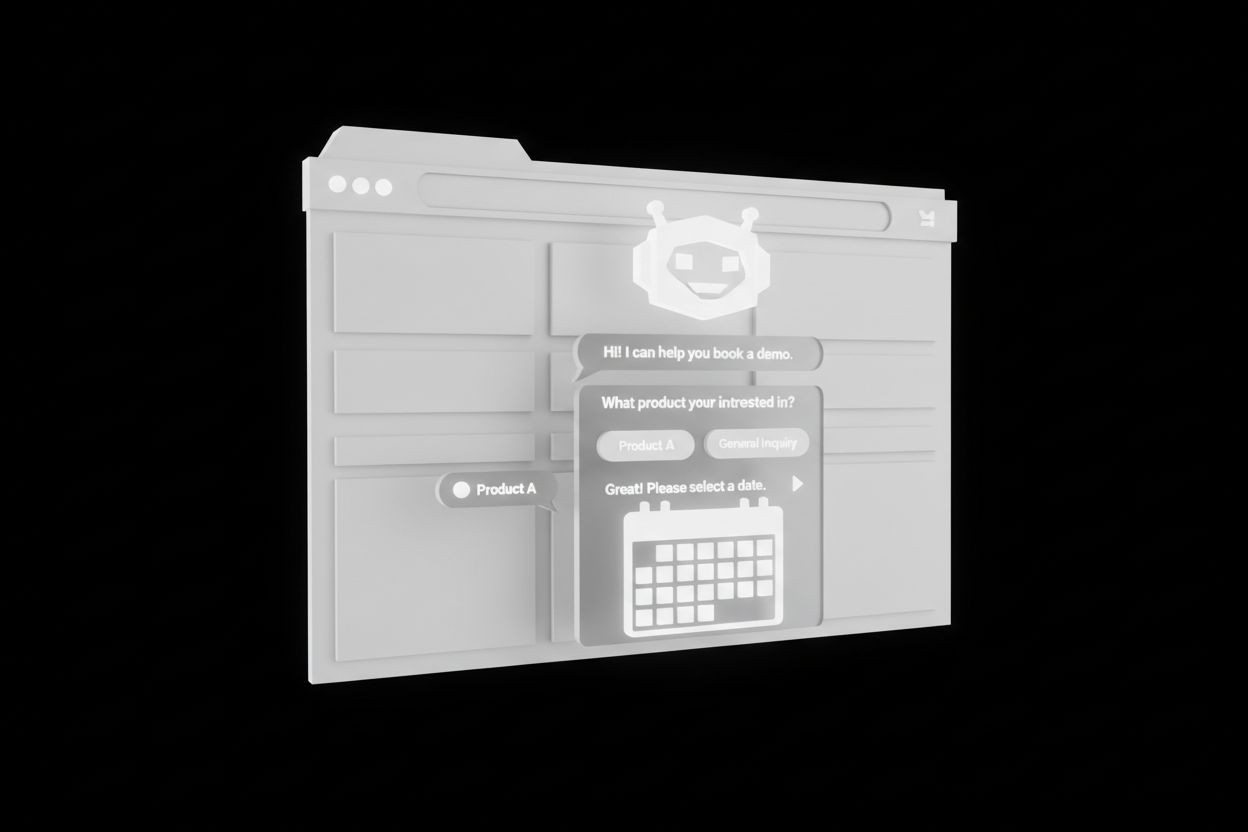
Personalization increases relevance and conversions when done correctly. AI can help by serving dynamic headlines, tailoring social proof, and handling simple qualification with a chat agent.
Practical personalization ideas
Geo-targeted hero lines that show local references.
Behavioral triggers that change the CTA for returning visitors.
Personalized social proof showing case studies from the visitor’s industry.
Chat agents and lead qualification
Use chat agents to capture intent and book calls. A lightweight flow might qualify a lead with 3 questions then offer a calendar link. For implementation guidance and pre-built agent workflows check Automated AI Chat Agents.
Ethics and frequency
Avoid showing overly personal details. Use aggregated data and be transparent about automation.
Paid media and social integration
Your landing pages must mirror ad copy to avoid message mismatch losses. For Meta and TikTok ads focus on short, benefit-led headlines and one-click landing flows.
Optimization checklist for paid media
Ensure ad-to-page message match.
Remove sitewide navigation from ad landing pages.
Track UTM parameters and pass them into forms to evaluate channel ROI.
If you run platform campaigns consider aligning design and tracking with your ad management provider. Learn more about paid campaign operations at Paid Ads Management.
For social automations and creative cadence that feed into landing pages check Automated Social Media to streamline assets and messaging.
Accessibility and inclusive conversion design
Making a site accessible improves conversions by widening your audience and reducing friction. Follow these practical accessibility checks:
WCAG-inspired checklist
All buttons and links must have sufficient color contrast.
Provide meaningful alt text for images and descriptive labels for form fields.
Ensure keyboard navigability and visible focus states.
Use semantic HTML headings and ARIA roles when necessary.
Screen reader tips
Avoid putting CTA only in an image. Provide a text equivalent.
Keep dynamic content announcements clear so users know when the page state changes.
Post-conversion experience and retention
A conversion does not end the experience. Design post-conversion flows to reduce buyer’s remorse and set expectations.
Essential post-conversion elements
Immediate confirmation page with next steps and a calendar link if relevant.
Follow-up automation sequence within the first 24 hours explaining what happens next.
Useful onboarding microcopy and quick wins to increase activation.
For systems that automate lead follow-up and onboarding you can integrate design with your lead generation workflows. Explore Automated Lead Generation to create consistent handoffs between site and nurture campaigns.
Measuring impact and proving ROI
To prove design value you need event-level data, funnel analysis, and attribution. Here is a basic measurement plan you can implement.
Minimum viable tracking
Page view, CTA click, form start, form complete, and micro conversions.
Use GA4 conversion events and an experiment platform for A/B tests.
Tag UTM parameters and persist them into form submissions.
Attribution considerations
Use multi-touch models to understand which channel assisted conversion.
Report on conversion rate, cost per acquisition, and downstream revenue when possible.
Advanced: link design changes to revenue
Run controlled experiments. Change only one major element per test.
Use holdout audiences where feasible to measure lift.
Common mistakes and how to fix them
Too many CTAs - Simplify to a single, primary action per page.
Message mismatch - Match ad, social, and landing page copy.
Slow pages - Compress images, use critical CSS, and lazy load below-the-fold content. Aim for under 2.5 seconds load time.
Forms with excessive fields - Ask only what you need. Move optional fields to step two.
Ignoring mobile - Test and design mobile-first.
Not tracking micro conversions - Track form starts and error rates to find friction points.
Quick implementation checklist
Define the single conversion for each high-value page.
Audit message match from top traffic sources.
Check hero hierarchy and CTA contrast.
Reduce form fields and enable autofill attributes.
Add two trust elements above the fold.
Implement basic event tracking for CTA and form submits.
Run at least one A/B test per month and log hypotheses.
Tools and templates to speed work
Landing page builders with testing: choose tools that let you deploy variants fast.
Heatmaps and session recording: identify where users hesitate or drop off.
A/B test runners: run controlled experiments on headlines and CTAs.
If you want an end-to-end solution for creating consistent, testable pages quickly consider combining automated site creation with testing tools. See Automated Website Creation for options that reduce manual handoffs.
Final checklist before you publish a page
Does the headline match the ad or social post?
Is the primary CTA clear and action-oriented?
Are forms as short as possible?
Are trust elements visible above the fold?
Is the page fast and mobile-friendly?
Are events and UTM tracking implemented?
If you can answer yes to each question you are set to launch an optimized page and measure real improvements.
Next steps and how to get help
Conversion focused website design combines art and measurement. Start with a single high-value page, implement the checklist, and run a test. If you need help building optimized landing flows, managing paid campaigns, or implementing AI chat agents reach out to a partner who can orchestrate design, tracking, and automation.
For agency support with campaigns and automation consider Paid Ads Management and the services linked earlier. When you are ready to scale, automation across creative, social, and chat will reduce friction and increase conversion velocity.
If you want a tailored audit or to discuss a conversion plan contact the team here: Contact us.
Frequently asked questions
How long before I see uplift from design changes?
Small changes can move metrics in a few days when traffic is steady. Statistically significant tests may take weeks depending on traffic. Prioritize quick wins like CTA clarity and form reduction for immediate impact.
Should I personalize for every visitor?
Personalization should be strategic. Start with simple segments like new vs returning visitors and industry-based messaging. Measure lift and expand the personalized experience gradually.
Where does SEO fit into conversion design?
SEO brings traffic. Conversion design converts that traffic. Maintain message match and speed while ensuring page content satisfies search intent. For ongoing organic growth consider our automated SEO services at Automated SEO.
Conversion focused website design is a repeatable process. Define the goal, remove friction, test, measure, and iterate. Use personalization and automation strategically, make your pages accessible, and always wire tracking so you can prove impact. Implement the checklist above and run controlled experiments each month to drive continuous improvement.