Outsourced AI Marketing Team: A Practical Guide to Choosing, Managing, and Measuring Success
Decide if an outsourced AI marketing team is right for your business. Practical vendor checklist, contract clauses, hybrid models, onboarding timeline, and benchmarks.
Choosing whether to hire an outsourced AI marketing team is one of the most strategic decisions a company can make in 2026. The right partner can accelerate paid media performance, scale AI chat agents, and automate social creative workflows. The wrong partner can lock you into rising costs, leak proprietary insights, and slow your learning curve. This guide lays out a practical, actionable roadmap: how to evaluate vendors, what to include in contracts, onboarding timelines, hybrid models that preserve institutional knowledge, and performance benchmarks for Meta and TikTok ads, AI chat agents, social media automation, and lead generation.
What exactly is an outsourced AI marketing team and when it makes sense

An outsourced AI marketing team combines human marketers, data engineers, and AI tooling supplied by an external provider to run all or parts of your marketing stack. Services commonly include running AI chat agents, automated social media creative generation, programmatic paid ads with machine learning optimization, and analytics automation for SEO and lead generation.
You should consider outsourcing when:
You need speed to market for campaigns where time matters.
You lack budgeted headcount to hire senior AI and data engineering talent now.
You want to validate AI-driven channels before building internal capabilities.
You need specialized tools or MLOps practices that would take months to set up.
You should be cautious when:
Your marketing relies on proprietary customer signals that create competitive advantage.
You operate in highly regulated industries where data governance is strict.
Your brand voice is nuanced and cannot be easily codified.
Core benefits and trade-offs
Benefits
Faster execution. Agencies often have prebuilt playbooks for Meta and TikTok ads optimized with ML.
Access to tooling. Partners bring models, data pipelines, and MLOps practices you might not have internally.
Predictable outcomes. Managed services can deliver predictable monthly outputs for creative, chats, and leads.
Trade-offs
Knowledge risk. Outsourcing can reduce internal learning if not set up as co-managed work.
Vendor lock-in. Losing direct control of code, models, or specific automations can be costly.
Alignment problems. Agencies may optimize for short-term metrics rather than long-term brand health.
True costs and total cost of ownership
A fair assessment compares building vs buying across direct and hidden costs.
Direct costs to outsource
Monthly retainer or performance fees.
Media spend and ad platform fees.
Licenses for AI tools the vendor uses.
Hidden costs to watch
Integration work for data pipelines and CRM sync.
Management overhead to coordinate governance and approvals.
Opportunity cost if knowledge does not transfer to your team.
Build side
Salaries for ML engineer, data engineer, AI PM, and senior marketer.
Infrastructure and MLOps tooling expense.
Time to recruit and ramp, typically 6 to 12 months before steady output.
Rule of thumb: estimate TCO across 12 to 24 months. For many SMBs, outsourcing reduces time-to-value even when monthly fees appear higher.
Strategic risks and how to mitigate them
Follow a three-layer mitigation approach: contractual, operational, and technical.
Contractual protections
Data ownership clause that states your company retains all customer data and derived insights.
Exit and transition service level, including handover timelines for models and pipelines.
Performance KPIs tied to deliverables and phased payments.
Operational protections
Mandatory knowledge transfer sprints during onboarding and quarterly reviews.
Shared runbooks for campaign logic and creative briefs.
Co-managed roles where your team owns strategy and the vendor executes.
Technical protections
API-first integrations so you can replace tools without data loss.
Model versioning and access to trained artifacts on exit.
Auditable logs for AI decisions when chat agents or ad targeting use sensitive signals.
Vendor evaluation framework: a step-by-step checklist
Use this practical scoring matrix when vetting partners. Score each item 1 to 5 and prioritize must-haves.
Capabilities and track record
Proven case studies for Meta and TikTok ads with CPA or ROAS metrics.
Experience deploying AI chat agents into live CX flows.
References from businesses of similar size and vertical.
Data and security
SOC 2 or equivalent controls and a clear data retention policy.
Willingness to sign a robust data processing agreement.
Technology and integrations
Support for CRM, CDP, and analytics stacks you use.
Ability to export models, scripts, and datasets as part of exit.
Team composition and transparency
Named leads for AI, data engineering, and account strategy.
Clear SLAs for response times and issue resolution.
Commercials and pricing model
Clear fee structure: retainer, performance, or hybrid.
Transparent pass-through costs for ad spend and third-party tools.
Knowledge transfer and training
Built-in transfer milestones and training hours for your team.
Documentation standards and playbook delivery.
Cultural and strategic alignment
Shared KPIs aligned to LTV, not just short-term conversion.
Link this evaluation to a simple spreadsheet for side-by-side comparisons. If you want a ready template, our automated lead generation page includes a checklist framework that maps to vendor capabilities: Automated Lead Generation - The Social Search.
Contract clauses and performance guarantees that matter
Include these clauses to reduce risk:
Data Ownership and Portability. Explicitly state that all raw and derived data belong to your company.
Transition Assistance. Vendor must provide code, model artifacts, and 90 days of handover support upon termination.
Performance SLAs. Define KPIs, measurement windows, and remediation steps if KPIs are missed.
IP and Model Rights. Clarify ownership of custom models and creative assets.
Audit Rights. Your team can audit logs and model decisions where relevant.
For client-side legal teams, these clauses are starting points. Negotiate durations and penalties that reflect the cost of replacing the vendor.
Practical onboarding timeline and milestones
A typical 12-week onboarding roadmap
Weeks 1 to 2: Discovery
Share data access, brand guidelines, and current performance baselines.
Align on KPIs and reporting cadence.
Weeks 3 to 6: Integration and pilot setup
Connect CRM, analytics, and ad accounts.
Run pilot campaigns: 1 Meta creative test, 1 TikTok audience test, and a basic AI chat pilot.
Weeks 7 to 10: Scale and optimization
Expand winning creative and audiences.
Iterate chat flows and integrate with lead routing.
Weeks 11 to 12: Handover and documentation
Deliver playbooks, model artifacts, and training sessions.
Finalize cadence for ongoing co-management or transition.
Expect a meaningful performance signal by week 8 with full stabilization by month 3 to 6.
Hybrid models: how to keep capability while outsourcing execution
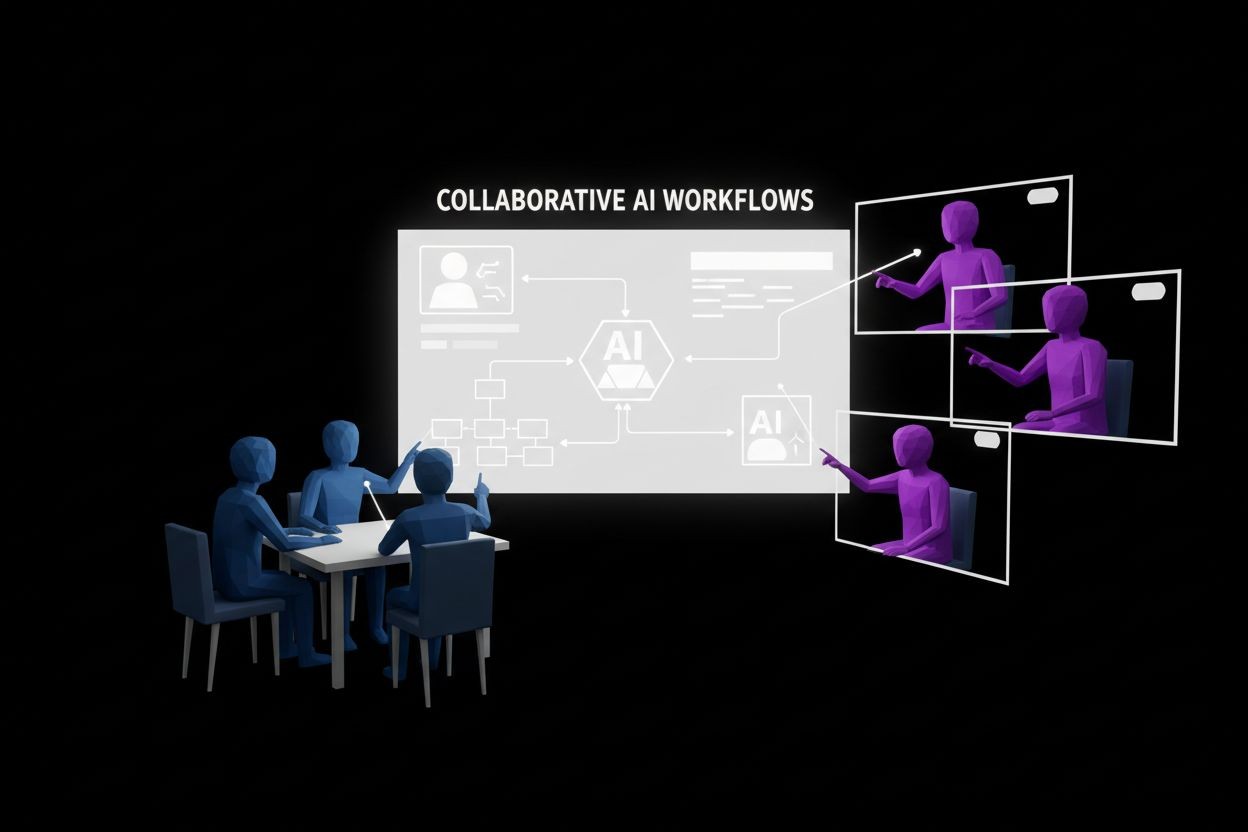
A hybrid model combines an in-house strategist and vendor execution. This preserves strategic control while leveraging vendor scale.
Common hybrid setups
Strategy owned in-house; vendor provides execution, optimization, and tooling.
Vendor handles data engineering and MLOps; in-house product marketing sets targets and reviews outputs.
Time-boxed outsourcing where vendors spin up pilots and then transition operations to internal teams.
How to make hybrid work
Create RACI matrices so roles are clear.
Maintain a small internal center of excellence responsible for data governance.
Budget for training and overlap months so knowledge transfer is intentional.
More about automating social media workflows and building internal capability can be found here: Automated Social Media - The Social Search.
Technology stack and integration checklist
Ensure compatibility across these layers:
Data sources: CRM, product analytics, ad platforms.
Feature store: how features are engineered, stored, and shared.
Model hosting: is inference on-prem, cloud, or vendor API?
Monitoring: real-time metrics for drift, latency, and campaign health.
Ask vendors for an integration diagram and a migration plan that shows how data will flow if you switch providers.
If you plan to automate chat agents, confirm the provider can integrate with your knowledge base and CRM. See our linked AI chat agent service for details: Automated AI Chat Agents - The Social Search.
Benchmarks and performance expectations by channel
These are starting benchmarks. Real results vary by vertical and audience.
Meta Ads
CPL for lead gen: $12 to $80 depending on vertical.
Expected improvement from AI-driven creative testing: 10 to 30 percent over manual testing.
TikTok Ads
Cost per install or lead varies widely; AI creative optimization can reduce costs by 15 to 35 percent when paired with high-frequency creative rotation.
AI Chat Agents
Self-service containment rates: 40 to 70 percent after tuning.
Lead capture lift when integrated with dynamic routing: 20 to 50 percent.
Organic and SEO automation
Content automation can speed production, but human editing keeps CTR and relevance higher. Use automation for drafts and scaling rather than full replacement.
Paid ads management with AI is a specialized offering. For managed ad operations, review targeted services here: Paid Ads Management - The Social Search.
Industry-specific considerations
B2B vs B2C
B2B buyers rely on account-level signals and long sales cycles. Ensure the vendor can do account-based advertising and link paid activity to pipeline metrics.
B2C requires fast creative iteration and a strong creative testing framework.
Regulated industries
Insist on strict data segmentation and privacy controls.
Build approval gates into chat agents and ad creative processes.
Company size
Small companies often benefit most from outsourcing to access expertise.
Large enterprises should focus on hybrid models to protect IP and control.
For more on combining CRM, automation, and growth strategy, see this guide: What Is CRM in Marketing: A Complete Guide to Strategy, Automation, AI, and Growth - The Social Search.
Team composition and hiring guidance if you decide to build in-house
Essential roles to hire over 12 to 18 months
Head of AI Marketing or AI Product Owner.
ML Engineer focused on model serving and feature pipelines.
Data Engineer to maintain ETL and lakes.
Senior Performance Marketer with experience in Meta and TikTok optimization.
Creative technologist for automated content production.
Budget: factor in salaries and tooling. Small teams will still need vendor contractors for specialized MLOps during ramp.
Decision scorecard: build vs outsource vs hybrid
Create a simple scorecard. Assign 1 to 5 for each dimension and total scores.
Dimensions
Time to value required
Budget flexibility
Data sensitivity and IP risk
Internal talent availability
Need for long-term capability building
If your total favors speed and limited internal talent, outsourcing is often the right first move. If IP and data sensitivity score high, a hybrid or build path is better.
Quick case examples
Case A: D2C brand scales TikTok with outsourced creative + AI optimization
Problem: Rising CPAs, creative fatigue.
Approach: Vendor ran creative tests with AI-driven variant generation and dynamic audience allocation.
Result: 28 percent reduction in CPA and 20 percent increase in return on ad spend within 10 weeks.
Case B: B2B SaaS combined outsourced AI chat agents with in-house sales ops
Problem: Low lead qualification rates and slow response times.
Approach: Vendor implemented chat agent integrated with CRM and lead scoring. In-house sales ops managed rules and routing.
Result: Lead qualification increased 35 percent and sales response time halved.
FAQs
How long before I see results from an outsourced AI marketing team?
Expect meaningful signals by 6 to 10 weeks and stable performance by 3 to 6 months depending on channel complexity and data freshness.
Will outsourcing hurt our brand voice?
It can if you do not document brand playbooks and review creative. Include brand guidelines and approval gates in onboarding.
Can we get our models back when we leave?
Negotiate model access and export of artifacts in the contract. Make portability a non-negotiable clause for critical models.
How do we avoid vendor lock-in?
Use API-based integrations, require data export formats, and build an internal center of excellence to retain knowledge.
Which channels benefit most from an outsourced AI marketing team?
Paid social on Meta and TikTok, AI chat agents for lead capture, and programmatic creative testing are the fastest wins.
Next steps and recommended checklist before you start
Run the vendor evaluation framework and score two to three finalists.
Draft contract clauses that protect data and include transition support.
Plan a 12-week onboarding with discovery, pilot, scale, and handover milestones.
Decide on a hybrid model if you need to preserve strategic control.
Prepare five internal stakeholders for weekly reviews during the first 90 days.
If you want hands-on help evaluating vendors or building a hybrid plan, our team can walk you through a tailored scoring matrix and pilot plan. Learn more about related services like automated SEO and website automation to support your funnel: Automated SEO - The Social Search and Automated Website Creation - The Social Search.
For a direct conversation about outsourcing or co-managing AI marketing, reach out here: Contact The Social Search.
Making the right outsourcing decision will protect your brand, accelerate growth, and keep your organization learning. Use the frameworks in this guide, insist on contractual protections, and design a hybrid path if you need both speed and long-term capability building.