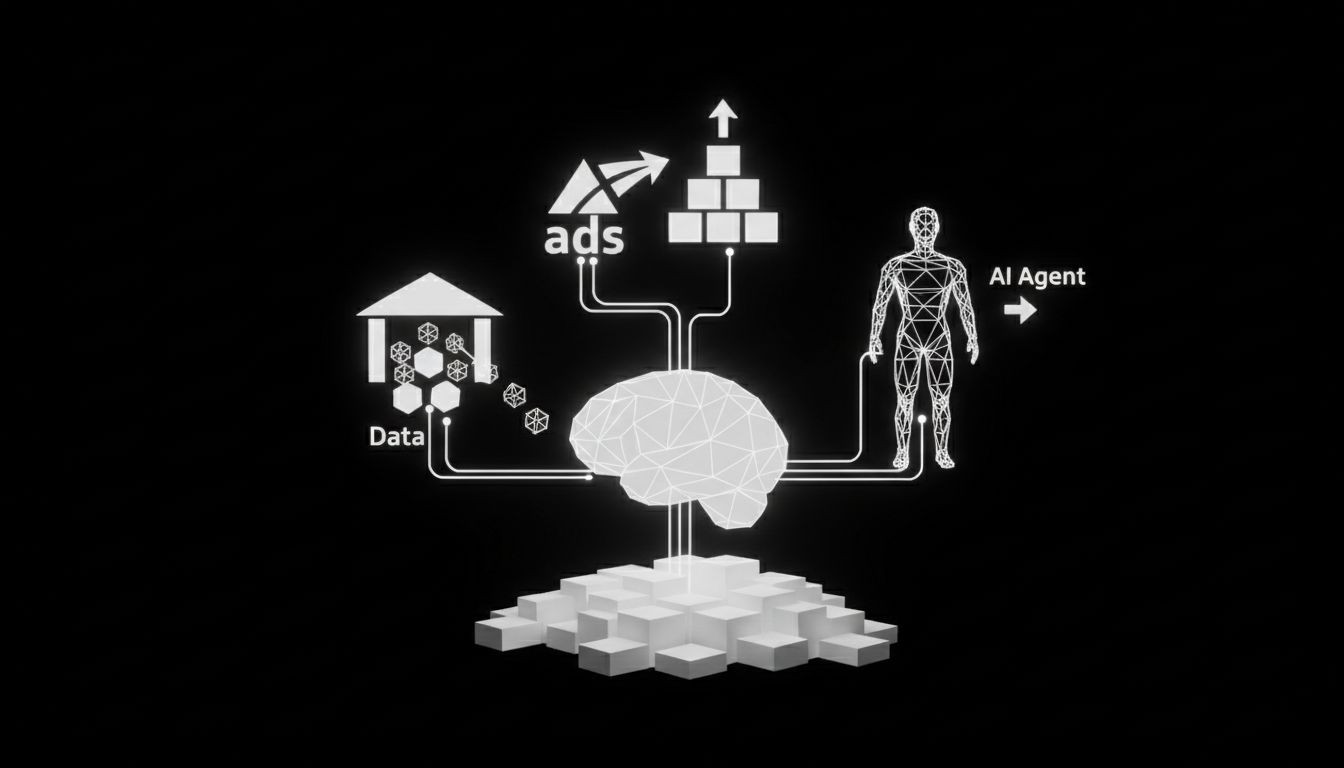
AI Marketing Infrastructure Setup: A Practical Guide to Build Data, Ads, and AI Agents
AI marketing infrastructure setup: build the data, tool stack, AI chat agents, and Meta/TikTok ad flows to generate leads and measure ROI within 90 days, fast.
Modern marketing wins when data, tools, and human creativity work together. If you want predictable lead generation, better-performing Meta and TikTok ads, and AI chat agents that convert, the foundation is not buzz. It is an intentionally designed AI marketing infrastructure setup that connects sources, automates workflows, measures revenue impact, and scales without breaking the stack.
Why an AI marketing infrastructure setup matters now
Companies that treat AI as a layer on top of broken marketing systems get poor results. The upside of a clean setup is measurable. Teams see efficiency gains of 30 to 60 percent, reductions in cost per acquisition, and improved campaign ROI once data flows and automation are in place. The logic is simple. AI models need high quality, timely data. Ads need clear conversion signals. Chat agents need context about the user and the product. When these pieces are assembled, campaigns stop guessing and start optimizing.
Key outcomes to expect from a correctly implemented setup:
Reliable lead funnels from social ads and organic channels
Real-time personalization for social and site experiences
Operational time savings through AI-run workflows
Clear measurement of revenue impact and CAC improvements
Core components you must design first
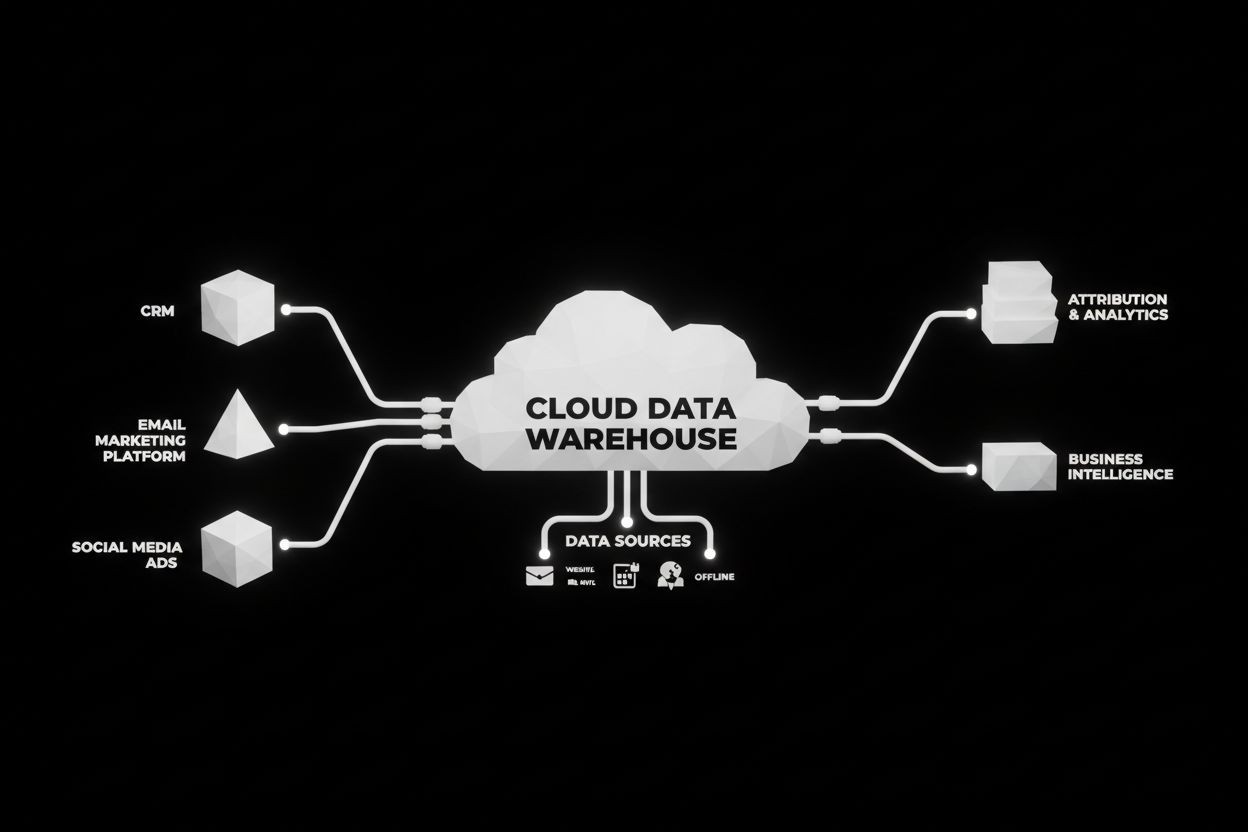
Before you buy tools, design the architecture. A practical stack has five layers:
Data foundation - ingestion and storage. Collect first party events, CRM records, ad conversions, email interactions, and offline touchpoints into a central store. Common choices include Snowflake, BigQuery, or a cloud data lake on AWS S3. The important part is schema discipline and time-stamped events.
Identity and activation - CDP and unified profiles. A Customer Data Platform or a set of stitched identifiers gives every user a persistent id. Use this layer to create audiences for Meta and TikTok and to feed personalization engines.
Orchestration and automation - workflow engines and orchestration tools. This is where you convert rules and model outputs into actions. Orchestration can be simple cron jobs, Zapier-like automations, or an event-driven platform for scale.
AI models and agents - inference, prompt management, and agent workflows. Maintain a model registry, version prompts, and log predictions. Separate heavy models used for personalization from lightweight agents used for chat interactions.
Measurement and reporting - attribution, incremental lift tests, and dashboarding. Store raw events and derived metrics so you can answer which ad or agent contributed to revenue.
These layers map to business outcomes. If lead generation is the goal, prioritize identity, activation, and ad signal capture. If retention matters, prioritize personalization, prediction models, and orchestration.
Reference architecture patterns and concrete tech choices
There is no single correct stack, but these patterns are proven:
Cloud-native data warehouse pattern: Events -> Streaming ingestion (Kafka or Pub/Sub) -> Raw zone in S3 -> Processed tables in Snowflake or BigQuery -> BI and ML feature store.
CDP-first pattern for ads: Pixel and server-side conversion ingestion -> CDP for unified audiences -> Activation to Meta/ TikTok via API-based audience syncs.
Agentic layer pattern: Prompt manager + model orchestration + context store (user profile + recent events) -> chat agent endpoints attached to web widget and CRM.
Tool suggestions by function:
Data warehouse: Snowflake, BigQuery, Redshift
ETL/ELT: Fivetran, Airbyte, dbt for transformations
CDP: Segment, RudderStack, or open source alternatives
Orchestration: Prefect, Airflow, or event-based workflows with Lambda
Model hosting: Managed endpoints from OpenAI, Anthropic, or a self-hosted inference cluster
Frontend chat: A lightweight widget integrated with your CRM and analytics
If you are a small team starting under $1M ARR, prioritize low-code ingestion (Fivetran, Zapier) and a single warehouse like BigQuery with a CDP-lite. For mid-market, add orchestration and a more formal CDP. Enterprises require governance, encrypted data at rest, and hybrid cloud patterns.
90-day implementation roadmap you can follow
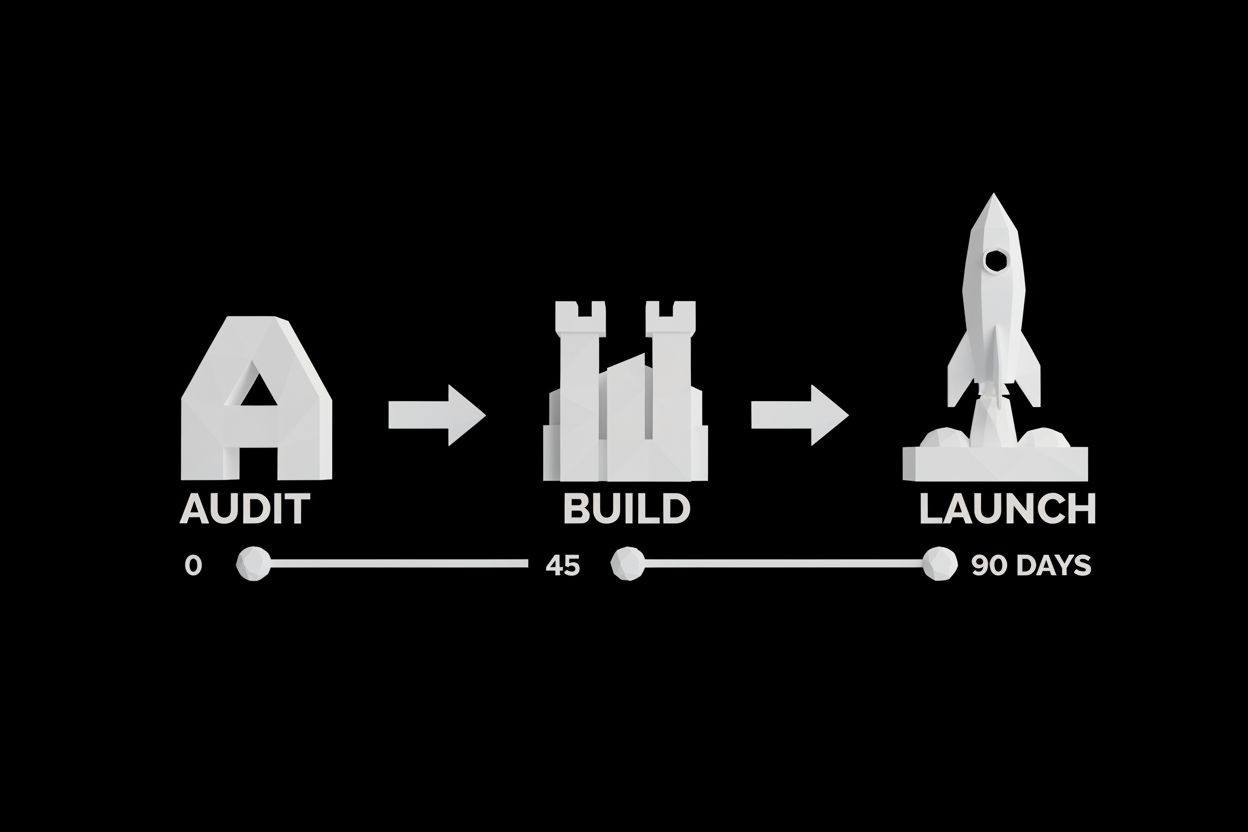
Phase 1: Audit and quick wins (weeks 1 to 2)
Map your data sources and conversion events
Audit ad pixels and server-side conversion tagging on Meta and TikTok
Identify the lowest-friction audience sync to start lead generation
Quick win: Fix broken attribution signals and feed them into your CDP
Phase 2: Core setup and baseline models (weeks 3 to 6)
Deploy a central data warehouse and configure ETL
Implement a CDP or unified identity layer
Set up automated audience exports to Meta and TikTok
Spin up a rule-based AI chat agent for lead qualification and integrate with CRM
Phase 3: Automation and AI production (weeks 7 to 10)
Build orchestration pipelines for campaign optimization signals
Deploy an initial personalization model for social creatives or landing pages
Run A/B tests and monitor lift
Phase 4: Measure, optimize, and scale (weeks 11 to 12)
Implement attribution models and revenue dashboards
Define ROI experiments for ad spend and agent interventions
Create a plan to expand models to other channels or geographies
This sequence gets you from audit to measurable automation in one quarter. Adjust timelines for complexity and compliance needs.
Integration patterns and sample configurations
Practical integrations reduce failure. Use these patterns:
Server-side events for ad platforms: Send conversions from your backend to Meta Conversions API and TikTok Events API. This reduces browser loss and improves matching.
Event schema contract: Define a canonical event structure for page_view, lead, purchase, and subscription, then enforce it at the ETL layer.
Webhook-first agent architecture: Chat widget publishes a conversation event and user id. Your orchestration service enriches the event with profile data, runs the agent, and writes the outcome back to the CRM.
Example webhook flow (pseudo):
User starts chat -> widget POST /conversations with { user_id, message }
Orchestrator enriches -> GET /profiles/{user_id}
Orchestrator calls model -> POST /models/chat with context
Orchestrator writes outcome -> POST /crm/leads and triggers campaign sync to Meta
These steps ensure every agent decision is recorded and auditable.
Ads on Meta and TikTok with AI in the loop
AI can improve both creative and optimization. Use the infrastructure you built to:
Feed conversion-quality signals into Meta and TikTok via server-side APIs
Automate audience creation from CDP segments for high intent users
Use creative testing automation to rotate variants and feed top performers back into the model
Practical tips:
Map LTV signals to custom conversions so that bidding optimizes for value not just clicks
Automate creative generation with constrained templates and human review to keep brand voice
Start with rules-based bidding automation, then move to model-driven bid suggestions once you have sufficient conversion volume
If you need help running ad programs, see our paid ads management offering for hands-on support and optimization best practices Paid ads management services.
AI chat agents that generate and qualify leads
Chat agents are often the first visible AI touchpoint for customers. To make them effective:
Connect the agent to CRM and CDP so it knows past interactions
Use intent classification models to route users to human agents or automated flows
Log all interactions for training and compliance
Start with a narrow use case such as lead qualification or booking a demo. Capture required data points and pass them directly to your lead scoring and ad retargeting systems. For a production-ready agent solution, you can explore our automated AI chat agents service to speed implementation Automated AI Chat Agents.
Measurement, KPIs, and ROI frameworks
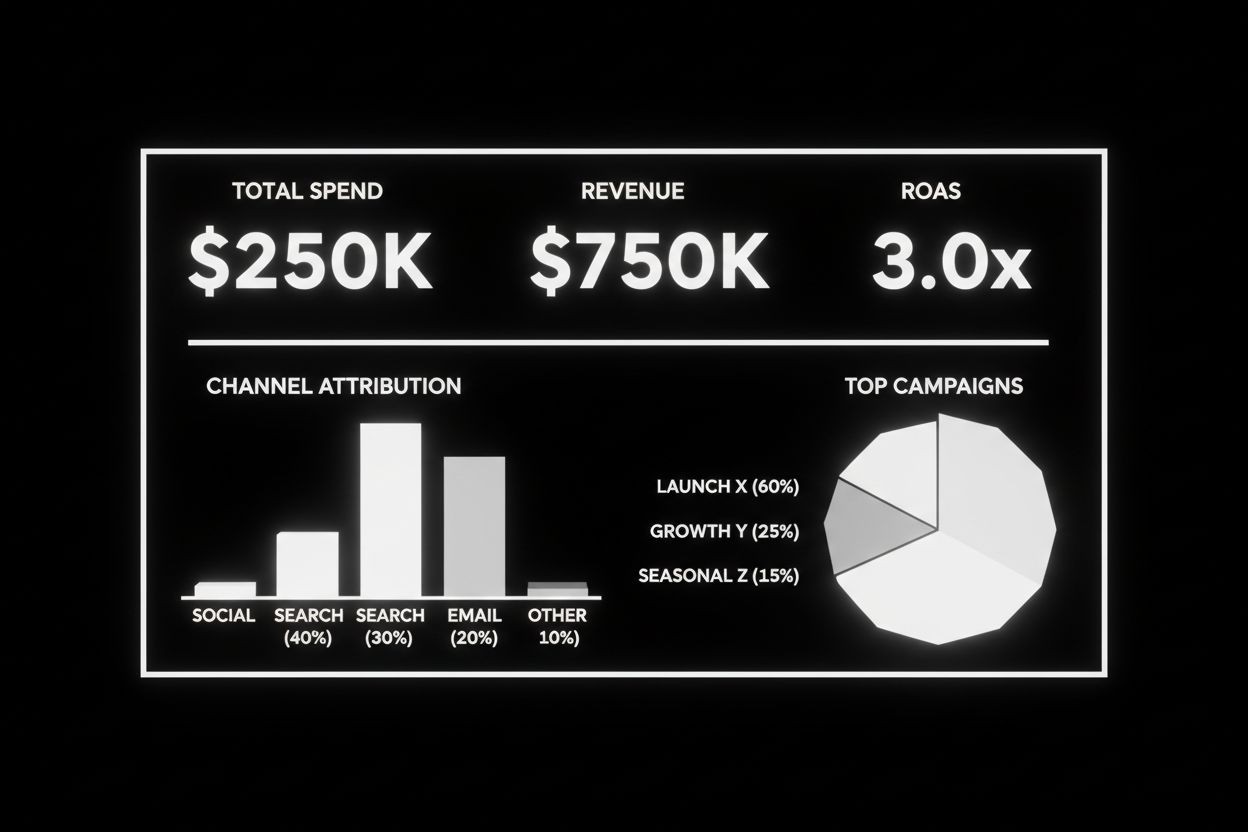
Measure what matters. Your KPIs will evolve, but start with these:
Leads per channel and cost per lead
Conversion rate from chat interaction to qualified lead
Revenue per marketing dollar and CAC by cohort
Incremental lift from AI-driven personalization and agent interventions
Time savings in campaign setup and creative production
Attribution strategy:
Capture server-side events and attribute with primary touch models for short term and test incremental lift for long term.
Run holdout tests to validate the contribution of agents or personalization features.
Budget guidance by stage:
Startup under $1M ARR: focus 15 to 20 percent of your marketing tech budget on foundational tools and low-code automation.
Mid-market $10M to $100M ARR: increase to 20 to 25 percent with more robust CDP and orchestration.
Enterprise: 25 to 30 percent for governance, MLOps, and multi-region infrastructure.
Governance, privacy, and compliance
Design governance early. Include these controls:
Data minimization in chat transcripts and user profiles to comply with CCPA and GDPR
Consent capture and clear data retention policies
Role-based access control on data warehouse and model endpoints
Audit logs for model decisions used in marketing campaigns
If you operate in regulated verticals, map regulatory constraints to your data flow and maintain a playbook for deletion and user access requests.
Common pitfalls and how to avoid them
Tool proliferation - Buy for capability and integration, not popularity. Keep the stack to 12 to 20 tools and consolidate where possible.
Poor data quality - Validate schema and implement data contracts before building models.
Lack of ownership - Assign a product owner for each business outcome such as lead gen or retention.
Skipping measurement - Without holdouts and lift tests you will not know the true impact.
When integrations fail, start by checking event fidelity, identity stitching, and retry logic for webhooks. Most failures come from mismatched event formats and expired API keys.
Vendor selection framework
Score vendors across these dimensions:
Integration readiness with your data warehouse and CDP
Security and compliance posture
Observable metrics and logging capabilities
Pricing transparency and total cost of ownership
Support for production MLOps and versioning
Create a simple scoring matrix. Weight integration and security highest for enterprise needs. For startups, prioritize time to value and managed services.
Industry-specific quick notes
E-commerce: Prioritize real-time personalization and server-side conversion tracking for Facebook and TikTok. Use product-level events for better bidding.
SaaS: Focus on lead quality signals and multi-touch attribution. Integrate agents to surface product fit and demo booking.
B2B services: Emphasize CRM integration and account-based activation from the CDP.
Learn more about connecting CRM and automation strategies in our CRM guide What Is CRM in Marketing.
Next steps and how to prioritize
Run a two-week audit of your events and ad signal quality
Deploy one CDP-driven audience and sync it to Meta or TikTok
Launch a focused AI chat agent for lead qualification
Implement server-side conversions and set up revenue dashboards
If you want implementation help, our services cover automated lead generation, social media automation, and SEO automation to accelerate results: Automated Lead Generation, Automated Social Media, Automated SEO.
Final checklist before you go live
Events are normalized and flowing into the warehouse
CDP has persistent user ids and audience exports are scheduled
Server-side conversions for Meta and TikTok are configured and tested
Chat agent writes leads to CRM and logs interactions for future training
Clear KPIs and holdout experiments are defined
A solid AI marketing infrastructure setup turns experiments into repeatable growth. Start small, instrument everything, and iterate toward more automation. If you follow the roadmap and governance steps here, you will move from experiments to measurable, scalable lead generation and ad performance within one quarter.
If you want a hands-on partner to implement these steps, contact our team to map your roadmap and run the first 90-day sprint Contact us.