Lead Generation vs Demand Generation: A Practical Guide for Modern Marketing
Clear comparison of lead generation vs demand generation, with tactics, budgets, AI chat agents, Meta and TikTok ads, measurement, and a 30/60/90 playbook.
Most marketing teams use both lead generation and demand generation, but they do not always agree on how to balance them. This guide explains the difference between lead generation vs demand generation, shows where each fits in the buyer journey, and gives a step by step playbook you can use with AI chat agents, social media, and paid ads on Meta and TikTok.
What is demand generation?
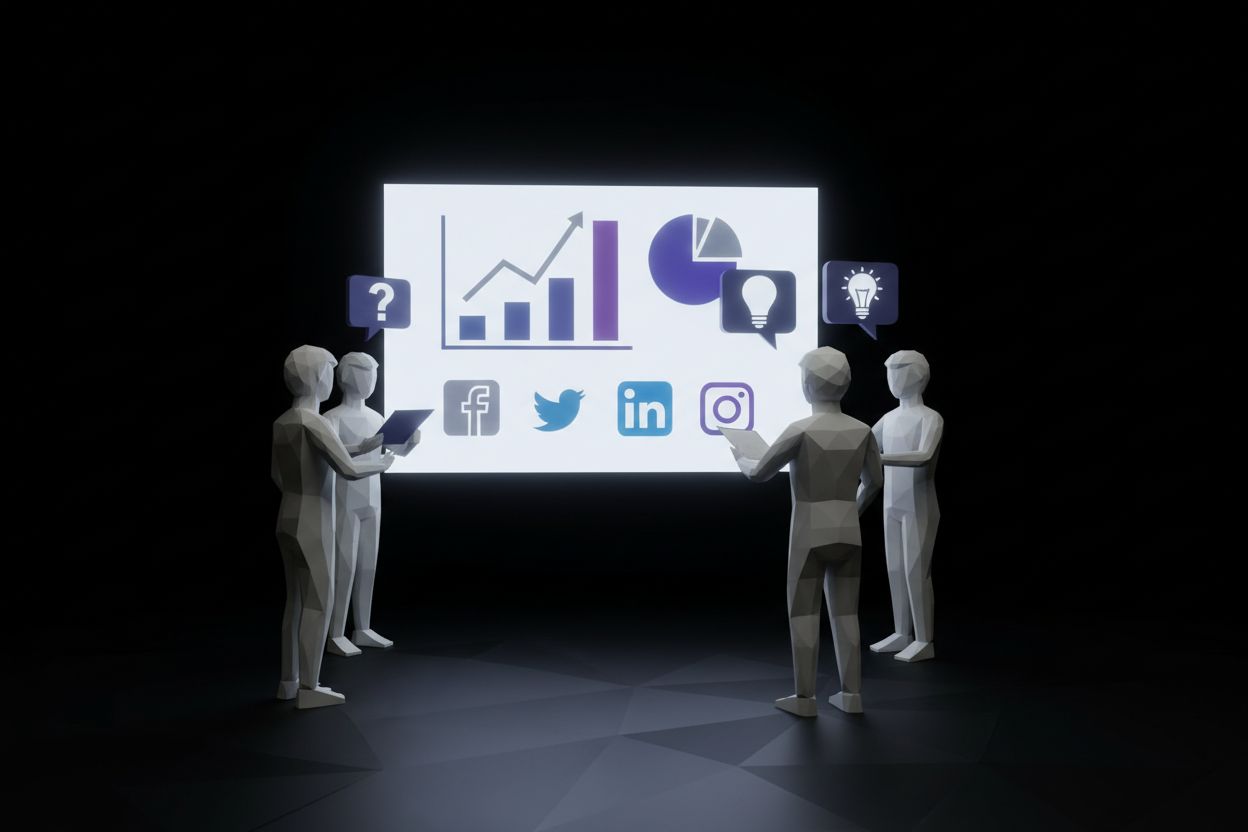
Demand generation focuses on increasing awareness, building trust, and creating long term interest in your brand or product. It is a top of funnel approach that primes audiences so they will consider you when they are ready to evaluate options. Demand generation is less about capturing a contact right away and more about shaping perception and demonstrating value.
Key characteristics
Top of funnel focus: awareness, education, brand salience.
Ungated content is common: blog posts, podcasts, videos, social organic posts, community engagement.
Long term ROI that compounds over time through content and thought leadership.
Emphasis on reach, engagement, and share of voice metrics.
Common demand generation tactics
SEO and content marketing to capture organic interest.
Social media storytelling and community building, often using short form content for reach.
Brand PR, influencer partnerships, and thought leadership.
High value ungated resources like research reports or interactive tools.
Paid reach campaigns on Meta and TikTok that focus on view-through and engagement rather than direct conversions.
Metrics to track
Impressions, reach, and view-through rate.
Branded search volume and organic traffic growth.
Engagement rate on social and content shares.
Assisted conversions in attribution models.
Why demand generation matters
Demand generation reduces acquisition friction over time. When your content and presence are strong, advertising CPAs fall and conversion velocity improves. It also future proofs growth in an era when privacy and tracking constraints make direct targeting harder.
What is lead generation?
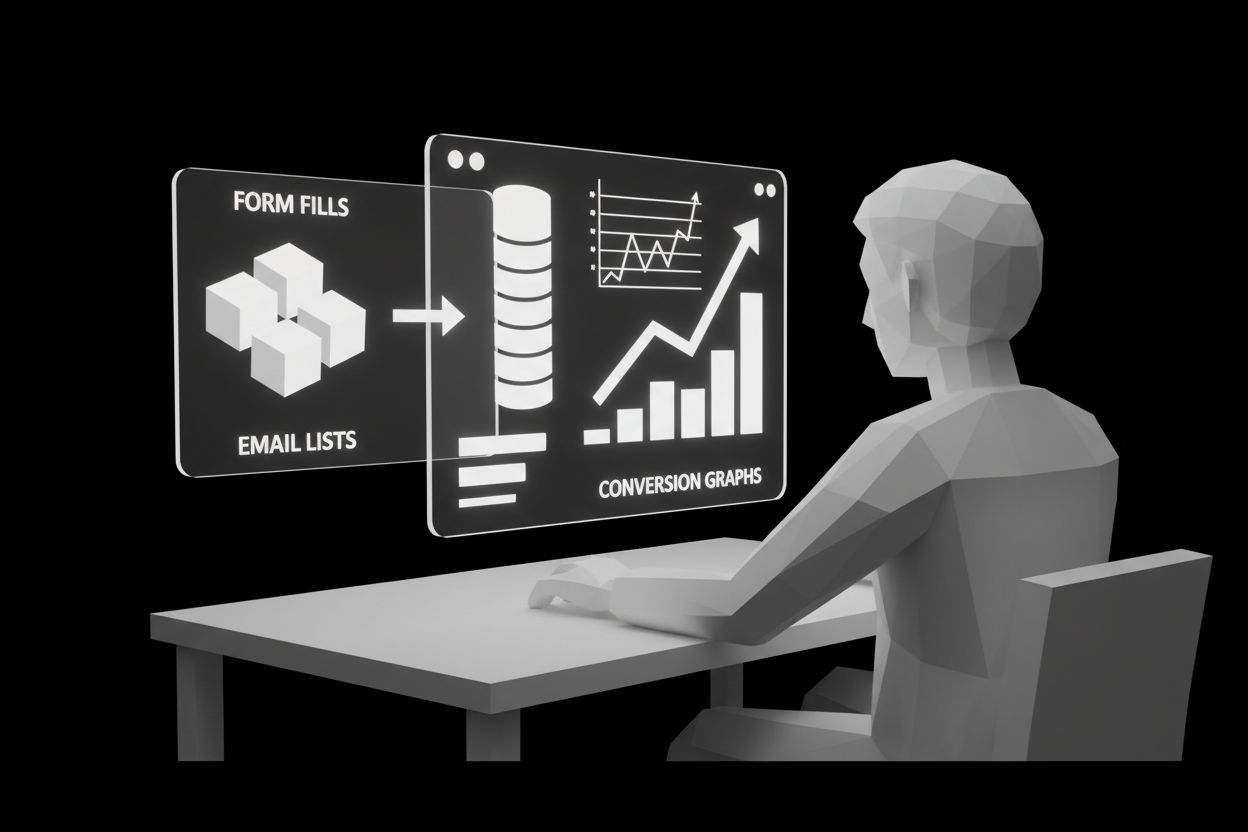
Lead generation is the set of tactics and systems you use to capture contact information or other identifying signals from people who express interest. Lead generation sits in the middle and bottom of the funnel. The goal is to move qualified prospects into nurture sequences or directly to sales.
Key characteristics
Captures identifiable contacts: email, phone, company, intent data.
Often uses gated content or conversion-focused assets: whitepapers, demos, trials, webinars.
Shorter term, measurable ROI tied to leads, MQLs, SQLs and pipeline.
Requires clear handoffs to sales and nurture infrastructure.
Common lead generation tactics
Landing pages with forms and gated downloads.
Paid conversion campaigns on search, Meta, and TikTok with leads as the objective.
Chat widgets and conversational forms powered by AI chat agents to qualify visitors in real time.
Email capture through contests, events, and webinars.
Metrics to track
Lead volume, cost per lead (CPL), conversion rate from lead to opportunity.
Marketing qualified leads and sales accepted leads.
Time to first response and sales conversion rate.
Why lead generation matters
While demand generation builds interest, lead generation converts that interest into actionable pipeline. Good lead gen allows you to measure ROI more directly and can be scaled predictably when you have steady acquisition channels and a reliable sales process.
Key differences between lead generation vs demand generation
Below is a practical comparison to clarify where to focus depending on your goals.
Dimension | Demand Generation | Lead Generation |
|---|---|---|
Primary goal | Build awareness and preference | Capture contact and create pipeline |
Funnel position | Top of funnel | Middle and bottom of funnel |
Typical content | Ungated, high value, branded | Gated, conversion oriented, product focused |
Measurement | Reach, engagement, brand lift | Leads, CPL, conversion to revenue |
Time horizon | Long term | Short to medium term |
Best for | Brand building, market education | Sales acceleration, direct ROI |
Narrative explanation
Demand generation seeds the market. It changes perceptions through content, social presence, and brand experiences. Lead generation harvests interest and converts it into contacts your team can nurture and close. For most growth teams the best results come when both are coordinated.
When to prioritize demand generation
Use demand generation when any of the following apply:
You are launching a new brand or rebranding and need awareness.
Your category requires education because customers do not yet understand the problem.
You face high customer acquisition costs and need to lower them by improving brand trust.
You want to build long term equity that lowers funnel friction over time.
Success metrics to watch
Branded organic traffic growth over quarters.
Share of voice in social and industry conversations.
Increases in direct and navigational search queries.
Practical channels
Invest in SEO and long form content. For a fast start, combine organic content with paid reach on Meta and TikTok to test messaging.
Use AI-powered content tools to scale content creation while keeping quality high.
Related resource: explore how CRM ties marketing and sales together in this guide to CRM strategy and automation What Is CRM in Marketing.
When to prioritize lead generation
Lead generation deserves priority in these cases:
You need predictable pipeline now to hit sales targets.
Your product sells with a short buying cycle and benefits from trial or demo conversions.
You have a sales team ready to follow up and convert leads.
Success metrics to watch
Cost per lead and lead quality.
Lead to opportunity conversion rates.
Average deal value and cost of customer acquisition.
Channels that perform
Run conversion-focused ads on Meta and TikTok, with creative variations for audiences that show intent.
Use AI chat agents to qualify leads in real time on your site and route hot leads directly to sales or calendaring.
Pair paid with SEO-driven landing pages that use content to prequalify visitors.
Add-on: if you are exploring outsourced campaign execution, consider professional services for paid ads management Paid Ads Management.
How they work together
Demand generation creates the conditions where lead generation works better. Think of demand as the upstream engine that increases the pool of people who are receptive to conversion. When you coordinate both strategies you multiply ROI.
Practical integration tactics
Use demand generation to drive qualified traffic into lead generation funnels. For example, a viral TikTok that educates can send users to a gated webinar sign up.
Retarget engaged audiences from demand campaigns with lead generation ads, lowering CPL.
Use content clusters that support both: ungated pillar content for SEO and gated deep dives that capture leads.
Ensure the sales team receives context with each lead: source, content interactions, engagement score.
Tools that enable alignment
Marketing automation and CRM integrations to sync lead data and activity.
AI chat agents that capture intent signals and feed them into the lead scoring model. See the capabilities of automated AI chat agents here Automated AI Chat Agents.
Automated social scheduling and monitoring to keep demand channels active while you pursue conversions Automated Social Media.
Implementation framework: a 30/60/90 day playbook
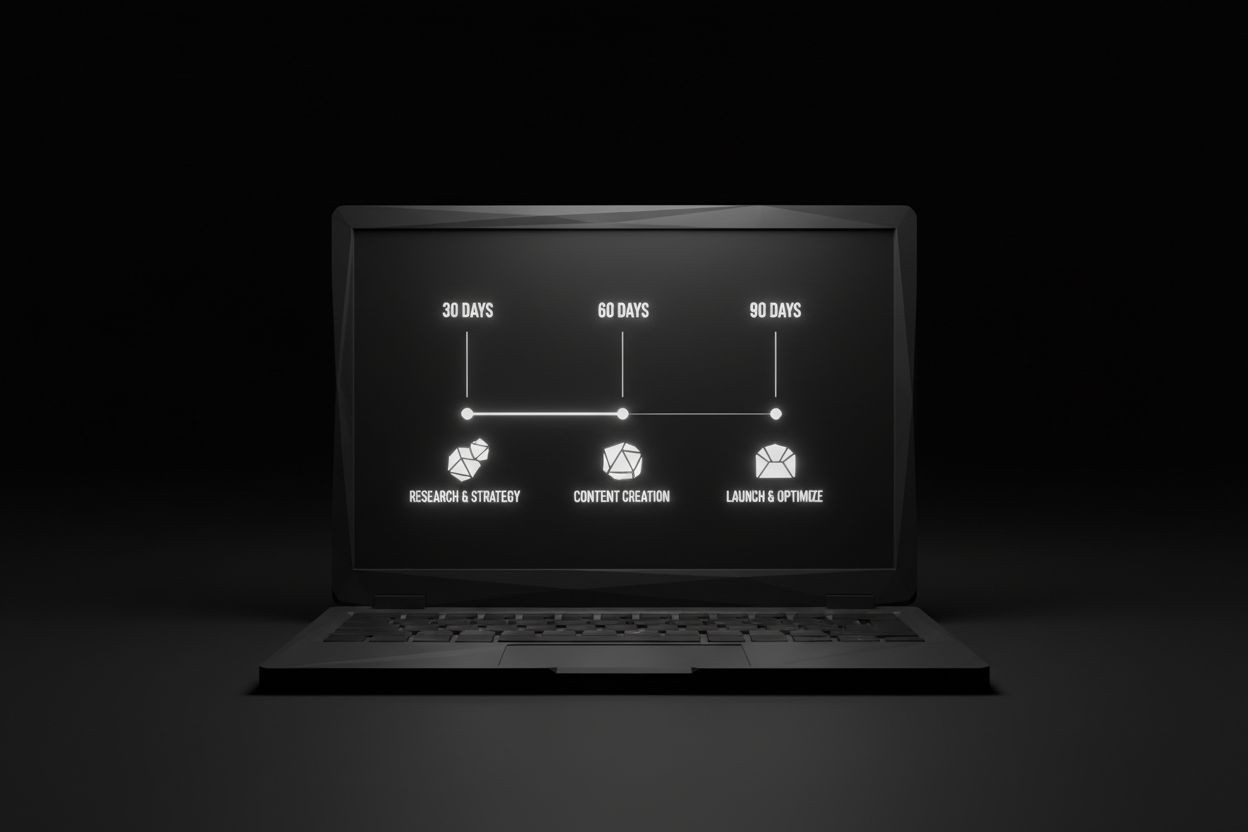
This practical timeline blends demand and lead generation with AI tools and paid media.
Days 0 to 30 - Set up and initial demand
Audit current content, SEO, paid accounts, landing pages, and chat flows.
Define audiences and personas with sales input.
Launch a demand campaign on social with educational short form videos on Meta and TikTok to test messaging.
Implement an AI chat agent on high traffic pages with simple qualification flows.
Create 3 pillar blog posts aligned to high value search queries.
Days 31 to 60 - Build lead capture and experiment
Launch gated content offers: webinar, checklist, or product demo page.
Run conversion campaigns targeting warmed audiences from demand campaigns to reduce CPL.
A B test landing page variants and chat flows to optimize conversion.
Begin a nurture email sequence for captured leads and hand off qualified leads to sales.
Days 61 to 90 - Optimize and scale
Evaluate channel performance and reallocate budget to the best performing creative and audiences.
Introduce lookalike audiences and predictive models to scale lead generation.
Implement multi touch attribution to credit demand activities that assisted conversions.
Document handoff SLAs between marketing and sales and refine the lead scoring model.
Tools and integrations to deploy quickly
Landing page and form builder with A B testing.
Marketing automation and CRM for lead routing. See the CRM guide for setup details What Is CRM in Marketing.
AI chat agent provider for real time qualification Automated AI Chat Agents.
Ads management partner for campaign ops Paid Ads Management.
Budget guidance and benchmarks by company stage
Benchmarks vary by industry but the following ranges are practical starting points. Adjust based on target audience costs and deal size.
Startup (pre product-market fit)
Monthly marketing budget: $2,000 to $10,000.
Focus: demand generation through content and community. Small paid tests on Meta/TikTok to validate messaging.
Expect high CPL as you learn. Prioritize experiments over scale.
Scale-up (product-market fit, growth focus)
Monthly marketing budget: $10,000 to $100,000.
Balanced mix of demand and lead generation. More spend on paid conversion campaigns once messaging works.
Benchmarks: CPL $20 to $200 depending on industry. Lead to deal conversion should be closely tracked.
Enterprise
Monthly marketing budget: $50,000+.
Invest in brand, thought leadership, enterprise demand campaigns and sophisticated attribution.
Use multi touch attribution and account based marketing to measure pipeline contribution.
ROI and simple CPL to LTV math
Example: If average deal value is $10,000 and average conversion from lead to closed deal is 2 percent, your implied revenue per lead is $200. If your CPL is $50 you may be profitable after marketing and sales costs. Run this calculation for your situation and include sales costs in the model.
Team structure and responsibilities
A clear ownership model prevents leads from slipping through the cracks and ensures demand activities feed lead pipelines.
Suggested roles and responsibilities
Head of Growth: owns strategy and budget allocation across demand and lead gen.
Content and SEO lead: focuses on demand generation through content clusters and organic growth. See automated SEO options for scaling Automated SEO.
Paid media manager: runs Meta and TikTok campaigns for both awareness and conversion.
Marketing ops and analytics: owns tracking, attribution, and integrations.
Conversational marketing specialist: manages AI chat agents and lead qualification flows Automated AI Chat Agents.
Sales development reps: follow up on inbound leads with agreed SLAs.
Make sure SLAs are documented and tested. A good SLA includes response time for new leads, required qualification fields, and escalation paths.
Common failure modes and how to avoid them
Treating demand and lead generation as separate silos
Fix: Align goals, metrics, and reporting so demand success is measured in contribution to pipeline.
Chasing low quality volume
Fix: Prioritize quality signals such as content engagement depth, recency, and firmographics over raw lead counts.
Poor handoffs to sales
Fix: Define and test SLAs. Use automation to pass context and reduce manual steps.
Ignoring attribution
Fix: Implement multi touch attribution and consider last click, time decay, or position based models depending on your sales cycle.
Not using conversational AI where it matters
Fix: Deploy AI chat agents on key pages and make sure they route hot leads instantly. Services exist to automate lead generation and chat together for faster conversions Automated Lead Generation.
Measurement: what to track and how to attribute success
Essential metrics
Demand: organic traffic growth, branded search lift, social engagement, view through rate on video.
Lead: CPL, lead velocity, lead quality, MQL to SQL conversion.
Revenue: pipeline created, closed revenue attributed to marketing.
Attribution recommendations
Start with a simple multi touch model that credits both awareness and conversion touchpoints.
Use UTM parameters for all campaigns and feed them into your CRM.
Regularly compare model outputs and correlate with sales cycle length. Invest in analytics to automate reporting and to show how demand activities assist closed deals.
Conclusion
Choosing between lead generation vs demand generation is the wrong question. Both are essential and must be coordinated. Demand generation builds the top of your funnel and reduces friction, while lead generation captures intent and converts it into pipeline. Use AI chat agents, SEO, and social with paid ads on Meta and TikTok to test messaging, qualify visitors, and scale conversions. Start with a 30/60/90 plan, align marketing and sales SLAs, and measure both assisted and direct contribution to revenue.
If you are ready to move from theory to execution, a few practical next steps are to implement automated chat qualification, connect your CRM and analytics stack, and run short paid tests to validate messaging and audiences. For implementation support consider services for automated social media and paid ads management Automated Social Media and Paid Ads Management. When you are ready to scale lead capture systems and define attribution, this agency offers integrated solutions for automated lead generation Automated Lead Generation.
For questions or a tailored growth plan, reach out to an expert via our contact page Contact.