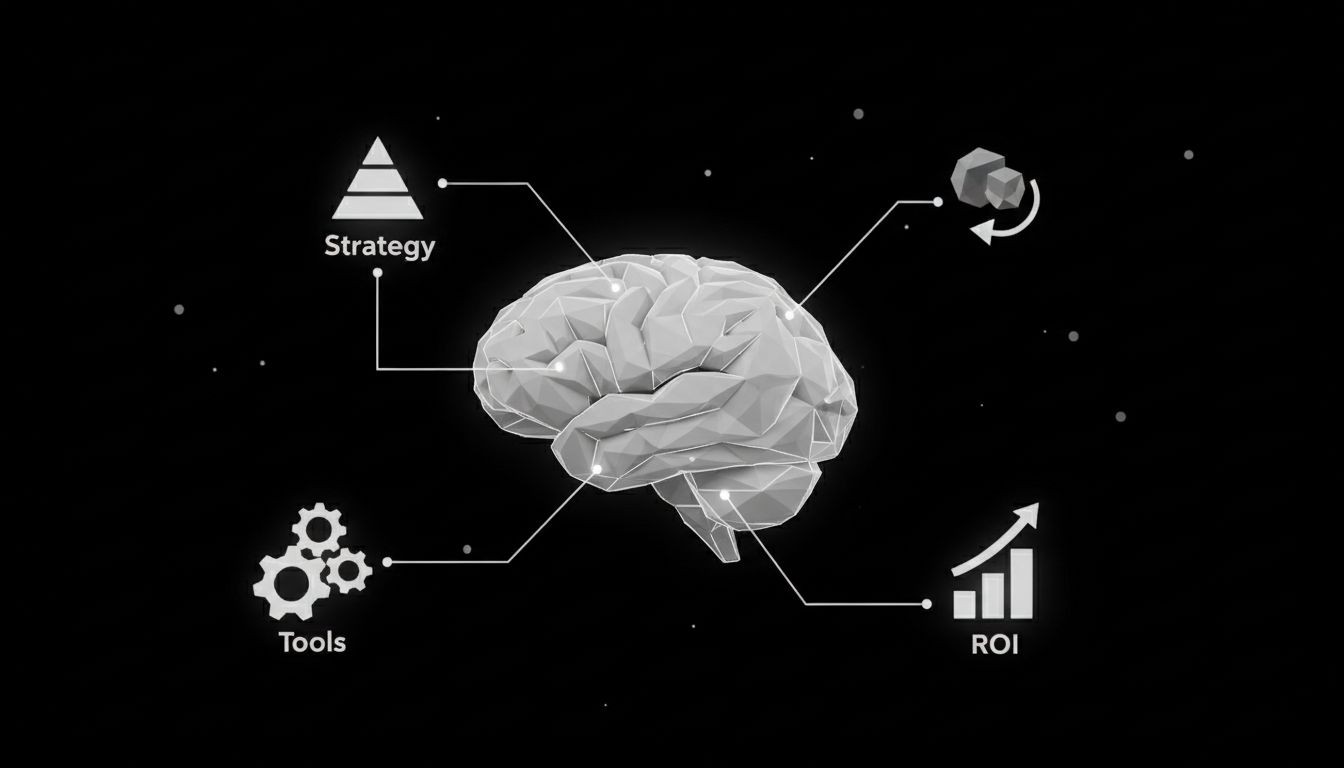
AI in Marketing: A Practical Guide to Strategy, Tools, and ROI
Practical guide to ai in marketing: strategies, 30/60/90 roadmap, ROI metrics, tools, prompts, and step by step tactics for ads, SEO, social, and chat agents.
Marketers who treat AI as a novelty will fall behind. Those who pair practical strategy with the right tools will see faster lead growth, better ad performance, and measurable ROI. This guide lays out a pragmatic, implementation-first approach to ai in marketing with specific playbooks for lead generation, SEO, social media, chat agents, and paid ads on Meta and TikTok.
What is AI in marketing?

AI in marketing means using machine learning, natural language processing, generative models, and predictive algorithms to automate tasks, personalize experiences, and turn data into action. It ranges from automated ad bidding and creative generation to chat agents that qualify leads and content tools that accelerate SEO work. The important distinction is that effective AI augments human judgment and removes repetitive work while leaving strategic decisions to people.
The current reality
Adoption is widespread but uneven. Many teams use point solutions for specific tasks. The next step is integrating these tools into a coherent stack so AI outputs feed your CRM, ad platforms, and analytics for closed loop learning.
Why AI matters now
Scale personalization without ballooning headcount. AI can generate personalized sequences and creative variants at scale.
Speed up experimentation. You can test more creative variations and audience segments faster than manual workflows allow.
Improve targeting and spend efficiency. Predictive models and automated bidding reduce wasted spend and lift conversion rates.
Unlock insights from messy data. AI can surface customer intent signals from behavior, text, and engagement patterns.
Use AI to improve lead quality and lifetime value, not just to cut time on tasks. For SEO-specific automation and content optimization workflows, consider integrating platforms that automate audits and on-page suggestions like those used in automated SEO workflows. See our guide on automated SEO for practical setups: Automated SEO - The Social Search.
Core use cases and how to prioritize them
Content creation and SEO
Use generative models to draft blog posts, meta descriptions, and variant headings. Pair them with a human editor and an SEO auditor plugin to maintain quality.
Automate on-page recommendations and tag optimizations.
Social media planning and amplification
Schedule, vary, and test post copy and creative automatically. AI can suggest captions tuned to platform tone and recommended posting windows.
For automation examples and workflows, see Automated Social Media - The Social Search.
Lead generation and qualification
Use predictive lead scoring to prioritize inbound leads. Route high-intent prospects to sales and nurture lower-intent leads with AI-driven sequences.
Automate lead capture flows and data enrichment to reduce friction. See our automated lead generation offering: Automated Lead Generation - The Social Search.
Chat agents and conversational marketing
Implement AI chat agents for 24/7 qualification, booking, and common support queries. Keep escalation paths clear so humans take over complex conversations.
For implementation details, review our automated AI chat agents service: Automated AI Chat Agents - The Social Search.
Paid advertising optimization
Use AI to generate creative variations, optimize bids, and discover profitable audiences across Meta and TikTok. We cover ads specifics in a later section and link to paid ads management resources: Paid Ads Management - The Social Search.
Analytics, attribution, and forecasting
Build predictive models for churn, LTV, and pipeline. Use multi touch attribution models adjusted by AI to see which campaigns drive real value.
Prioritize use cases that map to clear revenue or cost metrics. Start where small wins compound, like lead scoring or ad creative variant testing.
Running ads on Meta and TikTok with AI
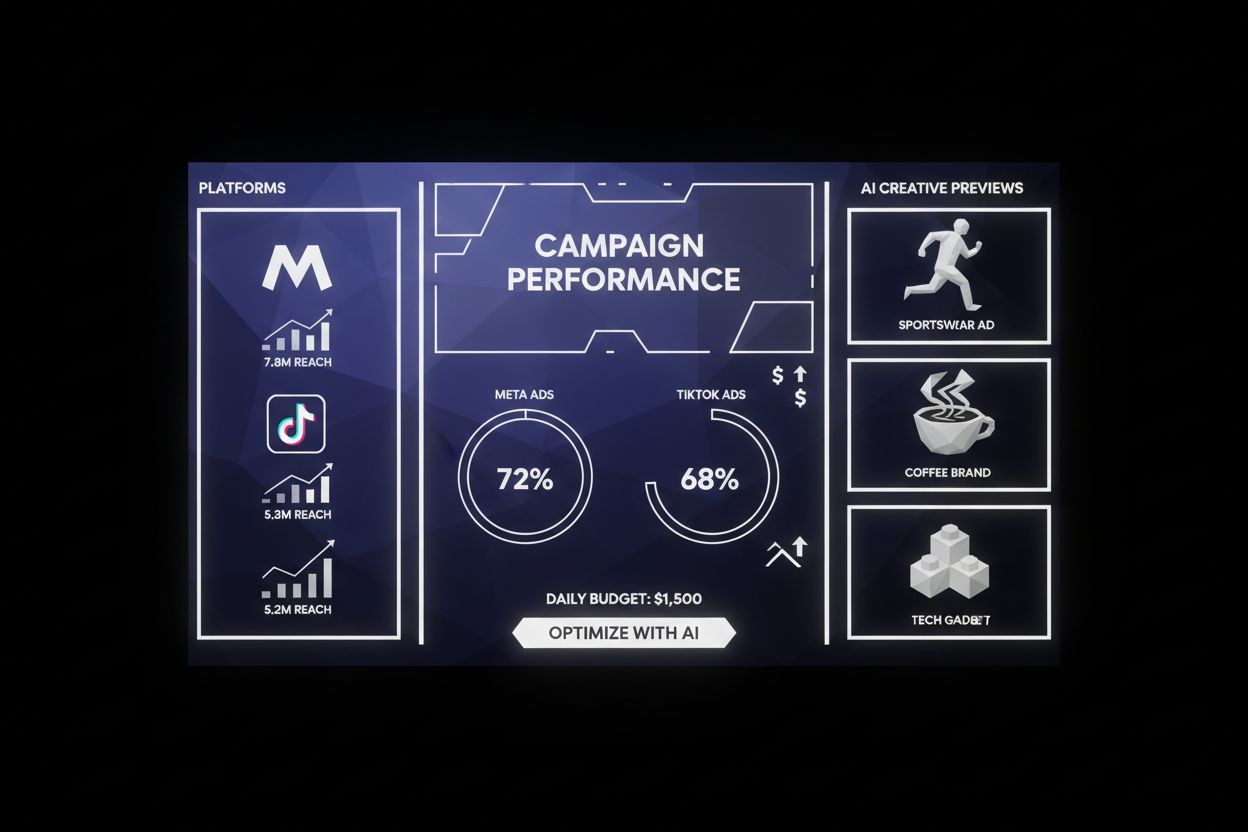
AI can change how you approach creative, targeting, and bidding on Meta and TikTok. Here is a practical playbook.
Creative generation and variant testing
Use generative models to create 6 to 12 ad copy variants and 5 to 10 video or image variants. Focus on short hooks for TikTok and conversational copy for Meta.
Label each variant with hypothesis tags like “value-based hook” or “testimonial” so results map back to creative concepts.
Audience expansion and lookalikes
Start with a high-quality seed audience from CRM segments or converters. Generate lookalikes, then use AI to test micro audiences and surface intent signals.
Budgeting and bid strategy
Allocate 10 to 20 percent of budget to exploration. Let automated bidding optimize within guardrails you set for CAC or ROAS.
If performance drops, pause and test a new batch of creative. Frequent creative refreshes prevent ad fatigue.
Measurement and KPIs
Track cost per acquisition, value per acquisition, conversion rate by creative, and creative fatigue metrics. Tie conversions back to LTV where possible so ROAS reflects true business value.
Scale safely
Use campaign budget optimization and experiment with automated creative optimization features in platform tools. Keep brand safety and messaging checks in the loop, especially for short form video.
Practical roadmap: crawl, walk, run (30/60/90 day plan)
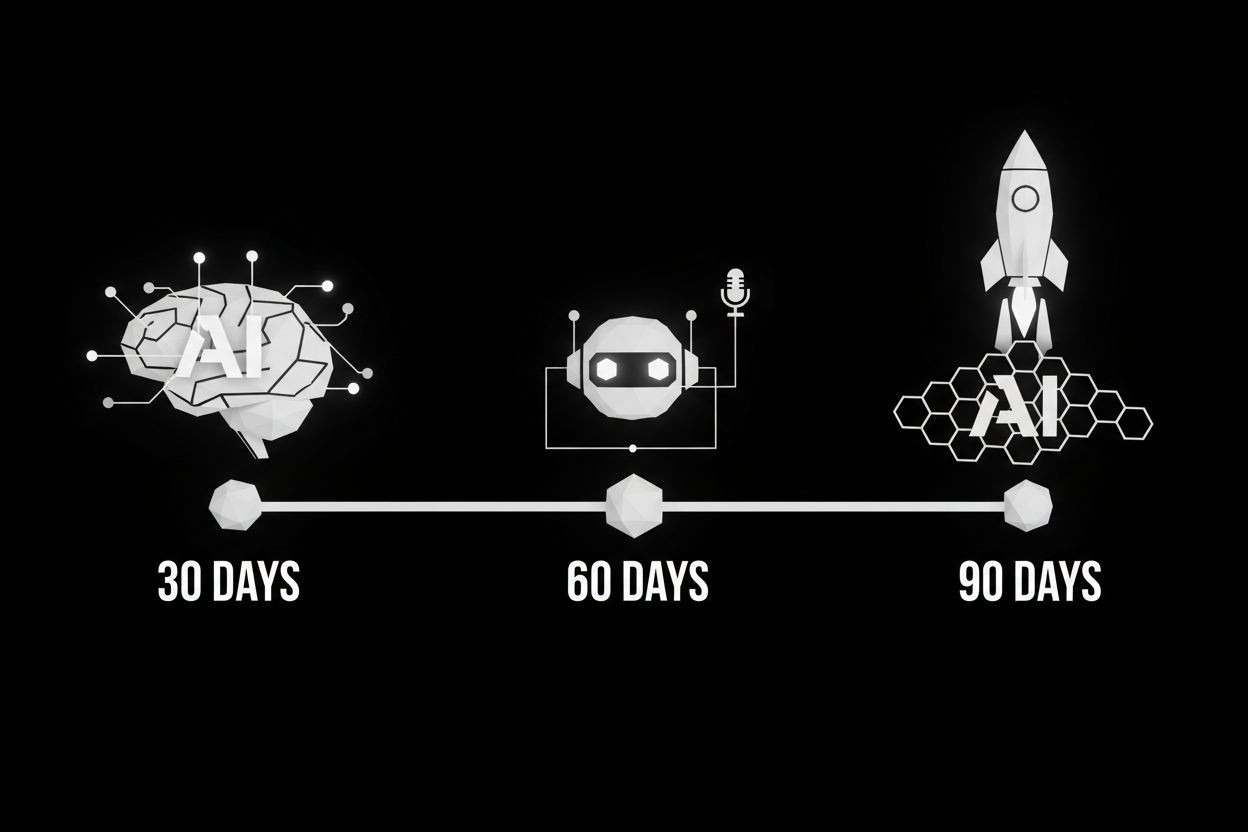
30 days - Crawl
Audit data sources and martech. Confirm clean CRM fields and consented data.\
Pilot one high ROI use case. Good options are lead scoring, an AI chat agent for common queries, or automated ad creative testing.\
Set baseline metrics for conversion rates, CAC, and average response times.
60 days - Walk
Integrate pilot with CRM and analytics for closed loop measurement.\
Expand creative tests and start automated audience discovery for ads.\
Train teams on prompts and review processes. Begin weekly review cadences for model outputs.
90 days - Run
Automate routing and handoffs. Deploy AI-powered workflows for lead enrichment, nurtures, and creative generation at scale.\
Optimize budgets toward high performing models and audiences. Create guardrails for human review and brand compliance.
Team changes to expect
Add a data owner or AI product manager who owns integrations and governance.\
Re-skill content producers to be editors and prompt engineers.\
Keep at least one human reviewer per channel for quality control.
Budget guidance
Allocate 5 to 15 percent of marketing budget initially to tools and integration.\
Reserve ongoing subscription costs plus an initial implementation budget for integration and training. Track ROI quarterly and reallocate spend to the highest performing AI-driven channels.
AI marketing maturity model
Level 1 - Manual
Processes are manual and tools are isolated. No predictive modeling.
Level 2 - Assisted
Point solutions automate discrete tasks like scheduling or copy drafting.
Level 3 - Integrated
Tools feed central data store. Predictive models inform prioritization.
Level 4 - Automated with humans in loop
Decisioning is automated for many tasks with human oversight.
Level 5 - Adaptive and agentic
Systems autonomously run campaigns and optimize across channels with minimal human intervention, following stringent guardrails.
Most teams should aim for Level 3 in the near term and Level 4 within 12 to 18 months depending on resources.
Measuring ROI and metrics that matter
Key metrics
Cost per lead, cost per acquisition, conversion rate, lead-to-opportunity rate, and customer lifetime value.\
Time saved on repetitive work and increase in campaign velocity.\
Prediction accuracy for lead scoring models.
Simple ROI formula example
Incremental revenue from AI driven channels minus AI costs, divided by AI costs.\
Example: If AI improvements generate $60,000 in incremental revenue and annualized tool and implementation costs are $20,000, ROI = (60,000 - 20,000) / 20,000 = 200 percent.
Make sure to attribute properly. Use modeling to connect early funnel improvements to downstream outcomes and adjust for seasonality.
Recommended AI marketing stack
Content and SEO
Generative models for drafting and a content optimization tool for SEO auditing. For hands-on SEO automation workflows see: Automated SEO - The Social Search.
Social media
Scheduling, creative variation, and trend detection platforms that feed performance back to creative models. Explore automation best practices at: Automated Social Media - The Social Search.
Lead capture and chat
Conversational AI for qualification and routing plus CRM integration. Start with a pilot chat agent and connect it to your lead flow: Automated AI Chat Agents - The Social Search.
Ads and measurement
Tools for creative generation, automated bidding, and audience discovery, paired with a measurement layer that connects ad spend to CLTV. For managed support see: Paid Ads Management - The Social Search.
Lead gen orchestration
Use predictive scoring and automated nurture sequences to turn more inbound interest into qualified meetings. Learn about building automated lead flows here: Automated Lead Generation - The Social Search.
Prompt library for marketers
Use these as templates and adapt tone for your brand.
Content brief prompt
“Create a 900 word blog post outline on [topic] targeting [audience], include five section headings, one FAQ, and suggested keywords. Keep tone professional and actionable.”
Ad creative prompt
“Write 6 short Facebook ad headlines and 6 90 character descriptions for a B2B SaaS product that reduces churn. Emphasize ROI and a strong call to action.”
Social post prompt
“Generate 10 social captions for LinkedIn about [topic]. Use a hook, one statistic, and a question to drive comments.”
Chat agent flow prompt
“Create a chatbot script to qualify visitors. Start with greeting, ask for company size, role, and primary pain point. If high intent, request email and offer booking link.”
A B test prompt
“Produce two clear hypotheses for A B testing creative for campaign X, each with a 1 sentence primary change and the metric to measure success.”
Use prompt engineering to set constraints like tone, length, and format to reduce editing time.
Common pitfalls and when not to use AI
When AI helps
Repetitive content generation, scale personalization, lead scoring, ad variant generation, and pattern detection in analytics.
When to hold back
Highly sensitive communications that require legal review or nuanced brand voice. Complex strategic decisions without human oversight. Cases with poor or biased data.
Integration challenges
Poor data quality and fragmented martech hinder performance. Start by cleaning CRM and standardizing event naming. Ensure GDPR and local privacy compliance.
Bias and transparency
Monitor models for biased outcomes in targeting and messaging. Keep transparent documentation of how models make decisions and provide an appeal or human review mechanism.
Future trends and next steps
Expect more multimodal models that combine images, video, and text to generate short form ads automatically. Agentic systems will be able to run closed loop tests, learn from results, and iterate with limited human input under strict guardrails. Regulation will tighten and require clearer disclosures on automated decisions and profiling. Marketers should invest in data hygiene, model monitoring, and skills training now.
If you want a practical starting point, pick one revenue focused use case and run a 90 day pilot. If you need help designing the pilot or integrating chat agents, creative automation, or paid campaigns, reach out to explore a tailored plan. Contact us to get started: Contact The Social Search.