Lead Generation Strategies: 12 Practical Tactics to Grow Pipeline in 2026
Proven lead generation strategies to attract, qualify, and convert more leads using AI chat agents, social media, SEO, and paid ads on Meta and TikTok.
Every growth plan depends on a steady flow of qualified leads. The right mix of channels, technology, and processes turns traffic into predictable revenue. This guide lays out 12 practical lead generation strategies you can implement now, plus industry playbooks, budget guidance, timelines, and measurement tactics that help you scale without guessing.
What is lead generation and why it matters
Lead generation strategies are the methods businesses use to capture interest from potential customers and collect contact information for follow up. Effective lead generation reduces acquisition cost, fills the sales pipeline, and creates repeatable growth loops. Companies that systematically test channels and tie leads to revenue see faster sales cycles and higher lifetime value.
Why focus on multiple strategies? No single channel wins forever. Combining organic SEO, AI-powered chat, social ads, and referral programs reduces risk and lets you optimize for cost per lead and conversion rate.
How to qualify leads before you spend time on them
Quality beats quantity. A lead that matches your ideal customer profile and shows intent moves faster through the funnel than a large batch of unqualified contacts.
Lead types and quick definitions
MQL (Marketing Qualified Lead): Engaged with content, a good fit, but not yet ready to buy.
SQL (Sales Qualified Lead): Passed qualification and ready for a sales conversation.
PQL (Product Qualified Lead): In product usage shows buying intent, common in SaaS.
Lead scoring framework in 6 steps
Define ideal customer profile attributes such as company size, industry, role.
Assign points for firmographic fit and behavior signals like demo request or pricing page visit.
Add negative points for disqualifying traits such as unsupported geography.
Set thresholds for MQL and SQL and automate handoffs in your CRM.
Review and adjust monthly based on conversion rates.
Use activity decay rules so old leads do not clog the pipeline.
Pro tip: Keep scoring simple at first. A handful of high-signal actions works better than an overly complex model.
Top 12 lead generation strategies to test this quarter

LinkedIn and social selling
Why it works: LinkedIn connects you directly to decision makers in B2B while other social platforms help build familiarity in B2C. Social selling shortens sales cycles and warms audiences for outreach.
How to do it:
Create 3 pillar post formats: educational, case study, short how-to.
Use a weekly cadence of posts plus 5 to 10 connection requests targeted by job title and industry.
Follow up with a value-first message referencing a recent post or mutual connection.
Tools: LinkedIn Sales Navigator, native publishing, social scheduling tools.
Pro tip: Test message personalization at scale by referencing public triggers such as funding rounds or job changes.
Email outreach and automation
Why it works: Email remains the highest ROI outbound channel when sequences are relevant and follow a multi-touch cadence.
How to do it:
Build segmented lists by vertical, role, and intent.
Create a 6-touch sequence mixing short emails, value adds, and a clear next step.
Use follow up rules that add leads to a nurture track if they do not respond.
Tools: Warmup services, deliverability checks, sequence builders.
Warning: Watch your sending reputation and comply with regional privacy laws.
Content marketing and SEO
Why it works: Organic content compounds. A few high-quality articles and pillar pages can provide steady inbound leads for months.
How to do it:
Map content to stages: awareness, consideration, decision.
Create gated assets for middle-of-funnel topics such as ROI calculators or comparison guides.
Optimize landing pages for conversions and link gated offers from related blog posts.
Tools: SEO platforms and content briefs.
Related resource: Learn more about automated SEO to scale content production with Automated SEO services.
Paid social ads on Meta and TikTok
Why it works: Meta and TikTok deliver cost-effective reach and strong targeting. TikTok is especially powerful for creative, discovery-driven campaigns.
How to do it:
Start with a conversion objective and a simple creative test of three variations.
Use custom audiences from site visitors and lookalikes for prospecting.
Run retargeting sequences that move viewers to a low-friction lead capture.
Tools: Meta Ads Manager, TikTok Ads, UTM tracking.
Example budget split for testing: 60 percent prospecting, 30 percent retargeting, 10 percent experiment.
Landing pages and conversion rate optimization
Why it works: Small UX and copy changes can lift conversion rates dramatically, lowering cost per lead.
How to do it:
Reduce form fields to 3 to 5 by default and use progressive profiling later.
Test CTA copy and placement, hero headline, and social proof.
Use heat maps and recordings to understand friction points.
Tools: A/B testing platforms, heat mapping.
AI chat agents on site and messaging platforms
Why it works: AI agents capture intent in real time, qualify leads, and book meetings while your team focuses on high-value conversations.
How to do it:
Deploy chat agents with scripts that ask qualifying questions and surface a recommended next step.
Integrate chat with CRM to create or update lead records automatically.
Use fallback routing to human reps for high-intent signals.
Tools and integration: Consider Automated AI Chat Agents to scale real-time qualification.
Pro tip: Train the agent with common objections and responses from your sales team.
Webinars and virtual events
Why it works: Webinars target mid-funnel leads and are efficient for demonstrating expertise and capturing detailed info.
How to do it:
Pick a focused topic and promote across email, LinkedIn, and paid social.
Offer a post-webinar resource like a checklist or template as a gated download.
Run a short qualification survey at registration to prioritize follow up.
Measurement: Track attend-to-demo conversion and follow-up response rates.
Referral and customer advocacy programs
Why it works: Referred leads convert faster and have higher lifetime value.
How to do it:
Make it easy to refer with one-click sharing and clear incentives.
Create a program for champions with tiered rewards.
Follow up with referred leads within 24 to 48 hours for best conversion.
Pro tip: Feature case studies of successful referrers to encourage participation.
Retargeting across channels
Why it works: Retargeting reminds interested visitors and nudges them back to convert, reducing wasted reach spend.
How to do it:
Segment audiences by intent, such as product page viewers or pricing page visitors.
Use dynamic creative to match messaging to the page they visited.
Sequence ads: awareness creative then social proof then direct CTA.
Tools: Pixel setups in Meta and TikTok, Google Ads remarketing.
Interactive tools and calculators
Why it works: Calculators and assessments are high-value gated assets that reveal user intent and data for scoring.
How to do it:
Build a calculator that solves a real cost or ROI question for your audience.
Gate the results behind a short form and offer a personalized follow up.
Use results to tailor sales outreach with quantified pain points.
Example: A SaaS churn savings calculator that estimates monthly savings and asks for company size.
Account-based marketing for high-value targets
Why it works: ABM focuses resources on a smaller set of accounts with personalized campaigns, increasing win rates for high-value deals.
How to do it:
Identify top accounts using firmographics and fit signals.
Coordinate content, targeted ads, and sales outreach with unique messaging per account.
Measure influence on opportunity creation and deal size.
Tools: ABM platforms, intent data providers.
Partnerships, podcasts, and events
Why it works: Partnerships extend reach into trusted audiences and events build credibility over time.
How to do it:
Co-create content with complementary partners and promote to both audiences.
Sponsor or appear on podcasts that reach your buyer persona.
Use events to capture leads with follow-up nurture sequences.
Pro tip: Track leads back to partner sources to measure ROI and refine partnerships.
Industry-specific playbooks and timelines

One size does not fit all. Below are quick playbooks and expected timelines for common verticals.
SaaS
Primary channels: SEO content, AI chat agents, webinars, PQLs from free trials.
Timeline to meaningful pipeline: 3 to 6 months for organic, 4 to 8 weeks for paid campaigns.
Budget split: 35 percent product-led growth, 25 percent paid ads, 20 percent content, 20 percent events and partnerships.
Manufacturing and Industrial B2B
Primary channels: LinkedIn, trade shows, account-based marketing, referral programs.
Timeline: 6 to 12 months for channel development, shorter close cycles once relationships are established.
Budget split: 40 percent events and ABM, 30 percent sales enablement, 30 percent digital outreach.
Professional Services
Primary channels: Thought leadership content, case studies, LinkedIn, referral networks.
Timeline: 3 to 9 months depending on reputation and content cadence.
Budget split: 40 percent content and SEO, 30 percent LinkedIn and outreach, 30 percent client events and partnerships.
eCommerce
Primary channels: Paid social on Meta and TikTok, retargeting, interactive quizzes.
Timeline: 2 to 8 weeks for paid ad optimization.
Budget split: 60 percent acquisition ads, 25 percent retargeting, 15 percent content and SEO.
When to disqualify a lead
Geography outside service area.
Budget or authority mismatch after qualification.
No clear pain within a reasonable timeframe.
Team structure recommendations
Growth lead to coordinate experiments and budget.
Content owner for SEO and thought leadership.
Paid ads specialist for campaign setup and optimization. Consider outsourcing to Paid Ads Management if bandwidth is limited.
Sales SDRs for follow up and demo booking.
Operations person for CRM and data hygiene.
Budget planning, KPI targets, and a simple ROI formula
Start small, measure, then scale. A basic budget allocation template for testing:
Experiment phase (first 3 months): 60 percent paid tests, 20 percent content creation, 20 percent tools and integrations.
Scale phase: Shift to 50 percent performance channels, 30 percent content and organic, 20 percent product and partnerships.
Quick ROI formula for a channel:
Average deal value times conversion rate equals expected revenue per lead.
Revenue per lead divided by cost per lead equals return multiple.
Example: $5,000 average deal value times 2 percent conversion equals $100 revenue per lead. If cost per lead is $25 then return multiple is 4x.
Measurement, attribution and continuous optimization
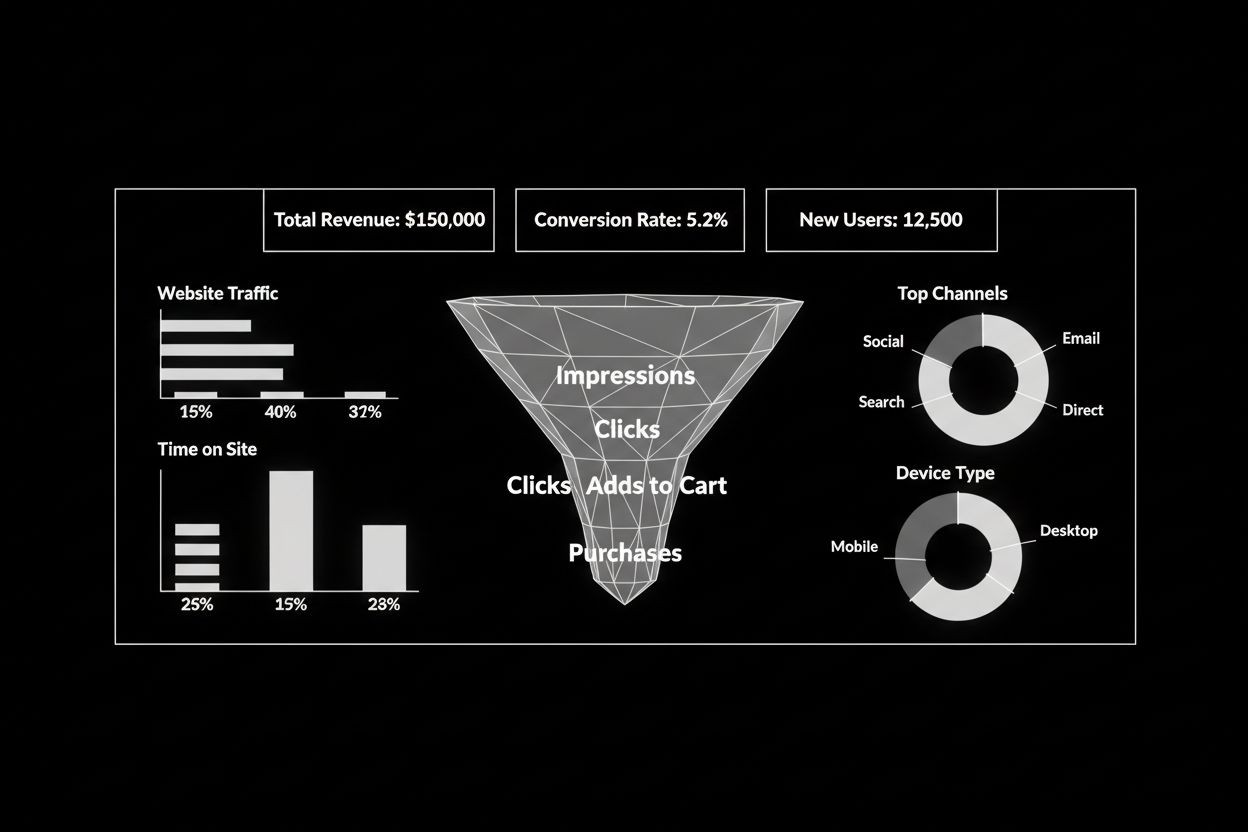
Measure what matters: raw volume is not enough.
Essential metrics
Cost per lead by channel
Lead-to-opportunity conversion
Opportunity-to-win rate
Pipeline velocity and average days to close
LTV to CAC ratio
Attribution models
First touch for top of funnel credit
Last touch for close attribution
Multi-touch for a balanced view of influence
Use cohort analysis to track how leads generated in month one convert over time. Run A/B tests regularly for ads and landing pages. Maintain a monthly review loop where sales and marketing review leads, conversion, and quality, and update the lead scoring model.
SLA example between marketing and sales
Marketing to deliver qualified leads with the agreed score threshold.
Sales to contact leads within 24 hours and update status within the CRM.
Weekly sync to discuss stuck leads and feedback.
Tool stack recommendations
CRM and lead routing for central data.
Chat agents that integrate with CRM. Learn about options in Automated AI Chat Agents.
Ads management for scaling paid channels. See Paid Ads Management.
Social automation for consistent posting and listening. Consider Automated Social Media.
SEO automation to scale content distribution. Explore Automated SEO.
End-to-end lead generation services to combine these tactics efficiently: Automated Lead Generation.
Quick-play templates you can copy
Cold outreach subject line examples
“Quick question about [company] growth”
“Idea to cut [specific cost or pain] by X percent”
3-touch email cadence
Short intro and one value statement.
Follow up with a case study link.
Breakup email with one last offer to help.
Webinar registration message
Headline: How to reduce acquisition cost by X percent
Bullets: What you will learn, who should attend, and one actionable takeaway
CTA: Reserve a spot
Lead qualification checklist
Company size and industry
Role and buying authority
Current solution and pain
Budget quarter
Timing and urgency
What to avoid: common lead generation mistakes
Chasing vanity metrics instead of pipeline impact.
Overly long forms that kill conversion.
No follow up SLA between marketing and sales.
Failure to attribute leads across touchpoints.
Using AI chat agents without human escalation for complex sales.
Final checklist and next steps
Pick three strategies from this list and run 6 to 8 week tests.
Set clear KPIs: cost per lead, lead-to-opportunity rate, pipeline contribution.
Implement lead scoring and an SLA for handoffs.
Add an AI chat agent to capture real-time intent. See Automated AI Chat Agents for integration ideas.
Reallocate budget based on measured ROI and scale winners.
Lead generation is a continuous process of testing, measurement, and alignment between marketing and sales. Use the strategies here to build a diversified, measurable pipeline and iterate quickly as you gather data.
Further reading and resources
For deeper automation workflows and to streamline campaign execution see Automated Lead Generation.
Need managed support for ads and creative? Check Paid Ads Management.
To scale content and SEO, explore Automated SEO.
If you want, I can create a 90-day rollout plan tailored to your industry and budget. Tell me your vertical and monthly testing budget and I will outline the first experiments and expected outcomes.