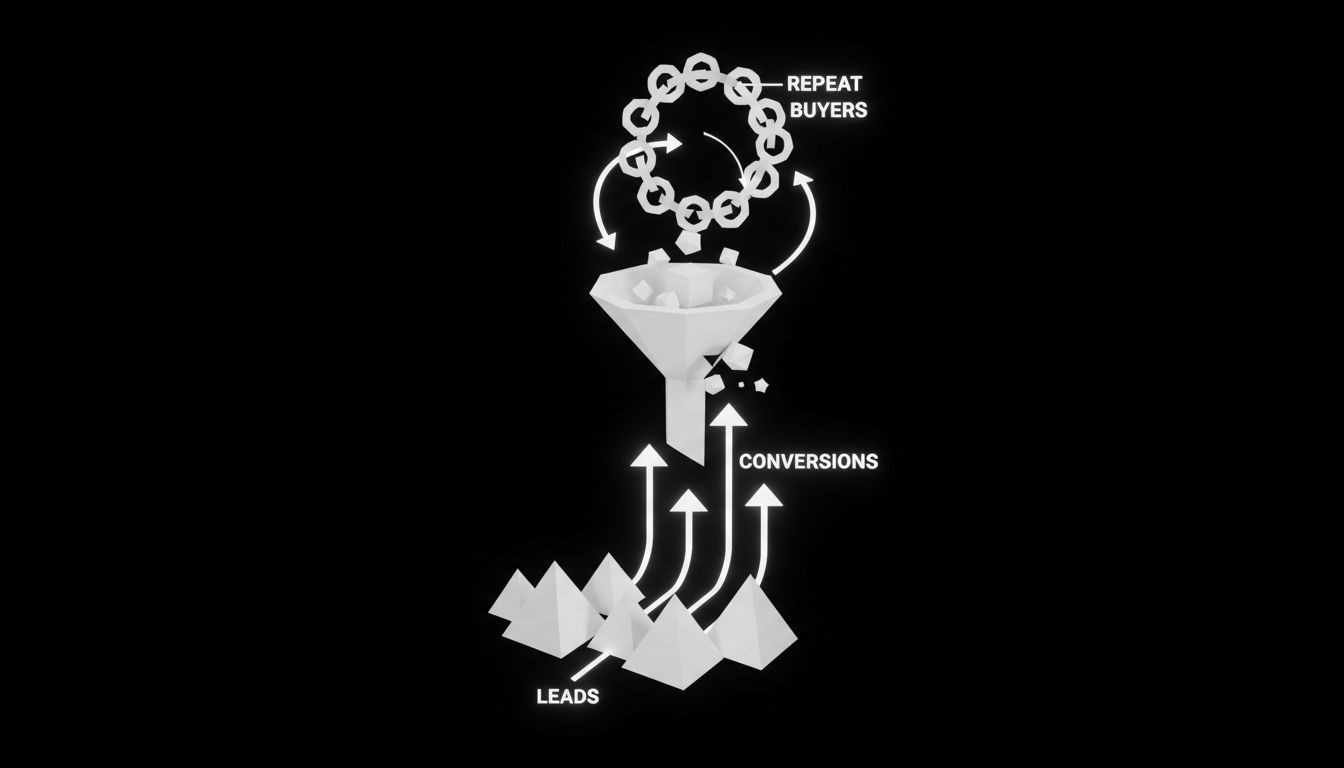
How to Increase Sales: A Practical System for Leads, Conversions, and Repeat Buyers
Learn how to increase sales with practical tactics for lead gen, Meta and TikTok ads, AI chat agents, follow-up, and repeat purchases that convert.
Most businesses do not need a clever sales trick. They need fewer leaks, stronger offers, and a faster path from first click to repeat purchase. If you are trying to figure out how to increase sales, start by fixing the bottleneck that is slowing you down, then scale the channel that produces qualified buyers. That might mean better lead capture, a sharper landing page, smarter social ads, or a follow-up system that replies before the lead goes cold. When those pieces work together, sales start to feel less random and more predictable.
If you want the mechanics behind that system, our Lead Generation and Marketing Automation Guide for 2026 Success is a useful companion read.
Diagnose the bottleneck first
Before you spend more on ads or discount your prices, find out where the process is breaking. Look at the journey in four steps: traffic, lead, sale, repeat purchase. If traffic is low, the problem is reach. If traffic is fine but leads are weak, the offer or the landing page needs work. If leads come in but sales are slow, your response time and objection handling are probably the issue. If the customer buys once and disappears, retention is where the money is leaking.
A simple way to keep this honest is to track a few core numbers every week:
Conversion rate from visitor to lead
Lead-to-close rate
Average order value
Repeat purchase rate
Cart abandonment rate
Sales cycle length
Do not try to fix everything at once. Pick the weakest stage and work there first. If your team does not have one place to see those numbers, a CRM is worth setting up early, because it makes patterns much easier to spot over time. It also helps you see which channel actually brings in the buyers that stick.
Fix conversion leaks first

The fastest sales wins usually come from reducing friction. People do not want to hunt for information, wonder what happens next, or wait hours for a reply. They want a clear answer, a clear price, and a clear next step.
Start with the basics:
Use one primary call to action on the page
Keep forms as short as possible
Show the value of the offer early
Add reviews, testimonials, and proof points near the CTA
Make payment or booking simple
Remove extra clicks between interest and action
If you sell services, the booking flow should feel easy. If you sell products, the checkout should feel calm and fast. If you sell high-ticket offers, the lead form should prequalify without becoming a hurdle.
An AI chat agent can help here by answering common questions, qualifying the lead, and routing hot prospects to a human. That is especially useful when people come from Instagram, Facebook, or your website after hours, which is why many teams pair landing pages with Automated AI Chat Agents - The Social Search.
Meta and TikTok both support low-friction lead capture in ways that fit modern buying behavior. Meta’s Advantage+ leads campaigns use AI to optimize audience, placements, and budget, and Meta says connecting first-party data through your CRM and Conversions API can improve lead quality. For click-to-message lead ads, Meta also recommends keeping the first conversation simple, often with six questions or fewer. (facebook.com)
On TikTok, lead generation can be run through instant forms, Promote, or the Lead Generation objective, and TikTok’s guidance points to Business Accounts, the TikTok Pixel, and Spark Ads as useful pieces when you want to capture demand and scale it efficiently. (ads.tiktok.com)
The lesson is simple. The fewer obstacles between attention and action, the more sales you will make from the same amount of traffic.
Increase sales from existing customers
It is usually cheaper to sell again than to win a new customer, which is why repeat revenue should be part of any sales plan. Many businesses focus so much on acquisition that they forget the people who already trust them. That is often the easiest place to grow.
Use these moves first:
Cross-sell related products or services
Upsell to a better package or tier
Create bundles that solve the next problem
Offer refill, reorder, or renewal reminders
Build a referral offer for happy customers
Reactivate old buyers with a new angle or new use case
If you sell products, think about what the customer needs next. If you sell services, think about the follow-on problem that appears after the first win. If you sell software or subscriptions, think about seat expansion, feature adoption, or annual plans.
Personalization matters here. One-size-fits-all follow-up rarely moves people to buy again. HubSpot’s guidance on lead nurturing emphasizes personalization, timely follow-ups, and content diversity, which is just as useful for repeat sales as it is for new leads. (blog.hubspot.com)
This is also where your customer records matter. If your data is scattered, the next offer is usually too generic. A cleaner view of each customer makes it easier to send the right message at the right time, which is why it helps to understand what CRM in marketing looks like in practice.
Get more qualified leads from social and paid ads

If you want sales to grow predictably, your ads should create conversations, not just clicks. That is true on Meta, TikTok, and any channel where a person can discover you before they are actively shopping. The goal is not to buy random traffic. The goal is to attract people who are likely to buy, book, or reply.
The best-performing ad angles usually do one of four things:
Show a painful problem and a clear fix
Prove the result with testimonials or case studies
Answer the objection the buyer is already thinking about
Make the next step feel safe and low risk
Short-form video usually works well because it is fast, honest, and easy to test. UGC-style clips, founder-led explanations, before-and-after examples, and FAQ videos all tend to work because they look like something a real person would actually watch.
Paid media works best when someone is actively testing budgets, audiences, and creative, which is why Paid Ads Management - The Social Search can pay for itself quickly. And if you want the brand to stay visible between campaigns, Automated Social Media - The Social Search can keep the content engine moving without adding manual work every day.
Meta and TikTok both make it easier to scale once you find a winning angle. On Meta, Advantage+ leads campaigns can simplify setup and let AI handle much of the optimization, while custom audiences, lookalikes, and CRM data help the system find better prospects. On TikTok, lead gen forms, Spark Ads, and the Pixel are useful when you want to capture interest without forcing people through a long website journey. (facebook.com)
If you are running click-to-message ads, keep the opening interaction short, useful, and easy to answer. The first conversation should reduce doubt, not add to it. That is especially important when the buyer is coming from social, where attention is short and distraction is high. Meta’s guidance also stresses clear next steps and simple question flow in message-based lead ads. (facebook.com)
Build a follow-up system that closes more deals
The biggest sales lift often comes from speed. A lead that gets a useful response right away is far more likely to keep moving than a lead that has to wait. This is where the handoff between marketing, chat, and sales matters.
A strong follow-up system should do four things well:
Respond quickly
Qualify the lead
Route the lead to the right person or sequence
Keep nurturing until the buyer is ready
Use email for education, SMS or DMs for reminders, and phone for high-intent leads. If someone books a call or buys, stop the nurture sequence and move them into the next stage. If they are not ready yet, keep educating them instead of pushing for the hard close too early.
This is also the stage where an AI chat agent earns its keep. It can capture the lead at night, answer common questions, and move the conversation forward until a human takes over. When the workflow is tied to your CRM, the right lead can be routed without delay, which reduces missed opportunities and improves lead quality across the board.
HubSpot’s guidance on drip campaigns and lead nurturing emphasizes personalization, timely follow-ups, and a steady cadence, often every two to three business days for active nurtures and about weekly for long-term education. That rhythm is a good baseline for most teams. (blog.hubspot.com)
Improve offers and pricing
If the offer is weak, more traffic will not fix it. Pricing and packaging have a bigger effect on sales than many teams realize. A clearer offer often sells better than a cheaper one.
Try these adjustments:
Create an entry-level offer that is easy to say yes to
Add a mid-tier option that feels like the best value
Keep a premium option for customers who want more support or speed
Bundle related items to raise average order value
Use guarantees or risk reversals when trust is the blocker
Use discounts sparingly and with a clear reason
For service businesses, a fixed-scope starter package usually converts better than a vague custom quote. For ecommerce, bundles and minimum thresholds can increase basket size without hurting perceived value. For B2B, tiered pricing makes it easier for the buyer to choose instead of stalling.
The key is to protect margin while making the next step feel easier. Discounts can open the door, but they should not become the only reason people buy.
Measure and scale what works

Once the funnel is cleaner, scaling becomes much easier. The goal is not more activity, it is more of the activities that already produce profit. That means measuring the right things, then putting more budget and energy into the winners.
Track these metrics weekly:
Cost per lead
Conversion rate by channel
Booked call rate
Lead-to-close rate
Average order value
Customer acquisition cost
Repeat purchase rate
Revenue per campaign
Then use a simple 30-day rhythm:
Pick one acquisition channel and one conversion fix
Test two or three ad angles
Tighten the landing page or lead form
Improve the first follow-up message
Review results by lead quality, not just clicks
Scale the winner and pause the weak spots
This is where a clean system beats a burst of effort. When your lead flow, follow-up, and CRM all work together, you can see what is actually driving revenue instead of guessing.
FAQ: how to increase sales
What is the fastest way to increase sales?
Usually the fastest wins come from fixing conversion leaks and speeding up follow-up. If leads are already coming in, a better response process can improve sales before you spend another dollar on traffic.
How can I increase sales without lowering prices?
Add bundles, upsells, clearer packaging, and stronger proof. Often the problem is not price alone. It is how the offer is framed and how easy it is to buy.
Do AI chat agents really help sales?
Yes, when they do more than greet visitors. The best ones answer questions, qualify intent, route leads, and book meetings. That is especially useful for after-hours traffic and social leads.
Should I focus on Meta or TikTok ads first?
Start where your audience already spends time and where you can respond quickly. If your buyers need reassurance and follow-up, message-based Meta campaigns can be a strong fit. If short-form video and discovery matter more, TikTok can be a good place to test creative and capture interest.
The real answer to how to increase sales is usually not one tactic. It is a system. Clean up the funnel, tighten the follow-up, improve the offer, and then scale the channel that keeps producing qualified conversations. Once those pieces work together, social media, AI chat agents, and paid ads stop feeling like separate tools and start acting like one growth engine.