Customer Acquisition Strategy: A Practical Guide to Turning Traffic Into Customers
Learn how to build a customer acquisition strategy with SEO, social, Meta ads, TikTok, and AI chat agents that lowers CAC and boosts ROI.
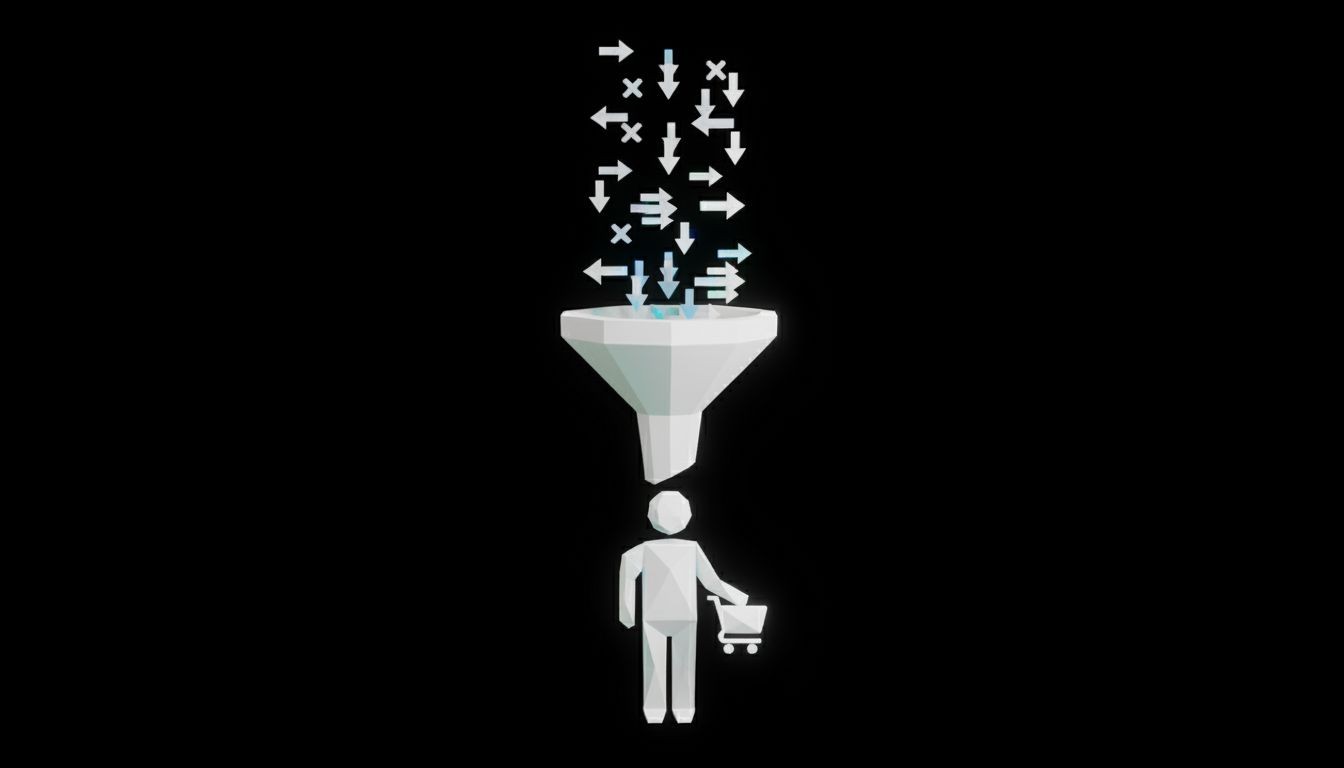
If your marketing is getting attention but not enough customers, the problem usually is not reach. It is the system behind the reach. A good customer acquisition strategy gives you a repeatable path from attention to lead to sale, so you can stop guessing and start scaling what actually works. That matters whether the first touch comes from SEO, social content, Meta ads, TikTok, or an AI chat flow. (hubspot.com)
The best strategies do not try to be everywhere at once. They start with a clear audience, a useful offer, and one or two channels that fit how the buyer already behaves. Once the basics are in place, you can layer in automation, creative testing, and better tracking to lower CAC and improve payback over time. (help.shopify.com)
What a customer acquisition strategy really is
A customer acquisition strategy is the plan for attracting, converting, and onboarding new customers sustainably. In practice, it connects your ICP, offer, channel mix, landing pages, follow-up, and reporting. HubSpot describes acquisition as attracting, converting, and onboarding new customers, while Shopify defines CAC as total advertising and sales spend divided by first-time customers attributed to a campaign. (hubspot.com)
Think of it this way:
Acquisition brings new people in.
Conversion turns interest into revenue.
Measurement tells you what to do more of.
Retention keeps the business profitable after the first sale.
If one of those pieces is missing, the whole plan gets expensive fast.
Build the foundation before you spend

Before you launch ads or publish content, get the basics right. HubSpot’s startup guidance emphasizes defining an ICP, validating product-market fit, and choosing channels based on real buyer behavior rather than guesses. That is the right place to start because acquisition costs rise fast when the audience or offer is fuzzy. (hubspot.com)
A strong foundation answers five questions:
Who is the buyer?
Be specific. Industry, role, pain point, budget, and urgency all matter.What problem are you solving?
The strongest acquisition offers are obvious and relevant. They promise a result the buyer already wants.What counts as a lead?
Is it a form fill, call, booking, message, trial, or purchase? Decide before you spend.What happens after the click?
Your funnel should be simple. Landing page, form, chat, calendar, or checkout, then an immediate follow-up.How will you know it worked?
Pick a few metrics that connect to revenue, not just attention.
If you need a system for capturing, routing, and following up on leads without delay, automated lead generation is a smart place to plug the gaps before you scale.
A practical 7-step customer acquisition strategy framework
The most useful strategy is the one your team can repeat. A simple framework keeps it from turning into a pile of disconnected tactics. HubSpot’s startup playbook, Shopify’s performance reporting, and the Meta and TikTok lead-gen tools all point to the same idea, get clear on the buyer, then measure the path from lead to customer. (hubspot.com)
1. Define your ICP
Write down exactly who you want to attract. If you sell to multiple audience types, pick one segment first. It is easier to win a narrow market and expand later than to try to market to everyone from day one.
2. Match channel to buyer intent
Use channels that fit the way people already discover solutions. Search works well when the buyer is actively looking. Social and paid media work well when you need to create awareness or accelerate demand.
3. Build one clear offer
Do not lead with ten options. Choose one primary offer, such as a demo, quote, audit, free consultation, sample, or trial. Then make the CTA obvious.
4. Set a CAC target
Your CAC target should make sense for your margins and sales cycle. If the cost to acquire a customer leaves too little room for profit, the channel is not ready, or the offer needs work.
5. Create fast follow-up
Speed matters. A lead that waits too long goes cold. Make sure every form fill, message, or call request triggers a fast response.
6. Launch small tests
Run short, focused experiments. Test one audience, one message, and one landing page at a time. That makes it easier to see what actually moved the number.
7. Review and scale winners
Keep what converts, cut what does not, and expand the channel mix only after the core system is working. Growth should feel controlled, not chaotic.
Choose channels based on intent and sales cycle
Not every channel deserves the same amount of attention. Some channels create demand now, some compound over time, and some do both. For long-term discovery, automated SEO is worth building early, while automated social media keeps your brand visible between campaign bursts. Meta and TikTok are especially useful when you want fast feedback because both platforms support native lead capture and message-based conversion paths. (facebook.com)
Here is a simple way to think about the mix:
Channel | Best for | Start here when | Watch out for |
|---|---|---|---|
SEO | High-intent discovery and long-term compounding traffic | People are already searching for the problem or solution | It takes time, so do not expect instant wins |
Organic social | Trust, visibility, and conversation | You need consistent presence and brand familiarity | Posting without a point of view usually underperforms |
Meta and TikTok ads | Fast testing, lead generation, and remarketing | You need quicker data and more control over volume | Weak offers get expensive fast |
Email and nurture | Converting leads into sales-ready prospects | You already have traffic or lead capture in place | If the follow-up is slow, people disappear |
Chat and DMs | Qualification and booking | Your buyers want quick answers or a lower-friction path | If the replies feel robotic, trust drops |
Referrals and partnerships | Warm introductions and credibility | You already have happy customers or aligned partners | These channels are easy to ignore unless they are built into the process |
The point is not to use every channel. The point is to choose a channel mix that fits how your buyer buys.
Where AI improves acquisition today
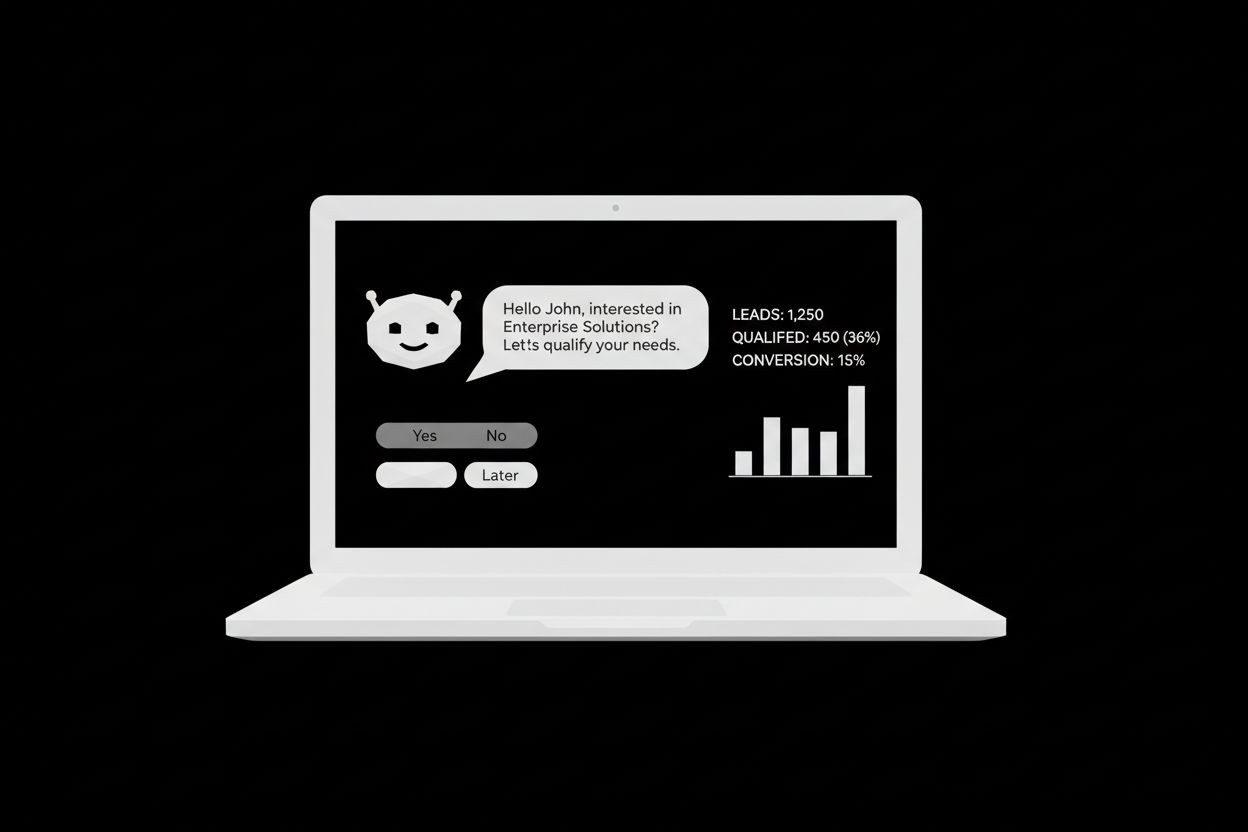
AI is most useful when it shortens the time between interest and response. Meta says Advantage+ leads campaigns use automation-first optimization, and its creative tools can generate variations from the copy and assets you provide. TikTok’s lead generation guide points to AI-driven targeting, chat-based funnels, and CRM integration as practical ways to improve lead quality and speed up handoff. (facebook.com)
That opens up a few useful plays:
AI chat agents can answer common questions, qualify leads, and route people to the right next step.
Creative generation can help you test hooks, headlines, and ad variations faster.
Predictive scoring can help sales focus on the hottest leads first.
Instant routing can send form fills to the right person or workflow without delay.
If you want AI to help on the front end of the funnel, automated AI chat agents can make the first response feel immediate instead of slow and manual.
AI works best when it supports a clean process. It should not hide a weak offer or replace good targeting. It should help you move faster on what is already working.
Paid ads that generate leads, not just traffic
Paid ads are strongest when they amplify a message that already works organically or in sales conversations. Meta lead ads with forms let people submit information directly, and Meta says instant forms and website-hosted forms are both supported. TikTok’s lead generation guide also recommends AI-powered targeting, in-app forms, messaging ads, and CRM integration so you can capture and follow up without friction. (facebook.com)
A few rules help paid acquisition stay efficient:
Keep the offer focused on one action.
Match the ad promise to the landing page or form.
Use fewer fields when you need more volume.
Retarget visitors who did not convert the first time.
Test new creative often, so performance does not stall.
Meta also recommends first-party data, custom audiences, lookalikes, and creative automation to improve lead quality. (facebook.com)
If you are running Meta or TikTok campaigns at scale, paid ads management helps keep creative, budget, and conversion tracking tied to revenue instead of vanity metrics.
Measure, attribute, and improve
Measurement is where a customer acquisition strategy becomes a business system. Shopify’s reporting tracks CAC, conversion rate, CTR, ROAS, sessions, new vs returning customers, and attribution models, which makes it easier to see what channel actually contributed to revenue. Shopify also distinguishes CAC from CPA, which matters because a campaign can produce cheap clicks or leads without producing profitable customers. (help.shopify.com)
A practical weekly dashboard should include:
Cost per lead
Cost per acquisition
Conversion rate from lead to customer
ROAS or payback period
New versus returning customers
Time to first response
Channel-level pipeline influence
Do not stop at the first conversion. If one channel gets cheap leads but almost no buyers, it is not really cheap.
Also look at attribution with a little humility. Some channels create demand that shows up later in search, direct traffic, or sales calls. If you only chase last-click numbers, you can cut channels that were actually helping.
Common mistakes that waste budget
HubSpot’s startup guide calls out three recurring problems: choosing the wrong channels, skipping deep customer research, and rushing to scale before the process is proven. Those mistakes show up in the same way over and over, weak conversion rates, noisy attribution, and a lot of activity that never becomes revenue. (hubspot.com)
Watch for these traps:
Targeting too broad of an audience.
Optimizing for clicks instead of customers.
Running too many channels at once.
Letting leads sit too long before follow-up.
Ignoring retention and only chasing new traffic.
Scaling budget before the offer is stable.
If this feels familiar, simplify before you expand. A smaller system that converts usually beats a larger one that leaks.
Industry-specific playbooks

A strong acquisition plan changes by business model. HubSpot’s startup guidance separates early scrappy acquisition from more repeatable systems, and that same logic applies across SaaS, ecommerce, B2B services, and local businesses. (hubspot.com)
SaaS customer acquisition strategy
SaaS usually works best with a mix of high-intent search, comparison content, product-led trials, retargeting, and fast qualification. If the product is complex, use chat or forms to route people to the right demo or trial path quickly.
Ecommerce customer acquisition strategy
Ecommerce usually benefits from Meta and TikTok ads, creator-style creative, offer testing, and strong email capture. The first job is to create enough purchase intent, then make the product page and checkout do their job.
B2B services customer acquisition strategy
B2B services often win with SEO, lead forms, case studies, retargeting, and booked calls. People rarely buy immediately, so the follow-up sequence matters almost as much as the first ad or search result.
Local business customer acquisition strategy
Local businesses need simple, fast paths to contact, such as calls, forms, message ads, or bookings. If the buyer wants a quote, a callback, or an appointment, remove as much friction as possible.
The common thread across every model is simple. Make it easy to discover you, easy to trust you, and easy to take the next step.
A simple 30-day customer acquisition strategy template
Use this as a starting point if you are building from scratch or resetting a messy funnel.
Week 1: Clarify
Define the ICP.
Write the core offer.
Pick one primary channel and one support channel.
Set the CAC target and the lead definition.
Week 2: Build
Create the landing page or booking flow.
Set up the form, chat, or lead ad.
Write the follow-up sequence.
Install tracking and attribution.
Week 3: Launch
Run the first campaign.
Publish the first round of content.
Test two or three creative angles.
Keep the budget small enough to learn, but large enough to get signal.
Week 4: Review
Compare CAC, conversion rate, and lead quality.
Remove weak messages, placements, or audiences.
Keep the winner.
Decide whether to scale, refine, or pivot.
That simple loop is enough to uncover what is working without overwhelming the team.
FAQ
What is the difference between customer acquisition and lead generation?
Lead generation is the process of getting interest, while customer acquisition is the full path from interest to paying customer. Lead gen is one part of the strategy, not the whole thing.
Which channel should I start with?
Start where your ideal buyer already spends time and where intent is strongest. If the demand already exists, search and SEO can work well. If you need quicker testing, Meta and TikTok are often easier to validate.
How do I know if my CAC is too high?
CAC is too high when it leaves too little margin to support delivery, overhead, and growth. Look at CAC alongside conversion rate, ROAS, payback period, and lifetime value instead of treating it as a standalone number.
Do AI chat agents really help acquisition?
Yes, when they speed up response time and qualify leads before handoff. They are most useful when the questions are repetitive and the next step is clear.
Final thoughts
A good customer acquisition strategy does not try to impress everyone. It creates a clear path from attention to lead to sale, then improves that path until CAC makes sense for the business. Start with one buyer, one message, and one channel mix. Once you have traction, add automation, AI chat, SEO, and paid media in a controlled way so growth stays profitable.