Customer Acquisition Strategies: 12 Proven Tactics to Drive Growth
Proven customer acquisition strategies to grow revenue fast. Learn paid social, SEO, AI chat agents, funnels, benchmarks, and industry-specific playbooks.
Every growth plan starts with one question: how do we reliably find and convert new customers without wasting budget? The best customer acquisition strategies focus on predictable channels, repeatable processes, and measurement that ties activity to revenue. This guide lays out 12 practical tactics, plus how to choose between them, tools to use, benchmarks to track, and short playbooks for SaaS, eCommerce, and local businesses.
You will finish this article with an action plan you can test in 30, 60, and 90 days. Expect concrete tips for paid social on Meta and TikTok, SEO and content that actually converts, AI chat agents that capture leads, retargeting that recovers lost buyers, and email funnels that increase conversion. Where helpful, I link to resources you can use to automate parts of the process.
What is customer acquisition and why it matters
Customer acquisition is the set of activities a business uses to find, attract, and convert new customers. It covers marketing channels, messaging, creative, landing pages, and the sales handoff. Acquisition is not the same as retention. Acquisition brings people into your funnel. Retention increases the lifetime value of those customers.
Why this matters now
Competition for attention is higher, which drives up ad costs and makes organic channels more valuable.
Privacy changes require smarter attribution and first party data collection.
AI and automation are shifting how brands engage prospects at scale.
Key metric to track first: customer acquisition cost or CAC. Pair it with lifetime value or LTV to know if your acquisition is profitable. A simple rule: LTV should be at least 3 times CAC for sustainable growth, though acceptable ratios vary by industry and stage.
12 customer acquisition strategies that work
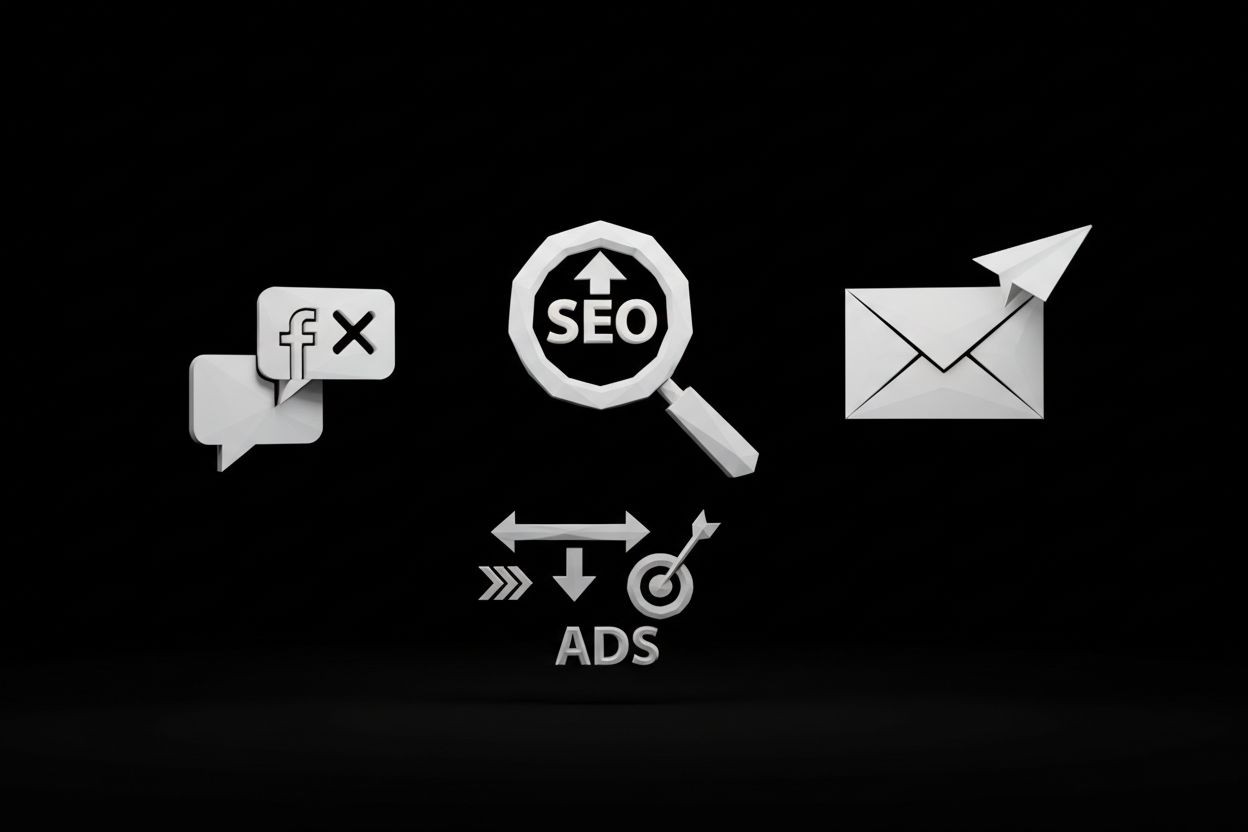
Below are 12 strategies with what they are, why they work, and three tactical tips you can implement this week.
1. Customer research and segmentation
What it is
Deep qualitative and quantitative research to define who buys from you and why.
How it helps
Targets your spend, refines messaging, and improves conversion rates across channels.
3 tips
Run five customer interviews to map common buying triggers and objections.
Use analytics to identify your top converting segments by source and behavior.
Create 3 buyer personas and map one targeted campaign for each persona.
2. SEO and content marketing
What it is
Organic content that draws search traffic, builds authority, and answers buyer questions.
How it helps
Lower acquisition cost over time and creates an evergreen funnel for top and mid funnel intent.
3 tips
Prioritize pages that match commercial intent and fix conversion elements first.
Build topic clusters around one core product with supporting how-to and comparison content.
Repurpose long form posts into short videos for social and landing pages to increase reach.
3. Paid social ads: Meta and TikTok
What it is
Targeted ad campaigns on platforms where audiences spend time, using creative tailored to each placement.
How it helps
Fast traffic and a predictable way to scale once creative and targeting work.
3 tips
Test three creatives in parallel: product demo, customer story, and quick tip.
Use prospecting to find new audiences and retargeting to convert warm leads.
Use short format video for both Meta and TikTok with captions and a clear CTA.
Learn more about managing paid social at Paid Ads Management - The Social Search.
4. Paid search and display
What it is
Search ads capture intent. Display helps awareness and retargeting.
How it helps
Search yields high intent leads. Display is cost effective for remarketing and upper funnel reach.
3 tips
Start with exact and phrase match keywords, then expand to broad modifier with budget controls.
Use site retargeting lists to serve value-driven creative that addresses objections.
Track conversion path from search click to sign up and assign micro conversions for optimization.
5. Email marketing and automated funnels
What it is
Nurture sequences, onboarding flows, and promotional campaigns that move prospects through the funnel.
How it helps
Email is one of the highest ROI channels when it is segmented and automated.
3 tips
Build a welcome sequence that converts cold signups into engaged users within seven days.
Use behavior-based triggers like page visits or cart abandonment to send tailored messages.
A/B test subject lines and send times for peak open and conversion rates.
Pair email automation with lead capture systems like the Automated Lead Generation - The Social Search service to reduce manual work.
6. AI chat agents and conversational marketing
What it is
Chatbots and AI agents that capture leads, pre-qualify prospects, and book demos in real time.
How it helps
Reduces friction, shortens response time, and increases conversion from high intent visitors.
3 tips
Use AI chat agents for qualification questions, then hand off to sales for warm leads.
Capture an email or phone number early in the conversation to enable follow up.
Analyze chat transcripts weekly to refine scripts and reduce drop off.
If you want to automate conversational flows, see Automated AI Chat Agents - The Social Search.
7. Referral and affiliate programs
What it is
Incentivized systems that reward customers or partners for bringing new buyers.
How it helps
Cost effective acquisition and higher trust because referrals come from known sources.
3 tips
Offer a dual-sided incentive that benefits both referrer and new customer.
Track referrals separately to measure true incremental value.
Recruit micro-influencers and niche affiliates rather than a few expensive partners.
8. Influencer and creator partnerships
What it is
Paid or product-exchange partnerships with creators who influence purchase decisions.
How it helps
Authentic reviews and demonstrations can drive both awareness and conversion quickly.
3 tips
Brief creators on a key message and a single CTA to avoid diluted outcomes.
Use unique discount codes or tracking links to measure ROI.
Prioritize creators with engaged audiences over follower count.
9. Retargeting and remarketing
What it is
Ads that follow users who visited your site or engaged with your content but did not convert.
How it helps
Converts users who are already familiar with your brand and lowers wasted ad spend.
3 tips
Segment audiences by intent for tailored creative: product viewers, cart abandoners, demo requesters.
Shorten retargeting windows for time-sensitive offers.
Use sequential messaging that addresses objections over multiple touchpoints.
10. Product-led growth and viral loops
What it is
Strategies that make the product itself the main acquisition engine through free tiers, invitations, or collaboration features.
How it helps
Lower CAC by leveraging existing users to bring new ones through built-in incentives.
3 tips
Offer a free tier that demonstrates core value quickly.
Add easy sharing actions that provide immediate value to both parties.
Track activation metrics to optimize the viral loop.
11. Community building and events
What it is
Forums, user groups, workshops, and live events that build a loyal audience.
How it helps
Creates a long term funnel and brand advocates who refer others.
3 tips
Start a weekly micro event or live stream around a customer problem.
Use private communities for beta testers and power users to drive product adoption.
Promote community highlights on social to attract new members.
Use automation to schedule community posts and repurpose content with tools like Automated Social Media - The Social Search.
12. Partnerships and co-marketing
What it is
Collaborations with complementary brands to share audiences through joint offers or content.
How it helps
Access to qualified audiences without the full cost of acquisition.
3 tips
Choose partners whose customers share your ideal persona but do not compete.
Co-create a webinar or tool and split promotion responsibilities.
Measure leads separately so you know which partnership delivered value.
How to choose the right strategy for your business
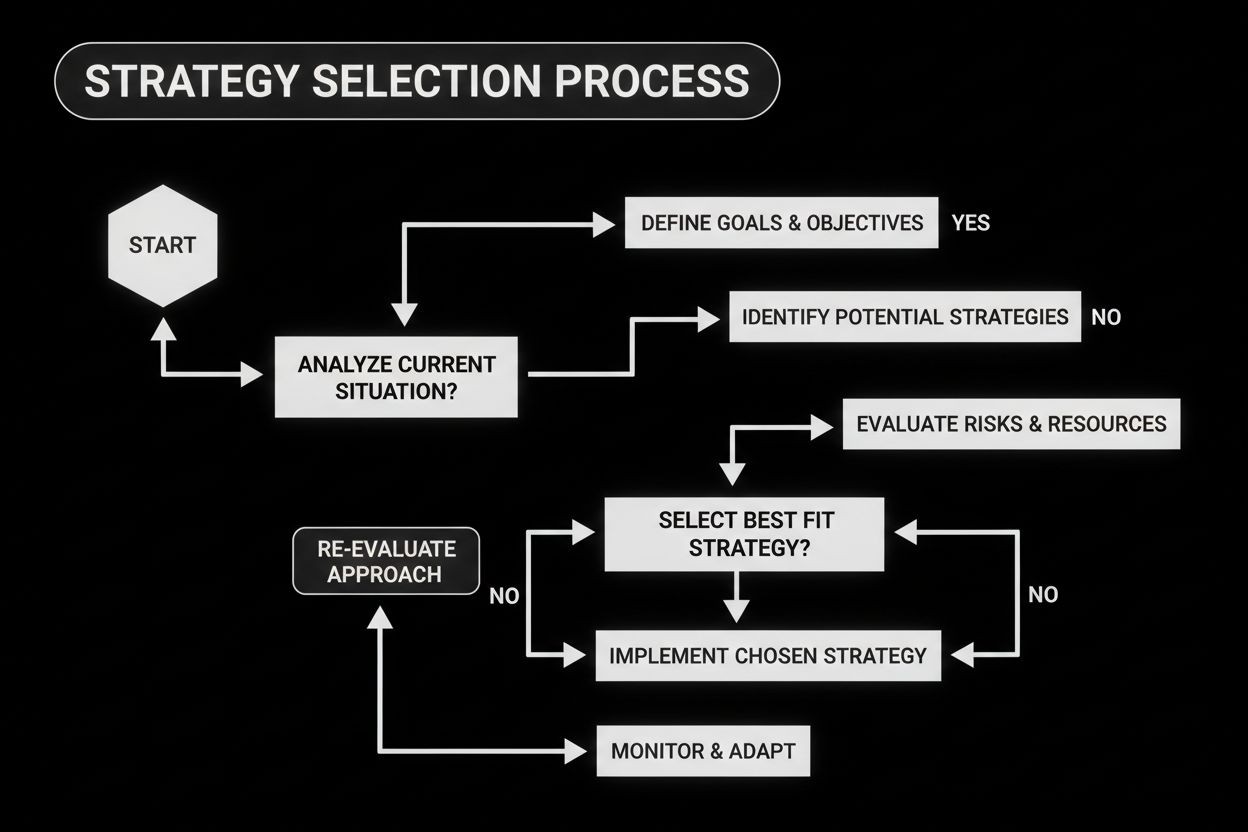
Choosing depends on budget, timeline, product type, and existing channels. Use this quick decision guide:
If you need immediate revenue in 30 days: focus on paid search and paid social with high intent creative and retargeting.
If you need sustainable lower cost growth in 3 to 12 months: invest in SEO, content, and email automation.
If your product benefits from network effects: prioritize product-led growth and referral programs.
If you have high average order value and long sales cycles: align sales and marketing with account based approaches and CRM automation.
Considerations by dimension
Audience: Are they active on social or do they search first? Choose social or search accordingly.
Budget: Paid channels scale fast but cost more per acquisition. Organic channels need time and content resources.
Complexity: Products that require education benefit from content, webinars, and conversational marketing.
Measurement: If you cannot track conversions, do not scale paid channels until tracking is fixed.
A short experiment plan
Week 1: Run a small paid social test, publish one SEO landing page, and enable chat capture on high traffic pages.
Week 2 to 4: Measure CPA by channel and double down on the top performer while optimizing landing pages.
Month 2 to 3: Expand successful creatives and build an email nurture sequence to increase LTV.
Channels and tools to implement acquisition strategies
Essential channel stack
Organic search and content
Paid social and search
Email and marketing automation
Conversational marketing and chat
Partnerships and affiliates
Key tools and recommendations
Analytics and attribution: GA4, server side tagging, and multi-touch reporting.
CRM and automation: centralize leads and activities. For a practical guide, read What Is CRM in Marketing: A Complete Guide to Strategy, Automation, AI, and Growth - The Social Search.
Paid social and creative testing: native ad managers for Meta and TikTok with dynamic creative.
Chat and bot platforms: integrate AI chat agents with your CRM to shorten response time.
Social automation: use scheduled posting and content repurposing to keep channels active, see Automated Social Media - The Social Search.
Measuring success: key metrics, benchmarks, and attribution
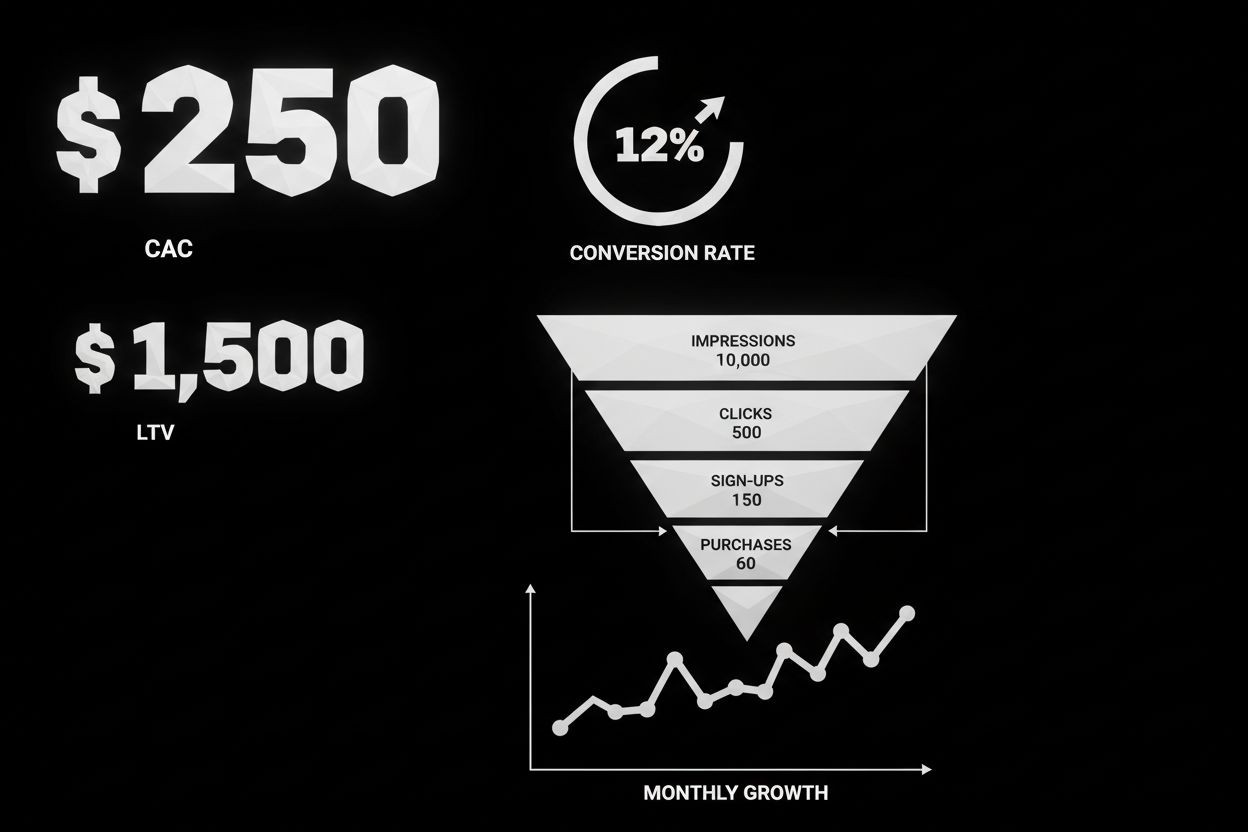
Core metrics to track
Customer acquisition cost (CAC) by channel
Conversion rate at each funnel stage: visit to lead, lead to MQL, MQL to customer
Lifetime value (LTV) and LTV to CAC ratio
Payback period: months to recover CAC
Return on ad spend (ROAS) for paid channels
Benchmarks and timelines
Paid social initial CPA: $30 to $200 depending on industry and offer. Expect improvement after creative optimization.
Paid search CPA: often 10 to 40 percent lower than social for high intent terms.
Organic SEO: expect measurable traffic lift in 3 to 6 months and conversion improvements by month 6 to 12.
Email ROI: strong lists can return 30x on promotional campaigns but this varies by list quality.
Attribution guidance
Use multi-touch models to value upper, middle, and bottom funnel activity.
Keep first party tracking accurate for retargeting and lead matching.
If possible, instrument server side events to avoid ad platform data loss.
ROI calculation example
If a campaign spends $10,000 and acquires 200 customers, CAC is $50. If average LTV is $200, the LTV to CAC ratio is 4. That campaign is profitable in most cases.
Industry playbooks: quick templates
B2B SaaS
Focus: product demos, content that addresses ROI and technical fit, account based marketing for high value accounts.
Channels: LinkedIn and search, webinars, email nurture, AI chat for booking demos.
Timeline: Paid tests in 30 days, scale via content and SEO by month 3 to 6.
eCommerce
Focus: creative-led paid social, retargeting, UGC, and fast checkout flows.
Channels: Meta and TikTok, email for cart recovery, influencer partnerships.
Timeline: Paid channels to drive immediate sales, SEO and content to lower CAC over 6 to 12 months.
Local small business
Focus: local SEO, Google Business Profile, partnerships with other local businesses, events.
Channels: Search ads for immediate visibility, community building for referrals.
Timeline: Local search gains in 4 to 8 weeks; events and partnerships yield steady referrals after three months.
Common mistakes to avoid
Scaling before you can measure. Do not increase ad spend until conversion tracking is reliable.
Chasing vanity metrics like clicks without conversion context.
Using the same creative across platforms. Creatives should match platform norms and intent.
Ignoring retention. Acquisition without retention raises CAC over time.
Overlooking audience data. Segmentation improves conversion and lowers wasted spend.
Quick checklist to launch an acquisition experiment
Define goal and acceptable CAC.
Map the funnel and assign micro conversions.
Set up analytics and attribution.
Create 3 creatives and 2 landing page variants.
Run tests for 2 to 4 weeks, then analyze and iterate.
For a faster start, consider automating parts of your funnel with Automated Lead Generation - The Social Search to capture and qualify leads more efficiently.
Conclusion
Customer acquisition strategies are not one size fits all. The right mix depends on your product, audience, budget, and timeline. Start with one clear hypothesis, instrument tightly, and run short experiments that teach you which channels and messages move the needle. Over time, combine paid and organic channels, add automation, and optimize for LTV rather than only the lowest CAC.
Take action today by choosing one channel to test for 30 days, set a clear CAC target, and use the measurement framework above to decide whether to scale.
Frequently asked questions
What is the fastest way to acquire customers with limited budget?
Start with highly targeted paid social or search campaigns and a conversion optimized landing page. Use retargeting and email nurture to lower effective CAC. Keep tests small and measure CAC before scaling.
How long before SEO starts paying off for acquisition?
You can see incremental traffic in 3 months, but reliable organic conversion flows typically take 6 to 12 months depending on content cadence and competition.
How do I measure which channel deserves more budget?
Use CAC and payback period by channel and incorporate multi-touch attribution so upper funnel activities are credited. Increase budget for channels with acceptable CAC and improving conversion trends.
Can AI chat agents really increase conversions?
Yes. When configured to capture intent, pre-qualify leads, and book follow up, AI chat agents reduce friction and speed up the buyer journey. Integrate the chat with your CRM for best results.
If you want help implementing an acquisition plan that ties directly to revenue, reach out through our contact page or explore services that automate social, ads, CRM, and chat to scale results.