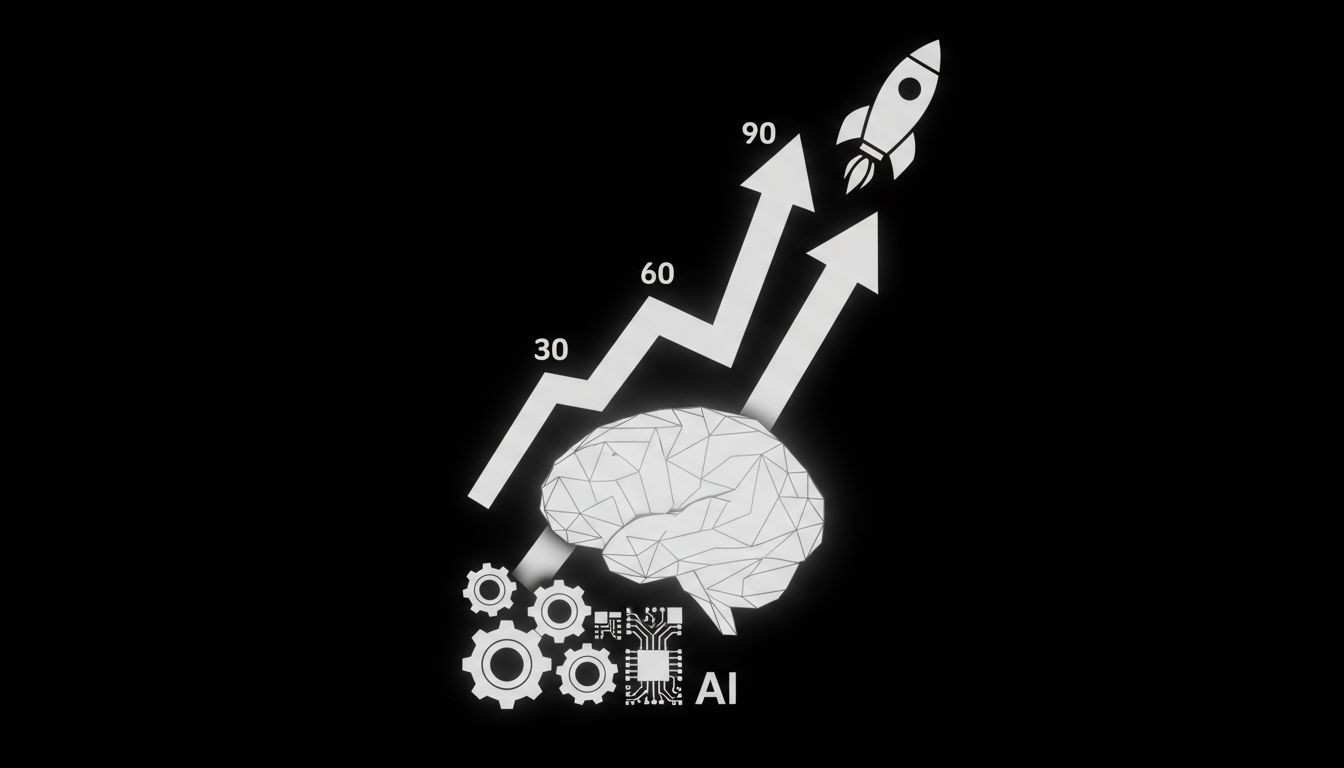
AI Marketing Systems for Startups: A Practical 30/60/90 Day Guide to Growth
Build AI marketing systems for startups with a step-by-step 30/60/90 day plan, tool stack, ROI metrics, and integration blueprints to scale leads and ad performance.
Every startup faces the same pressure: do more with less while proving fast traction. AI marketing systems for startups are not about replacing humans. They are about automating repeatable tasks, improving targeting, and freeing your small team to focus on strategy and creative work that moves metrics. This guide gives a practical roadmap, tool choices, integration patterns, and measurement plans you can implement in 30, 60, and 90 days.
Why startups should build an AI marketing system now

AI levels the playing field for startups with limited budgets and headcount. A deliberate AI marketing system can help your team:
Generate targeted content quickly for SEO and ads
Run and optimize paid campaigns on Meta and TikTok with automation
Engage leads 24-7 through AI chat agents that qualify and book demos
Personalize social media at scale while maintaining brand voice
Pull analytics that identify where to invest next
Startups that treat AI as an ecosystem component instead of a single tool get the most value. The right combination of content AI, chat agents, social automation, and ad optimization produces consistent lead flow and predictable CAC.
Core components of an AI marketing stack for startups
Your stack should map to the customer journey. Keep it lean at first, then scale components as you see ROI.
Content and SEO: AI writing assistants plus an SEO optimizer for topic planning and on-page optimization
Social media automation: scheduling, caption generation, performance analytics, and creative testing
Paid ads automation: creative generation, A B testing, automated bidding and audience expansion on Meta and TikTok
Conversational AI: chat agents for qualification, booking, and support
Analytics and orchestration: data warehouse or tracking layer, and automation tools to move data between systems
Practical starter stack - low budget: Chat agent platform, one AI writing tool, a social scheduler, and basic ads automation. Mid budget: add SEO optimizer and event tracking. Growth budget: integrate predictive analytics and a customer data platform.
Useful resources to explore implementation and services include automated lead generation and social media offerings like Automated Lead Generation - The Social Search and Automated Social Media - The Social Search.
30/60/90 day implementation roadmap
This roadmap breaks work into stages so you deliver value quickly and reduce risk.
Day 1 to 30 - Launch fast, validate product market fit with AI
Goals: set tracking, launch chat agent MVP, publish content that attracts targeted traffic, and run initial ad experiments.
Checklist:
Define one clear acquisition goal and metric. Examples: leads per week, trial signups per day, or demo bookings.
Implement tracking and event schema for core user actions. Use consistent UTM parameters and a simple events list.
Deploy an AI chat agent to handle lead qualification and appointment booking. Train it on 10 typical user questions and your qualification criteria. See Automated AI Chat Agents - The Social Search for service-oriented guidance.
Publish 4 to 6 SEO-focused articles using an AI writing assistant and an SEO tool for keyword research. Prioritize informational content that solves intent for your ideal buyer.
Launch two small paid campaigns on Meta and one on TikTok with distinct creative. Use automated creative generation to produce 6 variations per ad set.
Set up weekly reporting dashboard for cost per lead, conversion rate, and content engagement.
Expected outcomes: early qualified leads from chat agent, initial performance data for ads, early organic traffic signals.
Day 31 to 60 - Optimize workflows and expand channels
Goals: reduce cost per lead, improve creative, link content and ads, and automate routine workflows.
Checklist:
Optimize chat agent flows using transcripts. Adjust questions that lower conversion and remove friction.
Use performance data from week 1 to pause losing ad creative and scale winners. Introduce automated rules for bidding and budget reallocation on Meta.
Start audience layering. Layer custom audiences with lookalikes created from your first 100 high intent leads.
Connect your content calendar to social automation so every new article triggers a set of social posts with AI-generated captions and variations. Consider integrating with services like Automated Social Media - The Social Search for orchestration.
Implement simple lead scoring and tag schema inside your CRM. Route hot leads to SDRs and nurture the rest with AI-generated email sequences.
Add one predictive signal. For example, use an AI model to estimate lead intent using on-site behavior such as time on demo page and number of pages visited.
Expected outcomes: lower CPL, better creative testing cadence, automated social promotion, and clearer lead routing.
Day 61 to 90 - Scale, integrate, and formalize measurement
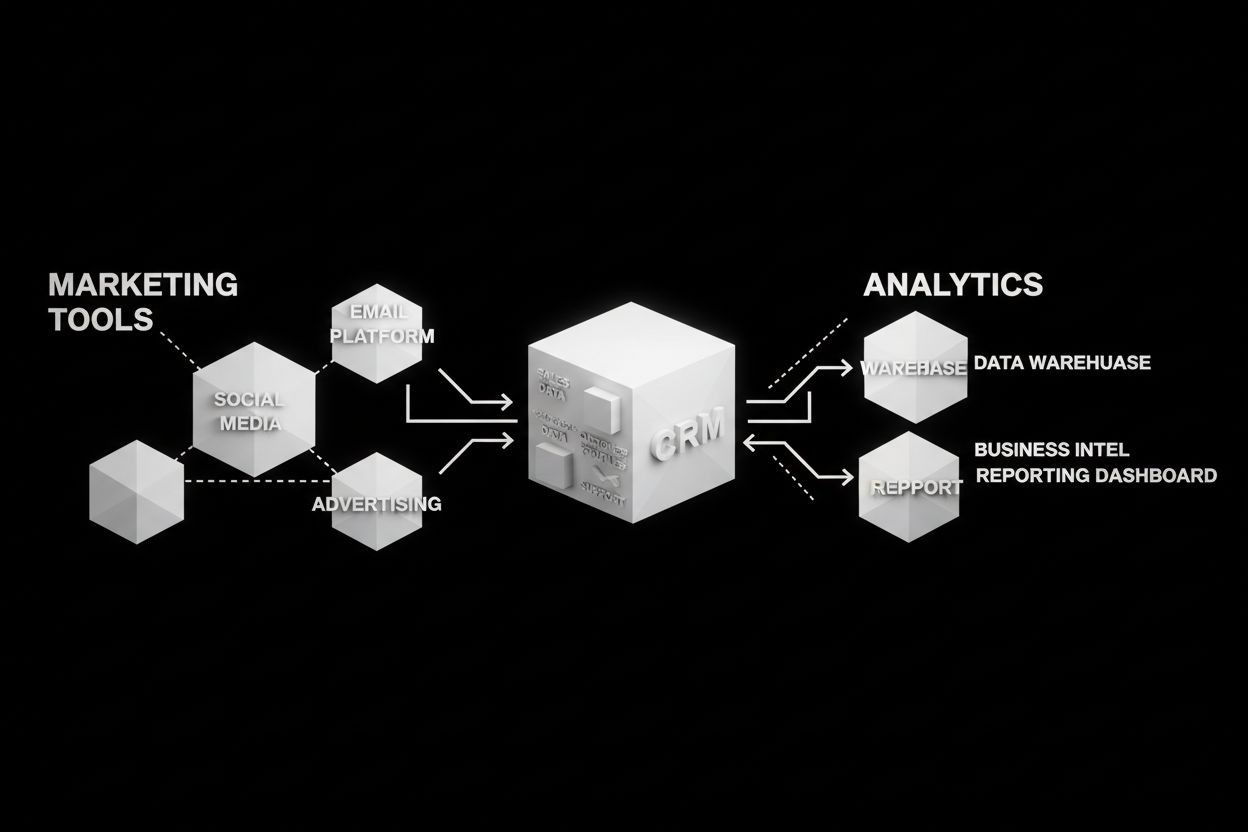
Goals: create an integrated ecosystem, automate reporting, and forecast acquisition costs.
Checklist:
Build data flows between tools. Centralize leads and events in a single destination like a lightweight data warehouse or your CRM. This reduces attribution gaps.
Implement automated campaign experiments. Use rules that spin up new creatives when a control drops below a threshold.
Formalize ROI tracking. Calculate customer acquisition cost and 30 to 90 day payback based on cohort conversion.
Train your team on new workflows. Create short SOP videos and a one-pager for each AI tool describing how to use it responsibly.
Scale successful channels. If Meta or TikTok shows consistent efficiency, increase budget incrementally and expand into lookalikes and interest layers.
Review compliance and data privacy settings across tools. Ensure GDPR and CCPA alignment if you target those regions.
Expected outcomes: stable pipelines, predictable CAC, and documented processes to onboard new hires.
How these tools should work together - integration patterns
A high-performing stack needs clear data flow. Think in terms of sources, processors, and destinations.
Sources: website events, social ad platforms, chat transcripts, CRM interactions
Processors: AI models for content, chatbot engines, ad optimization algorithms, and enrichment services
Destinations: CRM, customer data platform, analytics dashboard
Integration pattern examples:
Lead flow - ad click to CRM
Click triggers ad tracking and landing page event
Chat agent or form captures lead, sends to CRM with source metadata
Automation tags lead by campaign and triggers a nurture sequence
Content performance loop
Publish article, social scheduler shares posts
Analytics captures engagement and conversion metrics
Feeding top performing topics into the content AI for expansion or repurposing
Creative optimization
Creative variants tested in ad platform
Performance metrics fed into an AI model that suggests new variations and audiences
Winning variations baked into organic social templates
APIs and low code automation tools reduce manual sync work. If you use a third-party agency for paid ads, define data ownership and access so you can always run experiments independently. For paid campaign management support see Paid Ads Management - The Social Search.
Measuring ROI and KPIs that matter
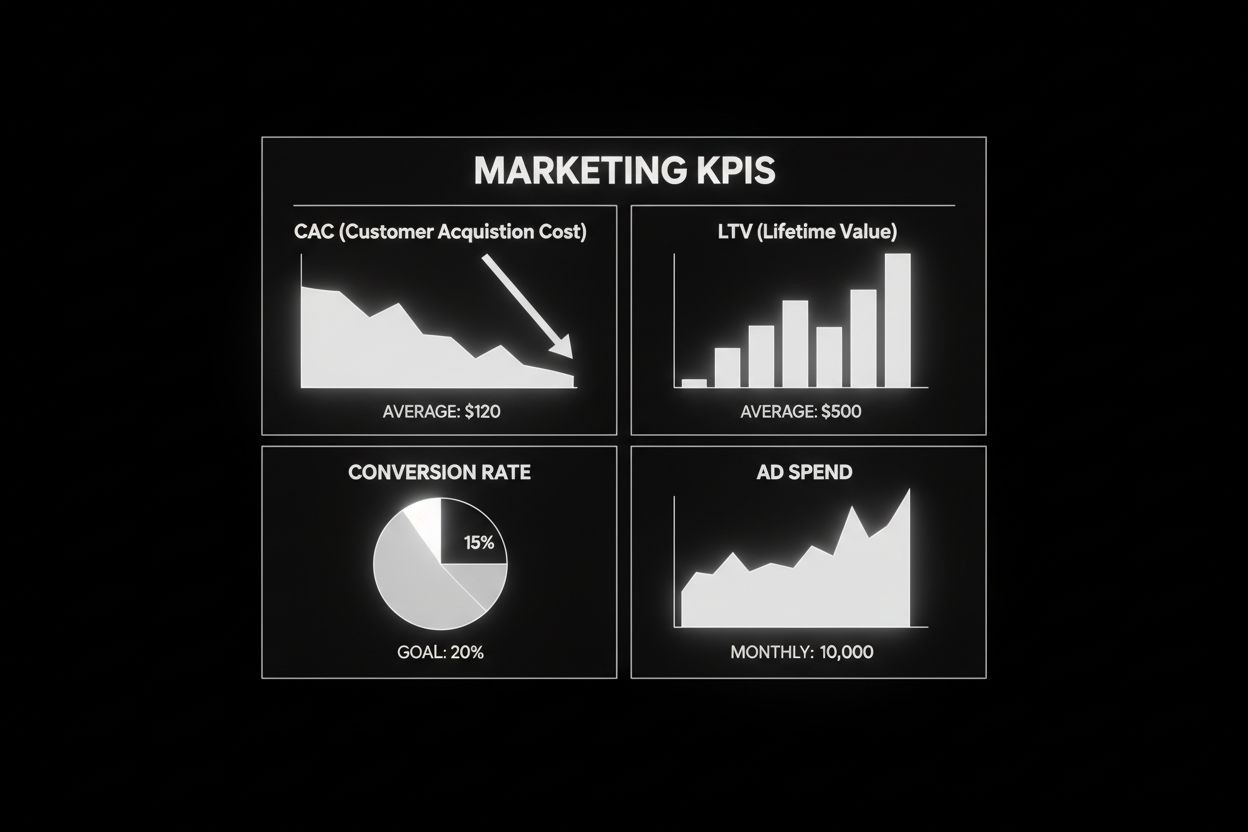
To prove value, focus on metrics that tie back to business outcomes.
Primary KPIs
Cost per lead (CPL) - cost to acquire a single qualified lead
Lead to customer conversion rate - percentage of leads that convert to paying customers
Customer acquisition cost (CAC) - total marketing and sales spend divided by new customers
Payback period - months required to recover CAC from gross margin
Secondary KPIs
Qualified leads per week - pipeline velocity
Pipeline value - potential MRR or ARR in pipeline
Engagement on content - time on page and organic referral traffic
Chat agent conversion rate - percent of chats resulting in a qualified lead or booking
How to attribute AI effects
Use A B tests or holdout groups when possible. For example, split test AI-generated creative against human-created creative.
Track before and after improvements in manual tasks. Example: average time to respond before chatbot was 8 hours, after chatbot it is under 10 minutes with equivalent conversion.
Attribute downstream revenue. Tie first-touch and last-touch models to see where AI-added content or chat interactions influenced conversion.
If you need deeper SEO automation, review options like Automated SEO - The Social Search for structured improvements.
Team training and change management
AI only works when people use it properly. A short training program avoids misuse and reduces fear.
Create 90 minute training sessions for each tool. Focus on practical tasks such as editing AI output and reviewing chat transcripts.
Build SOPs for content review, ad creative approval, and chat agent escalation.
Hold weekly review meetings for the first 90 days. Discuss results, unexpected behavior, and required policy changes.
Encourage staff to edit AI suggestions rather than accept them verbatim. This maintains brand voice and reduces factual errors.
Training example: give team members 30 minutes to create a landing page variation with the AI writer. Then review together, noting where the AI missed nuance or made helpful suggestions.
Budgets and when to DIY vs hire help
Budget scenarios help startups decide where to invest.
Bootstrap budget - under $1,000 per month: focus on one AI writing tool, a free or low cost chat agent, and organic social automation. Manual ad testing with small daily budgets works.
Growth budget - $1,000 to $5,000 per month: add SEO optimization, ad automation, and a better chat agent with CRM integration. Prioritize paid channels that show early traction.
Scale budget - $5,000+ per month: invest in predictive analytics, a CDP, and more aggressive ad testing. Consider hiring specialist contractors for creative and performance optimization.
DIY vs hire
DIY when you need rapid experimentation, the team has time to learn, and budgets are tight.
Hire specialists when speed to scale matters, when experiment velocity needs to be high, or when compliance and data governance are complex.
If you want an outside team for lead automation and workflow implementation, check Automated Lead Generation - The Social Search.
Tradeoffs, risks, and when not to use AI
AI is not a silver bullet. Be explicit about limitations.
When not to use AI
When accuracy is critical and errors have severe consequences. Example: legal disclaimers or complex technical documentation.
When the brand requires a highly specialized voice that AI cannot reproduce reliably.
When you cannot track results. If you cannot measure impact, pause and build measurement first.
Common risks
Hallucinated facts in AI copy. Always fact check before publishing.
Data privacy gaps when syncing across tools. Review consent and data retention policies.
Over-automation leading to bland creative. Use AI for scale, not for all decisions.
Ethical considerations
Be transparent when customers interact with chat agents and provide escalation paths to humans.
Avoid manipulative personalization. Use personalization to make offers more relevant, not to exploit vulnerabilities.
Quick playbooks for core channels
AI chat agents
Purpose: qualify leads and book demos
Quick wins: pre-fill form fields from chat, route high intent leads to calendar booking, and export transcripts weekly for improvement.
Social media with AI
Purpose: scale content distribution and creative testing
Quick wins: create caption variations, repurpose blog paragraphs into short posts, and auto-generate A B test creative for Meta and TikTok.
For managed campaigns and strategic support, see Automated Social Media - The Social Search.
Running ads on Meta and TikTok
Purpose: acquire users efficiently at scale
Quick wins: use creative automation, audience lookalikes, and automated bidding rules. Test short videos on TikTok and carousel content on Meta.
If you need campaign management support, Paid Ads Management - The Social Search can help implement best practices.
SEO and content
Purpose: build long-term, low cost traffic
Quick wins: target low competition keywords with high intent, repurpose top performing content into paid creatives, and use an SEO tool to optimize headlines and metadata.
For full SEO automation services review Automated SEO - The Social Search.
Final checklist before full scale
Events and attribution are working and tested
Chat agent converts and escalates correctly
Content calendar is automated and feeding social promotion
Ad experiments have winners and an automated scale plan
Team has SOPs and short training artifacts
Compliance and data governance are in place
Next steps and lead generation offer
If you want a hands-on implementation plan tailored to your budget, create a simple brief that includes your current traffic, monthly ad spend, and ideal customer profile. A lean audit will show where to plug AI for immediate impact and what to defer until you have more data.
For additional resources and to get help implementing any of these systems, contact our team and explore our services on marketing automation and AI chat implementation: Automated Website Creation - The Social Search and Paid Ads Management - The Social Search.
Start small, measure everything, and scale what works. An AI marketing system built with clear metrics and integration creates predictable lead flow and gives your startup the runway to focus on product and growth.
References and related reading
For a refresher on CRM and AI-driven marketing automation, see What Is CRM in Marketing: A Complete Guide to Strategy, Automation, AI, and Growth - The Social Search
For ideas on 2026 lead generation trends, review Lead Generation and Marketing Automation Guide for 2026 Success - The Social Search
If you want a downloadable 30/60/90 day checklist or a template for SOPs and measurement dashboards, ask and we will provide a tailored pack for your startup stage.