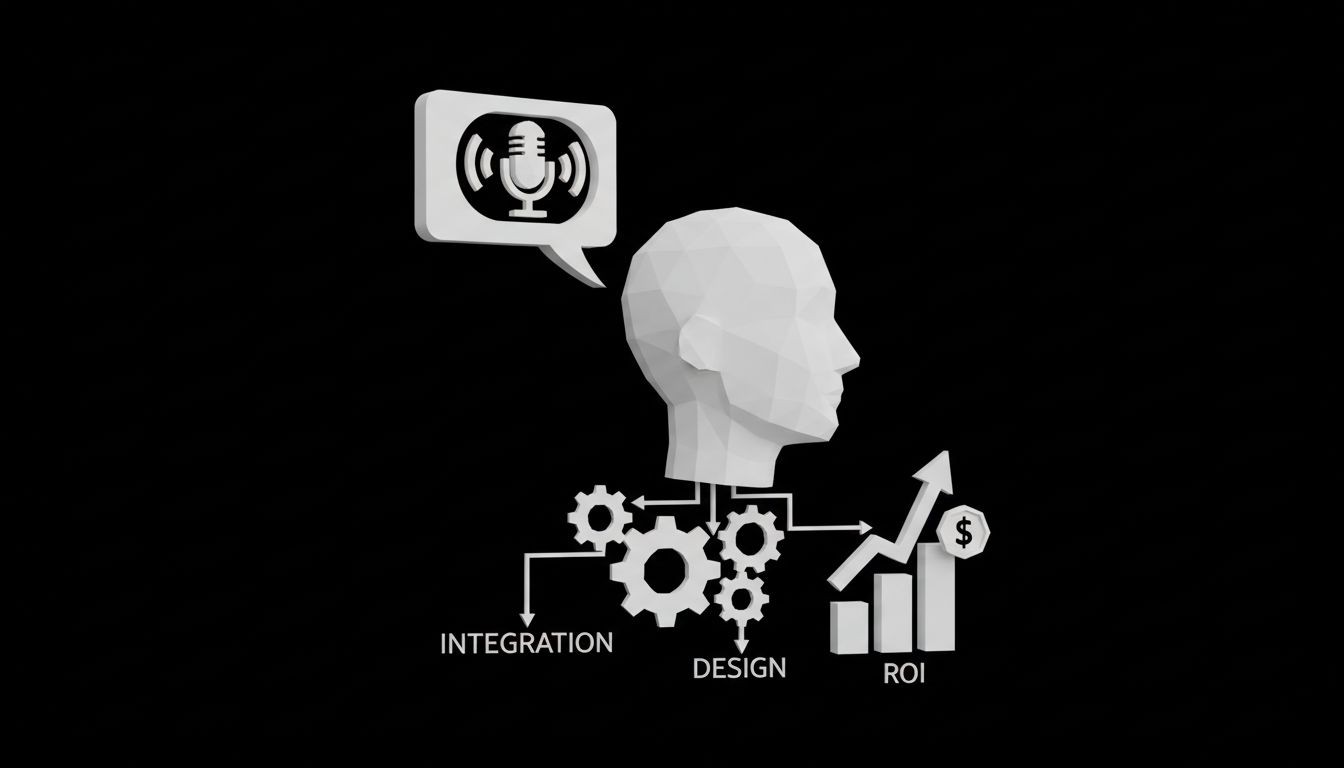
AI Conversational Agents for Sales: A Practical Guide to Design, Integration, and ROI
Guide to AI conversational agents for sales: architecture, conversation design, integrations, ROI, compliance, voice AI, and social ad tactics for lead growth.
Companies that move faster with buyers win more deals. AI conversational agents for sales can handle qualification, follow ups, booking meetings, and even carry parts of the negotiation, freeing reps to focus on closing the most promising opportunities. This guide explains how these agents work, how to design high quality conversations, how to integrate them with your stack, and how to measure ROI so you can scale with confidence.
What are AI conversational agents for sales and how do they work?

AI conversational agents for sales are software systems that use natural language processing, machine learning, and large language models to interact with prospects and customers across chat, email, messaging apps, and voice. They differ from rule based chatbots because they can understand context, manage multi step dialogues, and personalize responses based on CRM data and company knowledge.
Key components of a conversational agent architecture
Input layer. Channels where the agent receives messages: website chat, WhatsApp, Messenger, email, or voice calls. Input adapters normalize messages into a consistent format.
Language understanding. Intent recognition, entity extraction, and sentiment analysis determine the meaning behind a user’s message. This is where NLP models and embeddings play a role.
Dialogue manager. The central controller that decides next actions. It uses conversation state, business rules, and models to route between templates, dynamic responses, or human handoff.
Response generation. Responses can be template based, retrieval augmented generation, or fully generative via an LLM. Retrieval sources include product catalogs, knowledge bases, and CRM fields.
Integrations and orchestration. APIs and webhooks connect the agent to CRM, calendar systems, analytics, and ad platforms to update records, schedule meetings, or trigger campaigns.
Monitoring and feedback loop. Logs, conversation quality metrics, and annotated examples feed back into model retraining and flow improvements.
Why this matters for sales
AI conversational agents increase responsiveness and scale personalized outreach. They can qualify leads, book demos, handle routine objections, and reengage cold prospects. When well integrated they also keep CRM data accurate and provide revenue operations teams with better signals.
Types of agents and top sales use cases
Sales organizations use different agent types depending on the problem they want to solve.
Lead qualification agents. Ask qualifying questions, score leads, and push only sales ready leads to reps.
Outbound prospecting agents. Send personalized sequences over email or messaging and respond to replies in real time.
Meeting scheduling and calendar coordinators. Find openings, confirm times, and sync calendars.
Conversational demo assistants. Deliver product highlights, record interest, and surface relevant content.
Deal monitoring and follow up agents. Detect stalled deals and trigger targeted outreach.
Sales enablement assistants. Provide reps quick access to product positioning, pricing, and objection handling scripts.
Common use cases with examples
Inbound qualification on website chat. The agent asks three to five qualification questions, then assigns a score and either books a meeting or sends resources.
Outbound LinkedIn or Messenger outreach. The agent sends an initial value message and follows up if there is no reply.
Reactivating churn-risk customers. The agent identifies usage drops and offers help or promotions.
For hands on lead generation and social automation, combine conversational agents with automated social strategies. Learn how social automation fits into pipeline building at Automated Social Media - The Social Search.
Conversation design best practices with real scripts
Good conversation design makes agents feel useful and human without trying to pretend to be a person.
Principles
Start with a clear intent. Tell the prospect what the agent can do within the first two exchanges.
Use short messages. Break long replies into smaller, scannable parts.
Guide next steps. Offer clear, actionable choices like “Book a demo” or “Send pricing”.
Personalize using CRM signals. Refer to the company name, recent activity, or product interest.
Fail gracefully. When the agent cannot resolve a query, acknowledge limits and escalate fast.
Example script: inbound B2B SaaS qualification
User: “We are evaluating your analytics product. Can you help?”
Agent: “Absolutely. Can I ask two quick questions so I point you to the right info?”
User: “Sure.”
Agent: “Great. Are you evaluating for a team or the whole company?”
User: “Whole company.”
Agent: “Thanks. Roughly how many monthly active users do you expect?”
User: “Around 50,000.”
Agent: “Perfect. That fits our enterprise plan. Would you like to schedule a 20 minute demo with a solutions engineer or receive pricing right away?”
User: “Schedule a demo.”
Agent: “When works better for you: Tuesday afternoon or Thursday morning?”
This flow shows quick qualification, use of options to reduce friction, and immediate scheduling.
Handling objections and pushback
Define canned responses for common objections. Example: when a prospect says pricing is too high, the agent might respond with value focused questions and an option to connect to a rep for custom packages.
A/B testing conversational flows
Treat conversations like landing pages. Test different opening lines, question orders, and CTA wording. Measure completion rate, lead conversion, and meeting show rate. Keep variants minimal so you can identify what changed performance.
Voice agents: adding calls to your conversational mix
Voice agents take conversational AI into the phone channel. They are valuable for high value accounts and for markets where phone outreach still converts best.
Key differences from text agents
Latency matters. Spoken exchanges should be short and fast.
ASR and TTS. Accurate automatic speech recognition and natural text to speech are required for reliable conversations.
Regulatory considerations. Call consent rules and recording notices vary by region and channel.
Example voice flow for outbound demo booking
Agent calls and introduces company and reason for call.
Agent confirms this is a good time to talk.
Agent asks intent and offers two scheduling windows.
If interest is high, the agent transfers to a human or books directly.
Voice agents can be integrated with call analytics to feed sentiment and transcript data back into the CRM.
Integration details: APIs, webhooks, and CRM mapping
Successful deployments depend on clean integrations with your tech stack. Below are practical specifics to plan for.
API and webhook requirements
Incoming message webhook. The agent platform must accept messages from channels and post them to your server or a managed platform.
Outgoing message API. Your agent needs an API to send messages, update tags, and create notes in external systems.
Authentication. Use OAuth or API keys with proper rotation and least privilege.
Retry and idempotency. Design webhooks to handle retries and ensure the same event is not processed twice.
CRM data mapping
Identify canonical fields. Map lead status, lead source, custom qualification fields, and lead score.
Use update patterns that preserve historical data. Append notes rather than overwrite fields that reps depend on.
Contact matching. Leverage email and phone matching and fall back to fuzzy name matching for higher recall.
Sample integration flow
Agent qualifies lead on chat and writes a lead record via CRM API.
Agent updates lead score and sets a flag like “needs-handoff”.
CRM triggers a sequence or assigns to a rep based on territory rules. The agent posts the scheduled meeting link to the CRM event.
For a complete look at CRM strategy and automation with AI, see What Is CRM in Marketing: A Complete Guide to Strategy, Automation, AI, and Growth - The Social Search.
Training data, model tuning, and privacy considerations
Training data needs
Historical conversations. Use annotated transcripts or chat logs to teach intents and slot filling.
Knowledge base documents. Product specs, pricing, and onboarding guides seed retrieval augmented responses.
Synthetic expansions. Carefully generated examples can cover edge cases but should be validated by humans.
Quality control and retraining cadence
Log every conversation and capture corrections where humans intervene.
Retrain or fine tune models on a regular schedule, for example monthly, and after major product or pitch changes.
Privacy and compliance
Consent capture. For outbound outreach, ensure you have explicit or implied consent per channel and jurisdiction.
Recording notices. For voice interactions, inform callers if the call will be recorded.
Data minimization. Store only what you need and encrypt PII in transit and at rest.
Review requirements like GDPR and TCPA early when designing outbound agents to avoid costly compliance fixes later.
Measuring success and calculating ROI
Track staged metrics that connect agent activity to revenue.
Quality and performance metrics
Response time. Median time to first reply from the agent.
Qualification rate. Percentage of interactions that end as sales ready leads.
Conversion rate. Lead to opportunity and opportunity to win rates for agent sourced leads.
Hand off success rate. Percent of escalations where the rep had the context needed to continue the conversation.
Conversation CSAT. Short surveys after a conversation to measure satisfaction.
Example ROI calculation
Assume an SDR costs 60k per year and each SDR handles 1,200 qualified leads annually. An agent that qualifies 600 leads annually could replace half an SDR workload.
Annual cost saved: 30k
Agent platform cost: 10k per year
Net savings: 20k
Also measure conversion lift. If agent qualified leads have a 10 percent higher conversion rate because of faster response, multiply that by deal value to show incremental revenue.
Benchmark targets
Aim for response times under 1 minute for live web chat and under 5 minutes for messaging apps.
Qualify at least 30 to 40 percent of inbound chats into actionable leads in B2B contexts.
Strive for a handoff success rate above 90 percent with properly populated context notes.
Running social and paid ad campaigns with conversational agents
Conversational agents work well with paid social campaigns on Meta and TikTok. Use agents for qualification and immediate follow up from ad clicks.
Best practices for Meta and TikTok
Use click to message creative to lower friction. Direct ad clicks to Messenger or WhatsApp where the agent can start qualifying.
Pre-qualify in the ad. Use short creatives that set expectations and then follow up with the agent to deepen qualification.
Sync UTM and ad metadata into the conversation. Capture ad source and campaign so you can measure channel ROI.
Example flow combining ads and agents
Run a Meta lead ad with a CTA “Message us for a customized demo”.
Clicks flow to Messenger where the agent asks two qualification questions and offers a booking link.
Agent tags the lead with the campaign id and pushes to CRM.
For paid ad management and optimizing funnels that include chat conversion, consider integrating with Paid Ads Management - The Social Search.
Industry specific strategies
B2B SaaS
Focus on ARR, team size, and integration needs. Fast demo booking is critical.
Use account based signals and integrate with ABM tools.
E commerce
Use conversational agents to answer product questions, recommend products, and push discount codes.
Reduce cart abandonment by initiating chat when a user lingers on checkout.
Financial services
Implement strict verification steps and consent flows.
Use agents to triage simple requests and hand off complex financial advice to licensed humans.
For lead generation programs tailored to B2B contexts, explore Automated Lead Generation - The Social Search.
Troubleshooting common failures and fixes
Problem: Agent misunderstands intent frequently.
Fix: Expand training data for the missed intents and add clarifying follow up questions. Log all failure examples.
Problem: Low meeting show rates after agent schedules demos.
Fix: Add confirmation messages, calendar attachments, and a one click reschedule flow. Send reminders via SMS or Messenger.
Problem: CRM records are duplicated or overwritten.
Fix: Improve contact matching and use append patterns for notes. Add idempotency keys to webhook events.
Problem: Compliance complaints from outbound messages.
Fix: Audit consent capture, remove unconsented sequences, and add opt out instructions consistently.
Implementation roadmap: pilot to scale
Identify 1 to 2 high impact use cases like inbound qualification or ad to message follow up.
Map the end to end flow and integrations required. Include CRM fields, calendar APIs, and analytics endpoints.
Build a minimum viable agent with simple dialogues and clear handoff rules.
Run a two to four week pilot, measure conversion and handoff metrics, and capture failure cases.
Iterate on conversations, retrain models, and add channels like email or voice.
Automate monitoring and set escalation thresholds for human review.
If you operate a website and want to automate the whole experience, you can pair agents with a fast site build process from Automated Website Creation - The Social Search.
Checklist for launching an effective AI conversational agent for sales
Use case selected and baseline metrics established
Channels and integrations documented, including webhook specs and CRM mapping
Conversation scripts designed with fallback and escalation paths
Privacy and compliance review completed for each channel
Pilot executed and performance tracked for 2 to 4 weeks
Retraining schedule and feedback loop defined
Plan for A/B testing and continuous optimization
For teams looking to outsource development or use a managed platform for AI chat agents, review options at Automated AI Chat Agents - The Social Search.
Final thoughts
AI conversational agents for sales are a practical lever to scale lead qualification, speed response, and improve CRM hygiene. The technology is not a replacement for human reps. It is a force multiplier when used to remove repetitive work, route opportunities, and surface higher quality signals for sales teams.
Start small, measure carefully, and expand channels as you prove lift. With clear metrics, proper integrations, and attention to conversation quality and compliance, these agents can become a predictable source of pipeline growth.
If you want help designing agent flows that integrate with your ad campaigns and CRM, contact our team to discuss strategy and implementation at The Social Search contact page.