The AI Agency Guide: Unlocking Success in 2026
Unlock success with the AI agency in 2026 Learn how to build scale and future proof your agency with proven strategies tools and industry insights
Dec 10, 2025
The explosive growth of the ai agency sector is transforming how businesses operate and compete in the digital age. Entrepreneurs, marketers, and business owners now have a massive opportunity as AI revolutionizes service delivery, sales, and operational efficiency.
By mastering this model, you can unlock scalable, automated revenue streams with minimal overhead, joining the ranks of 6- and 7-figure agencies thriving on innovation. This guide reveals how to launch, grow, and future-proof your ai agency for maximum success in 2026.
You will discover the latest market trends, proven agency models, essential AI tools, client acquisition tactics, operational automation strategies, and predictions for the future of AI agencies.
The 2026 AI Agency Landscape: Market Trends & Opportunities
Defining the AI Agency Model
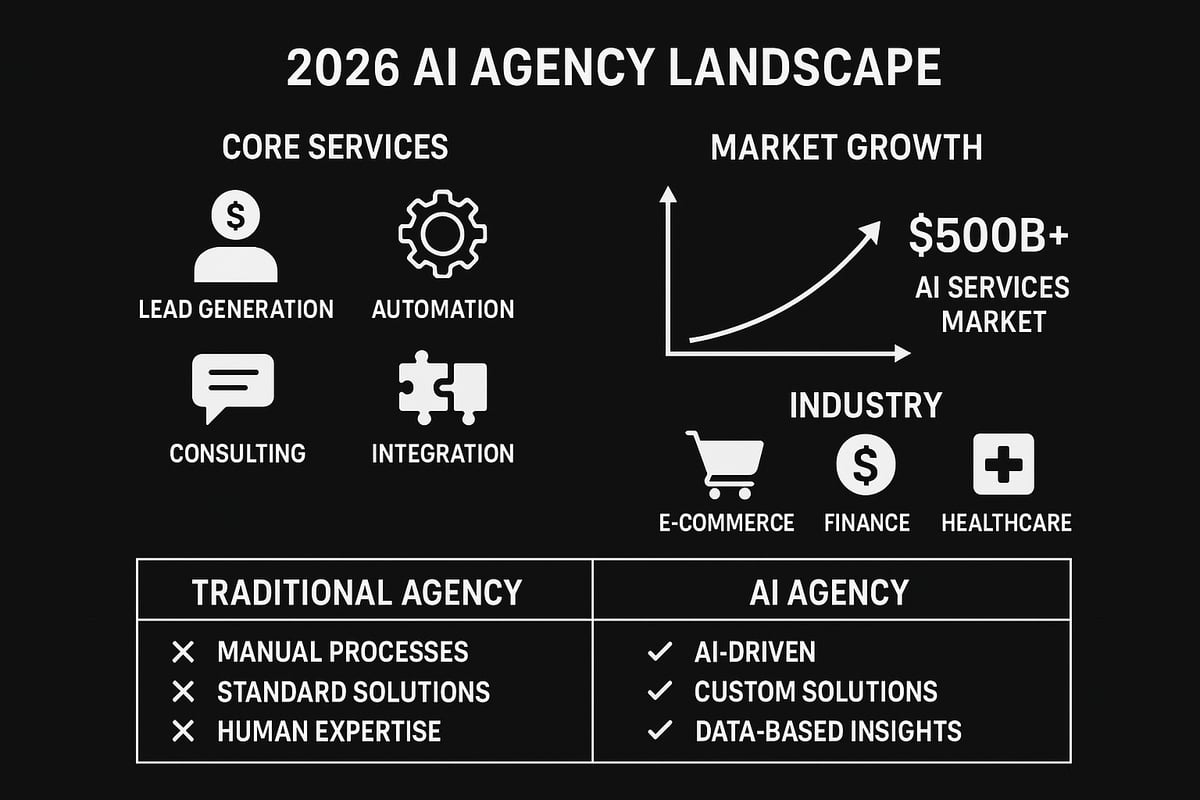
The ai agency represents a new breed of digital service provider focused on delivering AI-driven solutions to clients. Core services include lead generation, business process automation, AI consulting, and seamless AI integration into existing operations.
Unlike traditional digital agencies, the ai agency leverages automation to scale quickly, reduce overhead, and deliver results with less manual intervention. Labor costs are lower since many repetitive tasks are automated, allowing teams to focus on strategy and innovation.
A prime example is Instant AI Agency, which promises clients the chance to "work less, earn more" by automating both internal and client-facing operations. The ai agency model is built for scalability and efficiency.
Market Growth & Demand Drivers
The ai agency market is experiencing explosive growth. According to recent data, the AI services market is projected to exceed $500 billion by 2026 AI services market projected to exceed $500 billion by 2026. Both SMBs and large enterprises are rapidly adopting AI for sales, marketing, and customer support.
Key verticals such as e-commerce, finance, healthcare, education, and real estate are leading in AI adoption. The ai agency is uniquely positioned to serve these industries by providing tailored solutions that drive measurable outcomes.
As organizations seek to streamline operations and stay competitive, demand for specialized AI agencies continues to rise.
Competitive Analysis & Positioning
The ai agency landscape is becoming increasingly competitive, with leading firms differentiating themselves through unique value propositions. Top agencies focus on niche specialization, proprietary AI workflows, and outcome-based pricing to stand out.
Lessons from industry leaders like The Instant AI Agency and insights from top-rated business audiobooks reveal that success comes from delivering tangible ROI and building trust. To compete, agencies must demonstrate expertise and consistently deliver results.
Differentiation is key, whether through industry focus, custom AI models, or innovative pricing strategies.
Challenges & Risks
Despite the opportunities, the ai agency faces several challenges. Common pitfalls include overpromising results, lacking deep AI expertise, and navigating complex compliance issues.
Transparency with clients is essential, as is ongoing education about AI's capabilities and limitations. The regulatory landscape is evolving, with data privacy, AI ethics, and regional compliance requirements becoming more stringent.
Agencies that proactively address these risks and prioritize ethical AI deployment will build stronger, longer-lasting client relationships.
Opportunities for New Entrants
Entering the ai agency space has never been more accessible. With the rise of AI-powered SaaS platforms and automation tools, the barrier to entry is low. New agencies can form strategic partnerships with AI vendors, platforms, and consultants to accelerate growth.
A case study approach reveals that agencies leveraging AI have doubled client ROI with smaller teams and leaner operations. The ai agency model offers a compelling path for entrepreneurs to build scalable, future-proof businesses in a rapidly expanding market.
Step 1: Laying the Foundation—Choosing Your Niche & Services
Finding the right foundation for the ai agency starts with a clear focus on your niche and service lineup. Positioning your agency for success in 2026 means aligning your expertise with real market needs, leveraging the latest AI, and building trust from the outset.
Identifying Profitable Niches
The first step for the ai agency is choosing a niche with strong potential for AI adoption and measurable ROI. Evaluate each sector using these criteria:
Market size and growth trajectory
Readiness for AI-driven solutions
Clear pain points that AI can solve (e.g., manual lead management, slow sales cycles)
Competition level and saturation
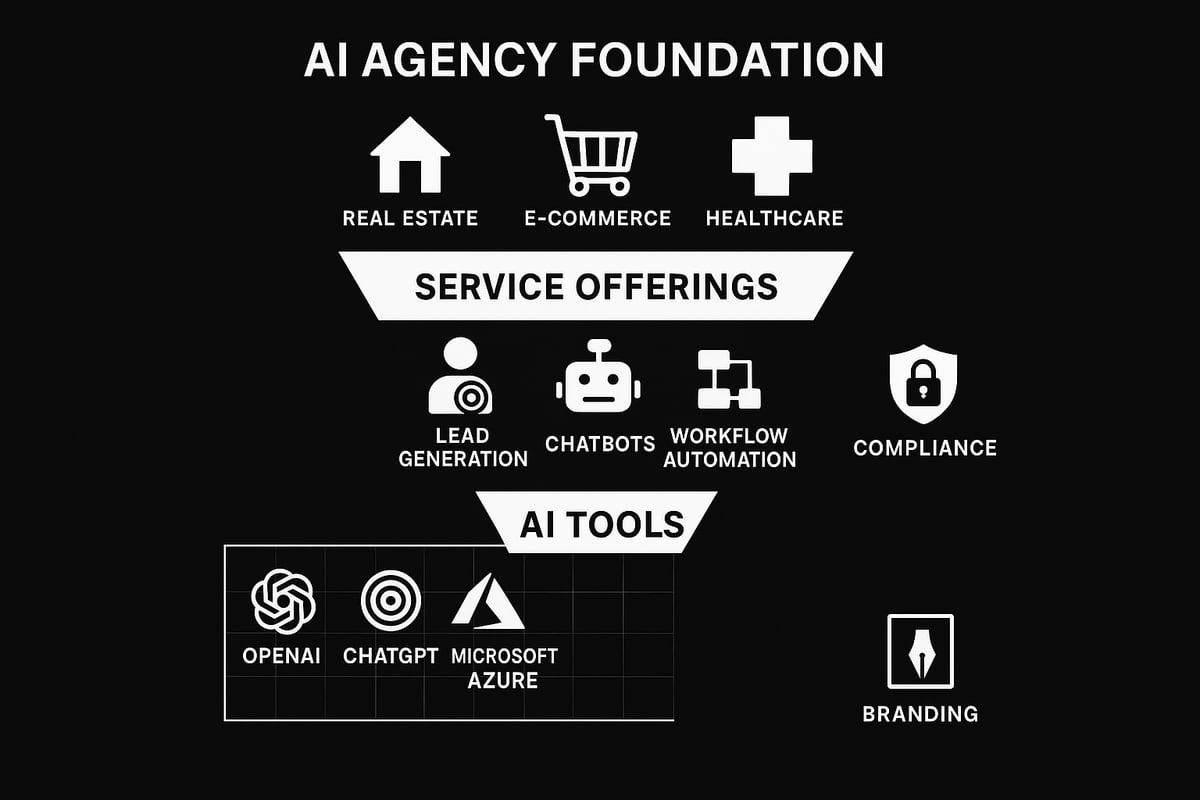
High-growth examples include real estate lead generation, SaaS sales automation, and AI chatbots for e-commerce. According to McKinsey, sectors such as finance, healthcare, and education are also seeing rapid AI adoption. For a deeper dive into how agencies use AI for client acquisition, see these AI-powered lead generation strategies.
Defining Your Core Offerings
After choosing your niche, the ai agency must define its core offerings. Productized services are popular, providing clarity for clients and scalability for your team. Common service bundles include:
AI-driven lead generation
Automated sales workflows
Workflow optimization
Customer support bots
Value-based pricing is more effective than hourly billing, as it aligns your compensation with client outcomes. For example, some agencies offer “AI sales teams” as a service, charging based on leads or revenue generated.
Building Your Tech Stack
Selecting the right tech stack is essential for the ai agency to deliver results efficiently. Critical tools include:
Function | Tool Examples | Open Source | Proprietary |
|---|---|---|---|
CRM Automation | HubSpot, Salesforce AI | ✗ | ✓ |
Chatbots | ChatGPT, Dialogflow | ✓ | ✓ |
Workflow Automation | Zapier, Make | ✗ | ✓ |
Consider integration capabilities, scalability, and vendor support. Weigh open-source flexibility against the reliability and support of proprietary platforms.
Legal, Compliance, and Ethics
Legal compliance is non-negotiable for the ai agency. Implement robust data handling procedures and ensure all solutions comply with GDPR or CCPA where relevant. Use clear contract templates that define data responsibilities and liability. Prioritize ethical AI deployment, being transparent about data usage and model limitations.
Branding & Positioning
Establishing a strong brand is key to standing out as the ai agency. Focus on authority, trust, and innovation. Essential website elements include:
Case studies with measurable outcomes
Client testimonials
Interactive AI demos
Build thought leadership by hosting webinars, joining podcasts, and sharing insights on LinkedIn. This approach not only attracts clients but also positions your agency as a trusted advisor.
Step 2: Building Your AI Agency Infrastructure
Establishing a resilient infrastructure is the backbone of the ai agency. This foundation supports scalable growth, efficient operations, and consistent client results. From assembling the right team to leveraging automation and defining your pricing, each element plays a crucial role in setting the ai agency up for long-term success.
Talent & Team Structure
Building the right team is essential for the ai agency. Decide whether to hire in-house, contract freelancers, or form white-label partnerships. Each approach impacts flexibility, cost, and expertise.
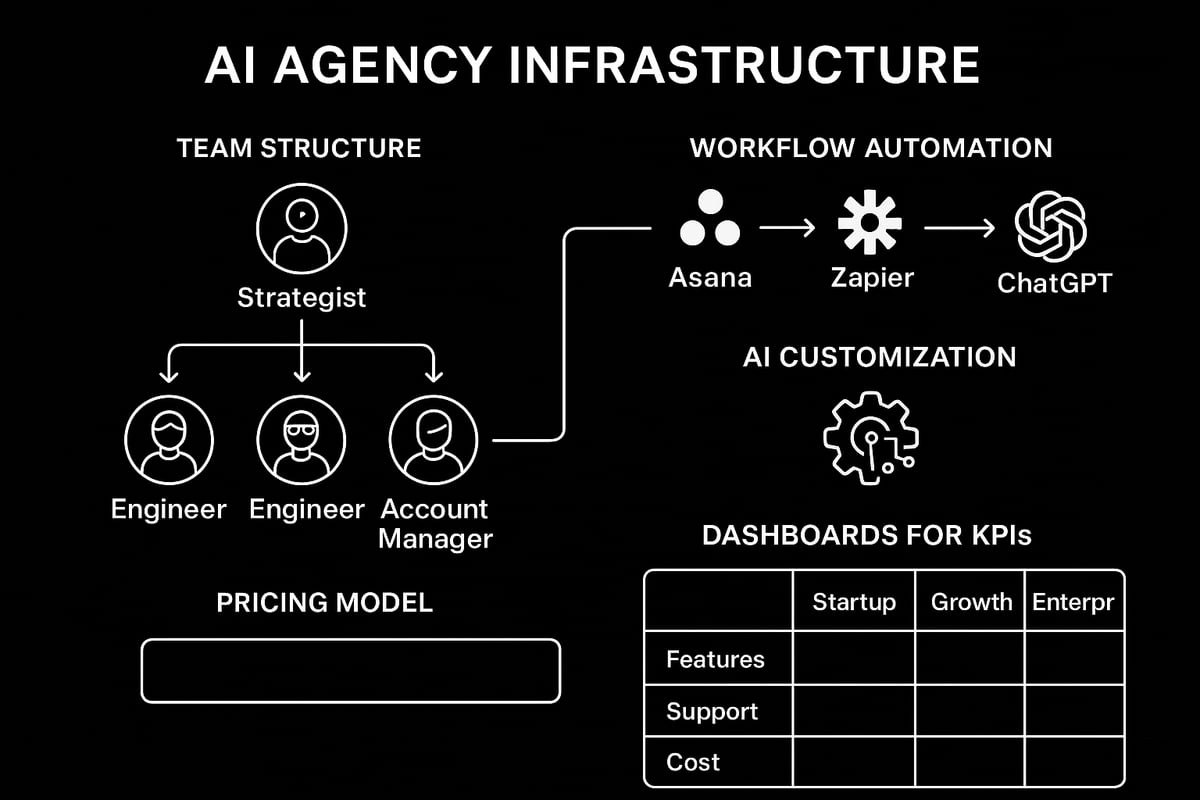
Key roles for the ai agency include:
AI strategist: designs solutions and oversees implementation
Automation engineer: integrates and customizes tools
Account manager: manages client relationships
Sales representative: drives new business
A lean agency might start with multi-role specialists, then scale by adding dedicated roles as client demand increases. Carefully structuring the ai agency team ensures both agility and depth in service delivery.
Workflow & Project Management
Efficient workflows set the ai agency apart. Standard operating procedures (SOPs) streamline onboarding, delivery, and support. Project management tools like Asana, Trello, or ClickUp, enhanced with AI integrations, help monitor progress and deadlines.
Automating repetitive tasks is crucial. Integrate AI tools to automate proposals, reporting, and status updates. For deeper insight into how automation transforms agency operations, see Marketing automation using AI.
With the right systems in place, the ai agency can deliver consistent results while minimizing manual effort.
AI Integration & Customization
Customizing AI tools to fit each client's needs is a core differentiator for the ai agency. Tailor chatbots to specific industries, automate sales funnels, and ensure seamless CRM integration.
Use APIs to connect different platforms, enabling smooth data flow and real-time updates. The ai agency should regularly review and update its tech stack to stay ahead of evolving client requirements.
By focusing on customization, the ai agency maximizes value and fosters long-term client partnerships.
Quality Assurance & Performance Tracking
Delivering measurable outcomes is central to the ai agency model. Set clear KPIs for each campaign, such as lead quality, conversion rates, or cost savings.
Deploy real-time dashboards so clients can track progress and results. Continuously optimize using AI-powered analytics to identify areas for improvement.
A robust quality assurance process positions the ai agency as a trusted partner, driving retention and referrals.
Pricing Models & Profitability
Selecting the right pricing model impacts the ai agency's growth and sustainability. Options include subscription, retainer, and performance-based structures.
Model | Pros | Cons |
|---|---|---|
Subscription | Predictable revenue | May limit flexibility |
Retainer | Strong client relationships | Requires ongoing value |
Performance | High earning potential | Variable income |
Calculate margins by factoring in automation, labor, and tech costs. Many agencies achieve $100K monthly revenue with just a handful of clients by leveraging automation. The ai agency should regularly review pricing and profitability to ensure sustainable scaling.
Step 3: Winning Clients & Scaling Revenue Streams
Securing clients and building steady revenue are the lifeblood of the ai agency. In this step, we detail actionable strategies to attract, convert, and grow your client base, while ensuring sustainable, scalable income streams.
High-Converting Client Acquisition Strategies
To stand out in a competitive landscape, the ai agency must deploy efficient client acquisition tactics. Combine outbound and inbound channels to target ideal prospects.
Outbound: Use cold email campaigns, LinkedIn outreach, and AI-driven prospecting tools to identify and connect with decision-makers.
Inbound: Develop content marketing assets, host webinars, and optimize for SEO keywords like "AI agency" to attract leads organically.
Hybrid: Blend automation with personalization to maximize response rates.
Leverage automation to scale outreach while maintaining a human touch. Test and refine messaging for each target segment. This approach ensures the ai agency consistently fills its pipeline with qualified opportunities.
Consultative Sales Process
The consultative approach is essential for the ai agency to convert prospects into loyal clients. Start with discovery calls to uncover client pain points and assess AI readiness.
Present tailored solution demos that clearly illustrate how your AI automations address specific business needs. Quantify the return on investment and highlight case studies.
Anticipate and address objections around implementation, cost, and change management. By focusing on education and transparency, the ai agency positions itself as a trusted advisor, not just a vendor.
Client Onboarding & Relationship Management
Smooth onboarding is critical for building trust from day one. Automate proposals, contracts, and kickoff processes to reduce friction for new clients.
Set clear expectations on deliverables, timelines, and communication. Use AI tools to streamline ongoing updates, reporting, and support.
Proactive relationship management helps the ai agency retain clients and identify new needs. Regular check-ins and transparent reporting foster long-term partnerships.
Upselling & Cross-Selling AI Solutions
Maximizing client lifetime value requires a strategic approach to upselling and cross-selling. Identify opportunities to expand service offerings as client needs evolve.
Core Service | Upsell Opportunity | Client Benefit |
|---|---|---|
Chatbots | Full workflow automation | Greater efficiency |
Lead generation | AI sales enablement | Higher conversion rates |
Analytics dashboards | Predictive analytics | Deeper business insights |
For example, an agency may start by implementing a chatbot, then introduce sales automation and analytics as trust grows. The ai agency should use bundled packages to make upgrades seamless and valuable.
Building Authority & Trust for Referrals
Establishing authority is key for the ai agency to drive word-of-mouth growth. Publish in-depth case studies and client testimonials to showcase proven results.
Speak at industry events and appear on relevant podcasts to share expertise. Collaborate with AI tool providers for joint marketing opportunities.
For more insights on scaling and future-proofing your agency, explore Grow your marketing agency with AI, which offers actionable strategies and real-world success stories.
The Social Search: AI-Powered Lead Generation & Sales Automation
The Social Search delivers advanced AI-driven solutions for lead generation and sales automation. Their intelligent workflows help the ai agency scale more rapidly and efficiently.
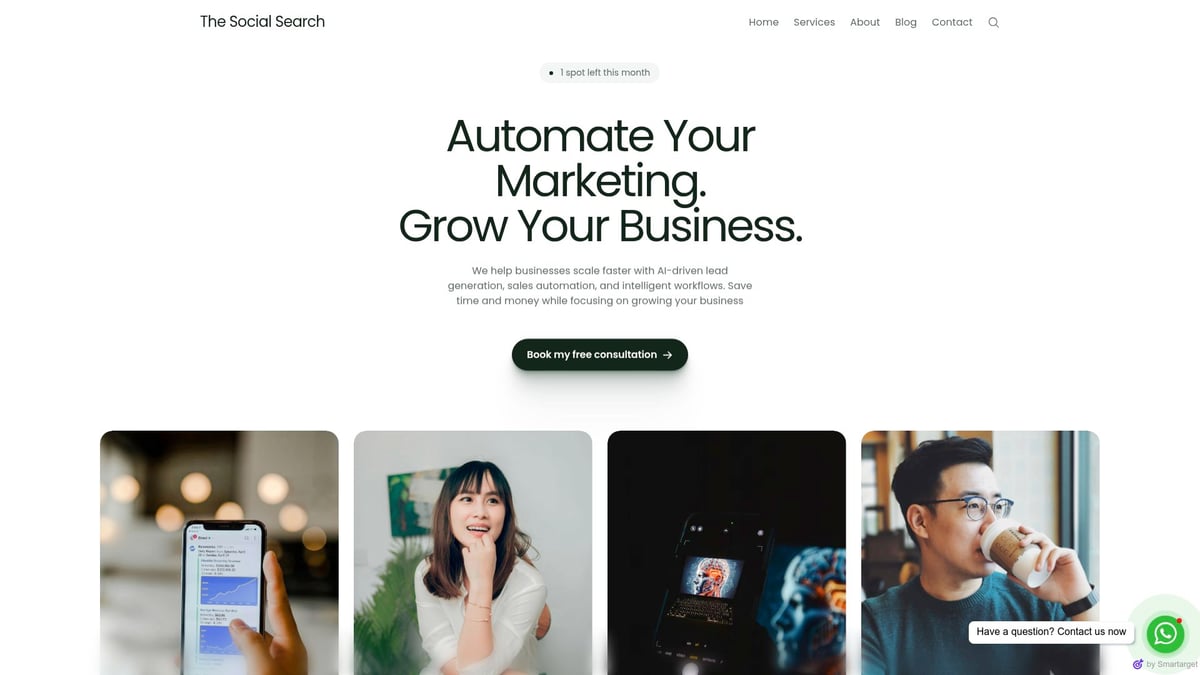
By automating sales and marketing processes, agencies save time and reduce costs. Real-world case studies show how small and mid-sized agencies achieve sustainable revenue growth with these tools.
Integrating AI-powered lead generation is now essential for the ai agency to stay competitive and deliver ongoing value to clients in 2026.
Step 4: Automating Operations for Maximum Efficiency
Automation is the backbone of the ai agency, driving productivity, reducing costs, and enabling scalable growth. By streamlining workflows and leveraging advanced AI technologies, agencies can deliver exceptional results while keeping overhead low.
Intelligent Workflow Automation
Every successful ai agency starts by mapping out its core business processes. Identifying repetitive tasks, such as client onboarding, reporting, or contract renewals, is crucial. Once mapped, these workflows are automated using tools like Zapier, Make, or custom scripts.
For example, automating client check-ins and monthly reporting not only saves time but ensures consistency. By embedding automation into daily operations, the ai agency can focus more on strategy and client growth. This approach frees up staff to tackle higher-value activities, making the agency more agile and competitive.
AI-Driven Customer Support
Providing responsive, reliable support is essential for retaining clients. Modern agencies deploy chatbots and virtual assistants to deliver 24/7 customer service. These AI-powered systems handle inquiries, troubleshoot common issues, and escalate complex requests to human agents.
According to IBM, businesses using AI in support roles can reduce response times by up to 70 percent. The ai agency can leverage Automated AI chat agents to ensure clients receive prompt, accurate assistance at any hour. This not only lowers support costs but also enhances client satisfaction and trust.
Streamlining Sales & Marketing
Automation transforms how the ai agency manages lead generation and nurturing. AI-driven tools personalize outreach, follow up with prospects, and book appointments automatically. By qualifying leads and tailoring communications at scale, agencies increase conversion rates and close deals faster.
For instance, agencies utilizing AI-powered email sequences see higher engagement and faster sales cycles. With these systems in place, the ai agency can maintain a consistent pipeline without manual intervention, allowing teams to concentrate on building relationships and expanding services.
Financial Automation
Efficient financial management is critical for agency sustainability. Automating invoicing, payments, and expense tracking minimizes errors and saves valuable time. Integrating AI with accounting platforms like QuickBooks or Xero provides real-time financial insights and forecasting capabilities.
The ai agency uses these tools to ensure stable cash flow and to predict future trends based on historical data. Automated reminders for outstanding invoices and expense approvals further streamline operations, supporting healthy, predictable growth.
Security & Data Management
Safeguarding client and agency data is non-negotiable. AI-driven security solutions monitor for threats, detect anomalies, and support compliance with regulations. Best practices include regular audits, encrypted communications, and automated backups.
A real-world example is an agency using AI monitoring to prevent data breaches before they escalate. By prioritizing security, the ai agency builds client confidence and meets industry compliance standards without manual intervention.
Step 5: Future-Proofing Your AI Agency—Trends & Innovations for 2026
The AI agency landscape in 2026 is evolving at a rapid pace. To stay ahead, leaders must anticipate trends, embrace innovation, and build flexibility into every layer of their business. Here is how the ai agency can remain resilient, relevant, and ready for the future.
Emerging AI Technologies & Use Cases
Emerging technologies are redefining what the ai agency can deliver. Generative AI, such as advanced language models and image generators, is driving new content creation and hyper-personalized marketing at scale. Predictive analytics is helping agencies forecast sales trends and reduce client churn more accurately.
According to recent research, 78% of organizations now use AI in at least one business function, signaling mainstream adoption across industries. Agencies leveraging GPT-5 or similar models are crafting bespoke solutions, from smart chatbots to automated campaign management. As a result, the ai agency that invests in these technologies will set the standard for measurable client outcomes.
Adapting to Regulatory Changes
With AI innovation comes increased scrutiny. The ai agency must navigate evolving data privacy laws such as GDPR, CCPA, and the upcoming AI Act. Building compliance into every process is non-negotiable.
Transparency is essential. Agencies should educate clients about how AI makes decisions and how data is handled. Regular audits, clear documentation, and compliance checklists are best practices. By prioritizing ethical AI deployment, the ai agency can build trust and reduce regulatory risk.
Scaling Globally & Remote Operations
The ai agency model thrives in a borderless world. Global expansion presents vast opportunities but also brings challenges with localization, remote team management, and varying regulatory standards.
Success in 2026 means deploying tools for seamless collaboration, project tracking, and client communication across time zones. Agencies should localize AI solutions to match market nuances. Establishing clear workflows and robust cybersecurity practices will keep remote operations efficient and secure, ensuring the ai agency can serve clients worldwide.
Developing Proprietary IP & White-Label Solutions
To stand out, the ai agency should develop proprietary intellectual property or unique automation frameworks. Custom AI models, specialized workflows, or white-label SaaS products allow agencies to license their solutions, creating recurring revenue streams.
Steps to build proprietary offerings:
Identify repeatable client challenges.
Design and test unique automation frameworks.
Package solutions for licensing or resale.
The ai agency that invests in IP gains a defensible edge and can scale income with less direct labor.
Building a Resilient, Adaptable Agency Culture
Future-proofing is not just about technology. The ai agency must foster a culture of continuous learning and innovation. Encourage your team to stay updated on AI advancements, attend industry events, and experiment with new workflows.
Attracting and retaining top AI talent is vital. Offer growth opportunities, support remote work, and celebrate experimentation. A resilient agency culture ensures the ai agency can adapt quickly to market shifts and client needs.
Predictions for the Next 5 Years
Looking ahead, analysts predict consolidation and specialization in the ai agency market. Integration with AR, VR, IoT, and other emerging tech will open new service lines. According to BlackRock forecasts AI dominance in markets by 2026, AI-driven agencies are expected to double revenues by 2030.
Key trends to watch:
Trend | Impact on the ai agency |
|---|---|
Market consolidation | Increased competition |
New tech integration | Expanded offerings |
Global scaling | Broader client reach |
Regulatory evolution | More compliance requirements |
Staying agile, innovative, and client-focused will define the ai agency leaders of tomorrow.
Resources & Next Steps: Toolkits, Templates, and Further Learning
Building the ai agency for 2026 requires access to the right resources, actionable templates, and a strong support network. In this section, you will find a curated toolkit to streamline your operations, accelerate learning, and position your agency for long-term growth.
Essential AI Tools & Platforms for Agencies
Selecting the right AI tools is critical for the ai agency to deliver results efficiently. Consider platforms for CRM automation, chatbot builders, workflow automation, and analytics dashboards. Leading platforms include HubSpot, Salesforce AI, Zapier, Make, ChatGPT, and Dialogflow.
Below is a quick comparison of popular platforms:
Platform | Features | Pricing | Integrations |
|---|---|---|---|
HubSpot | CRM, automation, analytics | $$ | Extensive |
ChatGPT | Chatbots, NLP | $ | API-based |
Zapier | Workflow automation | $ | 5,000+ apps |
Industry adoption is accelerating, as seen in UK leads Europe in AI-driven manufacturing, which highlights the impact of AI tools on operational efficiency. Prioritize platforms that scale with your agency and provide strong support.
Templates & SOPs for AI Agencies
Efficient processes separate successful agencies from the rest. The ai agency should leverage ready-made templates and standard operating procedures to maintain consistency and professionalism.
Key templates and SOPs include:
Client onboarding checklist
Proposal and contract templates
Campaign setup and reporting SOPs
Optimization playbooks
Use these resources to ensure every client experience is seamless. Templates also help new team members ramp up quickly, reducing training time and minimizing errors. As the ai agency grows, continuously refine your SOPs to incorporate best practices and client feedback.
Industry Communities & Support Networks
No agency grows in isolation. The ai agency founder should tap into industry communities for support, knowledge sharing, and collaboration. Top forums, Slack groups, and LinkedIn communities offer real-time advice from peers.
Recommended networks:
AI Agency Founders Slack
LinkedIn groups for AI consultants
Annual conferences and virtual summits
Peer mastermind groups
Attending events and joining discussions will keep you updated on trends, tools, and strategies. These networks are also valuable for partnership opportunities and client referrals, helping the ai agency stay ahead of the curve in a fast-moving industry.
Ongoing Learning & Certification
Continuous learning is essential for the ai agency to remain competitive. Prioritize courses and certifications from trusted providers like Google AI, OpenAI, HubSpot AI, and IBM Watson.
Top resources include:
Online courses on AI integration
Audiobooks like “The Ultimate Guide to Mastering AI for Leaders”
Industry podcasts and newsletters
Staying informed about new developments empowers your team to offer cutting-edge solutions. Encourage certification to boost credibility and demonstrate expertise to clients. The ai agency should foster a culture of curiosity and learning at every level.
Strategic Partnerships & Vendor Relationships
Strategic partnerships can unlock exclusive features, co-marketing opportunities, and referral networks for the ai agency. Identify reliable AI tool vendors early and negotiate favorable terms.
Key steps:
Research vendors with proven track records
Build referral agreements with SaaS providers
Join beta programs for early access to new features
Strong vendor relationships help the ai agency deliver unique value to clients. Co-marketing agreements can also drive inbound leads and bolster your agency’s authority. Evaluate partnership opportunities regularly to maximize growth potential.
Action Plan: Your First 90 Days as an AI Agency Founder
Launching the ai agency requires a structured approach. Follow this 90-day action plan to lay a solid foundation and gain momentum:
Choose a profitable niche and define core offerings.
Set up your tech stack and acquire essential tools.
Develop onboarding and delivery SOPs.
Acquire your first client through outbound and inbound strategies.
Automate key processes for efficiency.
Track performance metrics and iterate.
Monitor KPIs such as client acquisition cost, project turnaround time, and customer satisfaction. Use community resources and learning platforms for troubleshooting. With discipline and the right resources, the ai agency will be positioned for sustainable growth.
You’ve seen how AI agencies are transforming the business landscape and why 2026 is the year to seize this opportunity. If you’re ready to streamline your lead generation and sales processes, save time, and drive real growth, let’s talk about how these strategies can work for your business. Whether you’re just starting out or looking to scale smarter, I’m here to help you navigate the next steps with clarity and confidence. If you’d like personalized guidance tailored to your goals, Book a free consultation and let’s unlock your agency’s potential together.