Lead Generation Marketing Services: The Expert Guide 2026
Unlock business growth with our expert guide on lead generation marketing services for 2026 Learn proven strategies tools and trends to maximize your ROI
Dec 11, 2025
Imagine if you could double your qualified leads without increasing your marketing budget. How would that impact your business growth in 2026?
This expert guide explores the world of lead generation marketing services, providing proven strategies, the latest tools, and best practices to help your business scale efficiently.
You will gain actionable insights to choose, implement, and optimize lead generation marketing services for the highest return on investment. Discover how the industry has evolved, which core service types work best, the newest AI-powered tactics, and the future trends shaping success.
The Evolution of Lead Generation Marketing Services
The landscape of lead generation marketing services has transformed dramatically over the past decade. Shifts in buyer behavior, rapid digital innovation, and an explosion of data have all played a role. Today, businesses must adapt quickly or risk falling behind their competitors.
Changing Buyer Behaviors and Digital Transformation
Buyer journeys have shifted from traditional outbound tactics to digital-first, inbound-focused strategies. Customers now expect personalized engagement across multiple channels. Omnichannel journeys are the norm, with buyers moving seamlessly between platforms like social media, email, and instant messaging.
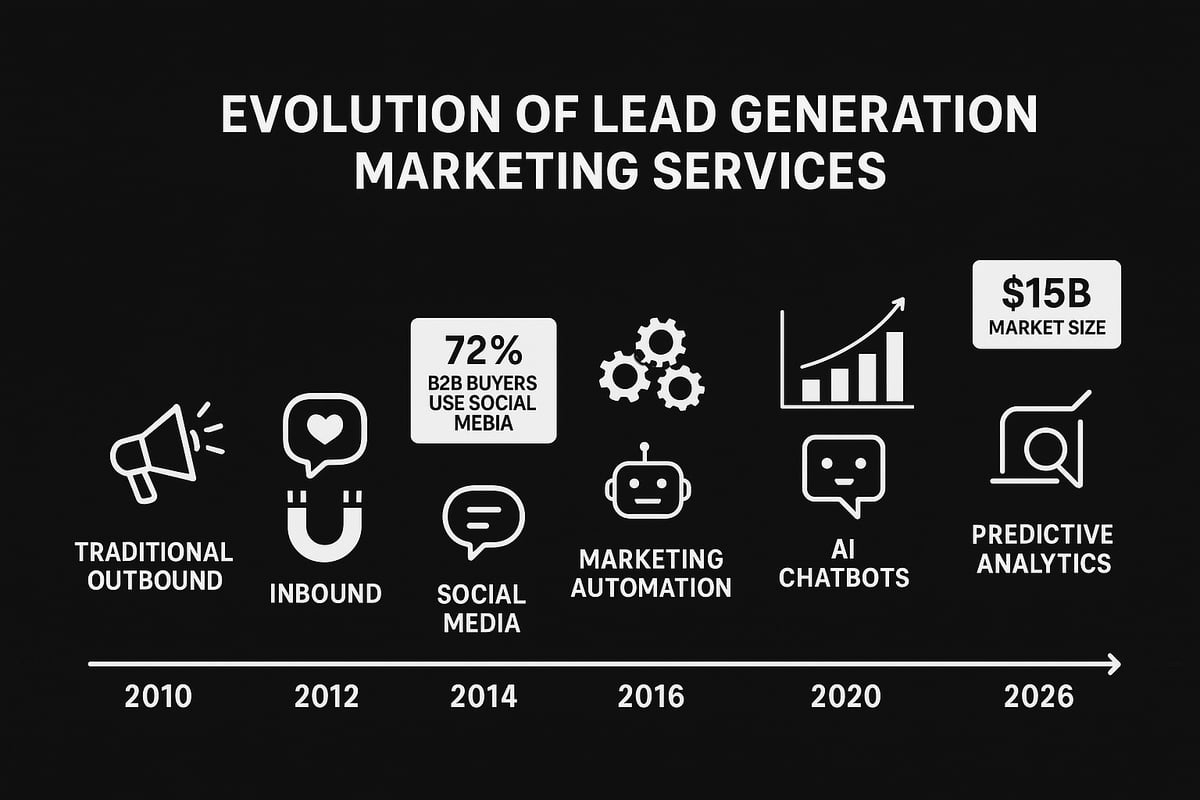
According to LinkedIn, 72% of B2B buyers rely on social media to research solutions. Mobile usage has surged, making real-time communication and instant access to information essential. As a result, lead generation marketing services have adapted, focusing on delivering immediate, relevant interactions.
Personalization is no longer a luxury. Businesses must tailor messaging and offers to individual preferences, driving higher engagement and conversion rates. This digital transformation has redefined how companies attract, nurture, and convert prospects.
Key Milestones and Technology Advancements
The journey of lead generation marketing services is marked by rapid technological advancements. Marketing automation platforms have become widespread, empowering teams to scale outreach and nurture leads efficiently.
AI and machine learning now play a crucial role in smarter targeting and predictive lead scoring. Chatbots and conversational marketing tools have emerged, enabling businesses to engage prospects 24/7. Today, 80% of businesses use at least one marketing automation tool, according to HubSpot.
Data privacy regulations, such as GDPR and CCPA, have influenced how leads are captured and managed. For a deeper look at how automation is shaping the industry, explore this guide on lead generation marketing automation.
The Expanding Role of Data and Analytics
Data and analytics are at the heart of modern lead generation marketing services. Companies use predictive analytics to identify high-value prospects and prioritize resources. Enhanced segmentation and lead scoring ensure that sales teams focus on the most promising opportunities.
Real-time performance tracking enables marketers to optimize campaigns on the fly. Forrester reports that organizations leveraging advanced analytics achieve 20% higher conversion rates. However, challenges remain around data quality and integration, making robust data management practices essential.
Continuous feedback loops between marketing and sales are vital. These insights drive ongoing improvements, ensuring that lead generation marketing services remain effective and aligned with business goals.
Current State and Market Size in 2026
In 2026, the global market for lead generation marketing services is projected to reach $15 billion, according to Statista. Adoption has surged among both SMBs and large enterprises, with industries like SaaS, e-commerce, and professional services leading the way.
The competitive landscape is evolving, with specialized agencies and advanced platforms offering tailored solutions. Key trends shaping the industry include increased automation, data-driven strategies, and a focus on compliance.
Today, businesses demand measurable ROI and scalable results. As a result, lead generation marketing services continue to innovate, setting new standards for efficiency, personalization, and growth.
Core Types of Lead Generation Marketing Services
Understanding the core types of lead generation marketing services is essential for any business aiming to grow its sales pipeline. Each service type offers unique advantages, and selecting the right mix can dramatically impact your results. Let’s explore the main categories shaping the lead generation landscape in 2026.
Inbound Lead Generation Services
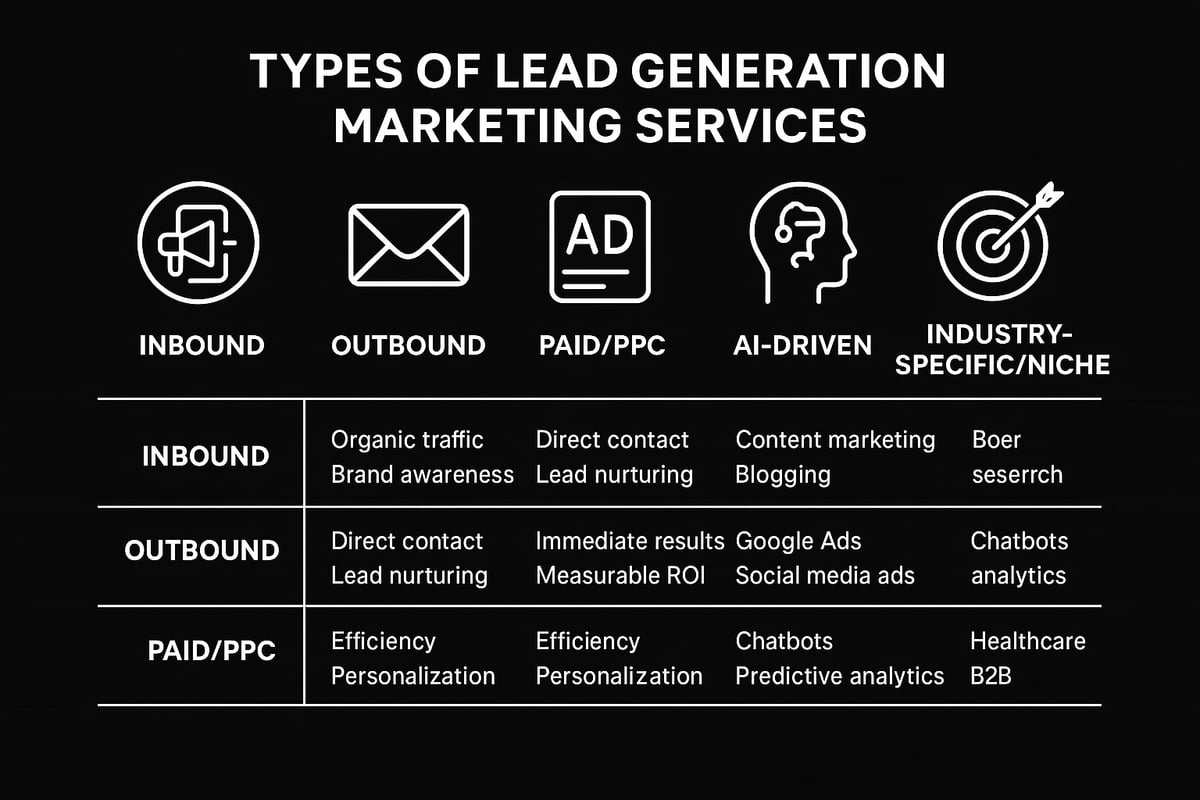
Inbound lead generation marketing services focus on attracting prospects through valuable content and organic engagement. These strategies include blogs, whitepapers, webinars, and robust SEO to drive qualified traffic. Social media platforms foster community and loyalty, helping brands build trust over time.
A key benefit of inbound lead generation marketing services is the higher quality of leads they deliver. According to HubSpot, 61% of marketers report that inbound channels yield superior lead quality compared to outbound. Both B2B and B2C organizations leverage these methods, tailoring content to address specific pain points and buyer journeys.
Inbound approaches are sustainable and cost-effective, making them a cornerstone for long-term growth.
Outbound Lead Generation Services
Outbound lead generation marketing services take a proactive approach, reaching out directly to potential customers. Tactics include cold emailing, telemarketing, LinkedIn outreach, and both virtual and in-person events. These strategies are particularly effective for targeting specific decision-makers or accounts.
Outbound lead generation marketing services often drive immediate results, with Salesforce noting that outbound efforts account for 40% of B2B appointments. However, outbound can be more resource-intensive and may face challenges with engagement rates compared to inbound.
Businesses should weigh the speed of outbound against its costs and suitability for their audience. A hybrid approach often balances the strengths of both.
Paid Advertising and PPC Lead Generation
Paid advertising and PPC-focused lead generation marketing services use platforms like Google Ads, Facebook Ads, and LinkedIn Ads to reach targeted prospects at scale. Retargeting campaigns and lookalike audiences help maximize ad spend and increase conversion rates.
According to WordStream, 49% of companies identify paid ads as their top lead source. When deploying paid lead generation marketing services, careful budgeting and ROI analysis are crucial. Optimizing ad creative, landing pages, and calls-to-action can significantly enhance outcomes.
Paid channels deliver rapid visibility and measurable results, making them ideal for campaigns with tight timelines or aggressive growth targets.
AI-Driven and Automated Lead Generation
AI-driven and automated lead generation marketing services leverage advanced technologies to streamline prospecting, lead scoring, and nurturing. Tools like chatbots and conversational AI engage visitors instantly, while automated workflows ensure timely follow-ups and data integration.
Gartner reports that AI automation reduces lead response time by 60%. Integrating these solutions with CRM and marketing platforms boosts efficiency and accuracy. For a deeper dive into these solutions, explore Automated lead generation strategies.
AI-powered lead generation marketing services enable businesses to scale outreach and personalize interactions, helping teams focus on high-value opportunities.
Industry-Specific and Niche Lead Generation Services
Industry-specific and niche lead generation marketing services cater to sectors like healthcare, real estate, and SaaS, addressing unique compliance and buyer journey requirements. Specialized agencies design custom workflows and ensure adherence to regulations, such as HIPAA in healthcare.
These lead generation marketing services offer deep domain expertise, improving lead quality and conversion rates. For example, healthcare providers need solutions that prioritize data privacy and regulatory compliance.
Partnering with a niche-focused provider helps businesses navigate complex markets and achieve better ROI by leveraging tailored strategies and tools.
Step-by-Step Guide to Implementing Lead Generation Marketing Services
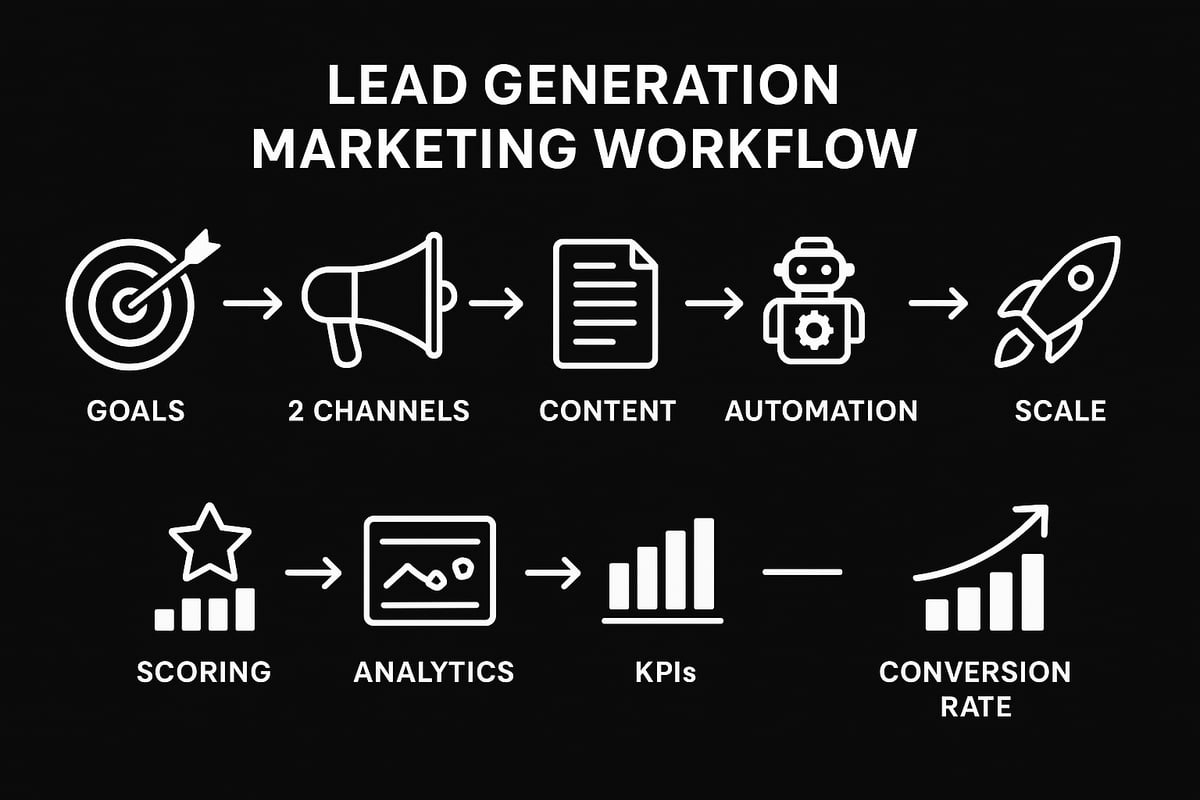
Implementing lead generation marketing services requires a systematic approach that aligns with your business goals and market realities. Follow this practical step-by-step guide to ensure every element supports your growth ambitions and delivers measurable results.
Step 1: Define Goals and Target Audience
The foundation of successful lead generation marketing services is clarity around your objectives and audience. Begin by setting SMART goals that define what you want to achieve, such as increasing qualified leads by 25% or boosting demo sign-ups by 30% within a specific timeframe.
Develop detailed buyer personas that capture your ideal customer’s demographics, pain points, and decision triggers. This process ensures your efforts target the right people, not just more people.
Align your lead generation marketing services goals with broader sales and business growth objectives. When your team understands who you want to reach and why, your campaigns will be focused and effective.
Step 2: Choose the Right Lead Generation Channels
Selecting the optimal channels is essential to maximizing the impact of your lead generation marketing services. Evaluate inbound and outbound options, considering your audience’s preferences and behaviors.
For example, B2B technology firms often succeed with LinkedIn outreach and webinars, while B2C brands may see strong results from social media and paid ads. Use the table below to compare key channel characteristics:
Channel | Best For | Typical ROI | Example Tactic |
|---|---|---|---|
Inbound | B2B, B2C | High | SEO, Content Marketing |
Outbound | B2B | Moderate | Cold Email, Calls |
Paid | B2B, B2C | Varies | PPC, Social Ads |
Consider managed solutions like Lead generation as a service if you need specialized expertise or want to scale quickly.
Step 3: Develop Compelling Offers and Content
At the heart of lead generation marketing services is the ability to attract and convert with valuable offers. Create irresistible lead magnets such as:
eBooks and whitepapers
Checklists and templates
Free trials or consultations
Interactive webinars
Optimize your landing pages for conversions using persuasive headlines, clear calls to action, and trust signals. Build authority with thought leadership content and continuously test headlines and CTAs to improve performance. Remember, quality content fuels engagement and drives high-intent leads.
Step 4: Automate and Integrate Lead Capture Processes
Efficiency and accuracy are crucial for lead generation marketing services. Implement automated forms, chatbots, and pop-ups to capture leads at every touchpoint. Sync all lead data with your CRM and marketing automation platforms to ensure seamless follow-up.
A typical workflow might look like this:
Visitor completes a form or interacts with a chatbot.
Data is sent directly to your CRM.
Automated emails are triggered based on user actions.
Automation reduces manual work, minimizes errors, and supports compliance with regulations like GDPR and CCPA.
Step 5: Qualify, Score, and Nurture Leads
Not all leads are created equal, so use lead generation marketing services to qualify and prioritize them. Build lead scoring models based on engagement, demographic fit, and readiness to buy.
Set up automated nurturing sequences, such as drip email campaigns, to provide timely information and move leads closer to a decision. For example, companies using lead scoring often see a 15% boost in sales productivity.
Ensure smooth hand-offs to sales teams and personalize communication for higher conversion rates.
Step 6: Measure, Analyze, and Optimize Performance
Data-driven optimization is vital for maximizing ROI from lead generation marketing services. Define clear KPIs such as cost per lead (CPL), conversion rate, and pipeline value.
Use real-time analytics dashboards to monitor performance and identify areas for improvement. Regularly conduct A/B tests on landing pages, offers, and messaging to refine your approach.
Create feedback loops between marketing and sales teams to ensure insights are shared and campaigns are continuously improved. Companies that optimize their campaigns often achieve a 25% higher ROI.
Step 7: Scale Your Lead Generation Efforts
Once your lead generation marketing services are delivering consistent results, it is time to scale. Identify your most effective tactics and expand them across new channels or markets.
Consider partnerships, co-marketing, and advanced automation tools to accelerate growth. For example, many businesses move from local campaigns to global outreach as they mature.
Invest in ongoing technology upgrades and process improvements to stay ahead of competitors. Scaling is about building on proven success while remaining adaptable to change.
Latest Trends and Innovations in Lead Generation for 2026
Innovation is accelerating in lead generation marketing services, fundamentally transforming how businesses connect with prospects. In 2026, organizations must keep pace with evolving tools and tactics to maintain a competitive edge. Let us explore the five most significant trends shaping the future of lead generation marketing services.
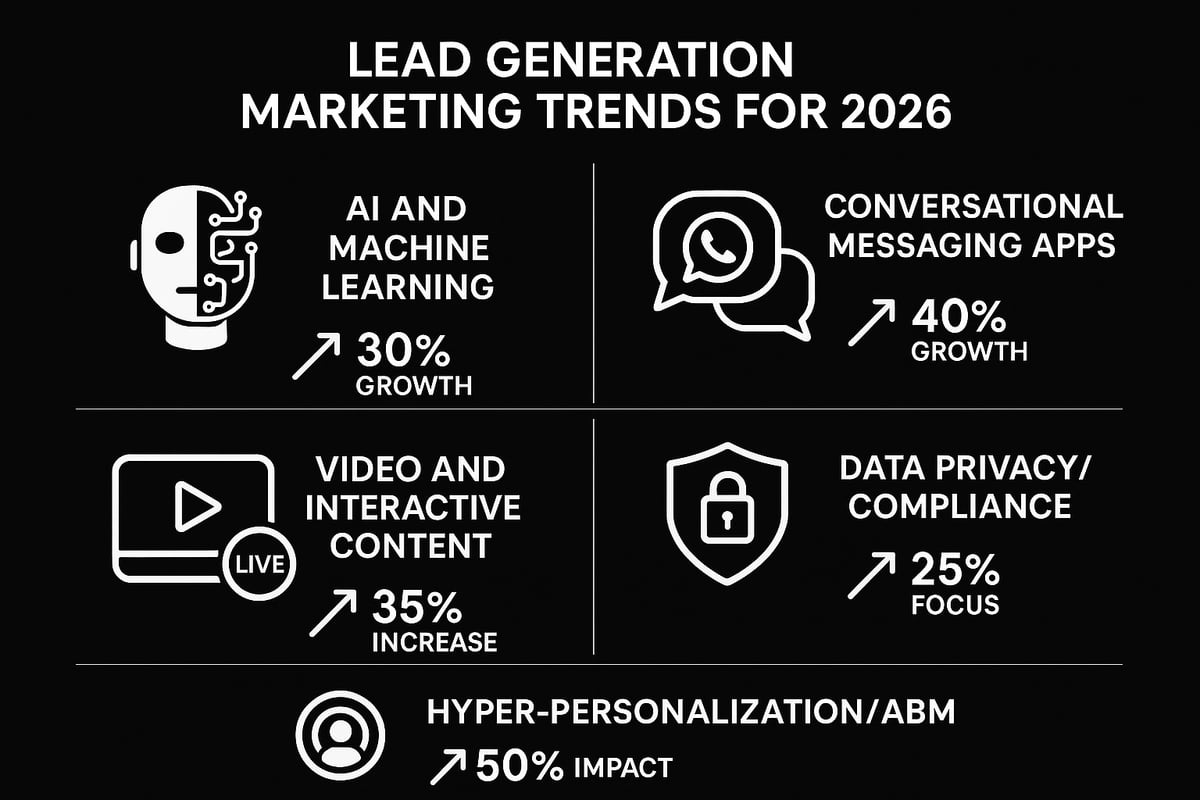
AI and Machine Learning Advancements
Artificial intelligence is redefining lead generation marketing services by enabling smarter prospecting and deeper personalization. Predictive lead scoring uses intent data to prioritize high-conversion prospects, while AI-powered personalization tailors content in real time. Natural language processing lets chatbots engage leads with more human-like conversations. Automated content creation streamlines campaign execution, freeing teams to focus on strategy. According to Lead Generation Statistics 2025, businesses leveraging AI tools see faster response times and higher conversion rates, illustrating the tangible impact of these advancements. As AI matures, expect even greater efficiency and accuracy in lead generation marketing services.
Conversational Marketing and Messaging Platforms
The rise of messaging apps is reshaping how companies engage leads. Lead generation marketing services now leverage platforms like WhatsApp, Messenger, and SMS to initiate conversations and capture interest instantly. These real-time channels deliver impressive open rates and facilitate quick responses. Integration with CRM and support workflows ensures seamless handoffs between marketing and sales. For both B2C and B2B businesses, conversational marketing creates a direct, personal connection with prospects, making lead generation marketing services more responsive and interactive than ever before. Companies that master these platforms position themselves to meet prospects where they already spend their time.
Video and Interactive Content for Lead Capture
Video is taking center stage in lead generation marketing services, especially as interactive formats become more accessible. Webinars, live demos, and Q&A sessions offer engaging opportunities for real-time lead capture. Personalized video outreach and shoppable videos boost engagement and drive conversions. Interactive landing pages with forms and gamification elements further enhance user experience. Studies show video landing pages can improve conversion rates by up to 80 percent, underscoring the value of multimedia in modern lead generation marketing services. Businesses investing in video set themselves apart with memorable, high-impact content.
Data Privacy, Compliance, and Trust Signals
With evolving regulations like GDPR and CCPA, data privacy is a top priority for lead generation marketing services. Transparent data collection and clear opt-in practices foster trust and compliance. Companies that highlight strong privacy policies and secure lead capture technologies see higher lead trust and improved conversion rates. Trust signals such as reviews, testimonials, and third-party certifications reassure prospects about data safety. By prioritizing compliance, organizations not only avoid penalties but also build stronger relationships, ensuring their lead generation marketing services remain effective and ethical.
Hyper-Personalization and Account-Based Marketing (ABM)
Hyper-personalization and ABM are transforming lead generation marketing services from broad outreach to targeted engagement. ABM strategies focus on high-value accounts with customized content, dynamic website experiences, and tailored offers. Cross-functional collaboration between sales and marketing ensures alignment and maximizes campaign impact. Companies deploying ABM see dramatically higher ROI, as personalization resonates more deeply with decision-makers. In 2026, the most successful lead generation marketing services will harness the power of data and technology to deliver relevant, individualized experiences that drive meaningful business growth.
Evaluating and Choosing the Right Lead Generation Marketing Services Provider
Selecting the ideal partner for lead generation marketing services can define your business’s growth trajectory. The right choice impacts lead quality, conversion rates, and your overall return on investment. With a crowded marketplace, it’s critical to evaluate providers using a structured, data-driven approach for maximum value.
Key Criteria for Selecting a Service Provider
When assessing lead generation marketing services, prioritize providers with proven experience in your industry. Examine their case studies and success stories to validate expertise. A robust technology stack is essential, especially if you require seamless integration with your CRM or automation tools. Transparency in pricing and clear deliverables should be non-negotiable. Reliable service level agreements and ongoing support ensure your campaigns stay on track.
Consider providers who leverage marketing automation, as automation is now a core driver of success in the field. According to Marketing Automation Impact, businesses using automation report higher efficiency and better lead quality. Prioritize agencies that demonstrate compliance with data regulations and offer transparent communication from the outset.
Questions to Ask Potential Providers
Choosing the right lead generation marketing services provider is not just about credentials; it’s about alignment. Ask which lead sources and channels they specialize in. Inquire about their methods for ensuring lead quality and compliance with regulations. Request details on their reporting and analytics approach, as regular performance insights are vital.
Ask for references or client success stories to gauge satisfaction and results. Discuss their campaign optimization process and how they adapt strategies for ongoing improvement. Insights from B2B Lead Generation Insights can help you benchmark provider responses and set realistic expectations for results.
Comparing In-House vs Outsourced Lead Generation
Deciding between in-house and outsourced lead generation marketing services requires careful consideration. In-house teams offer direct oversight and alignment but may lack specialized expertise and advanced tools. Outsourcing to specialized agencies brings access to best-in-class resources, scalability, and cost efficiencies, often saving SMBs up to 30 percent.
Hybrid models combine the strengths of both, allowing flexibility and knowledge sharing. Consider your internal resources, budget, and strategic goals. Outsourcing is ideal when speed, technology, and industry insights are priorities, while in-house may suit organizations seeking control and brand alignment.
Red Flags and Common Pitfalls to Avoid
Stay alert for unrealistic guarantees or vague deliverables when evaluating lead generation marketing services. Providers should be transparent about lead sources and campaign processes. Poor communication and lack of support signal potential issues down the line.
Avoid agencies relying on outdated tactics that no longer deliver results. Compliance and data privacy must always be prioritized. Finally, ensure you have clear metrics for success and regular performance reviews to avoid misaligned expectations and wasted investment.
Future Outlook: Lead Generation Marketing Services Beyond 2026
The landscape of lead generation marketing services is poised for dramatic transformation beyond 2026. As technology accelerates and buyer expectations evolve, businesses must adapt quickly to remain competitive. Let us explore the trends and strategies that will shape the future of lead generation marketing services, ensuring your business is ready for the next era of growth.
Emerging Technologies and Tools on the Horizon
The next wave of lead generation marketing services will be defined by cutting-edge technologies. AI-powered voice assistants are expected to handle initial lead qualification, making prospecting faster and more interactive. Advanced predictive analytics will enable businesses to identify intent and timing with unprecedented accuracy. Blockchain will offer secure, transparent lead data management, reducing fraud and increasing trust. Integration with IoT devices will allow contextual lead capture, connecting physical and digital touchpoints. For example, voice search is projected to drive 30% of lead queries by 2028. Staying ahead in lead generation marketing services means investing in these innovations now.
Evolving Customer Expectations and Buyer Journeys
Customer expectations are rising rapidly, especially regarding speed, personalization, and convenience. Buyers now demand instant access to information and self-service options at every stage of their journey. By 2028, 70% of buyers will expect real-time responses from businesses. Seamless transitions between online and offline channels will be standard. Trust and authenticity will be crucial, as buyers scrutinize every interaction. Businesses leveraging omnichannel strategies, including lead generation through social media, will be better positioned to meet these expectations. To succeed, lead generation marketing services must prioritize meaningful, timely, and transparent engagement.
The Role of Human Expertise in an Automated World
While automation will dominate many aspects of lead generation marketing services, the human element remains indispensable. Strategic planning, creative campaign development, and consultative selling, particularly for complex B2B deals, require expertise that AI cannot replicate. Human-led interactions build trust and provide nuanced understanding of client needs. Training teams to use new tools effectively and fostering a culture of continuous learning will set market leaders apart. Balancing automation with human insight ensures lead generation marketing services deliver both efficiency and genuine value for clients.
Preparing Your Business for the Future of Lead Generation
To future-proof your business, adopt agile and adaptable lead generation marketing services strategies. Invest in the latest technology upgrades and foster collaboration between marketing, sales, and IT teams. Monitor competitor moves and industry trends to stay ahead. Establish feedback loops for continuous improvement and encourage innovation at every level. Sustainable growth will come from building robust processes that evolve with the market. By anticipating shifts and remaining proactive, your organization can secure a strong position in the rapidly changing world of lead generation marketing services.
As you look ahead to 2026, staying competitive means embracing smarter, AI-driven lead generation and streamlined automation—just like we explored throughout this guide. If you want to see how these strategies can work specifically for your business or have questions about optimizing your sales and marketing processes, let’s connect. I invite you to take the next step toward accelerated growth and sustainable results. Book a free consultation with our experts at The Social Search, and together we’ll map out a lead generation plan tailored to your goals and challenges.