7 Inspiring Professional Services Website Ideas for 2026
Discover 7 inspiring professional services website ideas for 2026 that boost engagement, build trust, and drive results. Elevate your brand with proven strategies.
Dec 20, 2025
Digital expectations for every professional services website are evolving rapidly as we approach 2026. Clients now demand more than basic information, making it increasingly difficult for firms to stand out and earn trust online.
Despite these challenges, there is a tremendous opportunity for brands to inspire, engage, and convert visitors with innovative approaches.
In this article, discover seven unique website concepts that will help elevate any professional services website and set your brand apart in a highly competitive landscape.
The Future of Professional Services Websites: Trends Shaping 2026
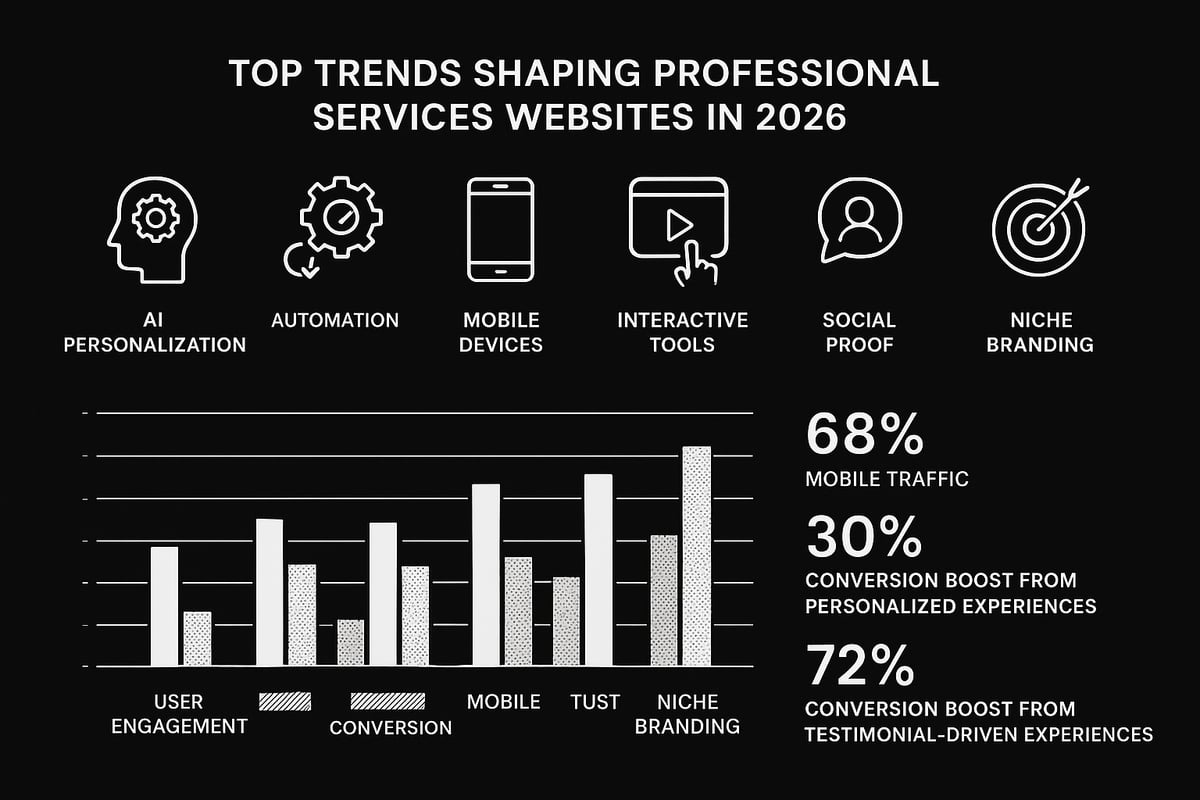
The digital landscape for every professional services website is evolving rapidly as we approach 2026. Clients expect more than a simple portfolio or contact form. They demand intuitive, tailored, and interactive experiences that reflect credibility and expertise instantly.
Hyper-Personalization and AI
A top trend is the shift to hyper-personalized journeys powered by artificial intelligence. Modern professional services website designs use AI-driven chatbots, dynamic content, and predictive recommendations to serve each visitor based on their unique needs and behaviors. According to industry experts, AI-driven personalization enhances user engagement and creates a seamless, relevant experience that drives loyalty and conversion.
Automation for Lead Generation and Onboarding
Automation is now essential for any professional services website. Automated lead qualification, smart forms, and streamlined onboarding portals reduce manual work and speed up response times. These enhancements lead to higher-quality leads and more satisfied clients, giving firms a competitive edge.
Mobile-First and Accessible Design
With over 60% of professional services website traffic now coming from mobile devices, responsive and accessible design is non-negotiable. Websites must adapt fluidly to all screen sizes and meet accessibility standards to serve every potential client. Fast load times, legible typography, and intuitive navigation are key drivers of engagement.
Interactive Content for Engagement
Interactive elements like calculators, assessments, and live chat are becoming standard features. These tools empower users to explore solutions, estimate costs, or get instant advice directly from a professional services website. Award-winning sites leverage interactive content to increase session duration and encourage meaningful interactions.
Transparent Social Proof and Real-Time Case Studies
Trust is built through transparency. Modern professional services website designs feature live testimonial feeds, real-time reviews, and up-to-date case studies. This transparency provides social proof at crucial decision points and reassures potential clients with authentic, timely feedback.
Niche Branding and Tailored Service Presentation
The rise of niche branding is reshaping how firms position themselves. A professional services website that targets specific industries or challenges—through personalized landing pages, industry-specific resources, and focused messaging—stands out in a crowded market. This tailored approach signals expertise and attracts high-value leads.
Summary Table: Key Trends for 2026
Trend | Impact on Professional Services Website |
|---|---|
Hyper-Personalization & AI | Higher engagement, better conversion |
Automation | Faster lead response, improved onboarding |
Mobile-First Design | Wider reach, improved accessibility |
Interactive Content | Increased engagement, longer sessions |
Transparent Social Proof | Builds trust, increases conversion |
Niche Branding | Attracts ideal clients, boosts SEO |
Recent statistics reveal that professional services website pages with dynamic testimonials can convert up to 50% more leads, while personalized experiences drive 20% higher conversion rates. Award-winning sites combine these elements, demonstrating that innovation, transparency, and seamless user journeys are setting new standards for digital trust and growth.
7 Inspiring Professional Services Website Ideas for 2026
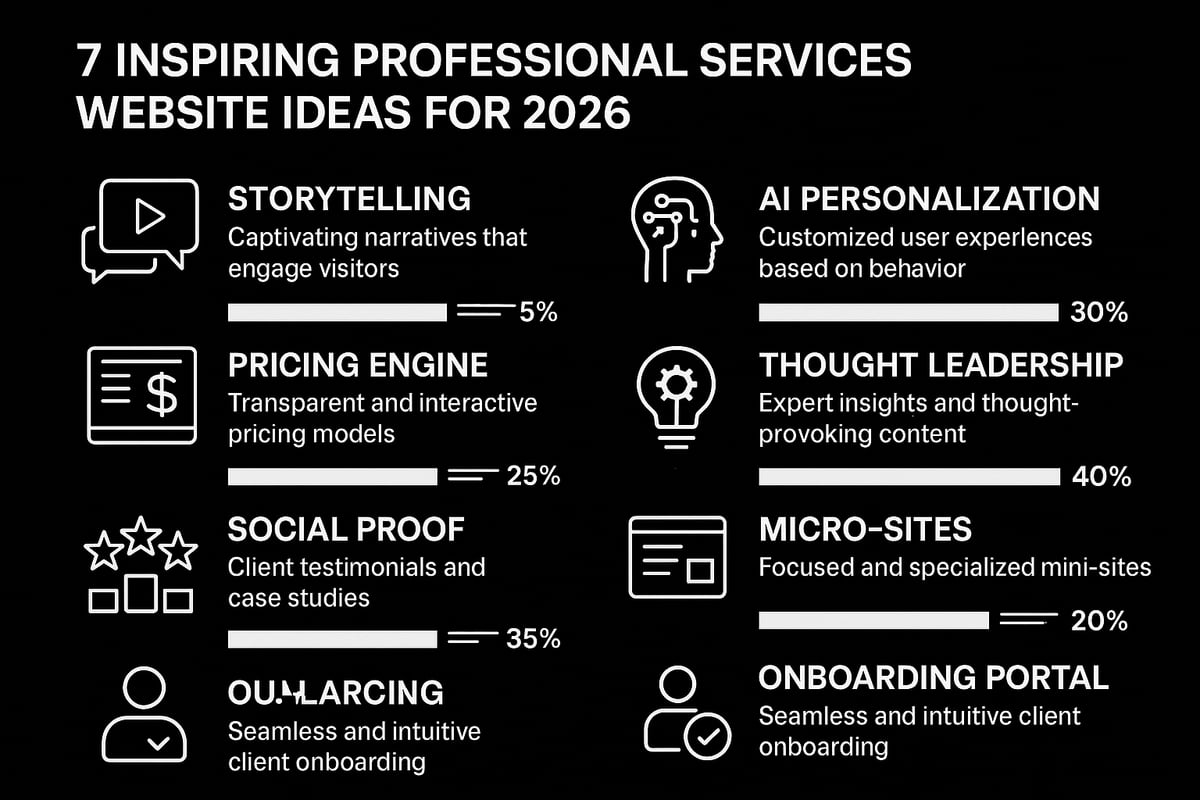
The digital landscape for professional services website design is evolving at a rapid pace. To stand out in 2026, firms must go far beyond traditional templates and static content. The following seven concepts exemplify the future of professional services website innovation, empowering firms to inspire, engage, and convert their ideal clients. Each idea below is designed to boost credibility, differentiate your brand, and elevate the overall client experience.
1. Immersive Storytelling with Interactive Case Studies
A professional services website in 2026 should go beyond basic testimonials. Immersive storytelling, powered by interactive case studies, allows firms to showcase their expertise and results in a compelling format. Imagine multimedia timelines and clickable client journeys that guide visitors through real-world transformations.
Video testimonials, before-and-after galleries, and dynamic sliders bring each story to life. Users can filter stories based on industry, challenge, or outcome, making the experience relevant and personalized. For example, a consulting firm might use dynamic sliders to highlight measurable financial improvements, while a law firm could present client journeys from initial consultation to successful resolution.
Benefits of Interactive Case Studies:
Builds credibility and trust by demonstrating proven outcomes.
Creates an emotional connection with prospective clients.
Increases average time spent on the professional services website.
Research shows that dedicated case study pages can boost conversion rates by up to 70%, making them a strategic asset. The story-driven approach humanizes your expertise and sets your professional services website apart from competitors.
Key insight: When you invite users to explore real client journeys, your firm’s value becomes tangible, memorable, and highly differentiated.
2. AI-Powered Personalization and Smart Content Delivery
AI is transforming the professional services website experience. With AI chatbots, instant qualification and tailored recommendations are available 24/7. Adaptive content modules change based on user behavior, industry, or even the stage of the buyer’s journey.
Personalized dashboards for recurring clients or logged-in users make a professional services website feel like a digital concierge. AI-driven resource libraries suggest the most relevant guides, whitepapers, or case studies based on a visitor’s interests.
AI-Driven Features:
Chatbots that answer questions and qualify leads in real time.
Content that adapts to industry or past engagement.
Custom dashboards for ongoing client relationships.
The impact of personalization is clear: personalized websites see 20% higher conversion rates, and personalized calls-to-action boost conversion rates even further. When every piece of content feels relevant, users are more likely to engage and become clients.
Key insight: Smart automation and tailored journeys create seamless interactions, improving both lead quality and client retention for your professional services website.
3. Transparent Pricing and Service Comparison Engines
Transparency is now a requirement for any leading professional services website. Interactive calculators let visitors receive instant quotes or service estimates, reducing friction and setting clear expectations. Service comparison tables highlight features side by side, while “build your own package” tools empower users to customize solutions.
Legal, consulting, and accounting sites have started to offer transparent fee breakdowns, demystifying costs and removing barriers to inquiry. These tools transform pricing from a hidden detail into a trust-building asset.
Transparent Pricing Benefits:
Reduces bounce rates and increases time on site.
Differentiates your firm by demonstrating openness.
Helps prospects make informed decisions faster.
Sites with transparent pricing see 30% lower bounce rates, as users feel confident and respected. The professional services website becomes a trusted advisor, not just a digital brochure.
Key insight: Openness in pricing fosters trust and positions your firm as a clear, customer-focused leader.
4. Thought Leadership Hubs with Multimedia Content
A modern professional services website should serve as a thought leadership hub. Integrating podcasts, webinars, and video explainers keeps content fresh and accessible. Curated expert articles, research reports, and downloadable resources cater to a range of learning styles and client needs.
Live Q&A or AMA sessions with industry leaders drive engagement and showcase your team’s expertise. Consulting firms, for example, often host monthly expert panels and maintain knowledge bases that attract repeat visits.
Thought Leadership Features:
Multimedia content (audio, video, articles) for broad appeal.
Regularly updated resources and research.
Interactive sessions with experts.
Firms with active content hubs receive three times more organic traffic, enhancing visibility and authority. This approach not only improves SEO but also strengthens ongoing client relationships.
Key insight: A centralized thought leadership hub transforms your professional services website into a go-to resource, fostering loyalty and positioning your brand at the forefront of your industry.
5. Real-Time Social Proof and Dynamic Testimonials
Social proof is essential for any professional services website. Live client feedback feeds, rotating testimonial carousels, and interactive maps displaying client locations and industries served all boost credibility.
Verified review integrations from platforms like Google, Trustpilot, and LinkedIn add another layer of authenticity. Some accounting firms display real-time satisfaction scores, offering prospects transparent insights into client experiences.
Dynamic Social Proof Tools:
Real-time testimonial carousels and feedback feeds.
Interactive maps for visualizing client reach.
Verified reviews for trust and legitimacy.
Pages featuring dynamic testimonials convert up to 50% more leads, especially when the feedback is fresh and authentic. This social validation accelerates decision-making at critical points in the buyer journey.
Key insight: Fresh, interactive social proof reassures visitors, helping your professional services website stand out and convert more leads.
6. Niche-Focused Micro-Sites for Specialized Services
Specialization is a powerful differentiator for a professional services website. Niche-focused micro-sites or landing pages target specific audiences or verticals, each with custom branding, messaging, and case studies.
IT consultancies, for instance, may have dedicated micro-sites for healthcare, finance, or education, each featuring industry-specific resources and regulatory updates. This approach makes your content more relevant and increases your authority within each niche.
Micro-Site Advantages:
Increased relevance for targeted audiences.
Enhanced SEO for long-tail, industry-specific keywords.
Higher conversion rates with tailored messaging.
Industry data shows that micro-sites can boost targeted lead generation by 40%. By signaling deep expertise, your professional services website attracts high-value clients seeking specialized solutions.
Key insight: Micro-sites help you dominate niche markets, positioning your firm as the go-to expert for complex challenges.
7. Seamless Client Onboarding and Self-Service Portals
Efficiency and convenience are hallmarks of a future-ready professional services website. Secure client portals enable project tracking, document sharing, and support, all within a branded digital environment.
Automated onboarding checklists and progress dashboards keep clients informed and engaged from day one. Integrated e-signature, billing, and appointment scheduling tools streamline the entire process, reducing manual workload and enhancing satisfaction.
Onboarding Portal Features:
Secure login for clients to access resources and track progress.
Automated checklists for a guided onboarding experience.
Integrated tools for signatures, billing, and scheduling.
Self-service portals can reduce onboarding time by as much as 60%, freeing up your team to focus on higher-value tasks. Clients appreciate the transparency and control, making your professional services website a true partner in their success.
Key insight: Digital-first onboarding not only increases client satisfaction but also improves operational efficiency for your firm.
Essential Design Principles for High-Performing Professional Services Websites
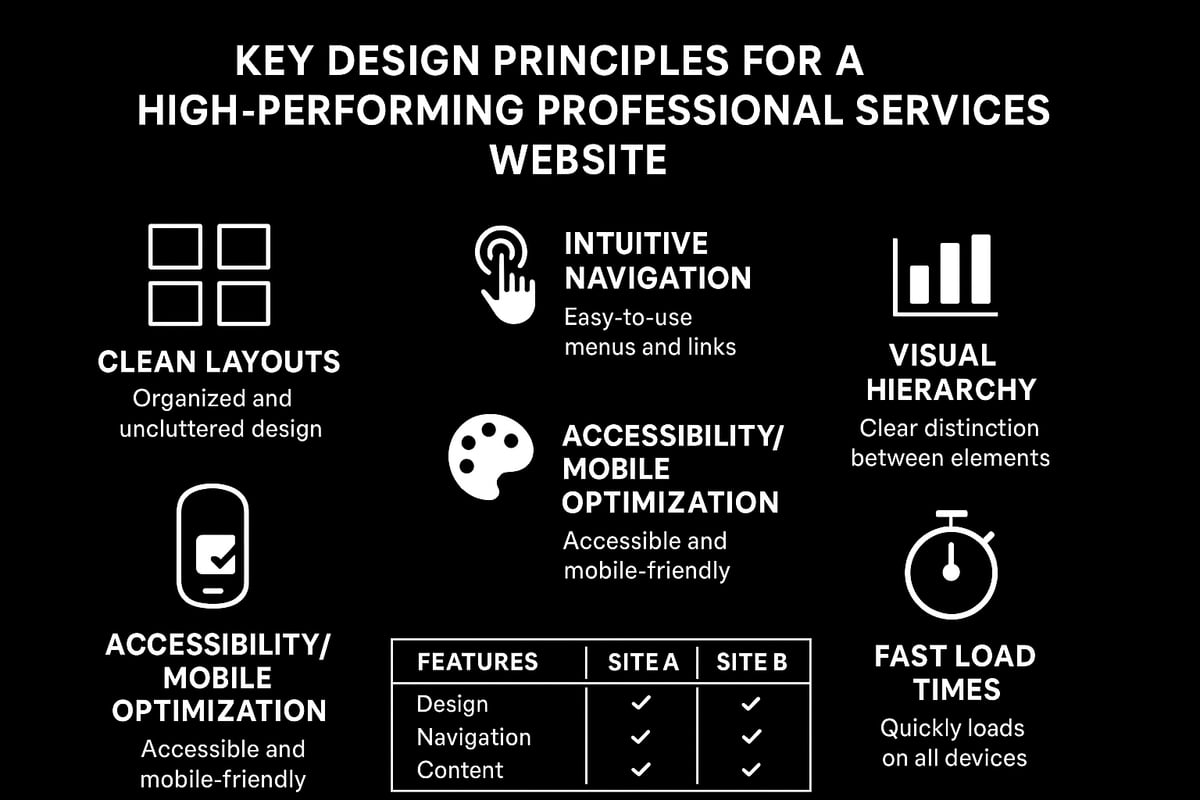
Design is the foundation of every successful professional services website. As digital-first impressions become the norm, your site’s effectiveness depends on how well it combines aesthetics, usability, and trust. The following principles are essential for building a high-performing platform that stands out in 2026.
Clean Layouts and Intuitive Navigation
A professional services website must prioritize clarity and ease of use. Clean layouts with generous spacing help users focus on key messages and actions. Intuitive navigation ensures visitors can quickly find what they need, reducing frustration and bounce rates.
Use simple menu structures, sticky headers, and logical page hierarchies. This approach not only improves user experience but also demonstrates professionalism and attention to detail.
Mastering Visual Hierarchy and Whitespace
Visual hierarchy guides users through content, making a professional services website feel organized and approachable. Use headings, subheadings, and contrasting colors to highlight important sections. Whitespace gives content room to breathe, preventing cognitive overload.
According to Interactive design trends for 2026, micro-interactions and subtle animations can further direct attention and enhance engagement. Balance visuals and text for maximum impact.
Consistent Branding Across Your Site
Consistency builds trust. Every professional services website should maintain uniform colors, typography, and imagery. This ensures a cohesive experience from the homepage to the contact form.
Develop a brand style guide and apply it across all pages. This includes logo placement, button styles, and image choices. Consistent branding signals reliability and expertise, encouraging visitors to engage further.
Accessibility and Mobile Optimization
Your professional services website must be accessible to all users, regardless of device or ability. Responsive design ensures seamless experiences on smartphones, tablets, and desktops. ADA compliance—such as alt text for images, proper contrast ratios, and keyboard navigation—removes barriers for users with disabilities.
Mobile-first strategies are essential, as most clients now begin their journey on handheld devices. Prioritize legibility, fast load times, and touch-friendly interfaces.
Speed, SEO, and Technical Excellence
Fast-loading pages keep users engaged and improve SEO rankings. Compress images, leverage browser caching, and minimize code for optimal performance. Technical SEO—structured data, clear URL structures, and XML sitemaps—helps search engines understand your professional services website.
Regular audits and performance monitoring are crucial for maintaining high standards. Leading sites consistently outperform competitors by focusing on both speed and technical accuracy.
Conversion-Driven Design Elements
Strategically placed calls-to-action (CTAs) and contact forms drive inquiries and new business. Position CTAs at logical touchpoints, such as service pages and blog posts. Use contrasting colors and concise language to make them stand out.
Integrate elements like testimonials, trust badges, and social proof to boost credibility. For more on effective strategies, explore professional services website strategies for actionable tips on optimizing every stage of the client journey.
Planning Your Professional Services Website Redesign for 2026
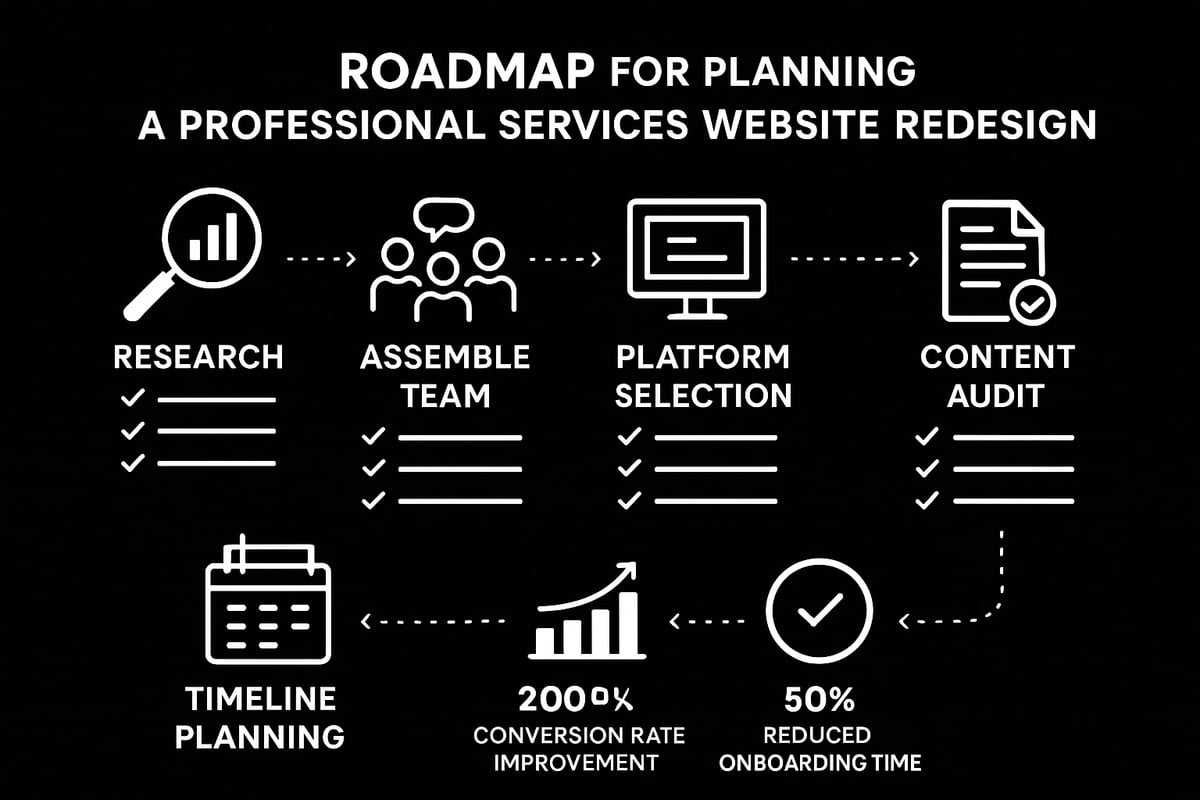
Redesigning a professional services website is a strategic investment that can shape client perceptions and drive business growth. To maximize results, a clear, step-by-step plan is essential. Begin by defining your vision and understanding where your current site stands in today’s competitive landscape.
Start with Audience Research
Effective redesigns start by mapping your audience’s needs, pain points, and decision-making journeys. Use surveys, interviews, and analytics to uncover what clients expect from a professional services website. Identify the questions they ask, obstacles they face, and the channels they use to discover your services.
Outline user personas to guide every design and content decision. This ensures your new site speaks directly to the people you want to attract, making their experience seamless and intuitive.
Set Clear Goals and Audit Existing Content
Establish measurable goals for your professional services website. Are you aiming for more leads, stronger authority, or better client retention? Setting priorities will shape your design and content strategy. For targeted lead generation strategies, see lead generation for professional services.
Conduct a thorough audit of your current content. Identify messaging gaps, outdated resources, or missing features. Analyze which pages perform well and which need improvement. Use this insight to build a content roadmap that aligns with your business objectives.
Choose the Right Platform and Assemble Your Team
Select a platform that fits your scalability and integration needs. Consider options like WordPress, HubSpot, or a custom CMS. If automation and modern workflows are priorities, explore solutions such as automated website creation for services.
Build a cross-functional team for your professional services website project. Include designers, developers, content strategists, and marketers. Each role brings a distinct perspective, ensuring the site is visually appealing, technically sound, and aligned with your growth strategy.
Map Timelines, Checklists, and Ongoing Optimization
Lay out a realistic timeline for your redesign project. Break the process into phases: research, design, development, content migration, testing, and launch. Use checklists to track deliverables and responsibilities at every stage.
Plan for continuous improvement. Schedule regular content updates, SEO reviews, and performance monitoring. This proactive approach keeps your professional services website relevant and competitive as the digital landscape evolves.
As you think about elevating your professional services website for 2026, it's clear that embracing AI-driven automation, personalized user experiences, and transparent client engagement can make all the difference. Whether you're looking to streamline your sales process, enhance credibility with interactive case studies, or simply stand out in a crowded digital space, the right strategy can fuel sustainable growth. If you're ready to explore how these website ideas can work for your business specifically, let's connect and map out the next steps together—simply Book a free consultation.