Social Sales Guide: Strategies to Boost Your Results in 2026
Master social sales in 2026 with proven strategies, platform-specific tactics, and AI-driven tools to boost revenue, build relationships, and outperform competitors.
Dec 13, 2025
In 2026, social sales will be the defining edge that separates market leaders from the rest as digital relationships become the foundation of every winning sales strategy.
This guide delivers proven, actionable strategies designed to help you maximize your social sales results in the ever-evolving digital landscape. Whether you are a sales professional, business leader, or marketer, you will find the latest insights, tactics, and tools to boost your revenue through social sales.
Explore how social sales has evolved, discover key trends for 2026, master step-by-step strategies, learn platform-specific approaches, measure your results, and gain inspiration from real-world success stories. Get ready to capture new opportunities, accelerate growth, and achieve your sales goals in a digitally connected world.
The Evolution of Social Sales: From Networking to Revenue Engine
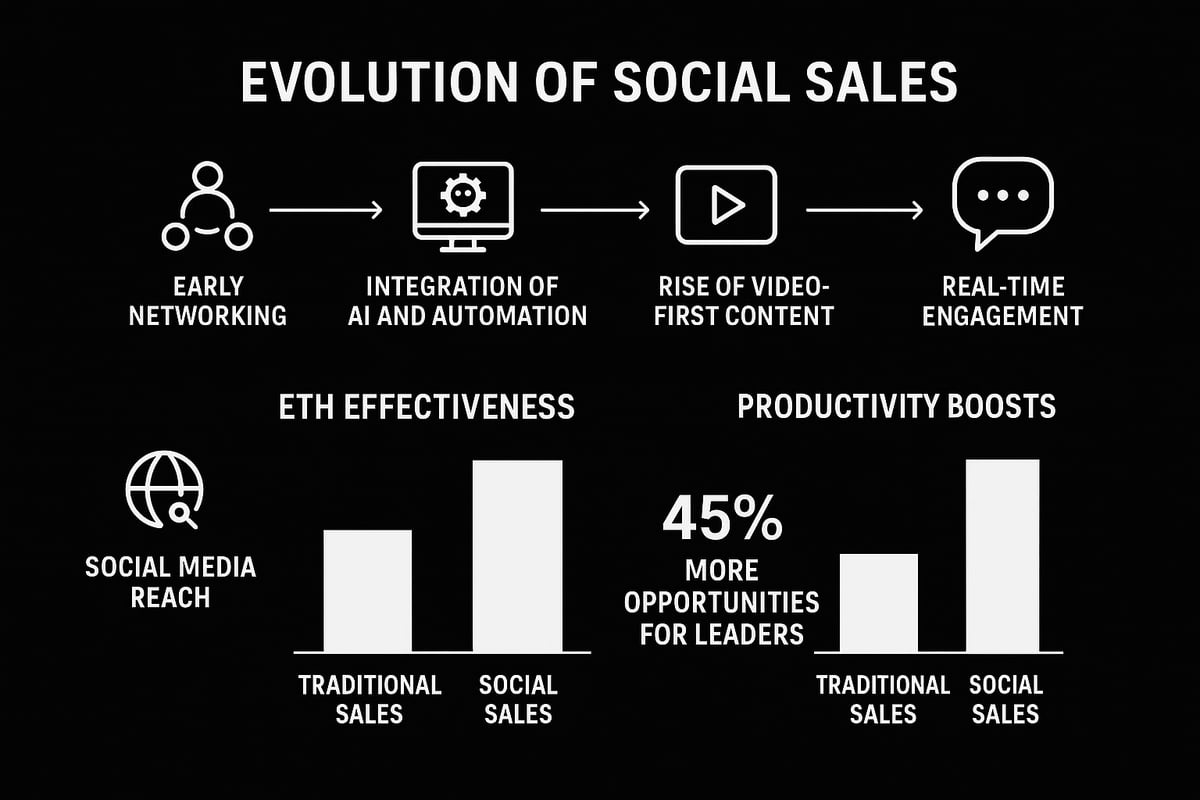
Social sales has rapidly transformed from basic online networking to a sophisticated, technology-driven revenue engine. In 2026, this approach goes far beyond traditional selling, blending AI, automation, and data to create authentic relationships that drive measurable results.
Defining Social Sales in 2026
Social sales in 2026 is a strategic, tech-powered process focused on building real relationships and driving revenue. Unlike traditional selling, which relied on cold calls or face-to-face meetings, modern social sales uses advanced technology and AI to personalize every interaction.
The shift from transactional to relationship-based models is clear. Tools like LinkedIn Sales Navigator help B2B sellers target prospects with precision, making outreach more effective. In fact, social selling leaders create 45% more opportunities than peers, showing the measurable impact of these strategies.
Today, social sales encompasses the entire digital ecosystem, integrating data, automation, and authentic engagement to accelerate business growth.
Why Social Sales Matters More Than Ever
Social sales has become crucial as global social media usage soars and buyer behavior shifts online. Buyers now use social platforms as their primary research and decision hubs, making it vital for sellers to meet them where they are.
Statistics show that 78 percent of social sellers outsell peers who avoid social channels. The pandemic further accelerated online networking, reducing the effectiveness of cold calls and traditional outreach. Companies like Microsoft saw a 38 percent productivity boost when adopting social sales practices.
The competitive landscape is evolving. If you are not leveraging social sales, your competitors likely are, putting you at risk of falling behind.
Key Trends Shaping Social Sales in 2026
Several key trends are redefining social sales in 2026. AI-driven lead generation and sales automation enable teams to identify and engage prospects faster. Micro-influencers and employee advocacy programs increase reach and authenticity.
Video-first content, live social selling events, and seamless social commerce integrations with e-commerce platforms are becoming standard. Personalized, data-driven outreach at scale is now essential, with privacy regulations demanding ethical practices.
Real-time social listening and engagement round out the trends, allowing brands to respond instantly to buyer signals and market changes.
Challenges and Opportunities in Modern Social Sales
Standing out in digitally saturated markets is one of the biggest challenges for social sales professionals. Balancing automation with genuine interactions requires skill and strategy.
Adapting to shifting platform algorithms and increasing buyer expectations for transparency and value demands agility. Both SMEs and large enterprises have new opportunities to innovate and grow through social sales.
Continuous learning is necessary, as demonstrated by companies like Genesys, which increased deal size by 42 percent using advanced social sales tools. The future belongs to teams that are agile, adaptable, and committed to authentic engagement.
Building a High-Impact Social Sales Strategy for 2026
A high-impact social sales strategy in 2026 requires more than a digital presence—it demands a thoughtful blend of brand authority, audience understanding, authentic engagement, and advanced technology. Success hinges on aligning your approach with evolving buyer expectations and leveraging every tool at your disposal. Let’s break down the essential building blocks for dominating the social sales landscape.
Laying the Foundation: Brand, Audience, and Value
Effective social sales begins with a strong, professional brand presence that speaks directly to your target audience. Consistency in messaging across all digital touchpoints is crucial. Your brand should reflect expertise and offer solutions, not just products.
By establishing thought leadership through insightful content, you build trust and credibility—critical precursors to sales success. Align your messaging with your audience’s specific needs and pain points. Remember, the core of social sales is solving customer problems, not pitching.
Consider that 96% of B2B marketers use LinkedIn as their primary channel, proving the importance of a unified digital presence. Investing in these fundamentals sets the stage for meaningful engagement and long-term results in social sales.
Identifying and Connecting with the Right Prospects
The next step in social sales is pinpointing high-potential prospects using advanced tools. Leverage social selling platforms to filter by industry, role, and buying intent, focusing on quality over quantity.
Warm introductions through mutual connections can fast-track trust. Conduct market research to understand buyer motivations and behaviors, enabling tailored outreach that resonates.
Top performers in social sales expand their networks twice as fast as their peers. For instance, PTC closed $4.5 million in deals by targeting outreach precisely. Authenticity in your approach increases conversion rates and builds lasting relationships with prospects, setting you apart in a crowded digital marketplace.
Creating and Sharing Content That Converts
Content is the engine of social sales. Share a balanced mix of original insights and curated industry resources to establish thought leadership and credibility. Use videos, live streams, and interactive formats to boost engagement and cater to evolving buyer preferences.
Personalize content for specific buyer segments, ensuring relevance and value. Encourage employees to share and create user-generated content, expanding your reach and authenticity.
Statistics show 70% of YouTube users purchase after seeing branded videos, while brands on Instagram achieve higher order rates than on their websites. Consistently delivering useful content positions your social sales strategy for higher conversion rates and deeper prospect engagement.
Engaging Authentically and Building Relationships
Social sales thrives on genuine, human connections. Prioritize real conversations rather than relying on templated sales scripts. Engage with prospects by commenting on, liking, and sharing their content to create rapport and show interest.
Personalize messages based on shared interests or previous interactions, and follow up regularly without overwhelming your contacts. Social listening helps you identify timely engagement opportunities, keeping you relevant and responsive.
Genesys saw a 42% increase in average deal size by fostering authentic engagement on LinkedIn. Focusing on relationship-building over hard selling ensures your social sales efforts deliver sustainable pipeline growth and repeat business.
Leveraging Social Listening and Real-Time Insights
Social listening is a cornerstone of data-driven social sales. Set up alerts for relevant keywords, competitor brands, and buyer intent signals to stay ahead of market trends.
Monitor industry conversations to identify pain points and adapt your messaging in real time. Tools like Google Alerts and native social analytics platforms make this process efficient and actionable.
Timely engagement, informed by social listening, leads to higher response rates. With 75% of B2B buyers using social media for purchase decisions, integrating real-time insights into your social sales workflow maximizes relevance and drives superior outcomes.
Integrating AI and Automation for Scalable Social Sales
Scaling social sales efforts requires a strategic blend of automation and personalization. AI-powered tools automate lead generation, outreach, and follow-up, freeing up time for high-value activities.
Intelligent workflows nurture and qualify leads efficiently, while AI-driven personalization ensures every interaction feels tailored. The key is balancing automation with a human touch to maintain authenticity.
For deeper insights on this trend, explore Social selling with AI automation, which highlights how AI is revolutionizing social sales and enabling teams to achieve more with less effort. Automation empowers your sales team to focus on building relationships and closing deals.
How AI-Driven Automation Empowers Social Sales Success
AI and automation are transforming social sales by streamlining prospecting, engagement, and follow-up processes. Tools like The Social Search help SMEs scale their social sales without losing the personal touch.
WhatsApp-based solutions and intelligent chatbots enable real-time, automated customer engagement, ensuring leads are handled efficiently. Case studies show SMEs doubling their qualified leads using AI-driven tools.
With more time to nurture relationships and close deals, sales teams gain a genuine competitive edge. Direct consultation and rapid deployment make these advancements accessible for businesses of all sizes, cementing social sales as a sustainable revenue engine.
Platform-Specific Social Sales Tactics for 2026
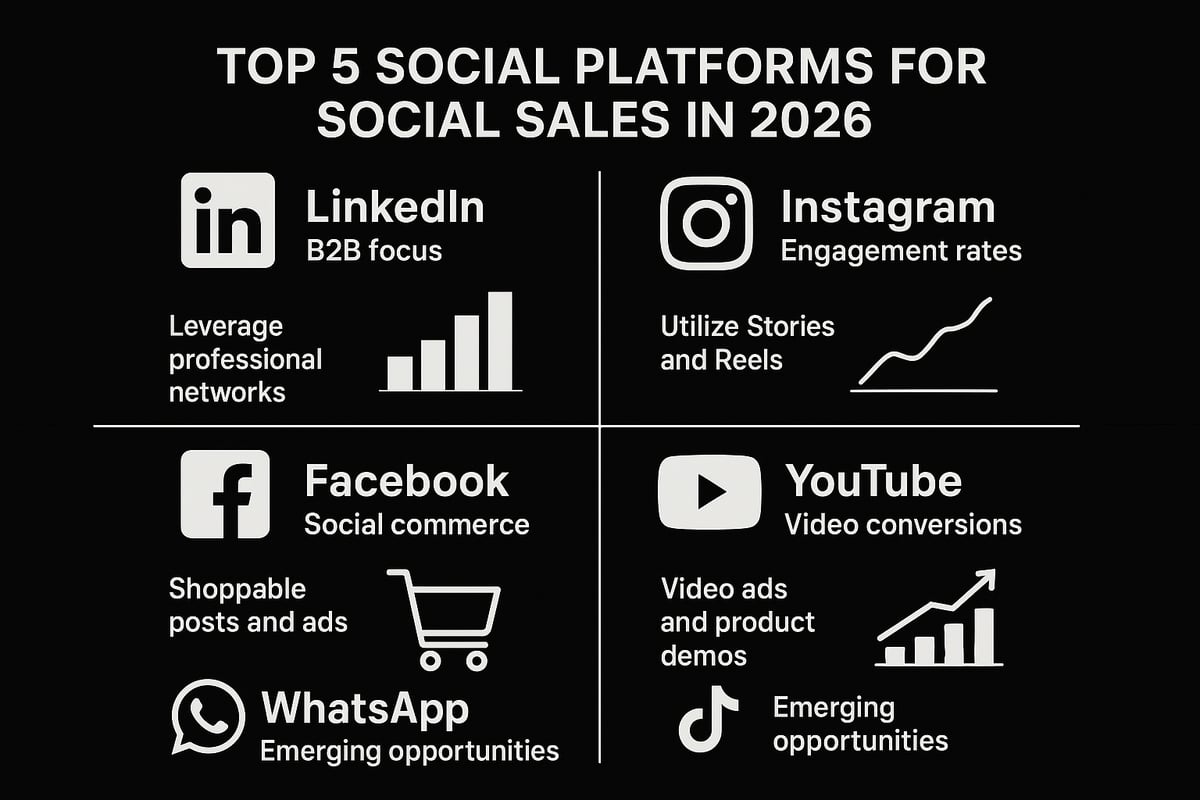
Success in social sales depends on mastering each platform’s unique strengths. Let’s break down proven tactics for 2026 to help you maximize results where your buyers spend their time.
LinkedIn: B2B Powerhouse
LinkedIn remains the top destination for B2B social sales. Start by optimizing your profile to showcase expertise, credibility, and relevant keywords. Use LinkedIn Sales Navigator for advanced targeting, filtering prospects by industry, role, and buying intent.
Participate in relevant Groups to build visibility and authority. Share thought leadership content, case studies, and industry trends regularly. Focus on increasing your Social Selling Index (SSI), which LinkedIn provides to track your impact.
Optimize your profile for search and trust
Leverage InMail for targeted, personalized outreach
Engage with prospect posts to nurture relationships
Microsoft’s sales teams achieved remarkable productivity gains by embedding social sales into their LinkedIn strategy.
Instagram: Visual Storytelling and Engagement
Instagram thrives on visual content and authentic engagement. Use Stories, Reels, and Live to connect with audiences in real time, showcasing products and behind-the-scenes moments.
Implement shoppable posts to make buying seamless. Collaborate with micro-influencers who can introduce your offerings to niche communities. Encourage user-generated content for social proof.
Share product demos and customer testimonials in video format
Run interactive Q&A sessions on Live
Feature employee advocacy to humanize your brand
With 200 million users visiting business accounts daily, Instagram is a prime channel for social sales growth.
Facebook: Community Building and Social Commerce
Facebook’s robust Groups and Shops features enable community-driven social sales. Create Groups for industry-specific conversations and nurture relationships with valuable content.
Utilize Facebook Shops for integrated social commerce, making it easy for customers to browse and purchase without leaving the platform. Target your audience with lookalike ads to expand reach and use Messenger for personalized follow-ups.
Post regularly in Groups to spark discussions
Offer exclusive deals through Shops
Respond promptly to comments and messages
For more insights on generating leads through these channels, see this guide on lead generation through social media. Social sales on Facebook continue to deliver higher conversion rates than other digital channels.
YouTube and Video-First Platforms
YouTube and other video-centric platforms are essential for social sales in 2026. Produce high-quality demos, customer testimonials, and behind-the-scenes content to engage prospects at each stage of the funnel.
Host live webinars and interactive sessions to address buyer questions in real time. Optimize video titles and descriptions for search, and embed clear calls-to-action and lead capture forms.
Use analytics to track viewer engagement
Test different video formats for higher conversions
Repurpose webinars into shorter clips for social sharing
Data shows that 70 percent of users purchase after watching branded video content, making YouTube a powerful engine for social sales.
Emerging Channels: WhatsApp, TikTok, and Beyond
Emerging platforms offer new frontiers for social sales. Use WhatsApp for direct, personalized communication and fast response times. Automate FAQ responses and appointment bookings with chatbots.
On TikTok, leverage short, creative videos to spark viral product discovery. Monitor trends and adapt content to fit the unique tone of each platform. Early adoption of new channels provides a competitive edge.
Build broadcast lists on WhatsApp for targeted updates
Collaborate with TikTok creators for authentic reach
Track engagement rates to refine your approach
Diversifying your social sales strategy across multiple platforms ensures broader reach and resilience in 2026.
Measuring, Optimizing, and Scaling Social Sales Results
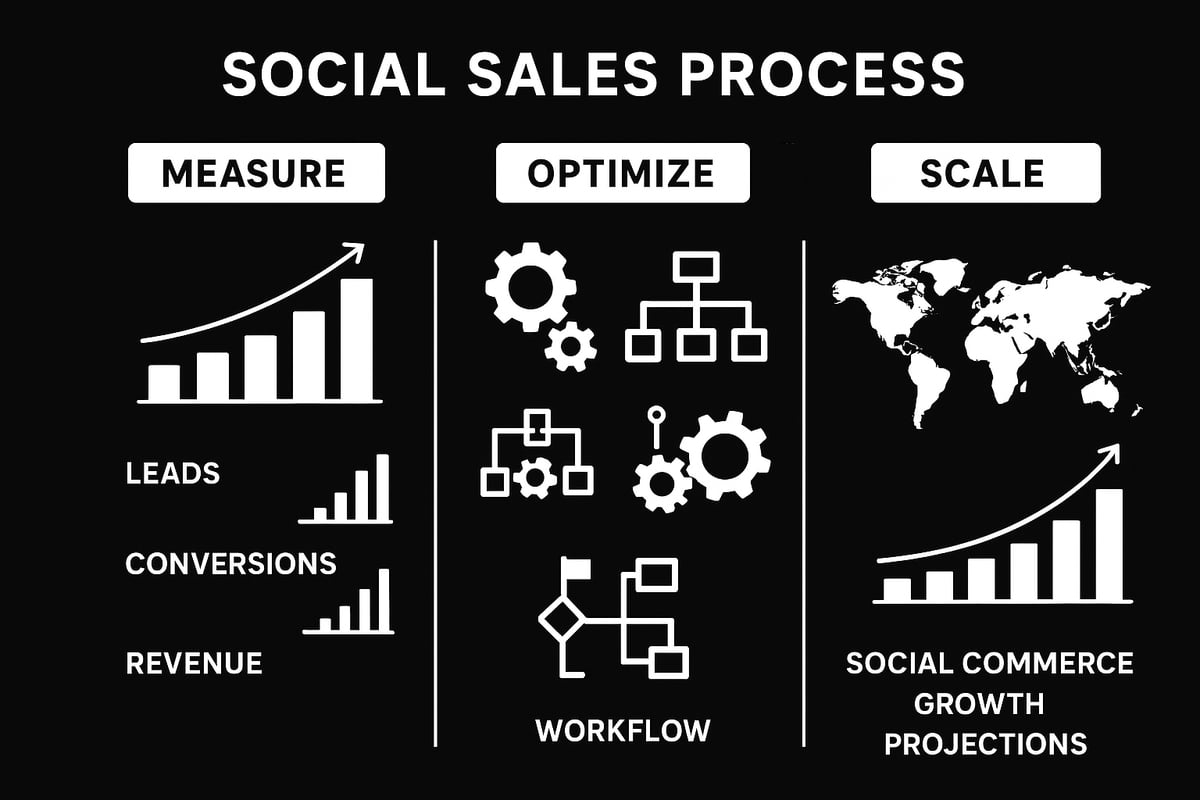
To maximize your social sales performance in 2026, rigorous measurement and continuous optimization are essential. Understanding what works, what needs improvement, and how to scale your efforts will set you apart in an increasingly competitive market.
Setting KPIs and Tracking Performance
Establishing clear KPIs is the foundation of successful social sales programs. Define specific goals such as lead volume, conversion rates, engagement metrics, and revenue generated from social channels. Make use of built-in analytics tools on platforms like LinkedIn and Facebook, paired with CRM integration for comprehensive tracking.
Leverage LinkedIn’s Social Selling Index (SSI) to benchmark your team’s effectiveness. Top performers in social sales are 51% more likely to meet or exceed their sales quotas. Compare your results to industry standards regularly to identify strengths and gaps. As social commerce revenue is projected to hit $1.08 trillion by 2028, robust measurement ensures you capture your share of this expanding market.
Analyzing and Interpreting Social Sales Data
Analyzing data is vital for refining your social sales strategy. Examine which content formats, outreach messages, or engagement tactics drive the highest response and conversion rates. Segment results by channel, buyer persona, and campaign to uncover actionable insights.
Use attribution models to connect social activity with actual sales outcomes. Run A/B tests on messaging or content types to optimize for engagement. Relying on data-driven decisions in social sales leads to ongoing improvements and higher ROI. Continuous analysis helps teams adapt quickly to shifting buyer behaviors and platform changes, maintaining competitive edge.
Optimizing Workflows for Efficiency and Scale
Efficient workflows are crucial for scaling social sales without sacrificing quality. Streamline lead management and automate repetitive tasks such as initial outreach, follow-ups, and appointment scheduling. Integration of automation tools boosts productivity, allowing sales professionals to focus on high-value activities.
For advanced workflow optimization, consider adopting automated social media strategies that support scalable social sales efforts. Regularly train your team on new technologies and best practices to maintain peak efficiency. Well-optimized workflows free up time for relationship-building and strategic selling.
Overcoming Common Social Sales Pitfalls
Even experienced teams encounter challenges in social sales. Avoid generic or overly automated outreach, as buyers expect personalized interactions. Stay compliant with privacy regulations and platform policies to maintain trust and credibility.
Remain authentic while scaling your efforts. Be agile in response to algorithm updates and evolving buyer preferences. Learn from negative feedback and campaign failures to strengthen future strategies. Transparency and adaptability are the keys to overcoming obstacles and achieving lasting social sales success.
Scaling Social Sales Across Teams and Markets
Scaling social sales requires a coordinated, strategic approach. Develop standardized playbooks and training programs to ensure consistency across teams. Foster collaboration between sales and marketing for unified messaging and smoother handoffs.
Localize content and engagement strategies to resonate with diverse markets. Use technology to coordinate multi-channel efforts and monitor results at scale. As social commerce revenue continues to surge globally, businesses that prioritize scalable social sales processes consistently outperform their competitors. Sustainable growth comes from a blend of process, technology, and a relentless focus on customer needs.
Real-World Social Sales Success Stories and Lessons Learned
Real-world examples show how social sales drives measurable business outcomes. These stories highlight how leading organizations have used social sales strategies to boost productivity, increase deal sizes, and achieve significant revenue growth. Each case demonstrates the power of digital relationship-building and strategic engagement in today’s competitive landscape.
Case Study: Microsoft’s Social Selling Transformation
Microsoft’s adoption of social sales marked a turning point for its sales teams. By integrating LinkedIn Sales Navigator into daily workflows, Microsoft empowered its professionals to identify, connect, and engage with decision makers more effectively.
The result was a 38% boost in sales productivity, directly linked to the strategic use of social sales technology. Leadership buy-in and comprehensive training were crucial for successful implementation. Microsoft’s transformation highlights how a tech-driven, relationship-focused approach to social sales can drive enterprise-level results.
Case Study: PTC’s $4.5 Million Social Sales Win
PTC leveraged social sales by focusing on LinkedIn’s Social Selling Index to guide best practices. Their team targeted high-potential prospects with personalized, data-informed outreach.
This approach led to closed deals exceeding $4.5 million. By continuously optimizing their social sales tactics, PTC demonstrated that data-driven targeting and authentic engagement deliver significant ROI. Their success proves that effective social sales strategies can accelerate revenue growth and create lasting customer relationships.
Case Study: Genesys’ Deal Size Growth via Social Engagement
Genesys took a proactive approach to social sales by maintaining an active presence on LinkedIn. Sales representatives regularly posted, followed, and connected with prospects, prioritizing genuine conversations over hard selling.
This consistent engagement resulted in a 42% increase in average deal size. The Genesys experience shows how ongoing, relationship-driven social sales efforts build trust and lead to larger, higher-quality deals. Their story illustrates the importance of authenticity and persistence in the social sales process.
Lessons from Top Social Sellers and Brands
Leading brands and sales professionals share several best practices for social sales success:
Embrace continuous learning and adaptability
Blend technology with personal engagement for a sustainable edge
Prioritize value, authenticity, and a customer-centric mindset
Scale successful strategies with automation and process refinement
With social media now reaching 64% of the global population, the opportunity for impact is enormous. For more in-depth guidance, explore these sales and marketing consulting insights to strengthen your social sales approach. The most successful brands evolve their social sales strategies to match shifting buyer expectations and digital trends.
As you look to elevate your social sales strategy for 2026, it’s clear that combining authentic relationship building with AI-powered automation is the key to staying ahead. We’ve explored proven tactics and real-world examples that show just how much impact the right approach can have. If you’re ready to put these strategies into action and want personalized guidance for your business, I invite you to Book a free consultation. Let’s work together to help you save time, drive higher-quality leads, and achieve sustainable revenue growth in the new era of social selling.