Lead Generation as a Service Guide for Success in 2026
Master lead generation as a service in 2026 with expert strategies, AI trends, provider selection, and actionable steps for scalable, sustainable business growth.
Nov 30, 2025
In 2026, lead generation is more than a numbers game. The landscape is shaped by data, automation, and AI, making lead generation as a service a strategic necessity for growth-focused businesses.
This guide breaks down lead generation as a service, revealing how to harness it for scalable and sustainable success. You will discover what LGaaS means, why it matters now, and how to select the right provider.
Explore the latest trends, proven strategies, and step-by-step implementation. Real-world examples and actionable insights will help you build a future-ready lead engine. Ready to transform your pipeline? Let’s get started.
Understanding Lead Generation as a Service in 2026
Unlocking growth in 2026 means rethinking how you find and nurture prospects. Lead generation as a service brings together advanced technology and expert strategy, offering a smarter, more adaptive way to fill your sales pipeline.
What is Lead Generation as a Service (LGaaS)?
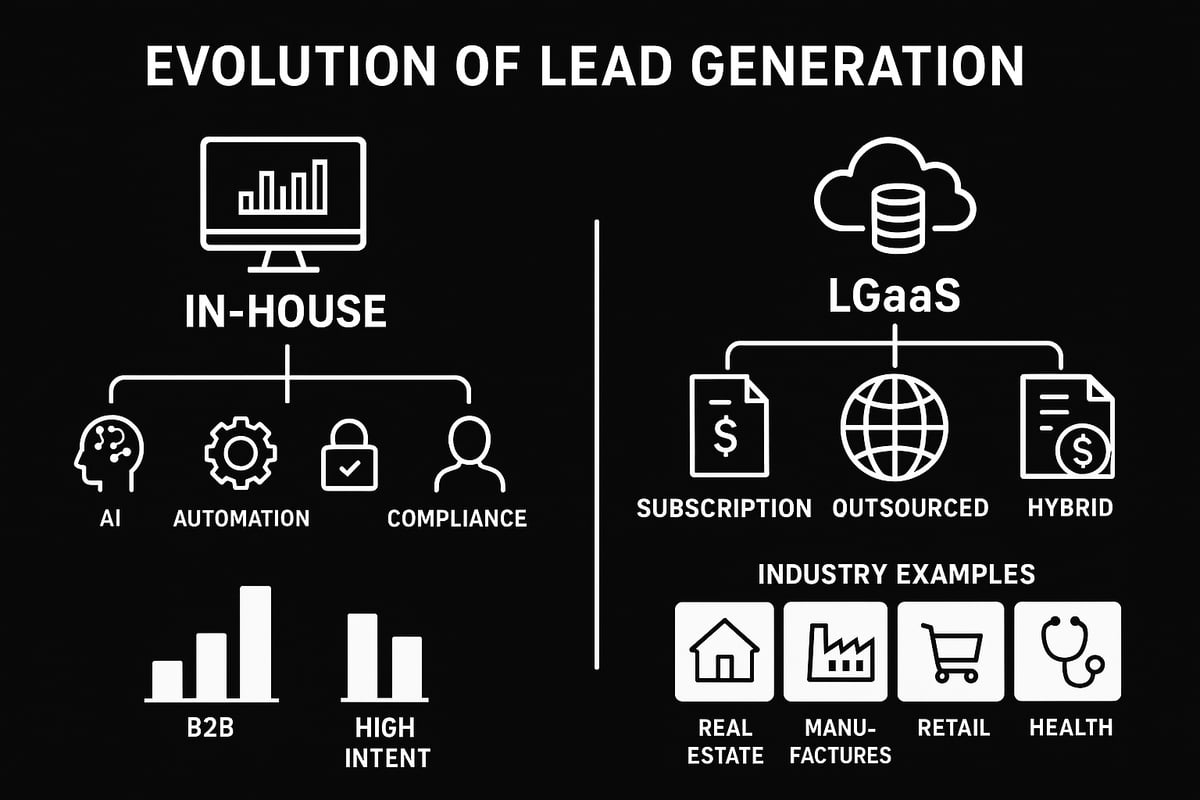
Lead generation as a service is a modern outsourcing model where specialized providers take charge of identifying, qualifying, and delivering sales-ready leads using a blend of automation, data, and human insight. Unlike traditional in-house teams, LGaaS uses external experts, advanced software, and scalable infrastructure to deliver a predictable flow of prospects.
There are three main models: subscription-based (fixed monthly services), fully outsourced (end-to-end lead management), and hybrid (shared responsibilities). Technology powers each, but human expertise ensures relevance and compliance. For example, B2B SaaS companies often use LGaaS for rapid pipeline acceleration. To better understand how these models operate, see Lead Generation Systems Explained.
Model | Description | Best For |
|---|---|---|
Subscription | Fixed monthly services | Consistent lead flow |
Outsourced | Provider manages all | Rapid scaling |
Hybrid | Shared responsibilities | Flexibility and control |
Why LGaaS Matters More Than Ever
In 2026, lead generation as a service is critical due to new challenges and opportunities. Digital marketing and sales funnels have become increasingly complex, making manual prospecting inefficient. AI and automation now transform how leads are identified and nurtured, boosting speed and accuracy.
Key drivers include:
Stricter data privacy and compliance needs (GDPR, CCPA)
Buyers completing 70% of research before contacting sales
Internal teams needing to focus on high-value closing activities
By leveraging LGaaS, companies gain a competitive edge and adapt quickly to market shifts.
Types of Leads and Target Markets
Lead generation as a service adapts to every market segment. Providers distinguish between B2B and B2C needs, tailoring strategies for each. High-intent leads (ready to buy) are prioritized over low-intent (early-stage) prospects, using behavioral data to segment and score.
Industry-specific approaches are common:
Financial services: regulatory-focused targeting
SaaS: pipeline velocity and demo bookings
Legal: compliance and trust-building
E-commerce: conversion-focused campaigns
Hospitality: omnichannel LGaaS to drive bookings
This flexibility makes LGaaS a fit for nearly any sector.
Key Benefits and Business Impact
Businesses using lead generation as a service see measurable improvements across the board. Top benefits include:
Higher lead quality and conversion rates
Scalability to match business growth
Lower costs compared to building in-house teams
Access to advanced analytics for smarter decision-making
For example, SMBs have achieved three times faster growth by outsourcing lead generation, gaining better pipeline predictability and higher ROI.
The 2026 Lead Generation Landscape: Trends & Innovations
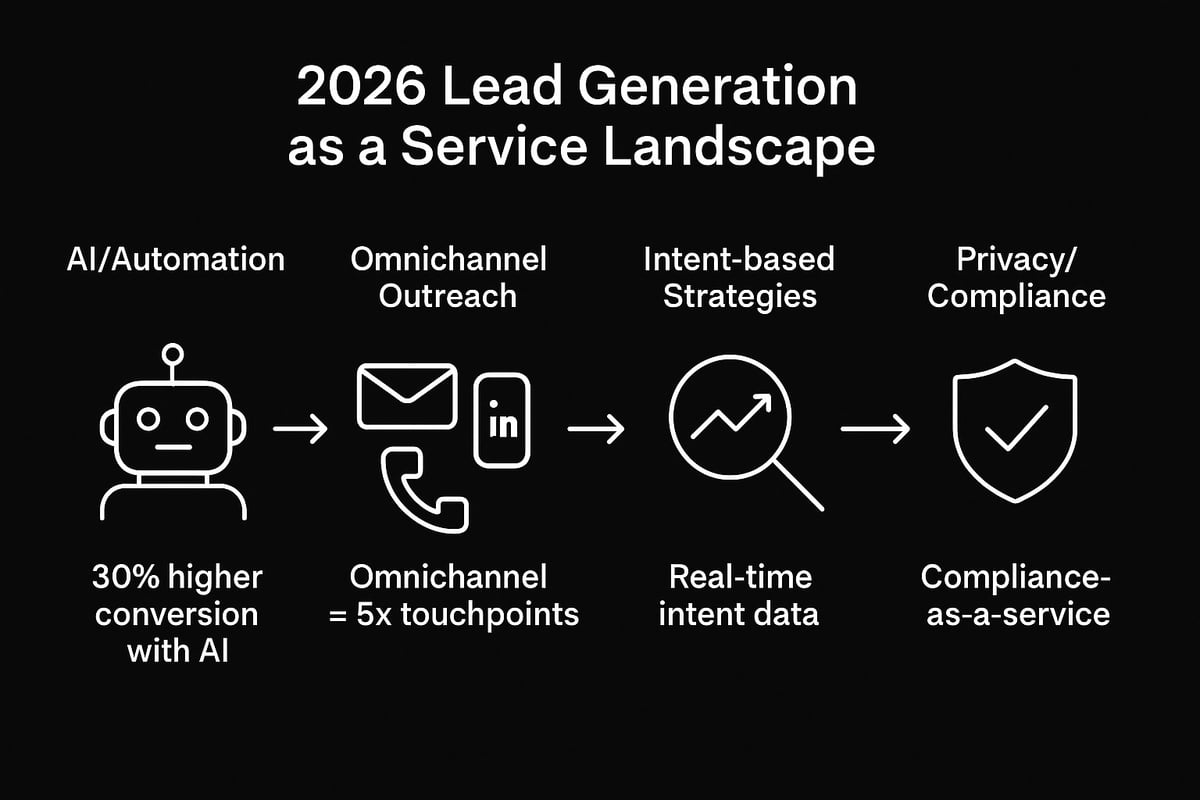
The landscape of lead generation as a service is rapidly evolving in 2026. Businesses are leveraging powerful technologies, new outreach methods, and advanced analytics to stay ahead. Let us explore the key trends shaping the future of lead generation as a service.
AI, Automation, and Predictive Analytics
AI is revolutionizing lead generation as a service by automating lead scoring, qualification, and outreach. Predictive analytics now pinpoint high-intent prospects before competitors, while generative AI crafts highly personalized messages at scale.
Companies deploying AI-driven lead generation as a service are seeing conversion rates rise by 30 percent. AI-powered chatbots and virtual assistants engage leads instantly, qualifying them in real time. For more details, see AI in Lead Generation.
The fusion of automation and analytics enables businesses to focus on closing, not just prospecting. This trend ensures lead generation as a service delivers measurable pipeline acceleration.
Omnichannel Outreach and Engagement
Successful lead generation as a service strategies now rely on orchestrated omnichannel campaigns. Providers combine email, LinkedIn, calls, retargeting ads, and educational content to create seamless touchpoints throughout the buyer journey.
Live chat and conversational marketing tools, including chatbots, enable real-time engagement. This approach fosters trust and keeps prospects moving through the funnel.
For example, B2B brands are leveraging LinkedIn automation for appointment setting, while integrating multiple channels for consistent outreach. Omnichannel lead generation as a service ensures no opportunity is missed.
Intent-Based and Data-Driven Strategies
Modern lead generation as a service uses behavioral signals, like website visits and content downloads, to prioritize leads. Real-time intent data is integrated with CRM and marketing automation platforms for precise targeting.
SaaS companies, for instance, give top priority to leads showing active buying signals. This approach increases efficiency and maximizes ROI.
By focusing on intent, lead generation as a service providers deliver higher-quality leads, reducing wasted effort and shortening sales cycles. Data-driven strategies are now essential for competitive growth.
Privacy, Compliance, and Ethical Lead Generation
With stricter global data privacy laws in 2026, lead generation as a service must prioritize compliance. Providers are implementing robust consent management and transparent data collection practices.
Many offer compliance-as-a-service add-ons, helping clients navigate GDPR, CCPA, and other regulations. Ethical outreach builds trust and protects brand reputation.
By adopting these standards, lead generation as a service partners become strategic allies, ensuring sustainable growth while mitigating risk.
How to Choose the Right Lead Generation as a Service Provider
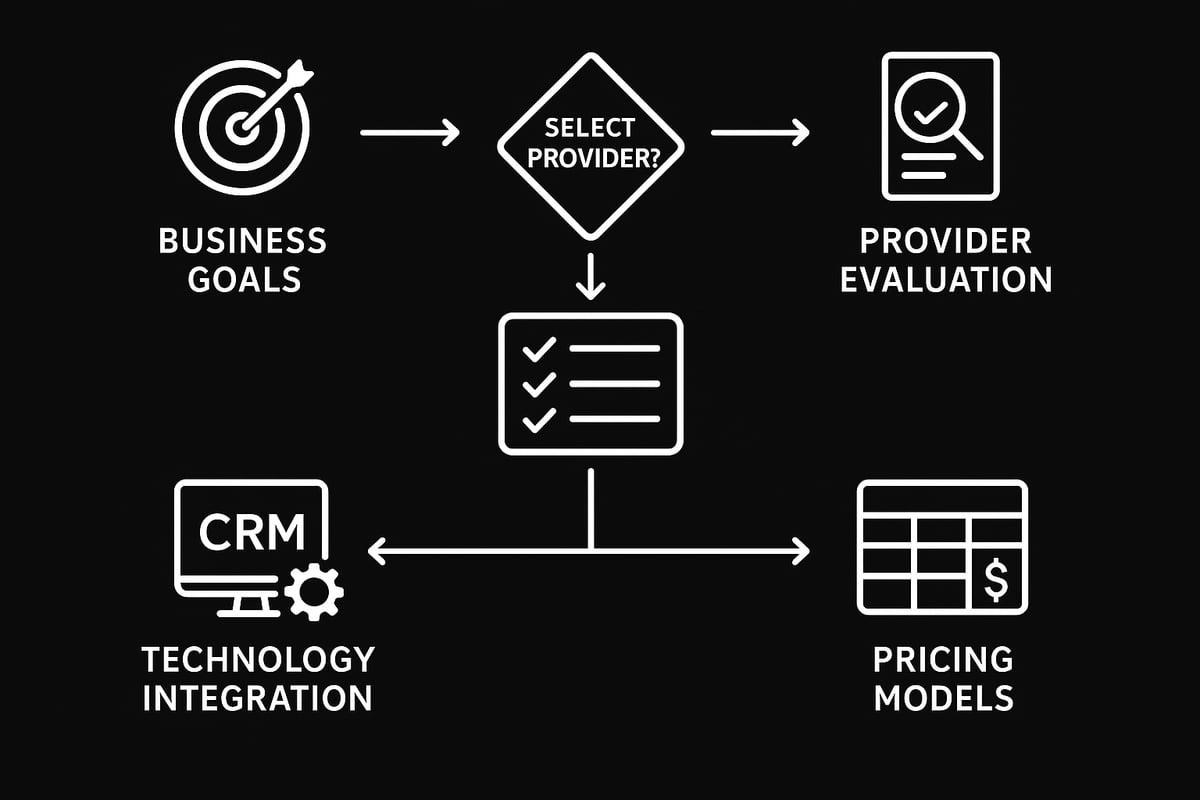
Selecting the right lead generation as a service provider can shape your pipeline results for years to come. In 2026, the options are broader and more sophisticated than ever, making a structured approach to evaluation essential.
Assessing Your Business Needs and Goals
Start by clarifying what you want from lead generation as a service. Define your ideal customer profile and detailed buyer personas. This ensures the provider aligns with your target market and delivers qualified leads.
Set measurable objectives around lead volume, quality, and ROI. Identify pain points in your current process, such as low conversion rates or inefficient prospecting. For example, an e-commerce brand aiming for better conversion from paid campaigns should seek a provider specializing in that area.
A clear understanding of your business needs helps you find a partner who can tailor their lead generation as a service solution for your growth stage and industry.
Evaluating Providers: Criteria & Red Flags
When comparing providers, focus on their service offerings, industry expertise, and technology stack. Look for those offering multi-channel outreach, vertical specialization, and robust analytics.
Review track records, case studies, and testimonials. Transparency in pricing, reporting, and communication is crucial. Watch for red flags like unclear compliance practices, poor data hygiene, or unrealistic promises. For deeper insights into automated capabilities, explore Automated Lead Generation Services as a benchmark for modern providers.
Choosing a lead generation as a service partner with proven processes and ethical standards safeguards your brand reputation and campaign effectiveness.
Technology Stack and Integration Capabilities
A top-tier lead generation as a service provider should seamlessly integrate with your CRM, marketing automation, and analytics platforms. Check for compatibility with tools like Salesforce, HubSpot, or your existing stack.
Ask about API integrations, workflow automation, and real-time data sync. This ensures your lead data flows smoothly and enhances your internal processes.
Effective integration not only streamlines operations but also allows you to measure and optimize every aspect of your lead generation as a service campaigns efficiently.
Pricing Models and ROI Considerations
Providers offer various pricing models, including pay-per-lead, retainer, performance-based, and hybrid structures. Understand how each model impacts your cost-per-lead and customer acquisition cost.
Use calculators or forecasting tools to estimate ROI before committing. For instance, some firms provide lead calculators to project marketing performance.
Transparent pricing and a clear link between investment and results are hallmarks of a reliable lead generation as a service partner. Prioritize providers who help you scale efficiently without hidden costs.
Step-by-Step: Implementing Lead Generation as a Service for Success
Unlocking the full potential of lead generation as a service requires a structured, strategic approach. By breaking down the process into actionable steps, businesses can maximize efficiency, boost lead quality, and achieve sustainable growth. Follow this proven framework to ensure every stage of your lead generation journey is optimized for success.
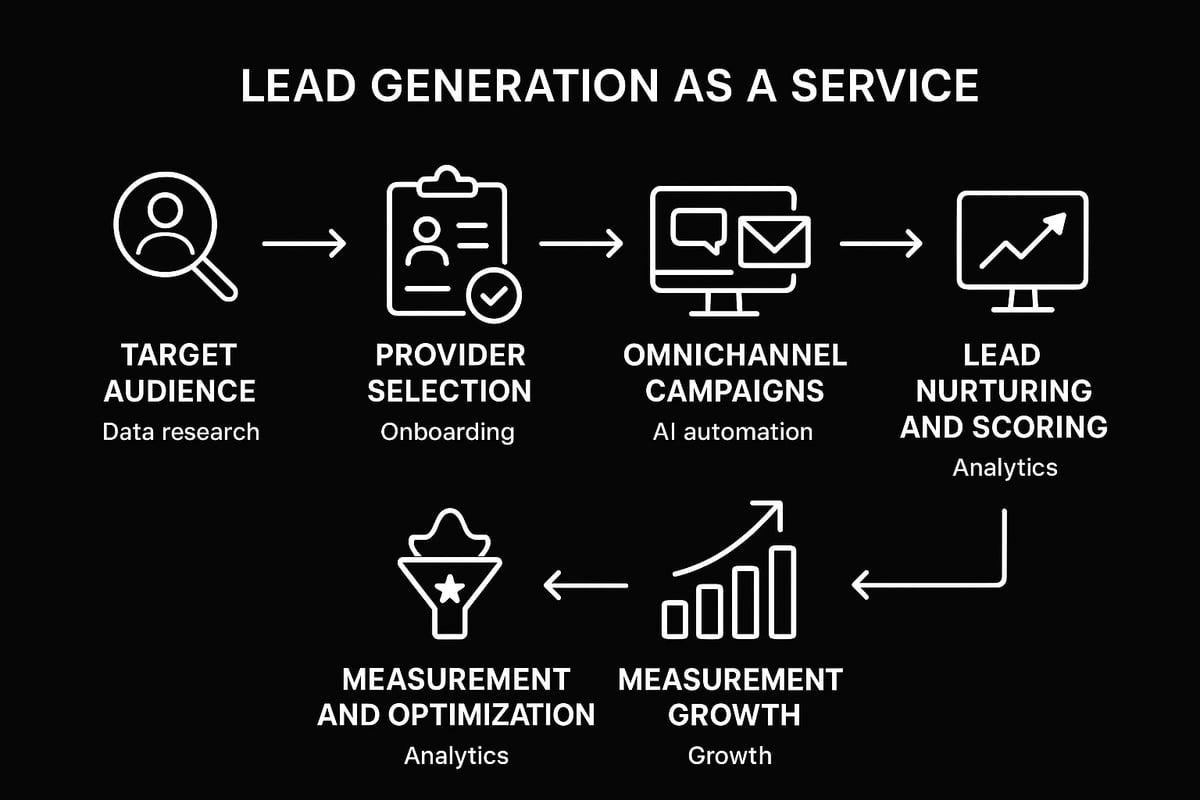
Step 1: Define Target Audience and Lead Criteria
Start by pinpointing your ideal customer profile and buyer personas. Deep research is essential, as effective lead generation as a service hinges on precise targeting. Use data enrichment tools to segment your audience by industry, role, or behavior.
Identify demographic, firmographic, and behavioral attributes.
Refine criteria using CRM and market data.
Example: A financial services firm narrows its focus to SMB CFOs.
Clear definitions ensure that lead generation as a service delivers high-intent prospects, setting the foundation for all subsequent steps.
Step 2: Select and Onboard Your LGaaS Provider
Choosing the right partner is critical. Evaluate providers based on expertise, technology stack, and industry fit. When onboarding, set clear KPIs and expectations, and align data sharing protocols to maintain compliance.
Review case studies and client testimonials.
Customize onboarding to your sector's needs.
Example: A hospitality brand adapts its onboarding with seasonal campaigns in mind.
A seamless onboarding process ensures your lead generation as a service provider operates as an extension of your team.
Step 3: Develop Omnichannel Campaigns
Design campaigns that engage prospects across multiple channels. With lead generation as a service, leverage AI-powered personalization for messaging on email, social, and phone. Automation enhances consistency and reach.
Tailor content to each platform.
Schedule outreach using advanced tools.
Example: A B2B SaaS company uses webinars and email drips in tandem.
Integrating AI agents in lead generation workflows enables precise targeting and personalized outreach, taking your campaigns to the next level.
Step 4: Nurture, Qualify, and Score Leads
Implement robust lead scoring models that combine behavioral, demographic, and intent data. Balance automated touchpoints with human interactions to keep leads engaged.
Use multi-touch nurturing for longer sales cycles.
Automate follow-ups while personalizing key messages.
Example: Legal services firms employ retargeting and tailored follow-ups.
This stage ensures lead generation as a service delivers not just quantity, but quality, moving prospects efficiently through the funnel.
Step 5: Measure, Analyze, and Optimize
Track essential metrics to evaluate campaign performance. Lead generation as a service platforms often provide real-time dashboards and analytics for actionable insights.
Monitor conversion rates, CPL, and pipeline velocity.
Conduct A/B testing on messaging and creatives.
Example: An e-commerce store iterates ad creatives for higher CTR.
Continuous measurement and optimization keep your strategy agile, enabling quick pivots in response to data.
Step 6: Scale and Iterate for Continuous Growth
Once successful patterns emerge, scale winning campaigns and experiment with new channels. Collaborate with your provider to innovate and test emerging tactics.
Expand budgets for high-performing campaigns.
Explore channels like WhatsApp, SMS, or conversational AI.
Example: A SaaS company grows from email outreach to LinkedIn automation.
By treating lead generation as a service as an evolving partnership, you ensure sustained pipeline growth and adaptability in a dynamic marketplace.
Advanced Strategies for Maximizing Lead Generation ROI
Unlocking the full potential of lead generation as a service in 2026 requires more than just basic tactics. Advanced strategies blend AI, data, and seamless collaboration to drive higher ROI, efficiency, and sustainable growth. Explore how to elevate your results with cutting-edge approaches tailored to today’s dynamic landscape.
Leveraging AI and Machine Learning for Hyper-Personalization
AI and machine learning are transforming lead generation as a service by enabling hyper-personalized outreach at scale. Dynamic content adapts to each stage of the buyer’s journey, increasing engagement and relevance. Predictive AI recommends next-best actions, while chatbots qualify and schedule appointments instantly.
Meta’s ambitious push to fully automate ad creation and targeting with AI by 2026 highlights the growing impact of automation on lead generation as a service. This evolution allows businesses to deliver tailored experiences efficiently, ensuring that every prospect receives the right message at the right time.
Integrating Intent Data and Behavioral Analytics
Intent data and behavioral analytics give lead generation as a service providers a competitive edge. By tracking real-time prospect activity across channels, organizations gain insight into what buyers want and when they are ready to engage.
High-intent leads are prioritized using advanced scoring models, while behavioral triggers activate personalized workflows. This data-driven approach boosts lead quality, shortens sales cycles, and increases conversion rates, ensuring that your lead generation as a service investment delivers measurable value.
Omnichannel Retargeting and Multi-Touch Campaigns
Omnichannel strategies are central to successful lead generation as a service. Coordinated campaigns across email, social media, web, and paid ads keep your brand top of mind throughout the buyer journey. Sequential messaging guides leads from awareness to decision, while retargeting campaigns recover lost opportunities.
The rise of AI-powered conversational tools, such as chatbots and voice assistants, is reshaping engagement. According to conversational marketing trends in 2026, integrating these technologies into your lead generation as a service strategy can significantly enhance response rates and lead nurturing.
Sales and Marketing Alignment for Higher Conversion
Maximizing ROI from lead generation as a service requires seamless collaboration between sales and marketing. Establishing service level agreements (SLAs), shared dashboards, and feedback loops ensures both teams work toward common goals.
Joint campaign planning and regular review sessions help identify bottlenecks and optimize processes. When sales and marketing align, leads are nurtured more effectively, resulting in higher conversion rates and a more predictable pipeline.
Automation and Workflow Optimization
Automation is essential for scaling lead generation as a service without sacrificing quality. Automated follow-ups, scheduling, and reporting free up valuable time for your team to focus on high-impact activities.
Workflow templates standardize lead handoff and nurturing, reducing manual errors and increasing efficiency. By optimizing these processes, businesses can improve consistency, accelerate response times, and maximize the ROI of their lead generation as a service investments.
Case Studies: Real-World LGaaS Success Stories
Real-world examples illustrate the transformative impact of lead generation as a service. A B2B company tripled qualified leads in six months with BusySeed’s data-driven approach. A hospitality firm saw bookings rise by 40 percent through omnichannel campaigns. A SaaS startup reduced customer acquisition costs by 25 percent using AI-driven lead scoring.
These case studies underscore the value of advanced strategies—when lead generation as a service is implemented thoughtfully, businesses across industries achieve faster growth, higher ROI, and a stronger competitive position.
Future-Proofing Your Lead Generation Strategy for 2026 and Beyond
Staying ahead in lead generation as a service requires a proactive approach to shifting buyer habits, regulatory landscapes, and technology innovations. By anticipating and adapting to change, your business can keep its pipeline strong, compliant, and ready for whatever the future holds.
Adapting to Evolving Buyer Behaviors and Tech
Today’s buyers are more self-reliant, often completing most of their research before engaging with sales. This trend will intensify by 2026, making it essential for companies using lead generation as a service to reach prospects where they are—across dark social channels, private communities, and emerging platforms. Businesses must embrace conversational marketing and adapt messaging strategies to fit new communication norms. Proactive monitoring of shifting buyer journeys ensures your outreach remains relevant and timely. Companies that align their lead generation as a service approach to these evolving preferences will consistently capture attention and drive stronger engagement.
Navigating Privacy, Compliance, and Ethical Challenges
Global privacy regulations are growing more stringent, requiring businesses to rethink how they collect and manage lead data. Lead generation as a service providers must prioritize transparency, clear consent, and robust compliance processes to build and maintain trust. Investing in compliance-focused partnerships reduces risk and streamlines adaptation to new laws. Ethical outreach, regular audits, and transparent data practices are now baseline expectations. Brands that use compliance as a differentiator not only protect themselves but also create a competitive edge, demonstrating a commitment to respecting customer rights and preferences in every campaign.
Measuring Success and Scaling for the Long Term
Long-term growth with lead generation as a service hinges on clear KPIs and a culture of continuous improvement. Establish metrics such as conversion rates, cost per lead, and pipeline velocity to assess performance and inform strategy. Building a learning organization enables your team to adapt rapidly to market shifts, competitor moves, or economic changes. Diversifying outreach channels and maintaining agile feedback loops help future-proof your pipeline. For example, e-commerce brands that leverage multiple channels with lead generation as a service can maintain steady lead flow even as digital markets evolve and consumer preferences change.
Emerging Technologies and What’s Next
The next wave of lead generation as a service will be shaped by powerful AI advancements, predictive intent analytics, and immersive engagement tools. By 2026, platforms like Meta are expected to fully automate ad creation and targeting with AI, as seen in Meta's AI-driven ad automation by 2026. Early adopters will also benefit from integrating AR and VR experiences, secure data sharing through clean rooms, and advanced personalization. Staying informed and testing these technologies can help your business seize new opportunities and outpace the competition with innovative lead generation as a service solutions.
As you look ahead to 2026 and consider how to truly future proof your lead generation strategy, it's clear that embracing automation, AI, and data driven workflows isn’t just a trend—it’s essential for sustainable growth. If you’re ready to explore how these advanced approaches can help your business scale faster, save time, and stay ahead of competitors, let’s take the next step together. I invite you to Book a free consultation to discuss your unique challenges and map out a tailored roadmap for your success. Your smarter, more efficient lead generation journey starts here.