Essential Guide to Marketing Consulting Success in 2026
Master marketing consulting in 2026 with expert strategies, tech trends, and proven frameworks to grow your business and deliver measurable client results.
Dec 12, 2025
In 2026, marketing consulting will be the engine behind business growth in a digital-first world—are you ready to lead? This essential guide presents a clear, step-by-step roadmap for achieving success in marketing consulting, equipping you with the latest strategies, innovative tools, and critical industry insights.
As the marketing landscape evolves rapidly, this guide empowers consultants and firms to navigate new technologies and build businesses that are both sustainable and scalable. Discover how explosive industry growth, emerging challenges, and unique opportunities will shape your path in 2026.
You will gain actionable strategies, future-focused trends, and proven frameworks to elevate your consulting practice. Master these essentials to unlock next-level results for your clients and future-proof your marketing consulting business.
The Evolving Landscape of Marketing Consulting in 2026
The marketing consulting industry is undergoing rapid transformation as we approach 2026. Driven by innovation and client demand, consultants must continuously adapt to new trends, technologies, and expectations. Understanding these shifts is crucial for building a future-ready consulting practice.
Key Industry Trends and Market Shifts
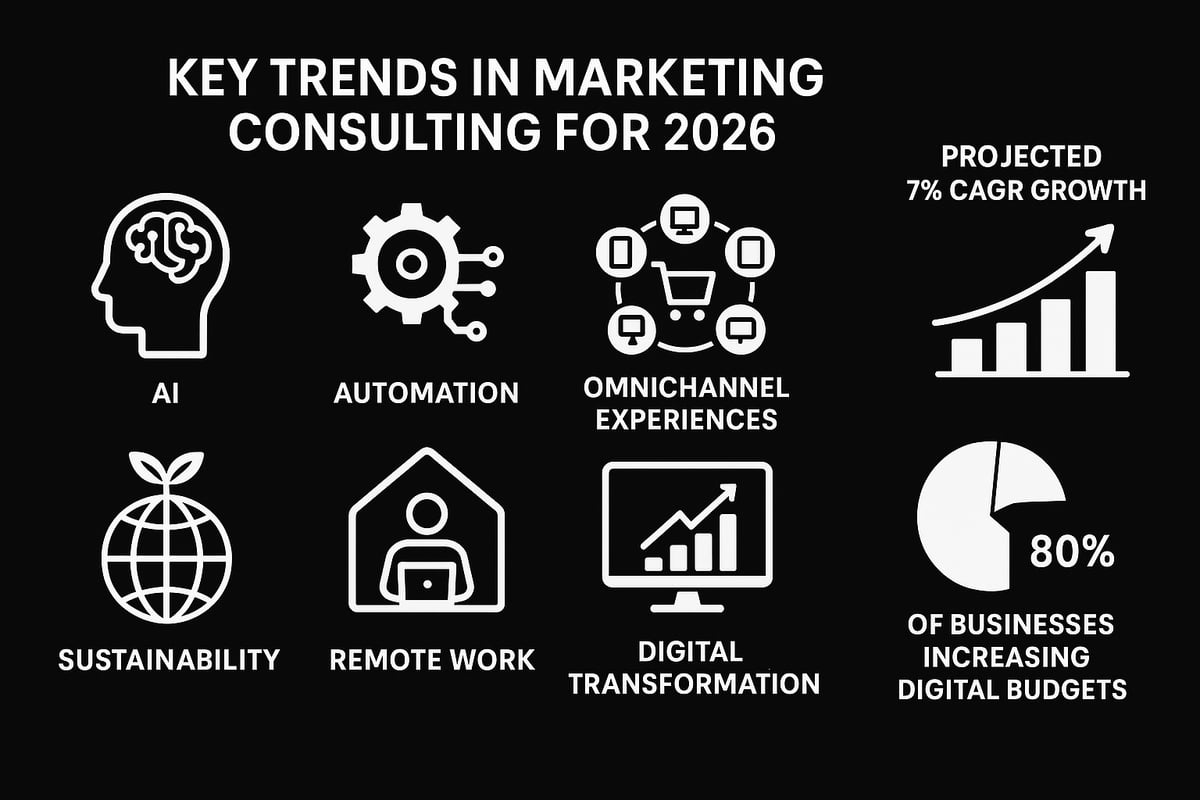
Marketing consulting in 2026 is shaped by several powerful trends. The rise of AI and automation has redefined how consultants approach strategy and execution. Data-driven decision-making is now the industry standard, allowing consultants to deliver more precise recommendations.
Clients increasingly expect seamless omnichannel experiences and personalized interactions. This shift is pushing marketing consulting firms to expand their expertise across industries such as healthcare and fintech. Sustainability and ethical marketing practices are also gaining prominence, with firms integrating these values into their core offerings.
Adapting to remote and hybrid work models is another significant shift. Firms like Bain & Company now emphasize customer strategy and digital transformation to meet evolving demands. According to industry reports, the consulting sector is projected to grow at a 7% CAGR through 2026. For a comprehensive review of these trends, visit the Marketing Consulting Market Analysis by Mordor Intelligence.
Trend | Impact on Marketing Consulting |
|---|---|
AI & Automation | Enhanced efficiency, smarter insights |
Omnichannel Experience | Improved client engagement |
New Industry Expansion | Broader client base |
Sustainability Focus | Ethical, future-proof strategies |
Remote Work Models | Flexible service delivery |
Impact of Technology and Digital Transformation
Technology is at the core of marketing consulting's evolution. AI-powered analytics, automation tools, and campaign optimization platforms are now integral to consulting services. Mastery of martech stacks—including CRM, marketing automation, and customer data platforms—allows consultants to provide tailored solutions.
Digital transformation is not just a buzzword; it is a central consulting offering. Consultants leverage WhatsApp and chatbots for real-time customer engagement, streamlining communication. In fact, 80% of businesses plan to increase digital marketing budgets by 2026, underscoring the need for consultants to stay ahead of the curve.
To remain competitive, marketing consulting professionals must proactively adopt new technologies. This means continuously monitoring advancements and integrating the latest tools into their service models. Those who lead in technology adoption will set themselves apart in a crowded market.
New Client Expectations and Value Propositions
Clients in 2026 are more discerning, seeking measurable ROI, transparency, and agile marketing consulting strategies. They prefer ongoing partnerships over one-off projects, driving a shift toward retainer and performance-based models.
Integrated sales and marketing solutions are now the norm. Consulting firms offer end-to-end customer journey mapping, ensuring that every stage of the client’s experience is optimized for growth. The real value in marketing consulting lies in delivering tangible business outcomes, not just executing isolated tactics.
Building trust through clear communication and proven results has never been more important. Consultants who align their value propositions with client goals and demonstrate impact will secure long-term relationships and referrals.
Core Competencies and Skills for Marketing Consultants in 2026
To excel in marketing consulting by 2026, professionals must master a blend of technical expertise, strategic insight, and interpersonal abilities. The evolving landscape demands consultants who are agile, data-driven, and committed to ongoing growth. Let us explore the essential core competencies every marketing consulting leader should develop to remain competitive and deliver measurable results.
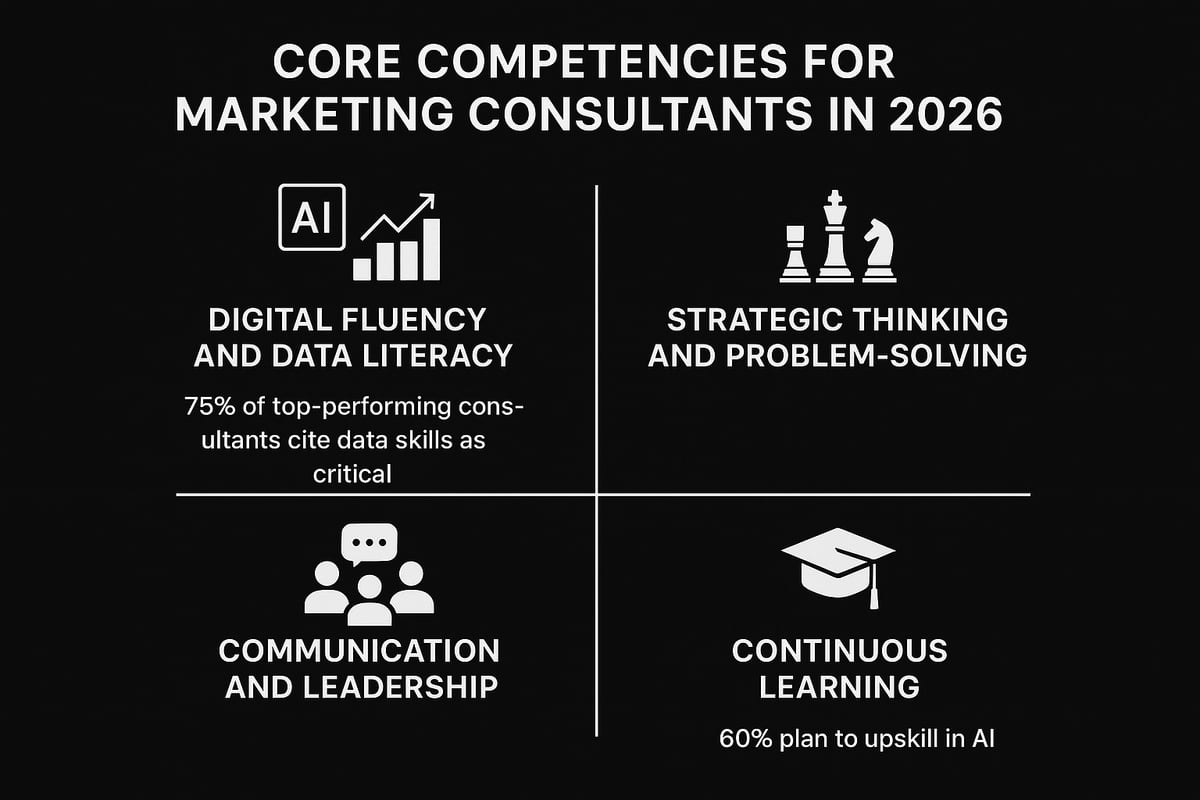
Digital Fluency and Data Literacy
Digital fluency and data literacy are now non-negotiable in marketing consulting. Consultants must navigate analytics platforms, interpret complex datasets, and translate numbers into actionable strategies. Mastery of data visualization, real-time performance measurement, and AI-driven tools is essential for campaign optimization.
For example, predictive analytics can identify trends before they emerge, allowing consultants to adjust tactics proactively. According to industry reports, 75% of top-performing consultants cite data skills as critical to their success in marketing consulting.
To stay competitive, consultants need to embrace the latest advancements in AI and automation. For a deeper dive into how AI is transforming the field, explore Leveraging AI in Marketing Consulting. By building these skills, professionals can deliver insights that drive measurable business outcomes.
Strategic Thinking and Problem-Solving
Strategic thinking sets great marketing consulting apart from the rest. Consultants must design holistic marketing strategies that align with client business objectives. This includes scenario planning, risk management, and adapting approaches for volatile markets.
Consider the importance of omnichannel engagement. Successful consultants develop frameworks that integrate digital, traditional, and experiential channels for maximum reach. By anticipating market shifts, they become proactive advisors rather than simple executors.
A consultant’s ability to solve complex problems and think several steps ahead is what clients value most in marketing consulting today. This competency ensures solutions are both innovative and resilient, supporting long-term client growth.
Communication, Leadership, and Relationship Management
Strong communication and leadership skills are essential in marketing consulting. Building trust with diverse stakeholders and leading cross-functional teams is at the core of every successful project. Effective consultants facilitate workshops, present findings with clarity, and foster buy-in for new initiatives.
Relationship management extends beyond project delivery. Consultants must nurture client partnerships, ensuring transparency and responsiveness at every stage. This drives higher retention and satisfaction in marketing consulting.
Soft skills like empathy, adaptability, and conflict resolution are just as vital as technical know-how. When consultants balance expertise with emotional intelligence, they create lasting impact for their clients.
Continuous Learning and Adaptability
Continuous learning is the backbone of sustainable marketing consulting. The digital landscape evolves rapidly, with new platforms, regulations, and best practices emerging each year. Consultants must invest in certifications, attend industry events, and seek knowledge that keeps their expertise current.
For instance, adapting to new privacy laws or digital standards requires both technical and legal awareness. A recent survey revealed that 60% of consultants plan to upskill in AI and automation by 2026, reflecting the pace of change in marketing consulting.
Staying ahead means embracing a growth mindset. Consultants who prioritize learning and adaptability are best positioned to lead, innovate, and future-proof their businesses.
Building a Future-Proof Marketing Consulting Business
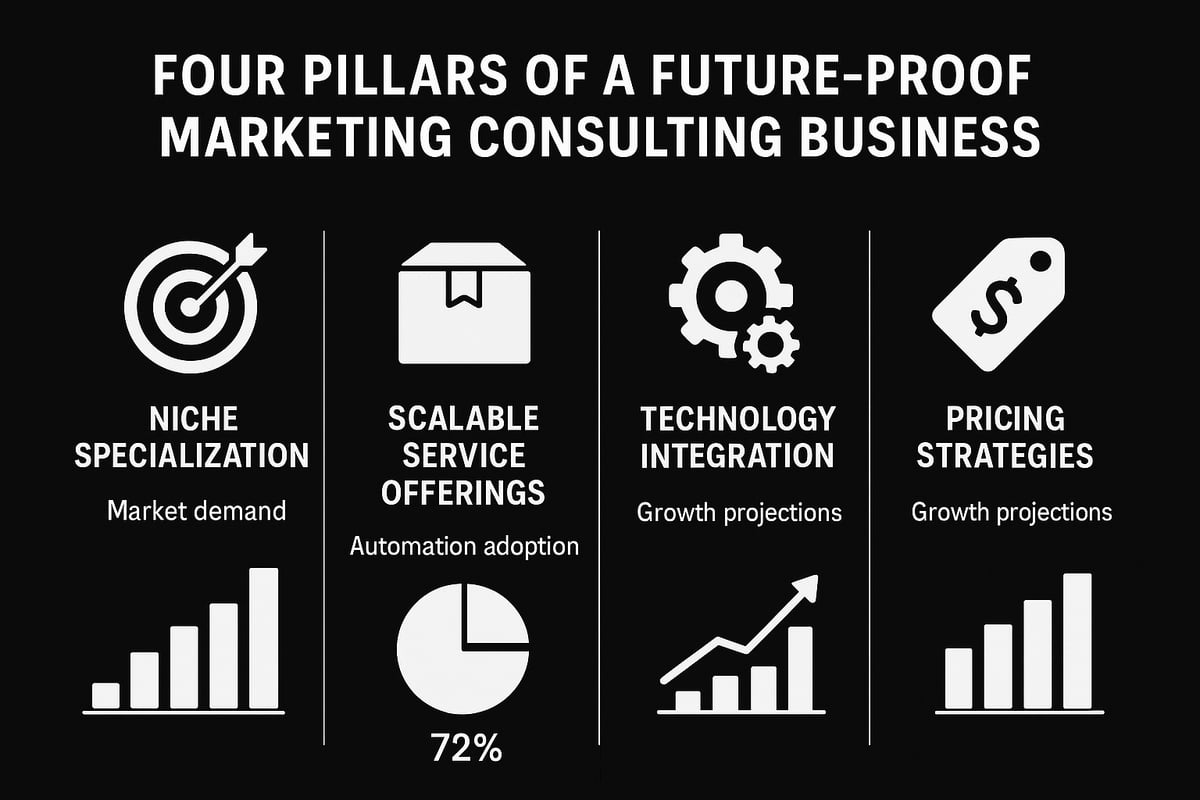
In the rapidly evolving world of marketing consulting, future-proofing your business is no longer optional. The landscape is shifting, client expectations are rising, and technology is transforming how services are delivered. To thrive in 2026 and beyond, consultants must strategically define their niche, develop scalable offerings, integrate cutting-edge tools, and adopt pricing models that build trust and long-term value.
Defining Your Niche and Unique Value Proposition
The foundation of a resilient marketing consulting business is a clearly defined niche. Specialization—whether by industry, channel, or technology—positions your firm as an expert, making it easier to attract clients who value deep expertise. For example, focusing on AI-driven lead generation or sustainability consulting can set your practice apart in a crowded market.
To identify your ideal niche, start by researching current market demand and analyzing your competitors. Which industries are underserved or experiencing rapid growth? What gaps exist in service delivery or expertise? Answering these questions helps pinpoint where your skills and experience will be most valued.
Niche expertise is not just about technical knowledge. It also involves crafting a unique value proposition that resonates with your target audience. This means articulating how your marketing consulting services solve specific business problems and deliver measurable outcomes. When your value is clear and relevant, premium clients and referrals follow naturally.
Developing Scalable Service Offerings
Scalability is essential for long-term success in marketing consulting. Productizing your services—such as offering digital audits, growth sprints, or modular consulting frameworks—enables you to serve more clients efficiently without sacrificing quality. Service packages make it easier for clients to understand what you deliver and the value they receive.
Consider creating standardized packages that address common client pain points. For instance, a digital marketing audit could include a comprehensive review of digital assets, followed by actionable recommendations. Growth sprints can focus on rapid experimentation and optimization, delivering quick wins and building momentum.
To see how leading consultants organize their offerings, explore the Marketing Consulting Services Overview. This resource outlines various service types and helps you benchmark your solutions against industry standards. By designing scalable service offerings, your marketing consulting practice can achieve consistent results and sustainable growth.
Leveraging Technology for Efficiency and Differentiation
Technology is a catalyst for efficiency and competitive advantage in marketing consulting. Integrating automation tools, CRM systems, and collaboration platforms streamlines operations and enhances client experiences. Building proprietary processes or digital dashboards can further differentiate your services in a saturated marketplace.
Automation, for example, reduces time spent on repetitive tasks, allowing consultants to focus on strategy and relationship building. Many firms now use automated reporting tools to provide clients with real-time insights. These innovations not only set your business apart but also improve scalability and client satisfaction.
With the right tech stack, marketing consulting firms can deliver faster, more accurate results. Investing in technology is not just about keeping up—it's about leading the pack with innovative solutions that drive measurable outcomes for your clients.
Pricing, Packaging, and Monetization Strategies
The way you price and package your marketing consulting services directly impacts your business's long-term viability. Value-based pricing, which aligns fees with the results delivered, is increasingly favored over traditional hourly or project rates. This model demonstrates your confidence in producing tangible outcomes and builds trust with clients.
Transitioning to retainer or performance-based models provides predictable revenue and fosters deeper partnerships. For example, outcome-based contracts might tie compensation to client revenue growth or other key performance indicators. This approach aligns your interests with your clients and encourages a focus on long-term business impact.
Transparent, flexible pricing strategies are essential for building lasting relationships. By clearly communicating your value and offering packaging options that fit different client needs, your marketing consulting business will be well positioned for sustainable success in 2026 and beyond.
Client Acquisition and Retention Strategies for 2026
Client acquisition and retention are central to marketing consulting success in 2026. As competition intensifies, consultants must adopt innovative approaches to attract, engage, and retain high-value clients. This section explores proven strategies, authority-building techniques, AI-driven automation, and actionable steps to future-proof your marketing consulting business for the evolving landscape.
Identifying and Attracting Ideal Clients
Understanding your ideal client profile is foundational for marketing consulting growth. Begin by creating detailed client personas based on industry, company size, decision-maker roles, and pain points. This targeted approach allows you to focus resources on segments most likely to benefit from your expertise.
Use inbound marketing strategies to attract prospects. Publish thought leadership articles, industry insights, and comprehensive case studies that showcase measurable results. These assets not only demonstrate your knowledge but also build credibility with potential clients.
Referrals remain a powerful acquisition channel in marketing consulting. Encourage satisfied clients to share testimonials and introduce you to their networks. Consistently engaging with your target audience through webinars, events, and social media further strengthens your pipeline and positions your firm as a trusted partner.
Building Authority and Trust in a Crowded Market
Establishing authority is essential for marketing consulting firms seeking to stand out. Start by developing a strong personal and organizational brand that communicates your unique value proposition. This includes a professional website, active social media presence, and a portfolio of success stories.
Participate in industry conferences, webinars, and podcasts to share your expertise with broader audiences. Speaking engagements and guest contributions on reputable marketing platforms position you as a thought leader and accelerate the client decision-making process.
To deepen trust, consistently publish high-quality content and engage in meaningful conversations with your audience. Transparency, responsiveness, and a commitment to ongoing education reinforce your credibility and foster long-term client relationships in the marketing consulting space.
The Role of AI-Driven Lead Generation and Sales Automation
AI-driven lead generation tools are transforming marketing consulting by streamlining prospecting and qualification. Implementing platforms that analyze data patterns and predict client needs enables you to focus your outreach on the most promising opportunities.
Automated sales workflows, including chatbots and personalized email sequences, ensure timely follow-ups and nurture leads efficiently. These technologies free up valuable time, allowing consultants to concentrate on strategic planning and high-value interactions.
A recent industry study found that AI-driven lead generation can increase conversion rates by up to 30 percent. By integrating automation into your marketing consulting processes, you improve scalability, reduce manual effort, and deliver a seamless experience for both prospects and existing clients.
How AI-Driven Automation Can Accelerate Consulting Growth
AI-powered automation is a game changer for marketing consulting firms in 2026. Intelligent solutions streamline lead generation, manage sales pipelines, and enable real-time campaign optimization through platforms like WhatsApp and chatbots.
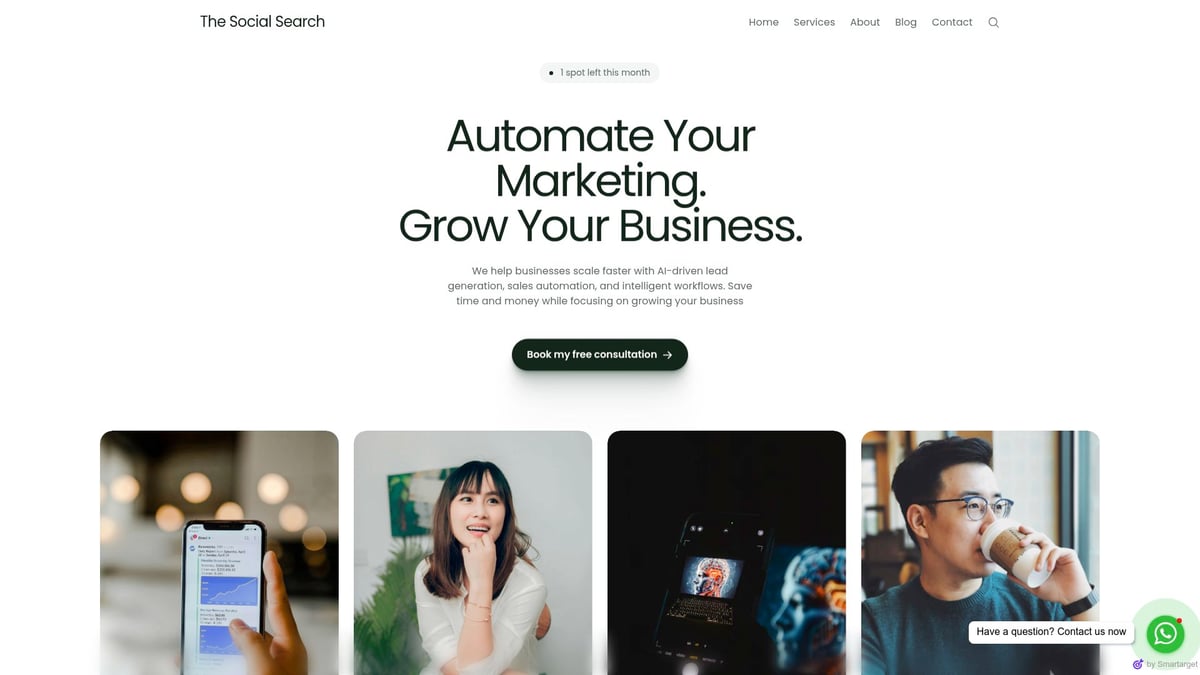
For small and mid-sized firms, automation levels the playing field with larger competitors. By leveraging tools that automate outreach, nurture leads, and deliver consistent client communications, consultants can scale their business without sacrificing personalization or quality.
Platforms like The Social Search empower marketing consulting professionals to optimize every stage of the client journey. Embracing AI-driven automation is not just a trend but a necessity for sustainable growth, improved client satisfaction, and long-term success in the dynamic consulting landscape.
Delivering Consistent Value and Measurable Results
In the fast-evolving world of marketing consulting, delivering consistent value and measurable results is the foundation for building trust and long-term client relationships. Success in 2026 means not just meeting expectations, but exceeding them through data-driven insights, transparent communication, and scalable frameworks.
Designing Data-Driven Marketing Strategies
To achieve sustained results, marketing consulting professionals must embrace a data-driven mindset. Setting well-defined KPIs and aligning them with client business objectives is the first step toward accountability. Through advanced analytics and performance measurement, consultants can monitor and optimize campaigns in real time.
Consider the following best practices for a data-driven approach:
Establish clear, quantifiable goals for every client engagement.
Use analytics platforms to track campaign performance and identify trends.
Implement A/B testing and attribution modeling to refine marketing tactics.
A table like the one below can help summarize essential metrics for effective marketing consulting:
Metric | Purpose | Tool Example |
|---|---|---|
Conversion Rate | Measure campaign effectiveness | Google Analytics |
Customer Lifetime Value | Assess long-term impact | CRM Platforms |
ROI | Quantify financial outcomes | Custom Dashboards |
With 78% of clients expecting ongoing performance insights, marketing consulting must prioritize transparency and adaptability.
Enhancing Client Collaboration and Communication
Strong collaboration is at the heart of exceptional marketing consulting. Transparent project management and regular communication keep clients engaged and informed. By using collaborative tools, consultants ensure shared visibility and foster an environment of trust.
Key strategies for enhancing collaboration include:
Scheduling regular strategy sessions for alignment and feedback.
Leveraging project management platforms for task tracking and reporting.
Creating feedback loops to quickly address concerns and adapt plans.
Workshops and real-time updates can further improve buy-in and satisfaction. When clients feel actively involved, marketing consulting projects are more likely to succeed and drive higher retention rates. Effective communication transforms complex data into actionable insights, making it easier for stakeholders to support new initiatives.
Measuring, Reporting, and Scaling Results
Measuring and reporting are essential for proving the value of marketing consulting. Establishing frameworks for tracking progress allows consultants to showcase tangible outcomes. Scaling successful campaigns across channels and markets requires careful documentation and analysis.
Consider these steps for effective measurement:
Develop standardized reporting templates for consistency.
Highlight success stories with case studies and measurable results.
Use automated dashboards to share real-time performance data.
As the field evolves, marketing consulting increasingly intersects with sales and business strategy. For deeper insights into this integration, see Sales and Marketing Consulting Insights, which explores how consultants deliver holistic value and adapt to changing client needs.
Ultimately, clients remain loyal to consultants who consistently demonstrate business impact and adapt strategies for growth.
Preparing for the Future: Trends and Opportunities Beyond 2026
The future of marketing consulting promises rapid evolution, driven by technology, shifting client needs, and bold new opportunities. To stay ahead, consultants must anticipate trends, expand their roles, and build resilient, adaptable businesses. Let’s explore what lies beyond 2026 and how to secure your place at the forefront of the industry.
Emerging Technologies Shaping Marketing Consulting
Emerging technologies are fundamentally reshaping the landscape of marketing consulting. Generative AI, voice search, and immersive experiences like AR and VR are moving from experimental to essential. Consultants now deploy advanced customer journey mapping and predictive analytics to deliver hyper-personalized solutions.
A marketing consulting firm that leverages AI-powered content creation can offer clients rapid, data-driven campaigns tailored to individual preferences. Voice search optimization is another frontier, requiring expertise in conversational marketing and content structuring. Immersive technologies open new channels for engagement, making client experiences more interactive and memorable.
According to Marketing Consulting Market Size, Share & Growth 2035, the market is set for significant expansion as firms invest in these emerging technologies. In fact, 90% of consulting firms plan to boost their martech spending by 2027, underscoring the centrality of technology in future marketing consulting strategies.
Technology | Impact on Marketing Consulting | Adoption Rate (2027 est.) |
|---|---|---|
Generative AI | Automated content, personalization | 85% |
Voice Search | New SEO strategies, accessibility | 70% |
AR/VR | Immersive client experiences | 60% |
Predictive Analytics | Smarter targeting, ROI insights | 90% |
To remain competitive, consultants must continually evaluate and integrate these technologies into their practice. The future belongs to those who are proactive, tech-savvy, and committed to innovation.
The Expanding Role of Marketing Consultants
Marketing consulting is no longer confined to campaign management or tactical advice. The role is expanding to encompass sales integration, customer experience (CX), and even business strategy. Clients increasingly seek consultants who can deliver holistic growth solutions, guiding digital transformation and organizational change.
Today’s marketing consulting leaders partner with clients on end-to-end growth initiatives. For instance, a consultant might oversee CX audits, align sales and marketing teams, and advise on data governance. This broader engagement positions consultants as trusted strategic partners, not just service providers.
As markets change, consultants must cultivate cross-disciplinary skills and industry knowledge. The ability to consult on digital transformation, regulatory compliance, and business model innovation is now a key differentiator in the marketing consulting space. According to recent analysis from Marketing Consulting Market Size & Forecast, firms that diversify their offerings and embrace integrated consulting models are best positioned for sustained growth.
The expanding role requires a mindset shift: success lies in delivering business outcomes, not just marketing outputs. By building expertise across sales, CX, and digital strategy, consultants can unlock greater value for clients and open new revenue streams.
Building Resilience and Agility for Long-Term Success
Future-ready marketing consulting businesses must be resilient and agile. This means adapting quickly to regulatory changes, market disruptions, and evolving client expectations. The most successful consultants invest in team development, technology partnerships, and continuous innovation.
Consider the lessons from recent economic downturns. Firms that pivoted their service offerings, embraced remote collaboration, and leveraged automation weathered uncertainty better than those that resisted change. Agility in marketing consulting translates to rapid response, diversified revenue streams, and proactive risk management.
To build resilience, consultants should:
Regularly upskill and cross-train teams on new technologies.
Foster strong partnerships with technology providers.
Monitor regulatory trends and adjust strategies promptly.
Encourage a culture of experimentation and learning.
Resilience and agility are the foundation for future-proof marketing consulting businesses. By anticipating change and cultivating adaptability, consultants can turn uncertainty into opportunity, ensuring sustainable growth well beyond 2026.
As you look ahead to mastering marketing consulting in 2026, embracing AI-driven strategies and automation can set you apart and position your business for sustainable growth. Whether you're aiming to streamline your lead generation, enhance client relationships, or simply stay ahead of industry trends, having the right partner makes all the difference. If you're ready to elevate your consulting practice and put these proven frameworks into action, let's take the next step together. You can Book a free consultation and discover how to scale smarter, save time, and focus on what truly drives results.