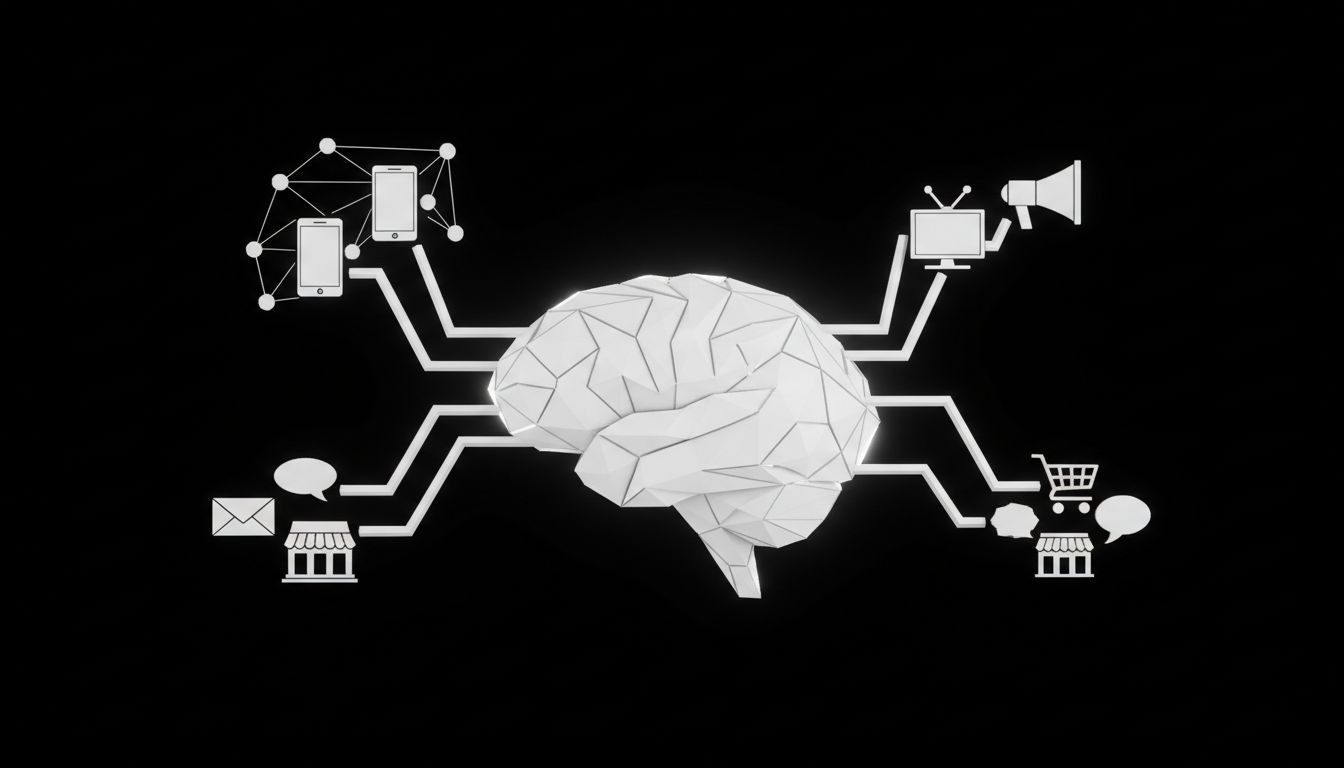
What Is Marketing Channels? A Practical Guide to Types, Strategy, and Examples
Learn what marketing channels are, how they differ from distribution channels, and how to choose the best mix for SEO, ads, email, and social growth today.
If you’ve ever wondered what is marketing channels, the simplest answer is that they are the paths you use to reach the people who might buy from you. Those paths can be digital, like SEO, paid social, email, and content. They can also be more traditional, like retail partners, wholesalers, events, or direct sales. The term causes confusion because marketers use it in two different ways. In modern digital strategy, marketing channels usually means the places and methods you use to create demand and generate leads. In broader business terms, it can also mean distribution channels, which are the routes products take to get to customers. Once you understand both, it becomes much easier to choose the right mix for growth, whether you are building a local service business, an ecommerce brand, or a B2B funnel that depends on search, social media, AI chat agents, and paid ads.
What marketing channels means in practice
Marketing channels are the touchpoints that help someone discover, trust, and act on your offer. A channel can be as simple as a Google search result or as active as a TikTok ad with a lead form. It can also be the email sequence that follows up after a download, the chatbot that qualifies a visitor, or the referral partner that sends you warm introductions.
In everyday marketing conversations, people usually mean promotional channels. These are the places where you create awareness and move prospects toward a conversion. That is the meaning this article focuses on first. Later, we will cover distribution channels so you can see where they fit.
A strong channel strategy is less about being everywhere and more about being present in the places your audience already uses. If your buyers research before they buy, search and content matter. If they respond to short-form video, paid social and creator-led content matter. If they need a quick answer before booking, your site experience and automated AI chat agents matter.
The main types of marketing channels

The most useful way to think about marketing channels is by how they influence the buyer journey.
Channel type | Best for | Strength | Limitation |
|---|---|---|---|
SEO and content marketing | High-intent discovery | Compounds over time and captures search demand | Takes time to build |
Paid search and paid social | Fast testing and scaling | Immediate visibility and control | Costs can rise quickly |
Email marketing | Nurture and retention | Owns the relationship with the audience | Needs a quality list |
Organic social and creator content | Trust and awareness | Builds brand memory and reach | Harder to attribute directly |
Website conversion tools and chat | Turning traffic into leads | Improves response speed and qualification | Depends on traffic quality |
Distribution channels | Getting products to buyers | Expands availability and reach | Often involves partners and margin tradeoffs |
SEO and content marketing
SEO and content marketing help you show up when people are already looking for a solution. That makes them one of the most valuable channels for lead generation, especially for service businesses and B2B brands. A useful blog post, comparison page, or landing page can attract traffic for months or even years.
This is also where a strong process matters. If you want your content to keep ranking and converting, automated SEO can help you maintain pages, refresh content, and keep search intent aligned with what buyers actually want.
Paid search and paid social
Paid search and paid social are the fastest way to test messaging, audiences, and offers. Search ads work well when intent is already high. Paid social works well when you need to create demand or introduce a new angle.
Meta and TikTok are especially useful for visual offers, short-form creative, and rapid testing. If you need lead flow sooner rather than later, paid ads management can help you set up campaigns, refine targeting, and improve the path from click to conversion.
Email marketing
Email is one of the few channels you truly own. Once someone opts in, you can follow up, educate, launch offers, and re-engage without paying for every impression. That makes email ideal for lead nurturing, abandoned cart recovery, onboarding, and post-sale retention.
Email works best when it is tied to other channels. A social post can drive the signup. A landing page can capture the lead. An automated sequence can move the person toward a call, a demo, or a purchase. When those pieces work together, email becomes more than a newsletter. It becomes part of the sales system.
Organic social and creator content
Organic social is where many brands build familiarity before a buyer ever visits the website. It is especially important for short-form video, brand storytelling, and community building. Creator content can add credibility because it feels closer to a recommendation than a polished ad.
This channel is often underestimated because it does not always close the sale on the first touch. But it can do a lot of the heavy lifting before the conversion happens. If you want to keep your posting consistent without making content creation the entire job, automated social media can help streamline publishing and repurposing.
Website conversion tools and AI chat agents
A channel does not stop when someone lands on your site. That visit still needs to turn into a lead, a booking, or a purchase. This is where your landing pages, forms, booking flows, and automated AI chat agents matter.
For many businesses, chat is one of the highest leverage conversion tools on the site. It can answer questions, qualify visitors, route them to the right next step, and collect details while the person is still engaged. That makes it especially useful for lead generation, service businesses, and high-intent traffic from SEO or paid ads.
Distribution channels
Distribution channels are not the same as promotional marketing channels, but they still matter. If you sell physical products, your distribution may include direct sales, retailers, wholesalers, marketplaces, resellers, or agents. The job of the distribution channel is to get the product where it needs to be.
For product businesses, the best growth plans usually combine both sides. Marketing creates demand. Distribution makes sure the buyer can actually get the product. If one side is weak, growth becomes harder than it needs to be.
Marketing channels vs distribution channels
This is the distinction that clears up most confusion.
Area | Marketing channels | Distribution channels |
|---|---|---|
Main job | Create demand and awareness | Move the product or service to the customer |
Examples | SEO, paid social, email, content, events, chat | Direct sales, retailers, wholesalers, marketplaces |
Audience question | How do I learn about this brand? | How do I get this product? |
Best success metrics | Traffic, leads, conversions, CAC, ROAS | Availability, sell-through, margin, reorder rate |
Common owner | Marketing team | Sales, operations, partnerships, ecommerce, or supply chain |
A simple way to remember it is this. Marketing channels help people find you. Distribution channels help them buy from you.
Why marketing channels matter

The right channels do more than bring in traffic. They shape the entire customer journey.
Awareness
At the top of the funnel, channels like SEO, paid social, short-form video, and creator content help people discover your brand for the first time. This is where first impressions are built.
Consideration
Once a prospect knows you exist, they start comparing options. At this stage, email nurture, case studies, webinars, retargeting, and educational content help them stay engaged.
Conversion
This is where a landing page, sales call, demo booking, checkout flow, or chat experience needs to do its job. If your offer is strong but your conversion path is weak, the channel will underperform. That is why smart teams invest in automated lead generation alongside traffic channels. They want every click to have a clear next step.
Retention
Good marketing channels are not only for getting new customers. They also support repeat purchases, upsells, referrals, and customer loyalty. Email and social are especially useful here because they keep your brand in front of people after the first conversion.
The best channel mix is rarely one channel doing everything. It is a sequence of channels that work together.
How to choose the right marketing channels

Choosing channels becomes much easier when you start with the buyer, not the platform.
1. Start with how your audience buys
Ask where your audience already spends time, how they search for solutions, and what level of trust they need before taking action. A high-consideration B2B buyer behaves very differently from someone buying a low-cost consumer product.
2. Match the channel to the sales cycle
Short sales cycles often work well with paid social, search ads, and direct response offers. Longer sales cycles usually need SEO, content, email nurture, and retargeting to keep the conversation going.
3. Pick channels that fit your offer
Some offers are easy to understand in a few seconds. Others need education, proof, and multiple touchpoints. If you are selling something complex, your channels should support explanation, not just exposure.
4. Set your budget and speed expectations
Some channels take time to compound, like SEO and organic social. Others can produce faster signals, like paid ads. A good plan usually combines both. One gives you speed, the other gives you staying power.
5. Build measurement before you scale
If you cannot tell which channel is driving qualified leads, you will end up guessing. That is why tracking matters from the start. Decide what a conversion is, how a lead is scored, and what handoff happens next.
6. Use automation where it saves time
When leads come in from multiple sources, speed matters. Automation can help route inquiries, tag sources, send follow-ups, and book meetings. If your team wants a cleaner workflow from first click to follow-up, automated lead generation can reduce manual work and keep hot leads from going cold.
A practical starting point is to choose two or three core channels first. Add more only after the first ones are stable.
Marketing channel examples by business type
Ecommerce
An ecommerce brand usually needs a mix of paid social, creator content, email, product page SEO, and retargeting. TikTok and Meta can create demand quickly, while email and organic search help capture people who come back later. The mistake many stores make is depending on one paid channel and ignoring retention.
B2B SaaS
For B2B SaaS, SEO, comparison pages, webinars, LinkedIn content, email nurture, and search ads often work well together. The buying cycle is longer, so one ad rarely closes the deal. A visitor may need to read a few articles, see a demo, and ask questions before they are ready to book.
Local service business
A local business usually benefits from local SEO, Google search ads, reviews, social proof, and fast contact options on the site. If the buyer needs an answer today, an AI chat flow or instant booking path can lift conversions fast. That is why automated AI chat agents can be so effective for service businesses that want better lead capture without adding more admin work.
New product launch
When a product is new, attention matters first. That usually means short-form video, paid social, creator partnerships, email waitlists, and a landing page with one clear action. The goal is to create interest quickly, then keep people moving toward the next step.
How to measure whether a channel is working
The wrong metric can make a good channel look bad. The right metric shows whether the channel is doing its job.
Channel | Core metrics | What to watch for |
|---|---|---|
SEO | Organic clicks, rankings, qualified leads | Search visibility and long-term growth |
Paid ads | CTR, CPC, CPL, ROAS | Creative fatigue, rising costs, poor landing pages |
Open rate, click rate, reply rate, revenue per send | List quality and message relevance | |
Organic social | Reach, shares, saves, profile visits | Engagement quality, not just views |
AI chat and landing pages | Chat starts, booking rate, lead quality | Response speed and friction in the funnel |
Distribution | Sell-through, margin, reorder rate | Partner performance and product availability |
A few measurement rules help a lot:
Do not judge SEO only by same-day revenue.
Do not judge social only by direct last-click conversions.
Do not judge paid ads only by impressions.
Do look at assisted conversions and lead quality.
Do tie channel metrics back to business outcomes, not vanity numbers.
The best teams understand that a buyer might see a TikTok, search the brand later, read a blog post, open an email, and then convert through chat. That is normal. The channel mix should be measured as a system, not in isolation.
Common mistakes to avoid
Trying to do everything at once
Many teams launch too many channels before one is working properly. That usually leads to thin content, scattered ads, and weak follow-up. It is better to win with a few channels first.
Treating all channels the same
A channel that builds trust is not measured the same way as a channel that drives instant clicks. SEO, email, social, and paid ads each have a different job. If you expect them all to behave the same, you will make poor decisions.
Sending traffic to a weak offer
No channel can fix a confusing landing page or an unclear call to action. If people click but do not convert, the problem may be the page, the offer, or the follow-up, not the channel itself.
Ignoring response time
For lead generation, speed matters. A great ad or a strong organic post can still lose value if the follow-up is slow. That is why automation, routing, and chat can make such a difference.
Forgetting the customer journey
Marketing channels should work together. A lead may discover you on social, validate you through search, sign up by email, and buy after a conversation. When the handoff is smooth, conversion gets easier.
FAQ
What are the most effective marketing channels?
The most effective channels depend on your audience and offer. For many businesses, SEO, paid ads, email, and social media make up the strongest core mix.
How many marketing channels should a business use?
Start with two or three channels that you can manage well. Once they are stable, add more. Quality beats quantity.
What is the difference between a marketing channel and a distribution channel?
A marketing channel creates awareness and demand. A distribution channel moves the product or service to the customer.
Are SEO and content marketing the same channel?
They are related, but not identical. Content creates the asset, while SEO helps people discover it through search.
What is an omnichannel strategy?
An omnichannel strategy is a coordinated approach where your channels work together so the customer gets a consistent experience across touchpoints.
Understanding what is marketing channels gives you a much clearer way to plan growth. Instead of chasing random tactics, you can build a system that matches how people actually buy. For most brands, that means combining awareness channels, conversion tools, and follow-up systems so traffic does not fall through the cracks.
If you are focused on lead generation, the goal is not to be everywhere. The goal is to be visible where your audience pays attention, persuasive where they compare options, and responsive when they are ready to act. That is when channels start working like a real growth engine.