Difference in Marketing and Sales: A Practical Comparison for Lead Generation and Revenue Growth
Learn the difference in marketing and sales, including funnel roles, MQLs, SQLs, KPIs, AI tools, and smarter lead generation strategies for faster revenue online.
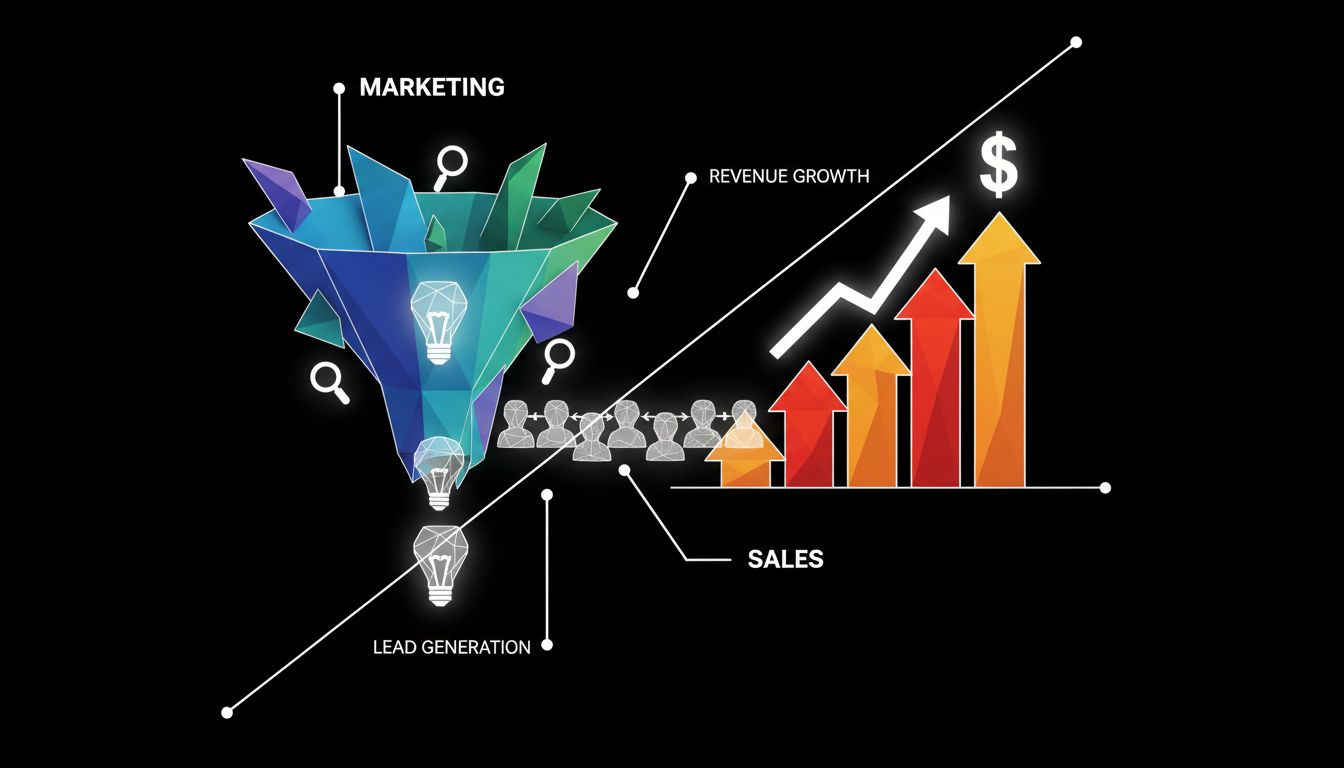
If you are trying to build pipeline, the difference in marketing and sales shows up fast. Marketing creates awareness, demand, and enough trust for someone to raise their hand. Sales takes that handoff and turns it into a real buying decision. The two roles overlap more than people think, especially once you add CRMs, lead scoring, paid media, and AI tools, but they still have different jobs inside the funnel. (salesforce.com)
Difference in marketing and sales at a glance
Here is the simplest side-by-side view of the difference in marketing and sales.
Area | Marketing | Sales |
|---|---|---|
Goal | Build demand and awareness. (bls.gov) | Convert qualified interest into a purchase decision. (salesforce.com) |
Audience | Broad audience, segments, and buyer personas. (salesforce.com) | Individual prospects or buying groups. (salesforce.com) |
Funnel stage | Top and middle of the funnel. (salesforce.com) | Middle and bottom of the funnel. (salesforce.com) |
Core work | Content, ads, social, research, and pricing strategy. (bls.gov) | Discovery, qualification, demos, objections, and negotiation. (bls.gov) |
Lead type | MQLs and nurtured leads. (salesforce.com) | SQLs and opportunities. (salesforce.com) |
Success looks like | More qualified pipeline and stronger brand interest. (bls.gov) | More closed-won deals and cleaner handoffs. (bls.gov) |
So the difference in marketing and sales is less about who matters more and more about timing. Marketing creates the conditions for a sale, sales finishes the conversation when the buyer is ready. (salesforce.com)
What marketing actually does
Marketing is the part of the revenue engine that creates interest before a rep ever gets on a call. The U.S. Bureau of Labor Statistics says marketing managers plan programs to generate interest in products or services, work with sales staff, and use market research to understand customer and market opportunities. Salesforce adds that marketing owns the top of the funnel and builds recognition through content, ads, social storytelling, and other awareness tactics. (bls.gov)
In a lead generation setup, marketing usually owns search, content, landing pages, email nurture, webinars, retargeting, and paid social. If your growth plan depends on discovery, Automated SEO can help keep search visibility and content updates moving, while Automated Social Media keeps your organic and paid social presence consistent. If paid social on Meta or TikTok is part of the mix, Paid Ads Management helps tie targeting, creative, and follow-up back to revenue instead of clicks alone. (salesforce.com)
Marketing also shapes the message before sales ever speaks to the lead. That matters because a buyer who has already seen your content, clicked your ad, or read your comparison page shows up with context. Sales gets a better conversation when marketing has already done the work of educating, qualifying, and building trust. (salesforce.com)
What sales actually does
Sales is where the conversation gets specific. The BLS describes sales reps as people who contact customers, explain product features, answer questions, and negotiate terms. Salesforce adds that sales picks up where marketing leaves off and focuses on the journey to final purchase. (bls.gov)
That usually means discovery calls, demos, objection handling, proposal work, pricing conversations, and closing. It also means follow-up, because many deals are lost simply because nobody stayed in touch at the right time. If your pipeline comes from forms, DMs, or inbound requests, Automated Lead Generation can keep early qualification from slipping, and Automated AI Chat Agents can answer basic questions or route the lead before a human rep steps in. (bls.gov)
Sales is also more personal than marketing. It works with individual people or buying groups, not just broad segments. In B2B especially, that means more conversation, more alignment, and more patience, because the buyer often needs proof, reassurance, and internal buy-in before they commit. (salesforce.com)
How the funnel connects both teams
The funnel is where the difference in marketing and sales becomes operational. Salesforce defines the marketing funnel as the path from ads, social campaigns, or promotional emails to leads, and says the sales funnel picks up from there and focuses on final purchase. It also recommends shared definitions for leads, MQLs, SQLs, opportunities, and customers, which is where many teams either get aligned or start arguing. (salesforce.com)
At awareness, marketing brings people in through search, social, email, and ads. At consideration, it nurtures with guides, comparison content, webinars, and case studies. At decision, sales takes over with demos, objection handling, pricing, and negotiation. That handoff gets cleaner when both teams agree on what counts as ready, what counts as qualified, and what happens next in the CRM. (salesforce.com)
MQL vs SQL
An MQL, or marketing qualified lead, is someone who has shown interest through a marketing action, such as signing up for an email list or downloading an ebook, but is not ready to buy yet. An SQL, or sales qualified lead, has shown enough intent to move into the sales process. Salesforce describes MQLs as top-of-funnel leads that still need nurturing, while SQLs are bottom-of-funnel leads ready for a more direct sales conversation. (salesforce.com)
This is where a lot of lead-gen teams get stuck. Marketing may think a lead is ready because the person filled out a form, but sales may disagree if the fit is weak or the intent is low. The cleanest fix is shared definitions, shared scoring, and a clear rule for when a lead moves from nurture to outreach. (salesforce.com)
Marketing and sales KPIs that matter
Marketing KPIs should tell you whether attention is turning into pipeline. A practical scorecard usually includes traffic, impressions, click-through rate, cost per lead, landing page conversion rate, MQL volume, and source quality. The point is not to chase vanity metrics, it is to see whether ads, content, and social campaigns are creating usable demand. (bls.gov)
Sales KPIs should tell you whether that demand is turning into revenue. Useful numbers include calls made, meetings booked, SQLs, close rate, average deal size, and sales cycle length. HubSpot defines the sales cycle as the process that moves a prospect from initial awareness to purchase, and notes that B2B cycles often involve more decision-makers and longer evaluation periods. (hubspot.com)
If you run Meta or TikTok ads, this difference matters even more. Marketing can optimize the ad and the landing page, but sales or an AI assistant has to respond fast enough to catch the lead while the intent is still fresh. In other words, clicks are nice, but booked calls are better. (salesforce.com)
B2B vs B2C: the difference changes by model
In B2B, sales cycles usually involve multiple decision-makers and longer evaluation periods than consumer purchases. HubSpot also notes that product-led and sales-led motions require different levels of outreach and relationship building, which changes how marketing and sales split the work. (hubspot.com)
In practice, that usually means B2B teams spend more time on education, stakeholder-specific content, and relationship building, while B2C teams lean harder on offer, volume, and fast conversion paths. A SaaS company may need demos, case studies, and a careful follow-up sequence. A consumer brand may need short-form creative, a strong offer, and a frictionless checkout. (hubspot.com)
That does not mean one function matters more than the other. It means the balance shifts. In B2B, sales often plays a larger role in the final decision. In B2C, marketing often carries more of the journey before a rep is ever involved. (hubspot.com)
AI and automation are changing both sides
AI is tightening the link between marketing and sales. Oracle says AI agents can identify expansion opportunities, prioritize accounts, coordinate marketing and sales actions, and spot high-propensity leads. HubSpot says AI-powered CRM and sales automation reduce repetitive work, improve response time, and help teams personalize at scale. (oracle.com)
That matters for modern lead generation. When a prospect comes in from content, social, paid ads, or a website form, the system should not just collect the name and hope for the best. It should qualify the visitor, route the right lead, and trigger the next step. That is exactly where Automated AI Chat Agents can help, especially when your team needs instant replies, simple qualification, and cleaner handoffs. (blog.hubspot.com)
The bigger point is that AI does not replace marketing or sales. It reduces lag between signal and follow-up. Marketing gets better targeting and content ideas. Sales gets better prioritization and faster response. The business gets fewer missed leads and less manual busywork. (blog.hubspot.com)
Which one should you focus on?
If you are choosing a career, marketing may be a better fit if you like audience research, messaging, creative testing, SEO, paid media, and analytics. Sales may be a better fit if you like live conversations, discovery, negotiation, and closing. That is the easiest way to think about the difference in marketing and sales from a job perspective. (bls.gov)
If you are building a business, do not choose one and ignore the other. A good growth system usually needs both, even if one person wears both hats at the beginning. Marketing creates the demand, sales turns it into revenue, and AI can make both sides faster if the workflow is set up well. (salesforce.com)
A simple rule works well:
If you need attention, start with marketing.
If you need more conversions from existing leads, strengthen sales.
If your handoff is messy, fix the funnel before adding more spend.
Common misconceptions that create friction
A lot of revenue problems are really role problems. One common mistake is treating marketing like a design team and sales like a closing machine. In reality, marketing also does research, targeting, and demand creation, while sales also does qualification, follow-up, and relationship building. (bls.gov)
Another mistake is judging marketing only by likes or reach. If those numbers are not creating qualified pipeline, they are not enough. The same goes for sales. Call volume is useful, but if the team is calling the wrong leads, the number does not mean much. (salesforce.com)
The fastest way to create friction is to skip the MQL and SQL definitions. When marketing and sales use different criteria for a good lead, the team wastes time arguing instead of converting. Shared definitions, CRM data, and clear routing rules solve a lot of that pain. (salesforce.com)
FAQ: marketing and sales
What is the main difference between marketing and sales?
Marketing creates awareness and demand. Sales converts qualified interest into a purchase. (bls.gov)
Is sales part of marketing?
Not exactly. They are separate functions, but they work best together and share funnel definitions, data, and handoff rules. (salesforce.com)
What comes first, marketing or sales?
In most buyer journeys, marketing comes first because it creates the initial engagement. Sales comes in after the lead shows enough intent. (salesforce.com)
Can one person do both?
Yes, especially in a small business or early-stage startup. The key is still to separate demand creation from closing so one job does not swallow the other. (salesforce.com)
Which is more important?
Neither one wins by itself. The best revenue teams align both sides, use shared definitions, and let data guide the handoff. (salesforce.com)
The shortest version of the difference in marketing and sales is simple. Marketing opens the door. Sales walks the buyer through it. In modern teams, especially when lead gen, social media, AI chat agents, and paid ads all feed the same funnel, the winners are the ones who connect the handoff instead of debating ownership. (salesforce.com)