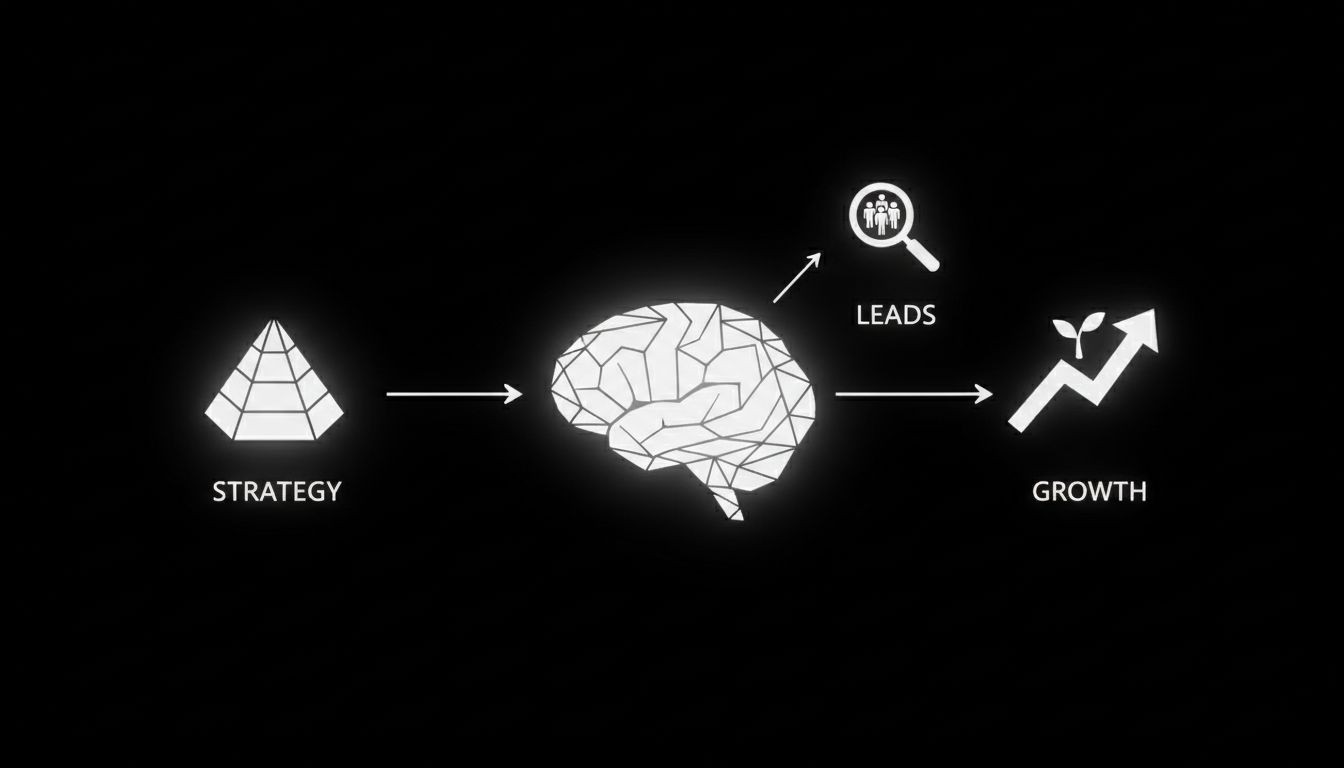
What Content Marketing Is: A Beginner’s Guide to Strategy, Leads, and Growth
Learn what content marketing is, how it works, and how to use it for SEO, social media, lead generation, paid ads, and AI-powered growth for your brand.
If you’ve ever wondered what content marketing is, the short answer is simple: it is the practice of creating useful content that attracts the right audience, builds trust, and leads people toward a profitable action. That action might be a newsletter signup, a lead form submission, a demo request, a store visit, or a purchase.
Instead of leading with a hard sell, content marketing gives people something useful first. A helpful blog post, a short video, a guide, a podcast episode, a case study, or a social post can answer a question, solve a problem, and keep your brand top of mind when it is time to buy.
What content marketing is, in plain English
Content marketing is a strategy, not a random publishing habit. The goal is to create and distribute content that your audience actually wants to consume. When done well, it brings people to your brand, educates them, and helps them move forward with confidence.
The content can live on your blog, website, email list, social channels, landing pages, or even inside an AI chat experience. The point is not to post for the sake of posting. The point is to earn attention, answer questions, and create momentum.
A simple way to think about it is this: advertising interrupts, content marketing earns attention.
Why content marketing matters

Content marketing matters because it helps people trust you before they ever speak with sales. That trust makes every other part of marketing work better.
Here is what strong content can do for a business:
Build awareness among people who do not know your brand yet
Educate prospects so they understand their problem and your solution
Support lead generation with useful assets that invite the next step
Improve search visibility with helpful, relevant pages
Give sales teams better content to share during follow-up
Create reusable material for email, social media, and paid campaigns
For lead generation, content works best when every piece has a clear next step. A blog post can lead to a guide. A guide can lead to a form fill. A form fill can lead to a demo or consultation. That is where content becomes a system instead of a one-off post.
What counts as content marketing
Content marketing includes a lot more than blog posts. If the asset is helpful, relevant, and designed to attract or move an audience forward, it probably fits.
Blog posts and articles
These are often the foundation of a content strategy because they can answer search questions, support SEO, and stay useful for a long time.Short-form and long-form video
Video works well for social media, explainers, tutorials, product demos, and brand storytelling.Social media content
Carousels, reels, TikToks, threads, and posts can extend the reach of your ideas and make your brand easier to remember.Email newsletters and nurture sequences
Email is one of the best places to turn content into repeat engagement, especially when you are building relationships over time.Lead magnets
Guides, checklists, templates, white papers, and webinars are all designed to trade value for contact information.Case studies and testimonials
These help prospects see how your offer works in the real world and why it is worth considering.Landing pages and product explainers
These are content assets too, especially when they are written to answer objections and convert interest into action.
A strong content mix usually combines evergreen content, which keeps bringing in traffic, with timely content that reacts to trends, launches, or seasonal demand.
Content marketing vs. SEO, inbound marketing, social media marketing, and advertising
These terms overlap, but they are not the same.
Term | Main job | How it relates to content marketing |
|---|---|---|
Content marketing | Creates useful assets for an audience | It is the core asset itself |
SEO | Helps people discover content in search | It increases visibility and traffic |
Inbound marketing | Attracts, nurtures, and converts people with helpful experiences | Content marketing is one major part of it |
Social media marketing | Distributes and engages across social platforms | Social channels help content travel farther |
Advertising | Pays to reach a targeted audience | Ads can amplify content and offers quickly |
Smart teams connect all of them. For example, a helpful article can be shaped with automated SEO, repurposed through automated social media, and amplified with paid ads management.
That is especially useful when you want one piece of content to support search traffic, social engagement, and paid lead generation at the same time.
How content marketing works across the buyer journey
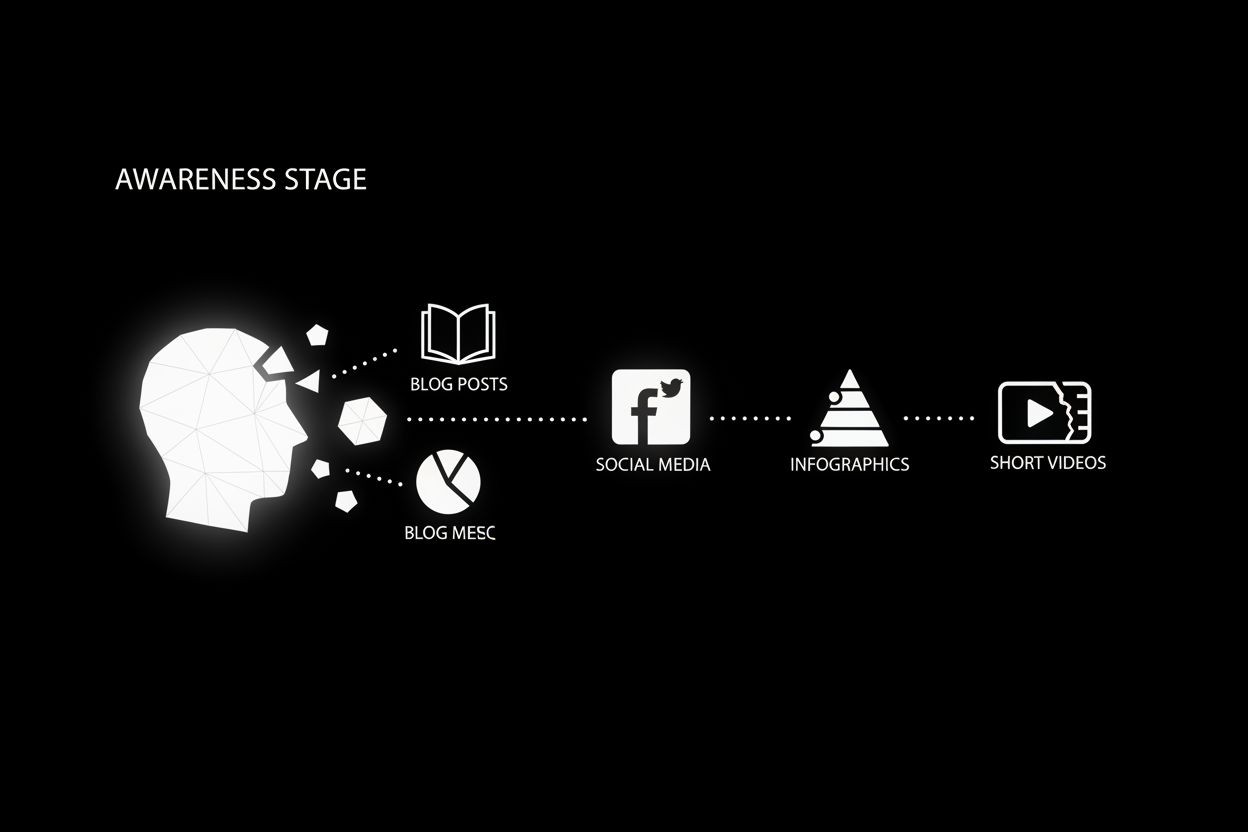
Good content matches the question someone is asking right now.
Top of funnel
At the awareness stage, people are usually looking for a clear explanation, not a sales pitch. This is where content such as “what is” articles, how-to guides, short videos, and educational social posts perform well.
Middle of funnel
At the consideration stage, prospects want to compare options and reduce risk. This is where case studies, webinars, comparison pages, email sequences, and product deep dives start to matter.
Bottom of funnel
At the decision stage, people want proof and reassurance. Pricing pages, testimonials, demos, FAQs, and strong landing pages help turn interest into action.
After the sale
Content still matters after the purchase. Onboarding emails, customer tutorials, knowledge base articles, and success tips help reduce churn and create more referrals.
This is also where automated lead generation and automated AI chat agents can make a big difference. They help capture interest, answer common questions, and move people from curiosity to conversation without making the process feel heavy.
How to start a content marketing strategy
If you are starting from scratch, keep it simple. The best content marketing plans are usually clear, focused, and easy to repeat.
1. Pick one business goal
Do you want more qualified leads, more demo bookings, more ecommerce sales, or stronger brand awareness? Choose one primary goal first. Content works better when it is tied to an actual business outcome.
2. Define one audience
A content strategy needs a real person at the center of it. Write down their role, pain points, common objections, and the questions they ask before buying.
3. Map topics to search intent
Build content around the questions your audience already asks. This is where SEO research helps. If people are searching for a topic, that is a signal that content can earn attention there.
4. Choose the right formats and channels
Do not try to be everywhere at once. Pick one primary content format and one or two distribution channels.
For example, a SaaS company might publish one long-form guide, turn it into a short video, send it in email, and post it on LinkedIn or TikTok. A local business might use a service explainer, a few short social clips, and a simple landing page.
5. Build a content calendar
A content calendar keeps the work consistent. It does not have to be complicated. A simple monthly plan with topics, owners, publish dates, and distribution tasks is enough to get started.
A practical starter template looks like this:
Topic
Audience
Search question or problem
Main format
Repurposed assets
Call to action
Channel plan
Success metric
6. Reuse every strong asset
One good piece of content should not live in one place only. A blog post can become a reel, a carousel, a newsletter, a landing page section, and an ad creative. Repurposing content saves time and improves your return on the original idea.
If you want a more operational view of the process, our Lead Generation and Marketing Automation Guide for 2026 Success is a useful next read.
What to measure
Do not judge content marketing by likes alone. Engagement is helpful, but it is not the full story.
Track the metrics that connect content to business value:
Organic traffic
Search rankings for target topics
Click-through rate from search or email
Time on page and scroll depth
Form fills and demo requests
Email signups and nurture performance
Assisted conversions
Pipeline generated and revenue influenced
Retention or repeat purchase behavior
If you are using content to support paid traffic, also watch landing page conversion rate and cost per lead. That is often where the real story shows up.
Common mistakes to avoid
A lot of content programs stall for the same few reasons.
Publishing without a strategy
If you do not know who the content is for or what it should do, it will be hard to measure success.Making everything promotional
People do not come to content looking for a brochure. They want help, clarity, and useful information first.Ignoring distribution
Great content can still fail if nobody sees it. Plan how each asset will be shared.Not repurposing anything
One article should become several assets across channels.Stopping too early
Content marketing often takes time to compound, especially when you are building authority from scratch.Tracking vanity metrics only
Impressions are nice, but leads, sales conversations, and revenue are what matter most.
How AI changes content marketing without replacing strategy

AI has changed how teams plan, draft, repurpose, and distribute content, but it has not changed the basic job of content marketing. You still need a clear audience, a useful message, and a reason for someone to care.
AI is best used for the repetitive parts of the process. It can help brainstorm topic ideas, outline articles, create social variations, draft email subject lines, and generate chatbot responses. That makes it easier to move faster without starting from zero every time.
What AI should not do is replace your point of view, your proof, or your judgment. The strongest content still feels specific, practical, and believable.
This matters a lot for teams running Meta and TikTok campaigns. The best ads often come from content that already worked organically, because you already know the message, hook, and offer have some traction. AI can help you scale that process, but it should not decide the strategy for you.
FAQ
What is content marketing in simple terms?
It is the practice of making helpful content that attracts the right audience and moves them toward a business goal. Instead of pushing a sales message first, you earn attention by teaching, explaining, or solving a problem.
Does content marketing work for small businesses?
Yes, especially when the business focuses on a narrow audience and a clear problem. Small businesses often benefit from local SEO articles, service pages, social content, and email follow-up because those assets can work together over time.
How long does content marketing take to work?
It depends on your industry, competition, and how consistently you publish. Some content can drive results quickly through email or paid distribution, but organic content usually takes months to build momentum.
What is the best content marketing example?
A strong example is a helpful article or video that answers a real question, ranks or gets shared, and leads to a next step such as a signup, demo, or purchase. The best content is useful first and commercial second.
Final thoughts
Content marketing works best when it is treated like a system, not a stream of random posts. Start with one audience, one problem, and one clear next step. Then create content that teaches, distribute it well, and keep improving what performs.
When that happens, content becomes more than content. It becomes traffic, trust, leads, and sales.