SEO On Page and Off Page: What’s the Difference and How to Use Both
Compare seo on page and off page, learn what each controls, and build a lead-gen strategy that turns search traffic, social reach, and links into sales.
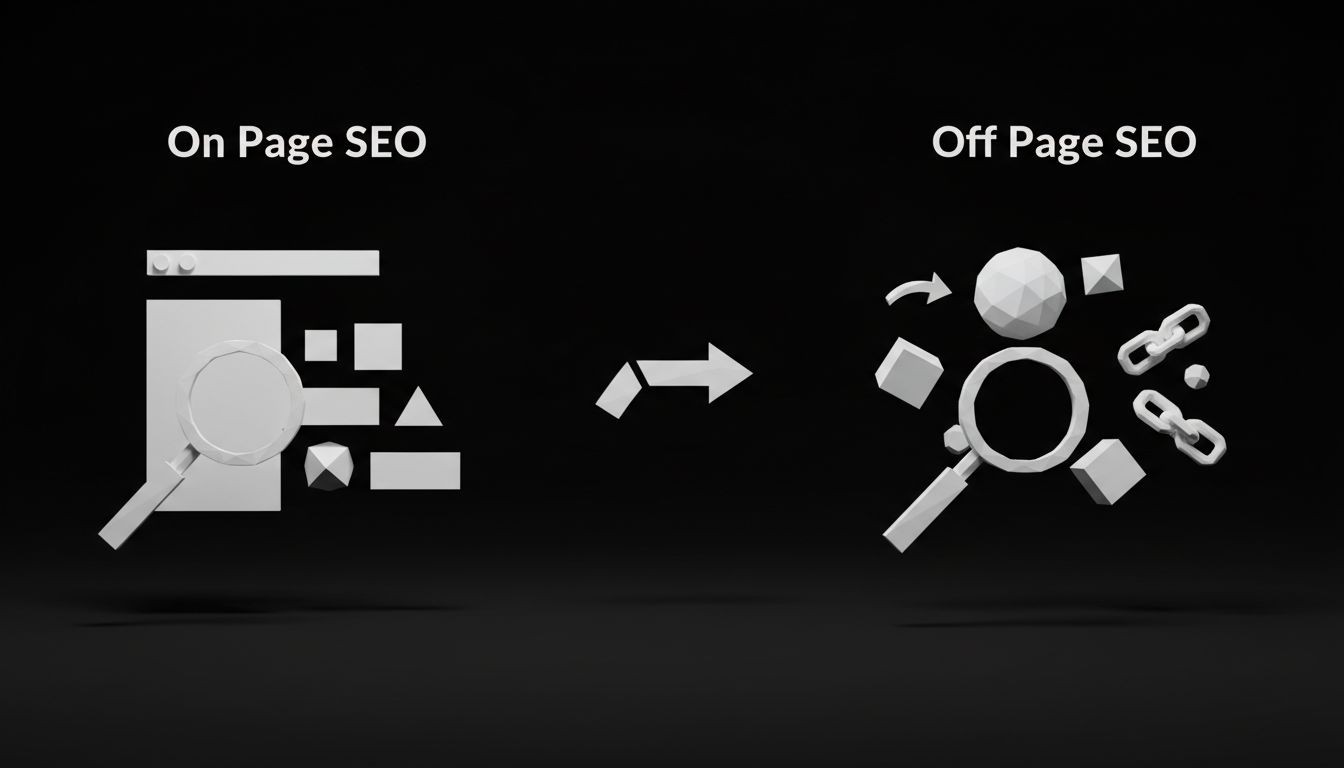
If your growth plan already includes Automated SEO, it helps to know which tasks belong on the page and which belong outside it. That is the real difference between seo on page and off page. On-page work shapes how clearly a page answers a search, while off-page work shapes how much trust, authority, and reach that page earns over time. Google’s guidance consistently points to helpful content, page experience, clear titles, descriptive snippets, crawlable links, image alt text, structured data, and legitimate link practices as part of that picture. (developers.google.com)
There is also a third bucket: technical SEO. In practice, this covers crawlability, indexation, URL structure, and the site mechanics that make a page accessible. Keeping the three buckets separate makes planning easier, especially when you are trying to generate leads from organic search, social media, AI chat agents, and ads at the same time. (developers.google.com)
What is on-page SEO?

On-page SEO is the part you can improve without waiting on anyone else. You choose the title, write the copy, structure the page, link to related resources, add images, and decide what action a visitor should take next. Google says good titles should be unique, clear, concise, and accurate, while snippets usually come from the page itself or the meta description. It also says the keywords meta tag is not used, which is a good reminder that old tactics are mostly noise now. (developers.google.com)
A strong on-page checklist usually includes one search intent per page, a clear H1, descriptive internal links, original images with alt text, structured data where it genuinely fits, and a page experience that feels useful rather than bloated. Google specifically notes that internal anchor text helps people and Google make sense of your site, that images should have descriptive alt text, and that helpful, people-first content matters more than a target word count. (developers.google.com)
For landing pages, this is also where conversion happens. If your offer is buried under vague language, the page may rank and still fail to generate leads. That is why clear messaging and a strong next step matter so much when you are building a funnel around SEO, AI chat agents, or paid traffic. If you want visitors to get an instant answer, Automated AI Chat Agents can help turn page views into conversations instead of dead ends.
Quick on-page priorities
Write for the query, not just the keyword.
Match the title and snippet to the page promise.
Use internal links with descriptive anchor text.
Add images and alt text where context helps.
Support claims with proof, examples, or original insight.
Keep the page easy to scan on mobile. (developers.google.com)
What is off-page SEO?

Off-page SEO is the reputation layer. It is built through backlinks, editorial mentions, partnerships, reviews, and other signals that happen beyond your own domain. Google’s policies make one thing very clear: links created mainly to manipulate rankings are link spam. If a link is paid or sponsored, it should be marked appropriately. That is why quality matters more than volume. One relevant editorial link is worth far more than a pile of weak placements. (developers.google.com)
In practice, off-page SEO also includes digital PR, podcast appearances, expert roundups, community visibility, and social distribution. For brands using Automated Social Media, the goal is not to collect likes for their own sake. The real win is creating attention that leads to mentions, links, branded searches, and trust. That is an inference from Google’s page-level ranking model and link guidance, but it matches how most growth teams work in the real world. (developers.google.com)
A simple off-page checklist looks like this:
Earn links from relevant, real sites.
Build mentions through PR, partnerships, and useful content.
Keep anchor text natural.
Avoid buying bulk links or using swap schemes.
Label sponsored placements properly.
Focus on quality signals that actual people would trust. (developers.google.com)
SEO on page and off page, side by side
Here is the cleanest way to compare seo on page and off page. Think of on-page as the page’s promise and off-page as the market’s response. Google’s ranking systems work at the page level and combine many signals, so neither side wins alone. The best results come from pages that deserve attention and a market that keeps reinforcing them. (developers.google.com)
Area | On-page SEO | Off-page SEO |
|---|---|---|
Main job | Make the page understandable, useful, and click-worthy. (developers.google.com) | Build authority, trust, and discovery from outside the site. (developers.google.com) |
Where it happens | On the page itself, including content, titles, links, images, and structured data. (developers.google.com) | Across the web through links, mentions, partnerships, and reviews. (developers.google.com) |
Best use case | Improving relevance, clarity, and conversion on important pages. (developers.google.com) | Expanding reach, credibility, and referral opportunities. (developers.google.com) |
Main risk | Keyword stuffing, thin pages, and weak intent match. (developers.google.com) | Link spam, paid link abuse, and unnatural anchor text. (developers.google.com) |
A useful shortcut is this: on-page creates the promise, off-page proves that other people trust it. If the promise is weak, off-page work struggles. If the market never sees the page, even strong content can stay buried. Google’s people-first guidance supports that balance because the content needs to satisfy the user before anything else. (developers.google.com)
Which matters more for lead generation?
For lead generation, on-page usually has to come first because the page must do the selling. That means a clear offer, visible proof, a fast path to action, and a page that answers the visitor’s real question. Off-page then brings more qualified visitors to that page. If you want a system that turns traffic into booked calls or demos, pair strong SEO with Automated Lead Generation and Automated AI Chat Agents so the page does not lose interested visitors. Google’s people-first guidance and E-E-A-T framing support that order because the content needs to satisfy the user first. (developers.google.com)
If you also need immediate traffic while organic visibility builds, Paid Ads Management can bridge the gap. That matters because paid search, Meta, and TikTok often give you faster message testing than organic alone, and the winning angles can feed back into your SEO pages later.
A practical workflow that combines both
If you want this to work in the real world, use a simple sequence instead of treating SEO as a one-time task.
Pick one money page. Choose the page that should earn the lead, sale, or demo.
Rewrite for one intent. Use a title and snippet that match the searcher’s goal. Google says titles should be unique, clear, concise, and accurate, and snippets usually come from the page content or meta description. (developers.google.com)
Strengthen the page. Add proof, sections that answer objections, internal links, useful images, and structured data where it helps. (developers.google.com)
Build supporting content. Publish related articles that answer sub-questions and link back to the main page. (developers.google.com)
Promote the page. Use outreach, partnerships, PR, and social distribution to earn attention. If a placement is paid, label it correctly. (developers.google.com)
Measure the right things. Use Search Console and analytics to see whether the page is earning clicks, impressions, and engaged visits. (developers.google.com)
This is also where Automated SEO can save time. Repeating the same optimization process across service pages, blog posts, and lead magnets is useful, but it is even better when that work is done consistently instead of sporadically.
How the balance changes by business type
The right mix changes depending on what you sell.
Local businesses: Prioritize service pages, location pages, reviews, and local mentions.
Ecommerce: Focus on category pages, product pages, image optimization, and structured data.
SaaS and service brands: Invest in comparison pages, case studies, trust signals, and lead capture.
Personal brands: Build author bios, thought leadership, podcast appearances, and mentions that reinforce expertise. Google’s E-E-A-T guidance is especially useful here because trust matters so much at the page level. (developers.google.com)
If your site is built to generate pipeline, the most important pages are usually service pages, case-study pages, and comparison pages. Those pages should be tight, credible, and easy to scan.
Common mistakes that slow results
A lot of SEO work fails for the same few reasons.
Writing for keywords instead of people.
Publishing thin pages that repeat the same phrase over and over.
Ignoring search intent.
Treating any backlink as a good backlink.
Buying or swapping links without proper labeling.
Forgetting internal links because the page looks fine on its own.
Chasing likes and shares without a plan to turn attention into traffic or leads. (developers.google.com)
The easiest fix is to ask one simple question before publishing: if a real buyer landed here from Google, would this page help them take the next step? If the answer is not a clear yes, neither on-page nor off-page work is finished yet.
KPIs worth tracking
You do not need a giant dashboard to know whether seo on page and off page is working.
For on-page, watch impressions, click-through rate, rankings, organic sessions, time on page, and conversions. For off-page, watch referring domains, link quality, brand mentions, referral traffic, and branded search lift. Search Console is useful because it shows how your pages are performing and helps you spot where optimization is still needed. (developers.google.com)
The main rule is simple: do not optimize for vanity. A page can get impressions and still fail to convert. A backlink profile can grow and still bring the wrong audience. The best SEO programs tie every metric back to business outcomes.
FAQs
Is internal linking on-page or off-page SEO?
Internal linking is on-page SEO. Google says anchor text on internal links helps people and Google make sense of your site, and that important pages should be linked from at least one other page on your site. (developers.google.com)
Which is more important, on-page or off-page SEO?
If you have to choose one first, start on-page. A page has to be useful, clear, and satisfying before off-page work can amplify it. Google’s people-first guidance, page-level ranking approach, and link best practices all point in that direction. (developers.google.com)
Is social media off-page SEO?
In practical marketing terms, social can support off-page SEO by spreading content and earning attention, but the real value usually comes from the visibility and links it helps create. That is an inference based on Google’s page-level ranking model and link guidance. (developers.google.com)
Can you rank without backlinks?
Sometimes you can, especially on less competitive queries, but Google still uses links as one signal among many. Strong on-page work is necessary, but in competitive spaces off-page authority usually decides how far a page can go. (developers.google.com)
How long does off-page SEO take?
Usually longer than on-page updates because it depends on other people linking, mentioning, or featuring your brand. The best way to speed it up is to publish something worth citing and promote it consistently. (developers.google.com)
The smartest SEO strategy is not choosing one side and ignoring the other. Build the page so it deserves attention, then build the reputation that helps it travel. If you do that consistently, seo on page and off page stop being separate tasks and start working like one growth system. (developers.google.com)