Customer Acquisition Formula: How to Calculate CAC and Lower It
Learn the customer acquisition formula, what to include in CAC, how to calculate it, and practical ways to lower costs across every channel and funnel.
If you are spending money on Meta ads, TikTok creatives, SEO, content, or outbound sales, the customer acquisition formula is the fastest way to see whether your growth engine is working. It tells you how much it costs to turn prospects into paying customers, which channels are efficient, and whether you can scale without burning cash.
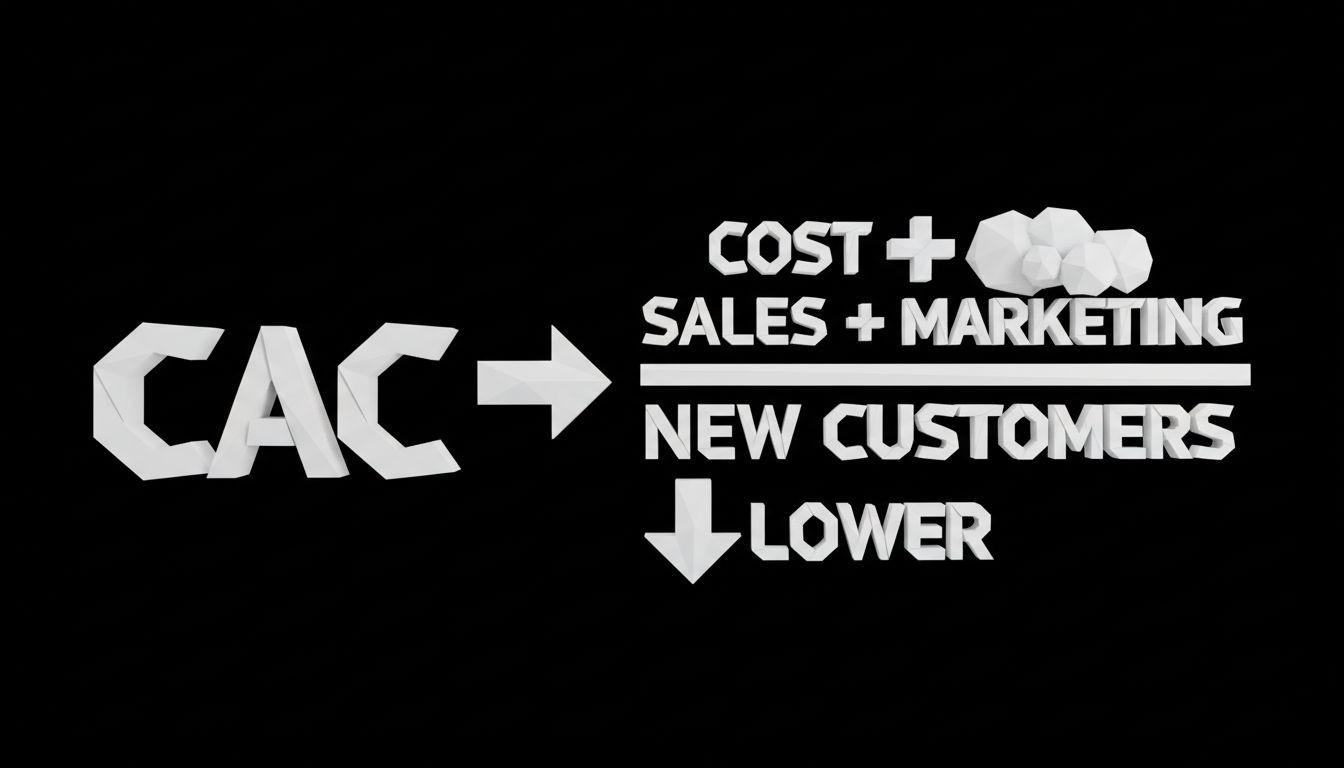
At its simplest, the customer acquisition formula is:
CAC = Total sales and marketing spend ÷ New customers acquired
That simple line is useful, but it only works when you define the time period correctly and include the right costs. If you want a true picture, you need to look beyond ad spend and count the full cost of acquiring the customer, from sales labor to creative production and the software that supports the funnel.
What the customer acquisition formula really measures

Customer acquisition cost, or CAC, measures the average amount you spend to win one new customer during a specific period. It is one of the clearest ways to judge marketing efficiency because it connects spending directly to revenue-producing customers.
For a startup, CAC can show whether a campaign is worth scaling. For a B2B company, it can show whether a longer sales cycle still makes sense. For an eCommerce brand, it can reveal which channel brings profitable buyers instead of just traffic.
The formula is often called the customer acquisition formula, CAC formula, or customer acquisition cost formula. People use those terms interchangeably, although the real value comes from how carefully you define the inputs.
If you are building a pipeline with Automated Lead Generation, CAC also helps you see whether more leads are actually translating into more customers, or whether the funnel is leaking between click, form fill, sales call, and closed deal.
The formula, line by line
The standard customer acquisition formula is straightforward:
CAC = Total acquisition costs ÷ Number of new customers
Here is how to read it:
Total acquisition costs: all expenses tied to winning new customers in the chosen period
Number of new customers: only the customers who actually bought, signed, or subscribed in that same period
Chosen period: month, quarter, or year, depending on your sales cycle
The period matters because acquisition spend and customer conversion do not always happen on the same day. If you run a month of Meta ads but most deals close 45 days later, measuring CAC too early can distort the result. That is especially true for B2B, where sales cycles are longer and CAC is usually higher than in B2C.
A useful rule is simple: match the spend window to the sales window as closely as possible.
What to include in CAC, and what to leave out

A lot of businesses undercount CAC because they only include ad spend. That makes the metric look healthier than it really is.
If a cost helps acquire the customer, it usually belongs in CAC.
Include in CAC | Usually leave out | Notes |
|---|---|---|
Paid media spend | Customer support for existing users | Support is retention unless it directly helps close sales |
Sales salaries and commissions | Product development | Include product work only if it is specifically tied to acquisition |
Agency and freelancer fees | General overhead with no allocation method | Overhead can be included in true CAC if you allocate it consistently |
Creative production | Long-term COGS | Keep acquisition and fulfillment separate |
Marketing tools and CRM software | Retention-only success work | Include tools used to generate or close leads |
Events, sponsorships, and travel | Internal admin costs unrelated to growth | Only include if the activity is part of acquisition |
Discounts, free trials, or promo offers when they drive acquisition | Purely operational spend | Count the cost if it is part of the conversion path |
A few practical notes:
Free trials count as CAC only when they convert to paying customers.
Lead forms are not customers. MQLs and SQLs are useful, but they are not the denominator for CAC.
Customer success can be tricky. If onboarding is essential to closing the sale, part of it may belong in CAC. If it is purely retention, leave it out.
Overhead should be handled consistently. Some teams calculate a lean CAC, others calculate a true CAC with allocated overhead. Just do not mix the two in the same report.
If your acquisition stack includes AI-assisted replies, chat routing, and fast follow-up, Automated AI Chat Agents can reduce the time between lead and conversation, which often improves conversion and lowers CAC without raising ad spend.
How to calculate customer acquisition cost step by step
Start with one clear time period, usually a month or a quarter.
Choose the period
Pick a window that matches your sales cycle. Paid social teams often look monthly. B2B teams often prefer quarterly.Add acquisition spend
Include the costs that directly support winning new customers. That can mean ads, sales labor, creative, tools, and agency fees.Count only new customers
Use paying customers, new subscribers, or closed-won accounts, depending on your model. Do not count existing customers, renewals, or free sign-ups that never converted.Divide spend by new customers
This gives you CAC.Check the result against LTV and payback period
CAC is more useful when you compare it to the value a customer produces over time.
Example
Suppose a company spends $48,000 in a quarter on paid media, sales salaries, software, and creative. It acquires 160 new customers in that quarter.
CAC = $48,000 ÷ 160 = $300 per customer
That means the business spent $300 to acquire each new customer in that quarter.
A simple spreadsheet template
A clean CAC sheet can be as simple as this:
Channel | Spend | New customers | CAC |
|---|---|---|---|
Meta ads | $12,000 | 80 | $150 |
TikTok ads | $8,000 | 50 | $160 |
SEO and content | $5,000 | 70 | $71 |
This kind of breakdown shows where growth is efficient and where budget is leaking. If you are comparing channels, Paid Ads Management can help you test creative and landing pages faster so you are not optimizing blind.
CAC formula variations you should know
There is more than one way to look at the customer acquisition formula.
Blended CAC
Blended CAC measures your total acquisition spend across all channels divided by all new customers acquired. It gives you the big-picture view.
Channel CAC
Channel CAC isolates one source, such as Meta ads, TikTok, email, outbound, organic search, or referrals. This is the version you want when deciding where to spend more.
Cohort CAC
Cohort CAC tracks CAC for customers acquired in a specific period, such as Q1 or a specific campaign. It is useful when conversion happens later, because it helps you match spend and outcome more accurately.
New CAC
New CAC is often used to separate acquisition of truly new customers from expansion, upsells, or reactivations. It is helpful when a business has multiple growth motions and wants a cleaner read on net-new performance.
CAC payback period
This shows how long it takes to earn back the cost of acquisition.
CAC payback period = CAC ÷ Monthly gross profit per customer
LTV:CAC ratio
This compares the lifetime value of a customer to the cost of acquiring that customer.
LTV:CAC ratio = LTV ÷ CAC
These formulas work together. CAC tells you the cost, payback period tells you how fast you recover it, and LTV:CAC tells you whether the economics are worth repeating.
CAC by business model
Not every business should judge CAC the same way.
B2B SaaS
B2B SaaS often has higher CAC because sales cycles are longer, more people are involved in the decision, and demos or onboarding calls take time. Free trials only belong in the CAC conversation when they become paying users.
eCommerce
For eCommerce, channel efficiency matters a lot. A paid social campaign may look good on traffic but fail on profit if the margin is thin or repeat purchase rates are weak. That is why many stores care about CAC alongside contribution margin and repeat rate.
Agencies and service businesses
Agencies and service firms often rely on founder-led sales, referrals, content, and outbound. In that case, CAC should include the time and tools behind the sale, not just ad spend. A good lead may be worth a lot more if the average client value is high and the delivery process is efficient.
Marketplaces and apps
Marketplaces may need to track buyer CAC and seller CAC separately. App businesses may also distinguish between install cost, activation cost, and paid subscriber CAC, because not every download turns into revenue.
In all of these models, Automated SEO can create lower-cost inbound demand over time, especially when people are searching for a solution instead of reacting to an ad.
Why CAC matters with LTV and payback period

CAC alone only tells part of the story. A high CAC is not automatically bad, and a low CAC is not automatically good.
What matters is whether the customer produces enough value to justify the cost.
That is where LTV and payback period come in.
LTV tells you what a customer is worth over time
CAC tells you what it cost to acquire that customer
LTV:CAC tells you whether the model is healthy
Payback period tells you how fast the business recovers the investment
A commonly used benchmark in SaaS is a 3:1 LTV:CAC ratio or higher. In other words, a customer should be worth at least three times what it cost to win them. A payback period of 12 months or less is also often treated as healthy in SaaS.
That said, the right benchmark depends on the business. An enterprise contract can justify a much higher CAC if the lifetime value is large. A low-margin eCommerce brand may need a much faster payback. B2B businesses also tend to have longer cycles and higher CAC than B2C brands, so context matters.
A simple way to think about it is this: if CAC is rising and LTV is not, growth gets fragile fast. If CAC is rising but LTV is rising faster, you may actually have room to scale.
What is a good customer acquisition formula result?
There is no universal number that makes CAC good or bad.
A strong CAC is one that:
leaves enough gross margin after acquisition and fulfillment
pays back in a reasonable period
supports healthy reinvestment in growth
improves as the business gets smarter with targeting and conversion
A weak CAC usually shows up when:
you are paying for a lot of traffic but not enough customers
sales cycles are too long for the current cash position
the channel mix is too dependent on one expensive source
you are buying customers faster than you can retain them
The best benchmark is your own history by channel, cohort, and segment. A CAC of $250 may be fantastic for one offer and terrible for another. The customer acquisition formula only becomes meaningful when it is tied to margin, retention, and sales velocity.
How to lower customer acquisition cost without slowing growth

Lowering CAC is not just about cutting ad spend. Often the biggest gains come from better conversion, better targeting, and faster follow-up.
Tighten your paid media strategy and creative testing on Meta and TikTok with Paid Ads Management
Use Automated AI Chat Agents to answer questions instantly, qualify visitors, and book meetings before a lead goes cold
Build steady inbound demand with Automated Social Media so your brand stays visible without relying only on paid clicks
Strengthen your organic pipeline with Automated SEO so more prospects find you when they are actively searching
Connect forms, CRM, routing, and follow-up with Automated Lead Generation so no lead slips through the cracks
A few more tactics work especially well:
Improve landing page conversion so more clicks turn into leads
Shorten response times because speed to lead still matters
Focus on high-intent audiences instead of broad awareness campaigns
Cut wasted spend by excluding existing customers from prospecting campaigns
Nurture better so sales teams spend time on real buyers, not unqualified leads
Use social proof and clear offers to improve conversion rates without adding more media spend
The fastest way to lower CAC is often to remove friction from the journey, not just to buy cheaper clicks.
Common mistakes when calculating CAC
A lot of CAC reports look clean but hide bad assumptions.
Counting leads instead of customers
Leads are useful, but CAC should be based on real customers or paying accounts.Ignoring sales labor
If your team spends hours selling, qualifying, and following up, that cost belongs in the formula.Mixing time periods
If the spend is from one quarter and the customers are from another, the result can be misleading.Using blended CAC for channel decisions
Blended CAC is good for a summary view, but it can hide one expensive channel and one efficient one.Including retention costs without a plan
Support and success costs may belong in a separate metric unless they are part of the acquisition process.Comparing CAC without LTV
A low CAC with poor retention is still a bad business outcome.Forgetting conversion lag
Especially in B2B, customers may convert long after the initial spend. Track cohorts, not just calendar months.
Quick answers to common questions
Is customer acquisition formula the same as CAC formula?
Yes, most of the time. People usually mean the customer acquisition cost formula when they say customer acquisition formula.
Should free trial sign-ups count as customers?
No, not unless they convert into paying customers. Trial sign-ups are leads or activations, not customers.
What is blended CAC?
Blended CAC is total acquisition spend divided by all new customers across all channels. It gives you the overall average.
How often should I calculate CAC?
Monthly works well for paid channels, while quarterly is often better for longer B2B sales cycles. The key is consistency.
Can AI help lower CAC?
Yes. AI chat agents, smarter lead routing, content automation, and better campaign analysis can all improve conversion efficiency and reduce waste.
The customer acquisition formula is simple on paper, but the businesses that use it well treat it like a decision tool, not just a reporting metric. Once you know what it really costs to acquire a customer, you can spend more confidently on the channels that work, cut the ones that do not, and build a growth engine that scales with less guesswork.