Conversion Optimization Guide: How to Turn Traffic Into Leads and Sales
Learn conversion optimization for lead generation, SEO, AI chat agents, social media, and paid ads with practical steps that boost ROI and leads quickly.
Conversion optimization is the difference between traffic that looks impressive and traffic that actually grows the business. If you are investing in SEO, running Meta or TikTok ads, publishing social content with AI, or using AI chat agents to handle inquiries, you need a system that turns visitors into leads, booked calls, purchases, and repeat customers.
What conversion optimization means
Conversion optimization is the process of improving the percentage of visitors who take a desired action. That action can be a form fill, demo request, trial signup, purchase, booked appointment, newsletter subscription, or even a chat conversation that becomes a lead.
The basic formula is simple:
Conversion rate = (Conversions / Visitors) x 100
If 2,000 people visit a landing page and 80 fill out the form, the conversion rate is 4 percent. That number matters, but context matters more. A page designed for cold traffic from social media will usually convert differently from a pricing page visited by someone already comparing vendors.
In practice, conversion optimization is not about one flashy change. It is about reducing friction, clarifying the offer, strengthening trust, and matching the page to the visitor’s intent.
Why conversion optimization matters for lead generation, SEO, and paid traffic
Traffic is expensive, whether you pay for it with ad spend, content production, or time. That is why conversion optimization has such a large impact on growth. Small improvements often create better returns than increasing traffic alone.
This is especially true for search traffic. If you are building automated SEO into your content engine, you want every article, landing page, and service page to do more than rank. It should also move the reader toward a call, quote, demo, or subscription.
The same logic applies to paid media. A strong ad can win the click, but the landing page wins the lead. When your Meta or TikTok campaigns send people to a page that feels relevant, easy to understand, and trustworthy, your acquisition costs usually become easier to control. Good paid ads management and good conversion optimization should work together, not separately.
Conversion optimization also helps teams make better decisions with the traffic they already have. If your site gets 10,000 visits a month and only a small fraction turn into qualified leads, there is usually hidden value sitting in the existing funnel. That is why conversion optimization is often one of the fastest ways to improve ROI.
Map conversions across the funnel
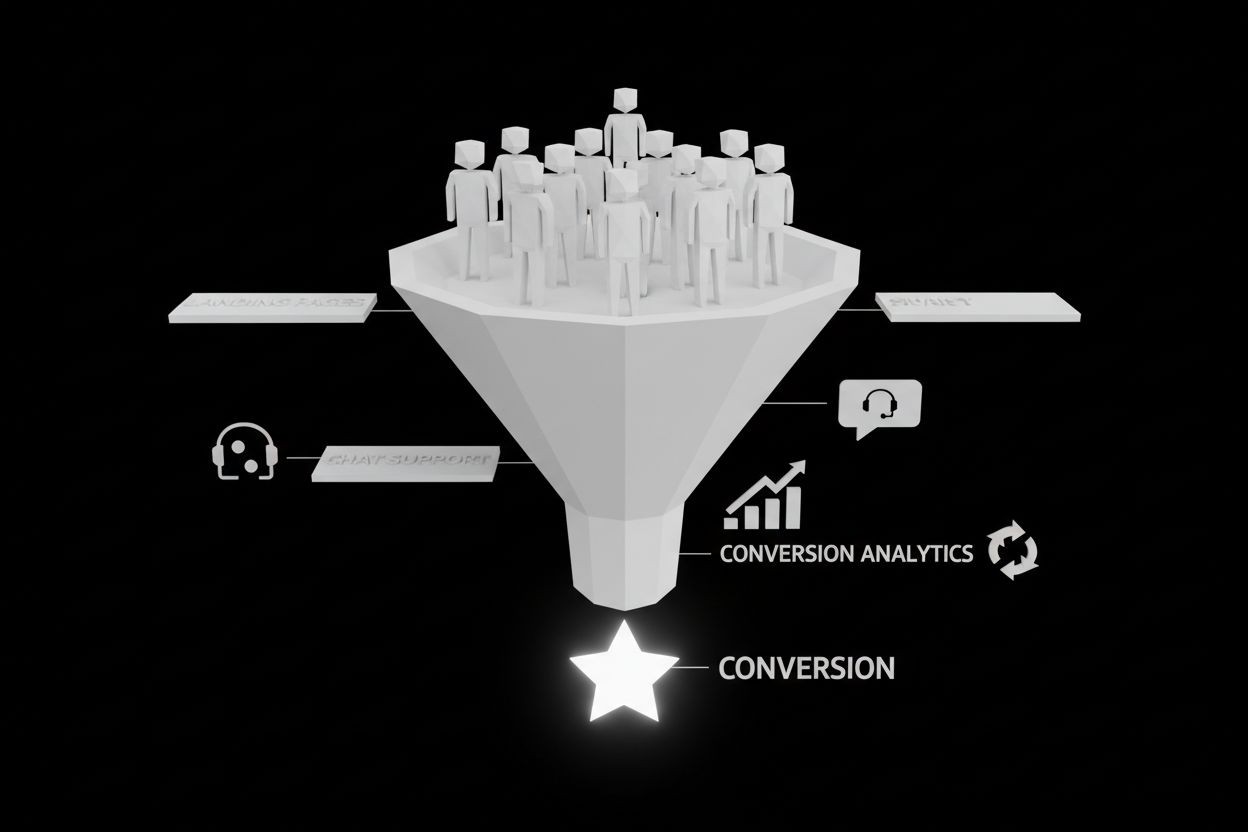
Most businesses do not have one conversion point. They have several. The smartest way to improve performance is to map those points across the funnel so you can see where visitors drop off and where they need more support.
Top of funnel
At the top of the funnel, people are often discovering you for the first time. They might come from search, social posts, influencer content, short-form video, or a paid ad. Here, conversion optimization is about message match and clarity.
If you are using automated social media to publish more consistently, each post still needs a clear next step. Do not ask a cold audience to do too much. One post should usually point to one action, such as reading a guide, downloading a checklist, or booking a consult.
For Meta and TikTok, the promise in the ad should connect directly to the landing page. If the ad promises a free audit, the page should open with that same offer. If the ad is about speed, the page should make speed obvious. This is one of the simplest ways to improve conversion rates without changing the entire site.
Middle of funnel
Once people know who you are, they start comparing options. This is where trust becomes important. Case studies, testimonials, FAQs, comparison pages, and short explainer videos all help.
For service businesses, the middle of the funnel is also where AI can make a difference. A visitor may not be ready to book a call right away, but they may be ready to ask a question. That is where a well-designed chat experience can keep the conversation moving.
Bottom of funnel
At the bottom of the funnel, the visitor is close to acting. This is where forms, booking pages, pricing pages, checkout flows, and final CTAs matter most. Every unnecessary field, unclear button label, or confusing step can create friction.
If your campaigns are driving high-intent traffic, paid ads management should be paired with a landing page built for fast action. That means fewer distractions, clear proof, and a form that asks only for what sales actually needs.
Post-conversion
Conversion optimization does not stop after the form submit or purchase. Thank-you pages, onboarding emails, follow-up speed, and upsells all affect the total value of the lead or customer. A fast response often matters as much as the page itself.
A repeatable conversion optimization framework
If you want better results, use a process instead of random changes. A simple framework keeps the work focused and makes the wins easier to repeat.
Define the main conversion.
Decide what outcome matters most right now. For some businesses it is booked meetings. For others it is lead form submissions, trial starts, or purchases.Find pages with traffic and friction.
Start where there is already intent. High-traffic pages, ad landing pages, pricing pages, and lead capture pages usually give you the clearest opportunities.Collect evidence before you change anything.
Use analytics, heatmaps, session recordings, surveys, customer support questions, and sales call notes to understand where people hesitate.Write a clear hypothesis.
A strong hypothesis sounds like this: If we change X for Y audience, then Z metric should improve because of reason A.Prioritize with ICE.
Score ideas by impact, confidence, and ease. That helps you avoid spending time on tiny changes while bigger blockers stay in place.Test one meaningful change at a time.
A/B testing works best when the idea is clear and the page gets enough traffic to learn from the result.Document what happened.
Keep a simple test log. The goal is not just to win one experiment. The goal is to build a playbook.
If your business depends on fast response times and better lead routing, automated lead generation can help connect the first click to the right follow-up while you refine the page experience.
Research methods that reveal friction
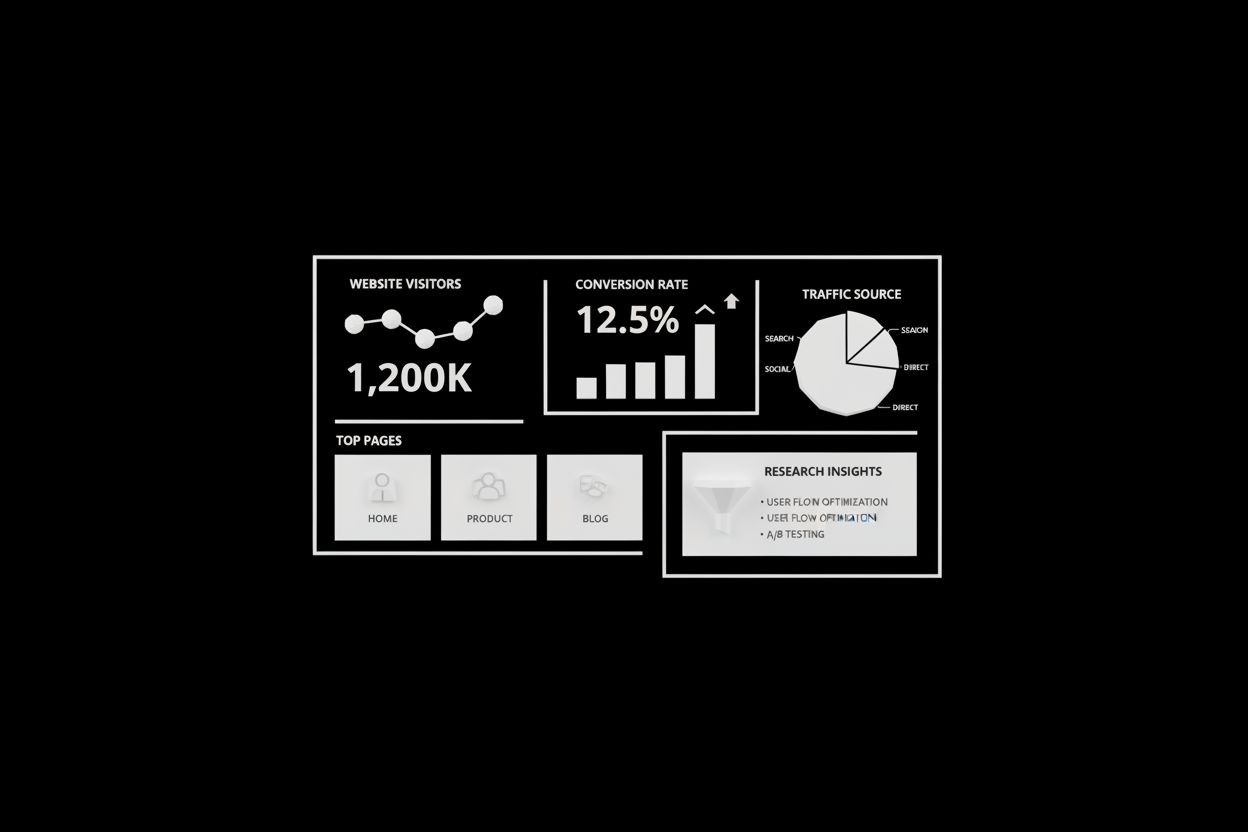
The best conversion ideas usually come from research, not guesses. Before you rewrite a headline or move a button, look for the patterns that show where people get stuck.
Heatmaps and scroll maps
Heatmaps help you see where people click, tap, and stop scrolling. If your CTA is buried below a section that gets very little attention, the problem may be placement, not the offer.
Session recordings
Recordings show hesitation in a way analytics cannot. You may notice repeated scrolling, rage clicks, or people trying to interact with elements that are not clickable.
Surveys and on-page polls
A short question like what stopped you from taking action can uncover objections you never see in the dashboard. Sometimes visitors need pricing clarity, more proof, or a simpler process.
Form analytics
Forms often hide more friction than the rest of the page. Look for fields that cause drop-off, validation errors, or long pauses. If the form is too demanding, people leave before the lead is captured.
Chat logs and AI conversations
The questions people ask your automated AI chat agents often reveal the exact objections blocking conversion. If the same question keeps coming up, your page should answer it earlier.
Sales feedback
Your sales team already knows where leads are confused. Listen for repeated questions about pricing, timeline, fit, or implementation. Those themes should show up in the copy on the page.
What to test first
Not every page element deserves the same attention. Start with the parts of the experience that affect clarity, trust, and ease of action.
Area | Why it matters | Good first test |
|---|---|---|
Headline | Confirms relevance fast | Lead with the main outcome, not the feature list |
CTA | Tells people what to do next | Use a specific action such as Book a demo or Get the audit |
Form | Removes friction | Cut unnecessary fields |
Social proof | Lowers risk | Add testimonials, reviews, or logos |
Page speed | Prevents drop-off | Compress images and reduce script bloat |
Mobile layout | Many visits happen on phones | Simplify the page above the fold |
Offer | Drives perceived value | Make the promise clearer |
Chat support | Captures questions | Add proactive prompts for high-intent pages |
For ad traffic, especially from Meta and TikTok, message match is often the first thing to test. If the ad is for a free consultation, the landing page should not make people hunt for the booking button. If the ad is about a specific problem, the page should speak to that problem immediately.
Conversion optimization by business model
Different businesses need different levers. The fundamentals stay the same, but the priorities shift based on how people buy.
Lead generation businesses
For agencies, local service businesses, consultants, and B2B teams, the goal is usually to turn visitors into qualified leads. That means shorter forms, stronger proof, and faster follow-up.
A two-step form can work well when the first step feels easy. So can a calendar booking flow if the offer is clear. The biggest win is usually not asking for too much too soon.
SaaS companies
For SaaS, conversion optimization often focuses on demo requests, free trials, and pricing page clarity. People need to understand the problem you solve, how fast they can start, and what makes you different.
Ecommerce brands
Ecommerce pages often improve when product pages answer objections sooner. Shipping costs, delivery timing, returns, and trust signals all matter. Checkout pages need to be simple, mobile-friendly, and distraction free.
Content and media businesses
If your business grows through articles, newsletters, or social content, the next step must be obvious. A useful article should lead to a subscription, lead magnet, or relevant service page. If you use automated social media to scale content, make sure every post points to one clear conversion event.
Common conversion optimization mistakes
The fastest way to waste time is to optimize without a plan. These mistakes show up often:
Testing the wrong page
Fix the pages with the most traffic and intent first.Changing too many things at once
If everything changes, you will not know what helped.Ignoring mobile behavior
Mobile users often need shorter pages, faster load times, and simpler forms.Optimizing only for vanity metrics
More clicks do not matter if qualified leads do not improve.Ending tests too early
A small early lift can disappear once traffic stabilizes.Not checking follow-up speed
If leads are not contacted quickly, conversion gains can vanish after the form submit.Forgetting the sales handoff
A better landing page should make the sales process easier, not harder.
A simple 30-day conversion optimization plan
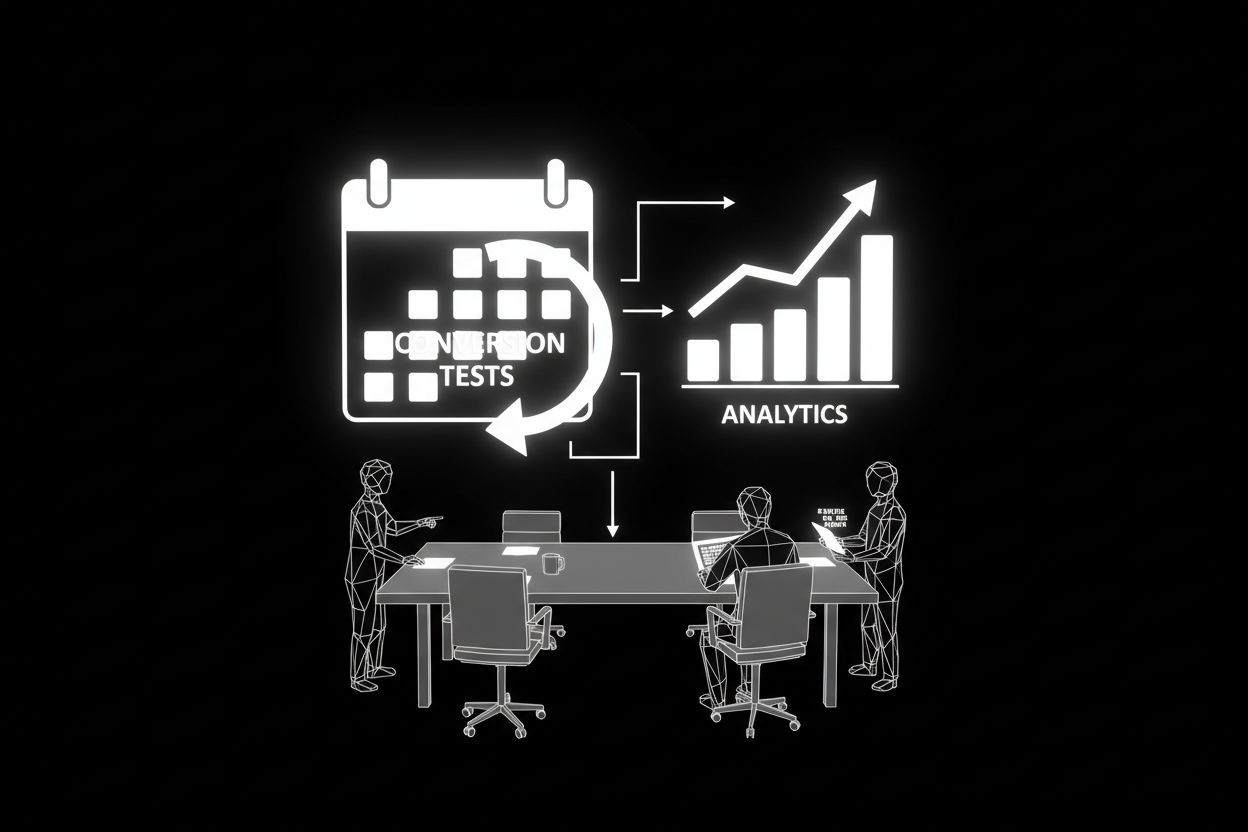
You do not need a giant project to start. A focused month is enough to uncover useful wins.
Week 1: Audit the funnel
Pick one main conversion goal and review the pages that matter most. Capture your baseline numbers, then identify the weakest step in the path.
Week 2: Gather research
Look at heatmaps, recordings, form drop-off, chat logs, and sales feedback. Write down the top three objections or points of confusion.
Week 3: Launch quick wins
Test one or two improvements that are easy to understand, such as a stronger headline, clearer CTA, shorter form, better proof, or tighter ad-to-page message match.
Week 4: Measure and decide
Review the results, compare them with the baseline, and document what you learned. If a change worked, keep it. If not, use the insight to shape the next test.
This is also a good time to check whether your conversion path is supported by the rest of the system. Strong SEO, consistent social content, good ads, and fast lead handling all influence the final result.
FAQs about conversion optimization
Is conversion optimization the same as CRO?
Yes. CRO, or conversion rate optimization, is the common shorthand. Most teams use the terms interchangeably.
What should I optimize first?
Start with pages that already get traffic and have a clear goal, such as landing pages, pricing pages, demo pages, and lead capture forms.
How long should a test run?
Long enough to collect useful data and account for normal traffic patterns. Do not stop the test just because early results look good or bad.
Can AI chat agents improve conversions?
Yes, especially when visitors have questions before they are ready to fill out a form. Fast answers, qualification, and handoff support can reduce friction.
Do SEO and social media affect conversion optimization?
Absolutely. They shape the quality and intent of the traffic entering the funnel. Better traffic makes conversion optimization more effective, and better conversion optimization makes every channel perform better.
Conversion optimization is not a one-time project. It is a habit of making the path from attention to action easier, clearer, and more trustworthy. When your SEO pages, social content, ads, landing pages, forms, and follow-up all work together, small improvements start to compound. That is how traffic turns into real business growth.