Cold Emailing Guide: How to Write Emails That Get Replies
Learn cold emailing strategies that improve opens and replies with stronger subject lines, personalization, follow-ups, and deliverability basics today.
Cold emailing still works when it feels specific, useful, and easy to answer. The inbox is crowded, but a well-written message can still start a real conversation if it reaches the right person with the right offer. That is why cold email remains such a practical channel for B2B sales, partnerships, recruiting, and founder-led growth. It also plays well with automated lead generation, paid ads management, and automated social media when you want a direct way to turn attention into conversations.
Why cold emailing still works when done right

Cold email is not about volume alone. It works because you can aim at a narrow audience, shape the message for one problem, and measure the result quickly. A good campaign does not try to impress everyone. It tries to get the right few people to reply.
The best cold email is not a pitch dump. It is a short, relevant note that proves you understand the reader’s world and have one useful reason to reach out. If you are building a repeatable pipeline, treat cold email as one part of a larger system alongside lead generation and marketing automation.
That control matters. Compared with broad social posts or static website traffic, cold email lets you choose the role, company size, trigger event, and offer angle. When the list is tight and the message is clear, reply rates usually improve because the outreach feels earned instead of random.
Build the offer before you write a single subject line
To get replies, the offer has to be clear before the subject line ever matters. Ask yourself: what problem am I solving, for whom, and why now? If you cannot answer that in one sentence, the email will probably wander.
Define one audience and one outcome
Write for one type of buyer at a time. A founder at a 20-person agency, a marketing director at a SaaS company, and a recruiter at a fintech startup each care about different outcomes. The tighter the audience, the easier it is to write a message that feels relevant.
Make the value obvious
Do not explain everything you do. Promise one clear benefit: more qualified demos, faster hiring, better backlinks, lower CPL, or cleaner lead routing. The reader should understand the point of the email within a few seconds.
Choose the right angle for the offer
Some emails lead with a problem, some with a timely opportunity, and some with proof. Use the angle that makes the decision easiest. If the prospect already feels the pain, lean into that. If they are not yet aware of the issue, lead with a useful insight or example.
When you want to keep this process consistent across segments, a lead generation and marketing automation workflow helps standardize research, sequencing, and handoff.
Write subject lines that get opened
A strong subject line is plain, specific, and believable. It should sound like something a real person would send, not a growth hack.
Good subject line formulas include:
Quick question about {{company}}
Idea for {{role or goal}}
{{Mutual connection}} suggested I reach out
Follow-up on your {{podcast, post, event}}
Can I share one idea for reducing {{pain point}}?
When in doubt, choose the simplest version that still feels relevant. Vague curiosity bait, fake urgency, and overly polished marketing language usually hurt more than they help.
The anatomy of a cold email that gets replies
A reply-worthy cold email has six parts: subject line, first sentence, reason for reaching out, value, call to action, and signature. Each part should do one job.
A simple structure looks like this:
Subject line that feels natural
First sentence that proves it is not a mass blast
One sentence that explains why you chose them
One sentence that shows the benefit
One low-friction ask
A clean signature with your name and role
Keep the body short. For many outbound campaigns, 70 to 150 words is enough if every line earns its place. The goal is not to explain everything. It is to create enough relevance that the prospect feels safe replying.
Example:
Hi {{first name}},
I noticed {{specific trigger}} and thought this might be relevant.
We help {{similar companies}} achieve {{outcome}} without {{pain point}}.
Would it make sense if I sent over two ideas?
Best,
{{name}}
The call to action matters because it lowers the effort required to respond. A reply like ‘yes, send it over’ is much easier than a request for a full meeting on the first touch.
When responses start coming in, automated AI chat agents can qualify interest quickly and route the right conversations to a human without slowing things down.
Personalization that feels human at scale
Personalization is not just adding a first name. It is the art of showing that the message was written for a real person with a real context.
Four useful levels of personalization
Basic: name, company, role.
Contextual: recent post, product launch, hiring announcement, funding round, webinar, or campaign.
Business-focused: connect the outreach to a problem they likely care about.
Trigger-based: use an event that creates timing, such as a new hire, new location, new offer, or recent ad campaign.
The best campaigns usually mix one strong detail with one clear business reason. Too much personalization can feel forced, especially if it reads like a list of copied notes.
A simple research workflow
Start with the company website, then check LinkedIn, recent content, hiring pages, podcasts, press releases, and ad libraries if relevant. Capture one or two signals only. Then build the email around that signal and the outcome you want.
If your prospects are active on social channels, automated social media can warm up the audience before your email lands, which makes the outreach feel less cold.
Frameworks that fit the situation
Not every cold email needs the same structure. The right framework depends on how aware the prospect is and how hard the ask is.
PAS
Problem, Agitate, Solution works well when the pain is obvious. Lead with the issue, show why it matters, then offer a clear next step.
AIDA
Attention, Interest, Desire, Action works when you need a little more explanation. It gives you room to show a result, a use case, or a proof point before the ask.
Quick question
This format is best for simple, low-friction outreach. It is short, direct, and often effective for first-touch sales emails.
Mutual connection
If you genuinely share a contact, event, or community, say so early. A true connection lowers resistance and gives the message more credibility.
Use the framework that helps the reader move forward fastest. Do not force a complex structure into a simple ask.
Follow-up strategy that keeps the conversation alive

Most replies do not come from the first email. A thoughtful follow-up sequence is where a lot of the pipeline happens.
The biggest mistake is repeating the same message with a slightly different greeting. Every follow-up should add something new, even if it is small.
A simple sequence might look like this:
Reminder: a short bump with the original context.
Proof point: a case study, example, or result.
Resource: a helpful link, checklist, or note.
Breakup email: a polite close that gives them an easy exit.
Keep each follow-up shorter than the last. Change the angle, not just the timing. If the first email focused on a pain point, the next one can share a relevant outcome. If the first message was broad, the next can be more concrete.
A good follow-up feels respectful, not desperate. It says, ‘I still think this matters, but I am not going to force it.’
Deliverability basics you can’t ignore
If your emails do not reach the inbox, nothing else matters. For Gmail recipients, Google says messages might be rejected or sent to spam if sender requirements are not met, and bulk senders should authenticate with SPF and DKIM, set up DMARC, keep user-reported spam rate below 0.1% and avoid 0.3% or higher, and use one-click unsubscribe for marketing or promotional messages. Google also says one-click unsubscribe is required only for marketing and promotional messages, not transactional emails, and unsubscribe requests should be honored within 48 hours. Postmaster Tools can help you monitor delivery errors, spam reports, authentication, and spam rate. (support.google.com)
Google recommends setting up SPF and DKIM at least 48 hours before DMARC and rolling DMARC out gradually, starting with a none policy while you review reports. (support.google.com)
The FTC’s CAN-SPAM Rule says commercial email must use accurate header and subject lines, identify itself as an advertisement, include a valid physical address, and provide an opt-out mechanism. In the EU, the Commission says prior consent is required for direct marketing emails that promote particular brands or products, and recipients must be told at the first contact that they can object. (ftc.gov)
Practical habits help too: send from a real domain, keep formatting clean, avoid deceptive wording, and remove unengaged contacts before they drag down your reputation.
Cold emailing for different use cases
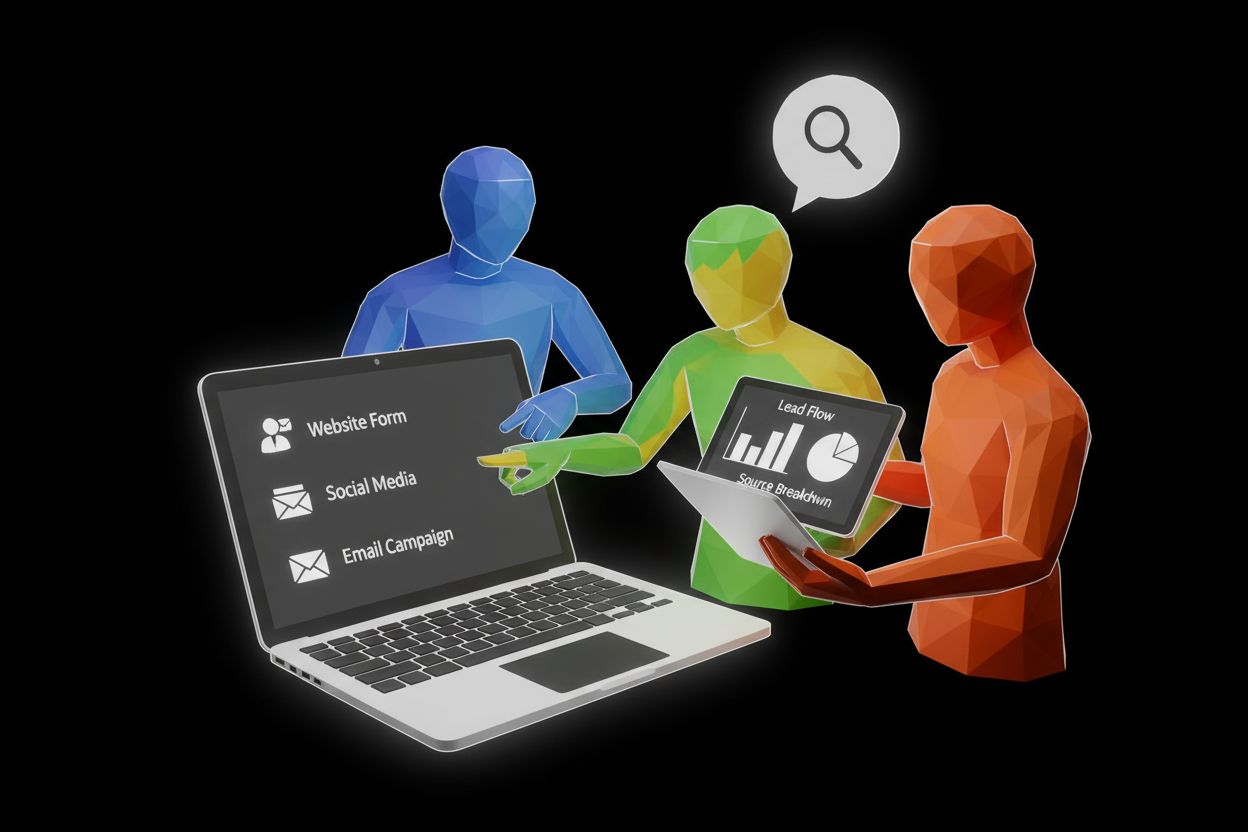
Cold email can support several business goals, but the angle should match the job.
Sales outreach
Lead with the pain you solve, the result you create, and the simplest possible next step.
Partnership outreach
Focus on audience overlap, shared value, and why the partnership helps both sides.
Recruiting
Speak to the role, the impact, and why the opportunity matters now.
PR and link building
Lead with a story, data point, or useful resource, not a generic request.
Networking and job seeking
Keep the message short, respectful, and specific about why you are reaching out.
If a prospect first met your brand through advertising, cold email can be the follow-up that turns curiosity into a conversation, which is why it pairs so well with paid ads management.
Common mistakes that lower reply rates
A lot of cold emailing problems are self-inflicted. The most common ones are easy to spot:
Opening with too much about yourself
Writing long paragraphs that are hard to skim
Using one generic template for every audience
Making the CTA too big too early
Hiding the value until the end
Sending without a real reason for the outreach
Ignoring bounces, replies, and unsubscribe requests
Treating the first draft like the final version
If your email could be sent to 100 people without any changes, it probably needs more work. Specificity is what makes cold outreach feel earned.
How to measure and improve results
Open rate can be a rough signal, but it is not the whole story. The metrics that matter more are reply rate, positive reply rate, booked meeting rate, and bounce rate.
Start by testing one variable at a time. Try different subject lines, first sentences, CTAs, or audience segments. If you change everything at once, you will not know what actually improved performance.
It also helps to keep a small swipe file of your best-performing openers, replies, and objections. That way, you are building a repeatable system instead of starting from scratch every week.
Log the segment, offer, and outcome in your CRM so sales and marketing can see which message types bring real opportunities, not just clicks or casual replies.
Put cold emailing inside a broader growth system
Cold email becomes much stronger when it is one part of a connected funnel. Social content builds familiarity, ads capture demand, AI chat agents handle inbound questions, and email turns qualified attention into direct conversations. If you want those channels to support one another, the combination of automated social media, paid ads management, automated lead generation, automated AI chat agents, and lead generation and marketing automation creates a much cleaner path from first touch to booked call.
The goal is not to send more email. The goal is to make every message feel like the logical next step in a larger buying journey.
Frequently asked questions about cold emailing
Is cold emailing legal?
Yes, but the rules depend on where you send and who you send to. In the U.S., commercial email is governed by CAN-SPAM, and in the EU, prior consent is required for direct marketing emails that promote particular brands or products. (ftc.gov)
How many follow-ups should I send?
A short sequence is usually enough. Send a reminder, then add a new angle or proof point, then close the loop politely if there is no response.
What makes a cold email feel personal?
One real detail. Mention a trigger, a business problem, or a specific reason you chose that person instead of everyone else.
Cold emailing is not about being clever. It is about being clear, relevant, and respectful of the reader’s time. If you write for one person, keep the message short, and make the next step easy, cold email can become a reliable source of qualified conversations rather than just another task in your outreach stack.