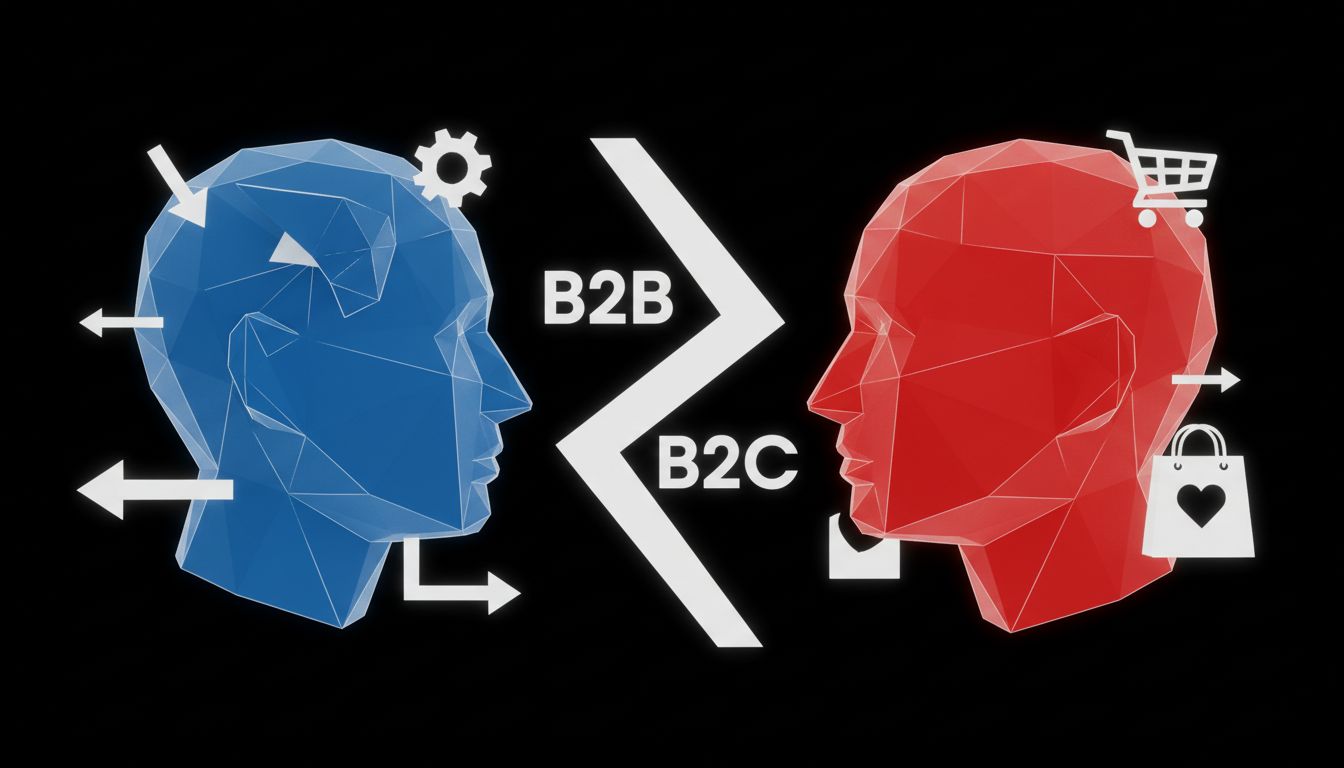
B2B vs B2C: Key Differences, Examples, and Marketing Strategies
Compare b2b vs b2c with side-by-side examples, sales cycle differences, pricing, KPIs, and marketing tactics for lead gen, social media, and paid ads that convert.
The easiest way to think about b2b vs b2c is simple: B2B sells to businesses, while B2C sells to individual consumers. That one difference changes the buyer journey, the sales cycle, the price structure, and the way you should market, follow up, and close the sale. It also changes how you use content, AI chat, social media, and paid ads to generate leads. (salesforce.com)
B2B vs B2C at a glance
Category | B2B | B2C |
|---|---|---|
Target buyer | Businesses, departments, buying groups | Individual consumers |
Decision-makers | Multiple stakeholders | Usually one person or household |
Sales cycle | Longer, research-heavy, approval-based | Shorter, faster, often emotional or impulsive |
Pricing | Quotes, contracts, volume pricing, payment terms | Fixed prices, discounts, simple checkout |
Content style | Educational, proof-driven, detailed | Visual, direct, benefit-led |
Best channels | LinkedIn, email, SEO, webinars, ABM | Meta, TikTok, Instagram, SEM, creators |
Customer service | Dedicated support, account management | Fast self-service, chat, returns |
Main KPIs | Leads, pipeline, ACV, retention | Conversion rate, AOV, ROAS, repeat purchase |
These differences are a synthesis of how official sources describe B2B and B2C buyer behavior, pricing, relationships, and channel use. (salesforce.com)
What is B2B?

B2B, or business-to-business, means a company sells products or services to another company instead of to an individual shopper. Salesforce describes B2B marketing as a business practice focused on other businesses, and classic B2B examples include industrial goods, business software, and consulting services. HubSpot adds that B2B ecommerce commonly includes manufacturers, wholesalers, distributors, marketplaces, and SaaS companies. (salesforce.com)
What makes B2B different is not just who buys, but how they buy. B2B customers are less likely to buy on impulse, they often need buy-in from other stakeholders, and they usually expect deeper answers about ROI, implementation, and risk. Salesforce also notes that B2B relationships tend to last after the sale, which is why account managers, webinars, newsletters, and ongoing support matter so much. (salesforce.com)
That is also why the lead process matters so much in B2B. If your goal is to turn traffic into pipeline, a CRM in marketing helps keep downloads, meetings, notes, and follow-up history in one place so leads do not fall through the cracks. In a B2B funnel, the real win is not a click. It is a qualified conversation. (salesforce.com)
What is B2C?
B2C, or business-to-consumer, means a company sells products or services directly to individual customers. Shopify defines B2C as a model where businesses sell directly to consumers, often online, and notes that successful B2C brands focus on user-friendly websites, personalized marketing, and excellent customer service. LinkedIn adds that B2C marketers often lean on social media, SEO, content marketing, and paid advertising to capture sales. (shopify.com)
In practice, B2C works best when the shopper can understand the offer quickly and move through checkout with very little friction. That is why product pages, reviews, promotional hooks, short-form video, and simple offers matter so much. A fountain pen brand selling directly through its own store is a good example of direct-to-consumer, or D2C, which Shopify treats as a direct transaction between a business and a consumer without middlemen. D2C is a subset of the wider B2C world, not a separate universe. (help.shopify.com)
The differences that matter most
Audience and decision-makers
B2B usually targets a buying committee. Even if one person opens the conversation, they often need input from finance, operations, procurement, or leadership before anyone signs off. B2C usually targets one shopper or one household, so the message can stay simpler and more direct. (salesforce.com)
Sales cycle and pricing
B2B buying cycles are usually slower. HubSpot notes that some B2B ecommerce cycles can stretch from three to nine months, and that B2B pricing often depends on volume, contract terms, or negotiation. B2C usually runs on clearer pricing, faster checkout, and more promotional urgency. (blog.hubspot.com)
Relationships and service
In B2B, the sale is rarely the end of the relationship. Salesforce says B2B marketing often continues after the sale through newsletters, product updates, webinars, and dedicated account managers. Oracle also highlights modern B2B buying experiences built around self-service, assisted buying, and long-term relationship building. B2C service, by contrast, usually needs to be fast, simple, and easy to scale. (salesforce.com)
KPIs you should track
The metrics change with the model too. B2B teams usually care most about lead quality, pipeline, sales velocity, average contract value, and retention. B2C teams usually pay closer attention to conversion rate, average order value, repeat purchase rate, and ROAS. The point is not to use more metrics, but to use the right ones for the buying behavior you actually have. (linkedin.com)
Marketing strategy: how each model wins attention
B2B marketing works best when it proves value before it asks for the sale. LinkedIn’s B2B content guidance points to webinars, whitepapers, templates, case studies, email, social posts, and Lead Gen Forms because B2B buyers need education, proof, and a clear reason to move forward. Salesforce adds that B2B buyers are less likely to buy on impulse, which is why content should be targeted and relationship-driven. If your team needs a stronger capture layer, automated lead generation can help turn traffic into qualified enquiries without creating more manual work. (business.linkedin.com)
B2C marketing usually wins by stopping the scroll. LinkedIn notes that B2C marketers often lean on social platforms like TikTok and Instagram, SEO, content marketing, and paid ads. TikTok’s Lead Generation product is built to capture interest directly in app with native forms and CRM sync, while Meta’s lead campaigns and automation tools are designed to generate and optimize leads more efficiently. If you are posting across channels at speed, a automated social media workflow helps keep the content engine moving without turning every campaign into a manual chore. (business.linkedin.com)
For both models, the funnel should look different, even when the tools overlap. B2B usually needs more depth, while B2C usually needs more speed. (business.linkedin.com)
B2B awareness: guides, explainers, thought leadership, industry research
B2B consideration: case studies, comparison pages, webinars, ROI calculators
B2B decision: demos, proposals, implementation plans, proof from similar customers
B2C awareness: short-form video, creator content, product hooks, social ads
B2C consideration: reviews, UGC, before-and-after content, bundles
B2C decision: offer-led landing pages, retargeting, cart recovery, checkout incentives
If you are building campaigns for lead gen, the content and the ad format should match the buying style, not just the platform.
Pricing, revenue, and customer relationships
B2B pricing is often negotiated or tiered. Shopify’s B2B terminology includes volume pricing and payment terms, and HubSpot notes that B2B ecommerce often involves higher order values, recurring revenue, and subscription-based models such as monthly or annual SaaS. Oracle also points to recurring, usage-based, and consumption-based strategies in modern B2B buying experiences. (help.shopify.com)
B2C pricing is usually more transparent. The shopper sees a fixed price, maybe a discount, and then decides whether to buy. That simplicity is a big reason B2C brands focus so heavily on product pages, promotions, and frictionless checkout. (shopify.com)
Customer service follows the same pattern. B2B buyers often need more support before and after the sale, while B2C customers usually expect quick answers and low-friction self-service. If you want to answer common questions after hours, automated AI chat agents can qualify prospects, route enquiries, and keep response times short without adding more manual load. Meta’s messaging lead ads and Oracle’s B2B workflow examples both show how chat and self-service reduce friction in the buying process. (salesforce.com)
When to use B2B vs B2C
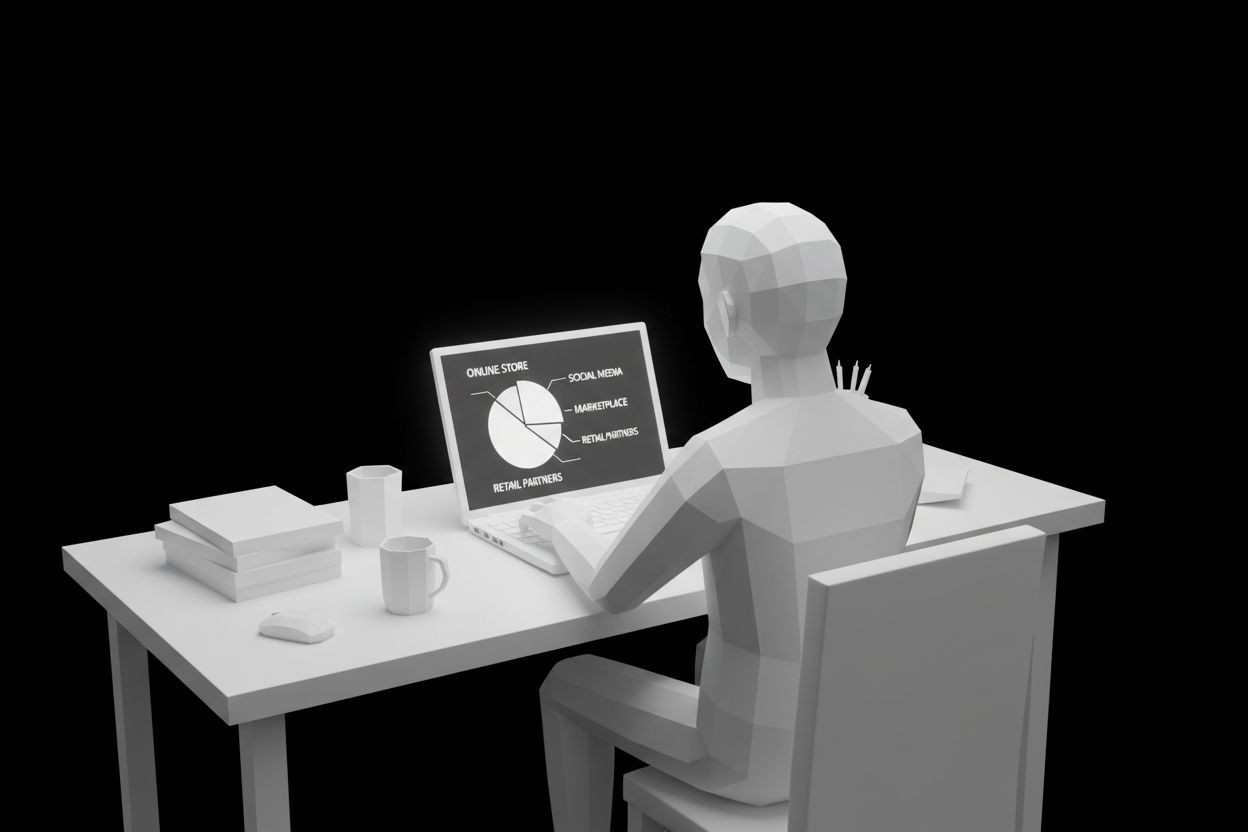
Choose B2B if your product solves a business problem, needs implementation, has a higher ticket price, or benefits from a longer relationship. Choose B2C if the buyer can understand the offer quickly, buy with little approval, and expects a simple self-serve experience. That is why software, manufacturing, wholesale, consulting, and services often skew B2B, while retail, consumer goods, beauty, and everyday services skew B2C. (salesforce.com)
If you sell to both businesses and consumers, you are not alone. Shopify’s B2B2C guidance shows how a brand can stay visible to the end consumer while also working through partners, and its help center supports blended or dedicated stores to keep B2B and D2C data separate. In plain English, the hybrid model works when you need both wholesale reach and direct customer insight. (shopify.com)
A quick way to decide is to ask these questions:
Does the buyer need approval from someone else?
Is the price negotiated or fixed?
Will one sale create months of support and account management?
Can the customer buy on their own, without a sales call?
Are you selling through partners, marketplaces, or your own storefront?
The more your answers lean toward approval, negotiation, and relationship depth, the more your model behaves like B2B. The more they lean toward speed, clarity, and self-service, the more it behaves like B2C. (salesforce.com)
Common mistakes to avoid
The biggest mistakes happen when the promise, the landing page, and the follow-up do not match the buyer’s reality. B2B audiences need proof and patience. B2C audiences need clarity and speed. If you flip those expectations, campaigns can underperform even when the creative looks good. (salesforce.com)
Treating B2B like a consumer ad by using hype instead of proof
Treating B2C like a technical proposal by overloading the buyer with detail
Sending paid traffic to a generic homepage instead of a focused landing page
Ignoring post-sale follow-up when the first conversion should be the start of retention
Running ads without matching the offer to the funnel stage
If your campaigns are getting clicks but not leads, paid ads management can help tighten targeting, creative, and landing-page alignment before you spend more budget. (facebook.com)
FAQ
Is Amazon B2B or B2C?
Both. Amazon Business is a business-to-business store that helps organizations digitize procurement, while Amazon’s broader consumer marketplace serves individual shoppers. (aboutamazon.com)
Can a company be both B2B and B2C?
Yes. Shopify explicitly supports blended stores, and its B2B2C guidance shows how brands can keep a visible relationship with the end consumer while also selling through business channels. (help.shopify.com)
Which is easier to market?
B2C is usually easier to launch because the buying path is shorter, but B2B often becomes more strategic over time because the relationships last longer and the order values can be higher. (blog.hubspot.com)
Which has higher lifetime value?
Often B2B, but not always. B2B can benefit from longer relationships, higher order values, and more retention, while B2C can still win on frequency and volume if repeat purchases stay strong. (blog.hubspot.com)
What is the main difference between B2B and B2C marketing?
B2B marketing is built around education, trust, and lead nurturing, while B2C marketing is built around attention, simplicity, and conversion. That is why B2B often leans on LinkedIn, email, and webinars, while B2C often leans on social platforms, SEM, and fast-moving paid ads. (business.linkedin.com)
B2B vs B2C is not just a vocabulary lesson. It is the foundation for how you build offers, write copy, choose channels, price products, and follow up with leads. B2B is built for trust, proof, and relationship-building. B2C is built for speed, clarity, and conversion. Once you know which buyer you are speaking to, the rest of the playbook gets easier, from content and AI chat to social media and paid ads. (salesforce.com)