AI Marketing Automation Agency: A Practical Guide to Strategy, Implementation, and ROI
Discover how an AI marketing automation agency drives lead generation, AI chat agents, social ads, SEO, and measurable ROI with a step-by-step implementation roadmap.
Every marketing team wants predictable leads, faster campaign iteration, and measurable ROI. An AI marketing automation agency brings those outcomes by combining machine learning, workflow automation, and marketing strategy into repeatable systems that scale. This guide walks through what these agencies do, real use cases, an implementation roadmap, pricing considerations, and the exact questions to ask before you sign a contract.
What is an AI marketing automation agency?
An AI marketing automation agency helps businesses automate repetitive marketing tasks and optimize campaigns with machine learning. Instead of one-off campaigns, the agency builds systems that learn from data, personalize interactions, and route leads through the right sales motions. Services commonly include AI-powered lead scoring, programmatic ad optimization, automated content personalization, and conversational chat agents.

These agencies work across the full funnel. They connect data sources, set up orchestration flows, and apply AI models to predict intent and action. The result is lower manual effort for your team, faster test cycles, and improved conversion rates. You should expect a mix of strategy, implementation, integrations, and ongoing optimization rather than a one-time setup.
Core services offered
Below are the service areas to expect when engaging an AI marketing automation agency.
AI marketing automation and orchestration. Design of automated customer journeys, lead routing, and triggers that move prospects through the funnel. This is the backbone of scalable lead generation. See our detailed automation offering at Automated Lead Generation - The Social Search.
AI SEO and content personalization. Predictive keyword targeting, automatic content adaptation based on user intent, and SEO workflows that scale content production. Learn about automated SEO at Automated SEO - The Social Search.
AI-powered content creation. Data-driven content briefs, automated social posts, and iterative testing of headlines and creatives.
Social media automation and creative optimization. Scheduling, creative variant testing, and engagement optimization using AI signals. For hands-on social automation strategies see Automated Social Media - The Social Search.
Paid ads management with AI. Real-time bidding adjustments, creative selection, and audience expansion on platforms like Meta and TikTok. A focused paid ads service example is available at Paid Ads Management - The Social Search.
Conversational AI and chat agents. Multi-channel chat agents for pre-sales, lead qualification, and customer support that integrate with your CRM. For technical chat agent implementations see Automated AI Chat Agents - The Social Search.
CRM and sales automation. Lead scoring, account-based workflows, and closed-loop analytics that connect marketing activity to revenue.
Why hire an AI marketing automation agency
Hiring a specialized agency saves time, reduces risk, and speeds up ROI. Here are the tangible benefits:
Efficiency gains. Automating repetitive tasks frees analysts and creatives to focus on strategy and higher-level optimization.
Faster experimentation. AI reduces the time to identify winning creative and audience combinations.
Better lead quality. AI scoring and behavioral signals filter noise and pass higher intent leads to sales.
Scalable personalization. Personalize emails, landing pages, and ad creatives at scale without multiplying cost.
Continuous improvement. Models retrain with new data so performance improves over time.
Quantifiable outcomes you can expect in the first 6 to 12 months include a 20 to 60 percent reduction in cost per lead, a 15 to 40 percent increase in conversion rates, and faster lead response times measured in minutes rather than hours. These figures depend on industry, data quality, and initial baseline performance.
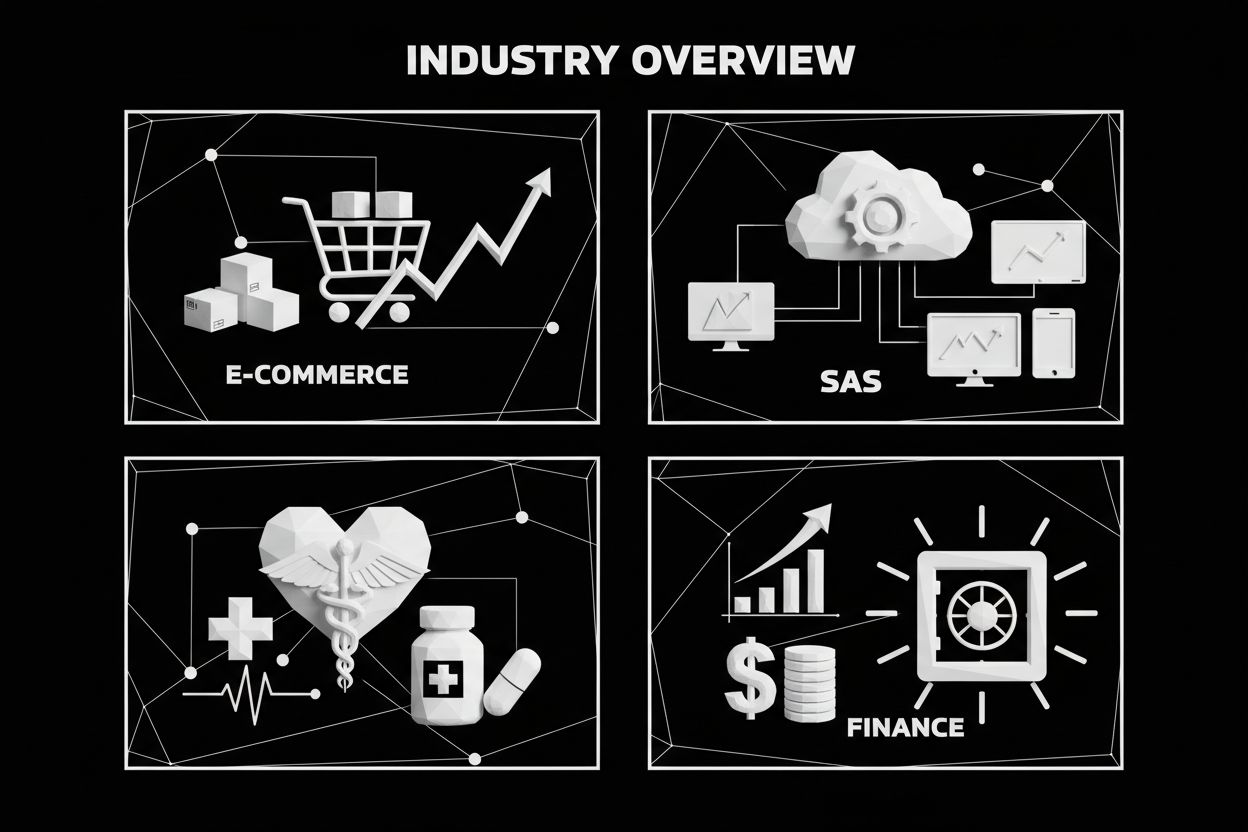
Industry-specific use cases and quick ROI benchmarks
Different verticals benefit in distinct ways. Below are four common verticals with practical examples.
E-commerce
Use case: Dynamic product recommendations, cart abandonment recovery campaigns, and automated ad creative testing.
Result: A standard implementation drives a 10 to 30 percent lift in average order value and a 15 to 40 percent reduction in cart abandonment cost.
SaaS
Use case: Behavioral lead scoring, trial onboarding automation, and intent-based outreach.
Result: Faster sales cycles, with qualified lead-to-demo conversions improving by 20 to 50 percent and trial-to-paid conversions improving by 10 to 25 percent.
Healthcare and finance
Use case: Secure lead capture workflows, consent-driven personalization, and careful escalation to human agents.
Result: Higher engagement while maintaining compliance. Expect slower initial velocity due to regulatory checks, but better lead-to-patient or lead-to-client conversion quality.
B2B services
Use case: Account-based orchestration, predictive account scoring, and multi-channel nurture sequences.
Result: Higher deal size and pipeline velocity, especially for mid-market accounts where orchestration raises engagement with key stakeholders.
These benchmarks are directional. Agency proposals should include a baseline audit and a forecast tailored to your metrics.
Implementation roadmap - from audit to autonomous optimization
A clear implementation roadmap reduces risk and sets expectations. Here is a practical 6 to 12 week phased approach for an initial automation wave, plus ongoing phases.
Discovery and data audit (1-2 weeks)
Map customer journeys, identify data sources, and audit data quality.
Determine compliance needs such as PDPA requirements and consent capture.
Strategy and design (1-2 weeks)
Define target segments, KPIs, and automation flows.
Decide on tech stack and integrations.
Build and integrate (2-4 weeks)
Connect CRM, ad accounts, analytics, and webhooks.
Implement initial AI models for scoring and personalization.
Pilot and test (2-4 weeks)
Run small experiments on paid channels and email flows.
Validate model predictions and iterate creative.
Scale and train (ongoing)
Expand to additional channels like TikTok, programmatic, or chat.
Train internal teams on processes and handoffs.
Continuous optimization (ongoing)
Retrain models, update audiences, and refine attribution.
Change management and training are key. A typical engagement includes 2 to 4 training sessions for marketing and sales teams and living runbooks for common scenarios.
Technical considerations
Integration readiness. Verify API access to your CRM and ad platforms.
Data quality. AI is only as good as the data it receives. Define canonical identifiers and data hygiene rules.
Compliance. For Singapore businesses, follow PDPA requirements for consent and data retention.
Security. Ensure secure token management and role-based access control.
Running ads on Meta and TikTok with AI
AI transforms ad management from manual bidding to continuous learning. Here are practical tactics to apply now:
Use creative testing loops. Deliver variant A/B tests at scale then let AI allocate budget to winners.
Combine signals. Use CRM lookalikes and site behavior to build layered audiences.
Automate creative refresh. Rotate assets automatically when performance decays.
Optimize toward value. Use conversion-level optimization rather than clicks for sustainable ROAS.
Monitor platform shifts. TikTok responds to creative novelty; Meta rewards strong signal-to-noise ratios.
Budget allocation tip: Start with a 70/30 split favoring proven audiences while reserving 30 percent for exploration. The exploration budget powers AI-driven audience expansion and creative discovery.
Measurement and attribution
Adopt multi-touch attribution models to understand cross-channel influence. Connect ad spend to revenue in your CRM to report true acquisition cost by cohort.
Designing AI chat agents that convert
A well-built chat agent can qualify leads and reduce time to first contact. Practical steps:
Map the top 5 user intents and design distinct flows for each.
Prioritize brief qualification questions that predict conversion.
Implement escalation logic so high-value leads route to sales immediately.
Log conversations into the CRM and trigger follow-up automation.
Continuously retrain NLP models with real conversations.
KPI checklist: containment rate, qualified lead rate, handoff time, and CSAT when used for support.
When not to use AI automation and limits to watch
AI is powerful but not always appropriate. Avoid or delay full automation if:
Data quality is poor. Bad data produces misleading predictions.
Volume is insufficient. Small sample sizes prevent reliable model training.
You need bespoke, high-touch sales motions. Some enterprise deals need human relationship building.
Compliance prevents automated actions. Sensitive industries often require manual review.
Always pair automation with human oversight and clear escalation paths.
Pricing models and build vs buy framework
Common pricing structures:
Month-to-month retainer. Covers strategy, implementation, and optimizations.
Project-based fee. Good for single-wave implementations like a pilot.
Performance fees. Tied to agreed KPIs such as CPL or MQL volume.
Hidden costs to budget for:
Data cleanup and migration.
Ongoing API or platform fees.
Creative production for ad variants.
Training and documentation.
Build vs buy checklist
Build if you have strong engineering resources, large teams, and long-term control needs.
Buy if you want speed, lower upfront risk, and vendor expertise in campaign optimization.
A hybrid approach often works best. Buy core automation and build bespoke integrations around it.
How to choose the right agency
Ask these questions when evaluating agencies:
Can you show industry-specific case studies and baseline to results?
What is your approach to data privacy and PDPA compliance?
Which platforms and integrations do you support?
How do you structure training and change management?
What KPIs will you commit to and how do you report them?
What does success look like at 3, 6, and 12 months?
Also request a technical appendix that lists required API scopes and a phased timeline. If you want a quick site review, see our contact page and services overview at The Social Search contact.
Helpful resources and next steps
If you are planning a pilot, start with these actions:
Run a 2-week data audit and baseline report.
Define the top three business outcomes you need in the first 90 days.
Choose a single channel to automate first, such as an AI chat agent or a paid social test.
Schedule training sessions for both marketing and sales handoffs.
For hands-on articles and guides, explore our insights and practical resources: the main site and blog at The Social Search - Blog and our insights hub at The Social Search - Insights. For deeper CRM and automation context, read What Is CRM in Marketing: A Complete Guide to Strategy, Automation, AI, and Growth - The Social Search.
FAQ
Q: How long does it take to see results from AI automation?
A: You can expect initial signal improvements in 4 to 8 weeks and more meaningful ROI by 3 to 6 months, depending on traffic and data volume.
Q: Will AI replace my marketing team?
A: No. AI amplifies the team. It removes repetitive work so people can focus on strategy, creative, and high-value decisions.
Q: How do you handle data privacy and consent?
A: Agencies should document consent flows, retention policies, and PDPA compliance. Confirm these practices in the contract.
Q: What KPIs should I track?
A: Track CPL, conversion rate, lead quality, time to contact, and lifetime value by cohort.
Q: Can AI optimize ads on both Meta and TikTok simultaneously?
A: Yes. But expect different creative and targeting strategies for each platform. AI helps allocate budget and personalize creatives per platform.
Final checklist before you hire
You have a clean data source and CRM access.
You set measurable goals for the first 90 days.
You confirmed PDPA and other compliance needs.
The agency provided a clear roadmap, training plan, and reporting cadence.
If you want a tailored assessment or a free pilot proposal, start a conversation with our team at The Social Search contact. We can review your current stack and suggest a 90-day plan that focuses on lead generation, AI chat agents, social automation, and performance ads.
Ready to move from manual campaigns to a learning system that scales? Contact us to schedule a discovery audit and get a custom roadmap aligned to your revenue goals.