The Expert Guide to My Marketing Agency in 2026
Discover how my marketing agency can thrive in 2026 with AI integration, advanced strategies, and expert insights for growth, innovation, and client success.
Dec 19, 2025
The marketing landscape is evolving at an unprecedented pace, making it essential for my marketing agency to stay ahead in 2026. With digital marketing growing more complex, the integration of AI and the need for multi-channel strategies are now central to success. Mastering advanced agency practices not only fuels scalable growth but also secures a clear competitive edge. This expert guide will walk you through the trends shaping the future, core agency services, technology adoption, optimal team structure, effective client acquisition, and how to measure performance for lasting results.
The Evolution of Marketing Agencies: Trends for 2026
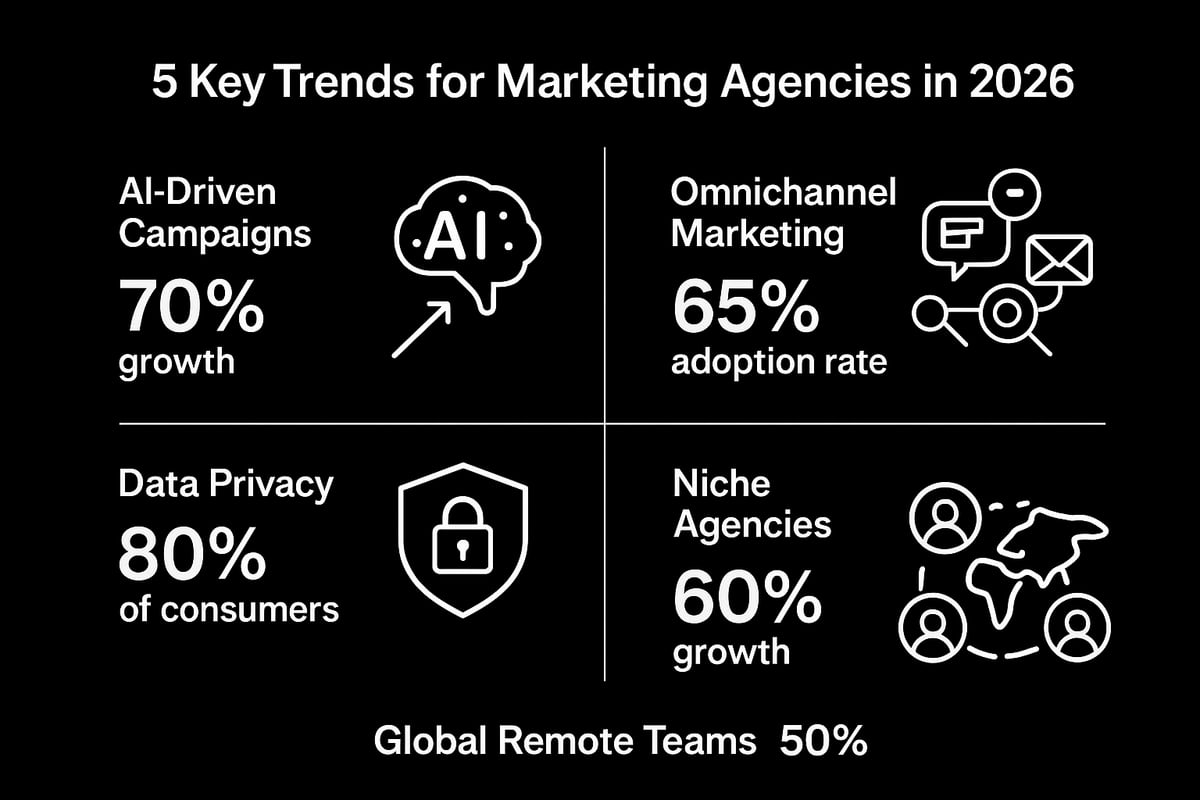
Staying ahead in the digital world means understanding the forces reshaping my marketing agency. In 2026, agencies face a landscape defined by rapid innovation, evolving client needs, and the growing influence of technology. Let us explore the five most significant trends that will impact agencies in the coming years.
The Shift to AI-Driven Campaigns
Artificial intelligence is revolutionizing how my marketing agency approaches campaign planning, targeting, and optimization. Agencies now use machine learning to analyze data, predict trends, and automate bidding for ads. For example, AI can identify the most effective channels for each audience segment and adjust campaigns in real time.
Recent research shows that 85 percent of agencies plan to expand AI investments by 2026. Tools powered by AI help agencies boost return on investment through smarter targeting and efficient budget allocation. For a deeper dive into the data and adoption rates, see these AI adoption in marketing statistics.
As AI becomes integral to agency operations, those who embrace it gain a clear competitive edge.
Omnichannel Marketing and Customer Experience
The modern client expects a seamless experience across every channel. My marketing agency integrates social media, search, email, and messaging platforms to deliver consistent brand messaging. This approach ensures that the customer journey is uninterrupted, whether they move from Instagram to email or from a website to a messaging app.
A recent case study showed that agencies using omnichannel strategies achieved 30 percent higher engagement rates. By combining data from multiple sources, agencies can personalize messaging and build stronger client relationships.
Clients increasingly value agencies that can deliver these unified, high-impact campaigns.
Data Privacy and Ethical Marketing
With stricter regulations like GDPR and CCPA, my marketing agency must prioritize data privacy in every campaign. Transparent data collection, clear consent practices, and ethical use of information are crucial for building trust.
Agencies are adapting by developing privacy-first strategies that still allow for effective targeting and personalization. This includes anonymizing data and giving users more control over their information.
The impact of privacy laws means agencies must balance compliance with innovation, ensuring both client success and consumer trust.
Rise of Niche and Micro-Agencies
Specialization is now a major advantage for my marketing agency in a crowded market. Niche agencies focus on specific industries, platforms, or services, allowing them to develop deep expertise and offer tailored solutions.
Industry reports indicate that niche agencies are growing twice as fast as generalist firms. Examples include agencies dedicated solely to influencer marketing or healthcare brands.
By carving out a unique space, these agencies attract clients seeking specialized knowledge and measurable results.
Remote Collaboration and Global Talent
The shift to remote work has transformed how my marketing agency sources and manages talent. In 2026, 70 percent of agencies operate with distributed teams, leveraging experts from around the world.
Collaboration tools enable seamless communication and project management across time zones. This approach brings diverse perspectives and skills to each campaign, driving innovation and creativity.
Agencies that master remote collaboration can scale quickly and deliver outstanding results, regardless of location.
Core Services of a Modern Marketing Agency
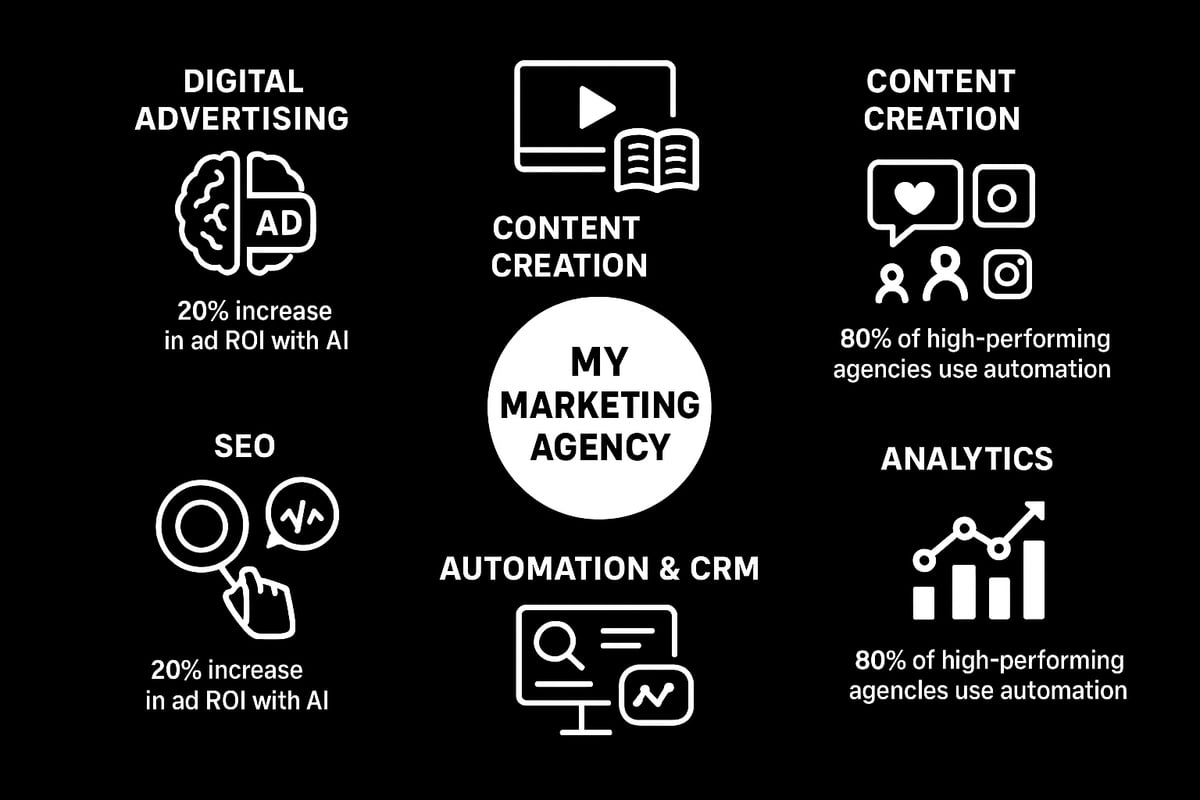
The foundation of my marketing agency in 2026 lies in a diverse suite of core services designed to accelerate client growth and maximize ROI. As the digital landscape evolves, agencies must master advanced strategies, leverage technology, and deliver measurable results. Here’s how my marketing agency stands out with a future-ready approach.
Advanced Digital Advertising
Digital advertising is at the heart of my marketing agency’s service offering. In 2026, programmatic ad buying and real-time bidding have become industry standards. These technologies allow agencies to purchase ad space efficiently and target audiences with precision.
AI and machine learning now power personalization at scale. Campaigns are dynamically optimized based on user behavior, driving higher engagement and conversions. For example, agencies leveraging AI-driven ad targeting report a 20% increase in ROI compared to traditional methods.
Key components of advanced digital advertising include:
Automated bidding strategies
Dynamic creative optimization
Cross-channel retargeting
By integrating these capabilities, my marketing agency ensures clients reach the right audience with the right message at the right time.
Content Creation and Storytelling
Content remains a powerful differentiator for my marketing agency. In 2026, the focus extends far beyond static blogs or simple graphics. Video content, interactive experiences, and immersive formats such as AR-powered stories are now essential.
Storytelling builds emotional connections and sets brands apart in crowded markets. Data shows that 72% of consumers prefer video content from brands, highlighting the importance of rich media in campaigns.
Content creation services at my marketing agency include:
High-quality video production
Interactive infographics and quizzes
Immersive brand storytelling using emerging technology
By crafting compelling narratives, my marketing agency helps brands resonate with their target audience and drive meaningful engagement.
Social Media Strategy and Community Building
Social media is a dynamic arena where my marketing agency excels. Each platform requires a tailored approach, from TikTok’s short-form videos to LinkedIn’s professional networking. Adapting strategies to fit platform-specific trends is crucial for success.
Building and nurturing online communities goes beyond follower counts. It involves active engagement, authentic conversations, and value-driven interactions. For instance, Brand X increased followers by 40% through dedicated community engagement initiatives.
Key social media services offered by my marketing agency:
Platform-specific content calendars
Influencer partnerships and UGC campaigns
Community management and real-time engagement
With these strategies, my marketing agency empowers brands to foster loyal online audiences.
SEO and Search Experience Optimization (SXO)
SEO has transformed into SXO, with my marketing agency prioritizing user intent and experience. Voice and visual search are now integral, as more users interact with search engines through smart devices and images.
AI-powered SEO tactics analyze vast datasets to identify trends, optimize content, and enhance visibility. Agencies focusing on SXO have increased organic traffic by 35%, proving the value of this holistic approach.
Core SXO services at my marketing agency include:
Voice search optimization
Schema markup and structured data
User experience testing and refinement
By adopting SXO, my marketing agency ensures clients stay visible and relevant in an evolving search landscape.
Marketing Automation and CRM Integration
Efficiency is critical for my marketing agency, and marketing automation is a key driver. Automation platforms handle repetitive tasks like lead nurturing, scoring, and follow-ups. Integrating CRM systems creates seamless customer journeys and unifies data for smarter decisions.
Data reveals that 80% of high-performing agencies use advanced automation tools. My marketing agency leverages these systems to maximize client outcomes. For a deeper dive into automation trends, see Automated Marketing Agency Trends.
Key benefits of automation and CRM integration:
Consistent multi-channel communication
Streamlined sales and marketing alignment
Actionable insights from unified customer data
This approach enables my marketing agency to deliver personalized experiences at scale.
Analytics, Reporting, and Attribution
Data-driven decision-making defines my marketing agency’s approach to performance measurement. Real-time dashboards provide clients with transparent, actionable insights. Multi-touch attribution models track every touchpoint, ensuring accurate ROI calculation.
For example, Agency Y improved client retention by 25% through transparent reporting practices. Regular analytics reviews allow my marketing agency to identify opportunities, optimize campaigns, and demonstrate value.
Essential analytics services include:
Custom KPI tracking and dashboard setup
Multi-touch attribution analysis
Monthly performance reviews and optimization recommendations
With these tools, my marketing agency ensures clients achieve measurable, sustainable growth.
Integrating Cutting-Edge Technology in Your Agency
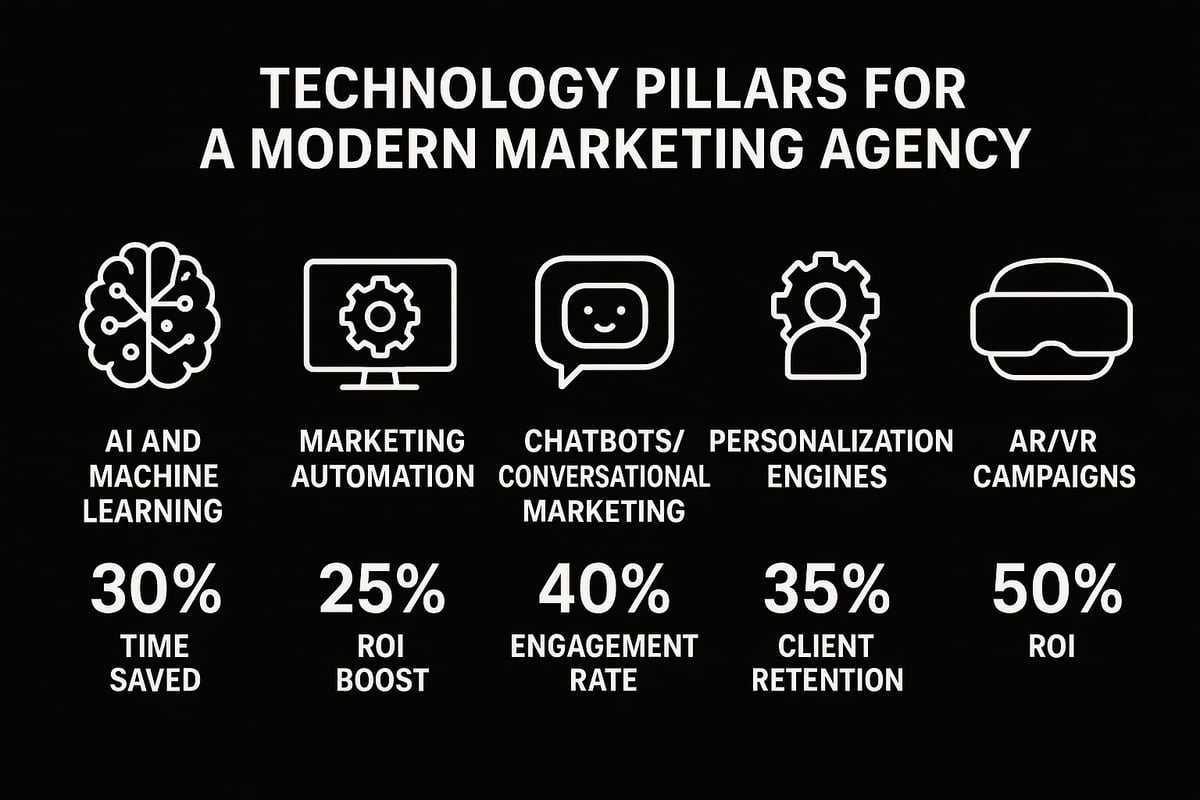
Staying competitive in 2026 means embracing the latest technology within my marketing agency. Seamless integration of advanced tools not only streamlines operations but also drives measurable results for clients. Let us explore how leading-edge solutions can transform every aspect of agency performance.
AI and Machine Learning Applications
AI and machine learning are revolutionizing campaign management for my marketing agency. Predictive analytics enable data-driven forecasts, helping anticipate campaign outcomes and optimize resources. AI-powered content generation tools make it possible to produce personalized assets on demand, reducing setup time by 50%.
Integrating AI also enhances collaboration, allowing teams to work alongside intelligent agents for greater productivity. Research on collaborating with AI agents demonstrates improved teamwork and performance in marketing tasks. As a result, my marketing agency can deliver faster, smarter, and more effective campaigns for every client.
Marketing Automation Platforms
Efficient marketing automation is foundational for my marketing agency’s growth. Top platforms offer features like lead scoring, multi-channel orchestration, and real-time analytics. Automating repetitive tasks liberates teams to focus on strategy and creativity.
Agencies leveraging advanced automation save an average of 15 hours per week, accelerating campaign execution. By integrating automation with CRM systems, my marketing agency ensures seamless customer journeys and consistent engagement. As automation platforms evolve, the agency’s ability to scale and adapt will only increase.
Chatbots and Conversational Marketing
Chatbots have become essential for my marketing agency, providing instant responses and 24 7 support. These tools capture leads, answer queries, and guide prospects through the funnel, all in real time. Conversational marketing enhances user experience and doubles lead conversion rates compared to traditional methods.
Implementing chatbots across websites, social platforms, and messaging apps creates a unified customer service approach. As my marketing agency continues to innovate, conversational AI will play a key role in nurturing relationships and driving results.
Personalization Engines and Dynamic Content
Personalization is at the heart of my marketing agency’s strategy. Dynamic content engines deliver tailored messages across email, web, and social channels, adapting to each user’s preferences and behavior. For example, using dynamic email content has increased open rates by 30%.
These technologies empower my marketing agency to create individualized journeys at scale, improving engagement and loyalty. By leveraging data insights and automation, the agency provides every client with customized experiences that drive measurable growth.
AR/VR and Immersive Campaigns
Immersive technologies like AR and VR are redefining storytelling for my marketing agency. Augmented reality overlays and virtual experiences captivate audiences, offering interactive ways to explore products or services. Retail brands using AR have seen engagement jump by 60%.
Incorporating AR and VR into campaigns allows my marketing agency to differentiate client brands and create memorable interactions. As these tools become more accessible, agencies investing in immersive content will lead the industry in innovation and audience connection.
Building and Structuring a High-Performance Agency Team
A high-performance team is the backbone of my marketing agency in 2026. As the industry evolves, assembling and nurturing a skilled, agile team is essential for delivering advanced solutions and maintaining a competitive edge.
Key Roles and Specializations in 2026
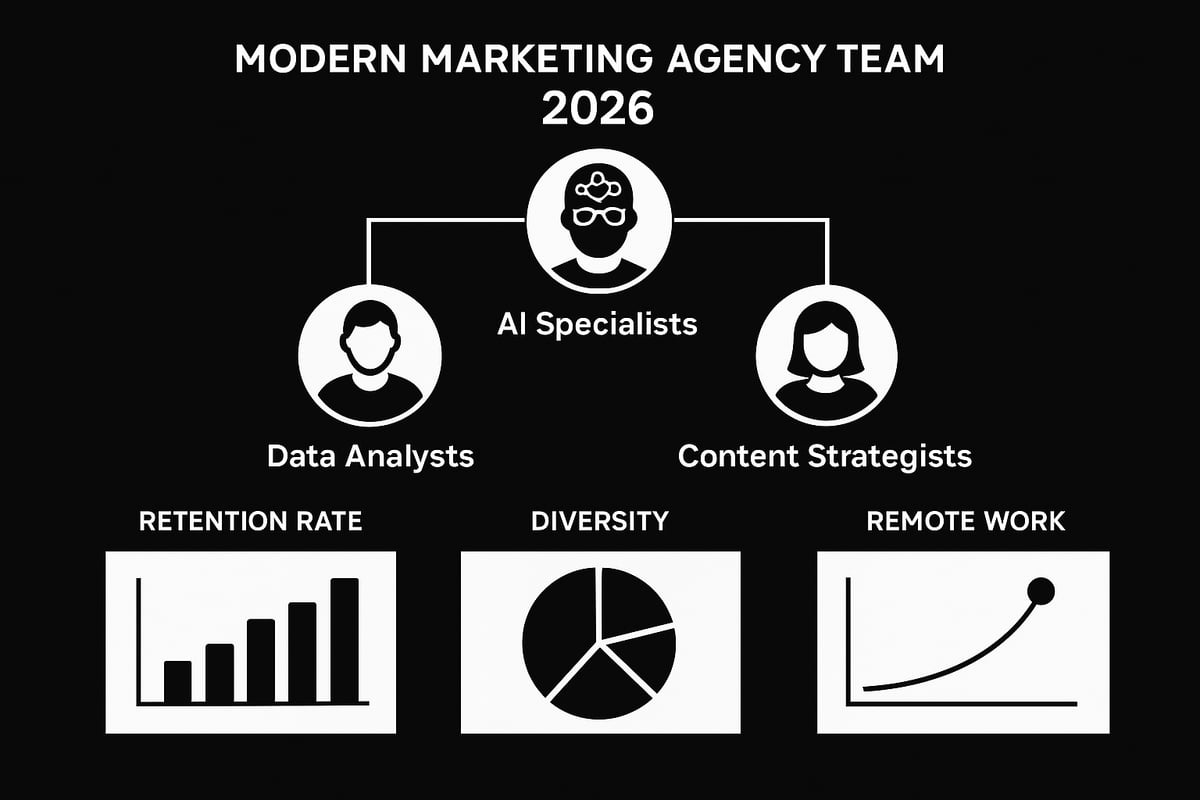
To keep my marketing agency ahead, defining clear roles is vital. The team in 2026 includes AI specialists who leverage machine learning for campaign optimization, data analysts who transform raw information into actionable insights, content strategists crafting engaging narratives, and automation experts streamlining operations.
Role | Core Function |
|---|---|
AI Specialist | Campaign analysis and predictive modeling |
Data Analyst | Performance measurement and insight delivery |
Content Strategist | Brand storytelling and content planning |
Automation Expert | Workflow automation and CRM integration |
Cross-functional teams allow my marketing agency to deliver integrated campaigns that adapt to changing market demands.
Recruiting and Retaining Top Talent
Attracting and keeping top talent is a priority for my marketing agency. The landscape is highly competitive, so offering remote work, flexible schedules, and ongoing professional growth is essential.
Remote work attracts a global talent pool.
Flexible schedules increase job satisfaction.
Growth opportunities, like regular training, boost retention.
Agencies with flexible work policies now see twice the retention rates of traditional firms. This approach ensures my marketing agency remains attractive to skilled professionals seeking dynamic, future-ready workplaces.
Fostering a Culture of Innovation
Innovation is the heartbeat of my marketing agency. Encouraging experimentation and supporting continuous learning helps the team stay ahead of industry shifts.
We implement regular training on new technologies, host brainstorming sessions, and recognize creative contributions. According to Award-Winning Agency Practices, agencies that foster innovation consistently outperform competitors. This mindset ensures my marketing agency adapts rapidly and delivers exceptional results.
Performance Management and Incentives
Clear KPIs and growth targets are foundational for my marketing agency’s success. By defining specific objectives, the team understands expectations and can focus on high-impact activities.
Rewarding innovation and results-driven performance motivates the team. Performance reviews, bonus structures, and recognition programs are in place to acknowledge outstanding contributions. This structured approach aligns individual goals with agency-wide success.
Diversity, Equity, and Inclusion Initiatives
Building diverse teams is a strategic imperative for my marketing agency. Diversity brings broader perspectives and fuels creativity, leading to better decision-making and problem-solving.
Industry studies show agencies with diverse teams outperform peers by 35 percent. We prioritize inclusive hiring and foster an environment where all voices are valued. This commitment strengthens my marketing agency’s reputation and drives sustainable growth.
Client Acquisition, Retention, and Relationship Management
Acquiring and retaining clients is the backbone of my marketing agency’s long-term success. In 2026, agencies must adopt innovative strategies and focus on building strong relationships to thrive in a competitive landscape.
Modern Lead Generation Tactics
Effective lead generation in 2026 relies on a combination of inbound, outbound, and account-based marketing. My marketing agency leverages AI-driven tools to identify high-potential prospects and automate initial outreach, saving both time and resources.
Personalization is key. By analyzing data and segmenting audiences, agencies can tailor their messaging, increasing engagement and conversion rates. For a deeper dive into actionable tactics, explore these Marketing Agency Lead Generation insights.
Regularly updating prospect lists and refining targeting strategies ensures my marketing agency remains agile and responsive to market shifts.
Personalized Client Onboarding and Communication
First impressions matter. My marketing agency designs customized onboarding experiences for every client, setting clear expectations and outlining tailored strategies from the start.
Automation tools enable consistent, high-touch communication throughout the client journey. Automated check-ins, progress updates, and educational resources foster trust and transparency.
Interactive onboarding portals and welcome kits further differentiate my marketing agency, making clients feel valued and informed from day one.
Delivering Value and Building Trust
Ongoing value delivery is essential for client retention. My marketing agency provides transparent reporting, sharing real-time results and actionable insights during regular reviews.
Clients appreciate proactive recommendations and clear explanations of campaign performance. By demonstrating a deep understanding of their business goals, my marketing agency builds long-lasting partnerships rooted in trust.
Consistent delivery of measurable results solidifies the agency’s reputation and encourages clients to expand their engagement.
Handling Client Feedback and Conflict Resolution
Feedback is a growth opportunity. My marketing agency implements structured processes for collecting client input, including surveys, review meetings, and digital feedback forms.
When challenges arise, swift and empathetic resolution is crucial. Open communication and a solutions-focused mindset turn negative experiences into lessons for agency improvement.
Documenting issues and follow-up actions ensures my marketing agency learns from each situation, enhancing future client interactions and satisfaction.
Upselling, Cross-Selling, and Expanding Accounts
Maximizing value for clients and the agency involves identifying new opportunities. My marketing agency analyzes existing client data to recommend complementary services or upgrades that align with evolving business needs.
Strategic upselling and cross-selling can increase revenue per client by 20 percent. For more growth strategies, see Growing a Marketing Agency.
By focusing on long-term partnerships, my marketing agency creates win-win scenarios that benefit both clients and the agency’s bottom line.
Measuring Success: KPIs and Performance Metrics for 2026
In 2026, precise measurement is the foundation for scalable growth and client satisfaction at my marketing agency. Tracking the right KPIs ensures every campaign delivers measurable impact. With advanced analytics and evolving benchmarks, agencies must adopt a data-driven mindset to stay ahead. Let us explore the essential metrics and strategies that define success for my marketing agency in the coming years.
Setting SMART Goals for Clients and Campaigns
Success starts with setting clear, actionable objectives. At my marketing agency, every campaign begins with SMART goals: Specific, Measurable, Achievable, Relevant, and Time-bound. These criteria align agency deliverables with client expectations and provide a roadmap for evaluation.
Specific: Define exactly what the campaign aims to achieve.
Measurable: Establish quantifiable outcomes, such as leads or conversions.
Achievable: Set realistic targets based on data and resources.
Relevant: Ensure objectives align with business goals.
Time-bound: Assign deadlines for each milestone.
By embedding SMART goals into every project, my marketing agency can track progress and pivot strategies proactively.
Core Marketing KPIs to Track
Identifying the right KPIs is critical for my marketing agency to demonstrate value. Key metrics include lead quality, customer acquisition cost (CAC), lifetime value (LTV), and engagement rates. For instance, optimizing engagement rates across channels is vital—brands using omnichannel strategies have seen up to 30% higher engagement, as shown in Omnichannel marketing case studies.
KPI | What It Measures | Why It Matters |
|---|---|---|
Lead Quality | Percentage of qualified leads | Drives sales efficiency |
CAC | Cost to acquire a new customer | Impacts profitability |
LTV | Revenue from a customer over lifespan | Guides retention strategy |
Engagement Rate | User interaction with content | Reflects campaign resonance |
Consistent monitoring helps my marketing agency optimize campaigns for maximum ROI.
Attribution Models and Data-Driven Decision Making
Attribution models empower my marketing agency to understand which channels drive results. Comparing first-touch, last-touch, and multi-touch attribution reveals the true customer journey. Multi-touch models, in particular, provide a holistic view by assigning value to each interaction.
Data-driven decision making means using insights from attribution to refine campaigns. Agencies leveraging granular attribution can allocate budgets more efficiently and improve performance. For my marketing agency, this approach ensures resources are focused on channels that deliver the highest return.
Client Satisfaction and Retention Metrics
Client satisfaction is at the core of my marketing agency’s long-term success. Tracking metrics like Net Promoter Score (NPS), churn rate, and client lifetime value reveals client sentiment and loyalty. Agencies with NPS above 70 achieve 30% higher client retention, making it a key benchmark.
Regular feedback loops, satisfaction surveys, and transparent communication keep clients engaged. By monitoring retention metrics, my marketing agency can identify at-risk accounts and implement strategies to boost loyalty.
Benchmarking and Continuous Improvement
Benchmarking against industry standards is vital for my marketing agency to remain competitive. Comparing performance data with top peers uncovers strengths and areas for growth. Setting internal benchmarks also motivates teams to exceed previous results.
Continuous improvement comes from analyzing outcomes, implementing feedback, and updating processes. By fostering a culture of learning and adaptation, my marketing agency ensures ongoing growth and innovation.
Future-Proofing Your Agency with Predictive Analytics
Predictive analytics is transforming how my marketing agency plans for the future. Leveraging AI-powered models, agencies can forecast trends, anticipate client needs, and improve campaign accuracy by up to 25 percent. This forward-looking approach allows for proactive adjustments and smarter resource allocation.
By integrating predictive analytics, my marketing agency can stay ahead of market shifts and deliver consistently superior results for clients. Embracing these tools is essential for any agency aiming to thrive in 2026 and beyond.
As you look ahead to the future of marketing agencies in 2026, it’s clear that embracing AI, automation, and intelligent workflows will set your business apart. If you want to unlock faster growth, streamline your processes, and stay ahead of changing trends, we’re here to help you navigate every step. Let’s talk about how you can put these expert strategies into action and create real, measurable results for your company. If you’re ready to start transforming your marketing and sales, Book a free consultation and let’s build your success together.