Lead Generation for IT Guide: Strategies for 2026 Success
Master lead generation for IT in 2026 with proven strategies, data driven tactics, and the latest tools to boost pipeline quality and achieve sustainable growth.
Dec 3, 2025
In 2026, IT companies are navigating an ultra-competitive digital marketplace where traditional methods fall short. Buyer journeys have become longer and more complex, leaving many teams searching for more effective solutions.
This guide explores the future of lead generation for IT, offering proven, data-driven strategies that address today's toughest challenges. From intent data and account-based marketing to AI-powered automation and short-form video, you'll discover the latest tactics shaping the industry.
Whether you're an IT leader, marketer, or sales professional, you'll gain actionable insights to boost pipeline quality, shorten sales cycles, and achieve ambitious revenue targets. Read on for a comprehensive roadmap covering obstacles, foundational frameworks, step-by-step strategies, technology trends, and measurement best practices.
Understanding the IT Lead Generation Landscape in 2026
The landscape of lead generation for it is evolving rapidly, presenting both opportunities and complexities for IT businesses. As we move into 2026, understanding these shifts is essential for building a successful pipeline.
The Evolving Nature of IT Buying Cycles
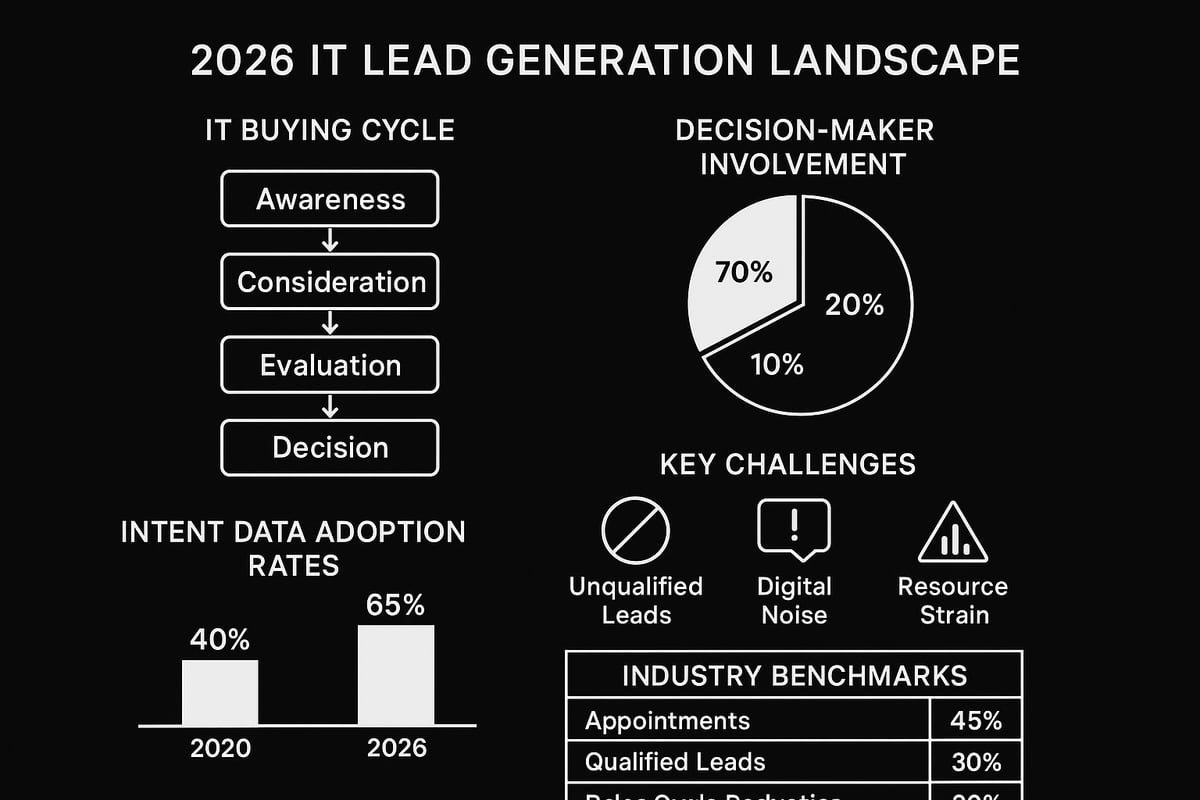
In 2026, lead generation for it must address increasingly complex buying cycles. IT solutions now require multi-touch engagement, often spanning months and involving diverse stakeholders. These committees commonly include CIOs, DevOps leaders, finance, and even end-users. Personalized outreach is vital, as buyers expect communication that resonates with their specific needs and project timelines. Timing matters more than ever, with successful teams tracking engagement signals to reach prospects when they are most receptive. The traditional linear funnel is gone, replaced by a dynamic, iterative process that rewards agility.
Key Challenges Facing IT Lead Generation
IT businesses face several persistent obstacles in lead generation for it. Sales teams are stretched thin, often lacking the resources to engage every potential account effectively. Reaching key decision-makers within large organizations remains difficult, especially as gatekeepers and digital barriers increase. Many campaigns produce a high volume of unqualified leads due to generic outreach tactics, diluting pipeline quality. Digital saturation is a real challenge, with 87% of buyers starting their research online before ever speaking with sales. This means your approach must stand out and provide real value from the very beginning.
Market Trends Shaping 2026 Strategy
The future of lead generation for it is shaped by several powerful trends. Third-party intent data is now adopted by more than 70% of B2B marketers, enabling teams to identify active buyers before competitors. Hybrid and digital-first engagement models are becoming standard, reflecting how buyers prefer to interact. The IT market is also expanding globally, with cross-border opportunities on the rise. To stay ahead, IT leaders should explore B2B lead generation strategies for 2026 that leverage these trends for maximum impact.
The Need for Data-Driven, Agile Approaches
Data-driven lead generation for it is essential to thrive in a competitive environment. Real-time analytics enable agile campaign optimization, allowing teams to respond quickly to market changes. Sales intelligence tools help identify buying signals and prioritize outreach, as demonstrated by Cloudreach’s ability to generate 100–150 leads per week per rep. Continuous testing and refinement are non-negotiable, ensuring that strategies remain aligned with evolving buyer behaviors and preferences.
Industry Benchmarks & Success Metrics
Modern lead generation for it is measured by clear, actionable benchmarks. Top-performing IT teams average over 50 sales appointments per quarter. Strategic improvements can yield a 20% reduction in sales cycle length, a 35% increase in qualified leads, and up to a 6x improvement in lead quality. ROI measurement is central, guiding investment in tactics and tools that deliver tangible results.
Metric | Industry Benchmark |
|---|---|
Sales appointments/quarter | 50+ |
Sales cycle reduction | 20% |
Qualified lead increase | 35% |
Lead quality improvement | 6x |
Examples
Case studies highlight the transformative impact of targeted strategies. OpsVeda and Inhalation Sciences increased conversions and revenue through outsourced lead generation. Cloudreach used sales intelligence to revamp its outbound pipeline and achieve consistent lead growth. These examples show that with the right approach, IT organizations can overcome challenges and realize sustainable success.
Strategic Foundations: Building a High-Performance IT Lead Generation Engine
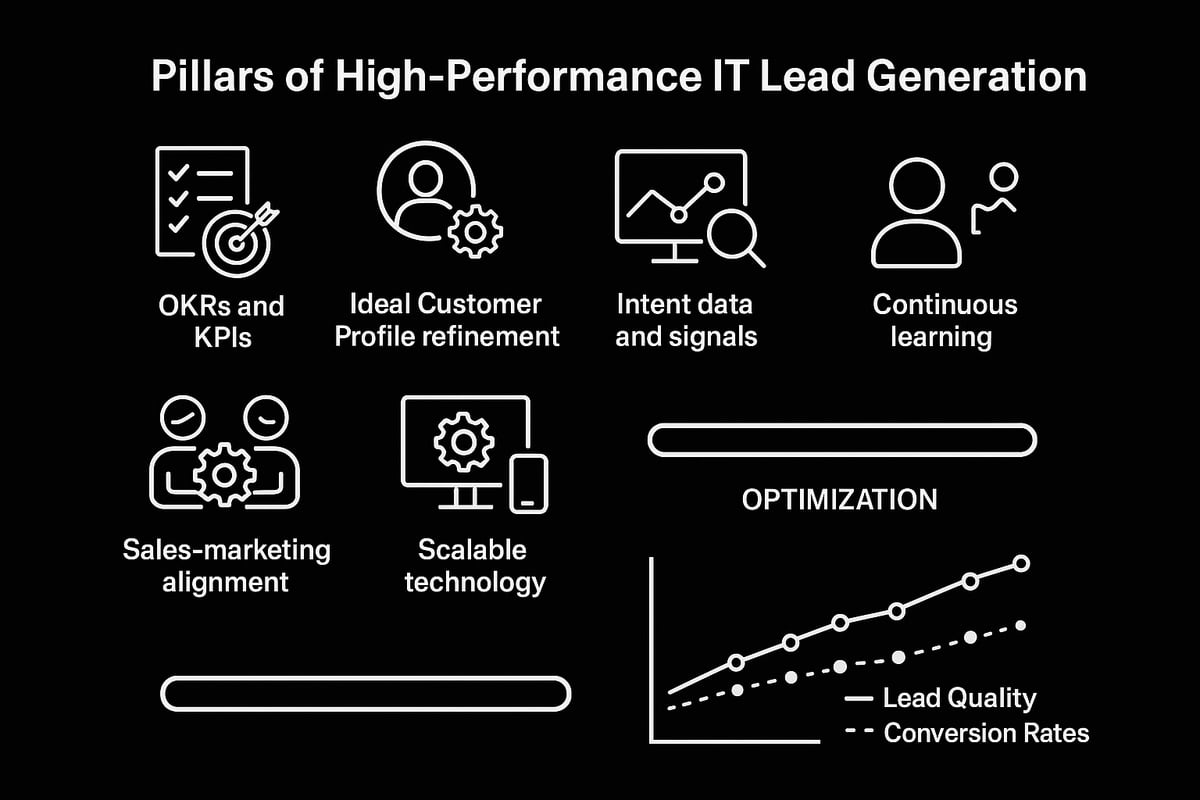
Establishing a strong foundation is essential for any successful lead generation for it strategy. IT companies in 2026 must adopt a structured, data-driven approach to stand out and drive real growth. This means aligning teams, processes, and technology around clear objectives and continuous improvement.
Setting Clear Objectives and KPIs
Defining clear objectives and measurable KPIs is the first step in building a high-performance lead generation for it engine. Objectives and Key Results (OKRs) provide alignment across teams, ensuring everyone works toward the same growth targets.
Common KPIs include:
Lead quality scores
Conversion rates from lead to opportunity
Pipeline velocity
Average deal size
Spotify’s adaptation of OKRs, from company-wide to individual goals, shows how tailored measurement drives focus at every level. Regularly reviewing these metrics enables IT businesses to pivot quickly and maximize results.
Defining and Continuously Refining Your Ideal Customer Profile
A precise Ideal Customer Profile (ICP) is the backbone of lead generation for it. Start with detailed B2B buyer personas, considering roles, industries, company size, and pain points. As customer needs shift, update personas to reflect new priorities.
Effective segmentation allows IT firms to target multiple verticals or product lines. Use surveys, CRM data, and market research to keep your ICP fresh and accurate. This approach ensures resources are spent on the highest-value prospects.
Leveraging Data and Intent Signals
Leveraging intent data and sales intelligence is now critical for lead generation for it. By tracking buyer research activity and engagement signals, teams can identify high-intent accounts ready for outreach.
Sales intelligence tools offer real-time insights, surfacing prospects showing purchasing intent. Integrating this data into Account-Based Marketing (ABM) campaigns increases efficiency, as outreach is focused on the most promising leads.
Aligning Sales and Marketing Teams
Seamless alignment between sales and marketing is a non-negotiable foundation for lead generation for it. Shared goals, regular communication, and feedback loops ensure campaigns are optimized and pipeline gaps are quickly addressed.
Cross-functional collaboration helps identify what messaging and channels resonate best. For example, Callbox’s end-to-end sales development support enables faster adaptation and unified execution, boosting results across both teams.
Investing in Scalable Technology Infrastructure
A robust technology stack underpins modern lead generation for it. Essential tools include CRM systems, marketing automation platforms, and AI-driven analytics. These solutions streamline workflows, centralize data, and enable smarter decision-making.
Automation is especially vital for scaling outreach and nurturing leads efficiently. Learn more about how automated lead generation for IT can transform pipeline results by reducing manual tasks and improving lead quality.
Continuous Learning and Adaptation
Continuous learning is at the heart of sustainable lead generation for it success. Regularly revisit objectives, test new tactics, and embrace agile methodologies. Analyze campaign data and stakeholder feedback to refine strategies and stay ahead of evolving buyer expectations.
Industry leaders like Cognism and Spotify illustrate how a culture of experimentation and adaptation leads to long-term growth. By fostering curiosity and resilience, IT companies can future-proof their lead generation for it approach.
Step-by-Step IT Lead Generation Strategies for 2026
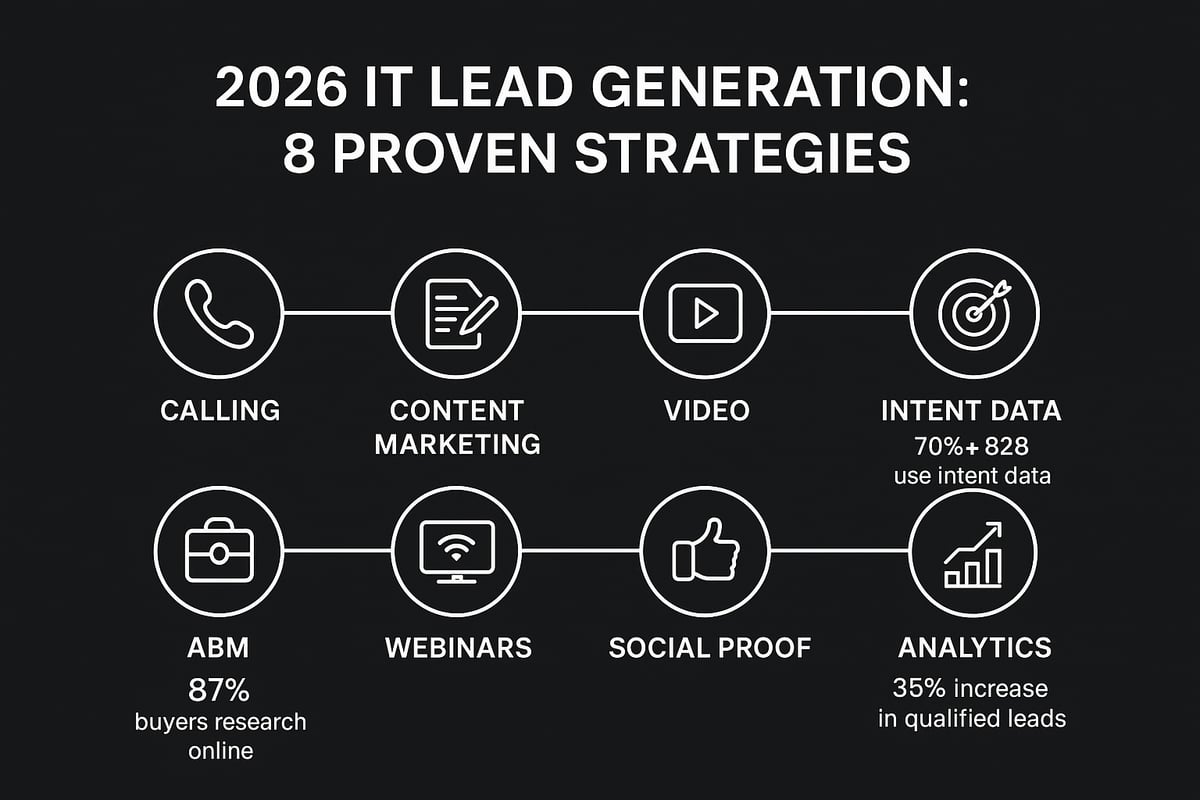
The landscape of lead generation for it in 2026 is more intricate than ever. Success relies on a structured, multi-pronged approach that blends data, technology, and human insight. Below, we break down eight actionable strategies to help IT businesses attract, engage, and convert high-quality leads in a digital-first world.
Step 1: Direct Outreach and Intelligent Calling
Direct outreach remains a pillar of lead generation for it, especially when targeting C-level and VP buyers. Cold calling, when supported by robust sales intelligence platforms, allows teams to access phone-verified contacts and prioritize high-value accounts.
To boost engagement, personalize scripts based on company insights and recent activity. Effective multi-channel strategies combine calls with email, LinkedIn, and SMS, creating more touchpoints and increasing response rates.
For example, Cloudreach used sales intelligence tools to transform their outbound pipeline, generating 100-150 quality leads per rep each week. Tracking call-to-meeting conversion rates helps refine tactics and maximize ROI. For a deeper dive into proven outreach approaches, see this guide to IT sales lead generation strategies.
Step 2: Multi-Channel Content Marketing & Thought Leadership
Content remains a magnet for lead generation for it. IT buyers value educational resources that address pain points and showcase expertise. By mixing blogs, whitepapers, case studies, and newsletters, businesses can nurture prospects at every stage.
Balance gated content, like eBooks and webinars, with ungated assets to optimize lead capture. Gated content acts as a value exchange, capturing high-quality lead data in return for valuable insights. Influencer-backed and research-driven materials build authority and credibility.
Test different formats to match audience preferences. For example, using interactive case studies or newsletters with curated industry news can increase engagement. Always measure which content channels drive the highest conversion rates.
Step 3: Harnessing Short-Form Video and Visual Storytelling
Short-form video is revolutionizing lead generation for it by making complex topics accessible and engaging. Platforms like TikTok, YouTube Shorts, and LinkedIn enable IT brands to reach new audiences with concise, high-impact visuals.
Videos should address common questions, product features, or customer testimonials. Embedding these clips in landing pages and email campaigns can increase user engagement by up to 2.5 times compared to long-form content.
Use visual storytelling to simplify technical concepts. For instance, Cognism leverages video to explain the value of intent data, helping buyers understand its impact quickly. Monitor video watch rates and sharing metrics to gauge effectiveness.
Step 4: Utilizing Intent Data and Buyer Signals
Intent data is a game changer for lead generation for it. By monitoring online research activities and content consumption, IT companies can identify prospects actively seeking solutions.
Integrate both third-party and first-party data sources to build a complete picture of buyer intent. Trigger personalized outreach when prospects show key buying signals, such as visiting pricing pages or downloading technical guides.
Sales intelligence tools provide real-time alerts, enabling teams to act when interest is at its peak. This results in higher conversion rates and shorter sales cycles. For example, Cognism’s platform enables proactive engagement with in-market accounts.
Step 5: Account-Based Marketing (ABM) and Personalization at Scale
ABM takes lead generation for it to the next level by focusing on high-value accounts. Align sales and marketing teams to design coordinated, personalized campaigns that target specific organizations and roles.
Use data to segment accounts by industry, company size, or pain point. Personalize messaging to address each stakeholder’s unique challenges. Intent-driven ABM campaigns consistently outperform generic outreach, delivering larger deals and faster cycles.
Track ABM performance with metrics like deal size, win rates, and cycle length. According to recent studies, 96% of B2B marketers have a documented ABM strategy, underscoring its critical role in IT lead generation.
Step 6: Hosting Webinars, Virtual Events, and Live Demos
Webinars and virtual events are essential for lead generation for it, serving as powerful lead magnets. They allow IT companies to demonstrate product capabilities and share industry expertise in real time.
Interactive Q&A sessions and live demos foster trust and allow prospects to see solutions in action. Collect detailed attendee data for targeted follow-up campaigns and nurturing sequences.
Inhalation Sciences, for example, increased sales appointments and revenue by integrating webinars into their lead generation process. Analyze registration rates, attendee engagement, and post-event conversions to refine your event strategy.
Step 7: Social Proof, Reviews, and Customer Advocacy
Building trust is fundamental to lead generation for it. Showcase client testimonials, detailed case studies, and third-party reviews on platforms like G2, Capterra, and LinkedIn to establish credibility.
Encourage satisfied clients to refer peers and participate in advocacy programs. Highlighting real-world results, such as those achieved by OpsVeda and AutoPylot, can persuade new prospects to engage.
A structured customer advocacy initiative not only attracts new leads but also strengthens long-term client relationships. Track review volume and referral rates to measure impact.
Step 8: Continuous Testing, Analytics, and Performance Optimization
Optimization is the engine of sustainable lead generation for it. Use A/B testing to refine messaging, channels, and offers. Monitor key metrics like lead source, conversion rates, and ROI with real-time analytics dashboards.
Quickly iterate based on performance data and stakeholder feedback. For instance, Callbox’s data-driven approach led to a 35% increase in qualified leads and 20% reduction in sales cycles.
Document successful processes and regularly review outcomes to ensure continuous improvement. An agile, data-centric mindset allows IT teams to adapt to changing buyer behaviors and market conditions.
Technology, Tools, and Automation for IT Lead Generation in 2026
The technology landscape for lead generation for it is advancing at an unprecedented pace. IT companies must leverage a robust tech stack, embrace AI-driven tools, and ensure seamless integration across platforms to stay competitive. In 2026, the right combination of systems and automation can be the difference between stagnant pipelines and scalable growth.
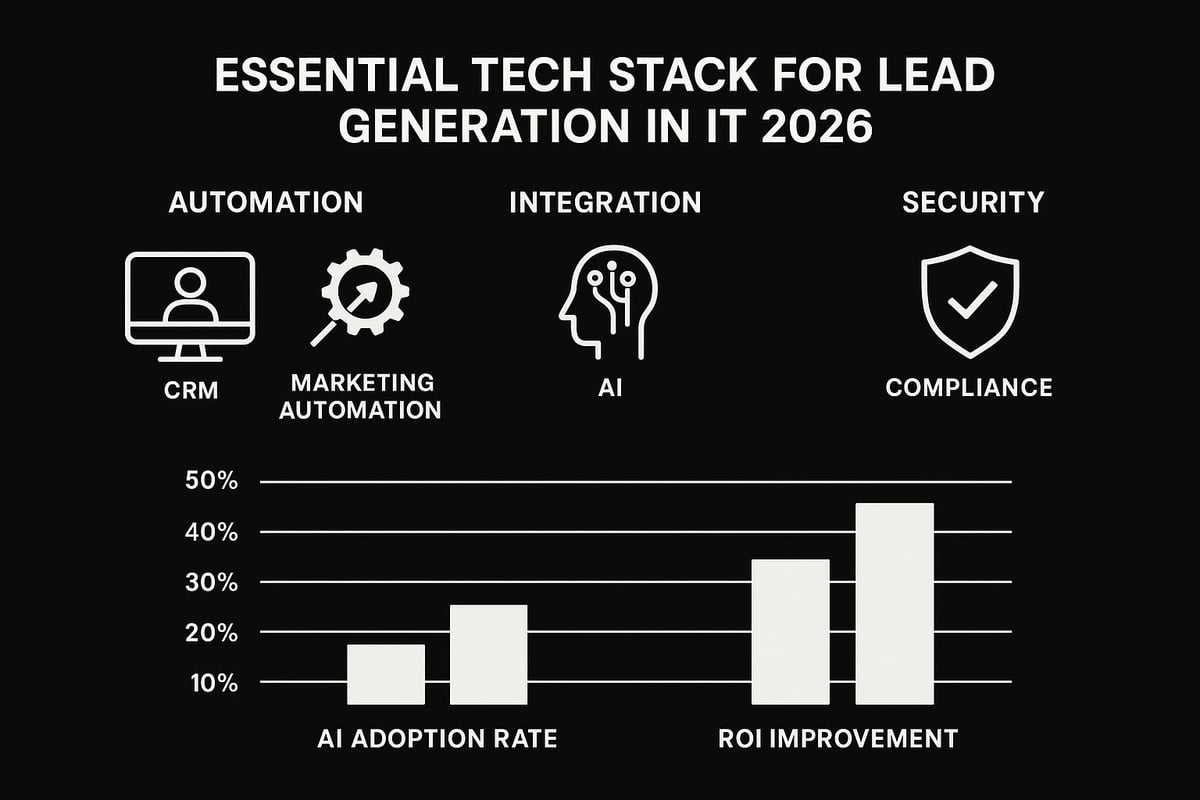
Essential Tech Stack Components
A modern lead generation for it engine requires a carefully selected suite of tools. At its core are CRM systems for managing leads and pipeline visibility. Marketing automation platforms orchestrate campaigns, while sales intelligence and intent data solutions enable precise targeting.
Component | Purpose | Example Tools |
|---|---|---|
CRM | Centralizes lead management | Salesforce, HubSpot |
Marketing Automation | Automates campaigns | Marketo, Pardot |
Sales Intelligence | Identifies buying signals | Cognism, LinkedIn Sales Nav |
Intent Data | Reveals active buyer interest | Bombora, 6sense |
Analytics Dashboard | Tracks performance metrics | Tableau, Power BI |
A unified stack ensures data flows seamlessly, supporting agile and informed decision-making.
AI and Automation Trends
Artificial intelligence is transforming lead generation for it by providing predictive analytics, automated lead scoring, and workflow optimization. AI-driven platforms can analyze vast datasets, uncover buying intent, and prioritize outreach, freeing sales teams to focus on high-value activities.
Recent research shows that AI adoption is finally driving ROI for B2B teams, making it a cornerstone of modern strategies. Additionally, chatbots and conversational AI are now essential for engaging leads around the clock and qualifying opportunities in real time.
Integrating Multi-Channel Campaigns
Seamless integration across email, phone, social media, and chat is vital for lead generation for it. Orchestrating campaigns across channels ensures consistent messaging and maximizes engagement opportunities.
Data syncing between platforms eliminates silos and allows for real-time insights into prospect behavior. Multi-channel approaches also enable IT businesses to meet buyers where they are, increasing the likelihood of conversion.
Data Compliance and Security
With growing data privacy regulations, compliance is non-negotiable in lead generation for it. IT firms must ensure their systems are GDPR-compliant and follow industry-specific rules.
Secure handling of prospect and customer data is crucial for maintaining trust and avoiding costly penalties. Regular audits and robust security protocols provide essential safeguards.
Measuring Technology ROI
To justify investments, companies must measure the true impact of technology on lead generation for it. Key metrics include pipeline growth, cost per lead, and revenue attribution.
ROI calculators and analytics dashboards help teams track which tools deliver the most value. As more organizations invest in automation and AI, clear measurement frameworks are essential for optimizing spend and scaling what works.
Preparing for Future Innovations
Staying ahead in lead generation for it means remaining agile as new technologies emerge. Investing in scalable, adaptable solutions today ensures readiness for tomorrow’s shifts.
Continuous learning, experimentation, and tech stack evolution position IT firms for sustained growth and competitive advantage.
Measurement, Optimization, and Scaling for Sustainable Success
Achieving sustainable results with lead generation for it requires a disciplined approach to measurement, feedback, and continuous scaling. By tracking the right metrics and learning from every campaign, IT organizations can refine tactics, avoid stagnation, and build momentum for long-term growth.
Defining Key Metrics and Success Indicators
Success in lead generation for it starts with clear, measurable goals. Common metrics include lead quality, conversion rates, pipeline velocity, and customer acquisition cost. Tracking sales appointments, deal size, and cycle length offers actionable insights.
A sample metrics table:
Metric | Benchmark (2026) |
|---|---|
Sales Appointments/Qtr | 50+ |
Qualified Leads Growth | +35% |
Sales Cycle Reduction | -20% |
Lead Quality | 6x improvement |
Consistent measurement helps teams understand which strategies truly move the needle for lead generation for it.
Building Feedback Loops for Continuous Improvement
Ongoing optimization is essential for lead generation for it. Regularly reviewing campaign results and gathering feedback from stakeholders ensures strategies remain aligned with organizational objectives.
Cross-functional alignment between sales and marketing enables quick adaptation. By analyzing data and acting promptly, teams can iterate messaging, channels, and offers to maximize pipeline results.
Establishing feedback loops drives transparency and accelerates improvement in lead generation for it.
Scaling What Works: From Pilot to Enterprise-Wide Rollout
Once high-performing tactics are identified, scaling becomes the priority. Documenting proven processes and playbooks supports consistent team adoption, while automation tools enable efficiency at scale.
Leveraging platforms tailored for IT marketing, such as those discussed in the IT marketing services overview, can streamline rollouts and ensure best practices are followed.
Automation and clear documentation empower IT organizations to expand successful lead generation for it strategies across regions and business units.
Common Pitfalls and How to Avoid Them
Avoiding common mistakes is vital for sustainable lead generation for it. Watch for:
Relying on a single channel or tactic
Poor data hygiene and neglecting compliance
Failing to adjust for changing buyer behaviors
Mitigating these risks ensures campaigns remain effective and scalable.
Examples of Scalable Success
Several IT organizations have scaled lead generation for it with data-driven, multi-channel campaigns. For instance, Cloudreach used intent data to transform outbound outreach, while Callbox clients grew appointments and revenue through targeted strategies.
These successes underscore the value of agile approaches and robust analytics in IT lead generation.
Future-Proofing Your Lead Generation Strategy
Continuous learning, routine experimentation, and strategic pivots are essential for future-ready lead generation for it. As buyer expectations and technology trends evolve, staying agile and investing in adaptable solutions will keep your pipeline strong.
Embracing innovation ensures your IT business remains competitive and resilient in the digital era.
After exploring how IT lead generation is evolving and which strategies drive real results in 2026, you may be wondering how to apply these insights to your own business. If you’re ready to modernize your pipeline, automate key workflows, and ensure sustainable growth, let’s take the next step together. We can discuss your unique goals, challenges, and tailor an approach that fits your vision for success. If you’d like expert guidance and actionable recommendations, you can Book a free consultation—I’m here to help you turn these strategies into measurable results.